Power Tools
Metabo KT 18 LTX 66 BL vs HiKOKI 36V Plunge Saw: Which Cordless Track Saw Makes More Sense?
Two closely related cordless plunge saws with different battery platforms, slightly different speeds, and one clear pick depending on how you already own into the ecosystem.
Introduction
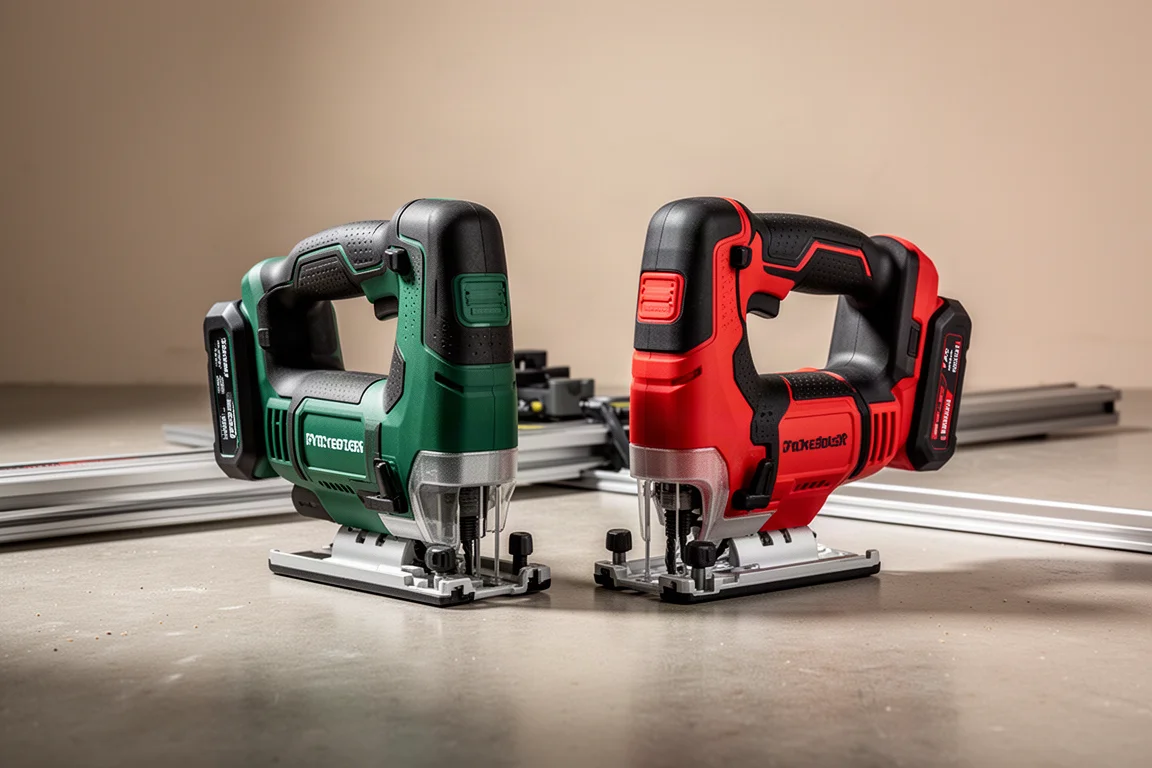
Metabo and HiKOKI make two of the most interesting cordless plunge saws you can buy right now, and the story behind them is a bit unusual. The two brands were once separate companies but now sit under the same ownership, which means these saws are far more similar than their different colour schemes suggest.
If you are torn between the Metabo KT 18 LTX 66 BL and the HiKOKI 36V plunge saw, this breakdown should make the decision a lot easier. The short version: they are near-identical tools, but the battery platforms, top speeds, and one clever power option set them apart.
Two Brands, Two Platforms
Here is how the brand situation works. HiKOKI was formerly known as Hitachi, and the Hitachi-owned company purchased Metabo in 2017. Metabo kept its own name and battery platform everywhere, while Hitachi’s power tool line became Metabo HPT in the United States and HiKOKI in the rest of the world. Since 2017, an investment firm has owned the combined group.
What matters for you is the batteries. Metabo uses its CAS system batteries, while HiKOKI, Hitachi, and Metabo HPT tools use MultiVolt batteries. These are completely different systems. You cannot put a Metabo battery on a HiKOKI tool, and you cannot put a MultiVolt battery on a Metabo tool. The Metabo saw is an 18V tool, while the HiKOKI saw is a 36V tool that also runs on 18V MultiVolt batteries.
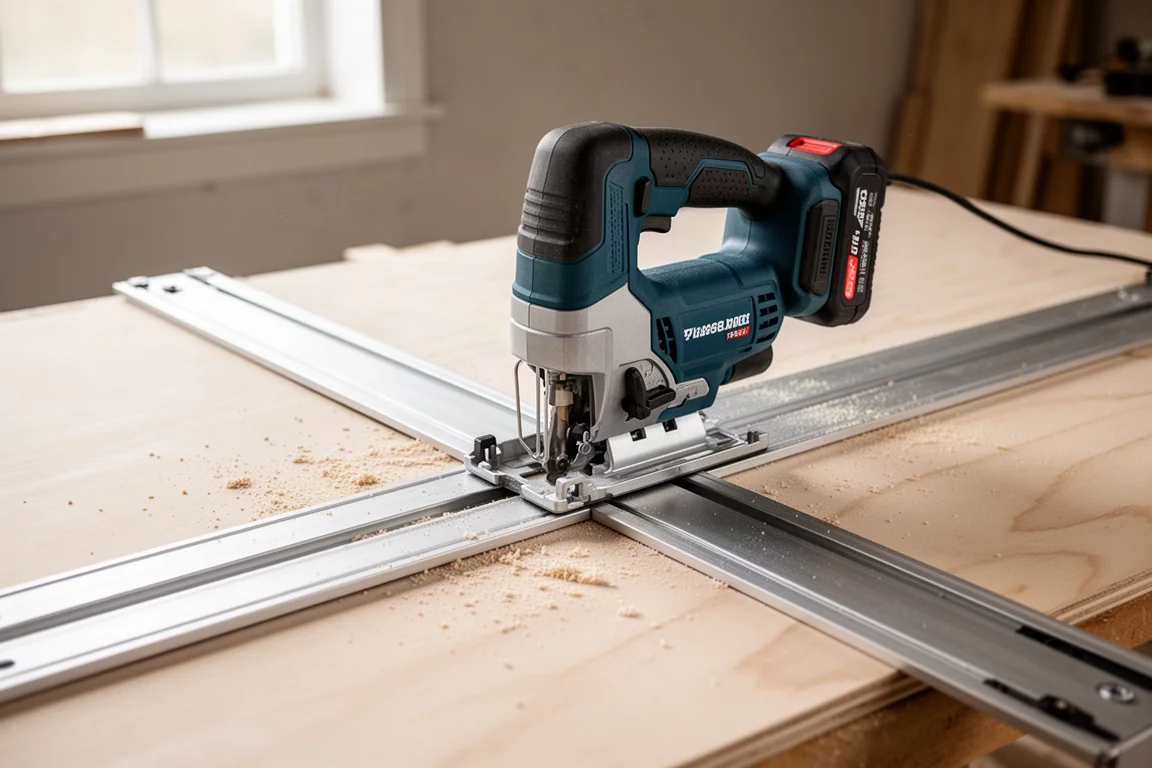
So the rule is simple: buy whichever matches the battery platform you already own. Neither brand’s batteries will ever cross over to the other.
Metabo KT 18 LTX 66 BL: 18V Simplicity
Blade changes on the Metabo are straightforward. Lift the depth setting into the red zone on the dial, turn it, and a small plastic piece pops out. Plunge the saw at the edge of a bench until it clicks into place, and the blade is locked with the fixing screw accessible and the trigger disabled. The Allen key lives on the side of the tool.
Plunge depth reaches 66mm, with a fine adjustment screw near the handle. The plunge lever releases the lock, and the trigger offers variable speed from level 1 at 2,250 RPM up to level 12 at 5,000 RPM. Bevel knobs front and rear go to 45 degrees, and pressing the button pushes past to 46 degrees before snapping back to 0.
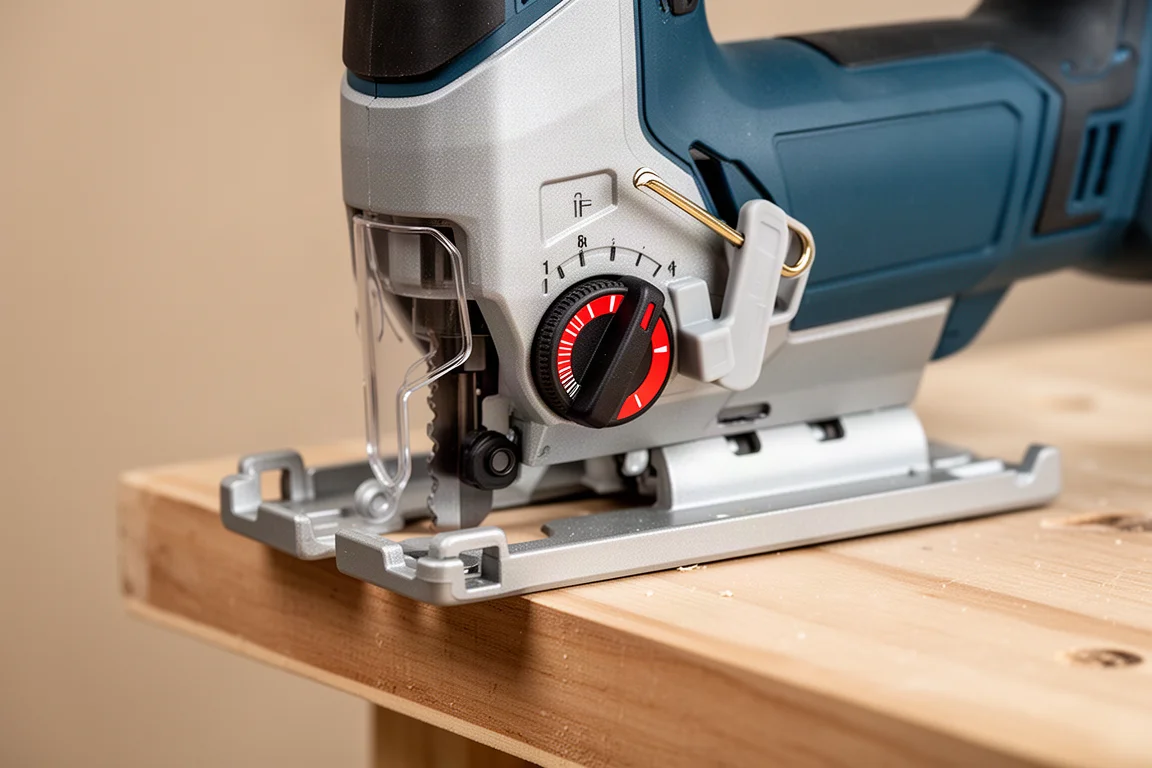
One quirk worth knowing: because CAS batteries have no release button built in, Metabo puts the release lever in the tool itself. On this saw it works, but it needs a second hand to press down while pulling the battery off, which feels clunkier than the slide-style release on most other platforms.
HiKOKI 36V Plunge Saw: The Same Body, More Under the Hood
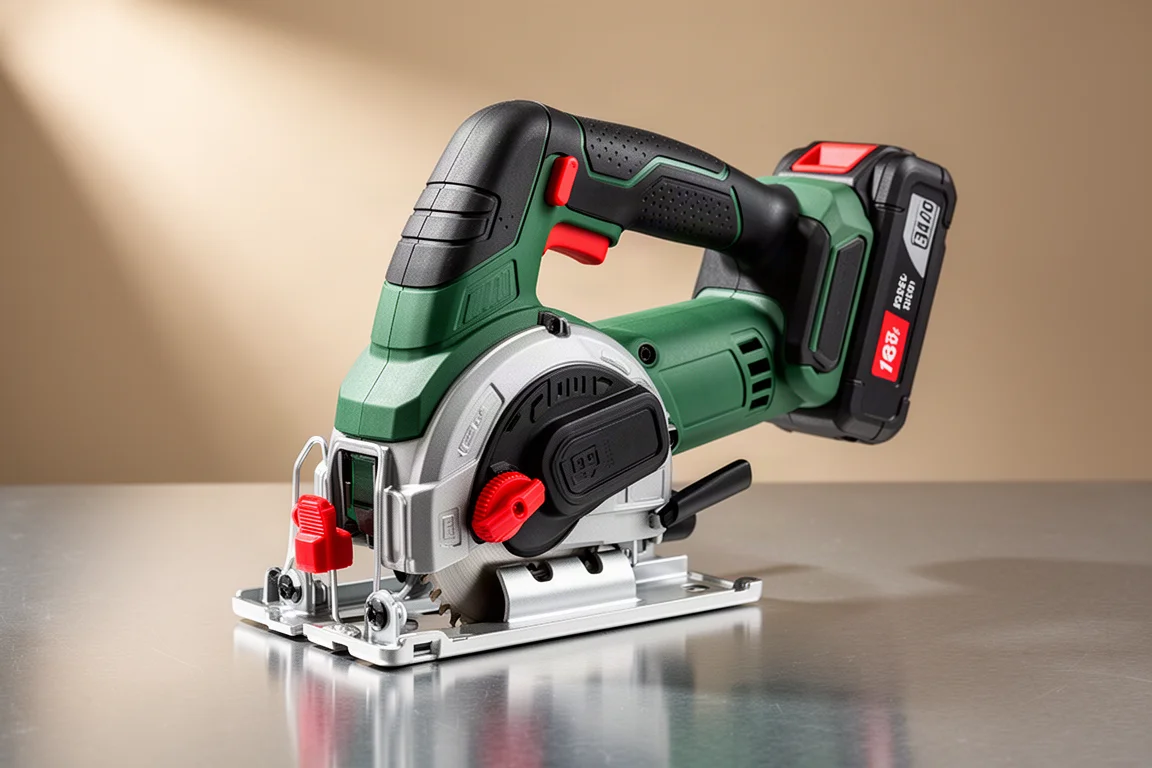
Everything about the HiKOKI saw is identical to the Metabo with one visual exception: it lacks the battery release lever, because MultiVolt batteries use a conventional slide-on design with side release buttons. The controls are green instead of red, and the plunge stop is labelled GR for guide rail instead of Metabo’s German FS for guidance system.
Under the hood, though, it is a different animal. It is a 36V tool, and the speed range reflects that: level 1 runs at 2,500 RPM and level 12 at 5,200 RPM, a little quicker than the Metabo across the board.
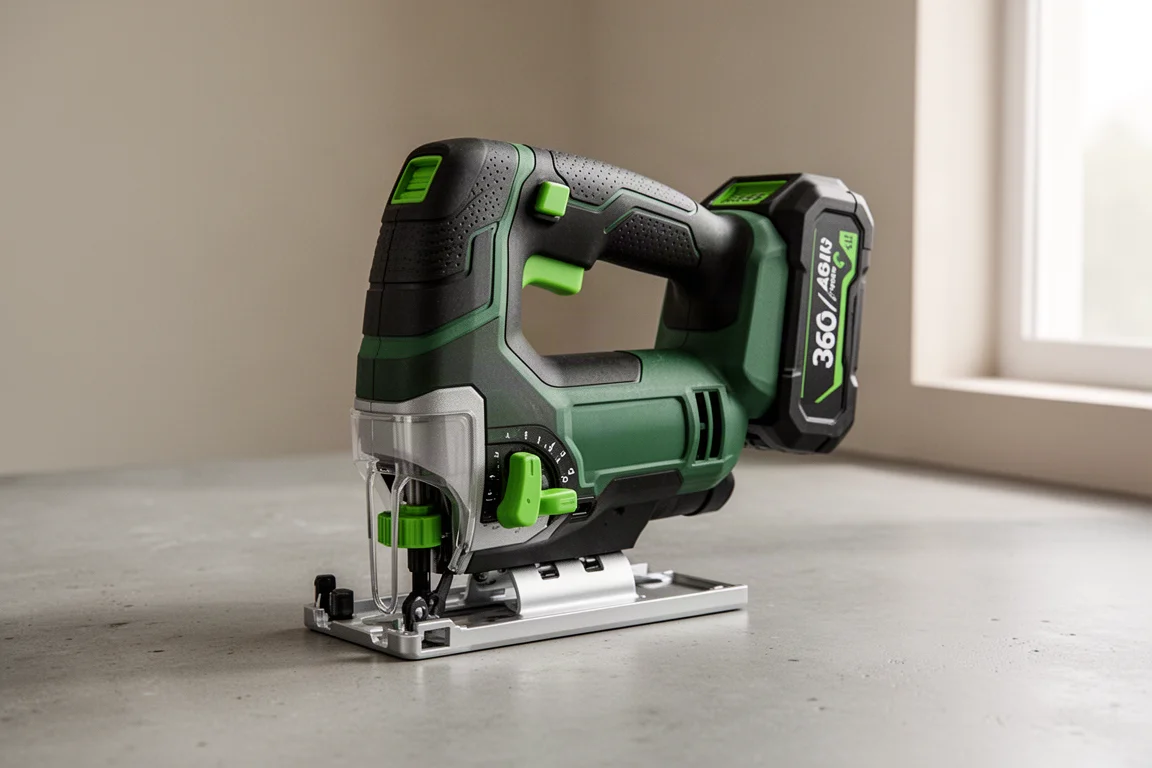
The MultiVolt platform also brings an interesting trick: an AC adapter that plugs into the back of 36V HiKOKI tools. With it, the saw runs off mains power all day with no battery charging to worry about, and it felt slightly quicker and more consistent than running on battery. There is a trade-off, though. On AC power the electric brake does not work, and the trigger cannot be pulsed. If you release the trigger mid-cut, you have to wait for the blade to fully stop before it will restart.
Cutting Performance, Depth, and Rails
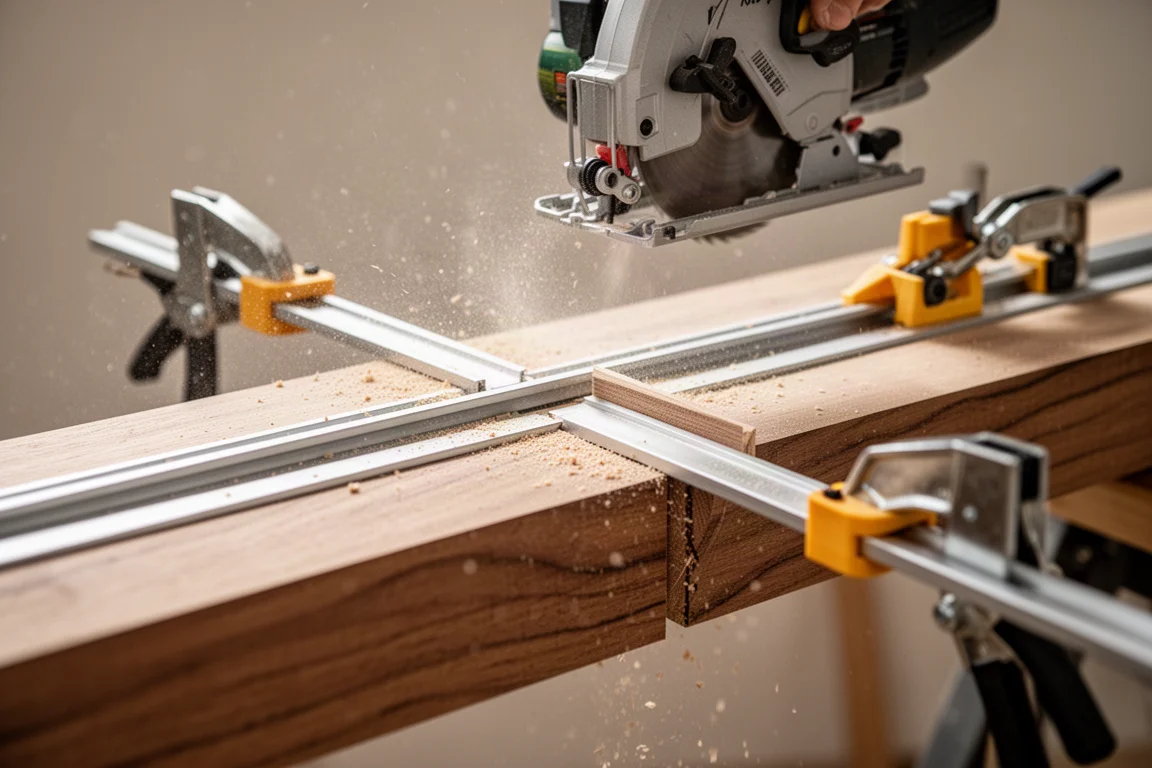
Ripping 15mm off 45mm-thick framing timber is well within reach of both saws. For full 45-degree bevel cuts along a rail, it pays to clamp the track down, since the slot under most guide rails gives the saw extra grip.
Both tools share the same base, with a track channel that runs on Metabo, HiKOKI, Makita, Hilti, Festool, and Milwaukee rails on the outer profile, plus a thinner inner rail for Bosch and Mafell tracks. A single dial on top adjusts both ends and both rail styles at once, which is genuinely nice to use.
The claimed 66mm maximum depth is without a track, and on a rail it drops to roughly 61mm, with reduced figures at 45 degrees. These saws are really designed for sheet goods like plywood, MDF, and laminates, and if you mainly cut without a track, a regular circular saw is a better fit anyway.
Metabo’s 1600mm track gives useful overhang at each end compared with the 1.4m Milwaukee and Makita tracks, though pairing two of them produces an awkward 3.2m, and adding the 800mm short track lands at exactly 2.4m. The connectors slot in easily and cam screws lock everything down solidly, which beats flipping the track over like you do with Makita and Milwaukee. One annoyance: some older Metabo tracks have a slightly different profile and simply will not fit newer saw bases. A Bluetooth starter for a corded vacuum is another handy Metabo accessory, triggering the vac automatically when the tool’s vibration starts, or manually with a button.
Which One Should You Buy?
Weight is nearly identical. With batteries fitted, the 36V setup comes in around 4.45kg against about 4.3kg for the 18V, roughly 150 grams heavier, and the flagship batteries from each platform weigh just under 1kg each.
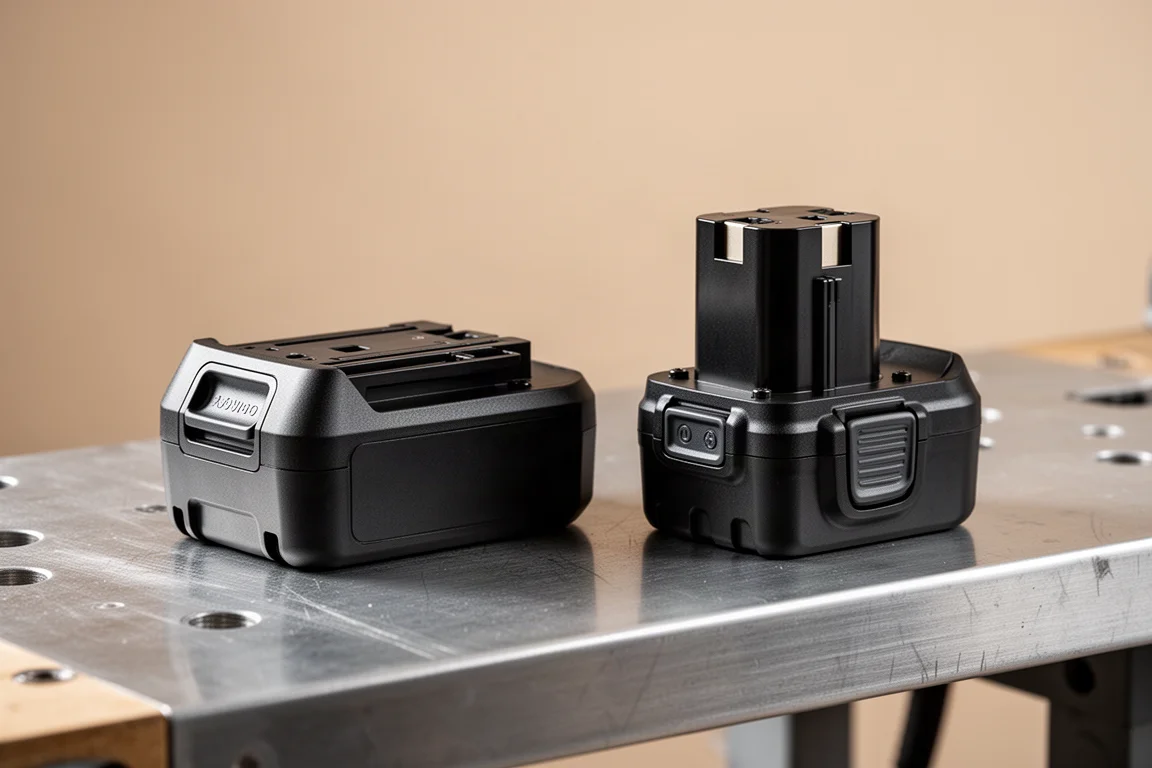
If you already own batteries in either system, the answer is easy: buy the one that runs on the platform you have. Both saws use the best battery from each camp well, with Metabo’s 5.5Ah pack delivering strong current for high-demand work and HiKOKI’s 4Ah/36V MultiVolt pack using more powerful 21700 cells.
If you were starting from scratch, the HiKOKI edges ahead. It runs slightly quicker, the battery release is more convenient, and the AC adapter option means you can work all day on mains power without cycling batteries. For most people, that combination makes it the more appealing pick.
Conclusion
These are essentially the same excellent plunge saw wearing two different badges, so your decision comes down to ecosystem rather than tool quality. If you are invested in Metabo’s CAS platform, the KT 18 LTX 66 BL is a confident choice. If you are starting fresh or already own MultiVolt batteries, the HiKOKI 36V saw offers more speed, easier battery handling, and that unique AC adapter flexibility.
Further reading
Related Reviews
Power Tools
Best 1-Inch Pistol Impact Wrenches: Three Heavy-Duty Options Compared
We compare three 1-inch pistol impact wrenches, from a budget-friendly Harbor Freight model to a premium Caterpillar unit, to help you choose the right one.
Power Tools
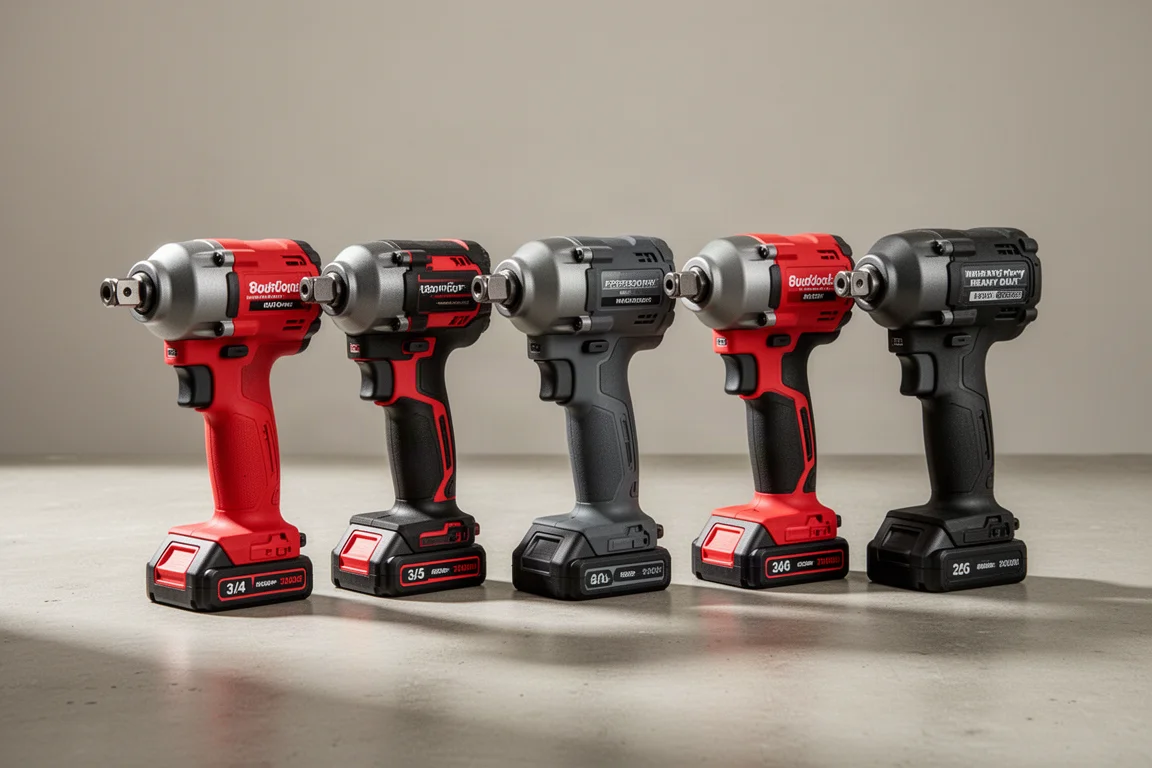
Best 3/4-Inch Impact Wrenches 2026: Five Contenders Compared
We compare five 3/4-inch impact wrenches across price and performance, from a budget Amazon option to Snap-on's most powerful model yet.
Power Tools
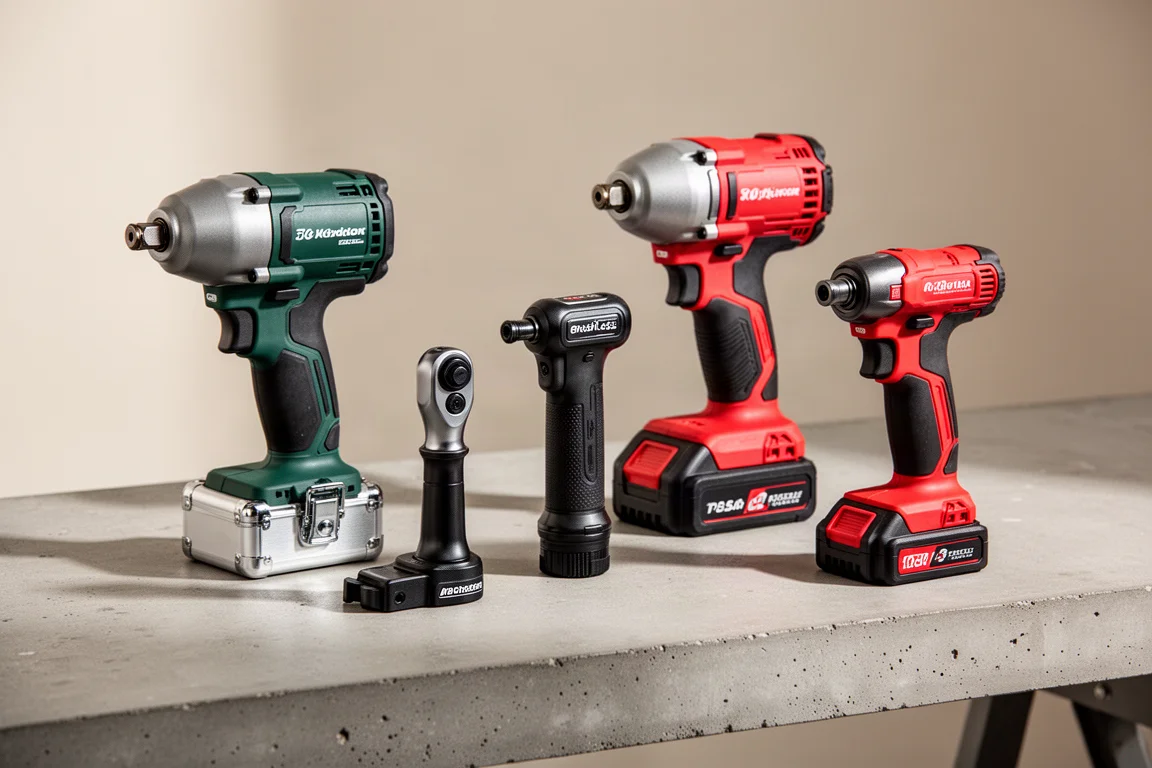
Best Budget Cordless Tools 2026: Walmart Finds That Punch Above Their Price
We tested five cordless tools from Walmart, including a high-torque impact wrench that trades blows with Milwaukee and a $35 duster that outperforms its price class.