Gravel Bikes
Merida Silex vs Vitus Adlar 2: Which Bikepacking Gravel Bike Wins?
Two carbon bikepacking gravel bikes compared on mounts, tire clearance, geometry, weight, price and ride quality, with a clear winner at the end.
Introduction
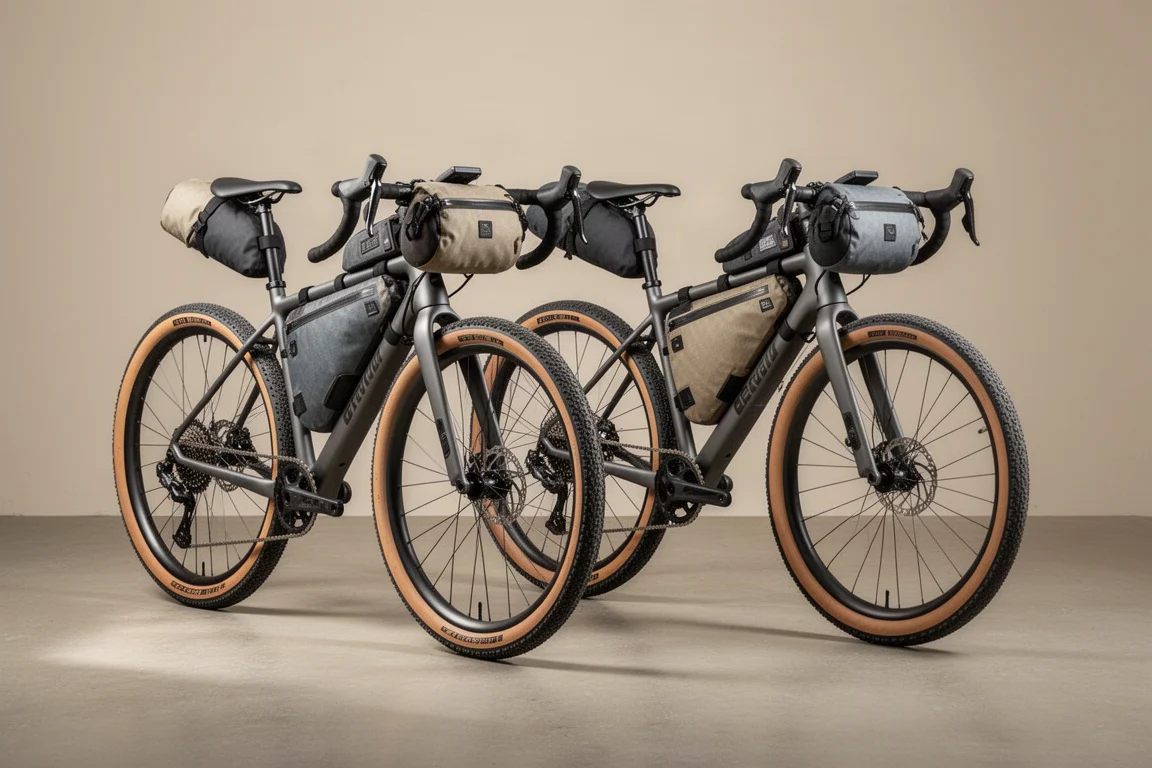
Two carbon gravel bikes, one clear brief: carry a load, stay comfortable over back to back days, and handle rough, rocky trails without drama. The Merida Silex and the Vitus Adlar 2 approach that brief from slightly different angles, and the similarities between them make the differences easier to judge.
Both run a Shimano GRX 12 speed mechanical groupset with hydraulic disc brakes, both use carbon frames and forks, and both have geometry that deliberately steps away from the stretched, aggressive position of a race gravel bike. What separates them is tire clearance, frame details, price and the way each one feels once the trail turns rowdy. Below is a breakdown of mounts, frame details, geometry, weight, specification, price and ride quality, followed by a clear recommendation.
What Makes a Bikepacking Gravel Bike Different
Not every gravel bike is set up for loaded adventure riding, and the differences tend to show up in three places.
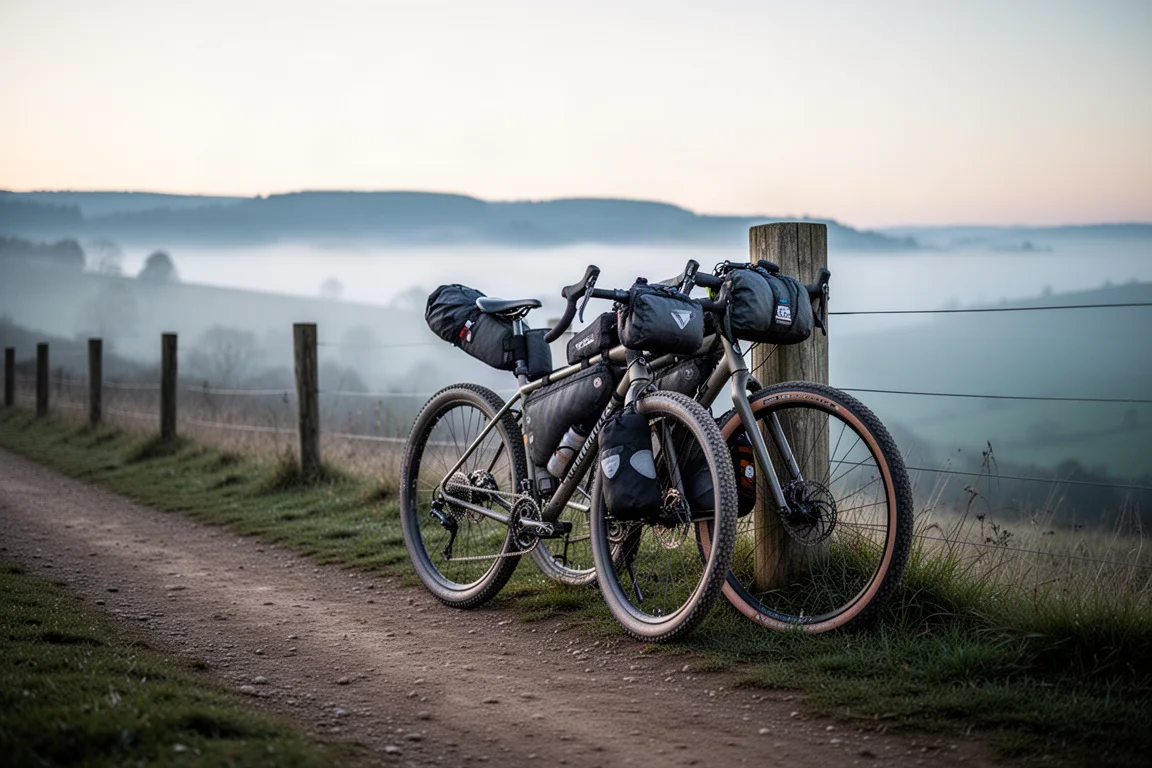
The first is mounting points. A bikepacking bike needs bolts on the fork and frame so bags, racks and extra bottles can be added easily. Both bikes here have mounts on the fork, the top tube and the down tube, plus mudguard mounts. The Merida adds a pair of bolts that can take a tool bag.
The second is tire clearance. Wider tires bring more comfort over long distances and multiple consecutive days in the saddle, which matters more once you are carrying weight.
The third is geometry. A more relaxed fit with a higher handlebar and a shorter reach keeps the upper body and back from taking a beating over several days. Off road, slacker head angles and longer wheelbases make a loaded bike calmer and easier to control on technical, rocky, rooty trails.
Those three factors run through the rest of this comparison, and they explain why two bikes that look so similar on paper can still suit different riders.
Merida Silex: Specs, Frame Details and Mounts
The Silex is built around a carbon frame and fork, with a claimed frame weight of around 1,220 g. That is light rather than ultra light, and the extra material is a deliberate trade for durability on loaded adventure riding.
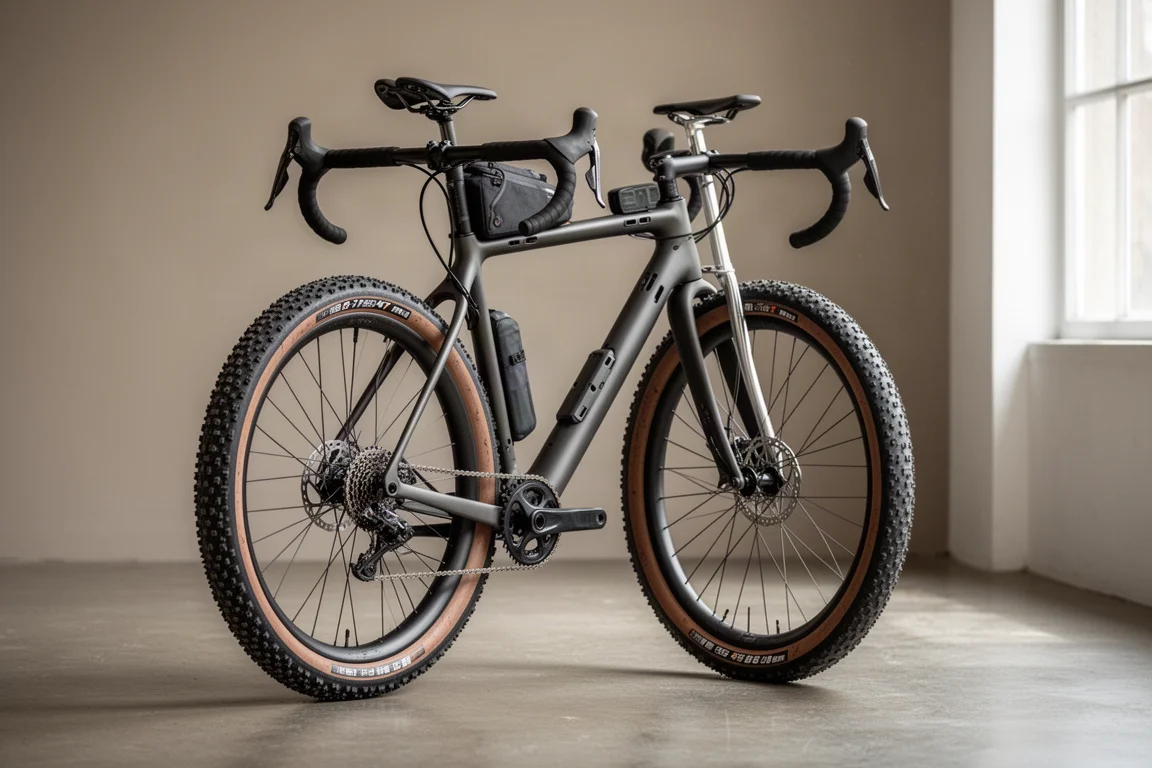
Tire clearance is 45 mm, and the bike is supplied with 45 mm Maxxis Rambler tires. The seat post is carbon and measures 27.2 mm, which opens the door to a suspension, dropper or more compliant post if you want one.
Two frame details stand out. The bottom bracket is threaded, which is welcome news for anyone who does their own maintenance. The fork is notably long, which means a suspension fork can be fitted without upsetting the geometry, an approach that avoids the handling changes that appear when a shorter fork is swapped out on other bikes.
The drivetrain is Shimano GRX 12 speed mechanical with hydraulic disc brakes, and the wide range gives the low gears that matter once a bike is fully loaded. Wheels are aluminium, from Easton. Price: €3,600.
Vitus Adlar 2: Tire Clearance and a Complete Rack System
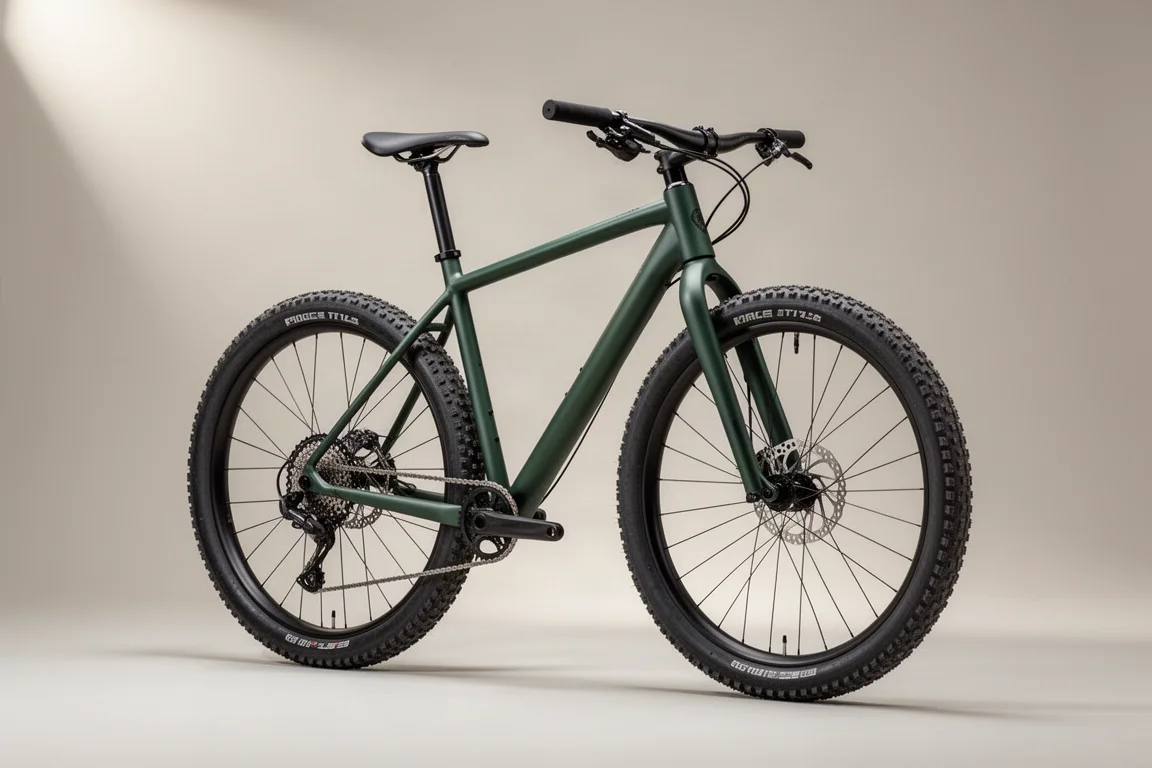
The Adlar 2 also uses a carbon frame and fork, with a slightly lighter claimed frame weight of around 1,190 g. Tire clearance is the headline: 52 mm, with 47 mm tires fitted as standard. That is a meaningful step up for anyone who wants to run wide rubber on loose or rough surfaces.
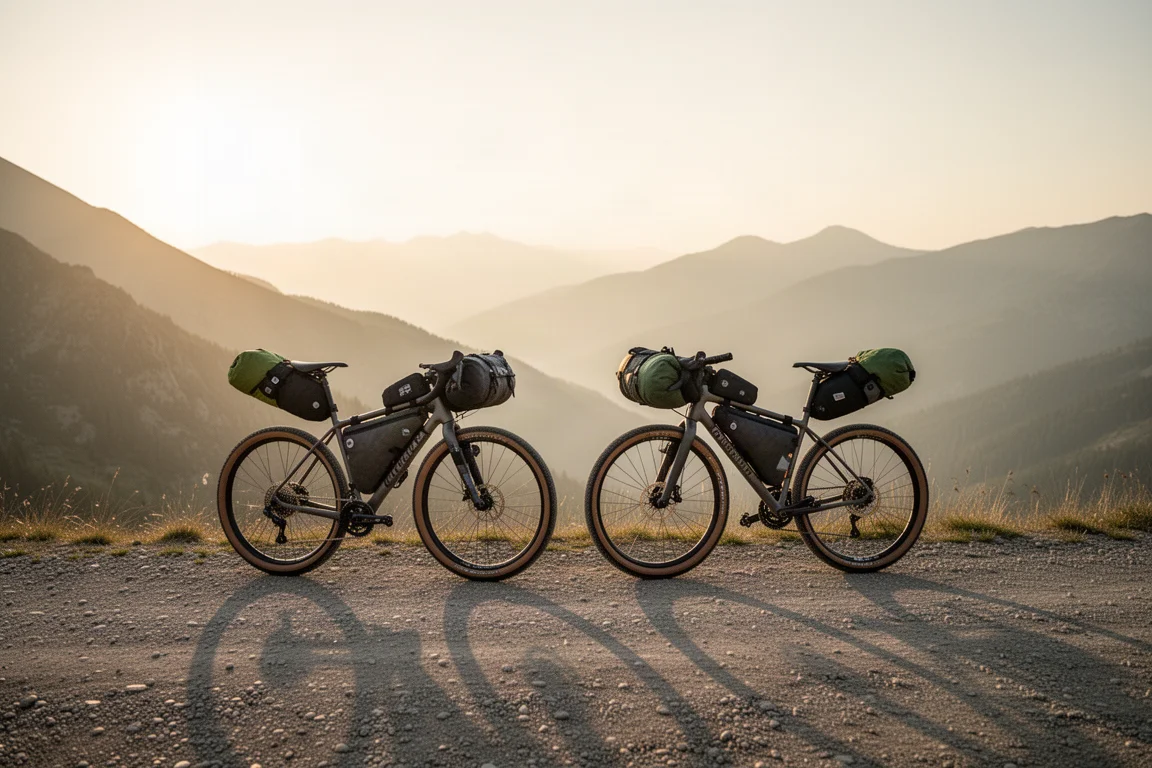
Vitus has also gone further on the bikepacking side. The brand developed its own front and rear rack system that mounts through the axles and is rated to carry up to 35 kg, alongside a matching bag range, so the bike can be set up as a complete bikepacking package from the start. Both bikes remain compatible with third party bags and rack systems.
The seat post is aluminium rather than carbon, and the bottom bracket is a press fit PF86. The handlebar is a Ritchey flared drop bar with a wide flare, which works well on technical trails. The drivetrain is the same Shimano GRX 12 speed mechanical setup with hydraulic disc brakes, and the wheels are aluminium, produced in house. The Adlar 2 costs more than the Silex.
Ride Quality and Handling on Road and Trail
The most striking thing about both bikes is how high the front end feels compared with a race gravel bike. Coming from a racer, that is the first thing you notice, and it pays off over long distances: the more relaxed position takes strain off the upper body and back.
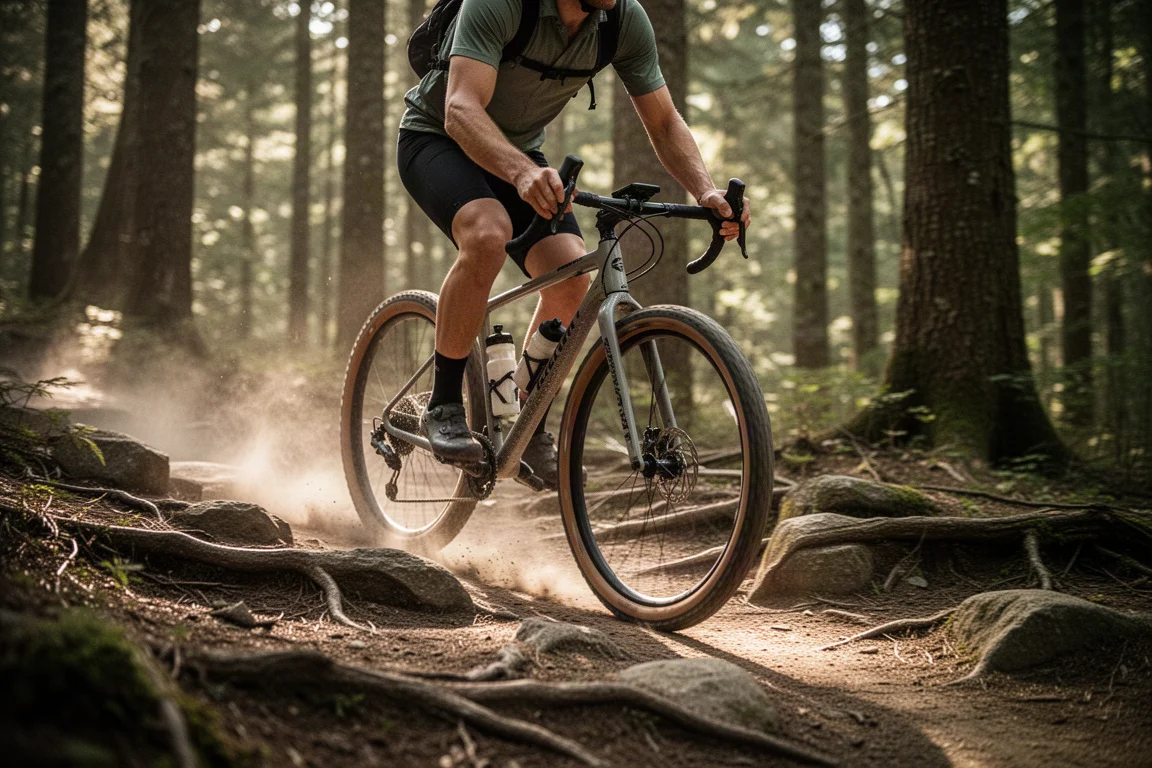
Off road, both are extremely capable. The combination of a high stack, a slacker head angle and a longer wheelbase makes rocky, rooty trails feel far less intimidating, and the rougher the trail gets, the more at home both bikes feel. The position that feels odd at first becomes normal quickly, and it makes a lot of sense once bags are added.
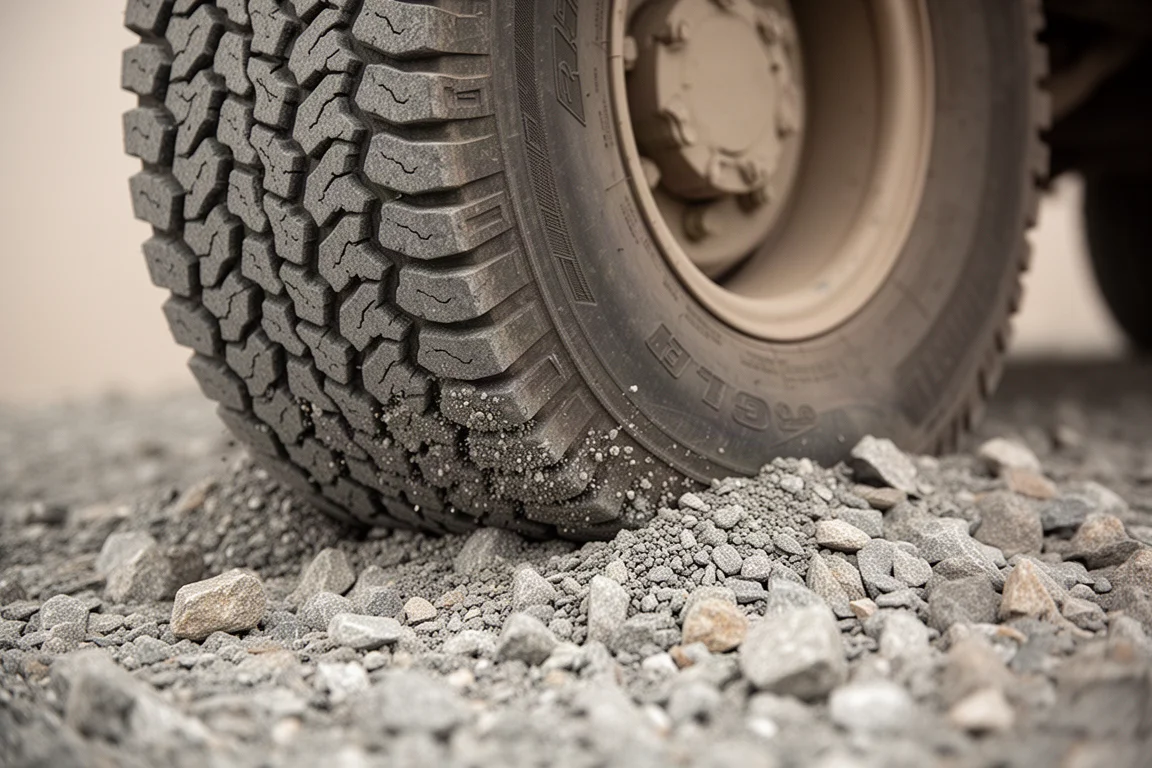
At the limit, the Silex has a slight edge. It is a touch slacker, a touch higher and a touch longer, and the Maxxis Rambler tires find more grip in loose conditions. Its ride is firm and engaging without tipping into harshness, and the 45 mm tires plus the carbon seat post take the edge off rough surfaces.
The Adlar 2 counters with bigger tires and a flared Ritchey bar that is genuinely better on technical trails, where the wide flare adds control despite its unusual look. On tarmac the Adlar 2 rolls better, thanks to a faster tread pattern, while the Ramblers on the Silex create a little more drag without feeling slow. For short road links between off road sections, that difference barely registers.
Comfort, Geometry and Long-Distance Fit
On comfort, the two bikes come out close to level. The Silex relies on 45 mm tires and a carbon seat post for compliance. The Adlar 2 has the advantage of considerably bigger tires but no carbon seat post. The result is a draw: neither bike beats you up over a long day.
Both frames use 27.2 mm round seat posts, so a suspension post, a dropper or a more compliant post can be fitted to either. Both also accept a suspension fork, such as a Fox or RockShox unit, thanks to the long carbon fork, and neither loses its geometry in the process. If your plans include the roughest trails you can find, that flexibility is a genuine advantage.
Both bikes also route their cables internally, which keeps things tidy when a handlebar roll is strapped on and bags are packed around the frame.
Price, Weight and Overall Value
Given how close these bikes are in frame material and groupset, the price gap is the surprise. The Merida Silex is priced at €3,600. The Vitus Adlar 2 sits higher still, and the difference is significant for two bikes that share so much.
The Adlar 2 does bring extras for that money: 52 mm tire clearance, the through axle rack system rated to 35 kg, the matching bag range and the Ritchey flared bar. The Silex answers with a threaded bottom bracket, a carbon seat post and a lower price.
Frame weights are close, with the Adlar 2 around 1,190 g and the Silex around 1,220 g. That 30 g gap is not something most riders will feel on the trail.
Buying Advice: Which One Should You Choose
Start with the trails you actually ride. If your bikepacking routes include rocky, rooty descents and you want the calmest, most planted feel at the limit, the Merida Silex has the edge, and its lower price and threaded bottom bracket make it the easier bike to own and maintain.
If maximum tire clearance matters, or you want a rack and bag system that arrives ready to go, the Vitus Adlar 2 is the more purposeful bikepacking platform, and the Ritchey flared bar is a real benefit on technical terrain.
Whichever you choose, plan the setup around the bike as well as the bike itself. Bags, racks and bottles add up quickly, and both frames have the mounts needed to carry them.
Conclusion
Both bikes are extremely good, and the differences are small enough that either one would serve a bikepacking rider well. Taken as a whole, though, the Merida Silex wins this comparison on price, tires and geometry: it is the slightly more capable bike at the limit and the easier one to live with. The Vitus Adlar 2 remains the stronger pick for riders who want maximum tire clearance and a complete rack and bag system out of the box.
Further reading
Related Reviews
Gravel Bikes
3T Exploro Ultra Review: A Fast Gravel Bike Built for Big Tyres
A close look at the 3T Exploro Ultra, an aero carbon gravel bike designed around wide tyres, with road-like handling, a 980 g frame and genuine rough-terrain capability.
Gravel Bikes
3T Extrema Italia Review: Aero Gravel Speed With Room for 57 mm Tires
The 3T Extrema Italia pairs an aero frame with huge tire clearance, Italian-made carbon and a more comfortable ride than the RaceMax. Here is what to know before buying.
Gravel Bikes
3T Race Max 2 Italia Review: An Aero Gravel Race Bike Made in Italy
A closer look at the second-generation 3T Race Max 2 Italia, covering its aero updates, ride character, tire clearance, internal storage and who it suits.