Kitchen Knives
Menelik Kakani Signature Series 21cm Gyuto Review: A Water-Quenched Gyuto With a Story
A handmade 26C3 water-quenched gyuto from a Cameroonian-born UK bladesmith, featuring a striking twin choil design and polished high-grit edge. Here is how it performs.
Introduction
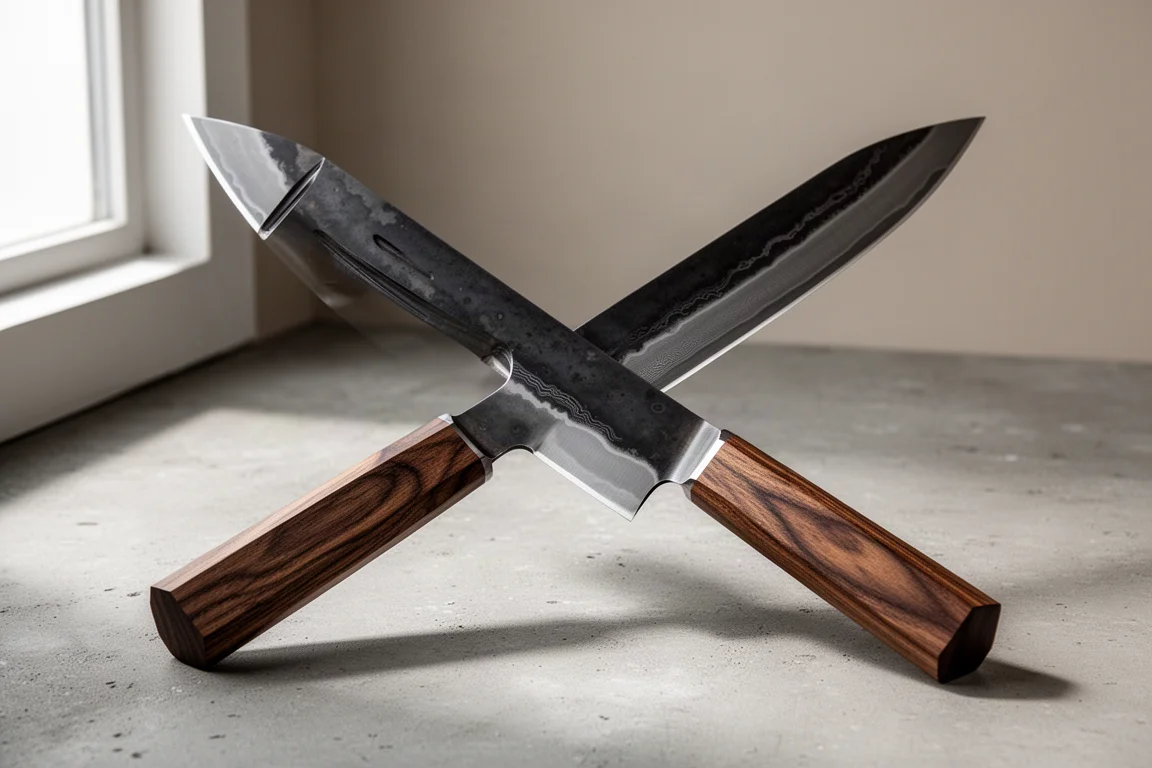
Every so often a kitchen knife arrives that does not look like anything else on the board. The 21cm gyuto from Menelik Kakani’s new Signature Series is exactly that kind of knife. Hand forged by a Cameroonian West African blacksmith living and working in the UK, it draws its most distinctive feature, the twin choil, from a Congolese dagger design found in the African smithing book Striking Iron. It is a first of its kind in a brand-new signature series, and after spending time with it in the kitchen, the originality is more than skin deep.
The knife is made from 26C3 high-carbon steel, water quenched to create a visible hamon, and finished with a polished edge and a traditional wa handle. Below, we break down how it is built, how it cuts, and who it makes sense for.
First Impressions and Unboxing
The knife ships with a one-page care card balanced on a cylindrical tube, and it is a genuinely thorough one. Because this is a high-carbon steel blade, the care sheet recommends using camellia or tsubaki oil when storing the knife for extended periods, and it includes a clear set of dos and don’ts. It is a small touch, but it shows care beyond the blade itself.
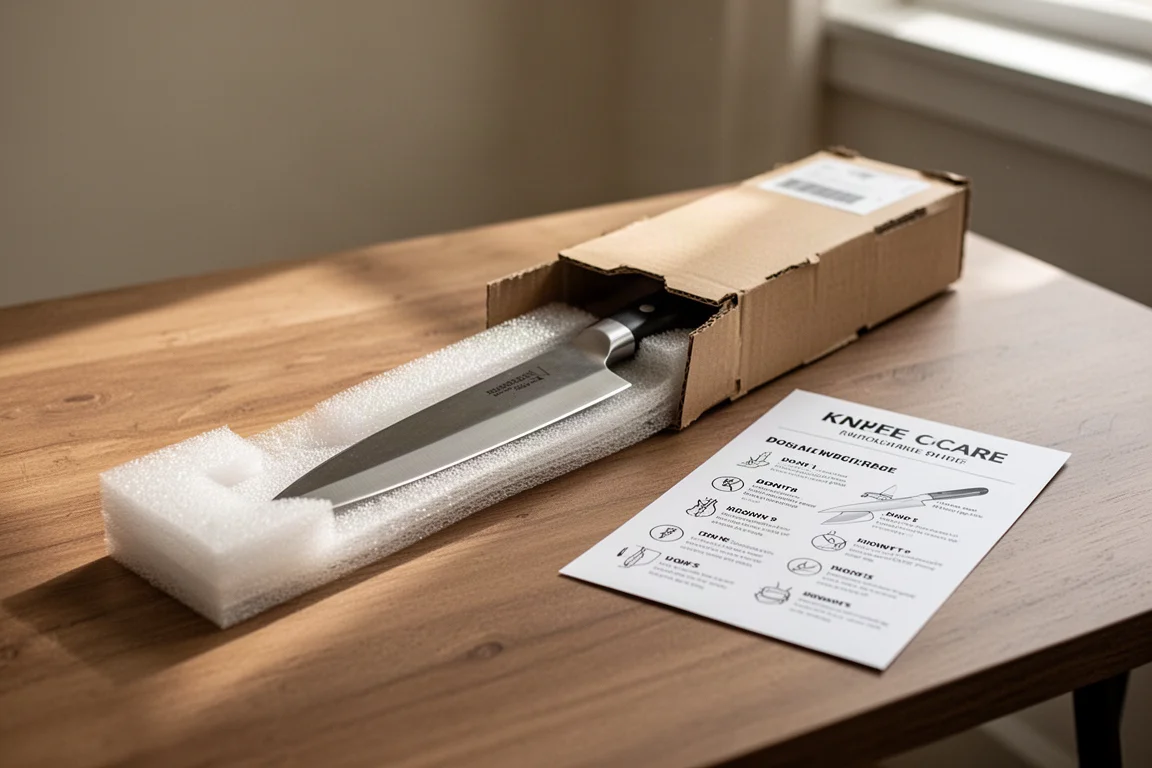
In hand, the first thing you notice is the heft. This is a knife with real presence and a satisfying weight balance point that sits right above the lower choil. The wa handle is traditional in style and well constructed, and the blade itself is immediately striking: a hamon runs along the 26C3 steel, the edge is polished to what feels like 3K grit or above, and the spine carries a detail that is genuinely unlike anything else we have handled.
The Twin Choil: Inspiration and Comfort
The defining feature is the twin choil. Below the index finger position there is a conventional choil, and above it a secondary groove cut into the spine, modeled after a Congolese dagger from Striking Iron. Before handling it, we were unsure how this would feel. In practice, it is comfortable for the most part, largely because the entire spine is polished to a silky smooth finish. Running a finger up and down into the groove is genuinely pleasant.
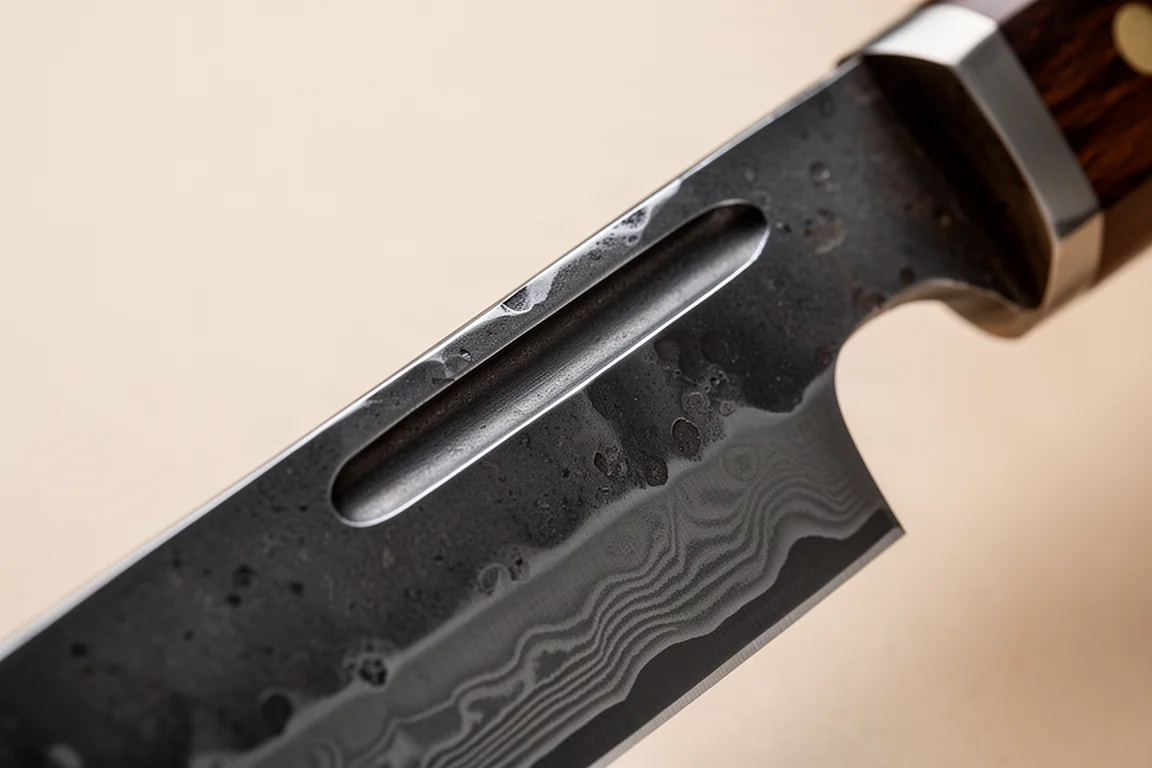
There are two situations where the groove becomes noticeable. When pressing down hard on dense foods such as a thick block of charcuterie or hard squash, the top of the groove can pinch the hand slightly. For most everyday foods this is not an issue, and if you do not use a pinch grip, it will not bother you at all. It also raises a fair question about how the same feature will feel on the smaller nikiri planned for the signature series, where repeated up-and-down motions could press the groove into the hand more often.
Visually, the cutout removes a large piece of steel without hurting the knife’s balance or comfort in a pinch grip. And once you know the story behind it, the feature stops being a curiosity and becomes the point. It would never be a request on a custom order form, but the Congolese dagger inspiration gives it meaning, and that matters for a knife like this.
Craftsmanship and Finish
The blade is made entirely by hand, forged from a rectangular bar. Menelik uses a two-stage quenching process: an initial water quench that allows the martensite marking and hamon to form, followed by a slow cool-down in oil. The bevels and flats are polished on wet stones from 500 grit up to 1,000 grit finger stones.
The maker’s mark deserves a mention of its own. It is an animal paw print belonging to the South African painted dog, with each portion of the paw formed from a Zulu spear motif. It reads like a clan symbol, and it is one of the more memorable maker’s marks we have seen.
The hamon pops nicely against the bright 26C3 steel and shows good contrast without feeling sloppy. The spine tapers in a distinctive way, pinching from the flats to almost nothing and perfectly rounded, another small detail that makes this knife feel one of a kind. A more aggressive mirror polish would push the price further, and at the current price point the finish strikes a sensible balance for a knife meant to be used.
Cutting Performance
Out of the box, the edge is sharpened on a Naniwa Pro to 2K grit, though it feels finer than that in use. It does not immediately pierce tomato skin, but it slices cleanly through a large onion with no effort, and the polished finish on the edge leaves a notably smooth cut.
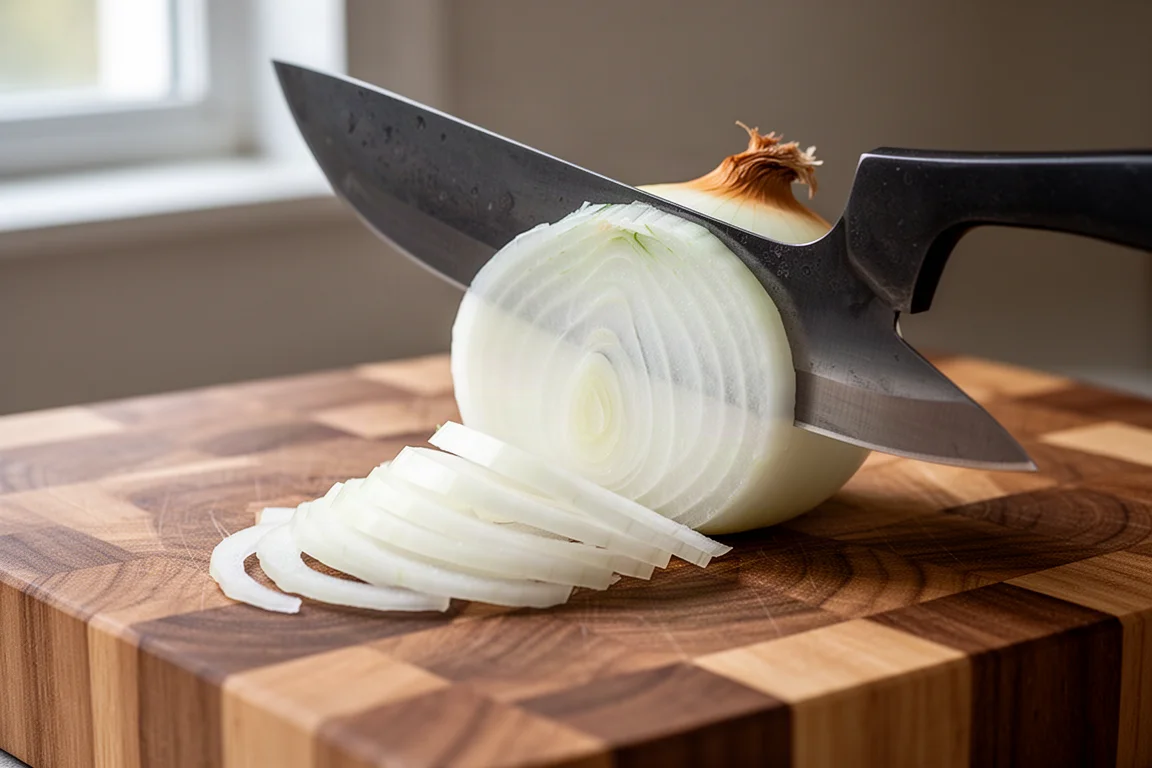
The lateral cut is the biggest surprise. Given the heft of the knife, we expected a lateral push through an onion to drag, but the bevel geometry makes it surprisingly smooth. This is a good reminder that performance is about geometry as much as edge finish. The knife is not thin behind the edge, but it is not a thick workhorse either; it sits somewhere in between, and the geometry does the heavy lifting.
From garlic to potatoes, the knife feels solid and sturdy in hand, in the same way a well-made heavier blade does. It is definitely not a laser, but it is not a clumsy workhorse either. It is something a little different, which fits the rest of the build perfectly.
Who This Knife Is For
This knife is for people who care about stories as much as steel. It suits buyers who want to support an emerging maker, appreciate the skill involved in a water quench, and are not afraid to actually put the knife to work, because this blade clearly wants to be used.
It is not for everyone. The price is on the hefty side, which puts it out of reach for some buyers. And while the blade profile works as a gyuto, the spine groove would be less ideal on a knife like a sujihiki, where you might sink your finger into that area more often.
One practical note for future buyers: a proper box will be included in upcoming shipments of this knife. It was still being developed when this knife shipped, so keep that in mind if presentation packaging matters to you.
Buying Advice
If the twin choil speaks to you, this is an easy recommendation. If you want a conventional gyuto profile with a steep height drop toward the tip, there are more traditional options. This blade is taller than a classic gyuto with a gentler decline to the tip, sitting closer to a chef or gyuto hybrid in feel. Its closest spiritual relative in spirit is the work of legendary Sakai bladesmith Itsuo Doi, whose bold profiles it recalls.
The signature series will eventually include three shapes: the nikiri, the small santoku, and this gyuto. If you are drawn to the idea of the series, following the maker’s journey as the other two knives are released is worth doing, since the same water-quenched 26C3 construction and signature details will carry across the set.
Conclusion
The Menelik Kakani Signature Series 21cm gyuto is a genuinely unique, great-performing knife. The water-quenched 26C3 blade, polished high-grit edge, thoughtful bevel geometry, and the story-rich twin choil add up to something that stands apart from anything else in a knife drawer. The groove can pinch under heavy downward pressure, and the price will exclude some buyers, but as the first release in a new signature series, it is a stunning debut and an easy knife to root for.
Product link
View more details for Menelik Kakani Signature Series 21cm Gyuto
This product is mentioned in the review. Check the specifications, options, and compatibility before buying.
View more details for Menelik Kakani Signature Series 21cm GyutoFurther reading
Related Reviews

Kitchen Knives
Best Chef's Knives 2026: 27 Popular Options Tested and Ranked
A comprehensive review of 27 chef's knives ranging from $18 to $380, with honest assessments of handle comfort, blade balance, and real-world performance.

Kitchen Knives
Best Chef's Knives Under $75: Two Tested Recommendations
Two practical 8-inch chef's knives that balance sharpness, comfort, and durability without premium pricing.

Kitchen Knives
Best Chef's Knives 2026: 27 Options Tested and Ranked
A comprehensive review of 27 chef's knives ranging from $18 to $380, with honest assessments of handle design, balance, blade profile, and real-world performance.