Telescopes
Meade ETX-70 Review: A Compact Computer-Guided Refractor That Still Holds Up
A 20-year-old computerized refractor bought broken, repaired, and put through a full star alignment test. Here is what the Meade ETX-70 does well and where it falls short.
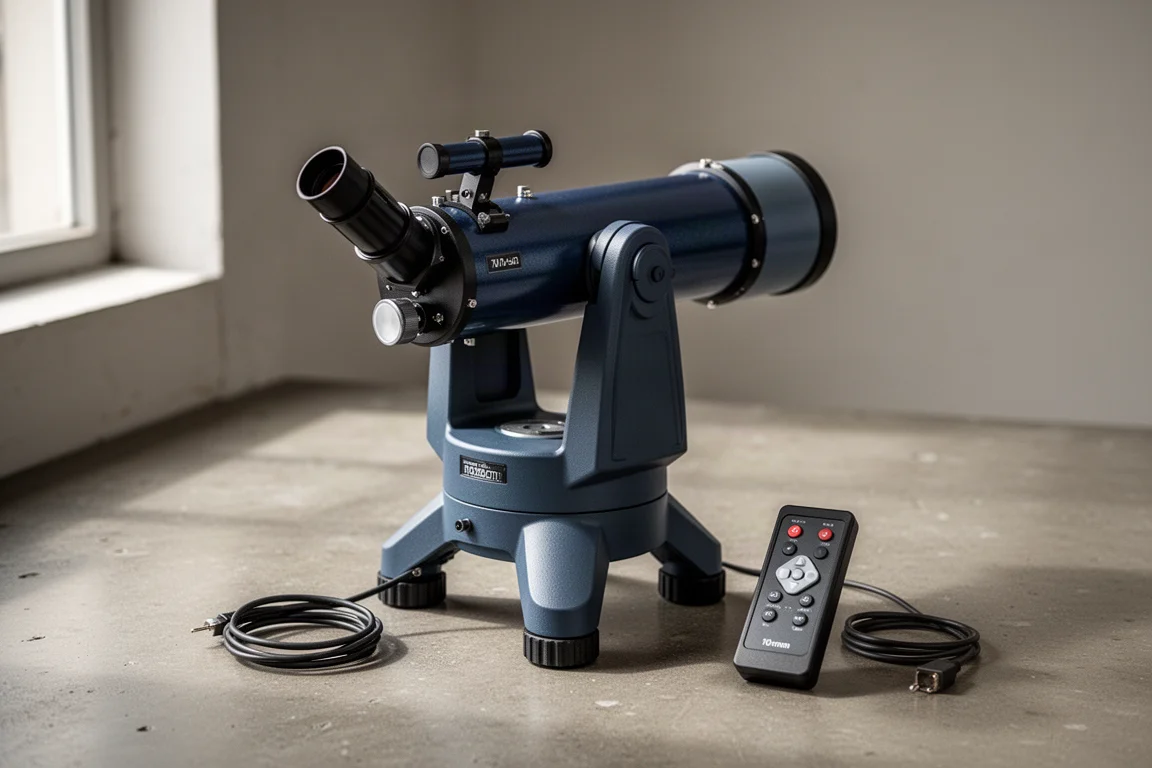
Introduction
The Meade ETX-70 is a compact 70mm computer-guided refractor that has quietly earned a second life on the secondhand market. This example was picked up used for $100 precisely because it was broken: the electronics were dead and no light would pass through the tube. After a battery swap and a diagonal repair, it turned out to be a surprisingly capable little scope with pinpoint optics and a go-to system that still works well two decades after it left the factory.
Who This Product Is for
This is a scope for casual skywatchers rather than serious deep-sky observers. If you want to point at planets, the Moon, and bright stars from a deck or table without fussing with manual alignment, the ETX-70 makes a lot of sense. The go-to mount finds targets for you, it runs on six AA batteries, and it is small enough to stuff into a backpack.
If your main interest is faint nebula structure from a light-polluted city, a larger Dobsonian will serve you far better. But for grab-and-go observing with automated pointing, this little refractor is an easy recommendation at the right price.
What Comes in the Box
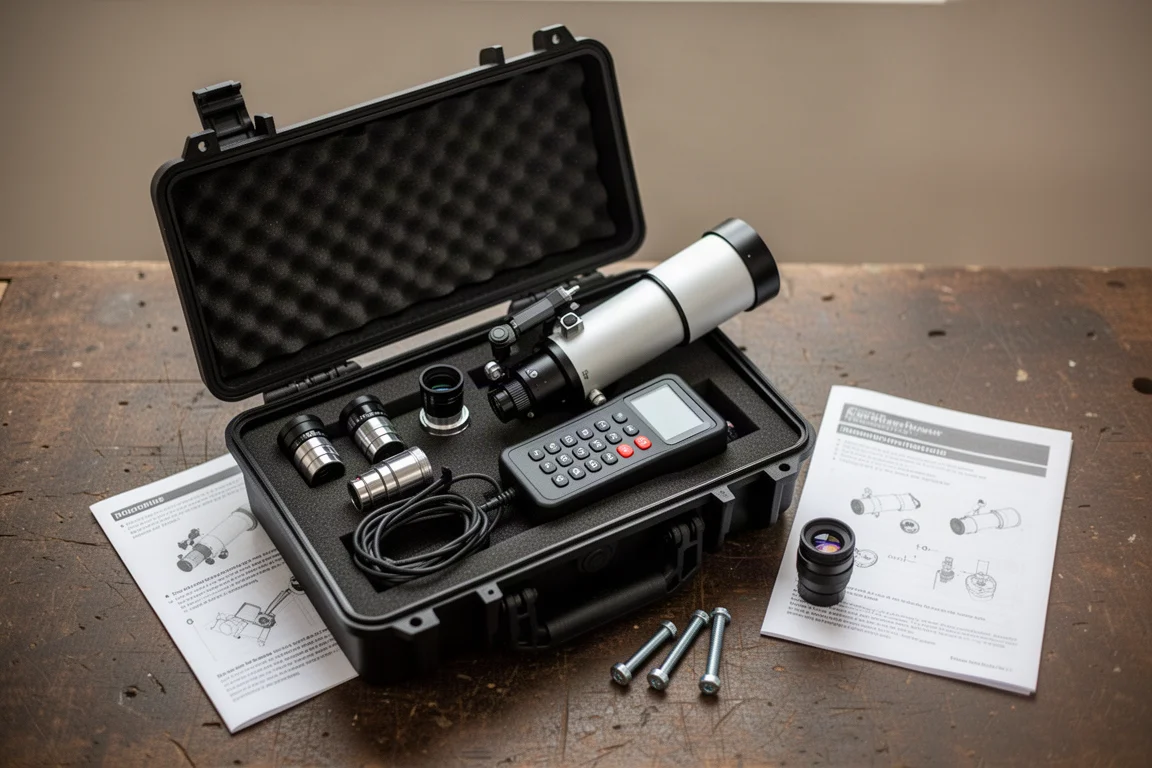
The kit includes a hard case with foam cutouts, a solid Meade tripod in a soft carry bag, and a full accessory set. That covers the Meade Autostar handheld controller, a 2x tele-negative Barlow lens, and four eyepieces: a 25mm and 9mm Plossl, a 6mm, and a remarkably tiny 4mm Plossl. The 25mm and 9mm Plossls are all-metal, hefty, and produce a good image. There is also a built-in compass, two tripod mounting bolts, an instruction manual, and even a CD of Meade’s astronomy software.
Everything in this particular kit looked remarkably well kept for a scope around 22 years old, with the manual still glossy and pristine.
The Broken Diagonal and the Repair
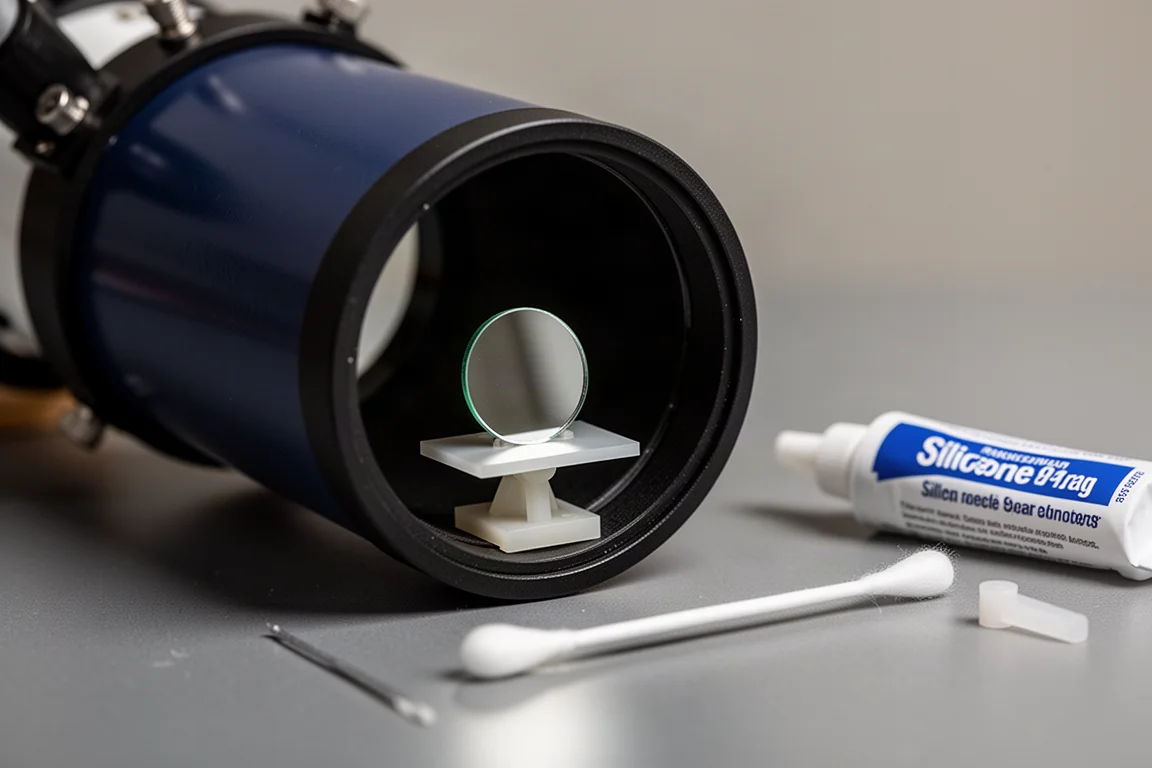
The reason no light passed through the tube was simple: the built-in diagonal mirror had broken off its flipping mechanism and was jammed loose inside. One nice quirk of this design is that the diagonal can be flipped flat for straight-through viewing, which also allows a camera to be attached at the back, though eyepiece use is the practical path for most owners.
Fixing it required a full teardown, because the diagonal section is molded as a single plastic piece with two inaccessible screws. After removing the uprights from the base and the tube from the fork arms, the mirror was cleaned and reattached with silicone aquarium sealant, then checked for alignment before the glue cured. The focuser moves the objective lens shell forward and backward, and it is extremely slow and tedious to use, which turned out to be the most irritating part of the whole telescope.
The base also hides a clutch mechanism and a hidden set screw under the clutch handle that makes disassembly far easier than it first appears. Reassembly was the fiddliest part, with a spring-loaded gear hub that wants to shed its parts if you are not careful. Taking photos as you go is genuinely good advice.
Power, Batteries, and First Boot
The battery compartment had suffered the classic fate: old leaking six-pack AA cells had corroded the metal fittings. A replacement holder is essentially identical and cheaply available, and with fresh batteries the base powered right up. The Autostar controller initializes, asks for the date and daylight savings setting, and walks you into Easy Alignment.
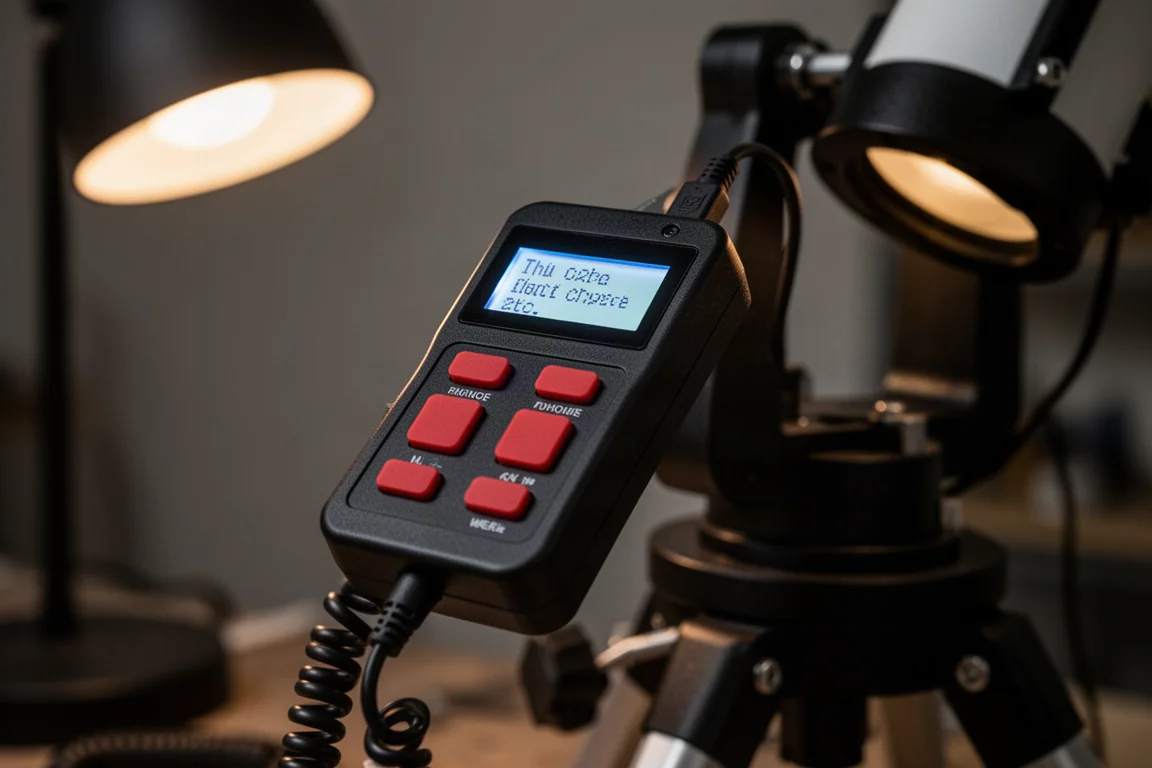
One practical note: firmware updates exist for the Autostar, but skipping them is a reasonable choice if you would rather not risk bracing a working 20-year-old controller.
How It Performs Under the Stars
The Easy Alignment routine is straightforward and relatively fast: point the tube north at 0 degrees elevation, let it slew to two alignment stars, and make small corrections. After alignment, the scope nailed Sirius dead center and placed the Orion Nebula in the middle of the field, then tracked it. That is impressive behavior from a two-decade-old go-to mount.
Use a low magnification eyepiece for go-to slewing, since you will need some fine-tuning at the eyepiece. At high power, tracking can take a few seconds to catch up as the gears engage, so expect a little drift after centering a target.
On optics, this refractor genuinely surprised: images are pinpoint sharp, notably better than many budget refractors. The 70mm aperture does impose limits. From the city, the Trapezium in the Orion Nebula shows nicely and sharply, but the surrounding cloud structure does not appear, because a small refractor simply lacks the light gathering of even an 8-inch Dobsonian.
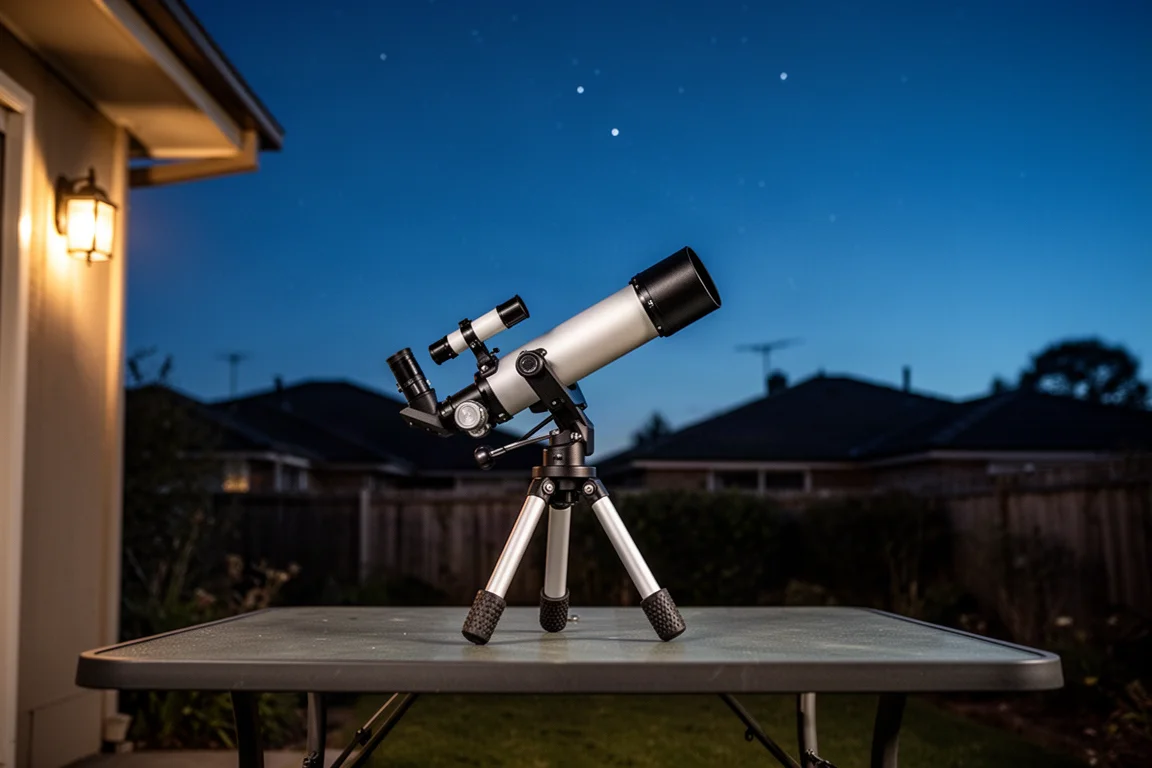
Things to Consider Before Buying
The cons are worth stating plainly. The 70mm aperture limits deep-sky detail, especially under light pollution. The slow-motion focusing knob can take close to a minute of turning every time you swap eyepieces. And if you buy used, budget time for a battery compartment cleanup and be prepared for aged electronics.
Buying Advice
If you can find an ETX-70 at a good used price in working condition, it is an easy recommendation: two thumbs up. The optics are genuinely sharp, the go-to and tracking hold up well after 20 years, and the rubber feet mean you can set it on any flat surface without a tripod at all. Keep expectations matched to the aperture, lean on Easy Alignment, and use low magnification when slewing to targets.
Conclusion
The Meade ETX-70 proves that a small, older computerized refractor can still deliver real observing value. Sharp optics, a working go-to system, genuine portability, and simple AA battery power make it a charming and practical choice for casual stargazers, as long as you accept the aperture limits and the glacially slow focuser.
Product link
View more details for Meade ETX-70
This product is mentioned in the review. Check the specifications, options, and compatibility before buying.
View more details for Meade ETX-70Further reading
Related Reviews

Telescopes
Sightron SJ75 UF and Sky-Watcher HS125: Two Telescopes Worth Watching
A look at two notable telescopes from a recent camera and optics expo: a sharp new astrograph from Sightron Japan and a compact fast reflector from Sky-Watcher.

Telescopes
SV503 102ED Review: A Budget 102mm Refractor That Surprises
The SV503 102ED is an affordable 102mm doublet refractor that delivers surprisingly decent star shapes and a smooth focuser, despite some chromatic aberration and light falloff.

Telescopes
SVBony MK127 Review: A Compact Maksutov-Cassegrain That Surprises
The SVBony MK127 is a 127mm Maksutov-Cassegrain telescope with a unique 0.65x reducer, making it a versatile option for visual astronomy and even some deep-sky imaging.