Kitchen Knives
Mazaki Kitchen Knives: Handmade Craftsmanship Worth Knowing About
A close look at the Mazaki Kochi series, Aogami Super, and Honyaki Aogami #1 knives, and why the maker's fully hand-finished bevels set them apart.
Introduction
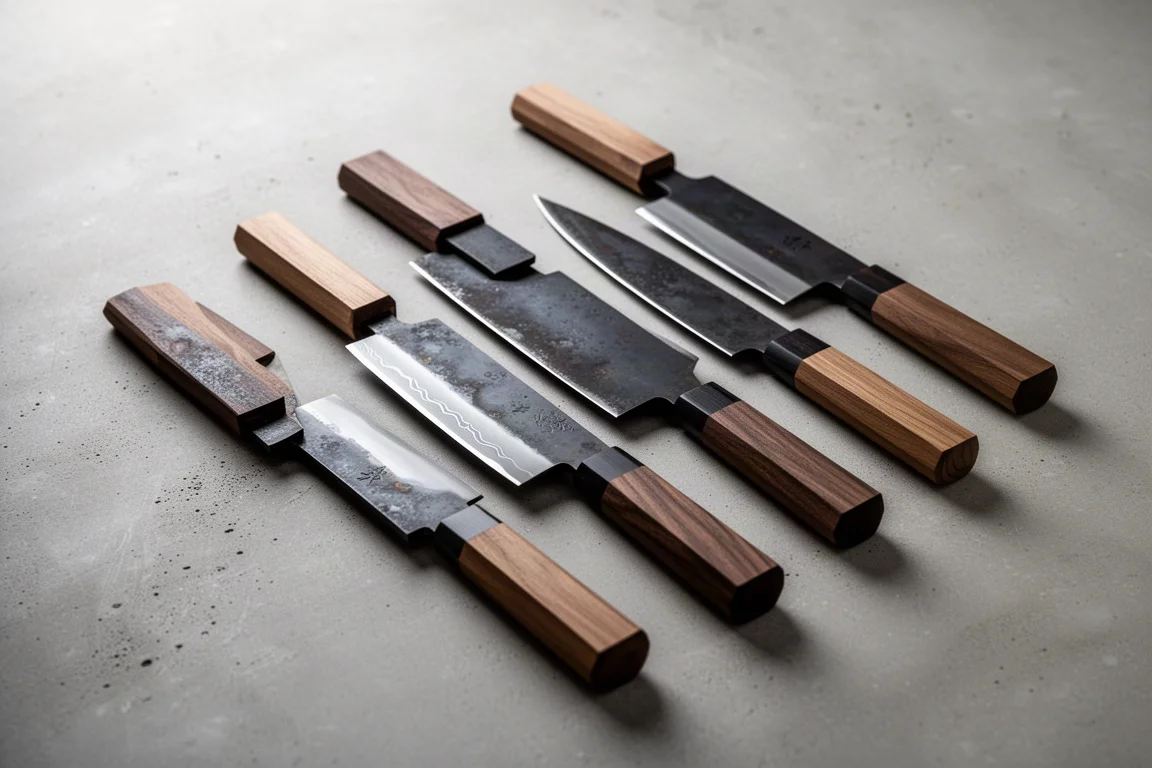
Some knives look simple at first glance and reveal their depth only once you know what went into them. Mazaki knives are exactly that kind of product. At a distance, you see clean, classic shapes, a subdued finish, and a simple octagonal handle. Up close, you find a level of hand craftsmanship that is increasingly rare anywhere in the knife world.
This post looks at what makes these knives special, then walks through the individual models worth considering: the Kochi Nikiri, the Kochi 210mm and 240mm Gyuto, the Aogami Super line, and the Honyaki Aogami #1.
Who Is Mazaki?
Mazaki is based in Sanjo, Niigata, and his work is emblematic of that region’s knife-making style: a blade that is a little wider at the spine with a beautiful taper down to a very fine edge, feeling excellent in the hand without being feather-light. His path there was an unusual one. Originally from Hokkaido, he traveled around Japan by motorbike trying to figure out what he wanted to do, knowing he loved working with his hands. He tried leatherwork first, visited several knife-making regions including Tosa and Sakai, and eventually settled in Sanjo, where the hand-made philosophy of knife making struck him as the right fit.
He apprenticed under Yoshida-san, then head blacksmith of the Yoshida family forge, a workshop that has produced several blacksmiths who went on to shape the region. His skill range is remarkable: he can forge-weld multiple different steels into a single blade and can even make a Honyaki, forging a blade from one piece of steel. That is genuinely difficult, and few makers attempt it.
On a hypothetical scale of handmade to machine-made, where 10 means almost everything is done by hand, most of his knives sit near the very top. And that is not just marketing: one specific detail of his process sets these knives apart.
The Detail Nobody Else Does
Here is the part most buyers never see but every owner eventually benefits from. After the initial grinding on a large coarse wheel, Mazaki moves to a small workspace and finishes every bevel entirely by hand. No machinery. No buffing wheel, no sandblasting to even out the scratches. From the moment the blade leaves the coarse wheel, sharpening the bevel takes him roughly 30 minutes to an hour and a half per knife.
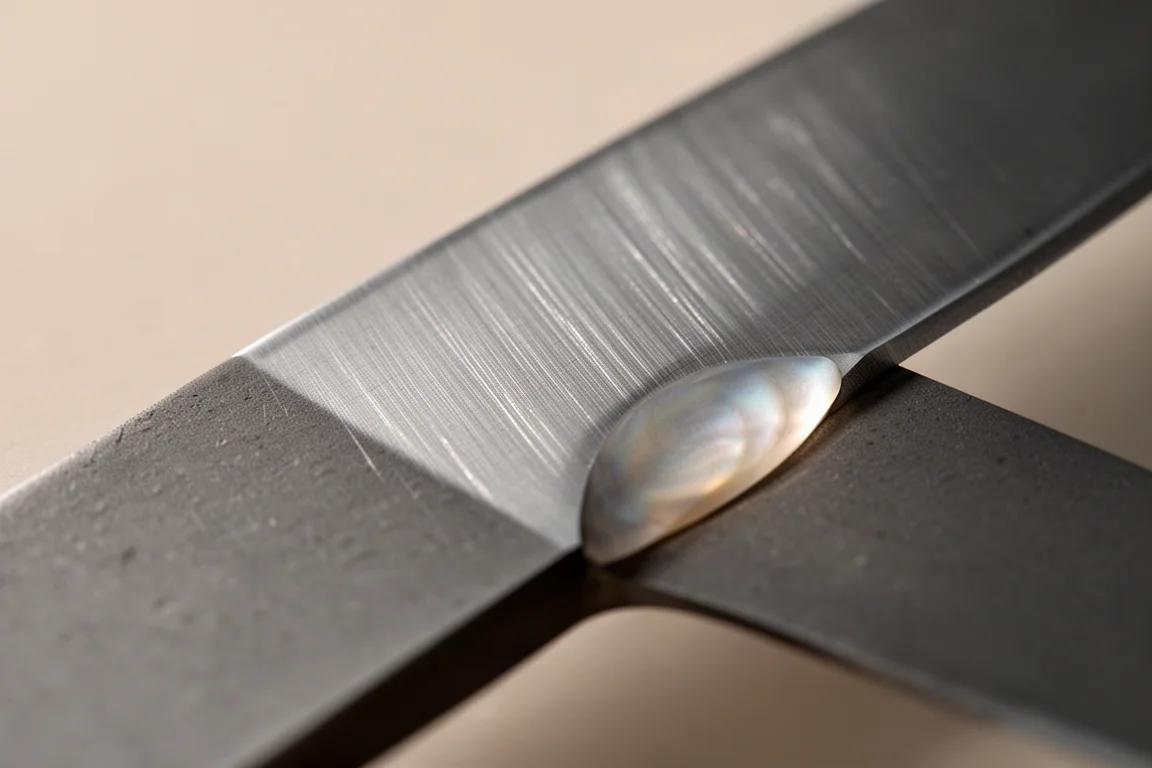
Look closely at the bevel and you will see faint, fine diagonal scratch lines rather than the perpendicular machine marks you find on most production knives. Those lines are his signature, visible proof the bevel was finished by hand.
Why does this matter to you? Most knives develop tiny low spots on the bevel over time. When you sharpen and thin a knife after months or years of use, the stone skips over those low spots and you have to work past them. On a Mazaki knife, that does not happen. Because he removes every low spot during the initial finishing, the bevel sits flat on the stone from day one. Sharpening is easier, you remove less steel each time, and the knife lasts longer. It is a painstaking choice that makes his own work harder and your ownership easier, and it applies to every knife he makes, not just the special ones.
The Kochi Series: Simple Looks, Serious Substance
The Kochi line is the most approachable way into Mazaki’s work. It features classic Sanjo-style blades with a subdued finish, simple octagonal handles, and standard shapes: nothing wild on the surface, with a lot of substance underneath. It is a series that has been around a long time, comes and goes in availability, and earns long-term fans. Because he cannot make enough to keep it constantly stocked, it is effectively a boutique offering with limited supply.
Mazaki Kochi Nikiri
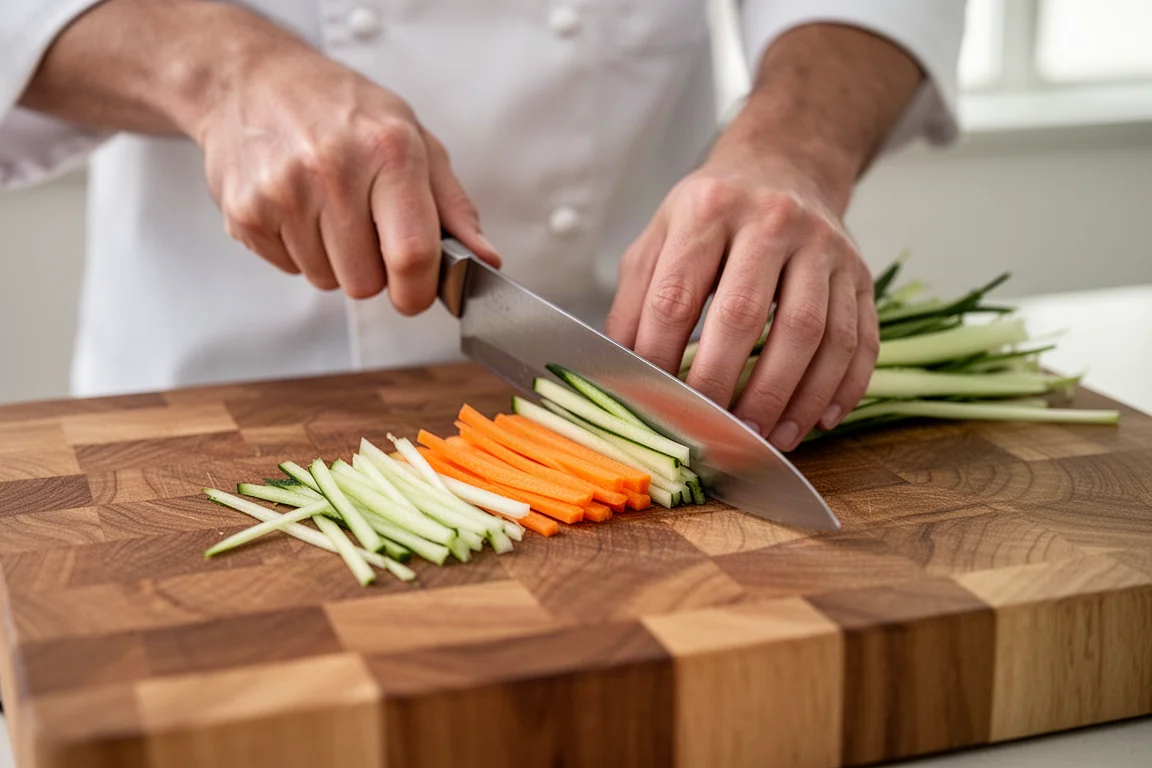
The Nikiri is one of the core shapes in the Kochi series and a long-time favorite. It shares the series’ signature traits: a wide spine that tapers to a fine edge, comfortable balance, and that fully hand-finished bevel that makes maintenance a pleasure. If you do a lot of vegetable work and want a smaller knife that still carries real authority behind the edge, this shape deserves a close look.
Mazaki Kochi 210mm Gyuto
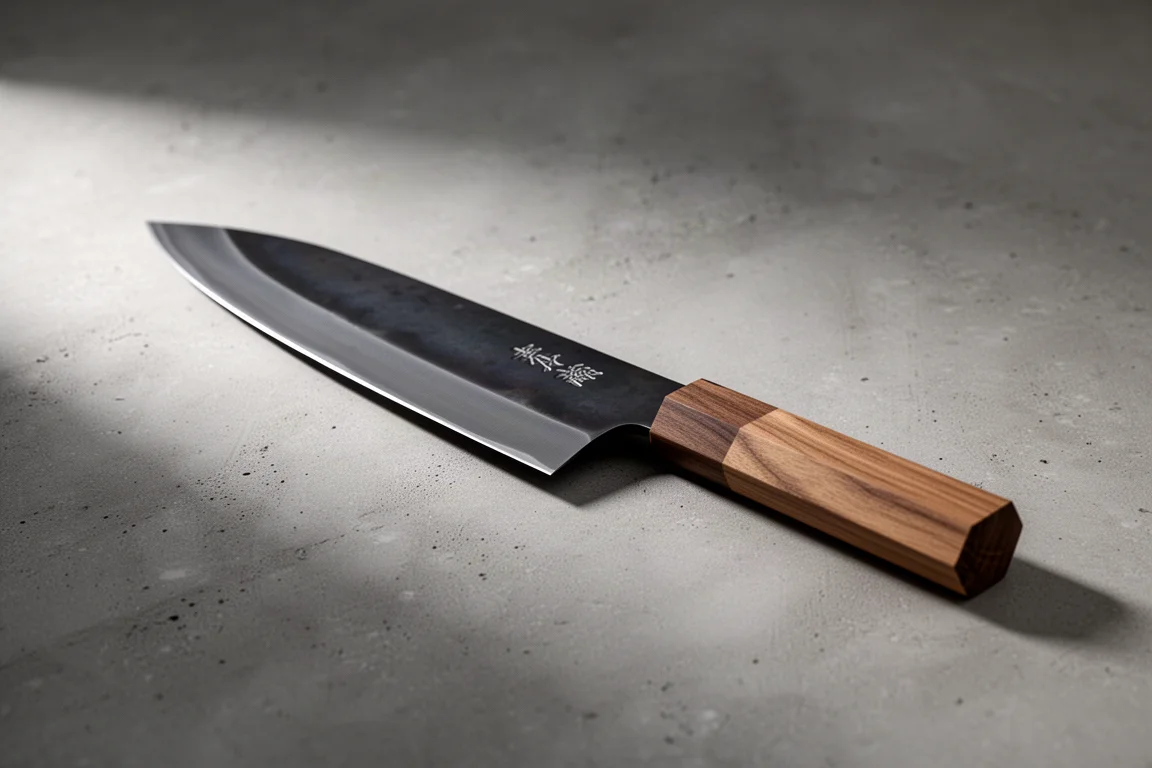
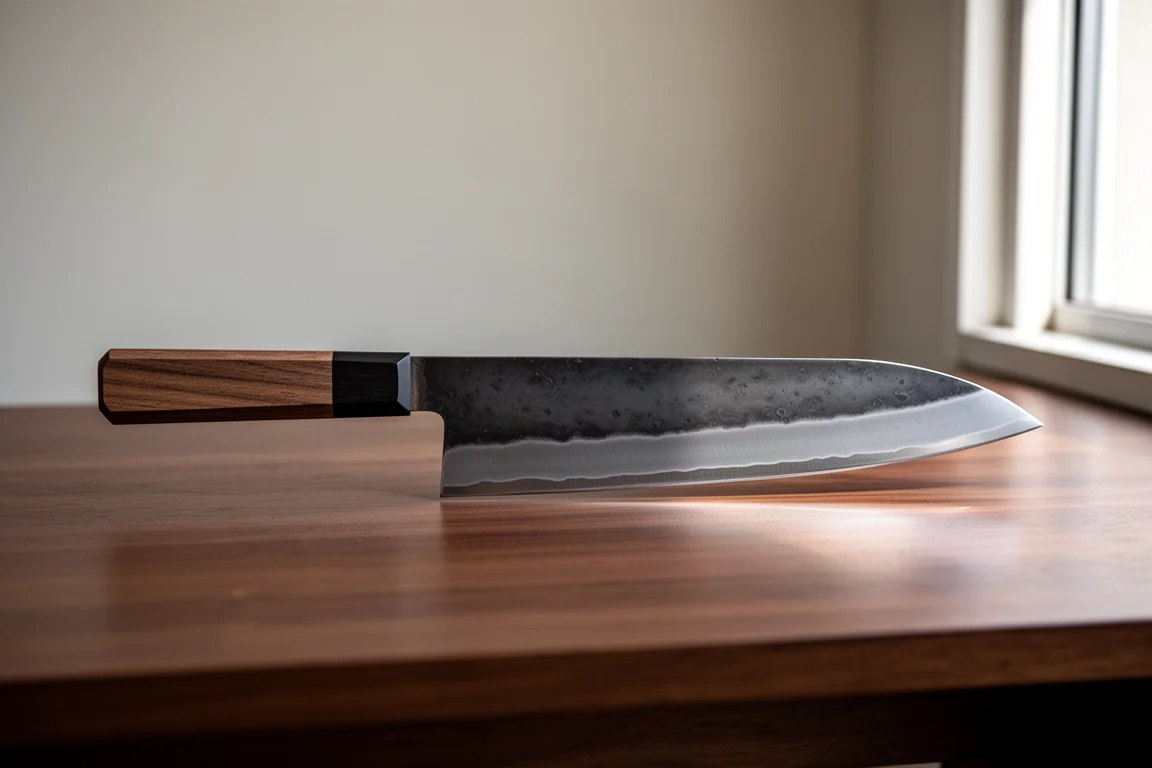
The 210mm Gyuto is the all-rounder of the line. The thick spine, around 6mm at its deepest point, sounds like a lot on paper, but it pulls the weight of the knife right into the pinch grip, so the knife feels light and nimble despite the extra mass. That extra bit of heft also helps the knife drive through cuts: once you focus on the sliding motion, the weight does the rest of the work.
Mazaki Kochi 240mm Gyuto
The 240mm Gyuto takes everything above and adds reach. In use, the back of the knife feels like the workhorse, sturdy and unfazed by dense ingredients, while the front is all finesse. The blade starts to curl slightly toward the tip, it has a nice roll there, and it glides smoothly across the board through rocking motions at the heel while staying solid and straight where you push with your thumb. If you break down larger produce or simply want more blade for bigger cuts, this is the one to watch.
Mazaki Aogami Super
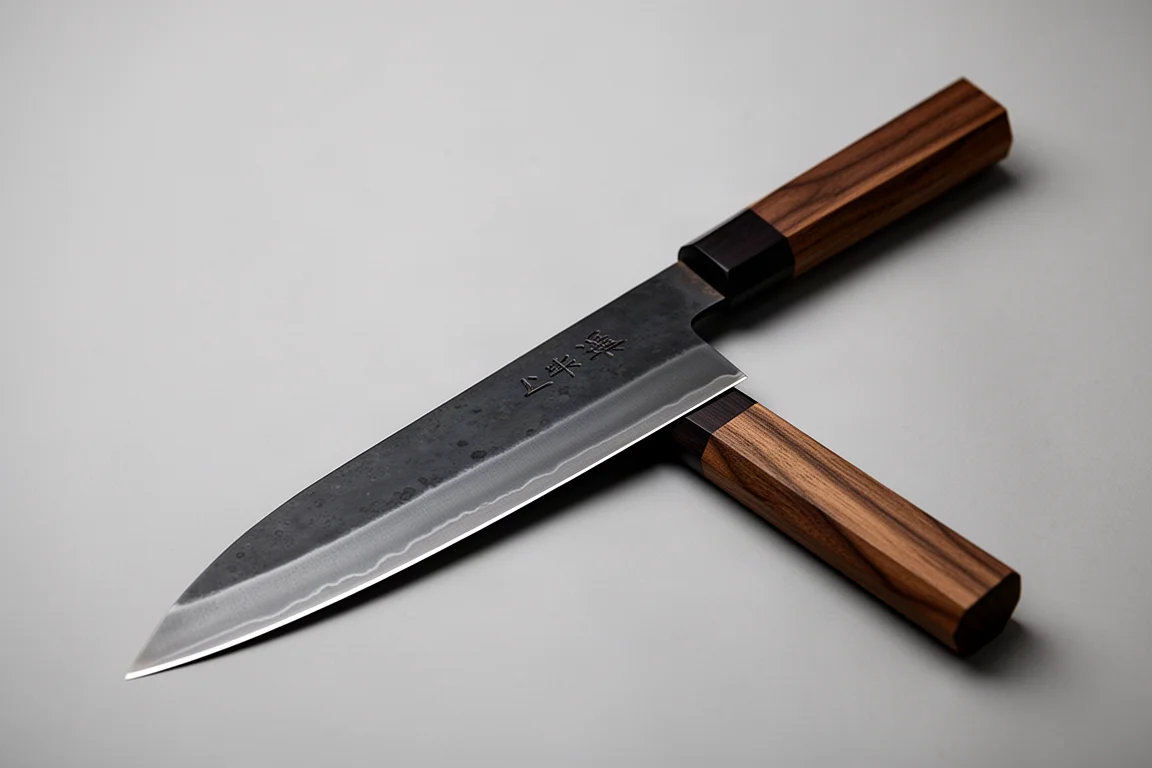
Aogami Super is one of the most demanding steels to forge-weld in house, and very few makers have perfected it. Mazaki chose his steels around one strict criterion: whether the steel is forge-weldable in his own workshop. The Aogami Super knives show the payoff, with an even, straight core between the cladding and the same painstaking hand finishing applied to every bevel. These appear only occasionally, but they carry the same process and the same value as everything else he makes.
Mazaki Honyaki Aogami #1
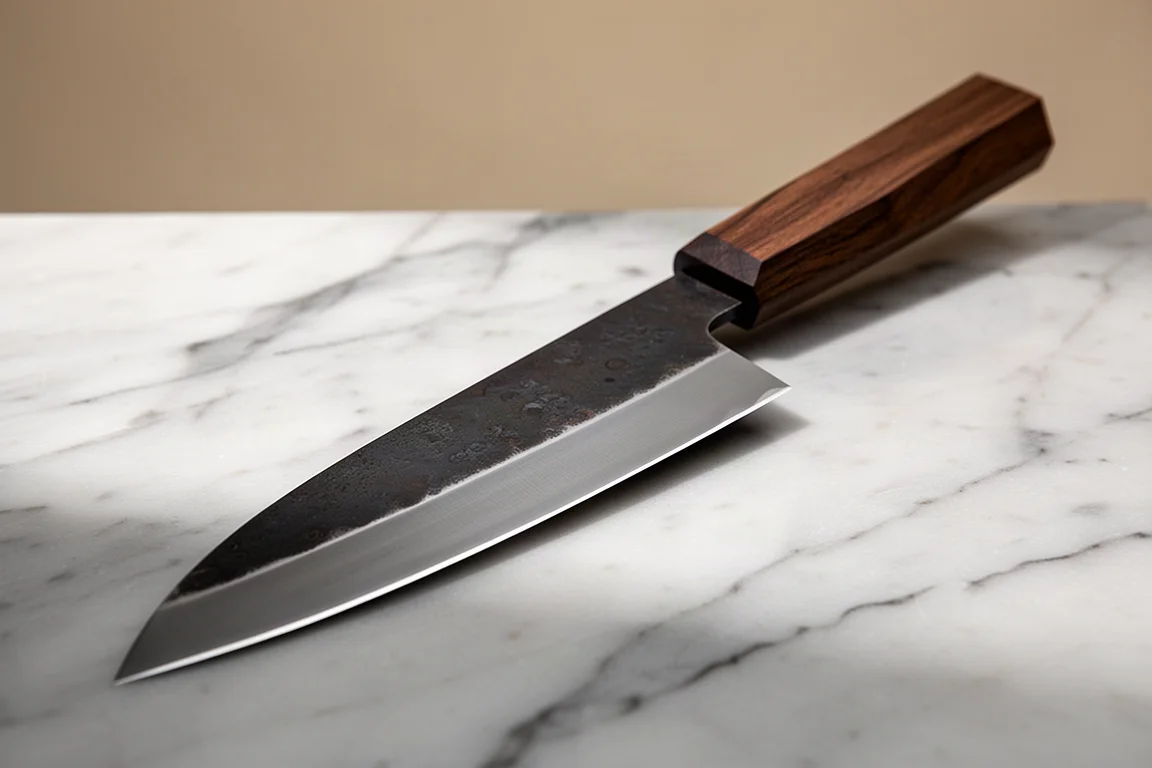
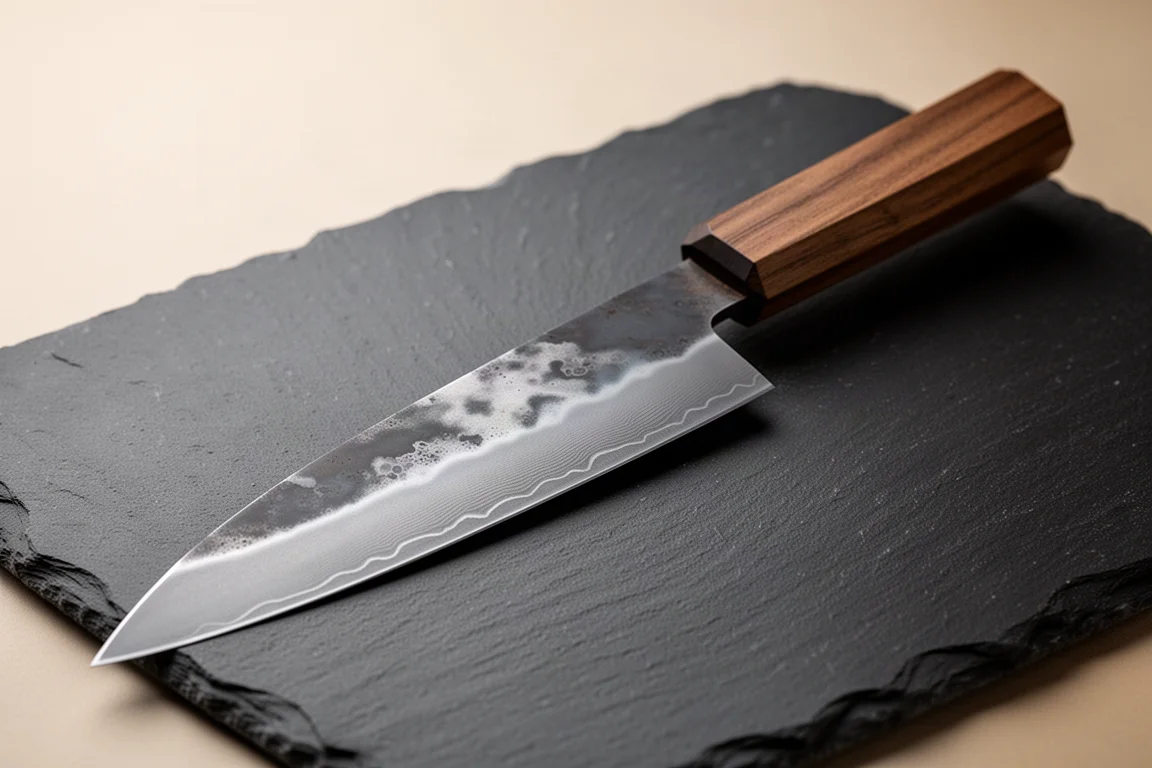
The Honyaki Aogami #1 is the showpiece. Honyaki means the blade is forged to shape from a single piece of steel, one of the hardest techniques in knife making. Clay is applied so the edge hardens intensely while the upper blade stays softer, creating a visible hamon line. What makes this one distinctive is the finish: most makers buff a Honyaki bevel to a mirror shine. Mazaki leaves his fully hand-finished, with those fine diagonal stone marks running evenly across the bevel and a beautiful clamshell-like reflection near the edge. Erasing the evidence of that work would be a shame, and he clearly agrees.
Buying Advice
Because supply is limited, timing matters more with these knives than with most. Availability tends to come and go rather than run continuously, so if a shape you want is in stock, it is worth acting on rather than waiting.
Choose by use case first. The Nikiri suits vegetable-focused cooks who want a smaller blade with real cutting presence. The 210mm Gyuto is the sensible first choice if you want one do-everything knife. The 240mm Gyuto fits cooks who want more reach and a workhorse feel behind the edge. The Aogami Super models reward steel enthusiasts who want top-tier edge performance with the same hand finishing. The Honyaki Aogami #1 is for the collector who wants the maker’s most demanding work, clay-hardened from a single piece of steel, with his signature hand-finished bevel left proudly visible.
Whichever you choose, the underlying value is the same: a bevel finished flat and true by hand, which means easier sharpening, less steel removed over the knife’s life, and a blade that stays performant for years.
Conclusion
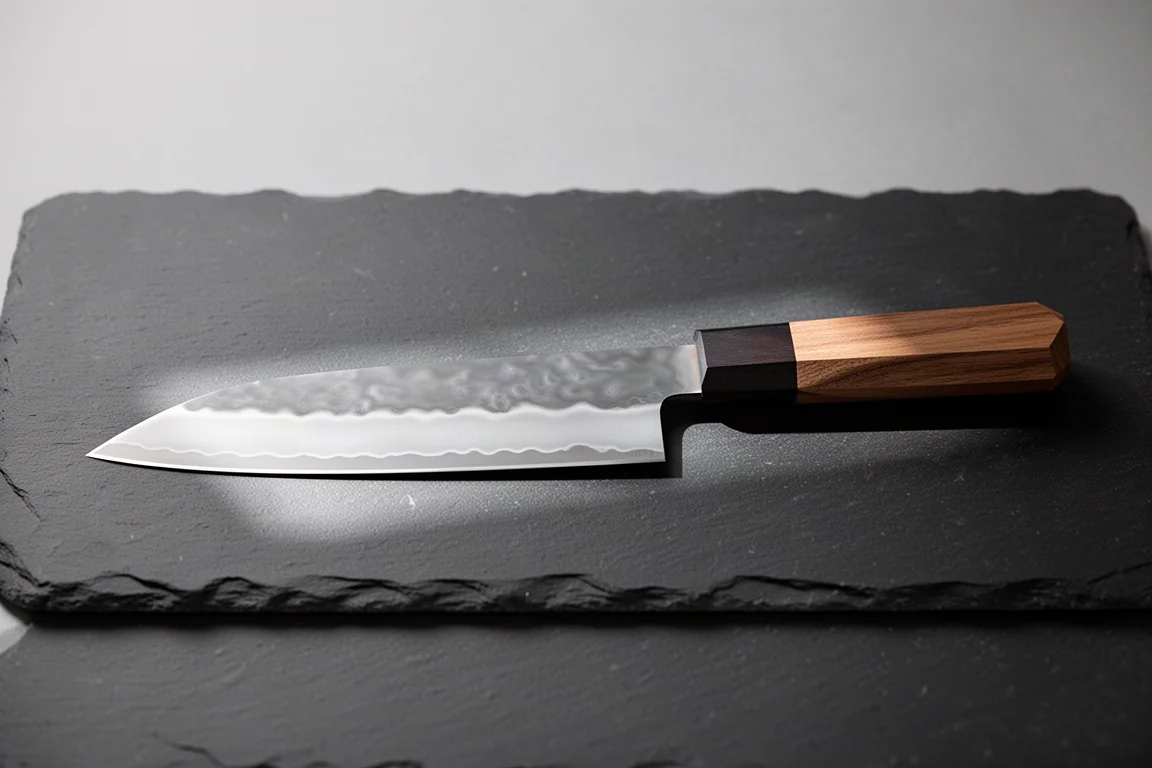
Mazaki knives are a rare combination: simple, honest looks on the surface, and an extraordinary depth of hand craftsmanship underneath. The fully hand-finished bevels are not the obvious selling point, but they are the reason these knives sharpen beautifully and hold their geometry over years of use. Whether you start with the Kochi Nikiri, step up to a 210mm or 240mm Gyuto, chase the Aogami Super, or aim for the Honyaki Aogami #1, you are buying a blade made almost entirely by hand, for the person who will use it. That is a rare thing to own.
Further reading
Related Reviews

Kitchen Knives
Best Chef's Knives 2026: 27 Popular Options Tested and Ranked
A comprehensive review of 27 chef's knives ranging from $18 to $380, with honest assessments of handle comfort, blade balance, and real-world performance.

Kitchen Knives
Best Chef's Knives Under $75: Two Tested Recommendations
Two practical 8-inch chef's knives that balance sharpness, comfort, and durability without premium pricing.

Kitchen Knives
Best Chef's Knives 2026: 27 Options Tested and Ranked
A comprehensive review of 27 chef's knives ranging from $18 to $380, with honest assessments of handle design, balance, blade profile, and real-world performance.