Aquarium Supplies
Maxspect Nano-Tech Bio-Plugs Review: Frag Plugs That Also Work as Bio Media
A frag plug built from bonded micro ceramic spheres that lets water flow through the plug itself, doubling as bio media for under 50 cents per plug.

Introduction
Frag plugs are one of those pieces of reef gear that rarely get a second look. Most of them do the same job: hold a frag upright and give it something to encrust over. Maxspect’s Nano-Tech Bio-Plugs take a different route. They are frag plugs made from bonded micro ceramic spheres, the same porous material the company uses for its bio media. That means water can pass through the plug itself rather than only around it. The result is a mount that also works as biological filtration surface, and the company’s own before and after comparison suggests that porosity may help frags grow faster. At $11.99 for a bag of 25, they are also priced closer to mid-range colored plugs than to specialist alternatives.
What Makes These Plugs Different
Most frag plugs are moulded from ceramic or aragonite and are essentially solid. Maxspect builds these from tiny ceramic spheres bonded together, creating a network of open pores that runs through the plug. Water does not just flow past the plug, it flows through it.
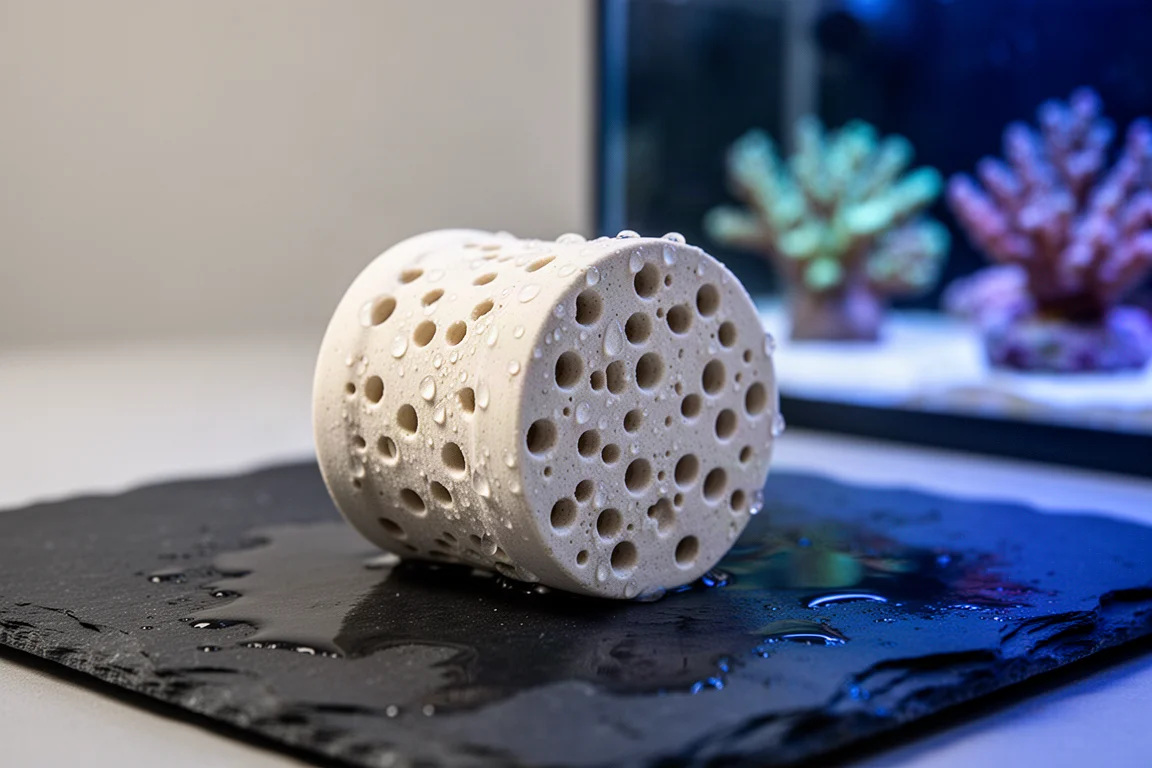
That single design change is what makes the plug do double duty. The open pore network gives aerobic bacteria a large surface area to colonize, which is the same principle behind any porous biological filter media. The plug sits in the tank as a small piece of filtration surface in addition to being a home for the coral. More water movement is also able to reach the underside of the frag, including the area where it has been glued down, along with the nutrients that come with it.
Who These Plugs Are For
These plugs are most relevant to reefers who frag their own corals regularly and want the mount itself to contribute something to the tank. If you already run a frag rack and go through plugs in volume, the combination of low unit cost and added biological surface area is the main draw.
They also suit hobbyists who prefer to leave the plug attached when mounting a frag to rock work, since the plug keeps working as filtration after it goes into the display. Anyone who simply wants the cheapest possible surface to glue a frag onto, or who uses natural-looking rock-style mounts for a seamless finish, may not get the same value from the extra material.
Main Strengths
The first strength is the pore structure itself. Because water passes through the plug, flow reaches the base of the coral rather than stalling around it. That is a genuine change from a solid plug, and it is also what allows the plug to host bacteria.
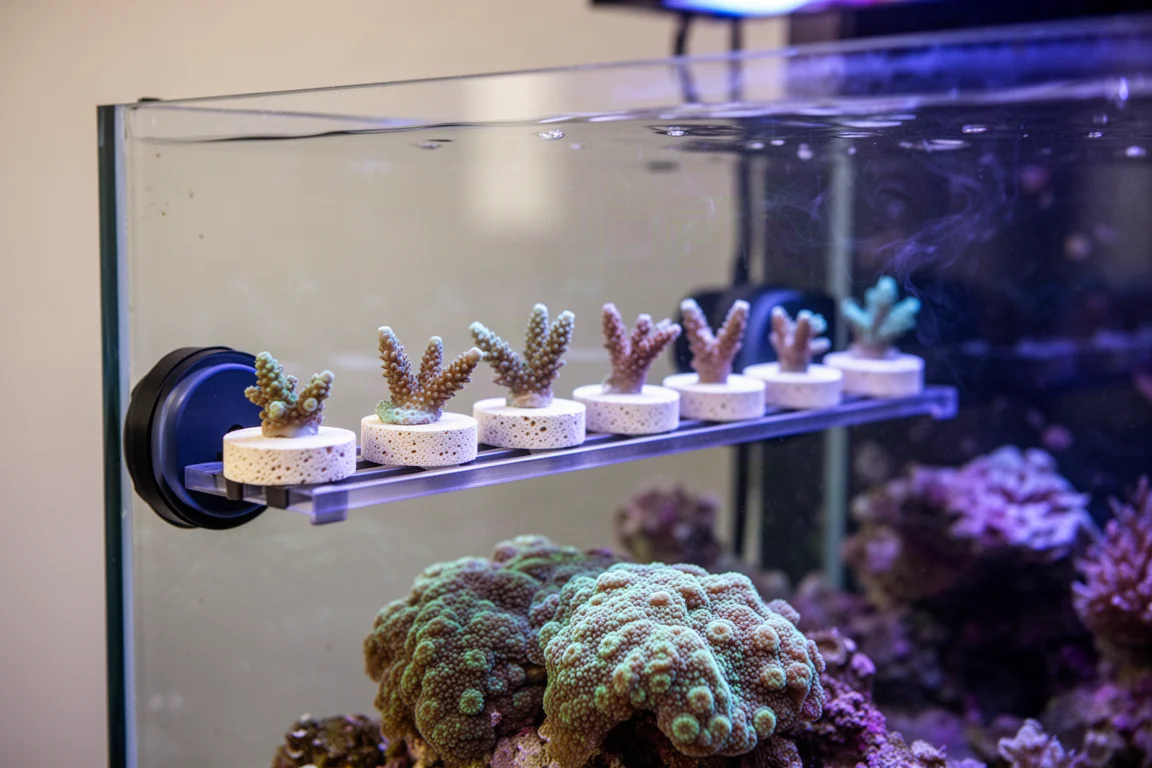
The second is the price. A bag of 25 plugs costs $11.99, which works out to less than 50 cents per plug. That places them in line with mid-range colored plugs and well below many specialized plugs, which is notable given the more involved manufacturing process. The physical build is solid as well, and the stem takes real force to snap off, so the plugs arrive intact and hold up to handling.
The third is compatibility. The disc measures 1.25 inches, giving a generous mounting surface for encrusting frags. The stem is shorter than most at under half an inch and tapers from 3/8 inch at the tip to 1/2 inch at the base of the disc, so the plugs should seat in a wide range of frag racks.
Things to Consider Before Buying
The growth claim deserves a careful look. The supporting evidence is a set of before and after photos from Maxspect showing frags side by side after eight months, with a visible difference in growth. It is encouraging, but it is a single maker-provided comparison rather than independent, repeated testing.
It is also not yet clear whether any growth benefit applies across all coral types. The comparison focuses on SPS frags, so whether LPS or soft corals respond in the same way remains an open question. In the same vein, whether the porous structure helps with acclimating new corals to a system has not been established.
Finally, the stem is tough. If you normally snap the stem off by hand before mounting a frag, expect to need more force, or a cutting tool, to get a clean break.
Sizing and Rack Compatibility
The 1.25 inch disc is on the generous side, which gives encrusting corals more room to spread before they run out of plug. The stem dimensions matter more for rack fit. At under half an inch long, it sits lower in a rack than taller plugs, which can help frags stay closer to the light and makes the plug less obtrusive in the rack.
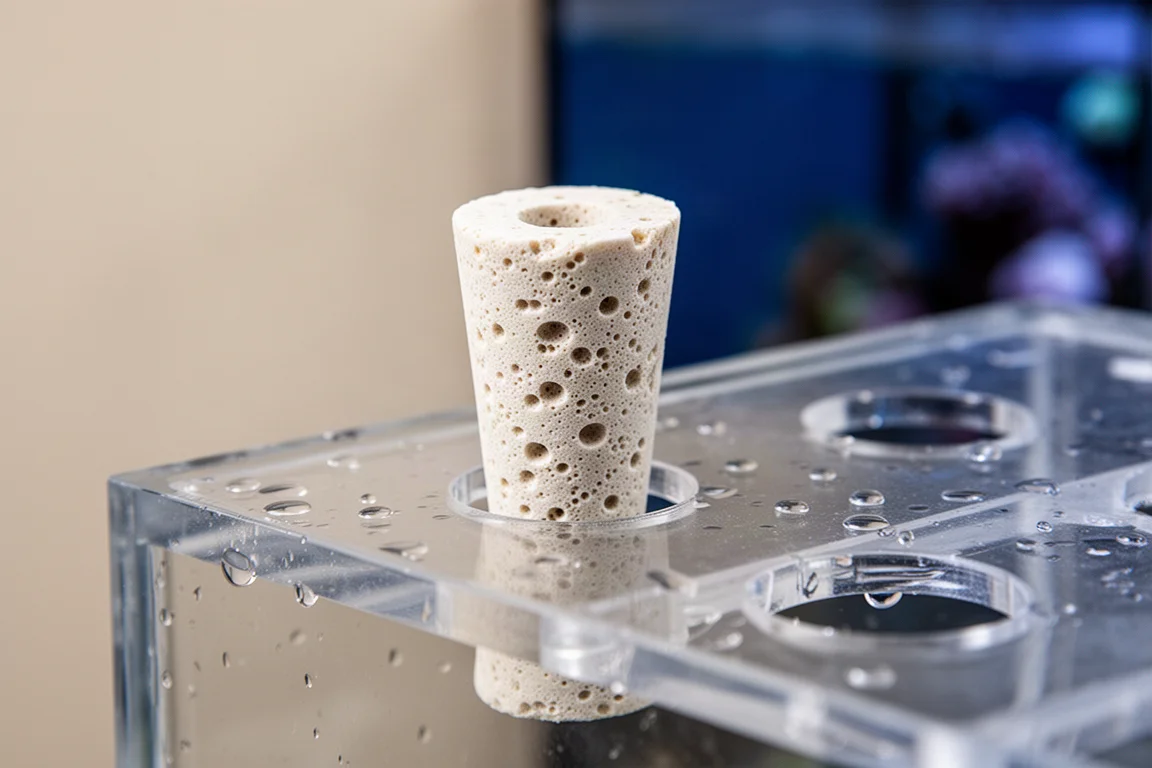
The taper from 3/8 inch to 1/2 inch is what makes the fit flexible. Narrower stems slide into tighter rack holes, while the wider section near the disc keeps the plug from wobbling once seated. The trade-off of the beefier stem is that removing it takes more effort than most plugs require.
What the Growth Evidence Suggests
The idea behind the growth claim is plausible. Corals such as SPS have been shown to carry bacteria in their gut that they have consumed as a food source, so a plug densely colonized by beneficial bacteria can act as a steady, localized food supply in addition to a mounting surface. Combined with better flow reaching the underside of the frag, that is a reasonable mechanism for faster encrusting and growth.
What is not yet clear is how much of that translates into measurable gains in a typical home system, and whether the effect holds for corals beyond SPS. The eight-month comparison is a useful starting point rather than a settled result, so it is worth treating the faster growth angle as promising but unconfirmed.
Buying Advice
If you frag corals regularly and want a plug that keeps contributing after the frag is mounted, these are an easy recommendation at under 50 cents each. The pore structure is a real functional difference rather than a cosmetic one, and the price sits in the same range as ordinary colored plugs.
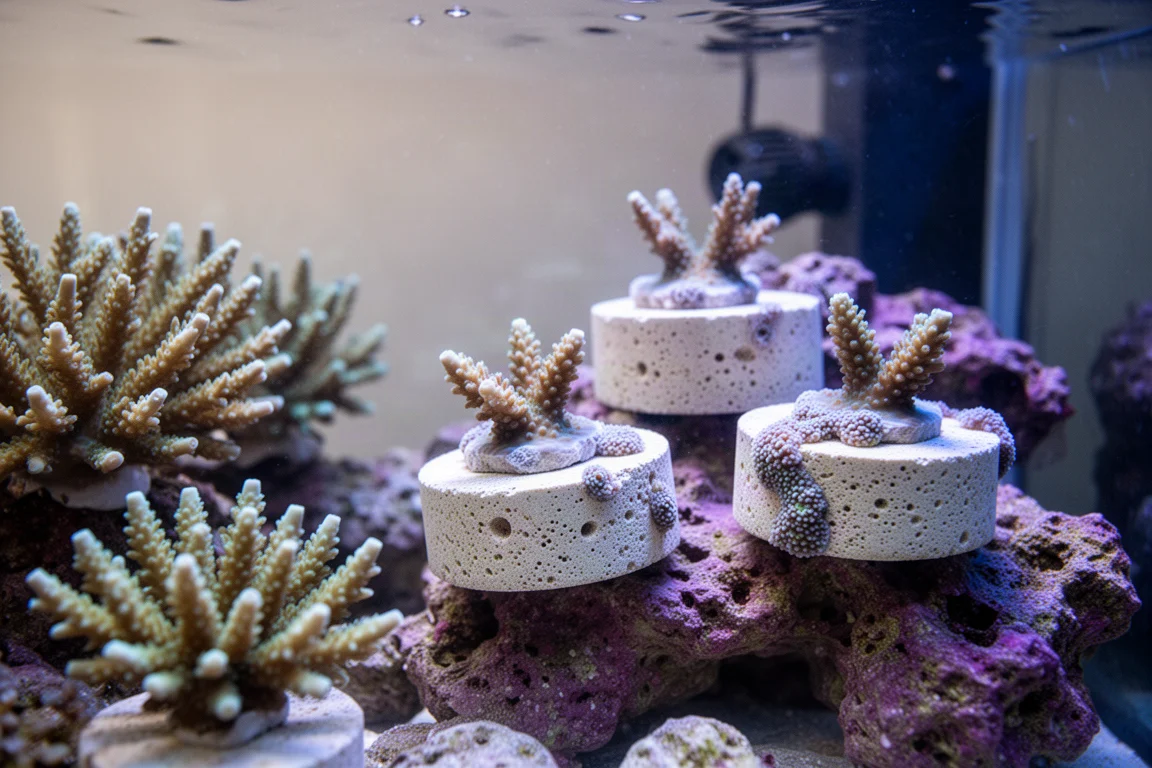
Buy them if you want flow under the frag and a small amount of extra biological surface area in the tank. Look elsewhere if you only want the cheapest possible mount, if you prefer natural rock-style mounts that disappear into the aquascape, or if you would rather wait for independent evidence of the growth benefit before changing what you use.
Conclusion
Maxspect’s Nano-Tech Bio-Plugs are a frag plug that also works as bio media. The bonded micro sphere construction lets water pass through the plug, supports bacterial colonization, and keeps flow reaching the base of the coral, all for less than 50 cents per plug. The growth evidence is encouraging but limited, and it remains to be seen how far the benefit extends beyond SPS frags. For reefers who frag often, the combination of price and function makes them worth trying.
Product link
View more details for Maxspect Nano-Tech Bio-Plugs
This product is mentioned in the review. Check the specifications, options, and compatibility before buying.
View more details for Maxspect Nano-Tech Bio-PlugsFurther reading
Related Reviews

Aquarium Supplies
Best Saltwater Aquarium Mixes: A Beginner's Guide to Seawater Chemistry
Understanding seawater mixes and how to choose the right one for your reef tank, FOWLR setup, or beginner goals.
Aquarium Supplies
Best Saltwater Aquarium Salt Mixes 2019: Six Categories Tested and Ranked
A comprehensive breakdown of the top salt mixes across popularity, cost, mixing speed, purity, consistency, and overall performance for reef aquariums.
Aquarium Supplies
Best Saltwater Mixes for Aquariums: A Practical Guide for Beginners and Reef Keepers
Compare the top saltwater mixes by price, calcium, alkalinity, and intended use. Find the right mix for your tank setup and learn the proper mixing procedure.