Garage & Workshop Tools
Max Speeding Rod 3-Ton Two-Stage Air Jack Review: Fast Lifts With Thoughtful Safety Details
A well-built 3-ton two-stage pneumatic jack with a protected air line, a proper lever valve, and lifting speed that makes shop work noticeably easier.
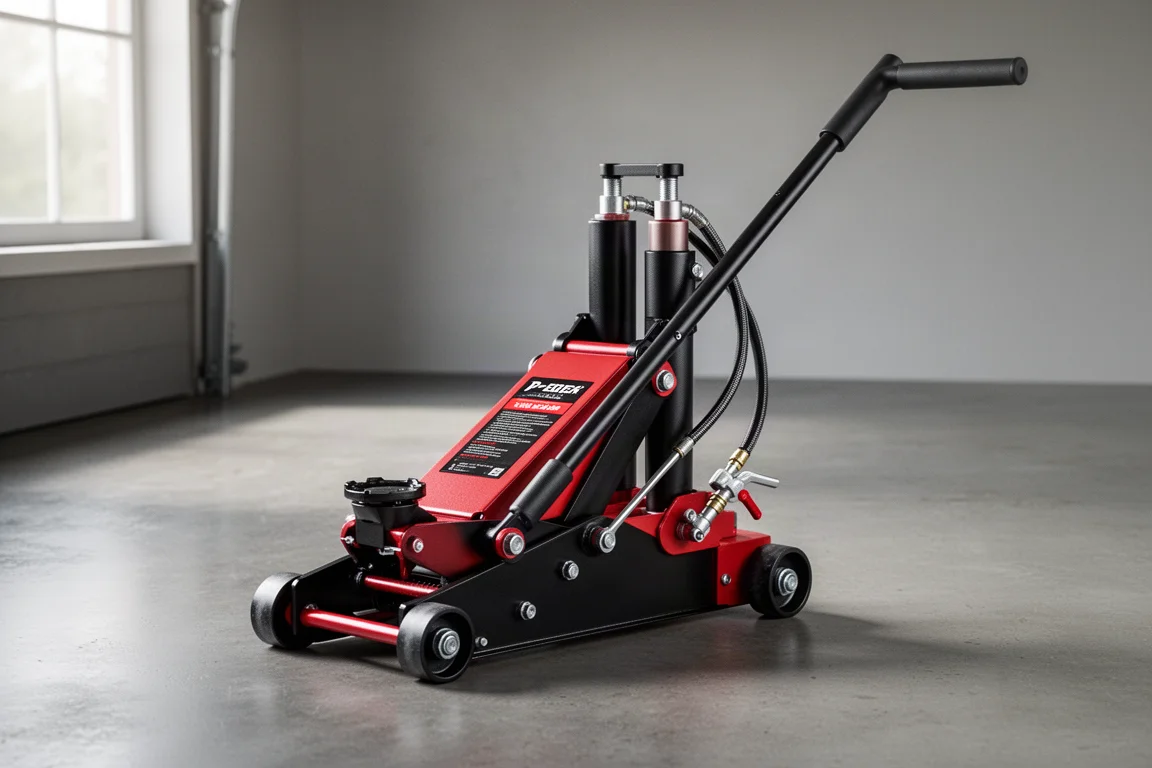
Introduction
Air-powered jacks have a reputation for being either expensive shop equipment or cheap imports with questionable construction. The Max Speeding Rod 3-ton two-stage air/pneumatic jack sits firmly in the first camp: it is well built, it lifts quickly, and it includes several safety-minded design choices that cheap air jacks typically skip.
Before anything else, one point worth repeating: a jack, any jack, is only as safe as the person using it. Always support the vehicle with jack stands before getting underneath it. This jack raises and lowers loads, but it should never be the only thing between you and the ground.
Lifting Performance and Speed
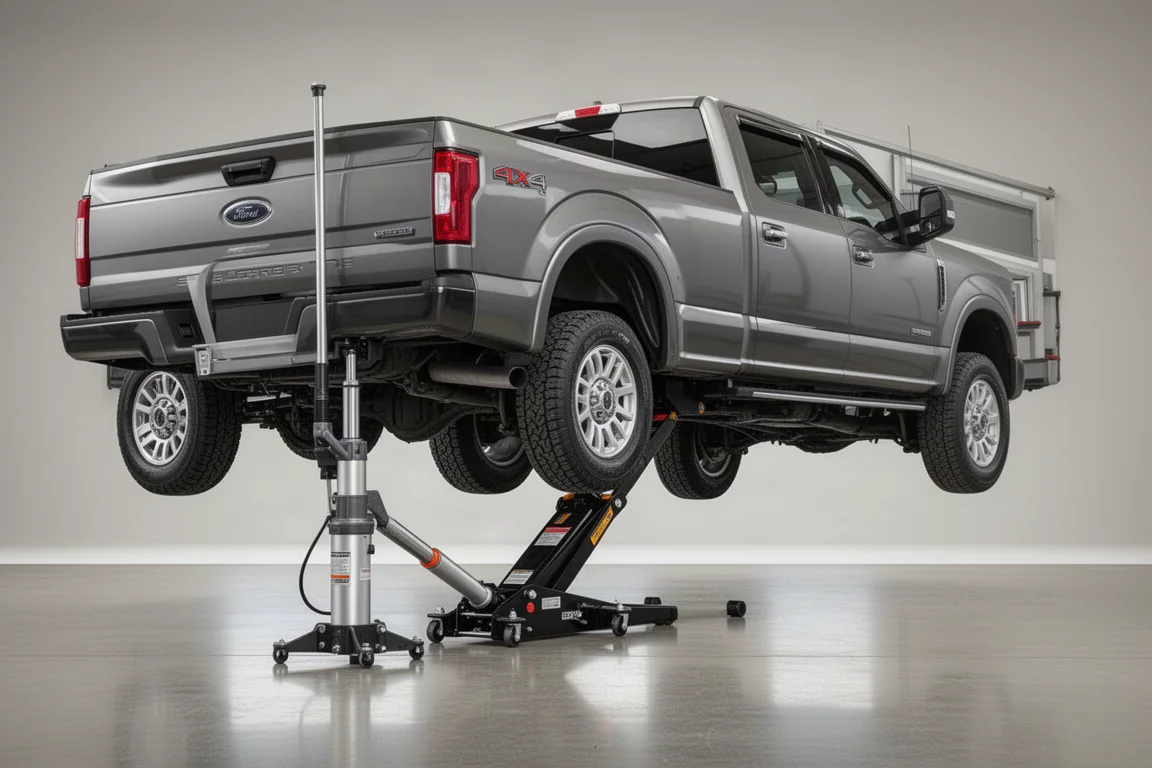
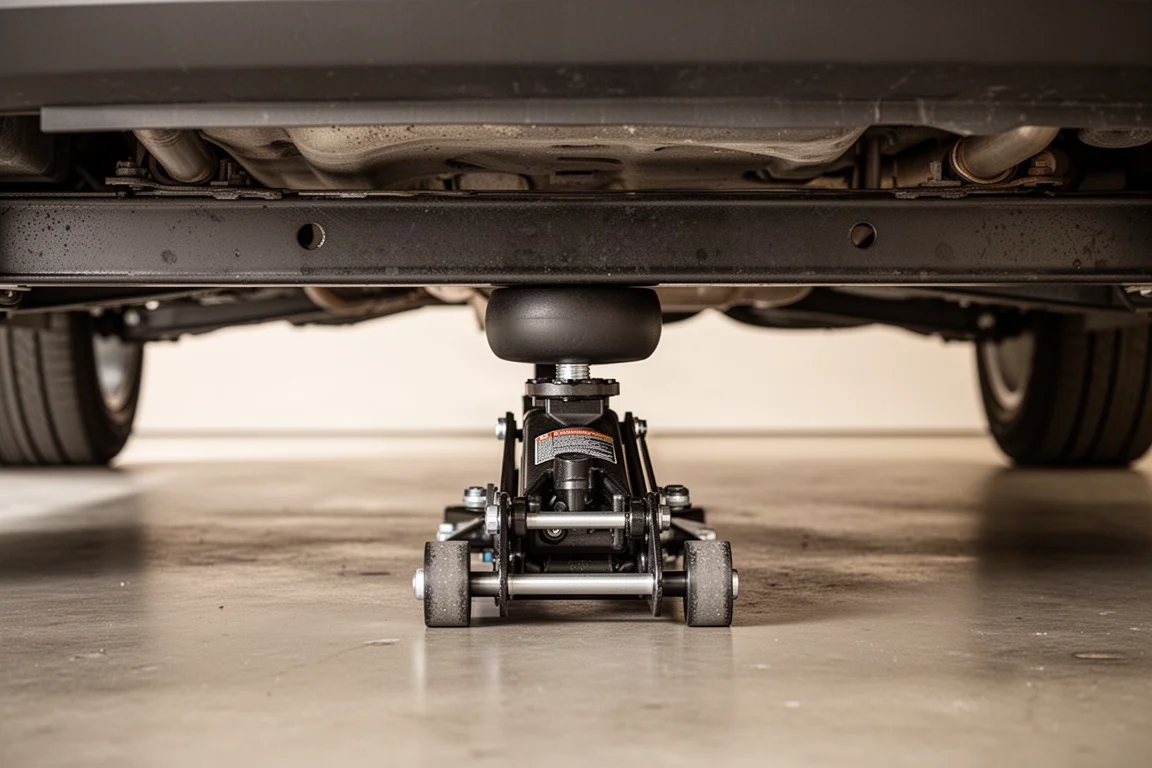
This is a 3-ton two-stage design, meaning one lifting stage at the bottom and a second at the top. With the rated working air pressure of 145 PSI, it lifted the rear of a full-size F350 pickup with no drama, and that truck weighs roughly 7,700 lb in total. For a 3-ton rated jack, that is a fair test of what it is actually being asked to carry.
If you need extra height, a threaded extension cap sits on top of the main pad, and screwing that centre piece on buys additional lift. Speed is one of the jack’s best qualities: at the rated 100 to 145 PSI it comes up fast, and it drops as quickly as the pressure allows.
Build Quality and Safety Features
The details here are what separate this jack from the inexpensive air jacks that tend to feel chintzy. The air hose runs up through the handle to a lever valve that sends air in or lets it out, and the entire run is covered by a spring. That matters, because a ruptured air line while a vehicle is in the air is exactly the kind of failure you never want to think about. With the hose protected, moving the handle up and back does not rub anything that could wear through the line.
The lifting pad itself is thick, similar in feel to the pads found on professional two-post lifts. It is designed to be lifted straight up, not loaded from the edges. Inside there is a centering rod: if the load shifts and gets awkward or pushed to one side, the jack simply stops lifting, which is a sensible failsafe rather than a flaw.
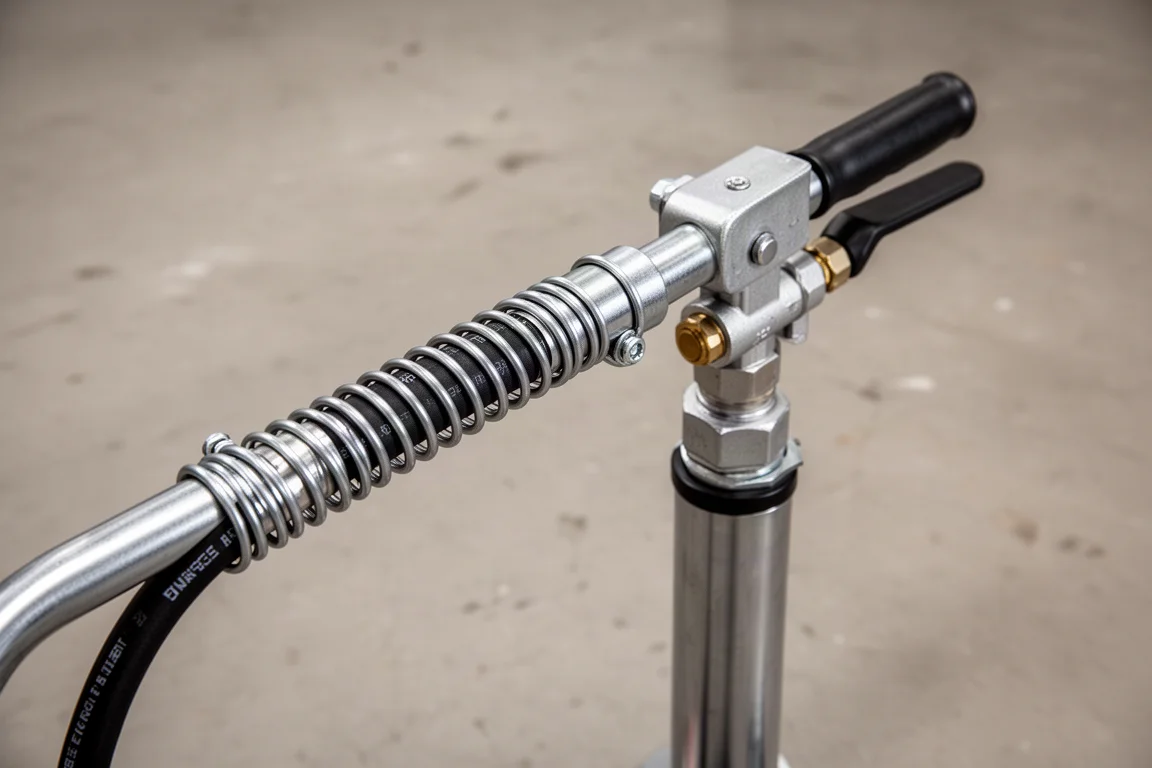
The lever valve is another genuine improvement. Cheaper air jacks often use a ball valve, which is harder to operate and feels flimsy. A lever gives better control, though there is one trade-off: you have to hold the lever to let the jack down. It will not automatically release on its own the way a ball valve can. On balance, the quality of feel and construction is worth that small inconvenience.
Everyday Handling and Small Trade-offs
The handle grip is a highlight. The rubber over the handle does not pop off no matter how hard you twist it, which is a real improvement over jacks where the grip slides off and leaves you holding two bare metal posts. Anyone using a jack around racing or frequent shop use will appreciate that.
The caster wheels run on ball bearings. Honestly, this does not make the jack any safer or functionally better, it is just nice to see the manufacturer put actual bearings in there. The handle can be set in three positions, though it uses threaded rods without nuts provided. You could add your own nuts to lock things down if you wanted to.
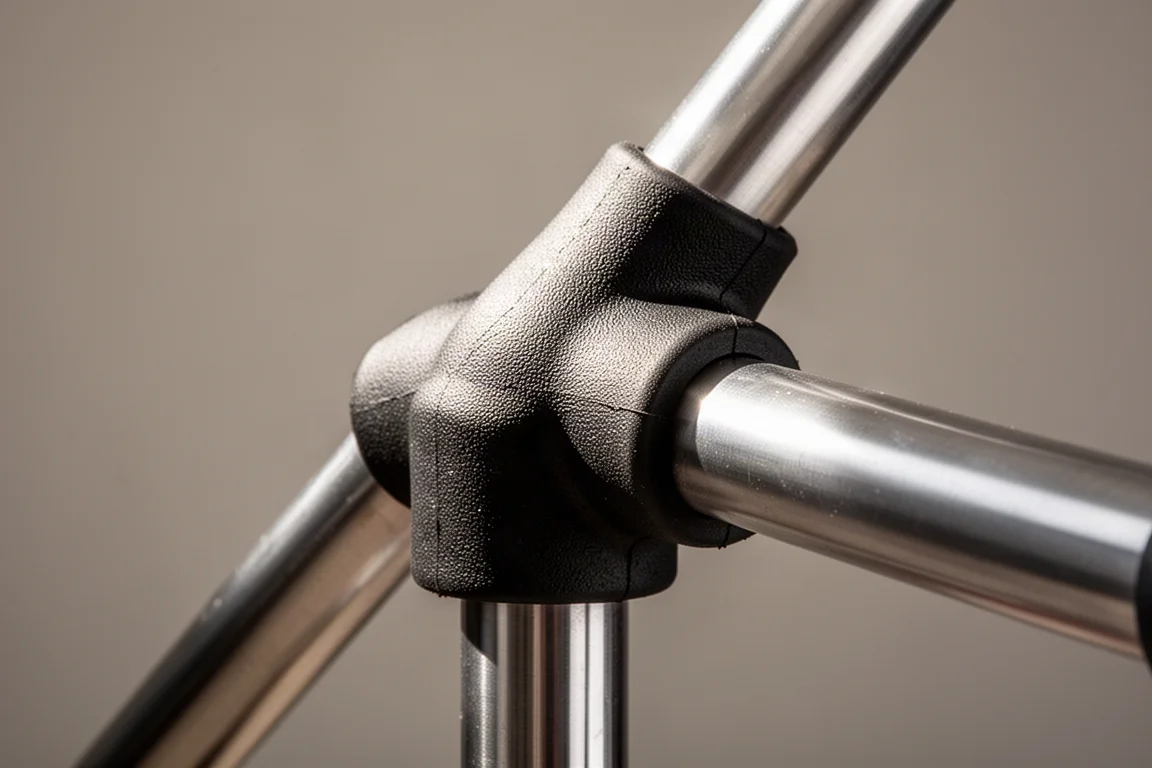
One unavoidable compromise: the wheels sit at the front, which is great for rolling the jack around the shop but less helpful once you are positioning it under a vehicle. Wheels at the back would add stress to the structure and make it less safe, so the design choice makes sense, even if wheeling it under a truck takes a bit of care.
Who Should Buy This Jack
Centre the load over the pad and this jack is smooth, fast, and easy to live with. It suits cars, light-duty trucks, side-by-sides, and most general shop work. Lifting larger trucks works well too, especially with the centre extension cap fitted.
Max Speeding Rod is primarily a European and Asian company, but its products are moving into other markets, and a 5-ton version is on the way. For many buyers, the larger capacity may actually be the smarter purchase: running a jack well below its maximum rating feels safer, lifts faster, and gives you headroom. If you regularly work on heavier equipment, it may be worth waiting for.
Conclusion
The Max Speeding Rod 3-ton two-stage air jack is a genuinely well-built piece of shop equipment: a protected air line, a proper lever valve, a solid centre pad with a sensible centering failsafe, and a grip that stays put. Its main quirks, the hold-to-lower lever and front-mounted wheels, are minor against how quickly and smoothly it lifts. Just remember the golden rule: always use jack stands, and never get under a vehicle supported by the jack alone.
Product link
View more details for Max Speeding Rod 3-Ton Two-Stage Air/Pneumatic Jack
This product is mentioned in the review. Check the specifications, options, and compatibility before buying.
View more details for Max Speeding Rod 3-Ton Two-Stage Air/Pneumatic JackFurther reading
Related Reviews
Garage & Workshop Tools
Best Garage and Workshop Sale Finds: 10 Picks Worth a Close Look
Ten high-value garage and workshop products from the June Parking Lot Sale, from a quiet inverter generator to a 61-piece socket master set.
Garage & Workshop Tools
Harbor Freight Jack Stands Tested Under a Cummins Ram 3500: Plus Three More Garage Essentials
A real-world load test with Daytona 6-ton jack stands, the Badland 3-ton off-road jack, a Hercules extended anvil impact wrench, and a Quinn 1/2-inch impact set.
Hand Tools
Astro Nano Impact Tools and the Quinn Master Bit Set: Five Upgrades for Tight-Space Work
Five compact, impact-rated tools for low-clearance fastener work, from Astro's low-profile Nano series to a versatile Quinn master bit kit.