Drones
Massive Drones: From Agricultural Spraying to Delivery Innovation
Exploring industrial-scale drones that reshape agriculture and logistics, from crop spraying to rooftop delivery systems.
Introduction
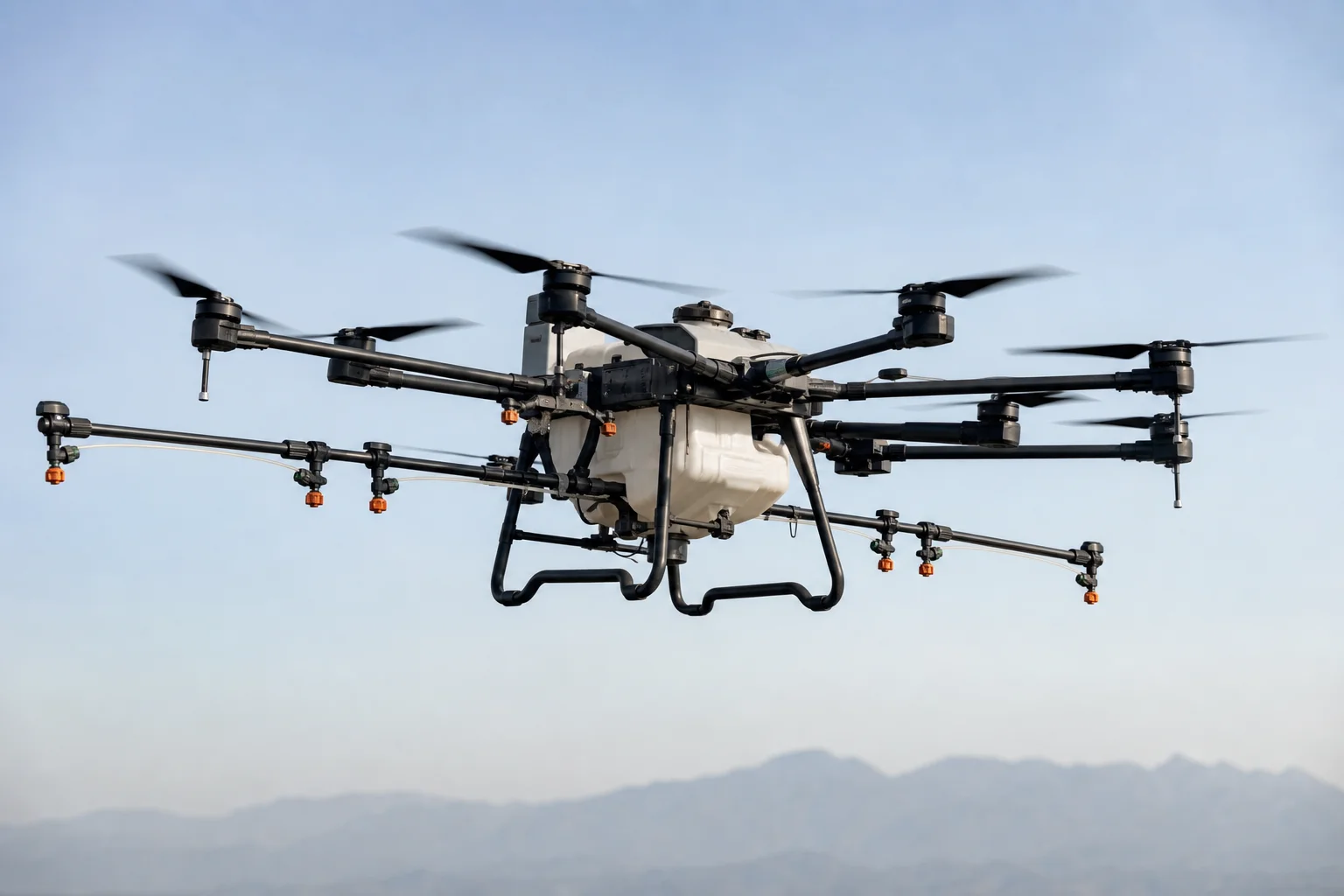
Industrial-scale drones represent a fundamental shift in how agriculture and logistics operate. Unlike consumer drones designed for aerial cinematography, massive drones are engineered for payload capacity, durability, and specialized tasks. DJI’s recent push into this space reveals how drone technology is solving real problems for farmers, service operators, and delivery networks.
The FlyCart 30: Purpose-Built for Delivery
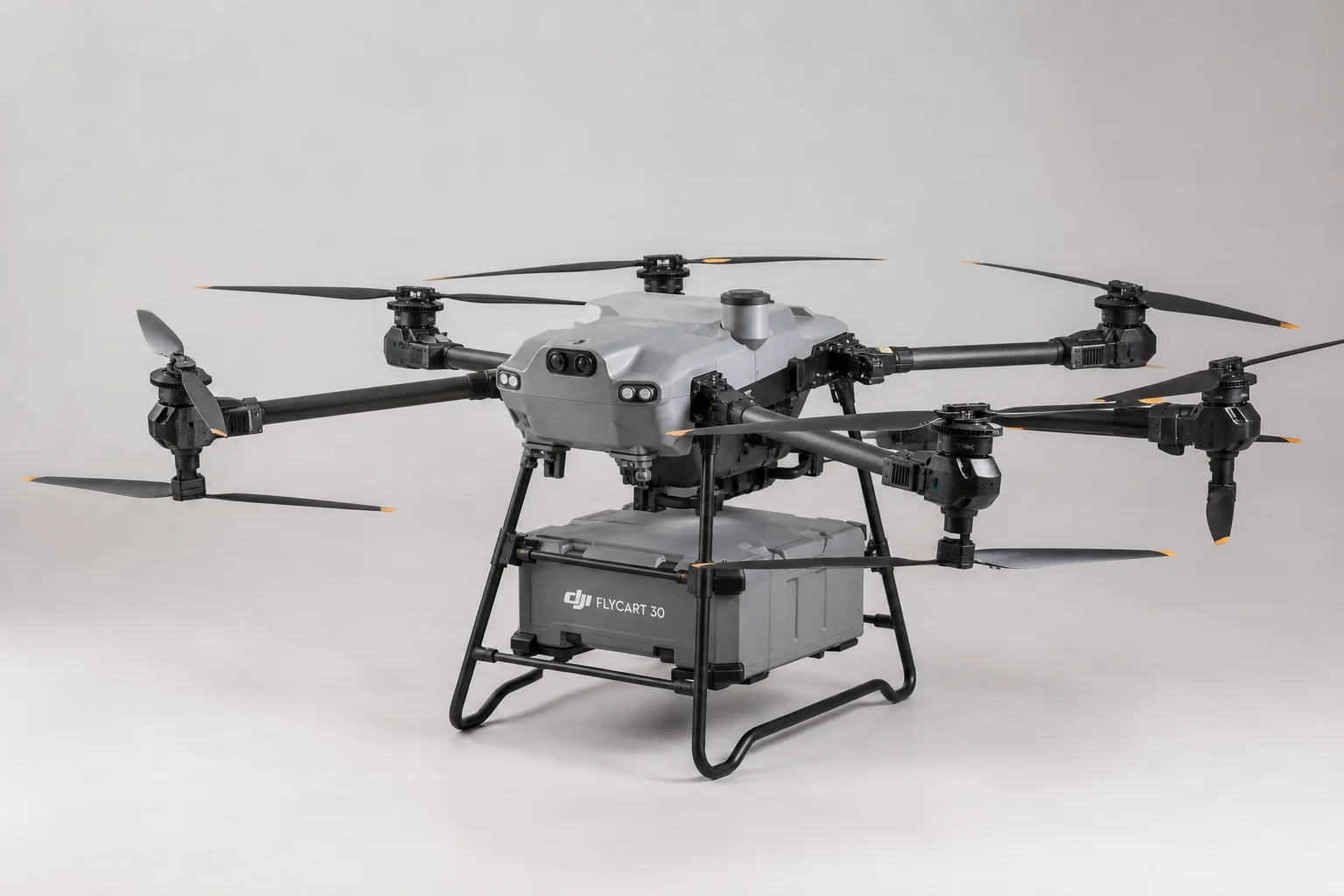
The FlyCart 30 marks DJI’s entry into dedicated delivery drones. With a 30-kilogram payload capacity when operating on two batteries, or 40 kilograms on a single battery, this aircraft is built for practical logistics rather than speed or cinematic appeal.
The design philosophy mirrors consumer drones in simplicity: fold out the arms, power on, wait for GPS lock, and take off. However, the engineering underneath is substantially different. The FlyCart 30 operates in IP55-rated conditions, meaning it can fly in rain and cold weather. The batteries include integrated heaters to function below freezing, addressing a real limitation of lithium cells in harsh climates.
Each battery delivers 52.2 volts and 1,984 watt-hours of capacity. Two batteries on the FlyCart means approximately four kilowatts of power on board, enough to drive a Tesla Model 3 roughly 18 miles. This power translates to range: eight kilometers when carrying 40 kilograms on one battery, or 16 kilometers at 30-kilogram payload with two batteries.
Battery Power and Range Capabilities
The FlyCart’s battery system reveals the engineering trade-offs in industrial drones. Each battery weighs 11 kilograms, which explains why a single battery allows higher payload capacity. With fewer batteries on board, the drone carries less total weight, freeing up lift capacity for cargo.
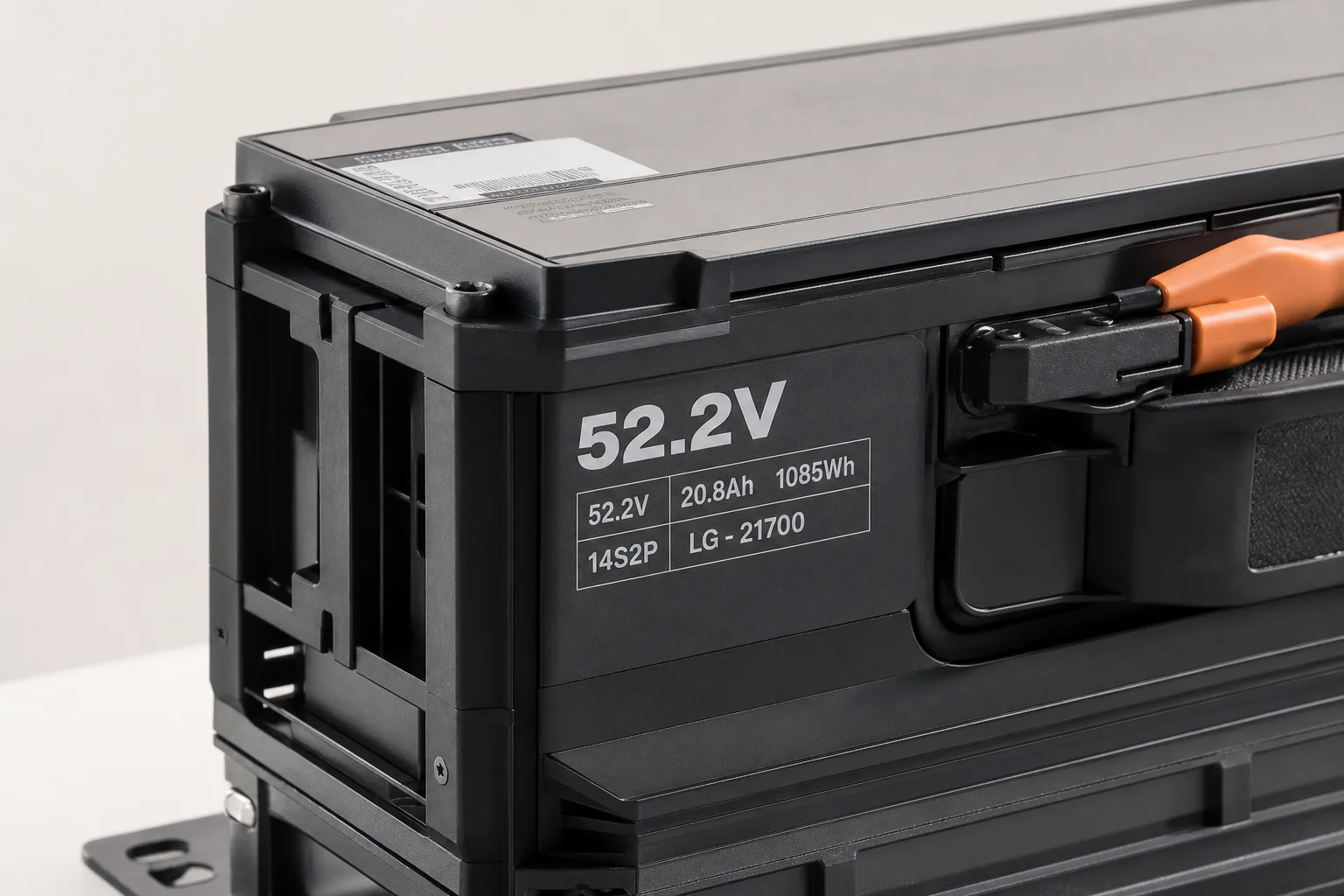
The batteries are not interchangeable with consumer DJI products. They are purpose-built for sustained high-power delivery, with thermal management systems designed to handle continuous operation in demanding conditions. The weight and capacity mean flight times are measured in minutes rather than hours, but the focus is on completing specific deliveries rather than maximizing airtime.
The Agras T40: Agricultural Spraying Drone
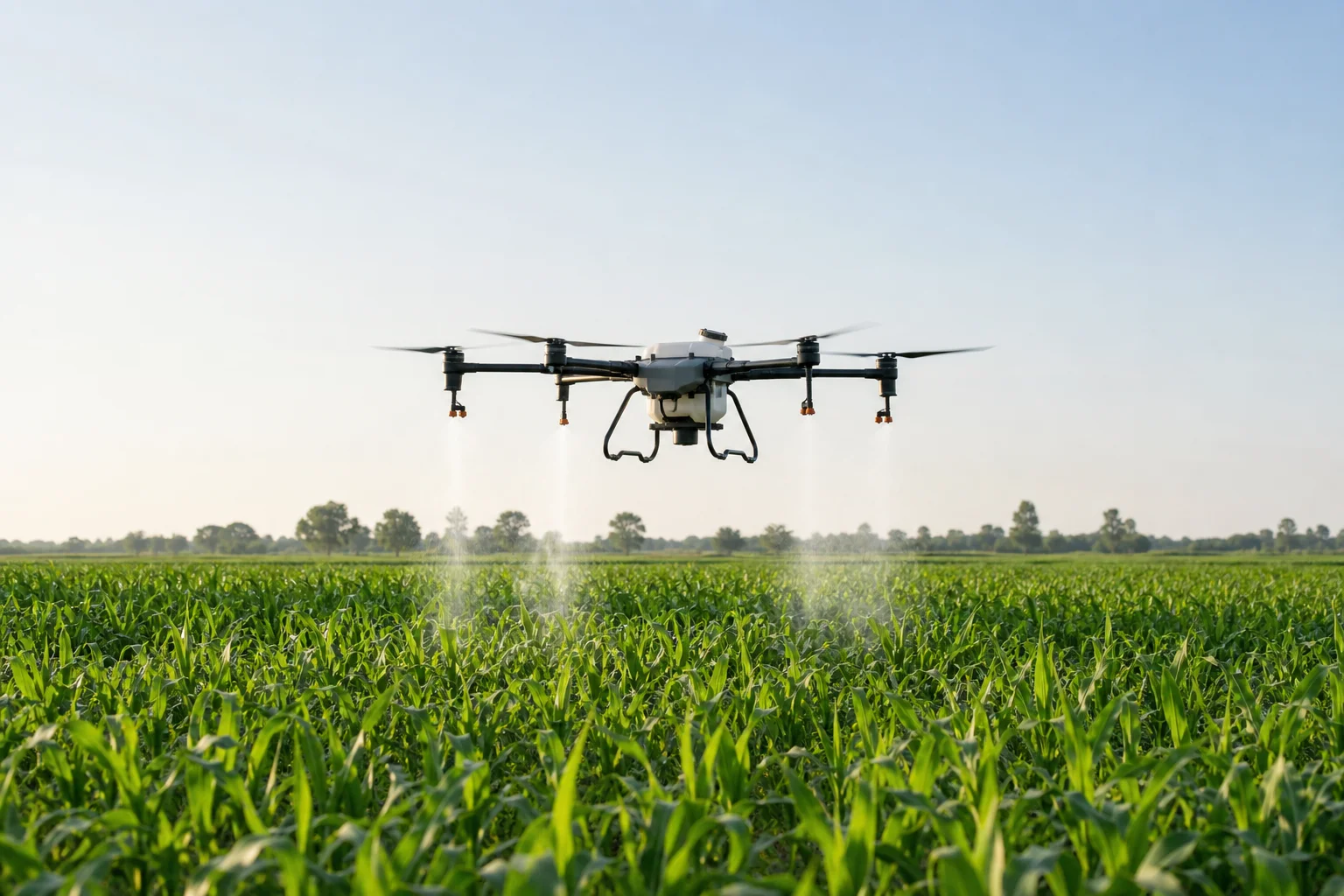
Before the FlyCart, DJI established itself in agriculture with the Agras line. The Agras T40 is a 10.5-gallon spray drone capable of covering 40 to 50 acres per hour at full efficiency. This represents a fundamental change in how farmers apply chemicals, seeds, and treatments to crops.
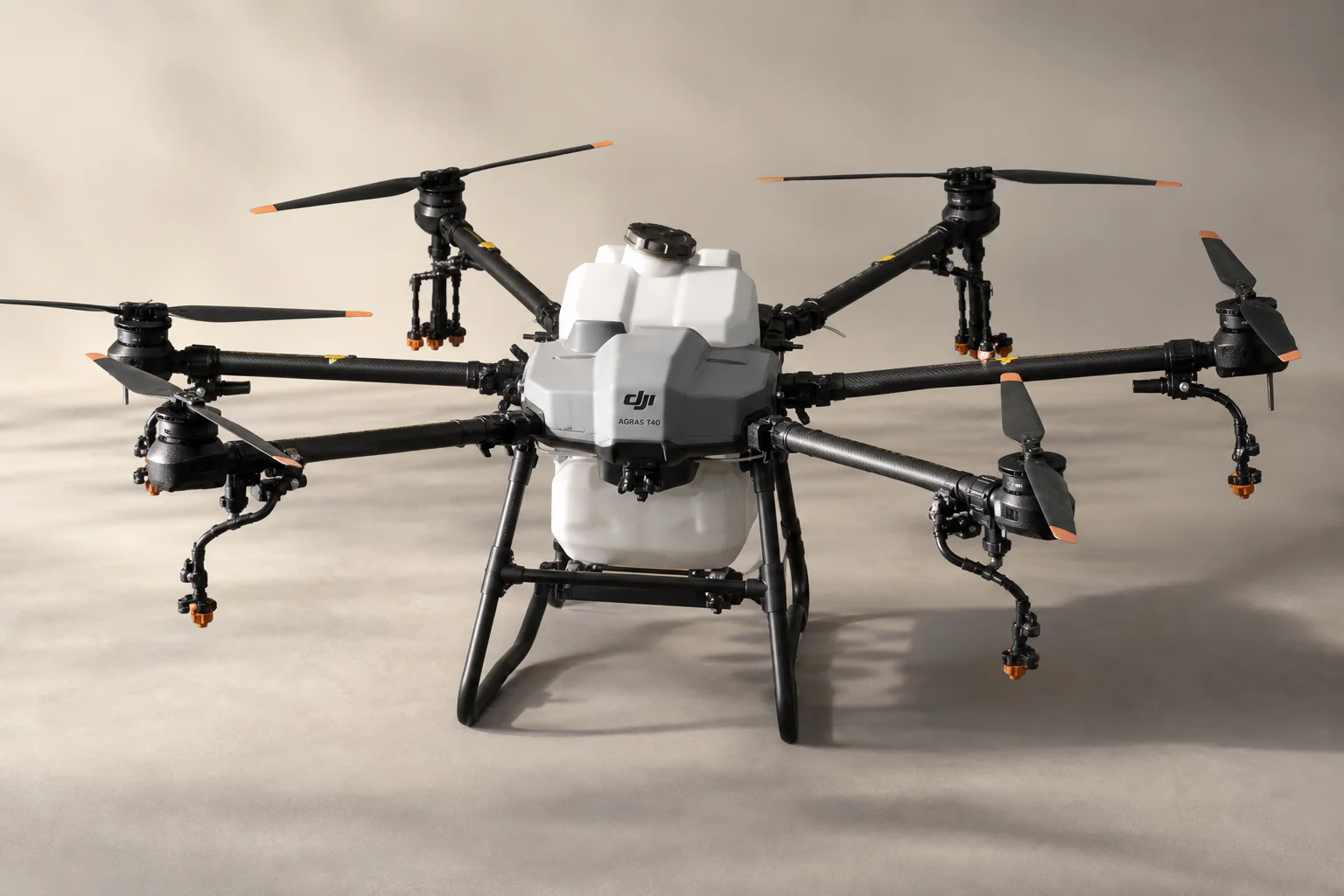
Traditional crop spraying relied on helicopters or fixed-wing aircraft, both of which require pilots to take significant risks flying low and fast. Helicopters can land at field edges to refill, making them more efficient than airplanes that must return to airports. Spray drones eliminate the human risk entirely while offering operational flexibility that neither helicopter nor airplane services can match.
The business case for spray drone operators is compelling. High school and college students can purchase a drone, secure financing, and recoup their entire investment in a single growing season. Farmers are willing to pay for the service because they lack the time or expertise to apply treatments themselves, and the demand for aerial application is consistently high.
Autonomous Spraying Operations
Modern spray drones operate with remarkable autonomy. Operators outline field boundaries and define spray patterns using cloud-based mission planning. Once uploaded, the drone executes the entire mission hands-free, maintaining consistent altitude and coverage while the operator monitors progress.
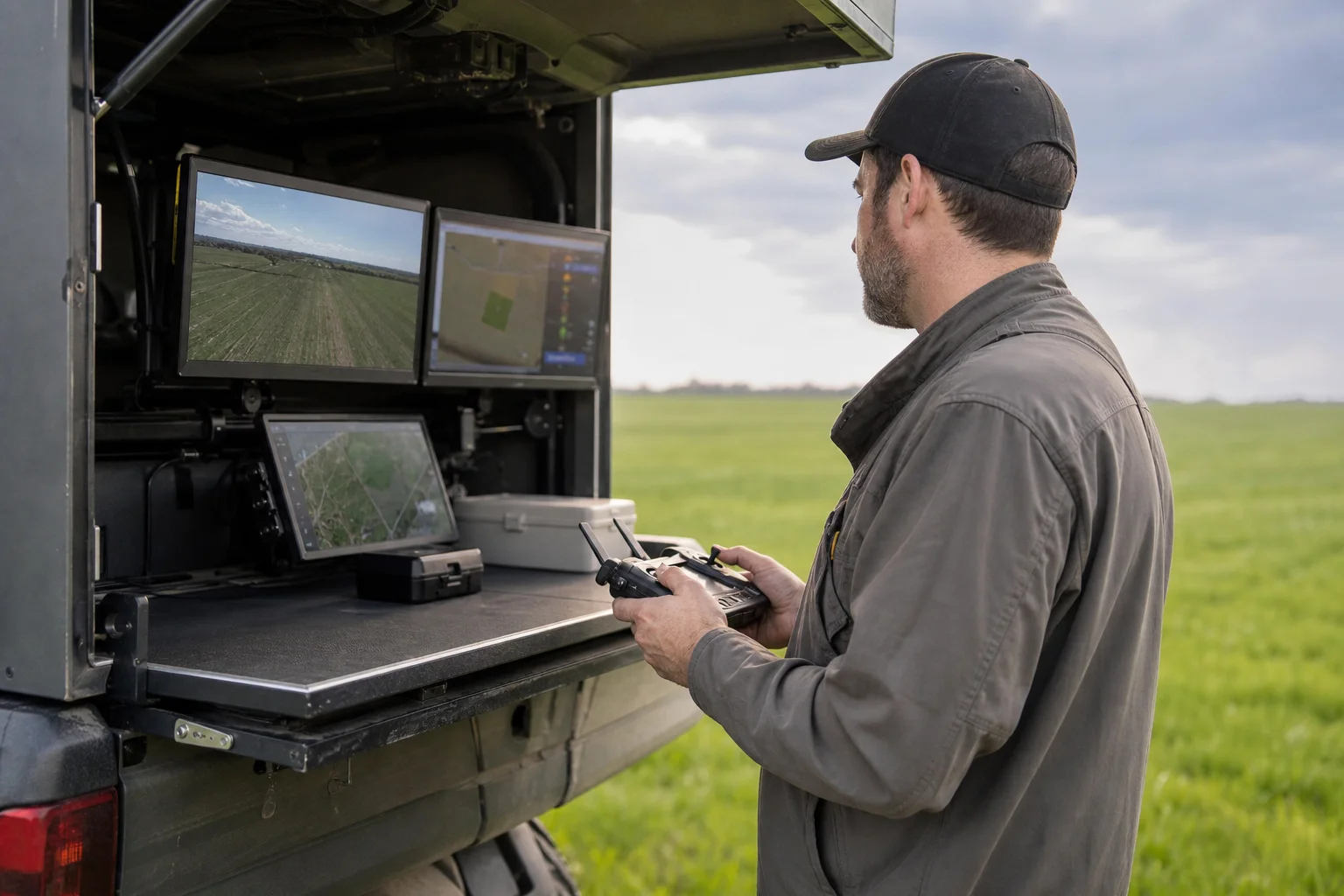
The workflow is optimized for continuous operation. A typical setup includes three batteries per drone: one flying, one charging, and one on standby. Battery chargers and cooling stations are mounted on mobile vehicles that serve as field command centers. Controllers and their batteries charge continuously, ensuring the drone is always ready for the next mission.
Farmers save the flight plans in the cloud, so returning to the same field means simply reloading the saved mission. This eliminates the need to re-plan every visit, reducing setup time and human error.
Real-World Applications Beyond Spraying
Spray drones have evolved far beyond their original purpose. One unexpected application emerged when a farmer needed to apply liquid shading agent to greenhouse roofs. Traditionally, this was done by hand with a sprayer, taking two to three days of labor. Helicopters could handle larger greenhouses, but required pilots to land and take off repeatedly. In some states, standing on greenhouse roofs is now illegal due to fall injuries.
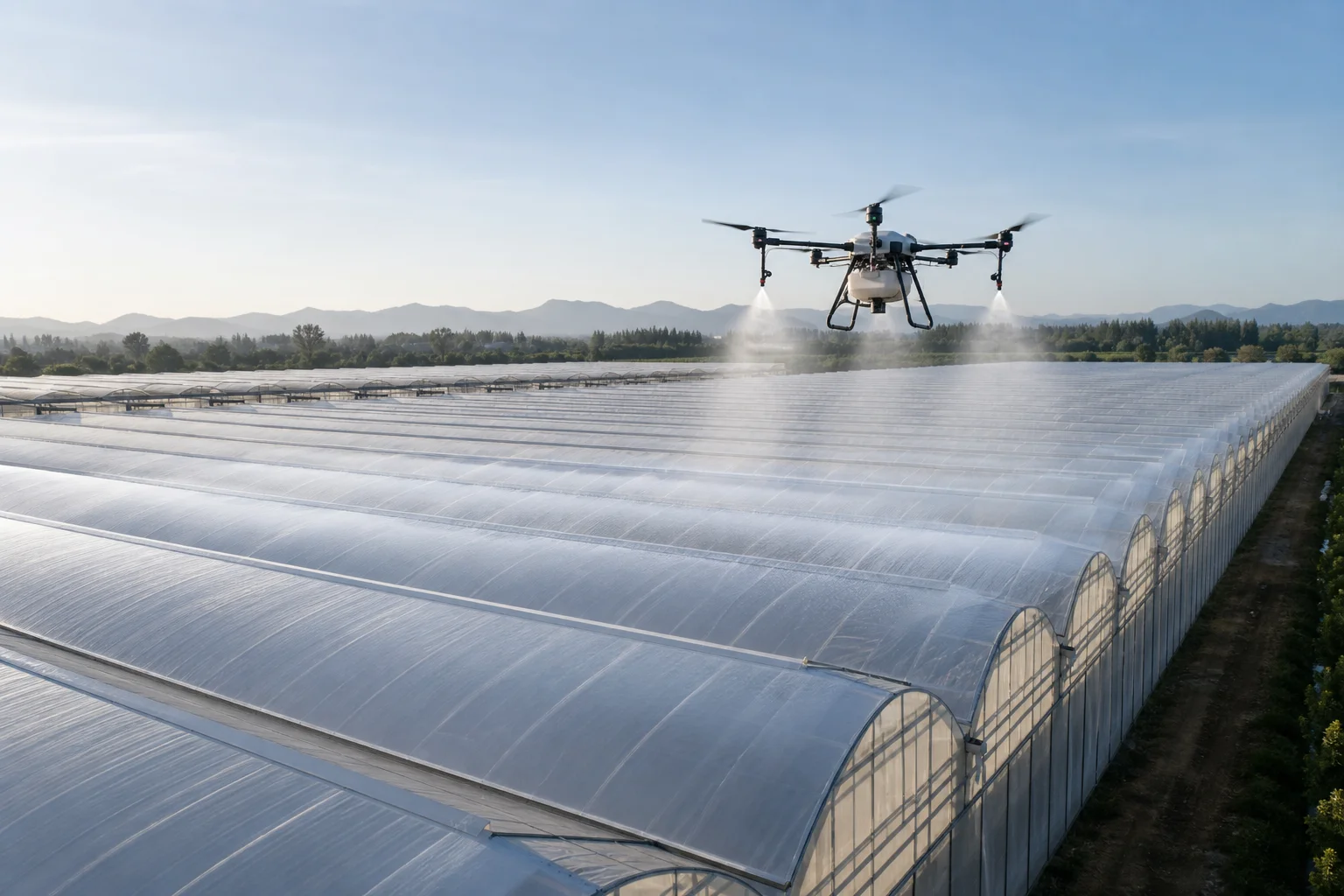
The spray drone completed the entire job by noon, reducing a multi-day manual task to a few hours. This success spawned new applications: companies have developed attachments to spray building facades, and the next logical step is pressure-washing equipment for window and building cleaning.
Operators report constant inquiries from around the world about new uses for spray drones. The technology is still discovering its full potential, with new applications emerging regularly as operators experiment with different payloads and nozzle configurations.
Audio and Camera Gear in the Field
When working with large drones in noisy agricultural environments, reliable audio capture becomes critical. The DJI Mic 2 wireless microphone system has become the primary audio tool for field documentation, with the majority of audio in recent productions coming from these units.
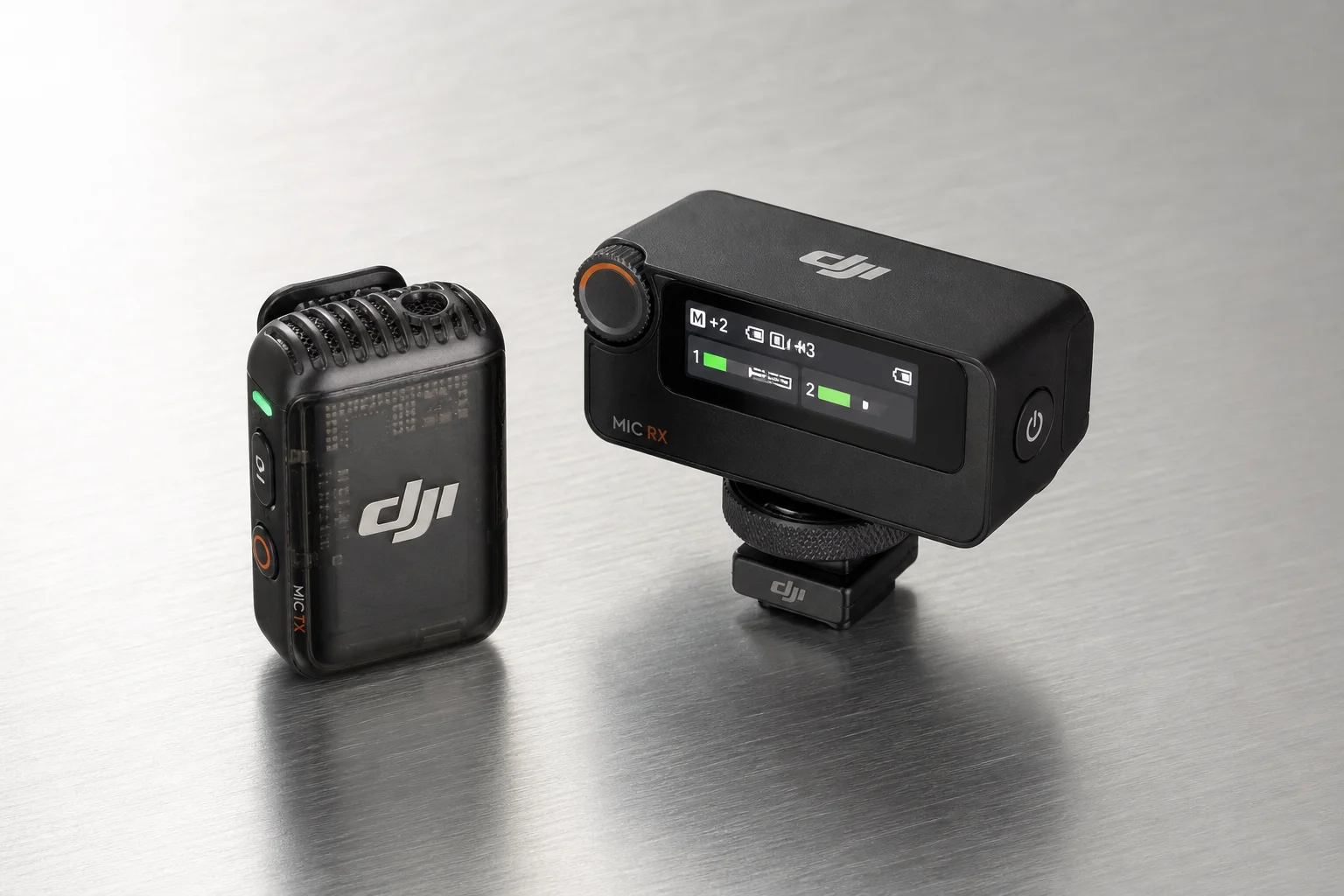
The Mic 2 offers practical advantages: omnidirectional pickup captures audio within a bubble pattern, making it ideal for capturing both the speaker and ambient sound without the narrow rejection pattern of shotgun microphones. The system now includes 32-bit internal recording for additional flexibility in post-production.
A new MI-shoe adapter allows the Mic 2 receiver to mount directly on Sony cameras without cables, eliminating the risk of port damage from cable strain or accidental impacts. This wireless integration is particularly valuable in field conditions where cables are a liability.
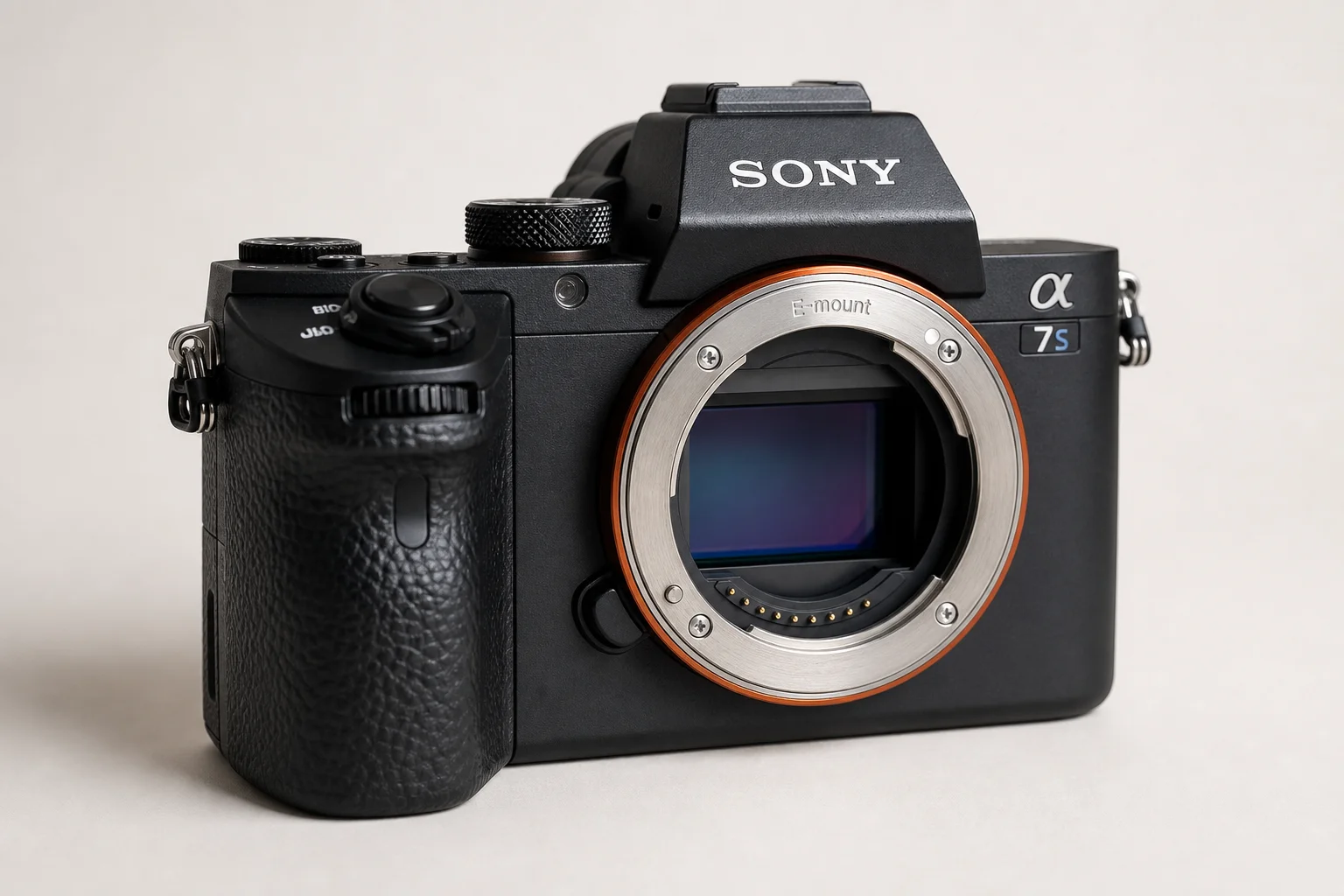
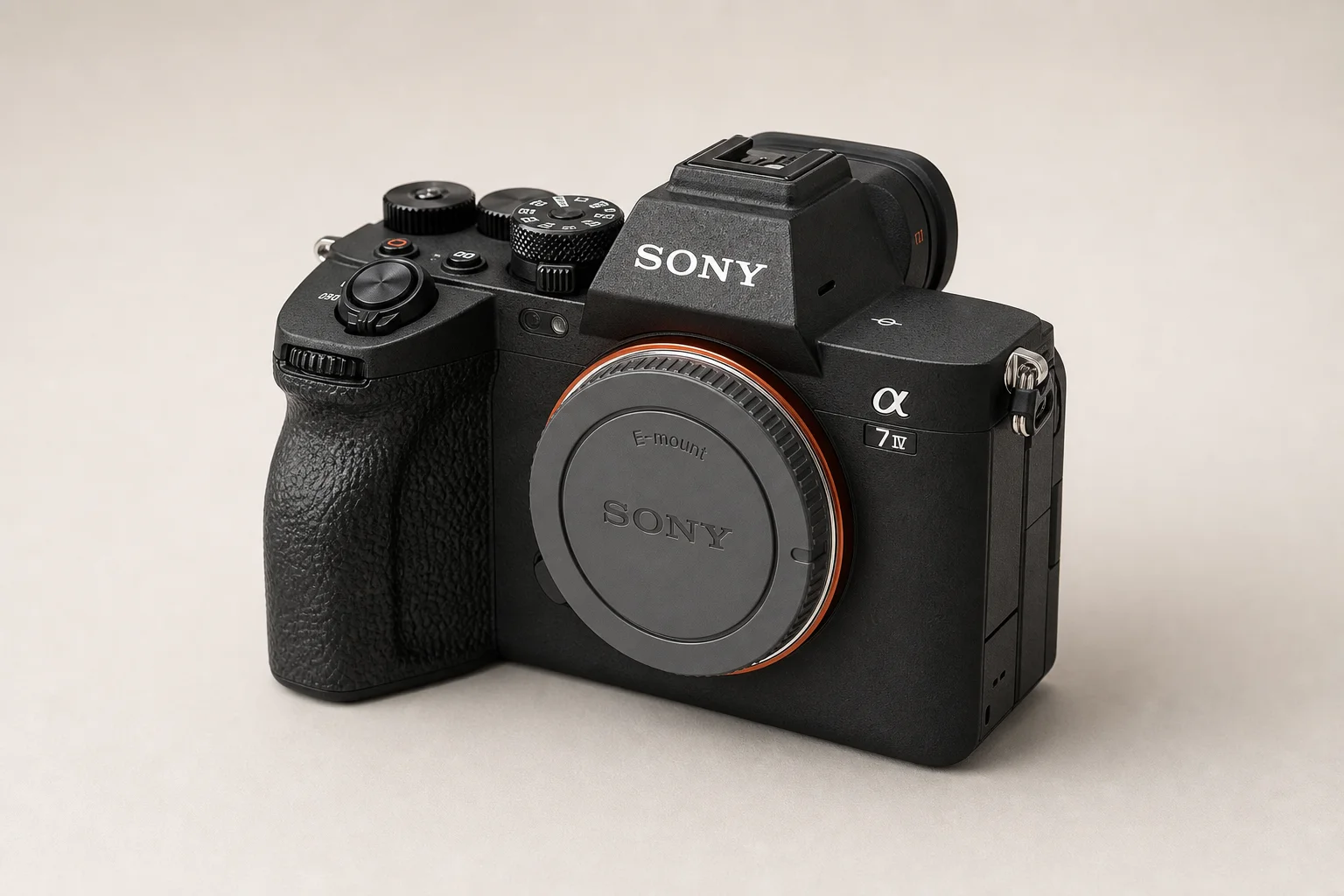
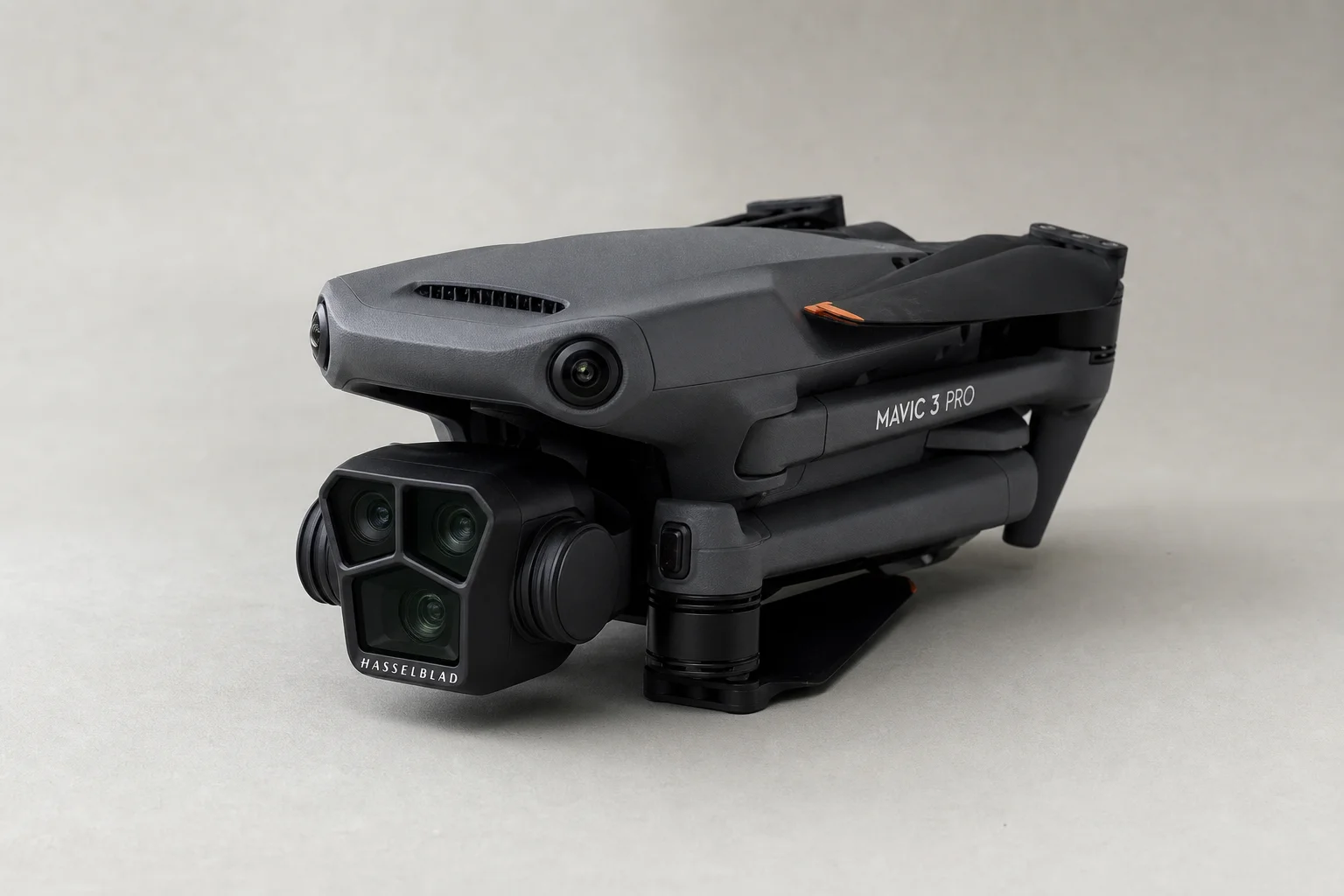
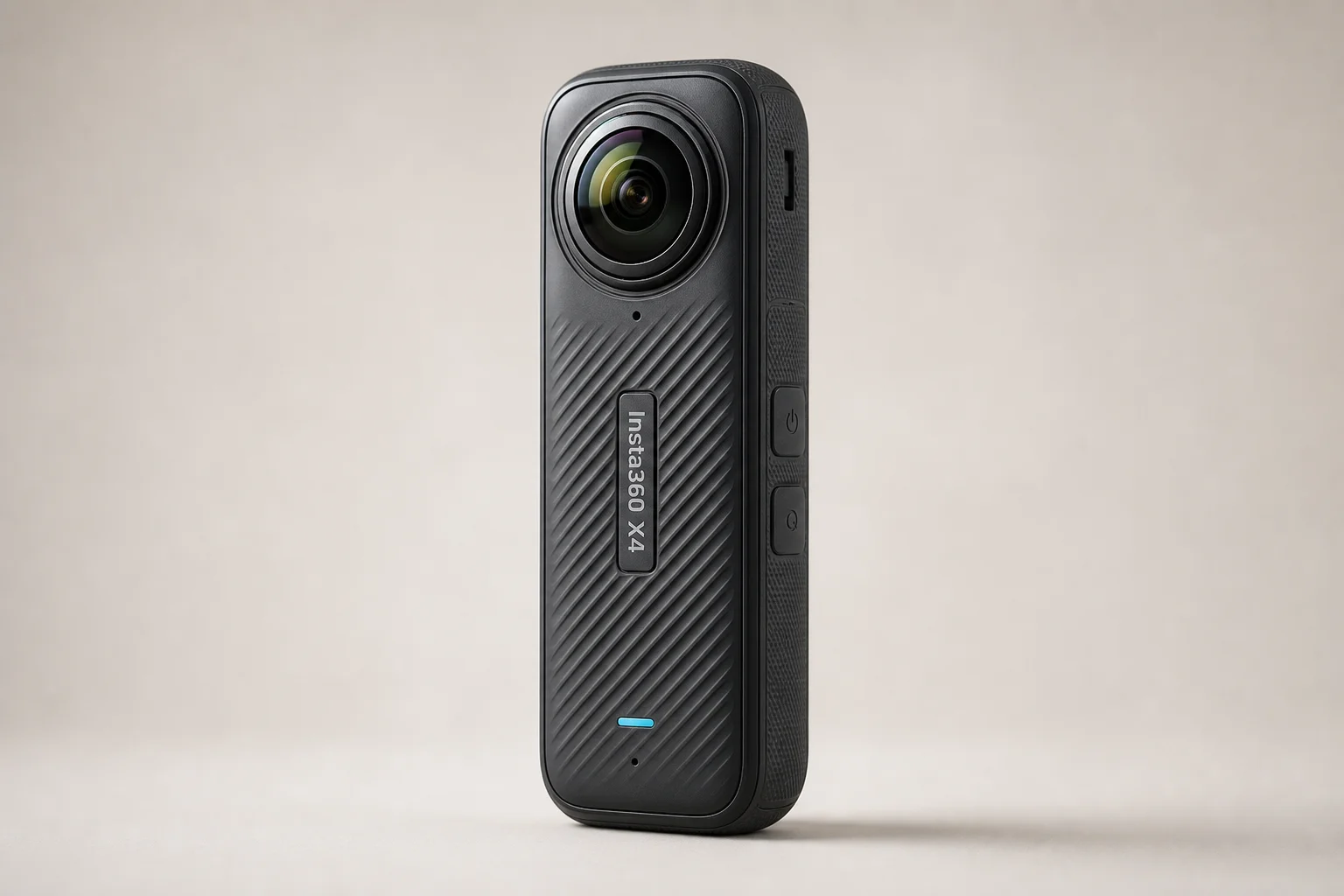
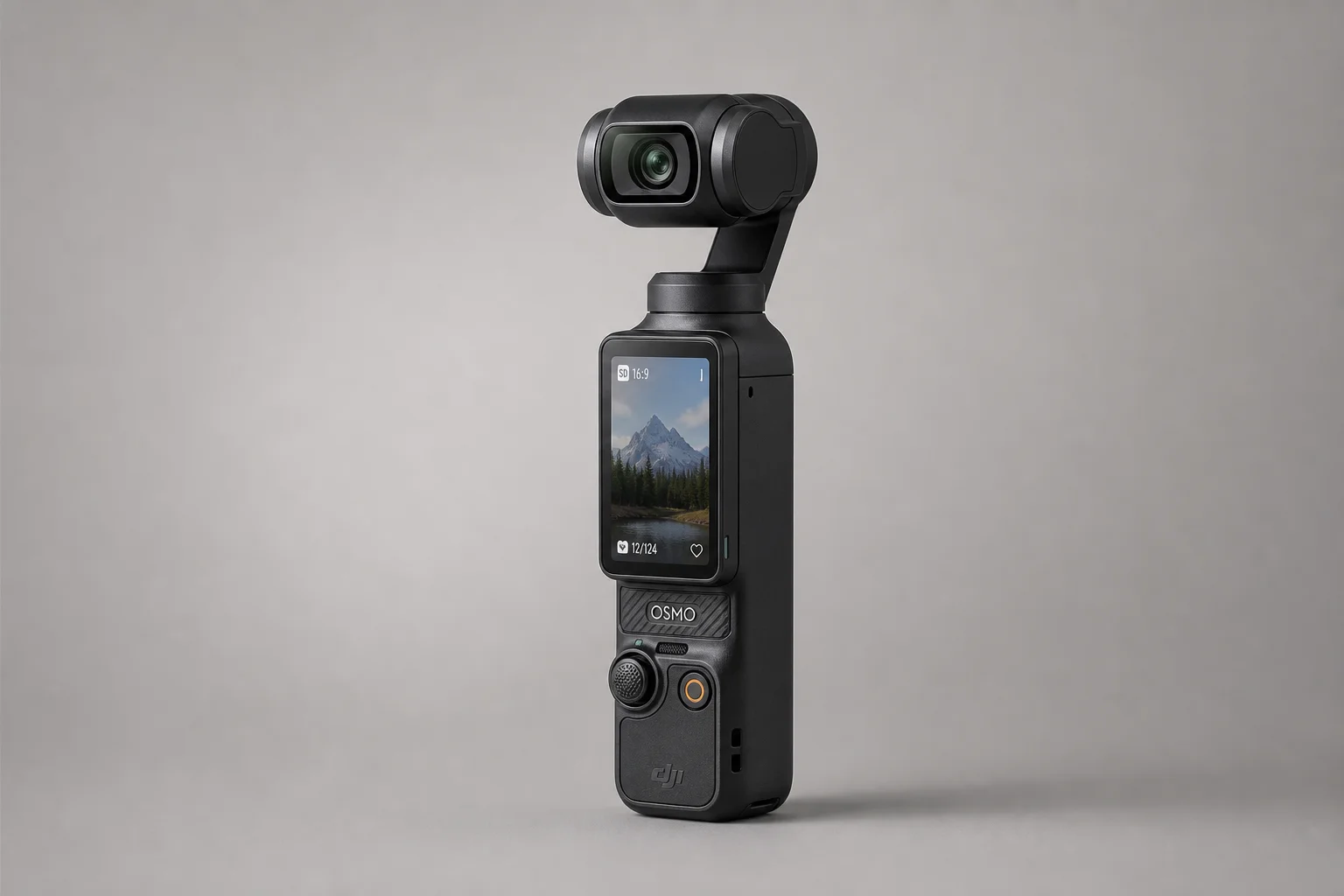
For visual documentation, the camera kit includes the Sony A7S and Sony A7 IV for primary filming, the DJI Mavic 3 Pro for its triple-lens versatility, the Insta360 X4 for immersive 360-degree capture, and the DJI Osmo Pocket 3 for compact stabilized footage.
View more details for DJI Mic 2
Conclusion
Massive drones are reshaping agriculture and logistics by automating dangerous, time-consuming tasks. The FlyCart 30 represents DJI’s commitment to delivery infrastructure, while the Agras T40 demonstrates how agricultural drones have matured into reliable business tools. As operators continue to discover new applications, industrial drones will likely become as essential to farming and logistics as tractors and trucks.
Further reading
Related Reviews
Drones
Best Budget Camera Drones Under 3000: Five Practical Options for Video and Photography
Five affordable camera drones with HD video capability and stable flight performance, each suited to different needs and budgets.
Drones
Best Budget Drones Under $200: Five Practical Options for 2026
Five budget-friendly drones with GPS, 4K cameras, and FPV capabilities. Real strengths and trade-offs to consider before buying.
Drones
Best Drone Cameras Under $500: Five Options for Different Needs
A practical guide to five drones under $500, covering portability, flight time, camera quality, and key features to help you choose.