Power Tools
Makita XGT B-6G Detail Sander Review: A Light, Fast Triangle Sander for Finishing Work
The Makita XGT B-6G detail sander pairs a 3 mm orbit with 40V power, light weight, and dust extraction that puts older 18V and corded models to shame.
Introduction
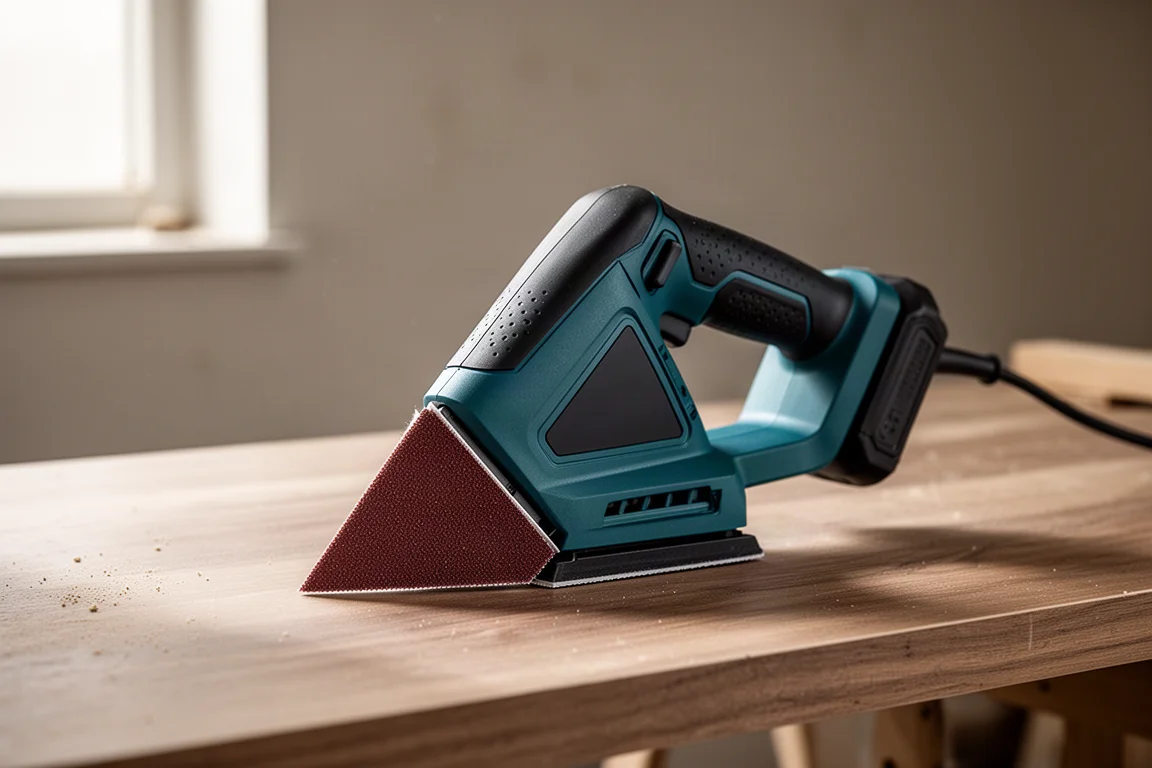
Detail sanders go by many names: Delta sander, triangle sander, mouse sander. Whatever you call them, the Makita XGT B-6G is one of the more interesting entries in the category, because it brings 40V XGT power to a tool class that has long been dominated by small, underpowered corded and 18V machines. This is the third sanders in Makita’s new XGT line we have looked at, following the 125 mm random orbital, with the 150 mm model rounding out the family.
The headline spec is a 3 mm orbit, marked clearly with a large “3” on the top of the tool, running at 6,000 to 10,000 RPM via a speed dial on the side. But specifications only tell part of the story. In use, the B-6G turned out to be dramatically faster, lighter, and more comfortable than the 18V detail sander it effectively replaces, with far better dust extraction as well.
Who This Product Is For
The B-6G suits anyone doing finishing work: cleaning up corners, skirting boards, window frames, or edge details where a random orbital sander cannot reach. It is also a natural upgrade path for owners of older Makita detail sanders, including the long-running corded 1063, which this model comfortably outperforms while weighing nearly 100 g less.
If you already own XGT batteries, the value proposition is straightforward: this is a genuinely lighter, faster machine than the 18V alternative, and the weight saving matters most when sanding walls, ceilings, or anything overhead for extended periods.
Main Strengths
The most striking result from testing is raw speed. Working on identical timber, the 40V B-6G cut roughly four times faster than the 18V equivalent, and while it is still not as fast as a random orbital sander on flat surfaces, it is not designed to be. For a detail tool, the pace is genuinely impressive.
Weight is the other standout. At 979 g without a battery, the B-6G undercuts both the older corded 1063 (1,622 g) and the 18V detail sander (1,084 g). It even comes in lighter than the 125 mm XGT random orbital at 929 g. Once you add a battery the picture shifts, since larger packs push the balance rearward, but the tool itself is notably light for its class.

Comfort also improved significantly. Vibration transmitted to the hand is noticeably lower than the 18V model, which makes longer sessions more manageable. The speed dial gives useful control, and the low speed setting makes it easy to see exactly what the pad is doing before you commit to full power.
Things to Consider Before Buying
One design detail worth understanding before you buy: the B-6G ships with the triangular Delta pad, while the B-005G variant ships with a finger-shaped rectangular pad. You do not need to buy both. The rectangular pad and dust shroud fit directly onto the B-6G. Simply slide off the shroud, remove the pad with the four screws underneath, and screw on the alternative pad. The two models are otherwise the same tool.
That shroud, by the way, is mostly a bumper. It stops the pad edge from bouncing against skirting boards and damaging paintwork when you work up close to edges. Slide it off when you need to get into tight angles.
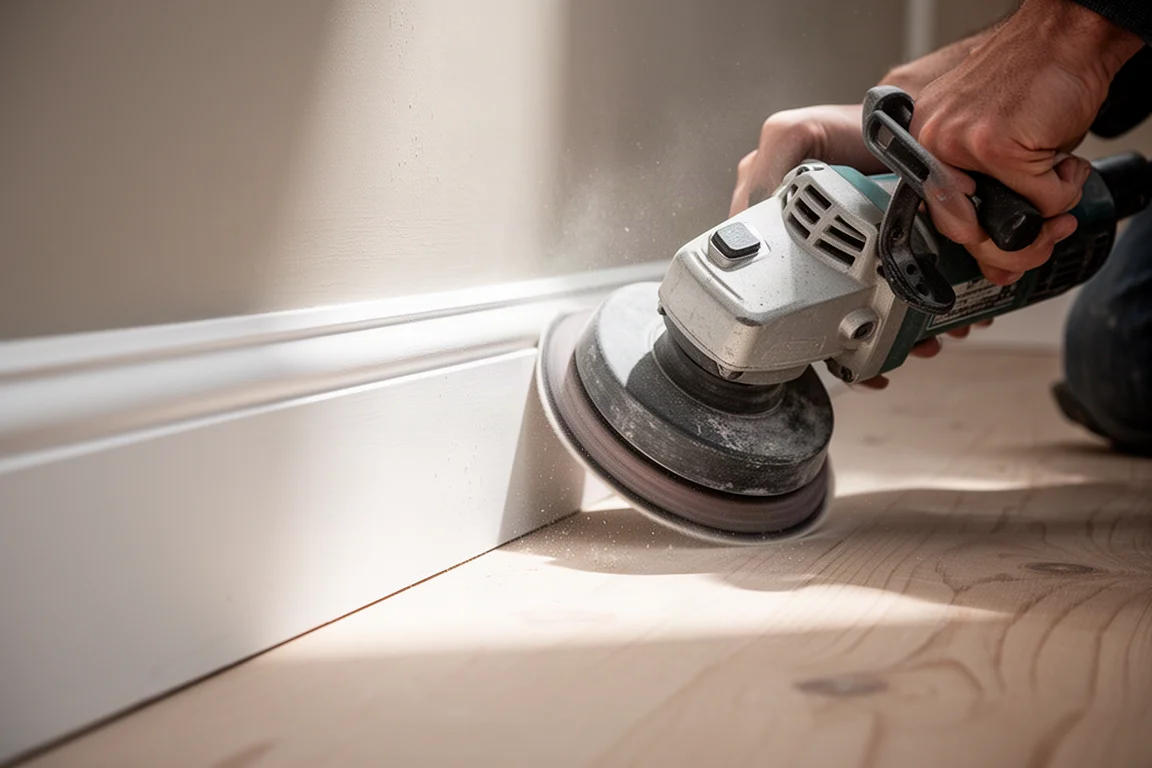
A few accessories sold in some regions are not included everywhere. The rectangular pad does not come with the Delta-pad version, and vice versa, so plan to order one separately if you want both profiles. The mesh abrasive pads supplied are worth keeping, but aftermarket mesh sheets vary widely in quality; cheaper 100 x 140 mm sheets undershoot the required 100 x 150 mm size and clog noticeably faster than premium alternatives.
Dust Extraction and Handling
Dust extraction on the B-6G is a major step up. Compared with the 18V detail sander, which relies on two small holes and tends to leave the abrasive pad plugged up quickly, the 40V machine pulls dust away far more effectively. It is not quite as effective as the random orbital, largely due to the pointed pad shape and the nose extending beyond the extraction path, but for a detail sander it is excellent.
The box includes a generous accessory kit in some markets: a dust extraction port that screws onto the rear and can be swapped between the XGT sanders, a cuff adapter for standard vacuum hoses, a 1.6 m battery adapter cord, a 5 m extension cord, a fabric dust bag, a pad protector for use with mesh sheets, an arm band for routing the cable, and even a hook and carabiner for pairing with Makita’s backpack vacuum harness system.
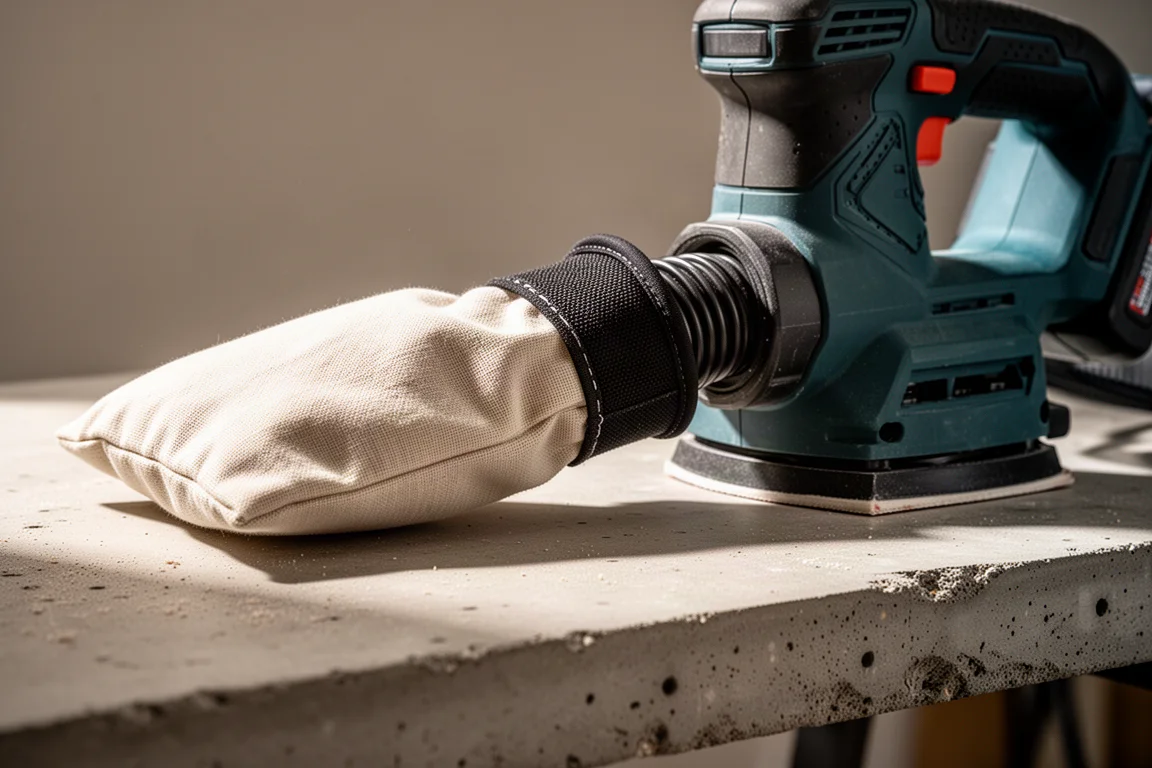
That corded-battery arrangement changes how the tool feels in hand. Because the battery hangs off a lead rather than the tool itself, the B-6G stays balanced and light in a way that battery-on-tool designs cannot match, especially with high-capacity packs that make comparable tools rear-heavy.
Buying Advice
If you are sanding old, weathered, or painted timber, the B-6G makes quick work of it, and the better dust collection means the abrasive stays fresher for longer. It handled a mouldy grey timber surface far faster than the 18V alternative, leaving a cleaner result with less effort.
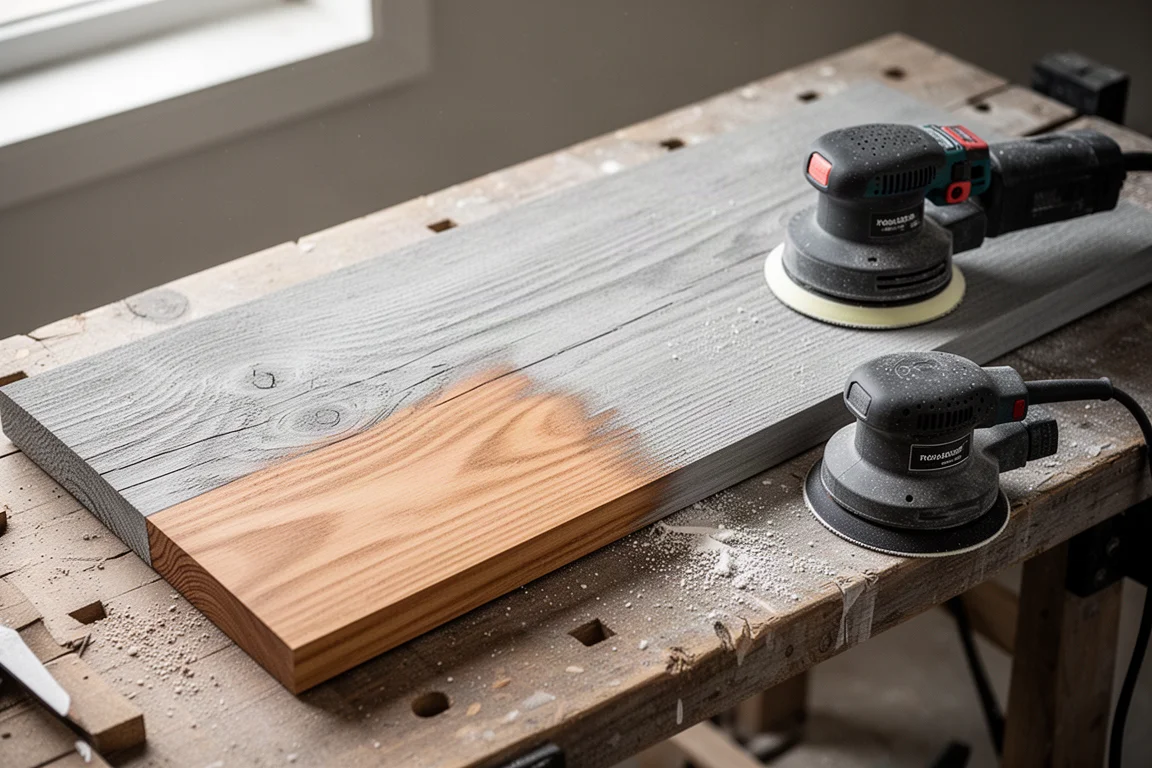
For tightening up swirl marks left by a random orbital on flat boards, the detail sander helps but will not fully eliminate them; expect some finer swirls of its own. Use it for edges, corners, and detail work, and let a random orbital handle the flats.
Our advice: skip the budget third-party mesh pads, match the correct 100 x 150 mm size, and if you want both pad shapes, plan for one extra pad purchase. Beyond that, if you are invested in XGT, this is an easy recommendation over any older Makita detail sander you might still be using.
Conclusion
The Makita XGT B-6G is a lighter, faster, and cleaner-running detail sander than both the 18V alternative and the decades-old corded 1063 it succeeds. With a 3 mm orbit, 6,000 to 10,000 RPM, strong dust extraction, and thoughtful accessories, it earns its place as the default choice for detail sanding work, particularly for anyone already running Makita’s 40V XGT platform.
Product link
View more details for Makita XGT B-6G Detail Sander
This product is mentioned in the review. Check the specifications, options, and compatibility before buying.
View more details for Makita XGT B-6G Detail SanderFurther reading
Related Reviews
Power Tools
Best 1-Inch Pistol Impact Wrenches: Three Heavy-Duty Options Compared
We compare three 1-inch pistol impact wrenches, from a budget-friendly Harbor Freight model to a premium Caterpillar unit, to help you choose the right one.
Power Tools
Best 3/4-Inch Impact Wrenches 2026: Five Contenders Compared
We compare five 3/4-inch impact wrenches across price and performance, from a budget Amazon option to Snap-on's most powerful model yet.
Power Tools
Best Budget Cordless Tools 2026: Walmart Finds That Punch Above Their Price
We tested five cordless tools from Walmart, including a high-torque impact wrench that trades blows with Milwaukee and a $35 duster that outperforms its price class.