Power Tools
Makita XGT 40V vs Metabo HPT 36V Reciprocating Saw: Which Big-Boy Recip Saw Makes More Sense?
A side-by-side look at two serious cordless reciprocating saws, comparing price, weight, size, and features before cutting performance gets tested.
Introduction
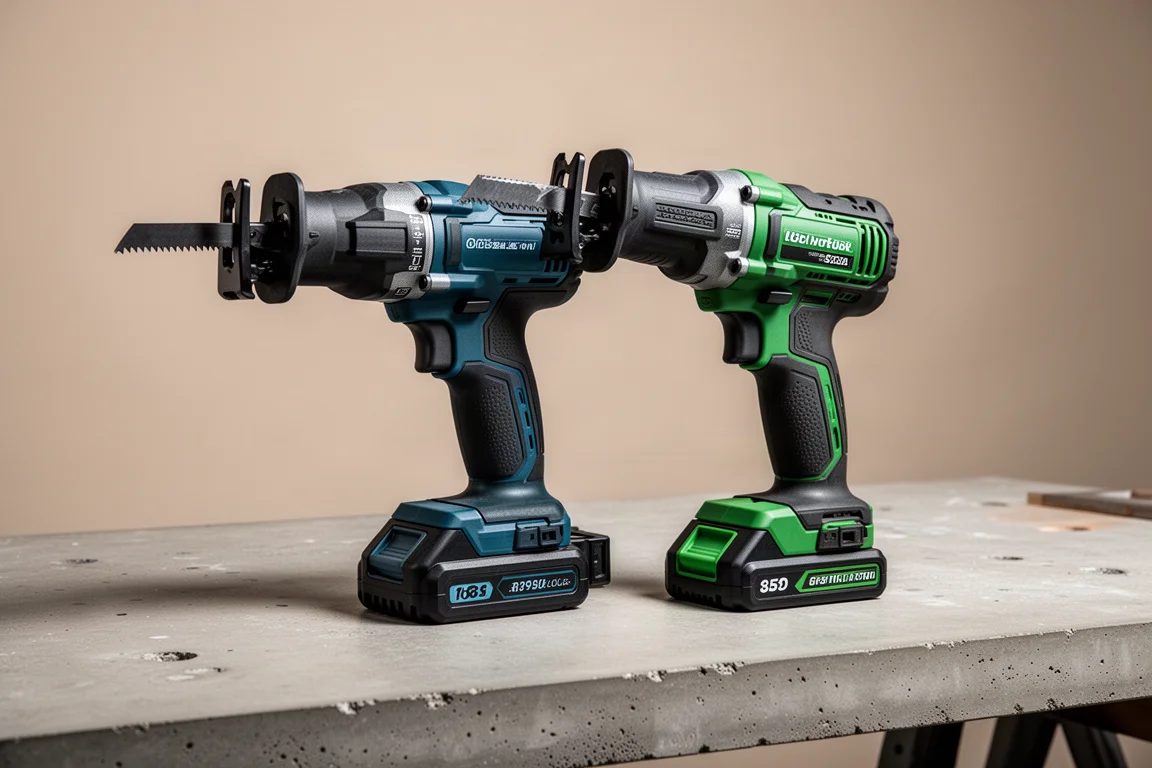
When it comes to full-size cordless reciprocating saws, two names keep coming up: the Makita XGT 40V and the Metabo HPT 36V. Both are serious demo tools aimed at users who cut a lot of material, and both sit at the top of their respective battery platforms. This comparison looks at first impressions, build, size, weight, and value before any cutting performance testing.
The Makita was bought right when it launched, specifically for a large demo job. The Metabo arrived more recently, with a big high-capacity battery still on the way. That timing gives a useful perspective: one tool has been in the rotation for a while, the other is fresh out of the box. Here is how they stack up on paper and in the hand.
Price and Value: Half the Money for the Metabo
The price gap between these two saws is the first thing that jumps out. The Makita XGT 40V recip saw was picked up for around $340, a kit that included a 4Ah battery and a rapid charger. That was the only place it could reliably be found at launch, and it was bought under time pressure for a weekend demo job.
The Metabo HPT 36V saw, by contrast, cost about $100 for the bare tool. A large 36V/8Ah (18V x 2) battery was found separately for roughly $50, and a charger was already on hand from other Metabo purchases. All in, the complete Metabo setup came in at a little under half the total cost of the Makita kit.
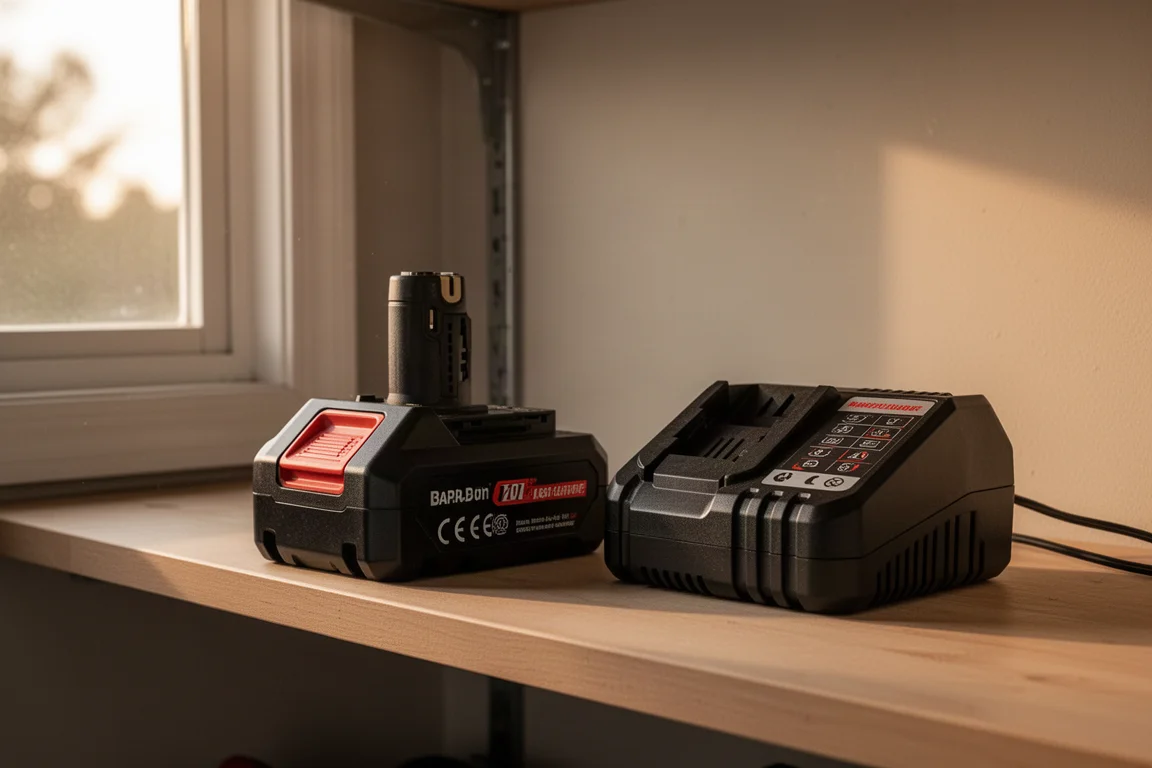
For anyone already invested in a battery platform, those numbers matter. The Metabo is clearly the value play here, while the Makita carries a premium that reflects its newer XGT platform.
The Orbital Action Gap
One feature difference stands out immediately: the Metabo HPT 36V has orbital action, and the Makita XGT 40V does not. For a saw in this price class, that is a genuine surprise. Orbital action typically makes faster cuts in wood and demolition work, and finding it on a saw that costs half as much is notable.
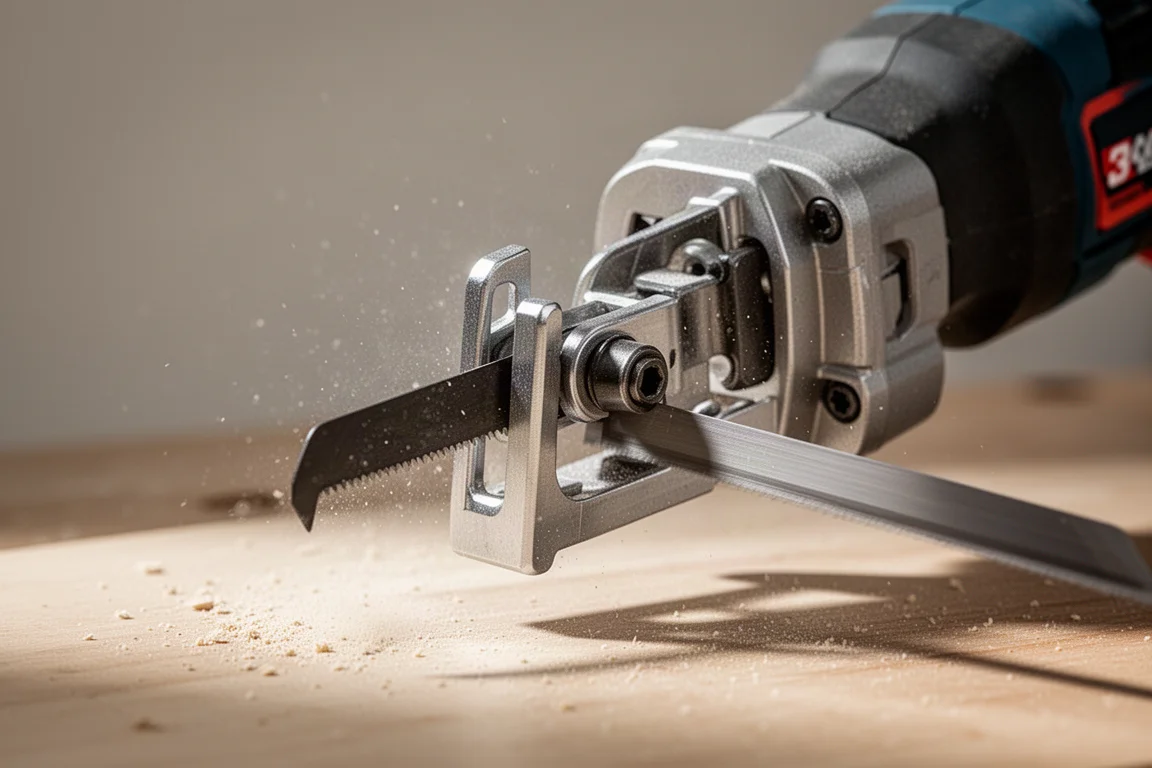
There is a twist, though. Newer versions of the Makita XGT recip saw released in Japan do include orbital action. The catch is import pricing: through overseas sellers, those newer models are currently running around $400 to $500 for the bare saw alone, with no battery or charger included. At that level, it is hard to justify unless a deal or sale brings the price down.
Size and Weight: Close, But Not Identical
Lined up side by side, the two saws are almost exactly the same overall length, with the Makita’s shoe table slightly longer. The Makita body is a bit thinner through the handle area, while the Metabo is somewhat thicker, likely due to the internal orbital mechanism.
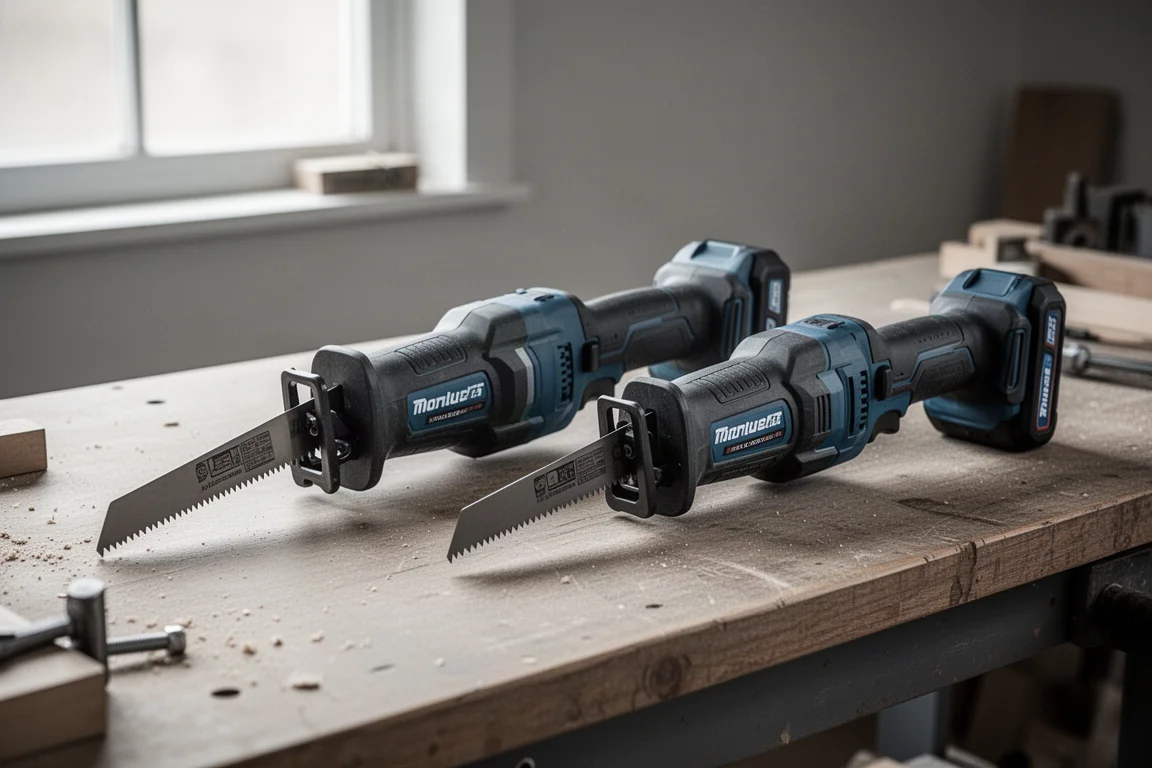
In the hand, the Makita feels denser and chunkier. It has more of a solid, substantial presence, while the Metabo comes across as the lighter-feeling tool. Both saws also feature wrapped rafter hooks, a small but practical detail for hanging the saw off a ladder or framing wall between cuts.
Which One Should You Buy?
At this stage, before cutting tests, the picture looks like this. The Metabo HPT 36V offers orbital action and a dramatically lower total cost, making it the obvious pick for budget-conscious buyers or anyone already running Metabo batteries. The Makita XGT 40V is the denser, more premium-feeling tool, and it makes sense for users committed to the XGT platform, but its lack of orbital action at this price is a real trade-off.

The real question is which saw cuts faster, and that head-to-head performance test is what matters most before spending money on either. On raw value alone, though, the Metabo currently has a strong case: similar length, lighter feel, orbital action, and roughly half the overall investment.
Conclusion
The Makita XGT 40V reciprocating saw is a well-built, dense, premium-feeling tool, but it costs significantly more and skips orbital action, a feature that even its own newer Japanese-market versions now include. The Metabo HPT 36V, at a fraction of the total cost, brings orbital action, a comparable footprint, and a lighter feel. Until cutting tests settle the performance question, the Metabo stands out as the smarter value, while the Makita remains the choice for XGT loyalists who want that build quality on their existing platform.
Product link
View more details for Makita XGT 40V Reciprocating Saw
This product is mentioned in the review. Check the specifications, options, and compatibility before buying.
View more details for Makita XGT 40V Reciprocating SawFurther reading
Related Reviews
Power Tools
Best 1-Inch Pistol Impact Wrenches: Three Heavy-Duty Options Compared
We compare three 1-inch pistol impact wrenches, from a budget-friendly Harbor Freight model to a premium Caterpillar unit, to help you choose the right one.
Power Tools
Best 3/4-Inch Impact Wrenches 2026: Five Contenders Compared
We compare five 3/4-inch impact wrenches across price and performance, from a budget Amazon option to Snap-on's most powerful model yet.
Power Tools
Best Budget Cordless Tools 2026: Walmart Finds That Punch Above Their Price
We tested five cordless tools from Walmart, including a high-torque impact wrench that trades blows with Milwaukee and a $35 duster that outperforms its price class.