Jobsite Appliances
Makita XGT 40V Microwave Review: A Cordless Lunch Heater That Actually Works
The Makita MW001G XGT 40V Max cordless microwave heats real food on tool batteries. Here is how it performs, what it costs in runtime, and who should buy it.
Introduction
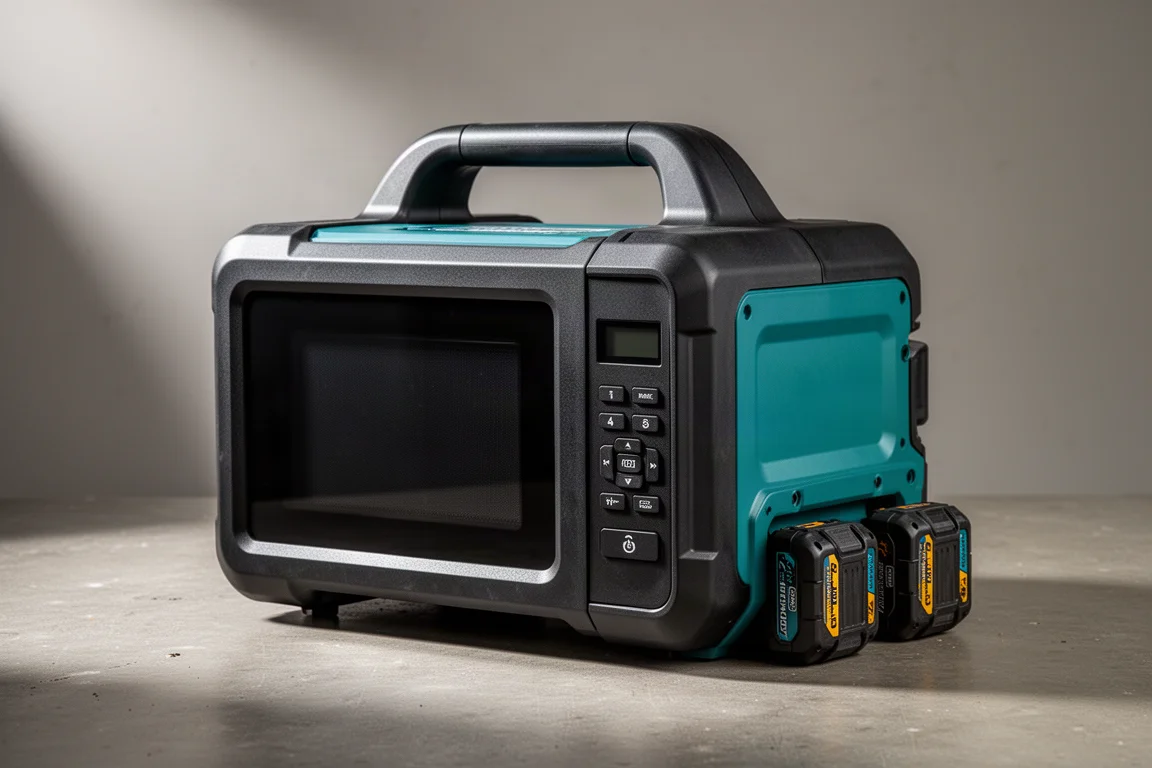
Cordless microwaves have been rumoured for years, and the Makita XGT 40V Max microwave (model MW001G) is the first one many of us have actually seen working. It runs on the same 40V Max XGT batteries that power Makita’s outdoor and construction equipment, which makes it a genuinely novel proposition for job sites, vans, and anywhere else without a wall socket.
The obvious question is whether a battery-powered microwave is a gimmick or a genuine lunch solution. After heating dinners, health bowls, a cold takeaway burger, and a frozen pie, the short answer is that it works well, with realistic expectations.
Specs at a Glance
The MW001G weighs 8.9 kg without batteries, rising to around 12.5 kg with two 8Ah packs. Externally it measures roughly 340 mm wide, 340 mm high, and 300 mm deep without a battery fitted. The interior comes in at about 255 mm wide, 120 mm high, and 240 mm deep.
Key numbers:
- Rated input: 800 watts
- Microwave frequency: 2450 MHz
- Power settings: 500W and 350W
- Timer: 10-second increments up to 20 minutes
- USB output: 5V at 2.4A
- Made in China
Despite having provisions for two batteries, this is a 40V Max tool, not an 80V platform. One battery is all it needs to run.
Design and Controls
The control panel is refreshingly simple: power button, a 500W/350W selector, timer, start, stop, and a battery display. The timer steps in 10-second increments up to 20 minutes. A removable front grille lets you blow sawdust out of the filter, which is a thoughtful touch for a tool destined for dusty environments. There is no rotating tray inside, just a flat plate, which makes cleaning easier and means nothing can slide around in transit. A silicone-style seal keeps moisture out of the unit, and there is an interior light, though it is not especially bright.
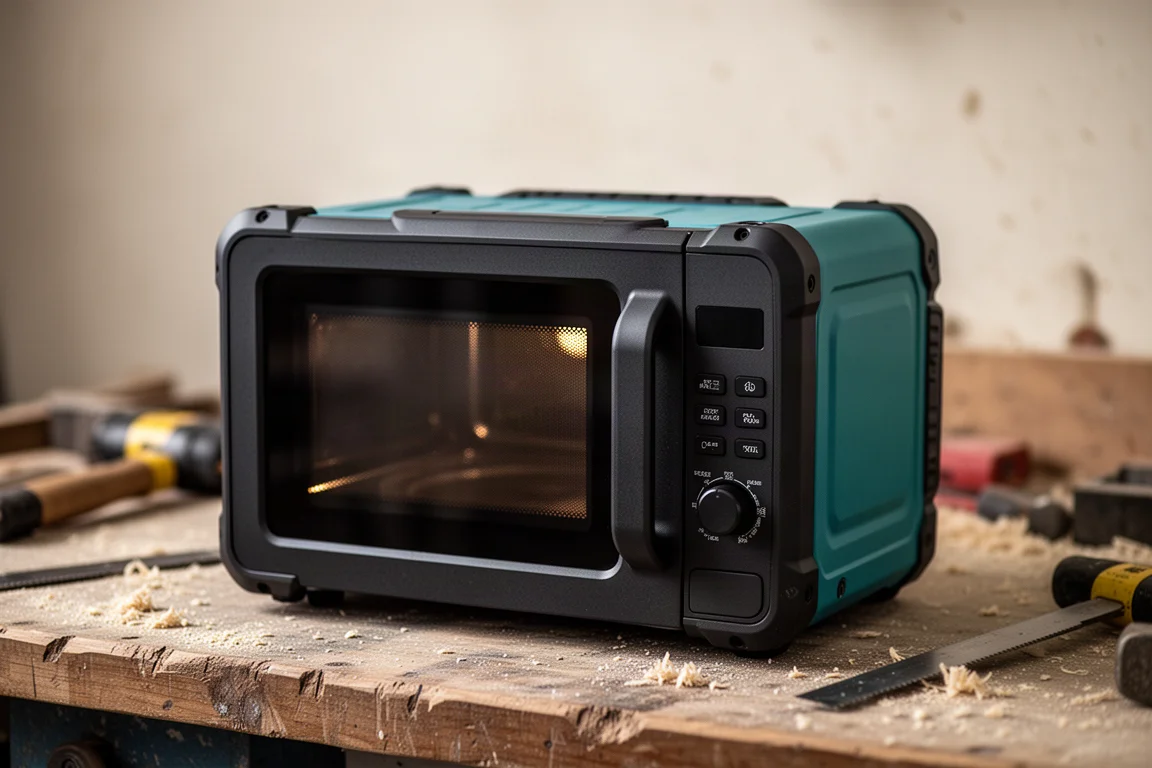
The door is old school: you just pull it open. Nothing to break. One notable omission is AC power; you cannot plug it into the wall at all. It is battery only, which will annoy some buyers.
Real-World Heating Tests
The 500W setting is the headline limitation. A typical home microwave runs at 1,000W or more, so food takes roughly 30 percent longer here rather than the double you might expect. Leftovers from the fridge took about three minutes and ten seconds on a 2Ah battery, and the food came out steaming hot. A chilled wellness bowl needed around three minutes total with a stir partway through, compared with about two minutes in a 1,200W kitchen unit.
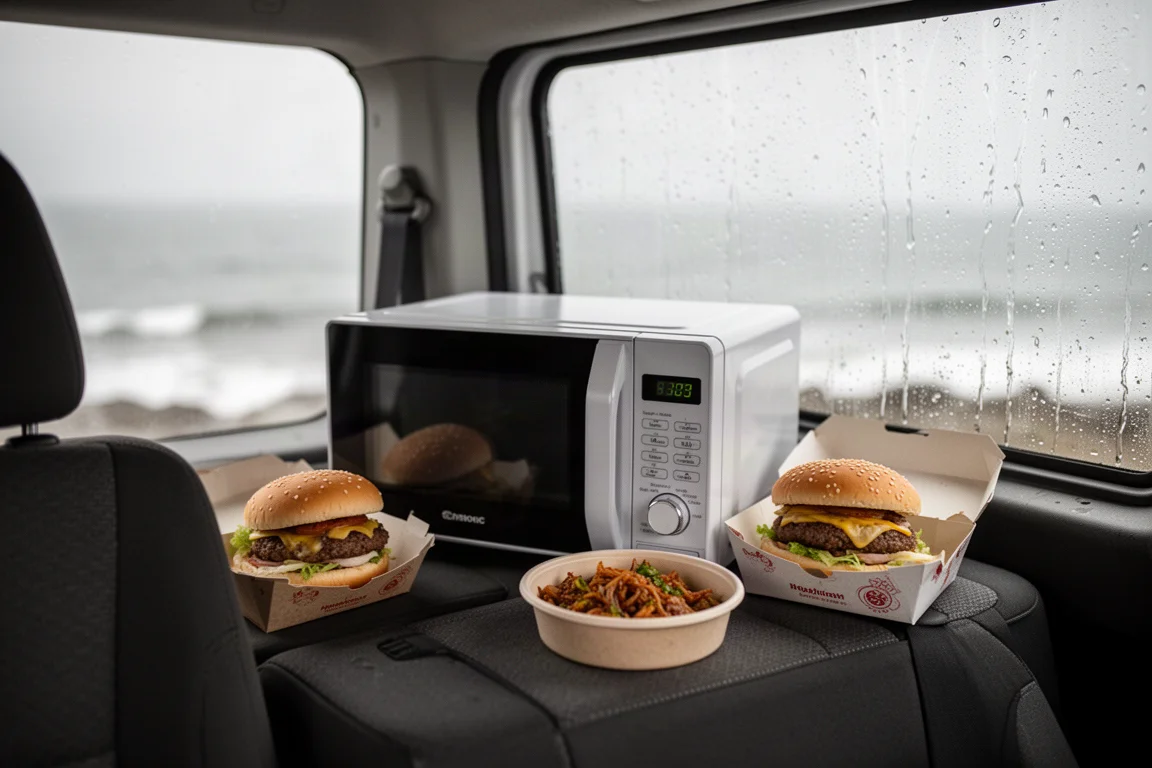
The best real-world test was a takeaway burger that had gone stone cold 45 minutes after ordering, heated on the back seat of a car on a rainy day. One 2Ah battery conked out mid-cycle despite showing two bars, but a fresh pack picked the countdown up automatically. The burger came back properly hot, and the tester noted the interior was getting too hot to hold comfortably. Be realistic: a 2Ah battery gives roughly three minutes of full-power heating, enough for one meal but little more.
Frozen Pie and Runtime Limit Test
The classic frozen pie test tells you the most about this unit’s ceiling. Three and a half minutes from frozen got a mince and cheese pie bubbling hot, though not as crispy as the packet promises, which is true of any microwave. Running it at eight minutes of constant runtime, the unit drops from 500W to 350W after about eight minutes to manage heat and battery.
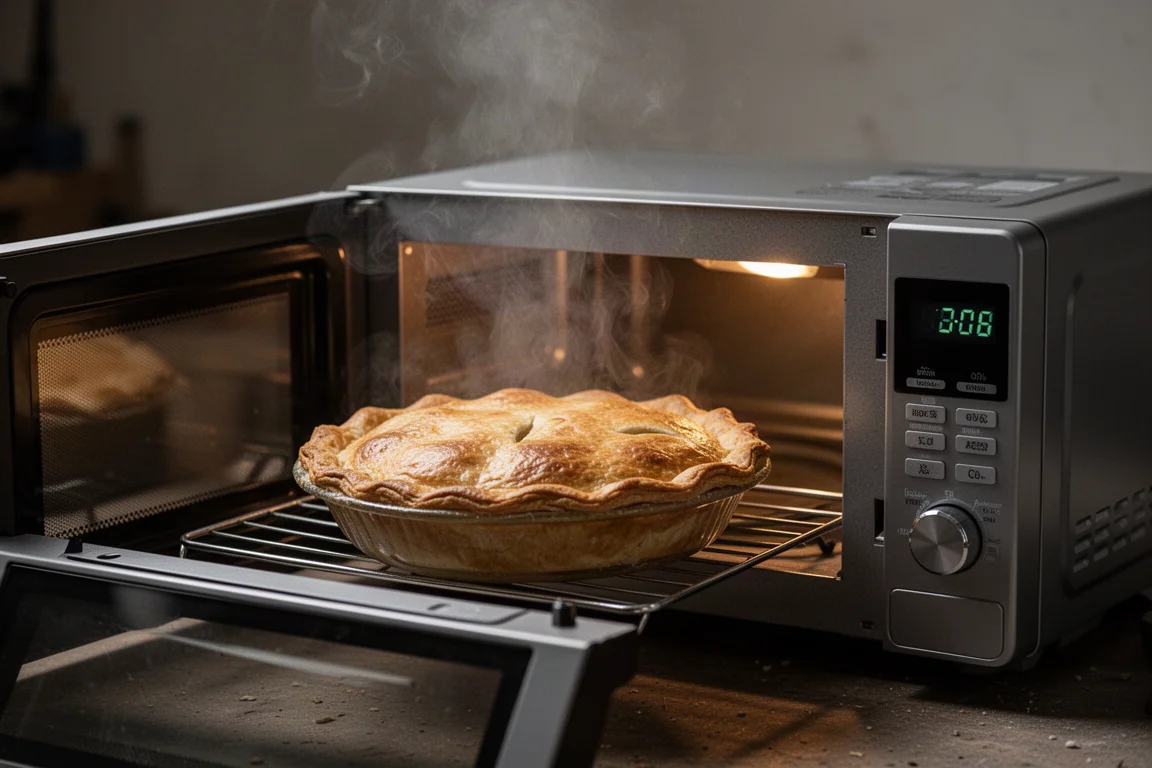
The endurance test confirmed Makita’s runtime claims almost to the second: the microwave cut out one second short of 11 minutes total runtime on a 5Ah pack. At that point the battery had run down to 30.9V and had heated to 55 degrees Celsius internally, hot enough that the charger will cycle its fan before accepting a charge. A word of warning: the USB port only works while the microwave is switched on, and resting your phone on top of a running microwave is not the smartest charging setup.
Battery Runtime and Charging Behaviour
Makita’s official figures and the real results line up closely:
| Batteries | Claimed runtime | Observed |
|---|---|---|
| 2 x 2Ah | 6 minutes | Just over 7 minutes |
| 2 x 2.5Ah | 8 minutes | Around 9 minutes |
| 2 x 4Ah | 15 minutes | About 15 minutes |
| 2 x 5Ah | 22 minutes | 21 minutes 58 seconds |
| 2 x 8Ah | 35 minutes | Fits tightly height-wise |
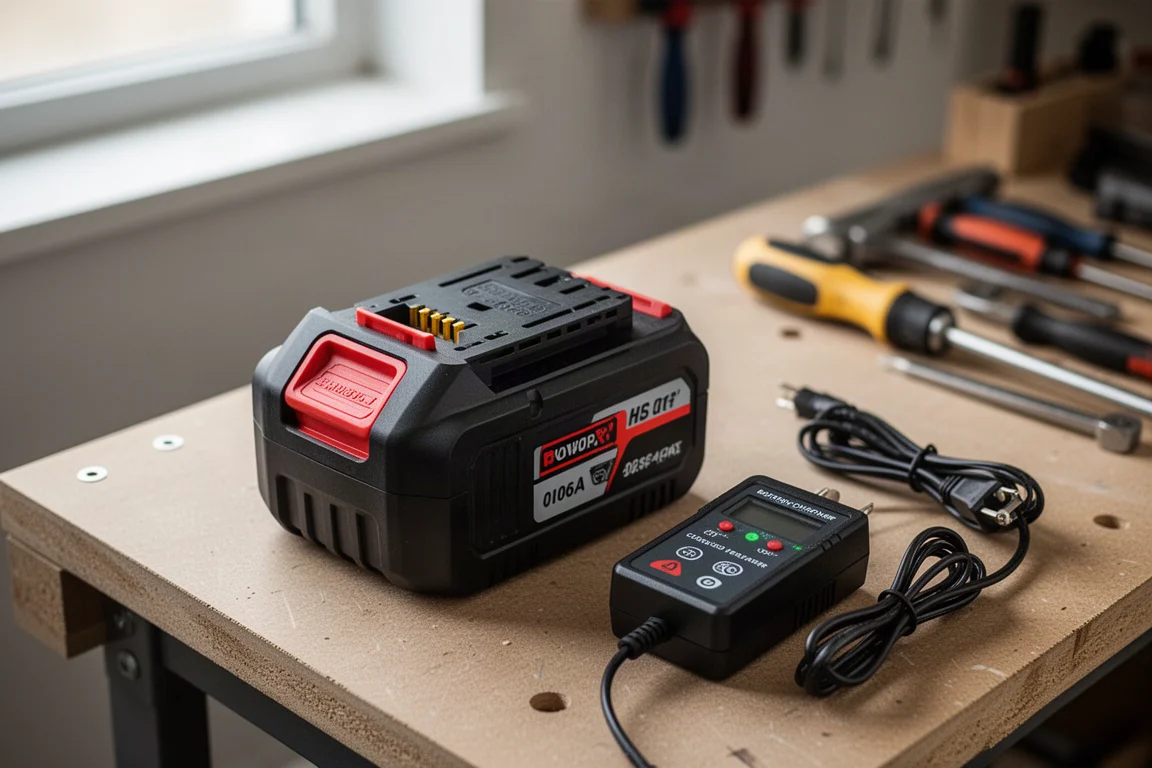
For anyone needing to feed a whole crew, Makita also offers the PDC 1200 backpack power supply (36V, 33.5Ah), which reportedly keeps the unit running for an hour and 25 minutes. In Australia and New Zealand, launch buyers can claim a toasted sandwich maker via redemption for the month of May, a clever companion accessory since a prepared sandwich toasts up inside the microwave.
Who Should Buy It
This is not a replacement for your kitchen microwave, and it was never meant to be. It is for tradies and campers who want hot food where there is no power point: job sites, vans, boats, worksites running on XGT batteries anyway. If your lunch routine involves pies, sandwiches, and leftovers that need a few minutes of heating, it does the job with minimal fuss. If you expect to cook full meals, look elsewhere.
Conclusion
The Makita MW001G is more than a novelty. It heats food faster than its modest 500W rating suggests, the controls are dead simple, the flat interior is easy to clean, and the runtime figures are honest. One battery heats a single meal comfortably, and spare packs or the backpack power supply extend it for a crew. As a first-of-its-kind battery appliance, it is a little gimmicky and a little expensive, but it also signals how far tool battery platforms have come. If hot lunch on site matters to you, this is a genuinely useful machine.
Product link
View more details for Makita XGT 40V Microwave (MW001G)
This product is mentioned in the review. Check the specifications, options, and compatibility before buying.
View more details for Makita XGT 40V Microwave (MW001G)Further reading
Related Reviews
Power Tools
Best 3/4-Inch Impact Wrenches 2026: Five Contenders Compared
We compare five 3/4-inch impact wrenches across price and performance, from a budget Amazon option to Snap-on's most powerful model yet.

Power Tools
Best Cordless Impact Drivers 2026: 12 Models Tested for Power, Speed, and Value
We tested 12 cordless impact drivers from leading brands to find the best performers for fastening, driving, and bolt breaking.

Power Tools
Best Right Angle Impact Wrenches 2026: Three Models Put to the Test
A close look at three right angle impact wrenches, including a record-breaking Makita and two budget options that fall short.