Power Tools
Makita XGT 40V DBO01CG Review: A Cordless Random Orbital Sander That Grows With You
A 5 mm orbit, 125 mm pad random orbital sander from Makita's 40V XGT line, with swappable backing pads and impressive runtime. Here is what it is like to live with.
Introduction
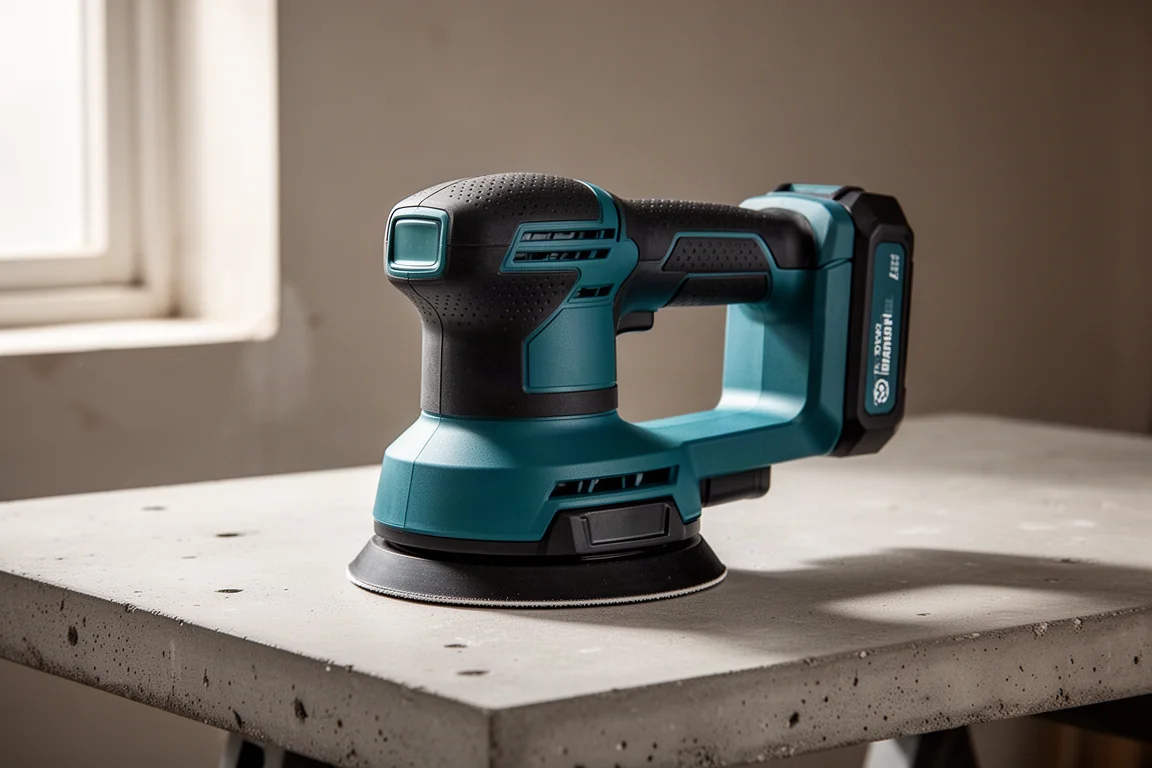
Makita’s XGT 40V sander lineup is quietly becoming one of the more interesting cordless tool families around, and the DBO01CG is a good place to start. It is a random orbital sander with a 5 mm orbit and a 125 mm (5 inch) pad, running on Makita’s 40V max XGT battery platform. On paper that combination promises fast material removal without a cord in the way, and in use it largely delivers.
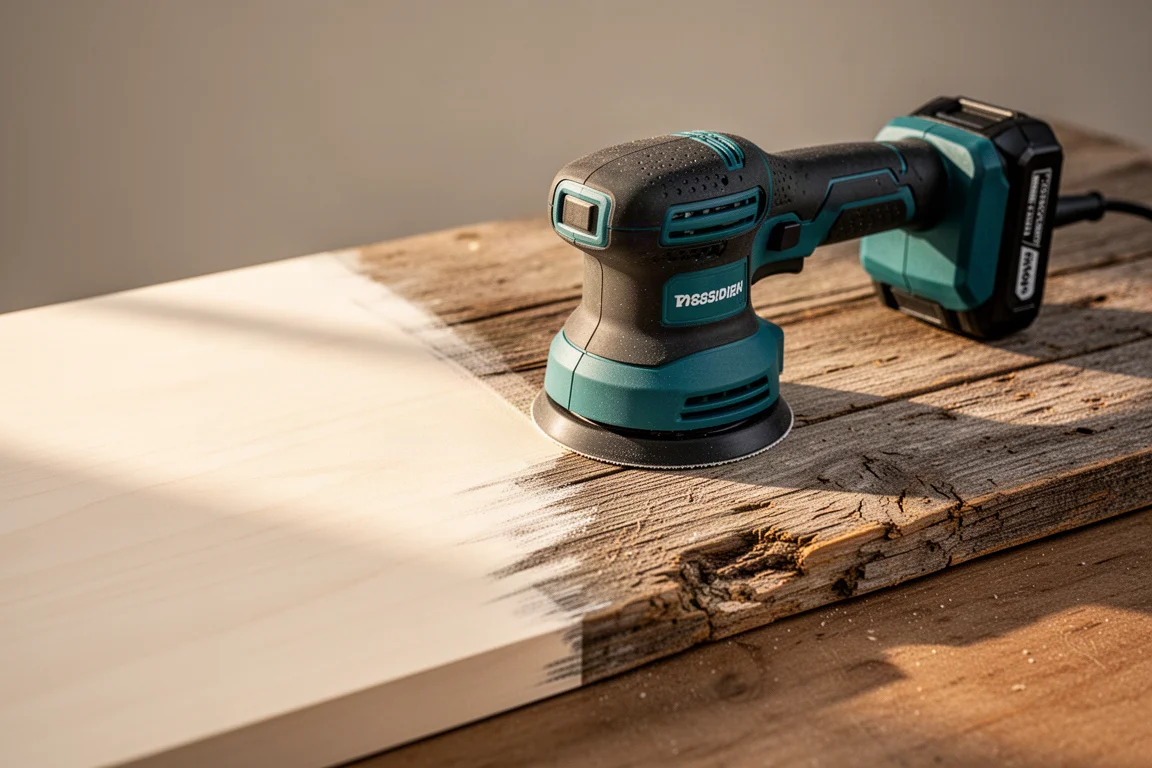
This sander has now been put through a full decking-refresh job: sanding weathered timber panels, testing pad swaps, running it with dust extraction, and pushing through several rounds of mesh sanding discs. Here is how it held up, and who it makes sense for.
Who This Product Is For
The DBO01CG suits woodworkers and renovators who want a cordless finish sander for panel work, decking, furniture, and smaller flat surfaces. If you already own XGT batteries, the value is obvious: you buy the bare tool and you are running. If you sand large flat areas regularly and want faster coverage, the same family offers a 150 mm (6 inch) variant, and as this review shows, you do not necessarily need to buy both tools to cover both sizes.
One Sander, Four Configurations
One of the smartest things about this range is the modularity. Makita has released four random orbital variants so far:
- DBO01CG: 5 mm orbit, 125 mm (5 inch) pad
- DBO02: 5 mm orbit, 150 mm (6 inch) pad
- DBO03: 3 mm orbit, 125 mm (5 inch) pad
- DBO04: 3 mm orbit, 150 mm (6 inch) pad
The key insight is that the pads are interchangeable across the random orbital models. Buy the 125 mm version and later decide you want the larger 150 mm pad for big flat areas? You can simply buy the pad and swap it onto the same tool. The orbit is fixed at either 5 mm or 3 mm, so you cannot change that, but you avoid paying twice for the motor, body, and accessories you already own.
The same logic applies to Makita’s two sheet-style orbit sanders in this line: one with a rectangular pad and one with a triangular detail pad, both of which accept each other’s pads. For anyone short on workshop space, one body with swappable pads is a genuinely practical approach.
Swapping the Backing Pad
Changing pads is straightforward. Flip the sander over, remove four screws with a screwdriver, lift off the pad, and fit the replacement. The only mildly annoying part is lining up the four mounting holes on the larger pad: there is no key or positive locating point, so you spin the pad until the holes align before refitting the screws. It takes a minute but it is not difficult.
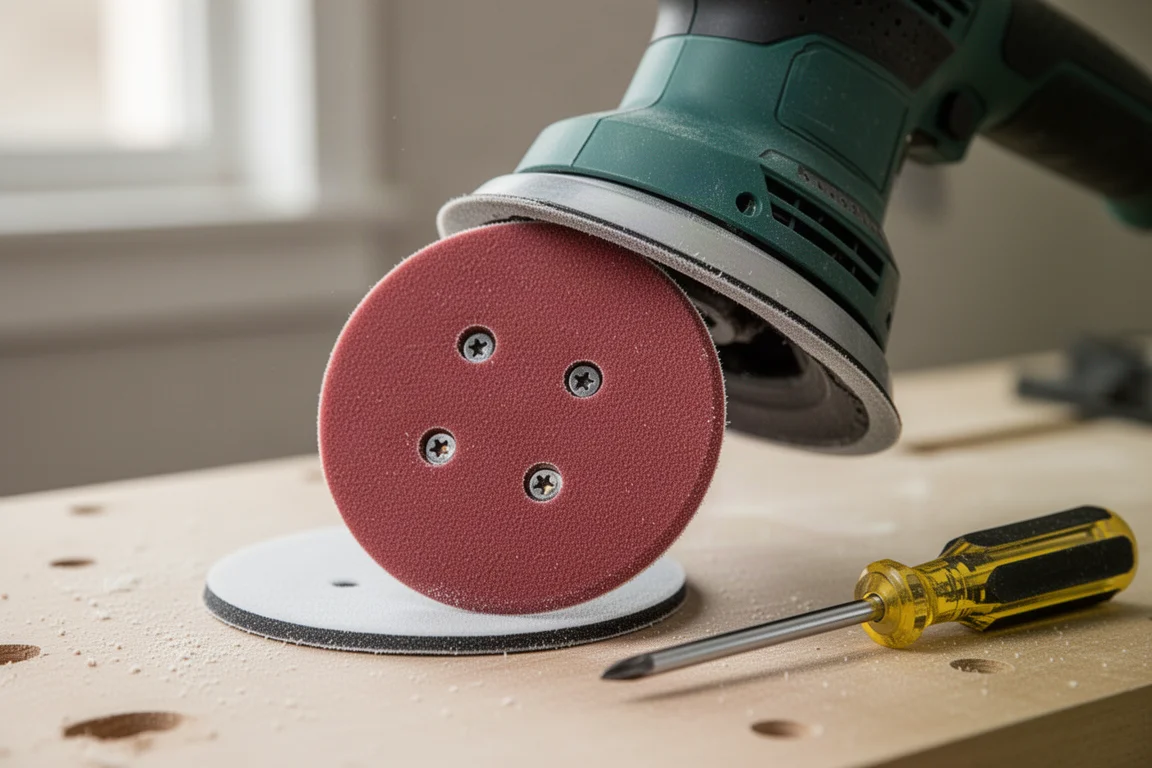
One gap worth knowing about: the tool ships with a sacrificial saver pad that sits between the backing pad and the mesh sanding disc, protecting the expensive backing pad from hook-and-loop wear and dust clogging. At the time of testing, the replacement 150 mm pads did not include this saver pad, though Makita mesh discs bundled with backing pads were reportedly on the way in some regions.
Cable, Vacuum, and Battery Setup
A few setup details make a big difference in daily use. Pairing the sander with a portable cordless vacuum turns this into an excellent low-dust sanding system. Makita offers a 5 m battery extension lead that lets you run the vacuum off a large battery while the sander’s cable runs alongside, and Velcro-tying the cable to the hose keeps everything as one unit that follows the tool instead of tangling or snagging.
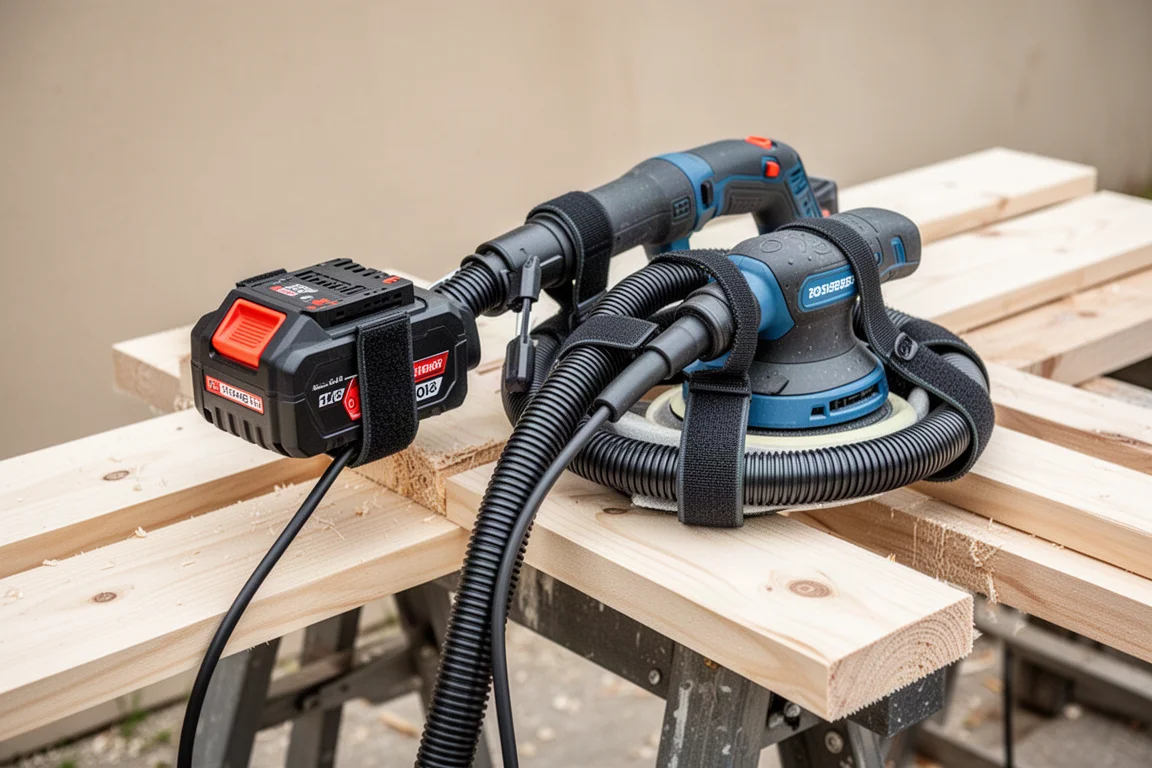
That tethered arrangement solves a real annoyance. With the shorter 1.6 m cable that comes with the sander, clipping it to a belt means you have to unclip every time you set the tool down to grab another board. With the longer cable and the cord secured to the hose, you can put the sander down and walk away freely. For repetitive work like sanding thin boards back and forth, this is a meaningful quality-of-life improvement.
As for runtime, sanding roughly 7 square metres of weathered timber consumed about one bar of a single XGT battery. Extrapolating, that suggests somewhere in the region of 28 square metres per charge depending on grit, orbit choice, and how hard you lean on the tool. That was comfortably more than enough for a full working session.
Main Strengths
- Swap-anything pad system: one body covers 125 mm and 150 mm jobs with a simple pad change
- Strong material removal at full speed; a test patch of weathered decking came up quickly with a 120 grit mesh disc
- Excellent dust extraction when paired with a cordless vacuum, with the shroud around the pad also acting as a helpful edge guide along angles and trim
- Very good battery efficiency for the work done
- Comfortable palm-grip handling with manageable vibration at 125 mm
Things to Consider Before Buying
The 125 mm pad with a 5 mm orbit is the sweet spot for narrow boards and general finish work, but it is not flawless. With generic mesh sanding discs, the test surface picked up noticeable swirl and cut marks even at 120 grit. The same discs in a premium brand behaved better in earlier use, so disc quality clearly matters: heavy ridges on cheap mesh discs can be aggressive despite the grit rating. If surface finish is critical, budget for quality discs, or consider the 3 mm orbit variant for finer finishing.
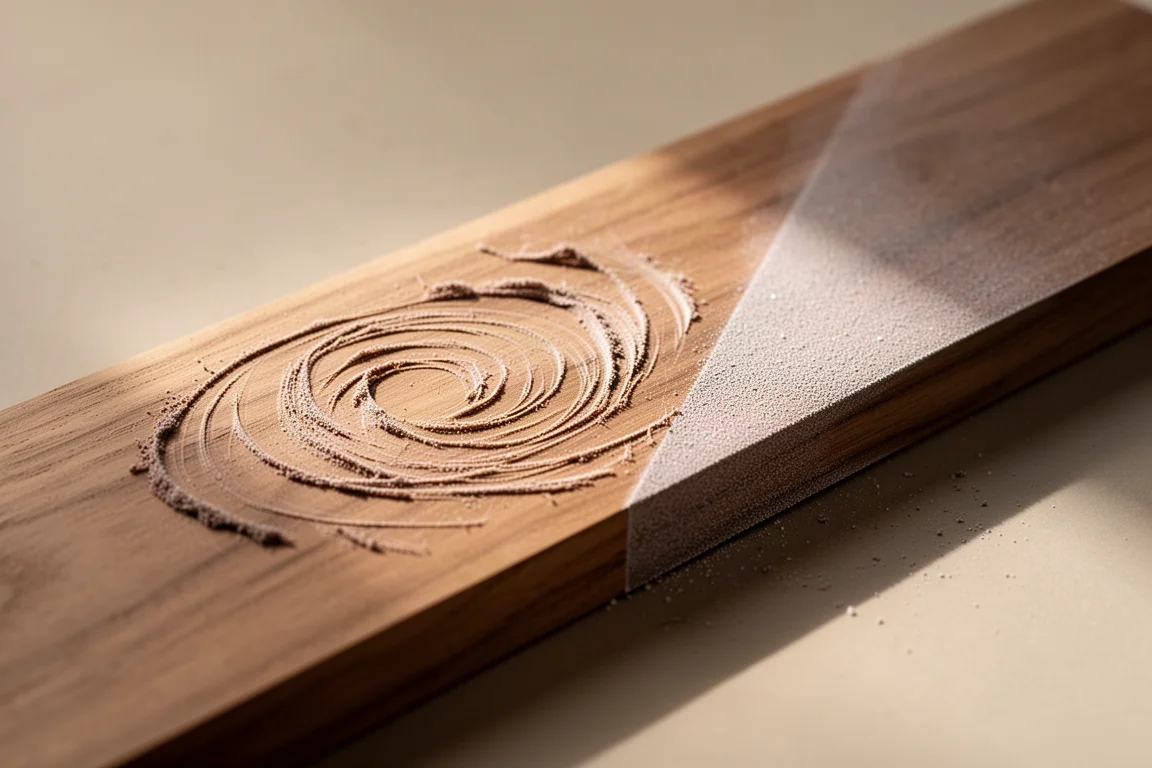
The 150 mm pad also changes the feel of the tool. It moves around more, wants to pull itself across the surface, and really benefits from being run at a slower speed. It is better suited to wide, flat panels than to narrow boards where the pad hangs over the edges. The larger pad also lacks the saver pad, and the smaller setup felt slightly better damped overall. For the narrow decking boards tested, the 125 mm was clearly the more controllable option.
Buying Advice
If you mostly sand smaller panels, furniture, or narrow boards, the DBO01CG with its 125 mm pad is the right pick, and you can always add a 150 mm pad later for occasional large flat surfaces. If your work is dominated by wide panels like benchtops and tabletops, starting with the bigger pad configuration may suit you better. In some regions only the 125 mm versions are sold, with the expectation that buyers add a 150 mm pad separately, which is a sensible way to avoid duplicate tools.
Whichever configuration you choose, pair it with a cordless vacuum, velcro the cable to the hose, and invest in quality mesh discs. Those three decisions matter as much as the tool itself for the final result.
Conclusion
The Makita XGT 40V DBO01CG is an impressive cordless random orbital sander: quick material removal, sensible runtime, smart pad-swapping across the range, and a dust extraction setup that makes it genuinely pleasant to use outdoors and in the workshop. Its weaknesses are tied to consumables rather than the tool itself, with cheap discs leaving swirl marks and the larger pad demanding a lighter touch. For woodworkers already in the XGT ecosystem, it is an easy recommendation, and for anyone tired of dragging cords across a deck, it is worth a serious look.
Product link
View more details for Makita XGT 40V DBO01CG Random Orbital Sander
This product is mentioned in the review. Check the specifications, options, and compatibility before buying.
View more details for Makita XGT 40V DBO01CG Random Orbital SanderFurther reading
Related Reviews
Power Tools
Best 1-Inch Pistol Impact Wrenches: Three Heavy-Duty Options Compared
We compare three 1-inch pistol impact wrenches, from a budget-friendly Harbor Freight model to a premium Caterpillar unit, to help you choose the right one.
Power Tools
Best 3/4-Inch Impact Wrenches 2026: Five Contenders Compared
We compare five 3/4-inch impact wrenches across price and performance, from a budget Amazon option to Snap-on's most powerful model yet.
Power Tools
Best Budget Cordless Tools 2026: Walmart Finds That Punch Above Their Price
We tested five cordless tools from Walmart, including a high-torque impact wrench that trades blows with Milwaukee and a $35 duster that outperforms its price class.