Power Tools
Makita XCU03 36V Chainsaw Review: Cordless Power with a Dual-Battery Design
A hands-on look at Makita's top-end 18V-battery chainsaw, covering its balance, safety features, thermal behavior, and the design details that could use work.
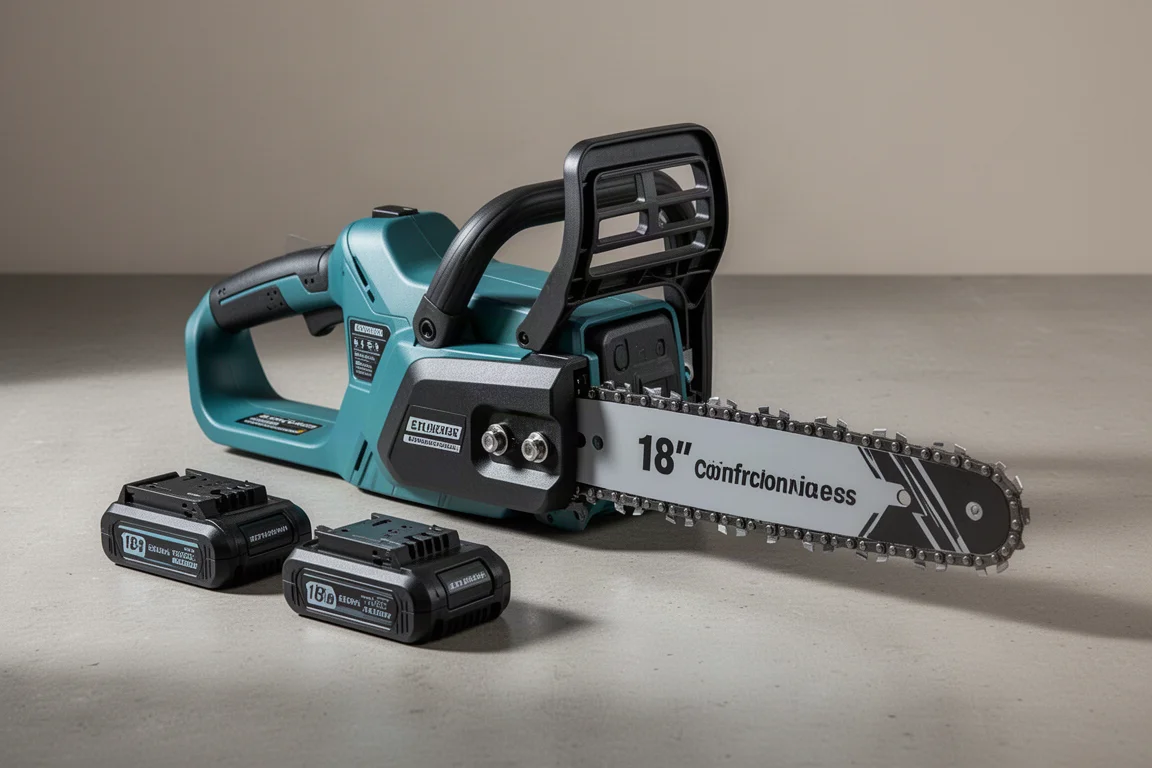
Introduction
The Makita XCU03 is the brand’s top-end chainsaw that runs on 18V batteries, using two of them at once to deliver 36V of power. The kit version comes with four 4.0Ah batteries and a dual charger, and it typically lands in the three to four hundred dollar range. It replaced an older 12V cordless saw that was reaching the end of its life, sitting comfortably between that smaller class and Makita’s smaller top-handle saw that sells for around two hundred dollars.
After real use cutting down 20 to 30 foot trees in a suburban yard, the picture that emerges is of a fundamentally reliable saw with a few genuinely frustrating design choices. Here is how it breaks down.
Who This Chainsaw Is For
This saw fits a specific and increasingly common buyer: someone who needs a chainsaw maybe once a month, cuts logs roughly the size of the bar, and wants none of the gas-related hassle. With an 18-inch bar, it handled taking down 20 to 30 foot tall trees in both a front and back yard without issue. There is no gas to mix, no carburetor to fuss with, no pull cord to fight. It just starts and works every time.
If that sounds like your use case, this class of saw, comparable to lower mid-range gas models, is now a realistic alternative rather than a compromise.
Main Strengths
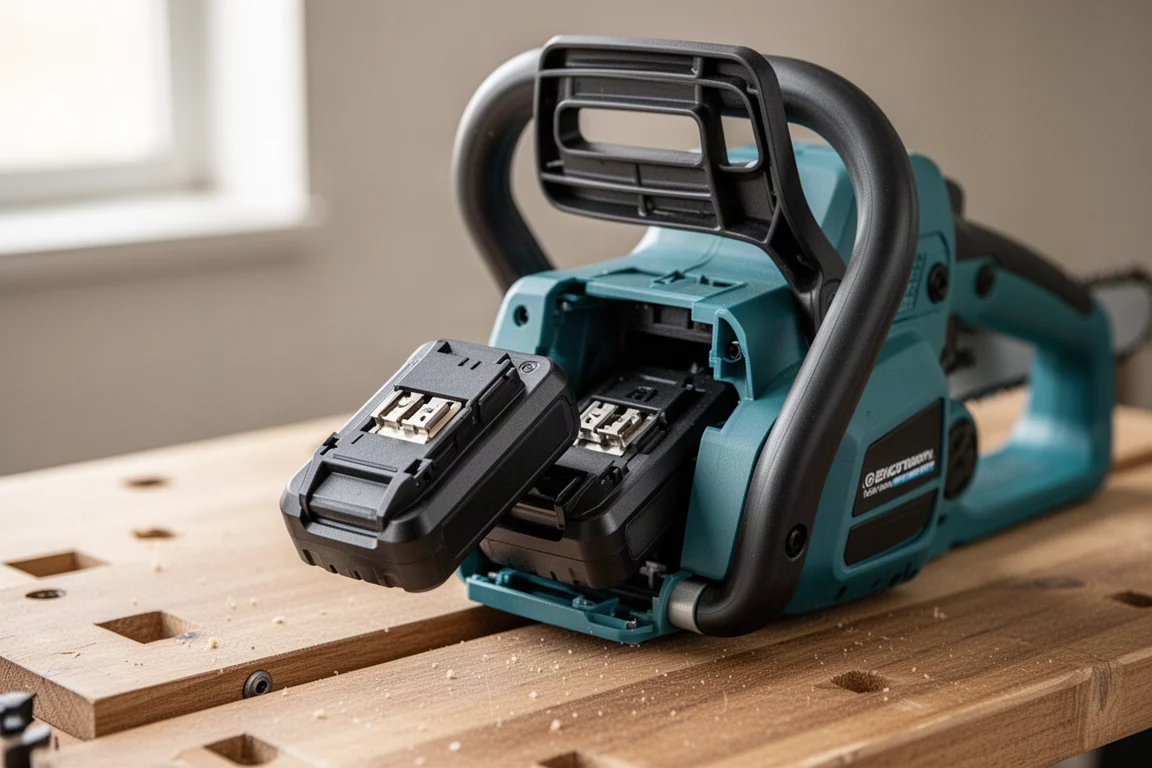
The dual 18V battery layout is the standout design decision. The batteries slot in at the rear of the body, and the weight distribution genuinely helps the balance of the saw in hand. More importantly, two smaller batteries share the thermal load better than one large pack. Owners of single large-battery cordless saws frequently report overheating the tool motor or the battery when pushing hard, and running two smaller packs spreads that heat.
The safety sequence is well thought out too. You press a power button, hold down a secondary control, and only then does the saw activate. That two-step process prevents accidental starts, which matters for a tool this size.
Reliability has been excellent. The saw has never had a real problem, bar and chain changes are straightforward, and it keeps working. That predictability is exactly what occasional users should be paying for.
Things to Consider Before Buying
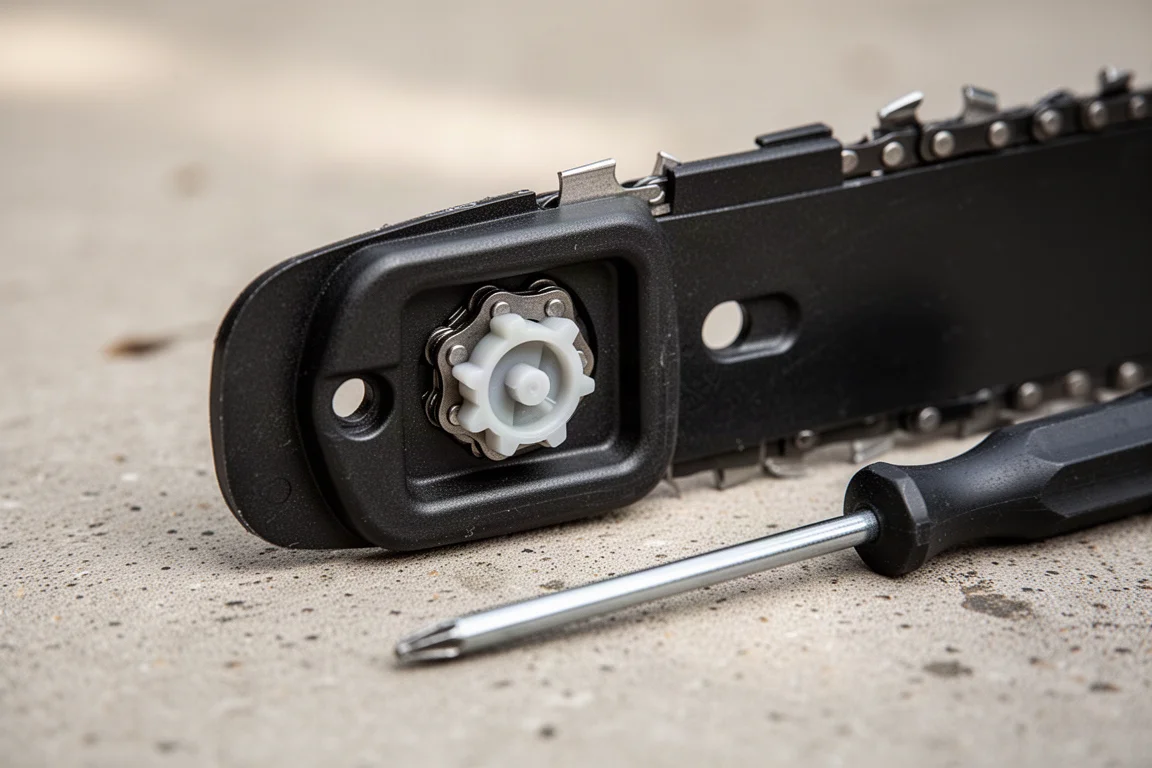
The chain tensioning system is the worst design element on this saw. After loosening the bar mount, adjustment happens through a tiny wheel that is hard on your fingers to turn, and if the recess fills with chips, adjusting it properly becomes genuinely difficult. Competing designs with two large knobs are far easier to live with.

The oil reservoir cap has the same problem in miniature. The lever is too small to grip with two fingers once it gets oily, so it usually takes a screwdriver or similar tool to open. A slightly larger lever would fix it entirely.
The battery indicator is another oddity. The 36V tools show three bars while the batteries themselves show four, and the three-bar readout is not very accurate. Sometimes the tool flashes one bar while the battery still shows three remaining. A consistent four-bar display on both would make far more sense.
Heat is the real constraint of the whole cordless category, not just this saw. In hot climates like central Florida, this saw has overheated a few times during hard use. Expect the tool to warn you when a battery gets hot so you can swap in a fresh pair. No cordless saw currently matches the non-stop runtime of a gas saw with a full tank, so set expectations accordingly.
Buying Advice
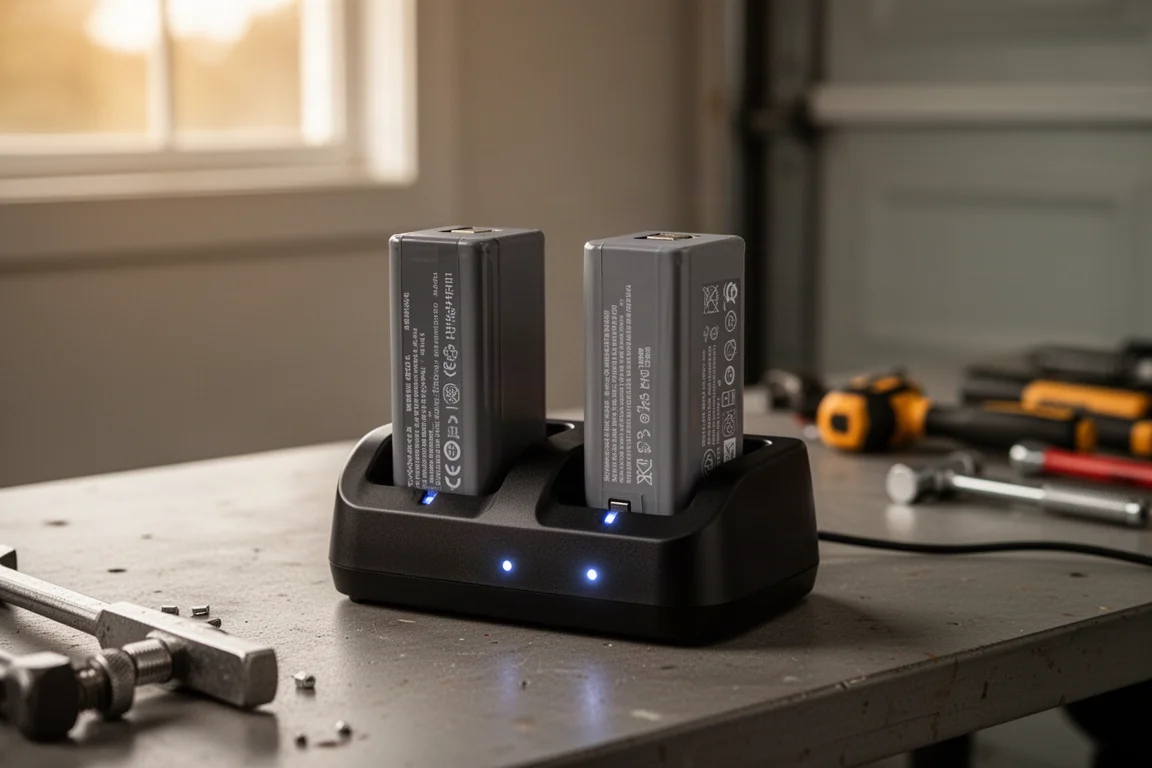
If you plan to run this saw non-stop, budget for roughly four sets of batteries, rotating pairs on and off the charger to keep momentum while letting packs cool. That is the practical cost of sustained cordless work.
The stock bar and chain are okay, but upgrading to an Oregon bar and chain brings a noticeable performance improvement right away and is a worthwhile early modification.
On the competitive side, the dual-battery approach holds up well against single large-battery rivals, which are reported to overheat quickly under heavy load. The new DeWalt 60V saw has been called the fastest cordless saw available and is worth a look at around four hundred dollars, but for buyers already invested in a battery platform, Makita’s dual-pack design is the more thermally sensible system.
Conclusion
The Makita XCU03 is a dependable cordless saw that nails the fundamentals: balance, safety, starting reliability, and a battery architecture that manages heat better than single-pack designs. The chain tensioner, oil cap, and battery indicator are all annoyances rather than deal-breakers, and a bar and chain upgrade addresses part of the performance picture. For the occasional user who wants gas-free cutting that simply works every time, it is an easy recommendation.
Product link
View more details for Makita XCU03 36V Chainsaw
This product is mentioned in the review. Check the specifications, options, and compatibility before buying.
View more details for Makita XCU03 36V ChainsawFurther reading
Related Reviews

Power Tools
Best 1-Inch Pistol Impact Wrenches: Three Heavy-Duty Options Compared
We compare three 1-inch pistol impact wrenches, from a budget-friendly Harbor Freight model to a premium Caterpillar unit, to help you choose the right one.

Power Tools
Best 3/4-Inch Impact Wrenches 2026: Five Contenders Compared
We compare five 3/4-inch impact wrenches across price and performance, from a budget Amazon option to Snap-on's most powerful model yet.

Power Tools
Best Budget Cordless Tools 2026: Walmart Finds That Punch Above Their Price
We tested five cordless tools from Walmart, including a high-torque impact wrench that trades blows with Milwaukee and a $35 duster that outperforms its price class.