Power Tools
Makita UC030G vs Milwaukee M18 F2CHS: Two 20-Inch Battery Chainsaws Compared
Two brand-new 36V battery chainsaws share the same bar, the same chain, and the same 8Ah batteries. Here is where they genuinely differ.
Introduction
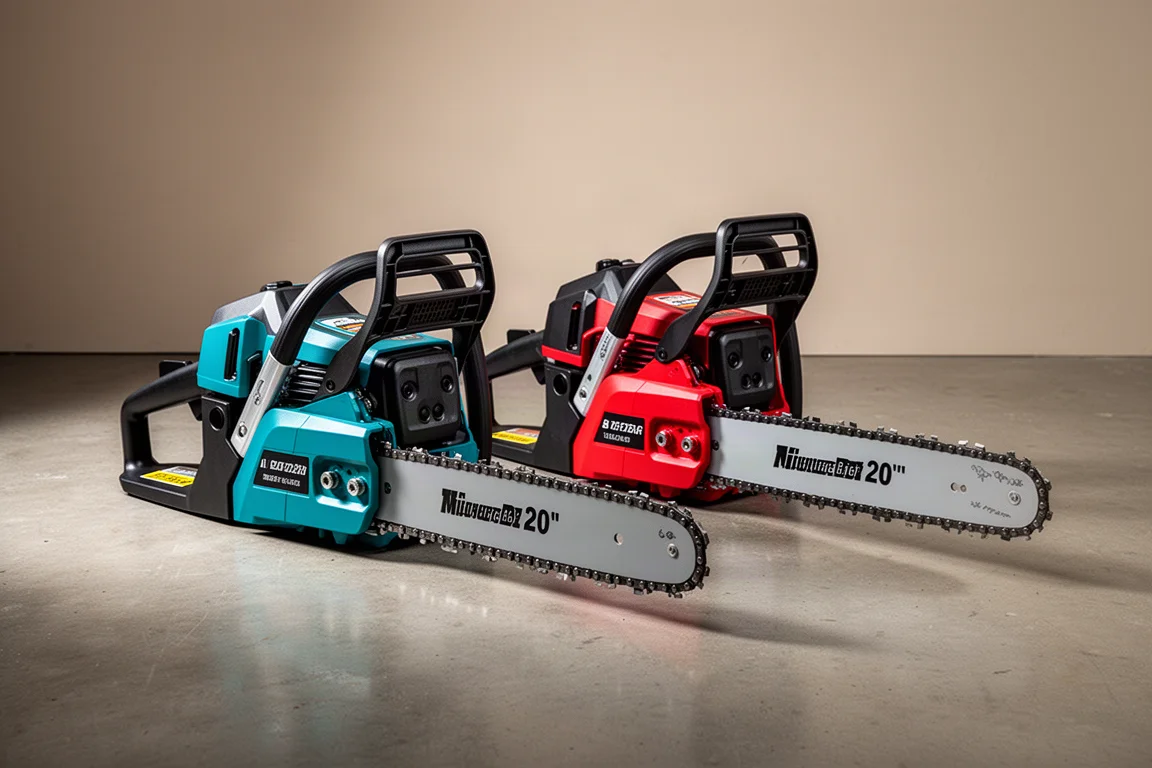
Two brand-new 20-inch battery chainsaws, one from Makita and one from Milwaukee, land in an unusually direct head-to-head: identical bar length, identical chain, and effectively the same nominal voltage. That makes this one of the cleanest battery chainsaw comparisons you will find, because nearly everything that separates them comes down to how each tool uses that shared hardware.
The Makita UC030G is a 40V max unit (36V nominal) running two 18V 8Ah batteries in series. The Milwaukee M18 F2CHS is an 18V-family tool that runs two 18V 8Ah packs for 36V nominal as well. Same batteries concept, same 20-inch bar, same Oregon chain. What differs is the class of the motor behind it.
What They Have in Common
These saws are almost interchangeable on paper. Both are brushless battery chainsaws using two 18V 8Ah packs to hit 36V nominal. Both wear a 20-inch bar, and both run the exact same chain: Oregon 95TXL, 3/8.25-inch pitch, 0.50-inch gauge (1.3mm). In practical terms, the cutting hardware is identical, so any difference in performance comes from the motor, tuning, and overall tool design.
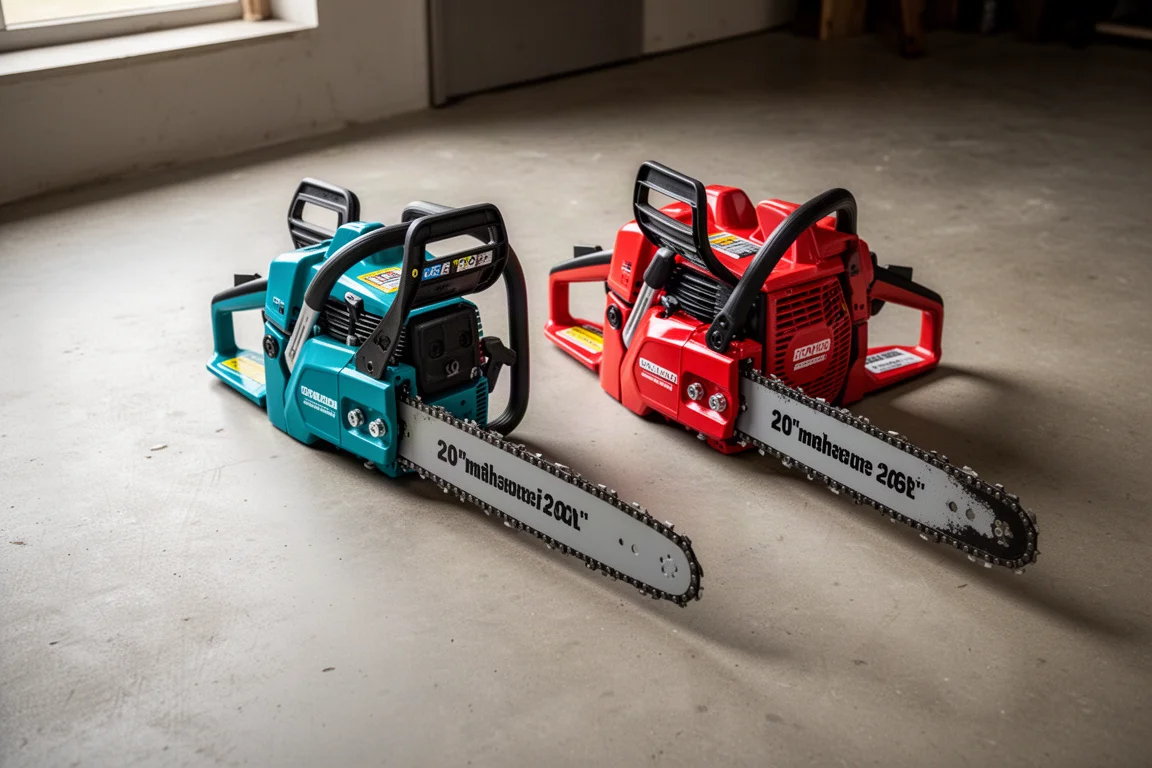
The headline difference is the power class each maker claims. Milwaukee rates its saw as the equivalent of a 70cc petrol chainsaw, while Makita positions the UC030G closer to a 50cc equivalent. That sounds like a clear win for Milwaukee, but real cutting tells a more nuanced story.
Cutting Speed and Behavior Under Load
The Makita is significantly quicker. Its chain speed on full throttle is more than double the Milwaukee’s, and you feel it the moment you pull the trigger. Cross cuts go through fast and clean.
The Milwaukee, on the other hand, simply plots along and keeps cutting. It is probably a bit less likely to stall than the Makita, especially when you start angling cuts or going across the grain at awkward angles, situations where the Makita struggles a little more and can cut out. Neither saw stalls much if you let the tool do the work and resist pushing hard, and even when the Makita does cut out, it is a half-second problem: back off, pull the trigger again, and away you go.
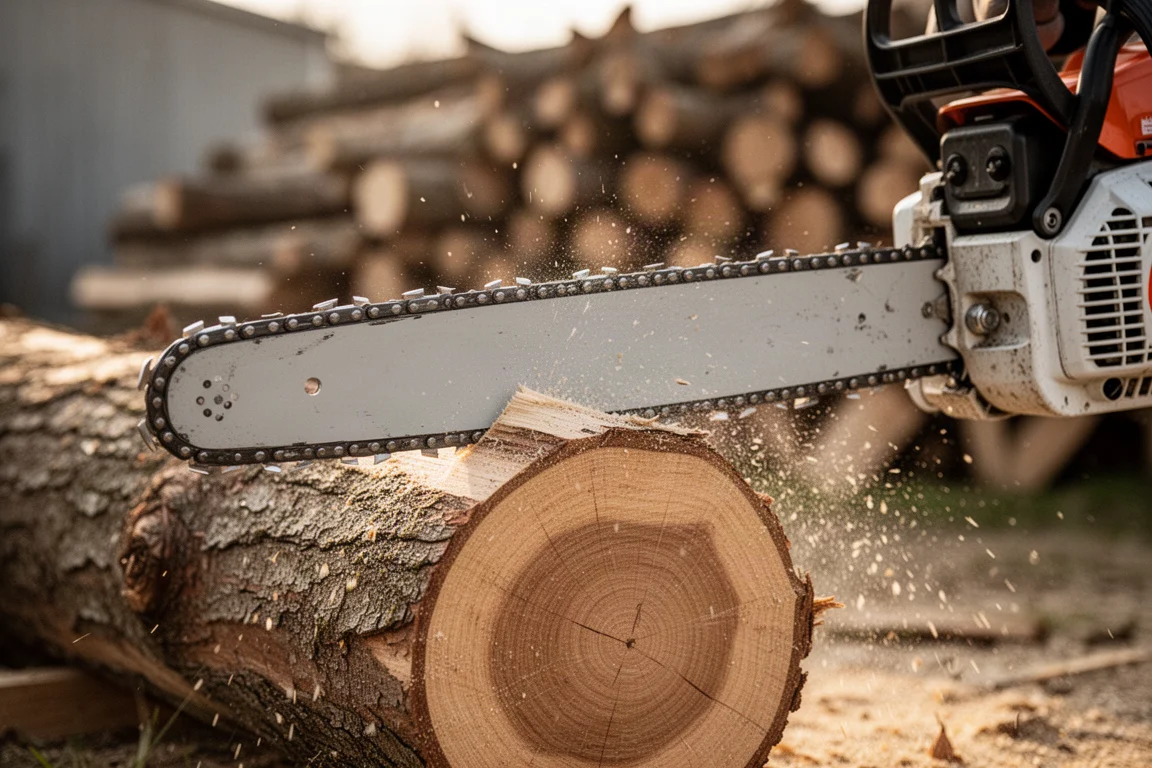
For plunge cuts, both did well. The Makita stalled once, but there was not much in it, and its lighter body made it noticeably easier to hold at a steeper, more vertical angle. The Milwaukee’s higher chain speed also makes it bouncier and a bit trickier to start a cut smoothly.
Weight, Balance, and Handling
Comfort is where the Makita clearly pulls ahead. It is a more streamlined, better-balanced tool and significantly lighter, around 1.2kg lighter in its current configuration with batteries attached. That difference is obvious the moment you pick both up.
The Milwaukee is heavy, but it does the job well and tolerates smaller or lower-amp batteries better. Dropping from the 8Ah packs down to a 2Ah barely fazed it, whereas the Makita shows a much more noticeable drop-off as you step down in battery capacity.
Battery Use and Runtime
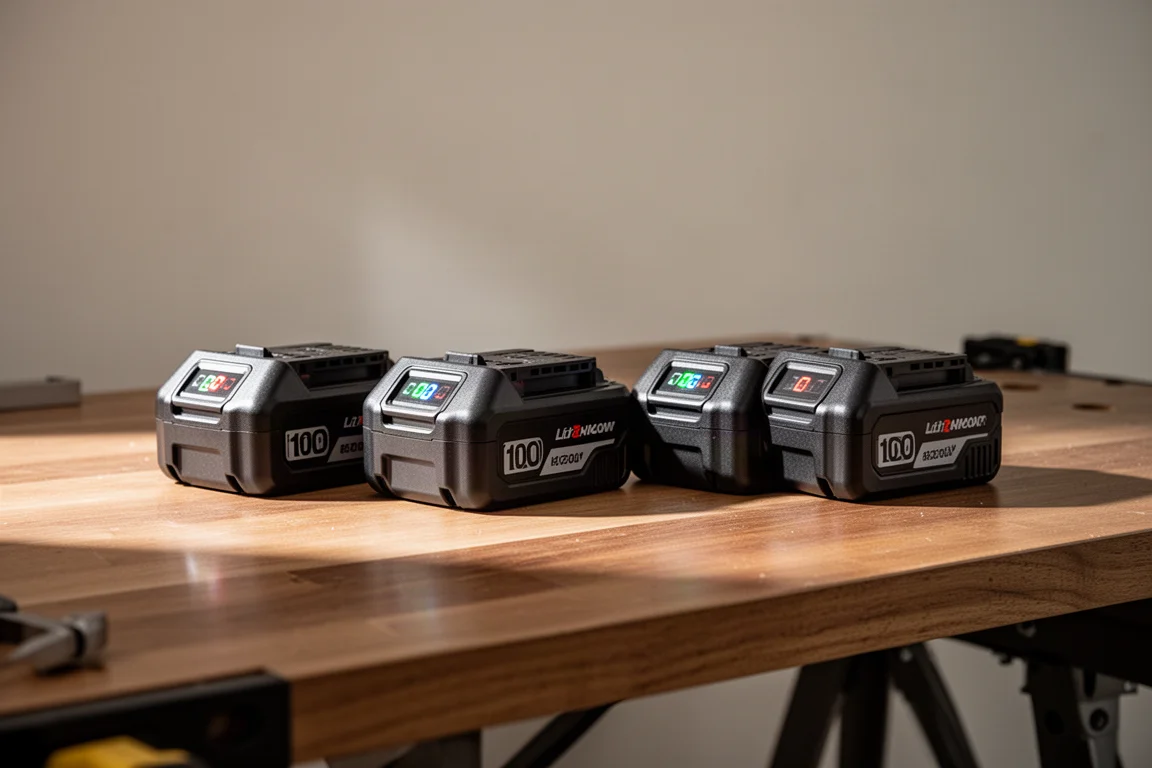
Counting cuts is tricky with inconsistent wood density and diameter, but the Milwaukee chewed through batteries noticeably faster than the Makita in testing. One likely explanation: with a longer runtime per cut, the Milwaukee’s motor is simply working longer and drawing more power to do the same job, consistent with its bigger 70cc-equivalent rating.
There is also a logistics difference worth noting. The Makita uses one set of two batteries for a full run before you swap, while the Milwaukee’s faster drain means you need double the battery inventory to keep it running continuously. If maximizing cuts per charge matters to you, the Makita is the better option.
Which One Should You Buy?
If you already own Milwaukee batteries, get the Milwaukee. If you are already invested in Makita, get the Makita. Both systems reward loyalty, and since the saws are so similar, your existing battery ecosystem should be the deciding factor.
If you are starting from scratch, look at what other tools you want in each system, because these saws are genuinely the same but different. The Makita wins on weight, balance, cutting speed, and cuts per charge. The Milwaukee wins on raw power class, tolerance for smaller batteries, and steadier behavior in awkward cuts.
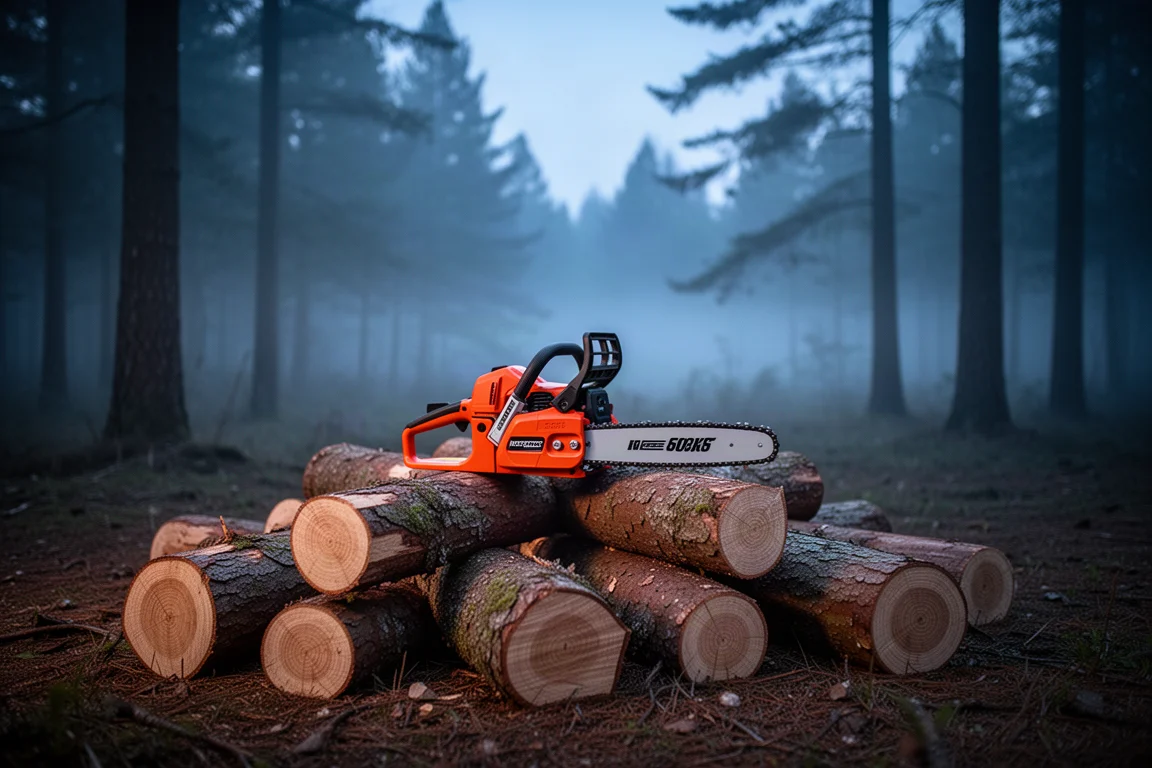
A final honest note: battery chainsaws have come a long way and are getting close to taking on petrol. For occasional and even fairly serious use, they are excellent. But if you cut all day, every day for a living, petrol still makes sense, and if you want super grunt from a massive saw, these two are not quite there yet. An 80V-class Makita is a tempting thought, but with 3.6kg of batteries on the 20-inch models alone, the weight penalty would be steep.
Conclusion
There is no runaway winner here. The Makita UC030G is the lighter, faster, more efficient saw, while the Milwaukee M18 F2CHS brings more claimed power and steadier resilience in tough cuts at the cost of weight and battery drain. Pick the one that matches your existing battery system, and you will not be disappointed with either.
Product link
View more details for Makita UC030G 20" Chainsaw
This product is mentioned in the review. Check the specifications, options, and compatibility before buying.
View more details for Makita UC030G 20" ChainsawFurther reading
Related Reviews
Power Tools
Best 1-Inch Pistol Impact Wrenches: Three Heavy-Duty Options Compared
We compare three 1-inch pistol impact wrenches, from a budget-friendly Harbor Freight model to a premium Caterpillar unit, to help you choose the right one.
Power Tools
Best 3/4-Inch Impact Wrenches 2026: Five Contenders Compared
We compare five 3/4-inch impact wrenches across price and performance, from a budget Amazon option to Snap-on's most powerful model yet.
Power Tools
Best Budget Cordless Tools 2026: Walmart Finds That Punch Above Their Price
We tested five cordless tools from Walmart, including a high-torque impact wrench that trades blows with Milwaukee and a $35 duster that outperforms its price class.