Power Tools
Makita XGT 40V Track-Compatible Circular Saws: Five Ways to Cut Straight Lines
A look at Makita's XGT 40V saws that run on guide tracks, from the new HS004G hybrid to plunge saws, adapters, and large-format options.
Introduction
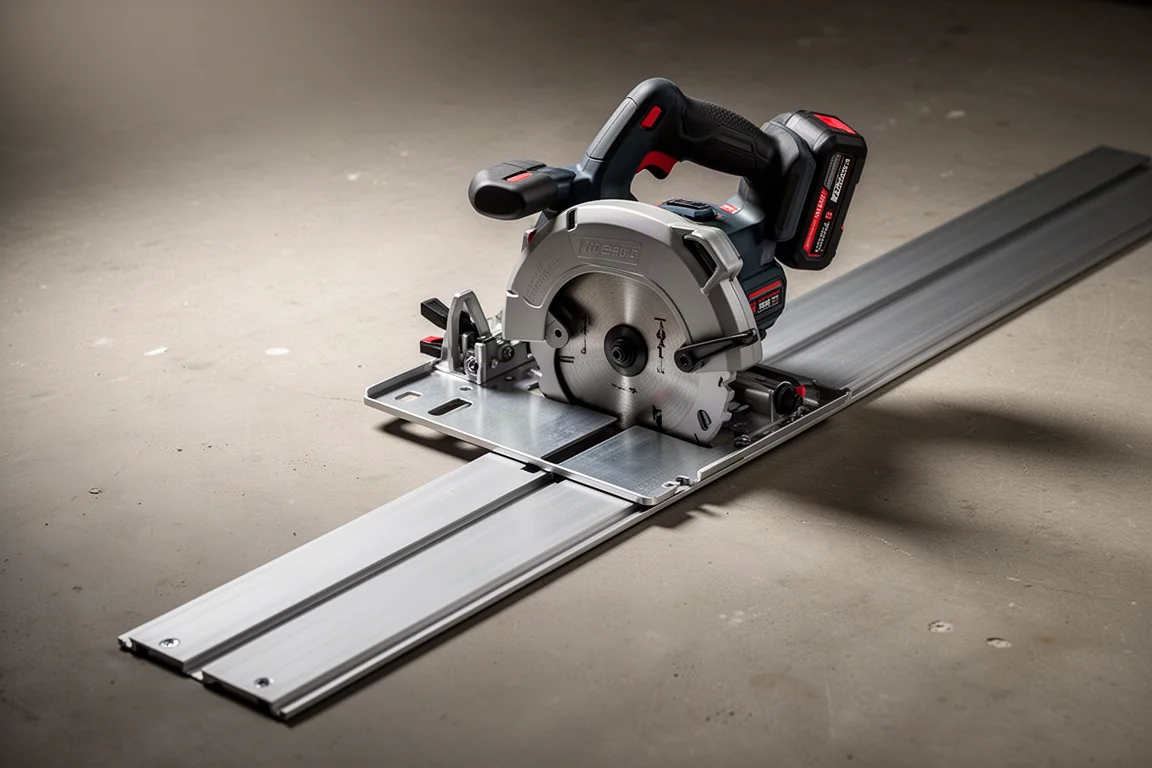
What happens if you take a regular circular saw and a plunge saw and combine the best parts of both? That is essentially what Makita has done with the XGT 40V HS004G, a track-compatible circular saw that keeps the simple, always-set depth behavior of a standard saw while adding a base that runs on a guide track. In this rundown we cover the HS004G itself, how it compares with the HS003G and the SP001G plunge saw, and the wider family of Makita options for cutting straight lines on a track.
Why a Track-Compatible Base Matters
A standard circular saw has a flat base that simply slides along the top of the material. A plunge saw base is also flat, but it has a large groove underneath for running on a track. The problem is that a plunge saw is awkward for ordinary cross cuts: you have to push the tool down into the cut, it springs back up when you come off the end of a workpiece, and the depth is never just set and forgotten the way it is on a regular saw.
Plenty of users only need to cut the occasional dead-straight line without ever using the plunge function. For them, a track-ready base on a normal circular saw is a genuinely practical idea, and Makita now builds several saws around exactly that concept.

Makita HS004G: The Track-Ready Hybrid
Think of the HS004G as an HS003G with a different base. The motor housing and body are effectively identical between the two; the difference is the track-compatible base, which adds a groove for the rail plus a reworked bevel mechanism. That mechanism is what keeps the cut line in the same place whether the blade is at 0 or 45 degrees, so you never accidentally cut into your track.
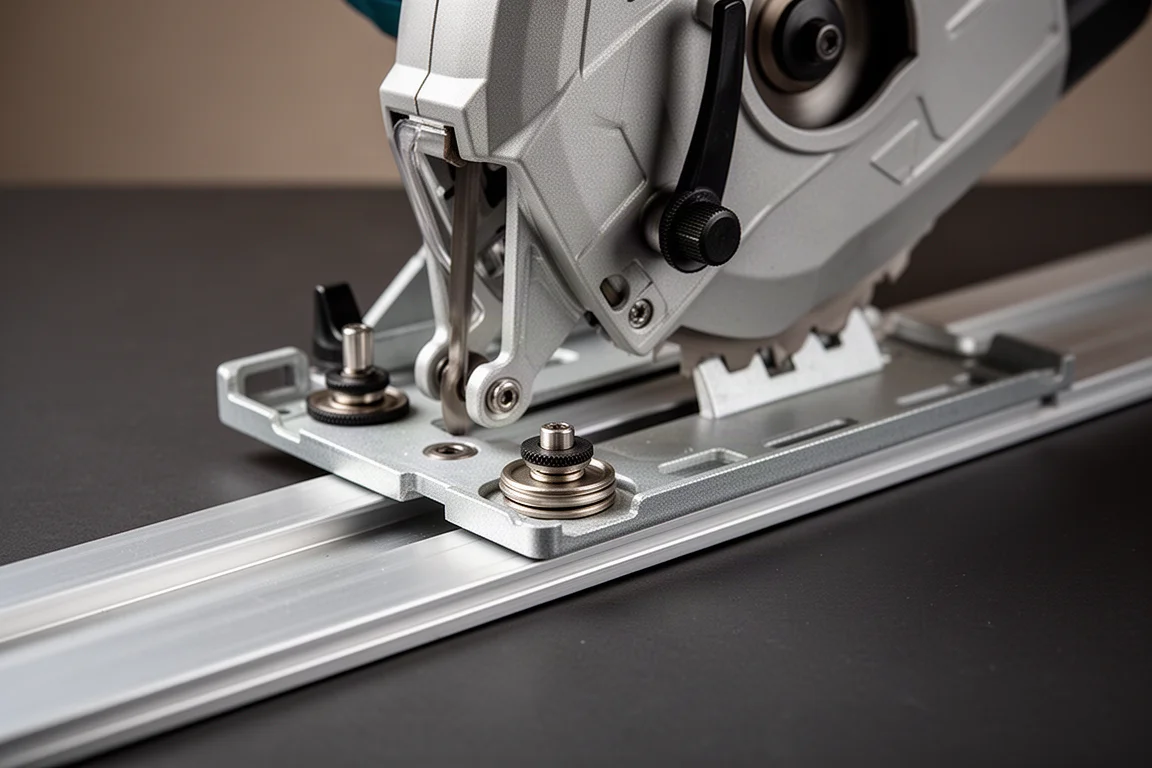
On the base you get two small wheels and a washer on a sliding switch that locks into the track groove, stopping the saw from tipping off during beveled cuts. Two cam-style dials let you remove any play so the saw slides smoothly and solidly along the rail.
The HS004G carries over the familiar feature set: AWS, a front light for high torque mode, on-board tool storage, an area for a rafter hook, and a rear lever for depth setting, though the depth guide marking is a small red line that is a little hard to read. Bevel capacity reaches 48 degrees, and the bevel mechanism has locking knobs at both the front and back, unlike the single front knob on the HS003G.
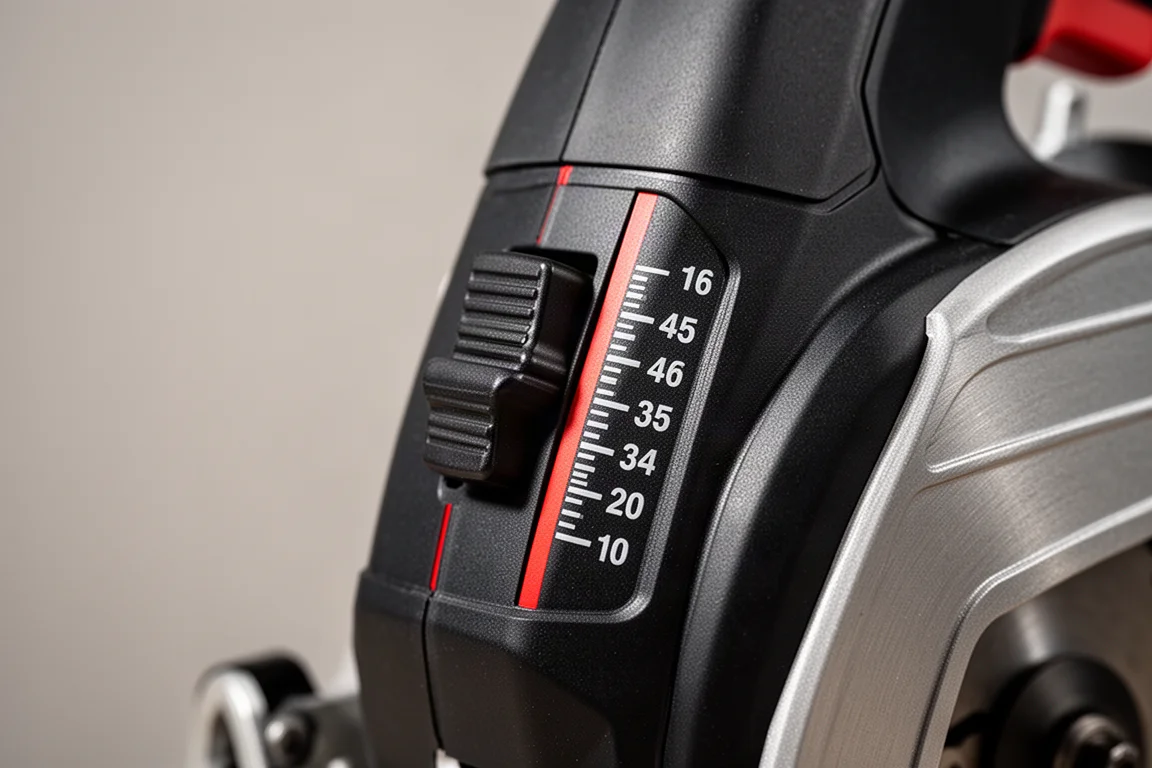
Depth of cut is where the numbers get interesting. Off the track, the HS004G manages around 60 millimeters, losing roughly six millimeters to the standard HS003G because of the wider base. On the track it cuts 57 millimeters, which is a full five millimeters more than the SP001G plunge saw manages on a rail, and up to seven and a half millimeters more if you fit a 190 millimeter blade. One caveat: the 45 degree bevel line only works off the track, and the base is wider at 170 millimeters, which gives a stable platform but can get in the way when working close to obstacles. There are also no detent stops on the front and no reverse bevel, so you set angles yourself.
Owners of the HS003G sometimes ask whether the track base can be swapped over. The two saws do appear to be the same unit underneath, so a swap is technically possible, but buying the base alone costs enough that you are probably better off buying the HS004G and selling the old saw, unless the HS004G is not available in your country and importing the base is the only route.
Makita HS003G: The Standard Baseline
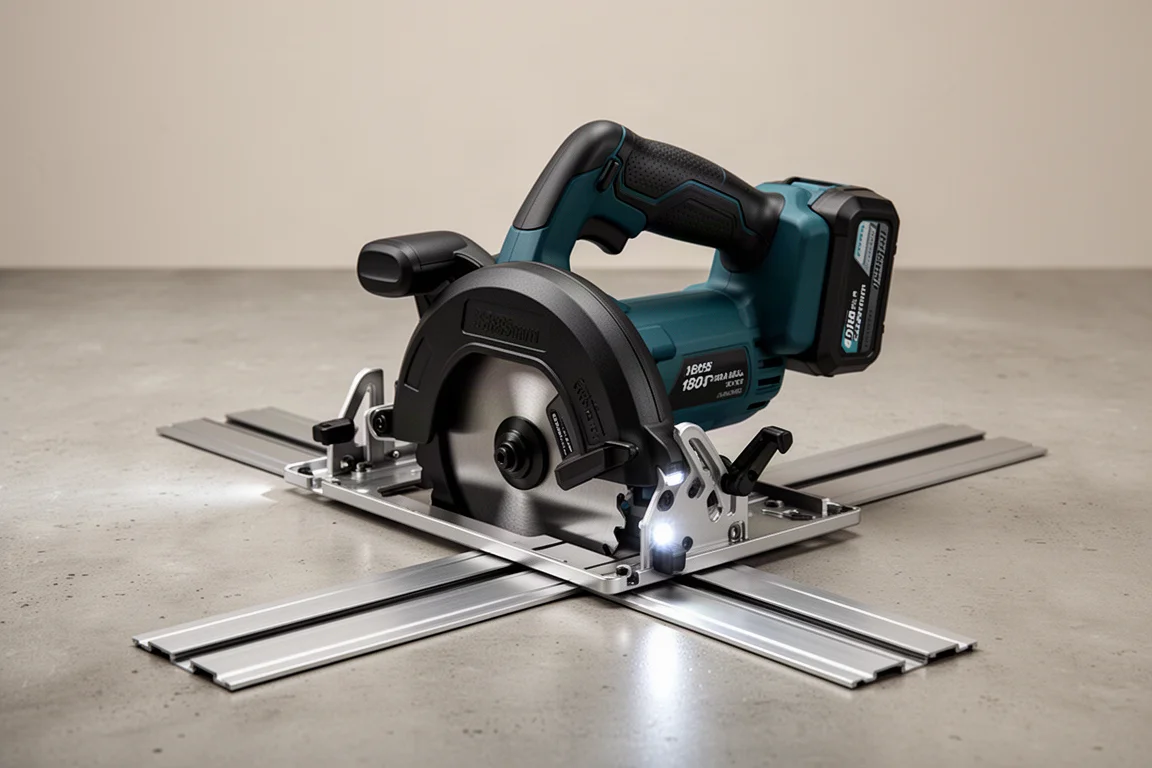
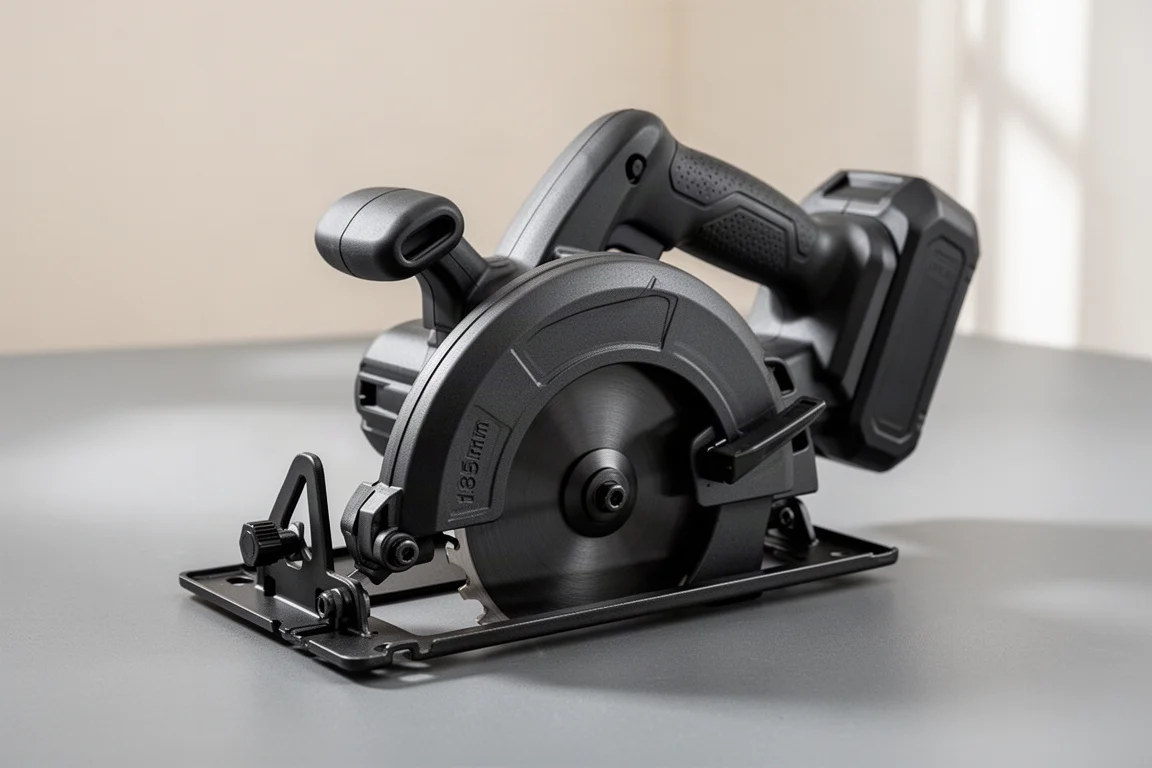
The HS003G, sold as the GSH01 in the United States, is the regular 185 millimeter circular saw in the XGT 40V lineup. It offers the deepest cut of the group at 66 millimeters, rising to 68.5 millimeters with a 190 millimeter blade fitted, and its bevel capacity runs to 56 degrees.
What it cannot do is run on a track directly. Because of the width of its base, it will not fit even with the adapter approach, crashing into the rail before the blade reaches the edge. To use it on a track you would need a universal adapter that the whole saw drops into, which costs you a lot of depth of cut, and Makita does not appear to make one for this saw.
It still makes sense as the choice for maximum depth of cut and bevel range when track cutting is not a priority.
Makita SP001G: The Dedicated Plunge Saw
The SP001G, sold as the GPS01 in the United States, is the traditional track saw in the lineup. It uses a 165 millimeter blade and cuts 52 millimeters on the track, and it has features the HS004G gives up: a reverse bevel of minus one degree, detent stops at 22.5 and 45 degrees, and a nicer depth guide.
Where it falls short for everyday use is convenience. For regular cross cuts it is a bit of a waste, because you always have to plunge it and it does not stay down like a normal circular saw. When it comes off the end of a cut, the base flops down in an awkward way. For dedicated track work, sheet goods, and jobs where the plunge function is genuinely needed, it remains the right tool.
Makita HS001G and the Adapter Route
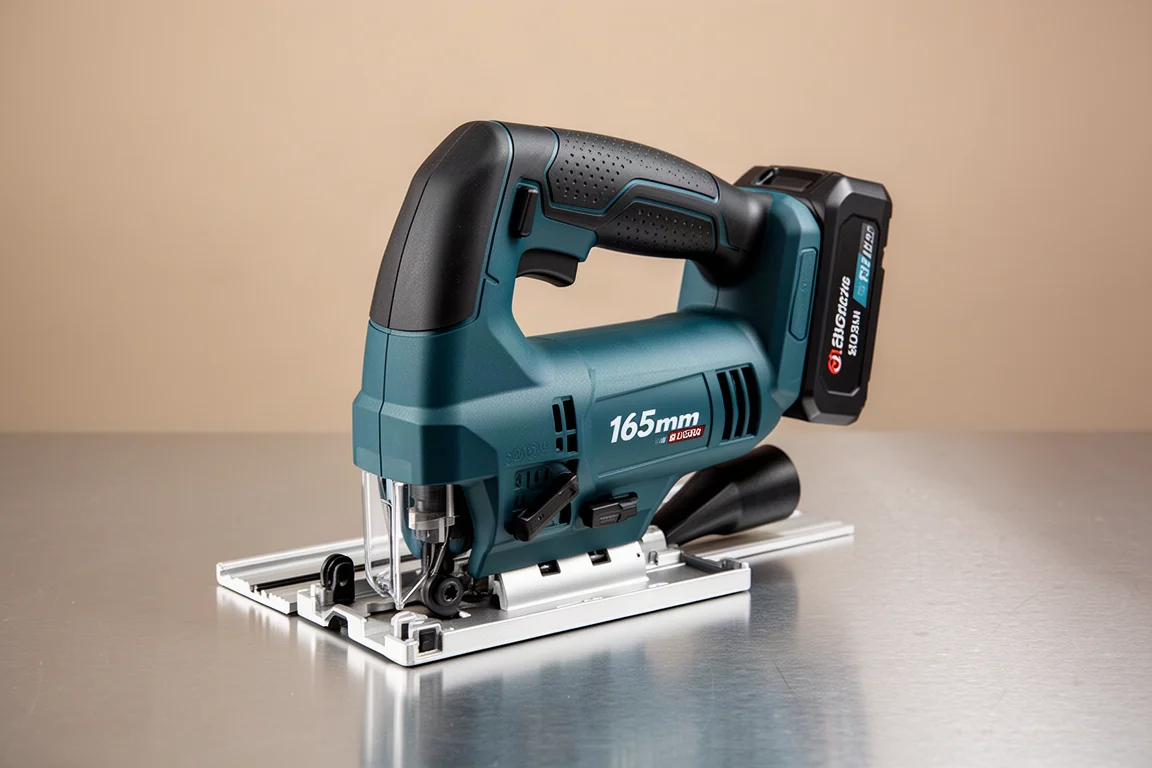
If you already own the HS001G, the 165 millimeter circular saw, you can run it on a track, but you will need an adapter. These adapters have been tricky to track down for this particular saw; the adapter from Makita’s 125 millimeter saw does work, though setup takes care to avoid damaging the track and to get the saw cutting straight.
The adapter includes the same washer-on-a-slide lock and two cam-style dials as the plunge saw and HS004G, plus preset lines at 0, 15, 30, and 45 degrees so the blade stays right on the edge of the track at any angle.
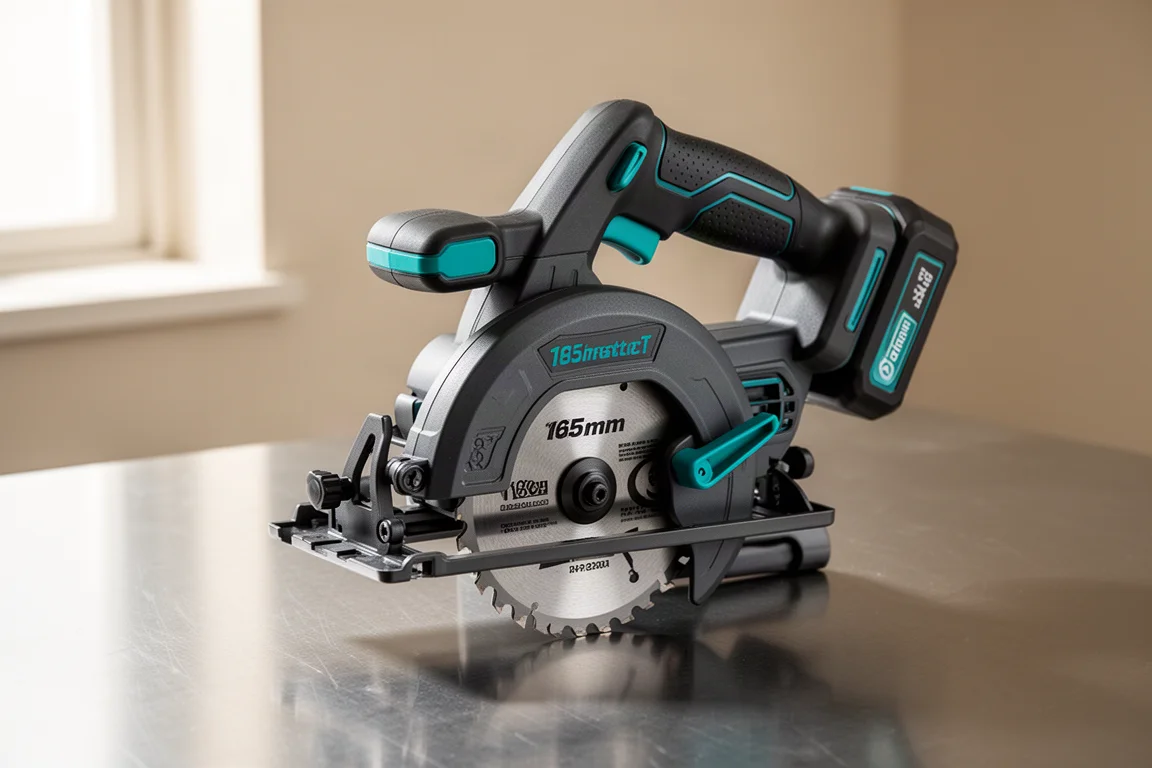
Makita’s 125 millimeter circular saws deserve a mention here too. The front of one model comes off so it can cut flush against a wall, and with a reverse bevel of minus 15 degrees and the adapter fitted, it can undercut walls to remove flooring flush to the base. For renovation work that is a brilliant little setup, though the adapters have to be bought from Japan as far as availability goes.
Large-Format Options: Makita HS009G and the 270mm Class
Makita has also extended the track-compatible base concept to bigger blades. The HS009G, a 235 millimeter saw, has been released in the UK, India, and a number of other markets, and it comes with a similar track-compatible base.
Even larger, a 270 millimeter model, advertised initially as 260 millimeters and sold as 270 in New Zealand, is track saw compatible and delivers over 100 millimeters of cut, enough to cut a 100 by 100 millimeter post in a single pass. There is no 40 volt blade-lift saw option yet, but an 18 volt saw can be used with a proper adapter that slides into the rip fence mounts, with a zero mark on the arm lining the blade up for a perfect zero-clearance cut on the track.
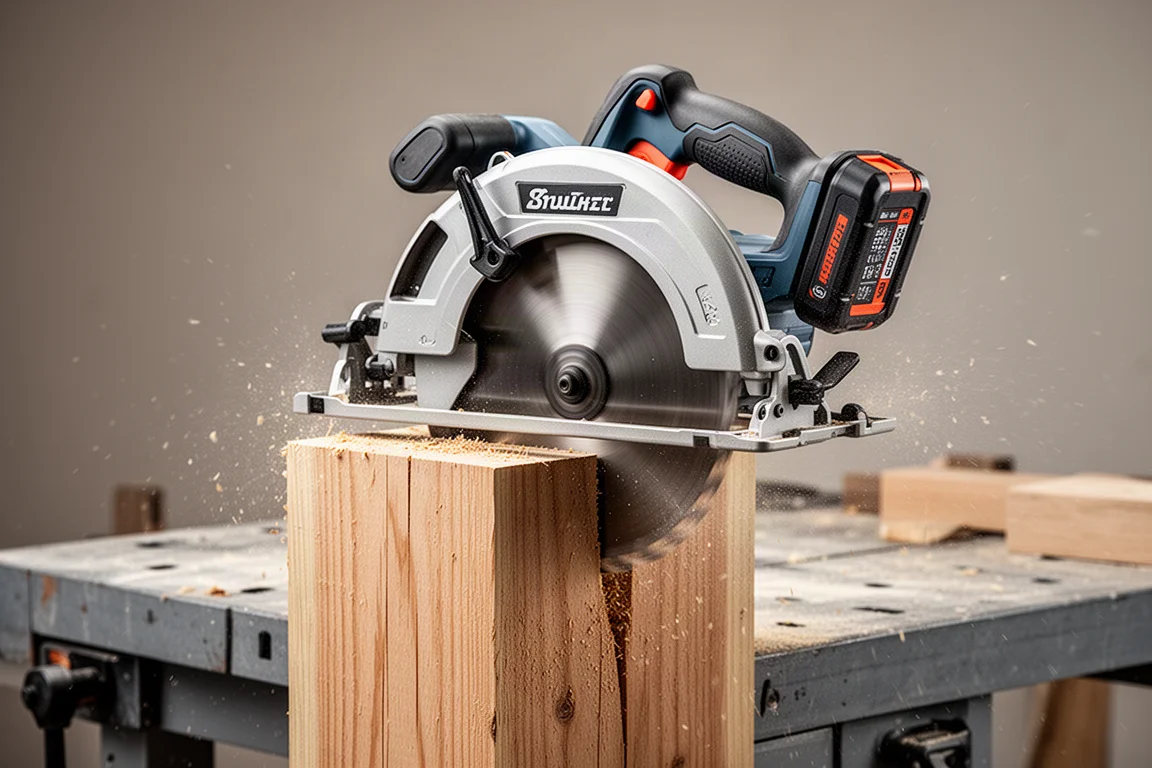
Makita’s tracks themselves come in 1.4 and 3 meter lengths in many markets, with other brands offering tracks as long as 5 meters. And the track is not just for circular saws: with the right attachments you can run jigsaws and routers on the same rails, and even without the correct attachment, the tracks still work as straight guides for almost any tool.
Buying Advice
If you mostly do regular cuts but want dead-straight lines, the HS004G is the most versatile option: deeper cuts on the track than a plunge saw and no plunge mechanics to fight with. If you need plunge capability, reverse bevel, and detents, the SP001G is the dedicated tool. For maximum depth off a track, the HS003G still leads the group. For big material, look at the HS009G or the 270 millimeter class, and for occasional track use with an existing 165 millimeter saw, the adapter route can work with some patience.
Conclusion
Makita offers more ways to run a circular saw on a track than any other brand seems to, spanning a hybrid track-ready saw, a conventional plunge saw, adapter options, and large-format models. Match the saw to how often you actually need the track, and any of these can earn a place in a kit built around dead-straight cuts.
Further reading
Related Reviews
Power Tools
Best 1-Inch Pistol Impact Wrenches: Three Heavy-Duty Options Compared
We compare three 1-inch pistol impact wrenches, from a budget-friendly Harbor Freight model to a premium Caterpillar unit, to help you choose the right one.
Power Tools
Best 3/4-Inch Impact Wrenches 2026: Five Contenders Compared
We compare five 3/4-inch impact wrenches across price and performance, from a budget Amazon option to Snap-on's most powerful model yet.
Power Tools
Best Budget Cordless Tools 2026: Walmart Finds That Punch Above Their Price
We tested five cordless tools from Walmart, including a high-torque impact wrench that trades blows with Milwaukee and a $35 duster that outperforms its price class.