Power Tools
Makita TP03 vs Metabo NP18DSAL: Two Cordless Pin Nailers Compared
A 12V and an 18V cordless pin nailer go head to head on features, firing speed, weight, and warranty to help you pick the right one.
Introduction
Pin nailers live in a small niche: they fire very short, very thin nails that are perfect for holding glued trim, moulding, and small assemblies while the glue sets. Because the nails are so small, most pin nailers leave almost no visible mark, which makes differences between models surprisingly subtle.
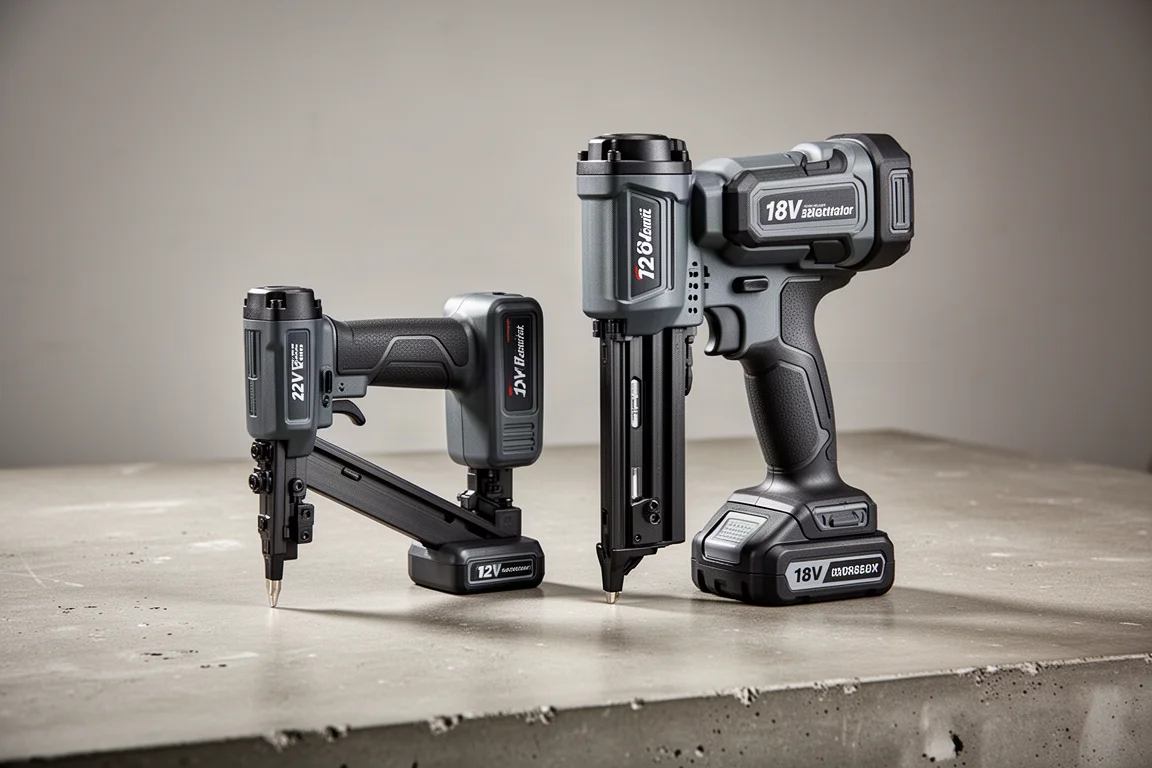
This comparison puts two cordless options side by side: the Makita TP03, a 12V (CXT) pin nailer made in Japan, and the Metabo NP18DSAL, an 18V model with a lifetime warranty and a strong reputation among nailer buyers. Interestingly, in real use the 12V and 18V tools function almost identically, so the decision comes down to features, weight, price, and warranty rather than raw power.
Evaluation Criteria
Both nailers were evaluated on build quality, features, firing speed and consistency, nail hole cleanliness, weight, price, and warranty terms. Each was fired through a thick softwood 2x4 with 1-inch pins, a tougher test than typical trim work, to see how each handled real firing conditions.
Makita TP03: Feature-Rich 12V Design
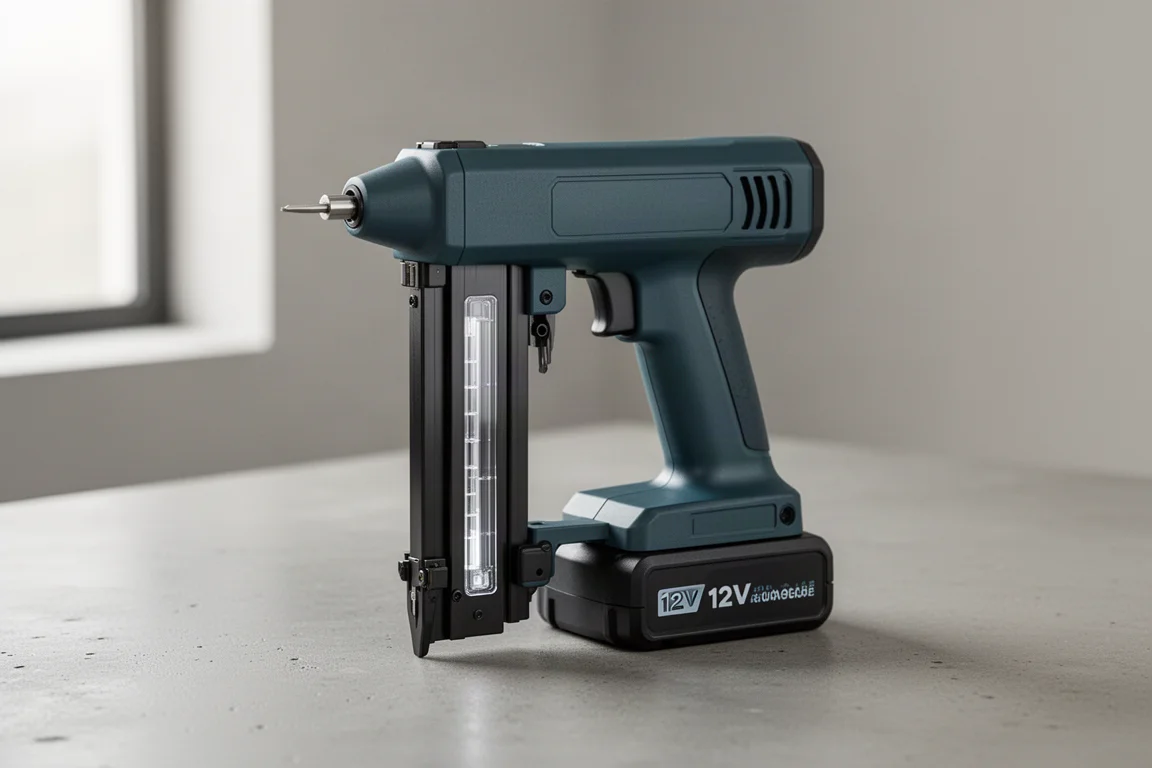
The Makita TP03 runs on the small 12V CXT battery platform and stands out immediately for its build quality. It feels solid and chunky in the hand, and the features are well thought out. The clear magazine window makes it very easy to see how many nails are left, something not every pin nailer gets right.
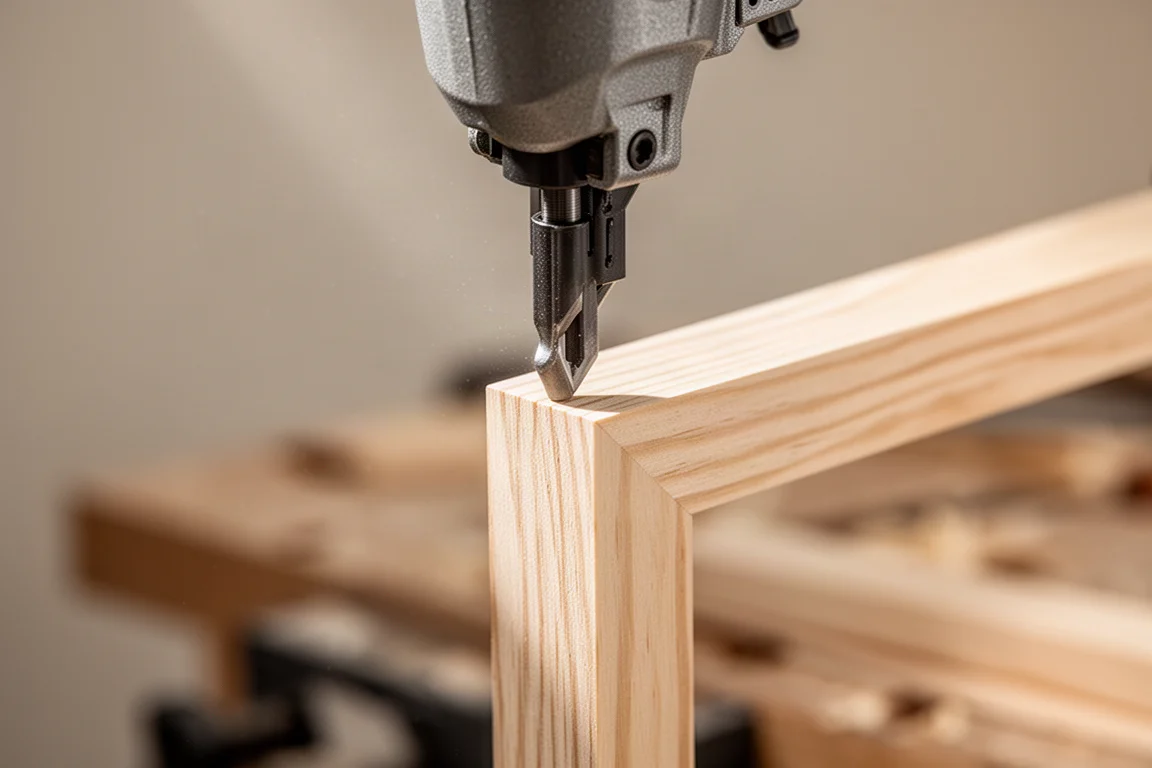
It also includes a dedicated safety switch that is deliberately hard to bump accidentally: you need to use the tip of a finger to toggle it. An onboard LED light illuminates the work area, an integrated Allen key lets you open the front head to clear jams, and there is spare tip storage on the back of the tool. The included tips are precise and make it easy to reach tight spots.
After roughly 300 nails, it has not jammed once or burned through a single bar of battery. The main annoyance is the depth adjustment: it only moves about half a turn before clicking, with a small diagram indicating left to pull out and right to push in, and it can be hard to tell whether you are going deeper or shallower. On the downside, Makita nailers carry a mixed reputation, with some buyers reporting reliability concerns and pricing around $220 on Amazon, though this unit was picked up new for $60 through eBay.
Metabo NP18DSAL: The Community Favorite
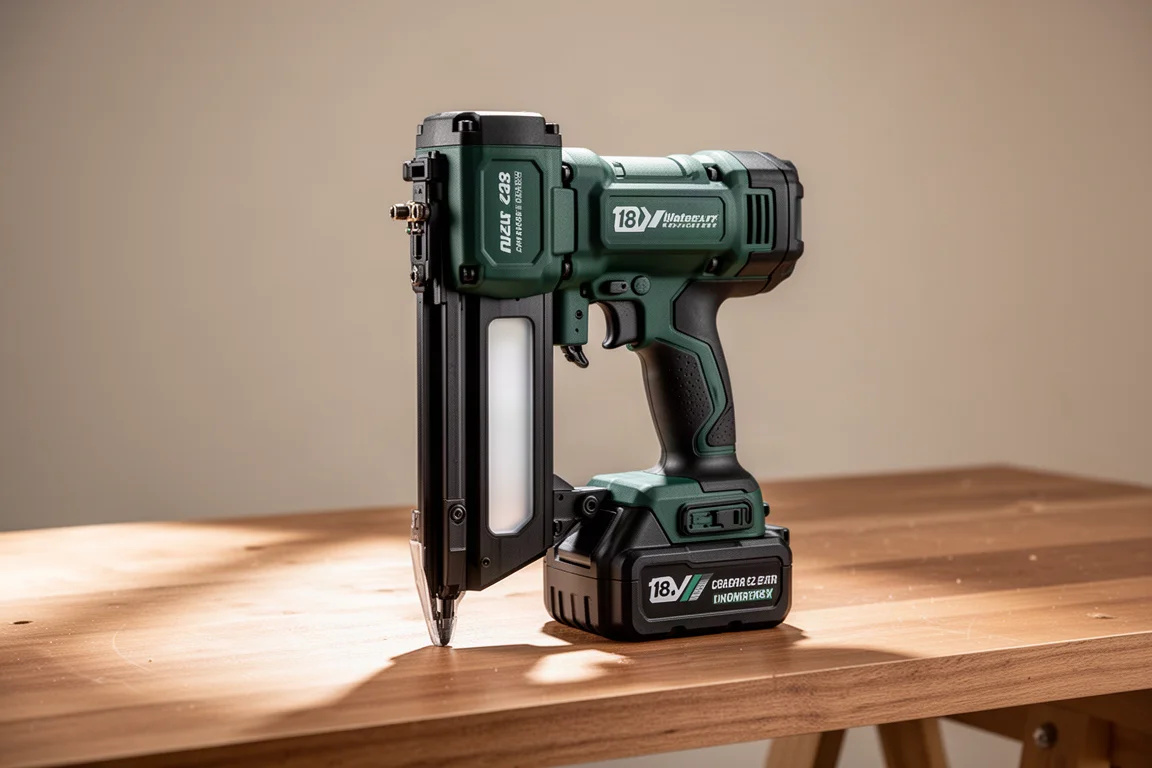
The Metabo NP18DSAL is an 18V tool that benefits from one of the strongest reputations in the nailer space. Metabo nailers are widely recommended and widely used, and the brand backs its cordless tools with a lifetime warranty. That warranty has fine print worth knowing: it covers the lifetime of the tool as defined by Metabo, meaning they will service it until replacement parts run out, at which point the coverage effectively ends.
Feature-wise, it offers an LED on/off button (the Makita only lights when you press the trigger), a battery-level indicator near the base, and dry fire lockout, which requires a small amount of pressure on the tip before it will fire. Dry fire protection is a genuinely useful feature that arguably should be standard on every nailer.
It is not without quirks. The magazine window is frosted rather than clear, making it harder to see exactly how many nails remain. The three-light battery indicator only tells you full, half, or empty, which is coarse compared to a real fuel gauge. Part of the motor is also more exposed than on the Makita, which raises some build quality questions, and the light sits on only one side of the tool.
Firing Performance and Nail Quality
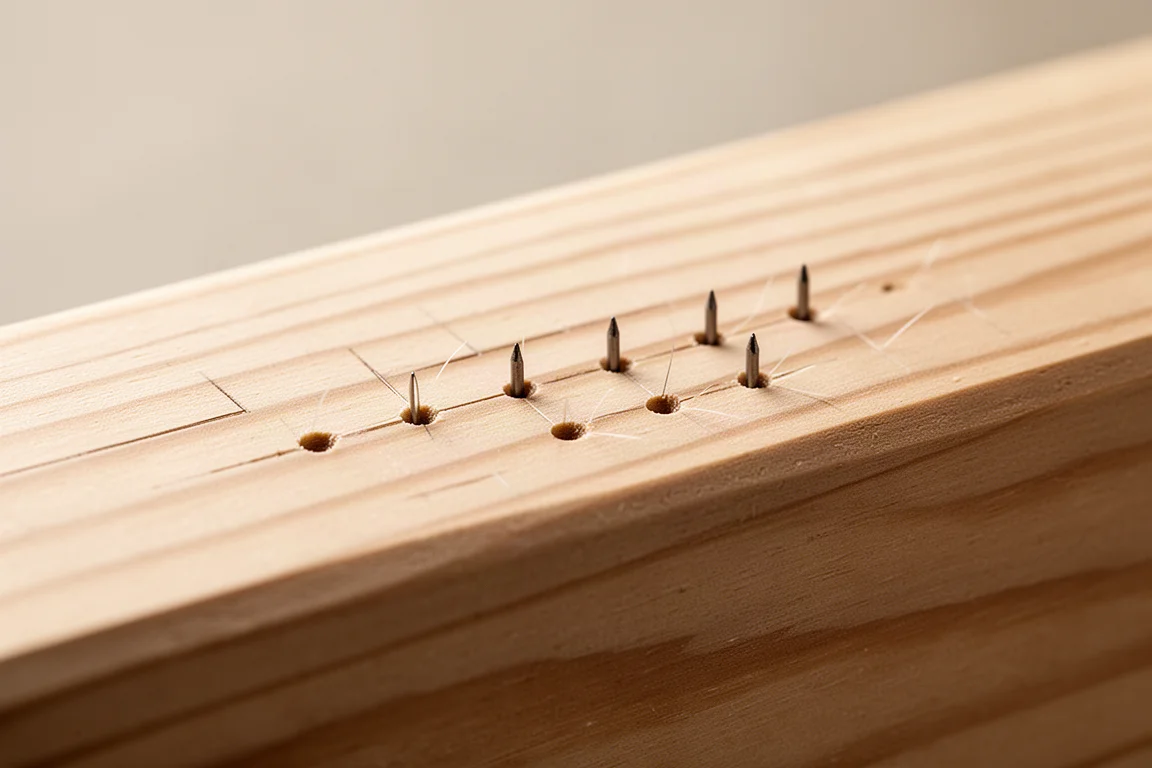
In testing on a 2x4, both tools left very similar, clean holes with minimal surface marring, and the difference between them in finish quality is essentially a draw once depth is tuned in. Both do a very good job of setting tiny pins flush.
The firing behavior differs more noticeably. The Metabo misfired once during testing and hesitated a few times when the trigger was pulled, requiring a second pull. The Makita fired as fast as the trigger could be pulled, with no hesitation, making it the clearly faster tool in rapid-fire use.
On weight, the Makita is the lighter of the two, as expected for a 12V tool versus an 18V one. With batteries installed, the Metabo weighed 4 pounds 7.5 ounces versus 4 pounds 0.7 ounces for the Makita. Without batteries, it was 3 pounds 10.4 ounces for the Metabo versus 3 pounds 9.1 ounces for the Makita.
Makita vs Metabo: Head to Head
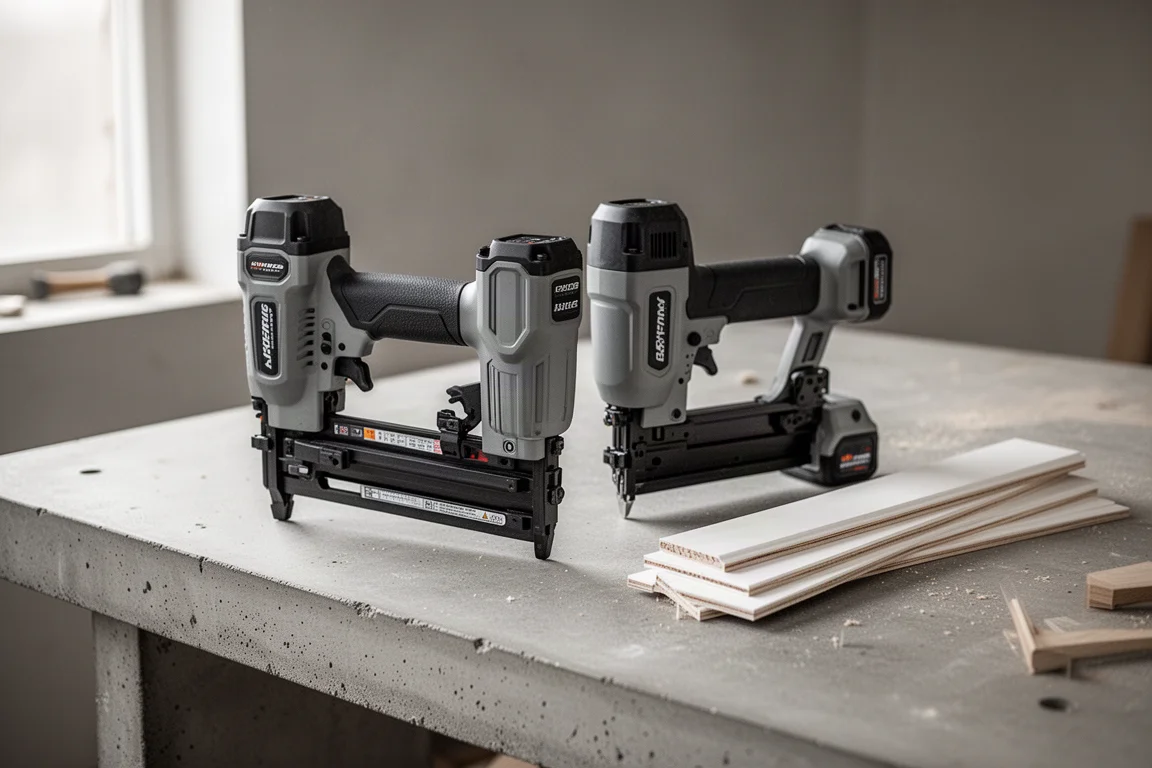
The Metabo is taller and slightly longer overall, while the Makita is a bit thicker thanks to its battery pack design. The Makita has two safeties: the tip must be pressed down and the trigger safety engaged. The Metabo uses a single safety plus dry fire lockout.
On warranties, the Makita offers three years, while the Metabo’s lifetime warranty is more flexible in practice, even with its parts-availability caveat. On price, the Metabo sits around $150 at Lowe’s, notably cheaper than the Makita’s roughly $220 street price. The Metabo also opens the door to the larger MultiVolt battery platform, while Makita’s 12V CXT line is relatively limited in the US.
Buying Advice
If asked to buy one again at full price, the Metabo NP18DSAL is the safer pick. It combines a lower price, a better-known nailer reputation, the lifetime warranty, and a bigger battery ecosystem. For many buyers, that combination outweighs the Makita’s sharper feature set.
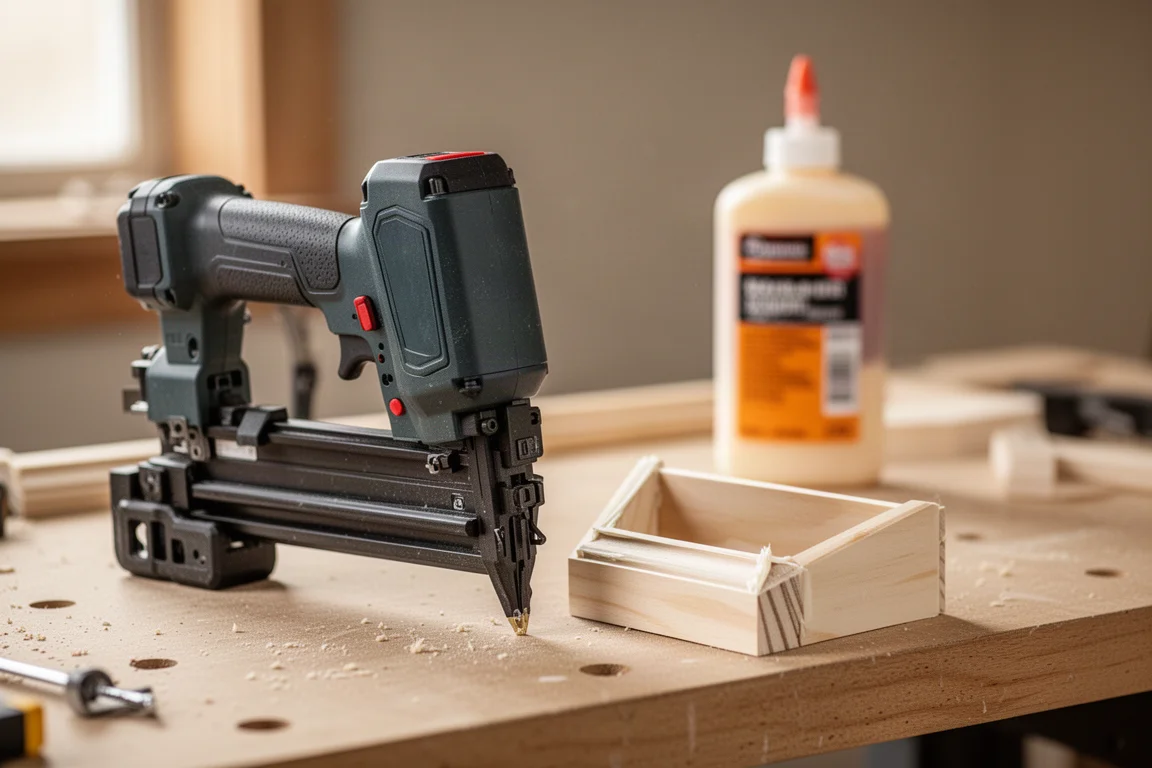
The Makita TP03 is still a strong choice, especially on a good deal. It is beautifully built, fires without hesitation, and offers nicer touches like the clear magazine window, dual safeties, onboard jam-clearing key, and spare tip storage. If you prefer Makita as a platform, consider the 18V version of this nailer instead, since that ecosystem offers far more battery options and likely similar weight to the Metabo.
Conclusion
These two pin nailers are closer in real-world output than their specs suggest: both drive clean pins, both are well made, and both are pleasant to use. The Metabo wins on price, warranty, and platform, while the Makita wins on firing speed and thoughtful features. Choose the Metabo if you want the safest all-around buy, and the Makita if you find it at a discount and value its refined design.
Further reading
Related Reviews
Power Tools
Best 1-Inch Pistol Impact Wrenches: Three Heavy-Duty Options Compared
We compare three 1-inch pistol impact wrenches, from a budget-friendly Harbor Freight model to a premium Caterpillar unit, to help you choose the right one.
Power Tools
Best 3/4-Inch Impact Wrenches 2026: Five Contenders Compared
We compare five 3/4-inch impact wrenches across price and performance, from a budget Amazon option to Snap-on's most powerful model yet.
Power Tools
Best Budget Cordless Tools 2026: Walmart Finds That Punch Above Their Price
We tested five cordless tools from Walmart, including a high-torque impact wrench that trades blows with Milwaukee and a $35 duster that outperforms its price class.