Power Tools
Makita TD173D Review: The Best Impact Driver Makita Has Ever Made
Makita's new top-of-the-line Japanese impact driver brings a ring light, repositioned handle, rear controls, and a slimmer nose. Here is what makes it worth the upgrade.
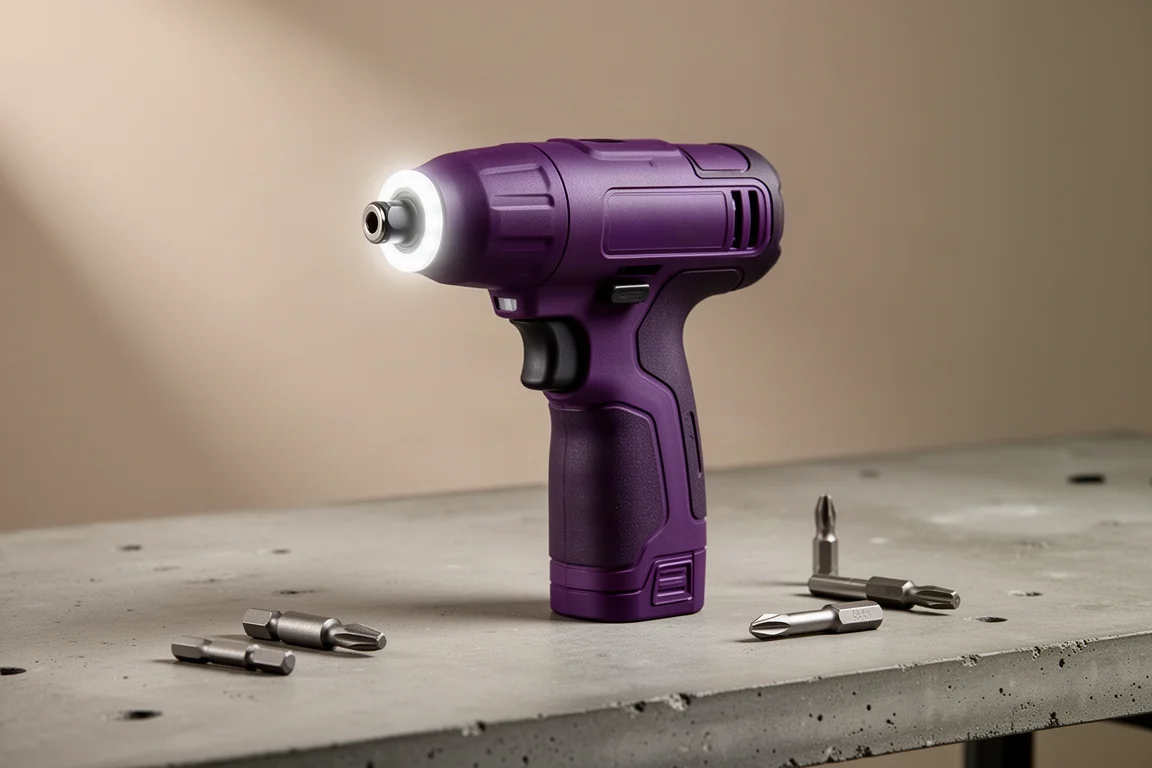
Introduction
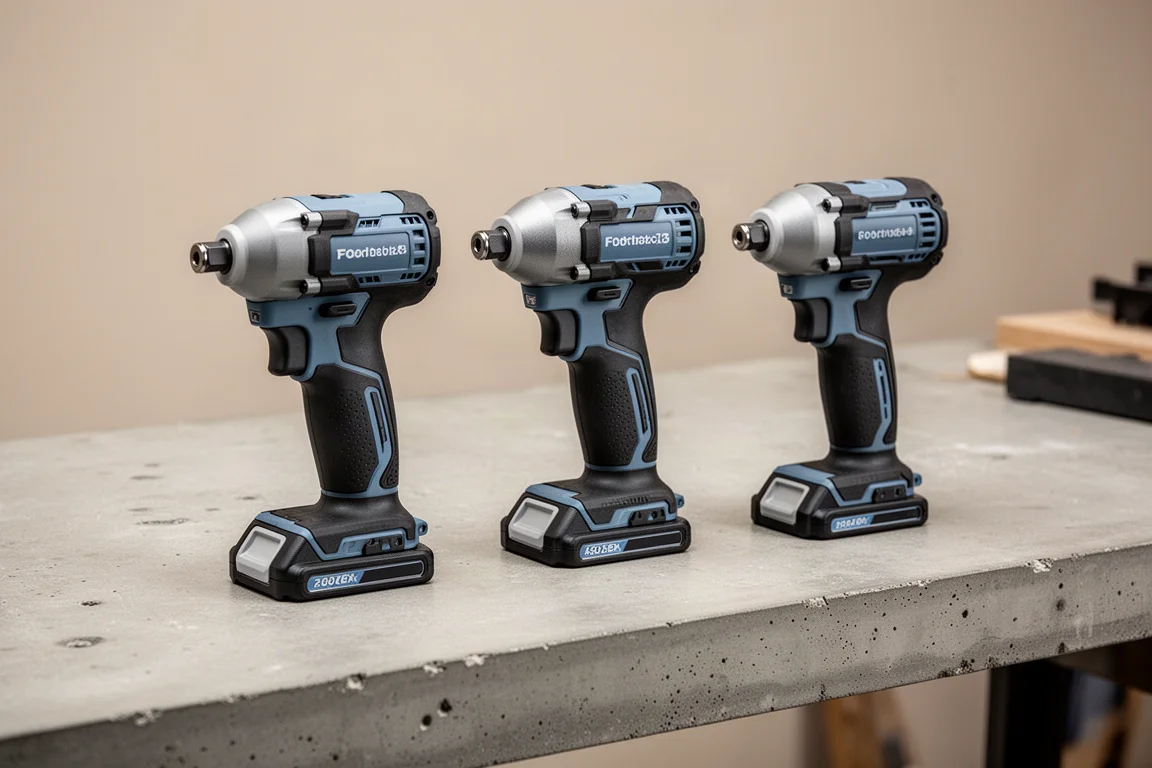
Makita releases new impact drivers often, and most generations bring only small incremental changes. The TD173D, made in Japan and sold in the distinctive purple “Tools and Stuff” color along with black, yellow, olive green, and standard teal, is different. It is not a minor refresh of the 172. It is, in our view, the best impact driver Makita has ever made, and the first in years that genuinely justifies an upgrade from an older flagship.
It will roll out globally under different model numbers, with the DTD173 expected in the United States, though the exact number has not been confirmed. If you want the purple color, the TD173D is the one to order, shipped direct from Japan.
What Makes the TD173D Different
The headline change is the new ring light. Previous models, including the newer 40 volt flagship with its four-LED arrangement, still threw shadows from longer driver bits. The TD173D’s ring light is far brighter and, no matter how you hold the tool or which length bit you use, the illumination lands as a single shadow-free dot right where the bit meets the work. It has three brightness levels, and it is bright enough to double as a torch.
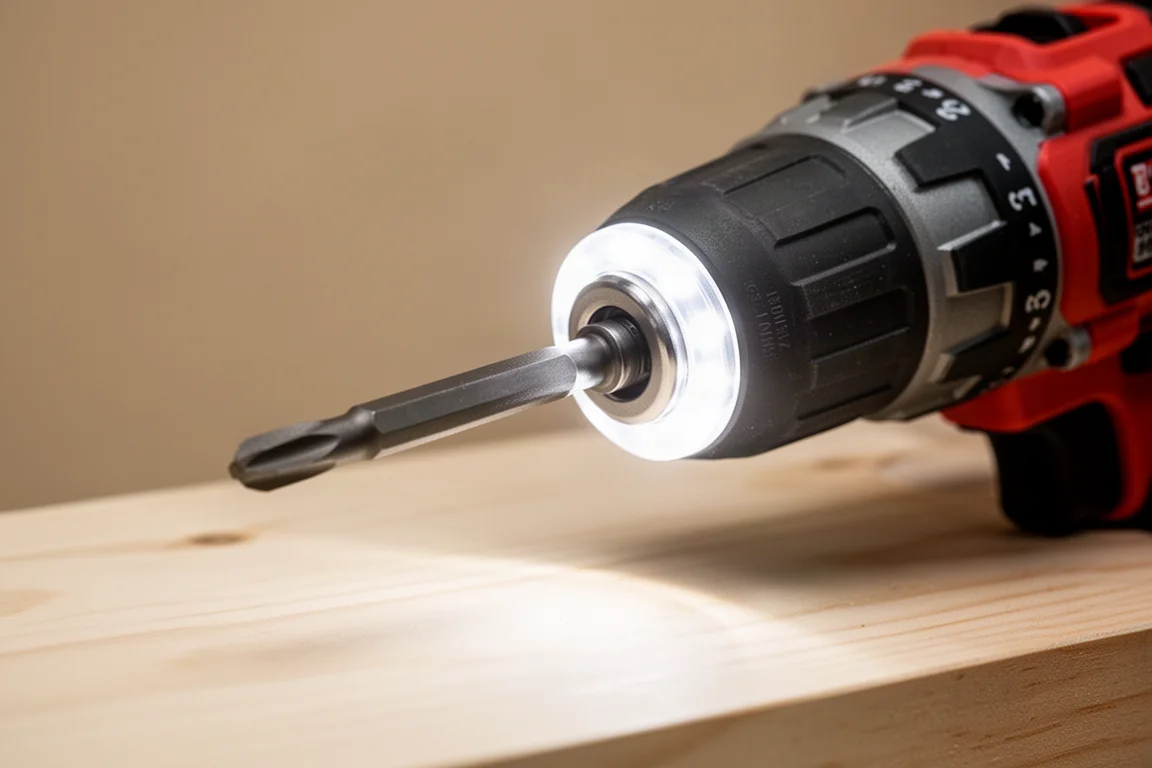
That ring light is not just a gimmick. By moving the LEDs into the ring where the glow-in-the-dark bumper used to sit, Makita eliminated the protruding side lights of previous models. The result is a noticeably narrower, more streamlined nose that gets into tighter spaces with nothing to catch. Makita attempted a slimmer nose with the 172, but the difference was marginal. Here it is a real improvement, and the back of the tool has been rounded off further as well.
The handle has also been repositioned. On most impact drivers, including previous Makitas, the handle sits toward the rear so the battery hangs forward-heavy and the tool wants to swing. The TD173D moves the handle more central to the battery, which balances the tool far better in the hand. It sits alongside the best current competitors for comfort, and pulling the battery back can also help in tight spaces where a forward-jutting battery gets in the way.
The third major change is the control panel, which has moved to the back of the tool. Previous generations put the mode buttons below the trigger, where the numbers read upside down and your hand blocks the view. On the back, the controls are easy to see and easy to adjust with your other hand while working. It is a small change with a big effect on everyday usability.
Modes and Controls
The TD173D keeps the quick-select trigger button above the trigger from previous flagships. Tapping it cycles through the four speeds, with a light flash confirming each change. It can also be programmed as a shortcut button: hold it with the button above the trigger, pick a special mode like bolt release or a tech mode, and from then on a tap jumps you straight to that mode and back. The programming survives battery removal, and you can clear it at any time by holding both buttons until everything flashes.
Modes in Practice
On paper the numbers are familiar: 180 Nm of torque, 3,600 RPM top speed, and 3,800 impacts per minute, matching the 171 and 172. Makita has apparently decided 180 Nm is enough for an 18 volt impact driver, and in real use the tool drives and removes screws much like its predecessors.
The special modes are where things get interesting. Bolt release mode stops the tool the moment pressure drops, so it loosens a nut and cuts out instead of spinning it off into oblivion. The two tech modes are for self-drilling screws into steel: mode three is for thin material up to roughly 1.5 to 2 millimeters with 3.5 to 4 millimeter screws, and mode four handles thicker stock. Tech mode three stops completely once the screw seats, protecting soft material like aluminum from stripping out. Tech mode four starts fast, slows as the screw beds in, then gently pulses impacts so you can judge the final position without shearing the screw head.
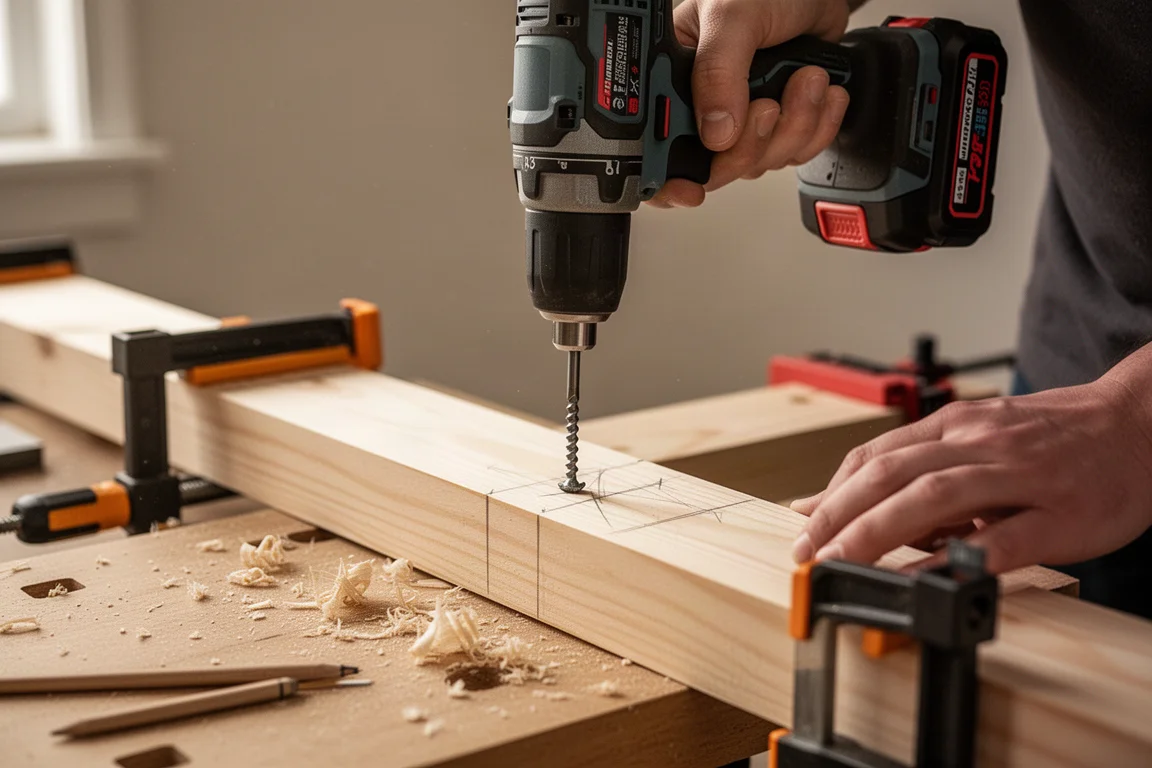
In testing, the tech modes proved material-dependent. They worked perfectly on thin aluminum flashing with 5 millimeter screws and on 5 millimeter steel plate, but were inconsistent on a 4 millimeter angle iron. The manual specifies narrow ranges for each mode, so results vary with the exact combination of material and fastener. When they work, they let you drive repetitive screws without thinking; when they do not, you can always fall back to feathering the trigger as usual.
One more trick: with the chuck in the center lock position, tapping the trigger turns the light on as a torch that stays lit for up to an hour, and taps it off again. The tool will not run in this position.
Driver Bits and the Japanese Chuck
Japanese-market impact drivers use a slightly different collet, which puts some buyers off. Standard bits from anywhere in the world still work, but they can insert deeper than usual, occasionally jamming or losing retention because the retention ball ends up on a bit’s edge rather than its flats. This has been an issue on the 172 and the newest 40 volt model, though not on the 171.
Makita’s fix is a tiny insert sleeve that goes pointy-end first into the chuck before the bit, locking the bit at the usual depth. The catch is that the sleeve is tiny and easily lost, and removing a bit can send it flying. The better solution is dedicated Japanese-spec bits, and Vessel makes an excellent range: nut setters in the 12 to 13 millimeter range (longer than the standard 9 to 10 millimeter versions to take up the extra depth), ball-retention nut setters that work on stainless where magnets fail, spring-pin bits, and double-ended bits that benefit from the extra length.
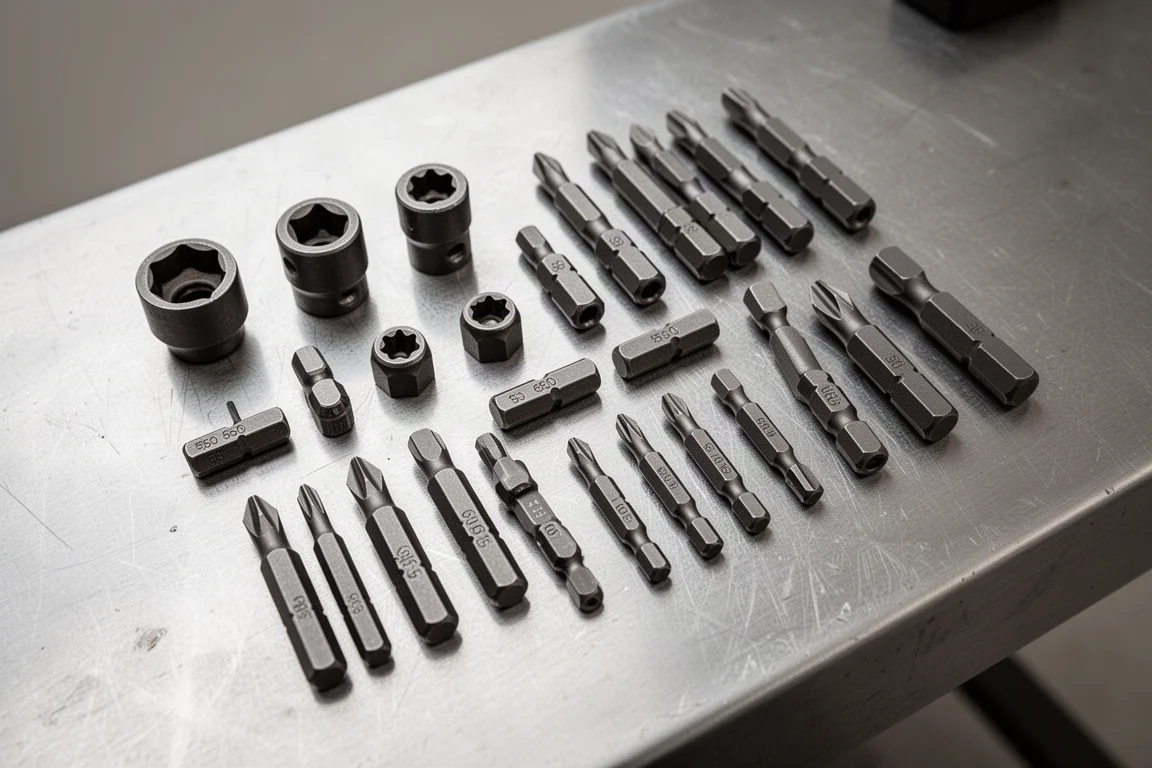
One caution: Vessel also makes bits for the US market with short stubby ends for standard drivers. If you want true Japanese-spec bits, look for Japanese printing on the packaging.
Weight and Handling
Weighed with a 5.0Ah battery, a stealth mount, and five driver bits, the TD173D comes in at about 1,540 grams, roughly 20 grams lighter than the 172 and 60 grams lighter than the 171. The weight difference alone is not the selling point, but combined with the better balance it makes the tool feel noticeably nicer in the hand.
Should You Upgrade?
If you own a 171 or 172, this is the first generation in a while where the answer is yes. The ring light alone is worth it, and the better balance, slimmer nose, and rear controls make it the most livable Makita impact driver yet. Against the 40 volt flagship, the case is more nuanced: the 40 volt offers dual-spring technology that is slightly quieter, quicker, and lower-vibrating, plus more modes, but the differences are marginal. This 18 volt is arguably the better tool overall, especially for the light.
Conclusion
The Makita TD173D is the rare flagship update that changes enough to matter. A genuinely useful ring light, a slimmer and better-balanced body, controls you can actually read, and a well-executed mode set add up to the best impact driver Makita has ever produced. If you are in the market for a top-tier 18 volt impact driver, start here.
Product link
View more details for Makita TD173D Impact Driver
This product is mentioned in the review. Check the specifications, options, and compatibility before buying.
View more details for Makita TD173D Impact DriverFurther reading
Related Reviews
Power Tools
Best 1-Inch Pistol Impact Wrenches: Three Heavy-Duty Options Compared
We compare three 1-inch pistol impact wrenches, from a budget-friendly Harbor Freight model to a premium Caterpillar unit, to help you choose the right one.
Power Tools
Best 3/4-Inch Impact Wrenches 2026: Five Contenders Compared
We compare five 3/4-inch impact wrenches across price and performance, from a budget Amazon option to Snap-on's most powerful model yet.
Power Tools
Best Budget Cordless Tools 2026: Walmart Finds That Punch Above Their Price
We tested five cordless tools from Walmart, including a high-torque impact wrench that trades blows with Milwaukee and a $35 duster that outperforms its price class.