Power Tools
Makita SP001G vs DSP600: Comparing the 40V XGT and 18Vx2 Plunge Saws
A close look at Makita's two top cordless plunge saws, covering what they share, where they differ, and which one makes more sense for your workshop.
Introduction
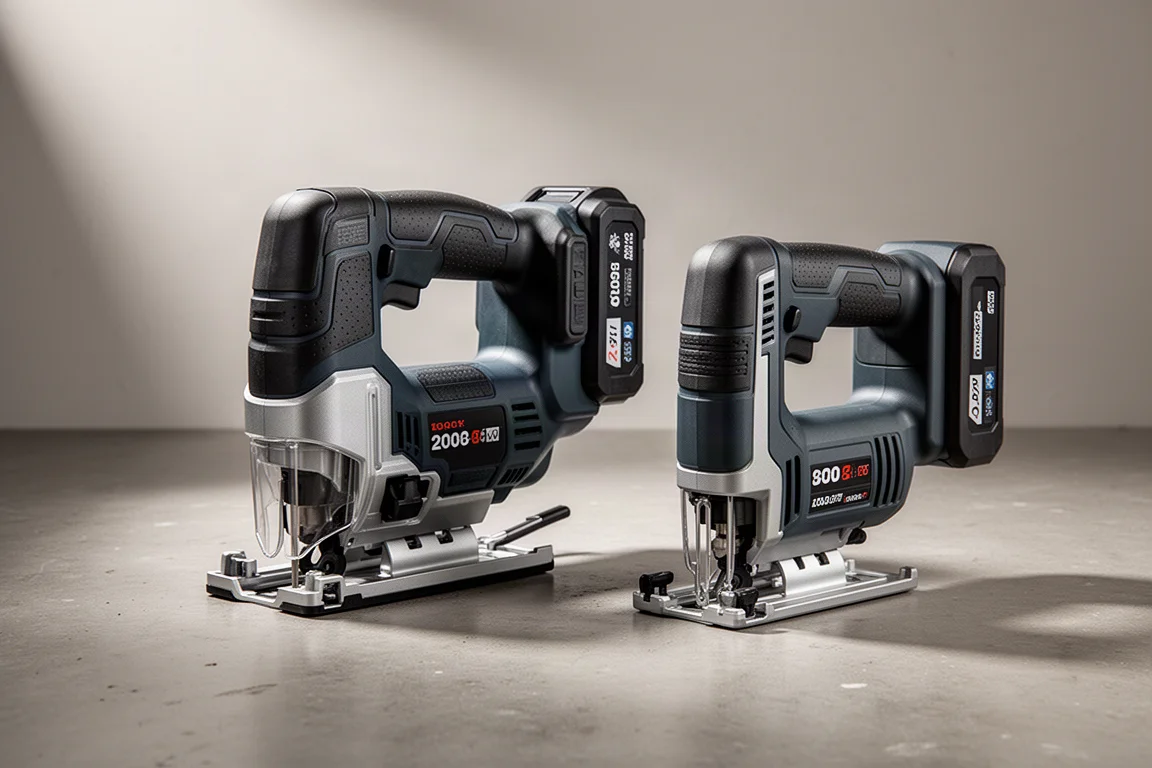
Makita’s plunge saw lineup has two flagship cordless options right now: the 40V XGT SP001G (sold as the GPS01 in some markets) and the older 18Vx2 DSP600. Both share nearly identical cutting hardware, but they differ in battery layout, balance, and speed under load. After using both back to back, the differences matter more than the spec sheets suggest.
What a Plunge Saw Actually Does
Plunge saws go by several names, including track saws and rail saws, but plunge saw is the more accurate term. The saw drops onto a Makita track and slides along it for a clean straight cut, and unlike a regular circular saw, the blade mechanism plunges straight down into the workpiece without tilting the whole tool. A regular circular saw can sit on a track, but to cut into the middle of a panel you would have to lift the depth adjust and force it down manually, which is far less controlled.
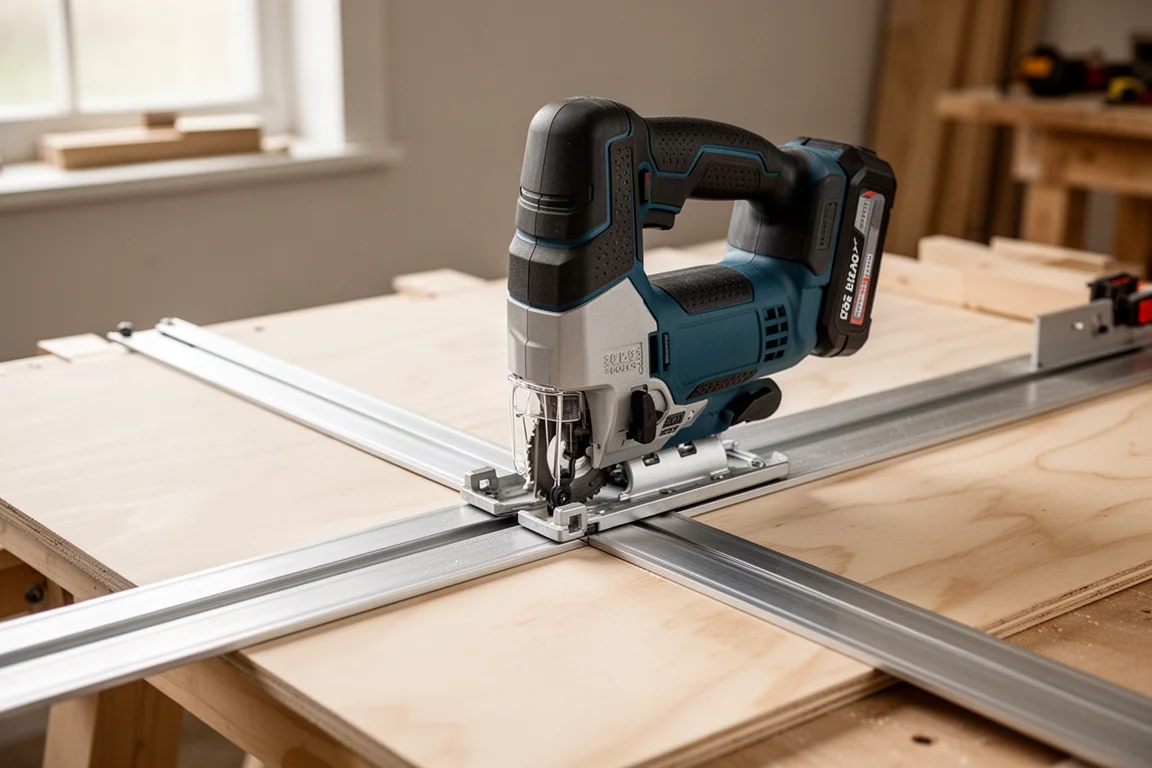
The tracks themselves come in 1.4 meter and 3 meter lengths. A common approach is to cut the 3 meter rail down to around 2.6 meters to get overhang when cutting a standard 2.4 meter sheet, or to pair two 1.4 meter rails with connectors for cross cuts and shorter storage.
Shared Features and Track Handling
Feature-wise, the two saws are almost exactly the same. Both are variable speed with a dial from 1 to 5: setting 1 runs at 2,500 rpm and setting 5 at 4,900 rpm. Both include on-board tool storage for blade changes, a blade access window, a blade lock lever that holds the blade in position, and a dust chute with detents at every 90 degrees.
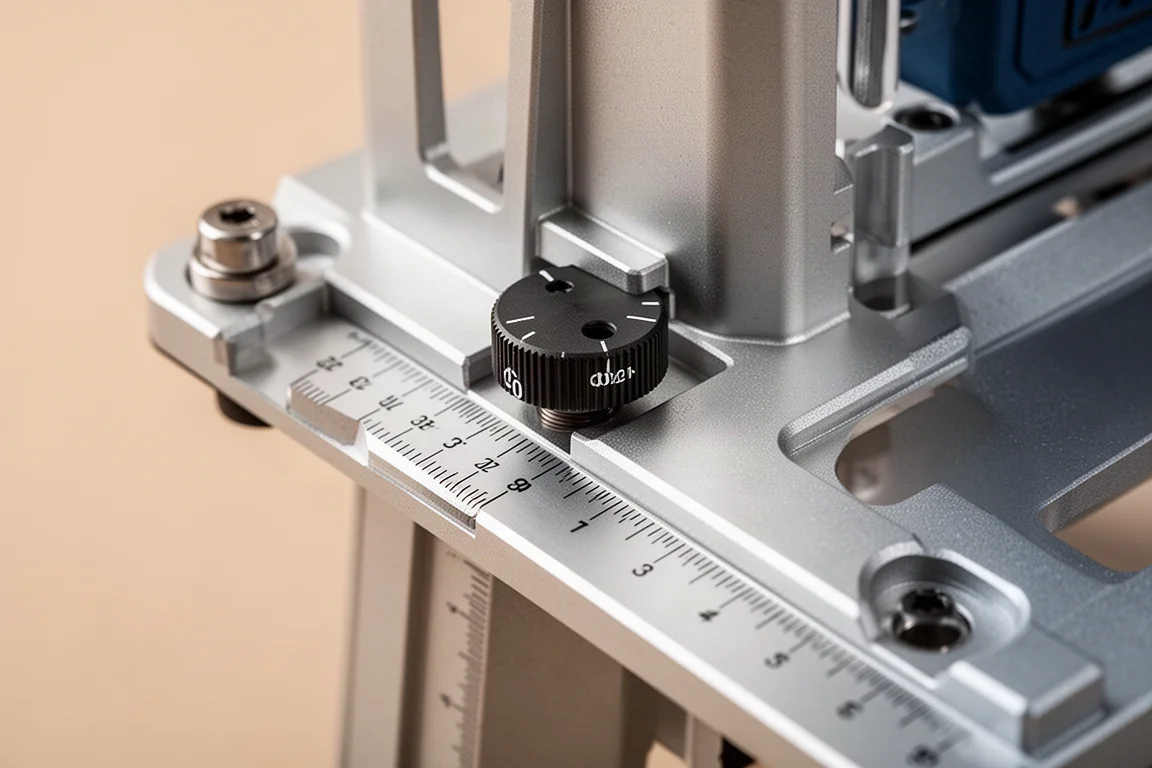
Depth of cut is rated at roughly 56 to 56.5 mm freehand and about 52 mm on the rail, so you lose around 4.5 mm when the saw is on the track. One frustration: the depth scale does not account for this. Set it to 40 mm and you actually get 36 mm on the rail, and there is no adjustment to correct it. You simply need to remember to add roughly 4 mm every time. The depth knob and bevel knobs can also seize up and become very tight over time.
Bevel cuts are well handled with preset detents at 45 and 22.5 degrees in both directions. A flick-up stop turns the 45 degree detent into 48 degrees, and two small tangs allow a minus one degree reverse bevel. Importantly, the bevel adjustments are designed so the cut line stays on the zero line of the track at any angle, so you never cut into the rail.
Track handling details include two knobs to remove chatter and keep the saw running straight, plus a small washer-style tab that hooks into the track slot to stop the saw tipping off, which matters a lot when the saw is set at 45 degrees and becomes front heavy.
Score Cuts and Splinter-Free Edges
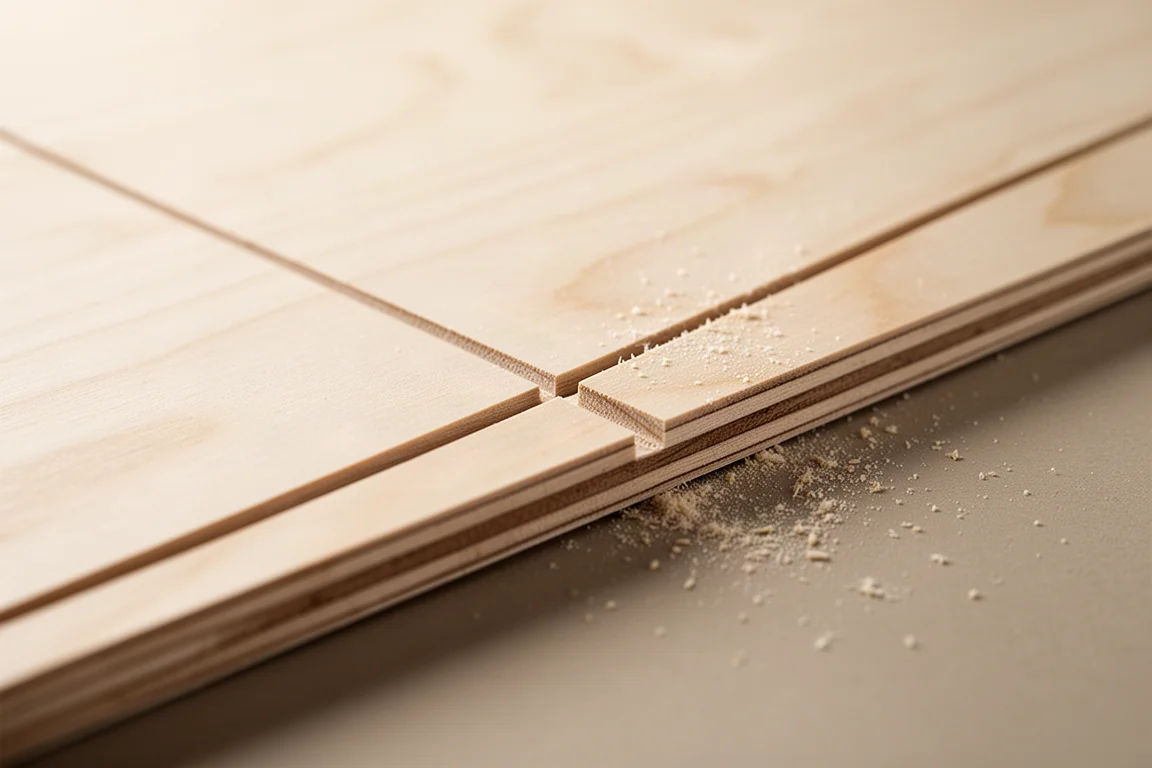
The score cut function is the reason cabinet makers and benchtop installers love these tools. A thumb lock limits the blade to a few millimeters of depth, letting you run a shallow pass with just the tooth tips across veneered plywood or laminated benchtops. Because the track keeps the saw in the same position, you then plunge deeper on the second pass for a full cut with no tear-out.
The Makita SP001G: The 40V XGT Option
The SP001G is the 40V XGT version, and its biggest advantage is the battery area. With a 2.5 Ah battery fitted, the rear of the tool sits almost in line with the base, protruding only a fraction, and the whole saw weighs about 4.6 kg. It is far less cumbersome and much nicer to use, and it maintains good cutting speed under load where the dual-battery saw can struggle with dense or thick timber.
It ships with AWS (auto-start wireless) built in as standard, includes AFT (Active Feedback Sensing Technology) that acts like a kickback limiter by cutting power quickly when the blade binds, and has a soft start and quick brake. Cutting sopping wet 2-inch rough sawn timber at full depth, it handled the strain better than the older model and produced a faster, more consistent cut.
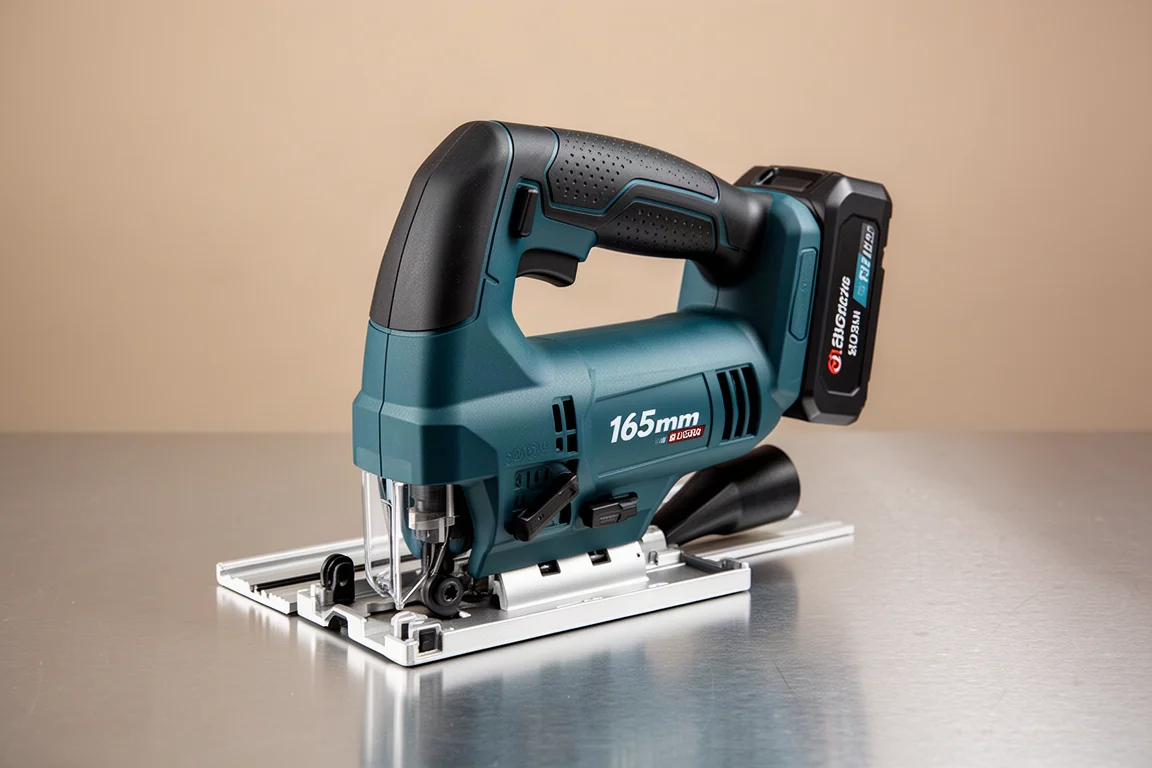
The Makita DSP600: The 18Vx2 Option
The DSP600 runs on two 18V batteries, which is where its problems start. With any 18V pack from 3 Ah to 6 Ah the weight is roughly the same at about 5.1 kg, but the dual-battery housing sticks out an extra 60 mm past the base. That overhang is enough to catch on clamps during cuts, which is a genuine annoyance and occasionally a hazard.
The rated speed is actually higher on paper at 6,300 rpm versus the SP001G’s 4,900 rpm, but raw speed does not equal faster cutting. Without the torque management of the 40V platform, the DSP600 can struggle to hold speed under load in dense timber, so the 40V saw cuts faster and more consistently in practice.
Two other differences: early DSP600 units (the original release) lack the AWS chip, which arrived with the DSP601, and the dust chute has no detent lock, so the hose can flop and hang in the way. The 36V (18Vx2) version also carries a battery gauge, which is unnecessary given each battery has its own indicator.
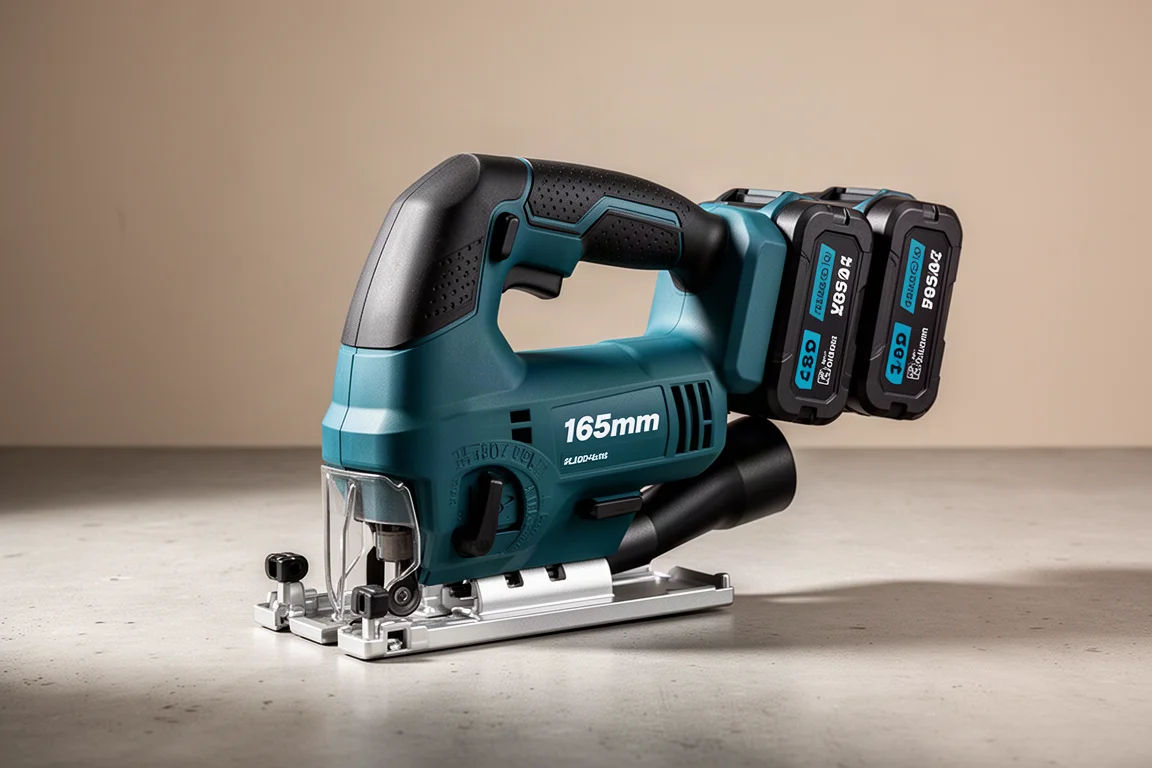
Which One Should You Buy?
If you already own the DSP600 and are happy with it, there is no urgent reason to upgrade. The jump is real but not enormous. If you are starting from scratch, the 40V SP001G is the clearly superior tool: lighter, less cumbersome, and more consistent under load. Both saws take the B-57358 blade, which comes fitted from new and is the best replacement choice. An optional sub-base rip guide is available separately.
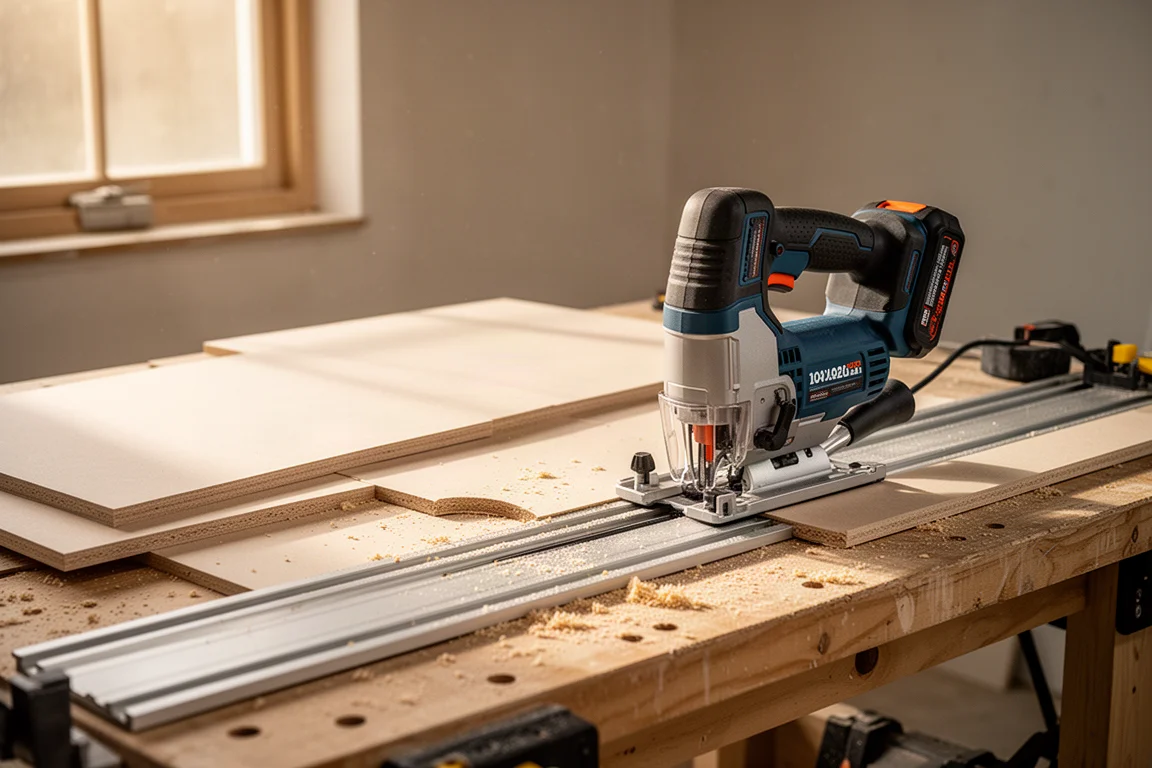
One final thought worth considering: if you only ever want straight cuts and rarely need the plunge function, a standard circular saw with a track groove, such as Makita’s HS004G, may serve you better. Plunge saws are awkward as general-purpose saws because the blade retracts whenever you let go of the pressure.
Conclusion
The Makita SP001G and DSP600 are near-identical cutting tools, but the 40V XGT version’s slimmer battery profile, lower weight, and better speed management under load make it the stronger choice for new buyers. Existing DSP600 owners can comfortably stick with what they have.
Further reading
Related Reviews

Power Tools
Best 1-Inch Pistol Impact Wrenches: Three Heavy-Duty Options Compared
We compare three 1-inch pistol impact wrenches, from a budget-friendly Harbor Freight model to a premium Caterpillar unit, to help you choose the right one.

Power Tools
Best 3/4-Inch Impact Wrenches 2026: Five Contenders Compared
We compare five 3/4-inch impact wrenches across price and performance, from a budget Amazon option to Snap-on's most powerful model yet.

Power Tools
Best Budget Cordless Tools 2026: Walmart Finds That Punch Above Their Price
We tested five cordless tools from Walmart, including a high-torque impact wrench that trades blows with Milwaukee and a $35 duster that outperforms its price class.