Power Tools
Makita DBO480 vs DBO481 vs DBO482: Which 18V Quarter Sheet Sander Should You Buy?
Makita's new 18V LXT quarter sheet sanders share one platform but differ in pads, plating, and market bundles. Here is how the DBO480, DBO481, and DBO482 compare.
Introduction
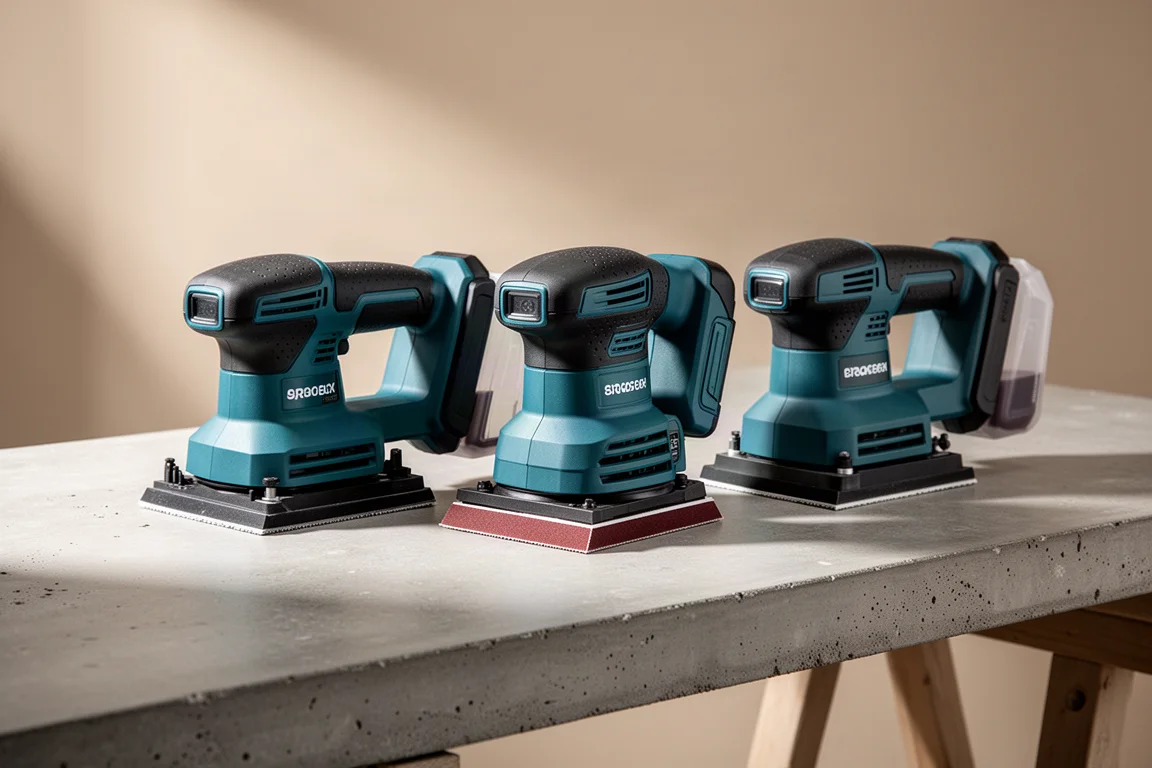
A cordless quarter sheet sander has been a long time coming from Makita, and the 18V LXT platform now has one in the form of the DBO480. Alongside it sit two regional siblings, the DBO481 and DBO482, which share the same core tool but differ in the pad configuration, plating, and the accessories you get depending on where you live.
This is a fine finishing sander, not a material-removal workhorse. Its job is getting a surface ready to paint, cleaning up stains and weathering, and reaching into corners and awkward spots that larger sanders cannot. If you want to know which Makita cordless sander removes the most material, the three-inch sheet sander currently holds that crown.
Evaluation Criteria
We looked at the three variants across the things that matter most for a finishing sander: dust extraction quality, sanding speed on real timber, ergonomics, and the flexibility of the pad system, especially for detail work between boards and inside rebates.
What’s In the Box and First Impressions
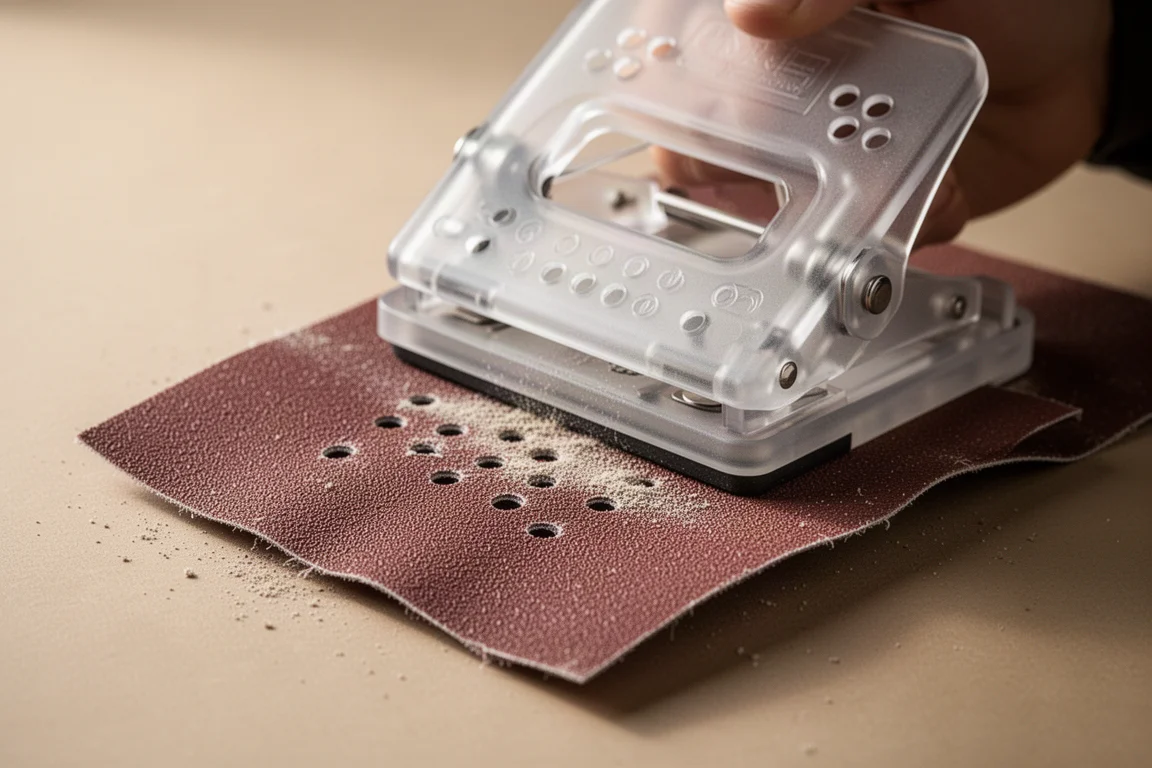
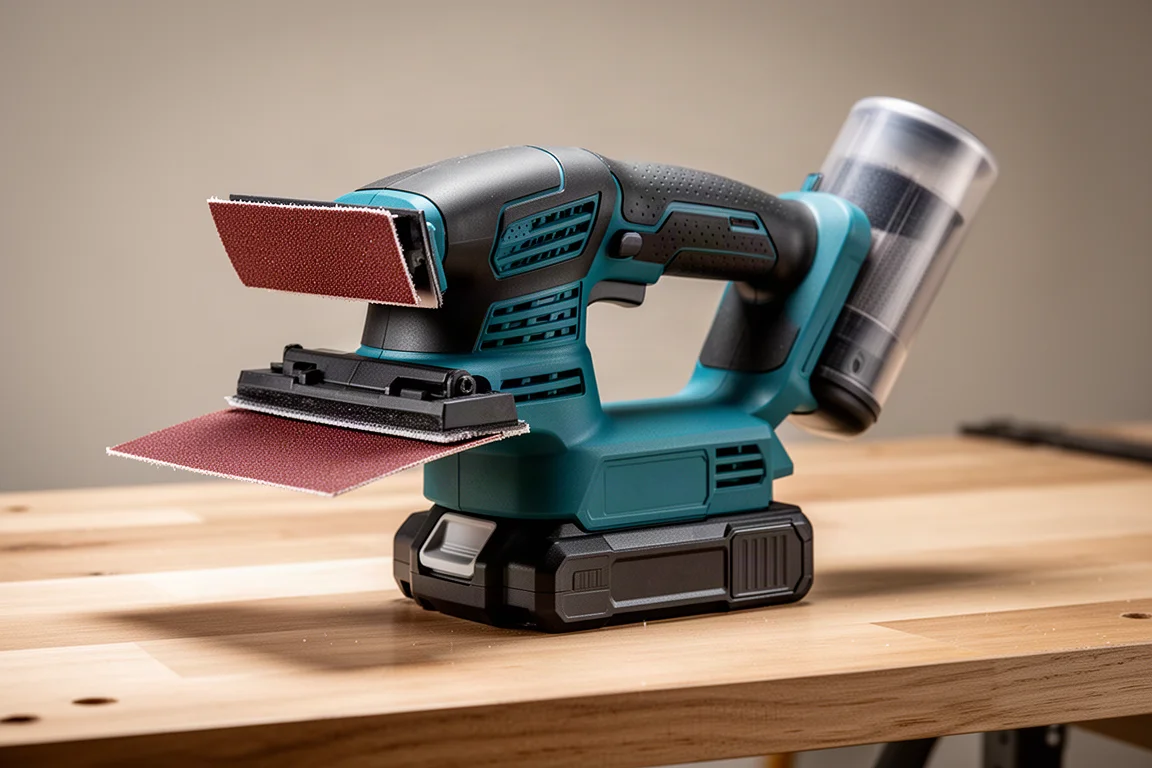
The DBO480 as sold in New Zealand comes with the quarter sheet pad attached, an oddly shaped rectangular/triangular detail pad, a hole punch plate for stamping dust holes into your sandpaper, a solid dust collector, and three bags of sanding paper. The rectangular pad may need to be bought as an optional accessory depending on your model and country, and the same goes for the triangular pad.
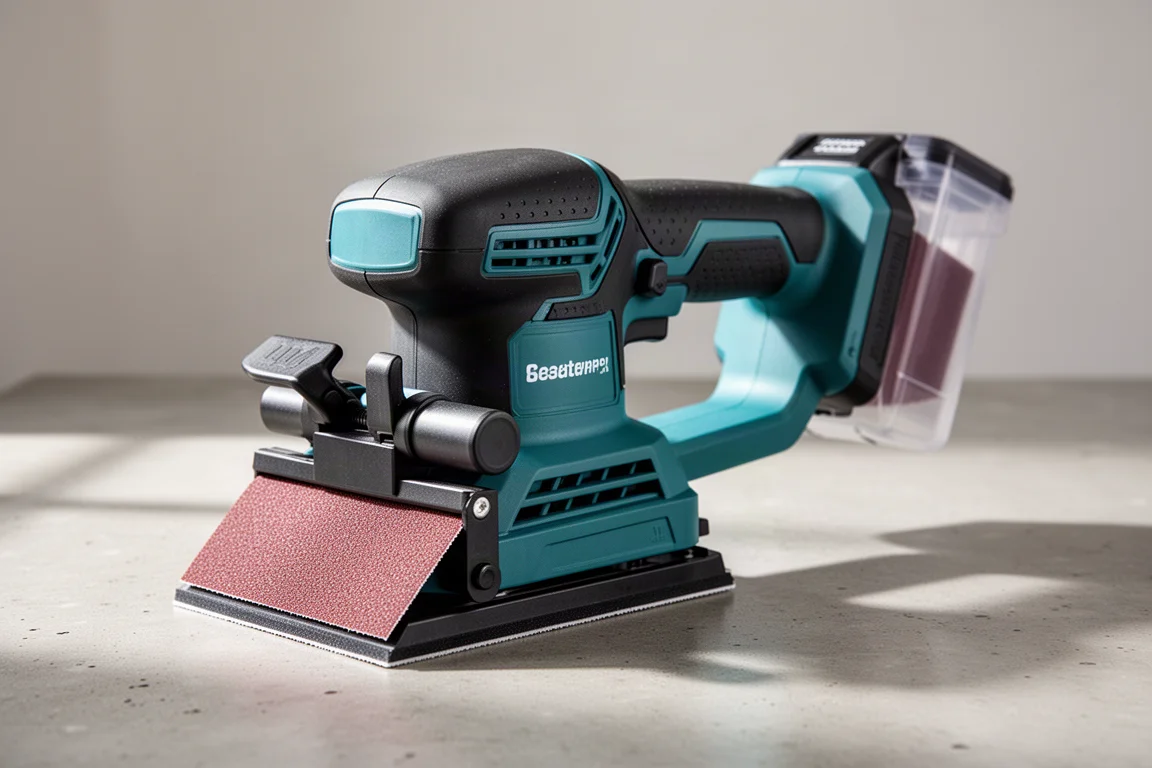
Ergonomically the tool is nicely designed and feels good in the hand, though a couple of small design details are a matter of taste. Paper attaches via hook and loop, but there are also clamps on the tool, so you can clamp plain paper from a roll, which happens to be the same width as the pad.
Sanding Performance and Dust Extraction
This is a brushed tool, just like Makita’s five-inch random orbital sander, and not brushless like the newer third sheet sander. Before dismissing it on that basis, it is worth noting that the competing cordless quarter sheet sanders on the market are also brushed; we are not aware of any cordless brushless quarter sheet sander currently available.
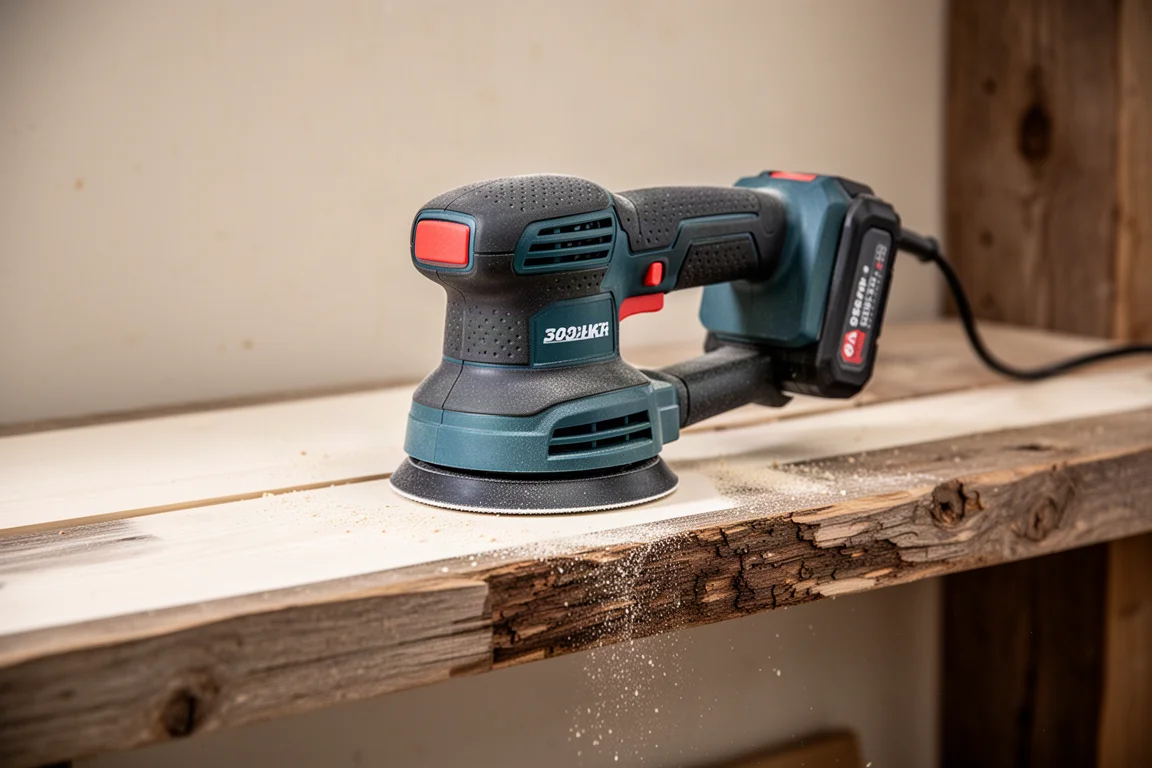
Speed settings come in two flavors rather than three: 14,000 orbits per minute and 11,000 orbits per minute. Hooked up to dust extraction, the suction proved excellent in real use. On a weathered hardwood shelf with deep water stains, a 60-grit sheet cleaned the surface up surprisingly quickly, and the dust extraction was superb.
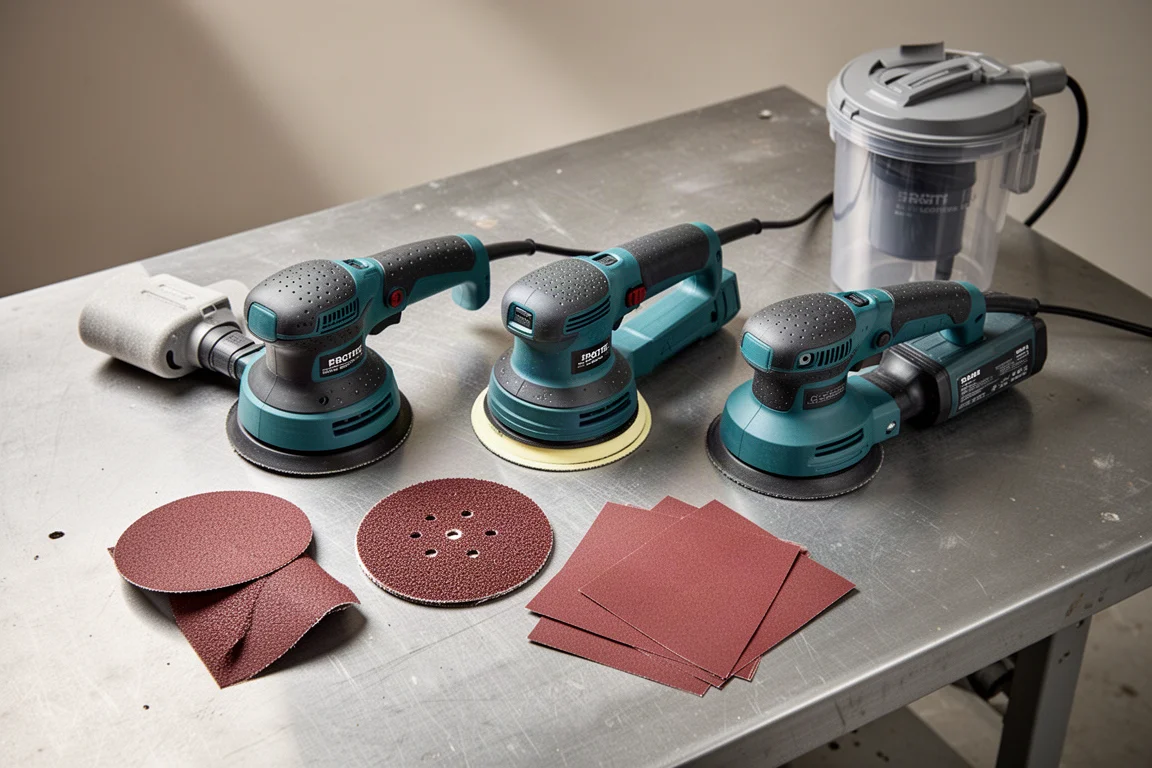
In a one-minute 60-grit head-to-head against the five-inch random orbital and the third sheet sander, the quarter sheet removed the least material, with the third sheet clearly the fastest. That is expected for this class of tool, and it underlines what this sander is for: finishing, not stripping.
The Triangle and Rectangle Pads: Getting Into Awkward Spots
The triangular pad has a square base and a shape quite different from a typical detail sander pad, with hook and loop on both sides. It extends well out in front of the tool, and the finish of the pad is a little rough, with some wrinkles where Makita has routed dust extraction from the tip.
That double-sided hook and loop is where the clever tricks live. Because the abrasive attaches on top of the pad as well as underneath, you can fold the paper over the edge and sand inside a rebate or recess with the pad’s edge. You can slide the folded pad between deck boards to sand the grooves, and with the thinner rectangular pad a single sheet fits through the gap easily.
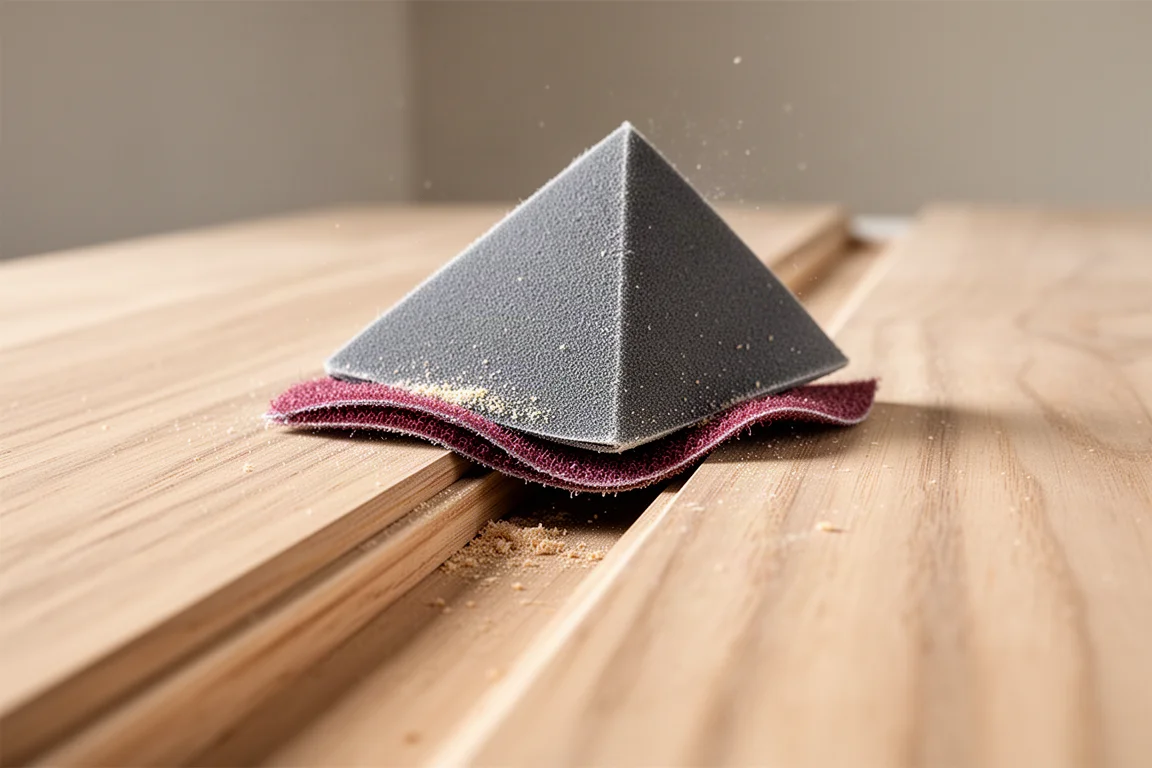
Another practical benefit: with paper on top of the pad, you can sand underneath the edge of something like a bench top by simply sliding the tool along, rather than getting underneath and pushing up, which is always a struggle. In use, the triangle pad tidied up fuzzy grooves between boards with ease.
Model Differences: DBO481 and DBO482
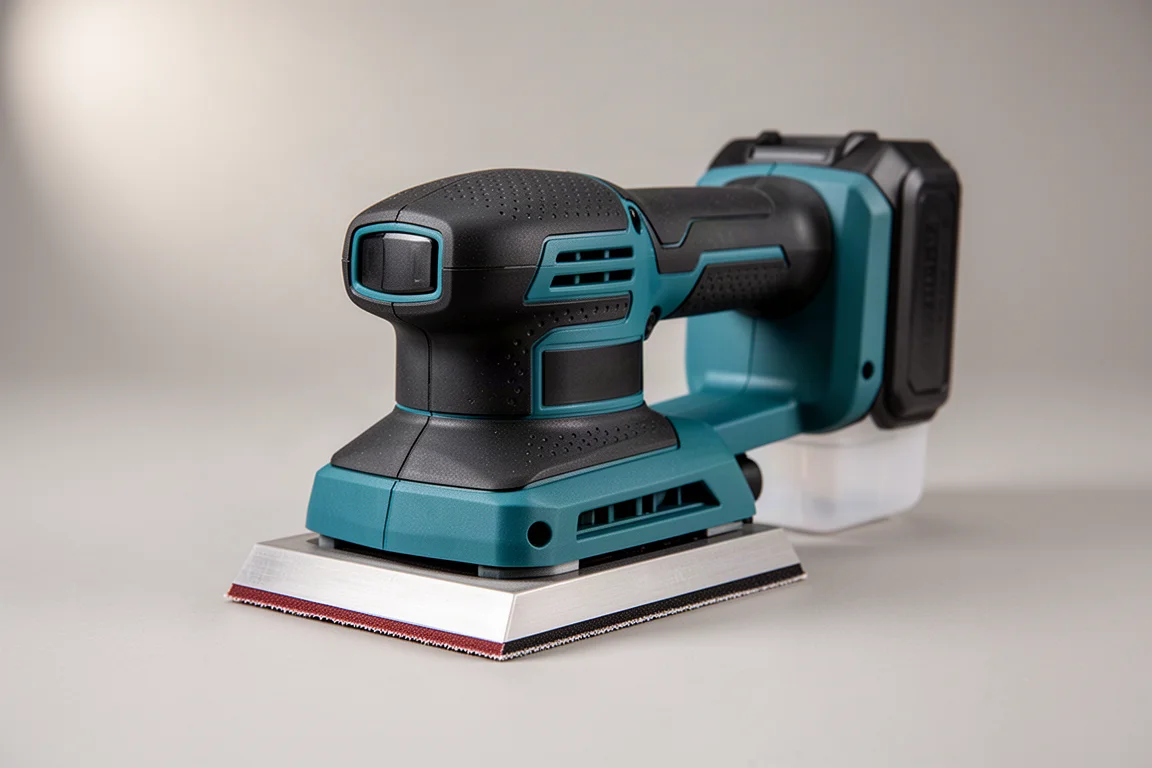
The three models are more alike than different, but the details matter when you are choosing. The DBO480 is the baseline version with a plastic plate and surrounding area around the pad, and it ships with the quarter sheet pad and, depending on region, the detail pads in the box.
The DBO481 is the one to note if you prefer clamping plain paper: its standard square pad has no hook and loop and is solid, designed purely for use with the tool’s clamps. The DBO482 steps things up with the plate and surrounding area made of aluminium rather than plastic, which should hold up better to workshop knocks over time.
Which One Should You Buy?
If you mainly use hook and loop abrasive sheets and want the standard configuration, the DBO480 is the straightforward choice. If you prefer clamping paper from a roll and can live without hook and loop on the main pad, the DBO481 makes sense. If durability of the pad plate matters to you, the aluminium construction of the DBO482 is the differentiator.
Whichever model you pick, check what comes in the box in your region, since the rectangular and triangular pads are sold as optional accessories in some markets. It is also worth confirming the dust extraction connection options for hooking the tool up to a workshop vacuum, as availability of accessories varies while the range is still new around the world.
Conclusion
The Makita DBO480, DBO481, and DBO482 bring a genuinely useful finishing sander to the 18V LXT range: excellent dust extraction, a comfortable grip, clever paper options, and a pad system that reaches spots most sanders cannot. Just remember it is a fine finishing tool, not a material remover. Makita’s 18V sander line-up is now respectable, and while 40V sanders have yet to appear, this quarter sheet fills a real gap in the range.
Further reading
Related Reviews

Power Tools
Best 1-Inch Pistol Impact Wrenches: Three Heavy-Duty Options Compared
We compare three 1-inch pistol impact wrenches, from a budget-friendly Harbor Freight model to a premium Caterpillar unit, to help you choose the right one.

Power Tools
Best 3/4-Inch Impact Wrenches 2026: Five Contenders Compared
We compare five 3/4-inch impact wrenches across price and performance, from a budget Amazon option to Snap-on's most powerful model yet.

Power Tools
Best Budget Cordless Tools 2026: Walmart Finds That Punch Above Their Price
We tested five cordless tools from Walmart, including a high-torque impact wrench that trades blows with Milwaukee and a $35 duster that outperforms its price class.