Tool Storage
Makita MakTrack vs Milwaukee Packout: Which Modular Tool Storage System Makes More Sense?
A side-by-side look at seven MakTrack units against a comparable Packout setup, covering latches, access, organizers, and rolling bases.
Introduction
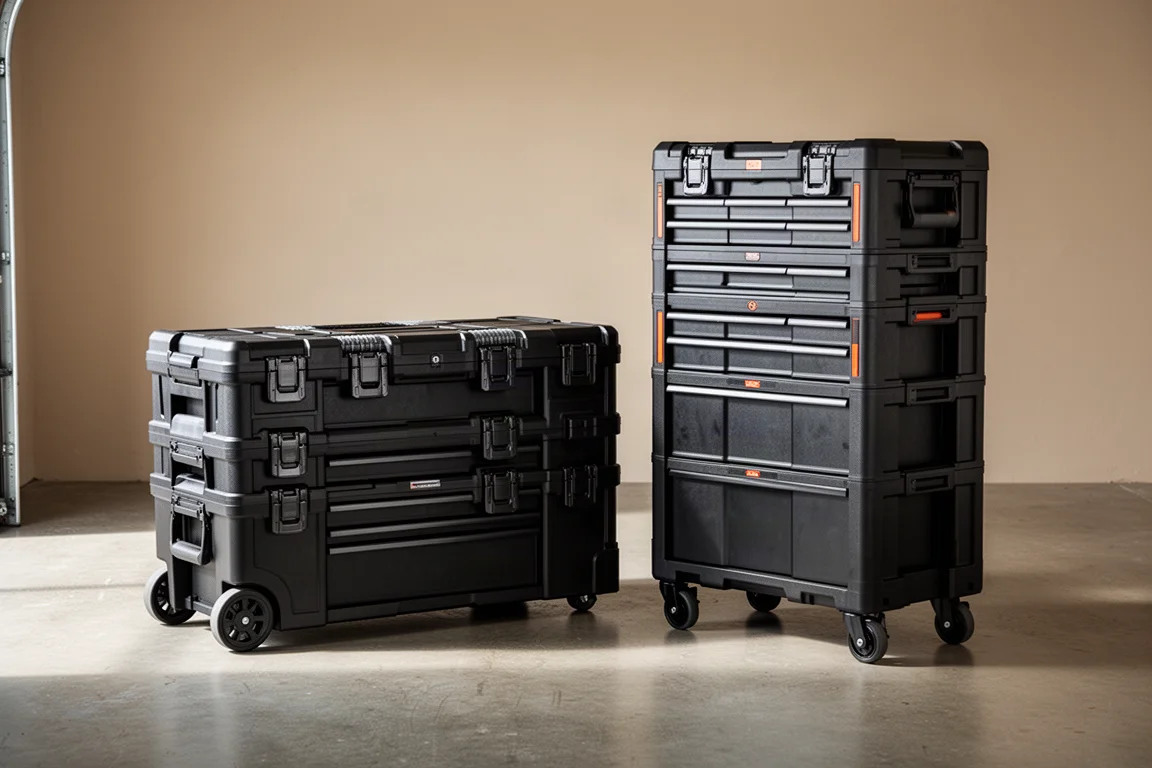
Modular tool storage has become the default way tradespeople and serious DIYers move gear between the van, the truck bed, and the job site. Milwaukee Packout has dominated that space for years, but Makita’s MakTrack has arrived with a different take on the same problem. This comparison puts seven MakTrack units up against the closest matching Packout setup, from the rolling base to the organizers on top.
The headline difference is philosophical. Packout boxes slide in from one side only and open in one direction. MakTrack boxes can be mounted and opened from either side of the stack. That single design choice shapes almost everything else, from latch size to how easily you grab a box mid-stack.
How the Two Systems Mount and Open
On the Packout system, each box locks in via angled tangs inside the mounting points, so every box has to slide in from one specific direction. That means the release levers sit down between boxes, and opening a box in the middle of a stack often means reaching into tight gaps or pulling the stack apart first. Packout lids also hinge in a fixed direction, so access is always from one side.
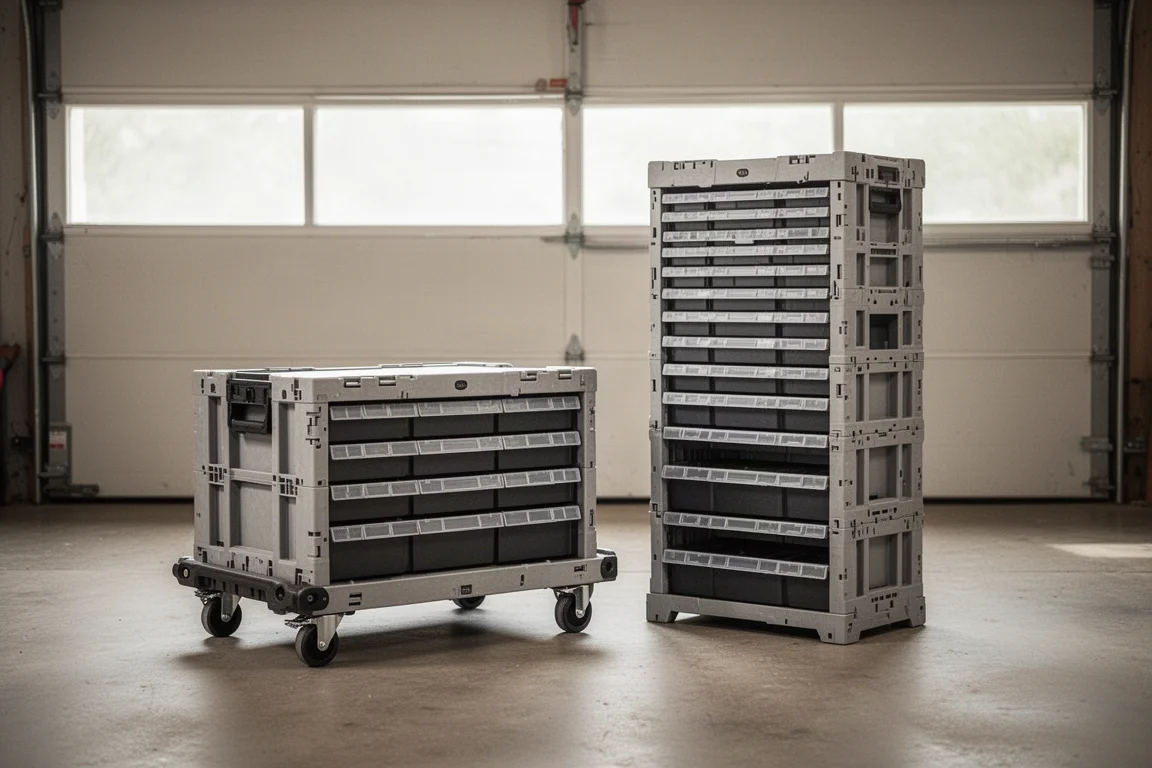
MakTrack boxes slide in from either side, and most of the range opens from both ends thanks to dual hinges. The large toolbox and the extra-large extension box even let you remove the entire lid. In practice, that means you can open any box on a MakTrack stack from whichever side you happen to be standing, without rearranging anything.
Latches and Release Levers
The latches are where MakTrack pulls clearly ahead. Makita’s latches are large enough to fit your whole hand underneath, firm and solid to operate, and much easier to use with gloves on. Packout latches are noticeably smaller, tighter, and louder, with a violent snap that makes closing them hard on your fingers.
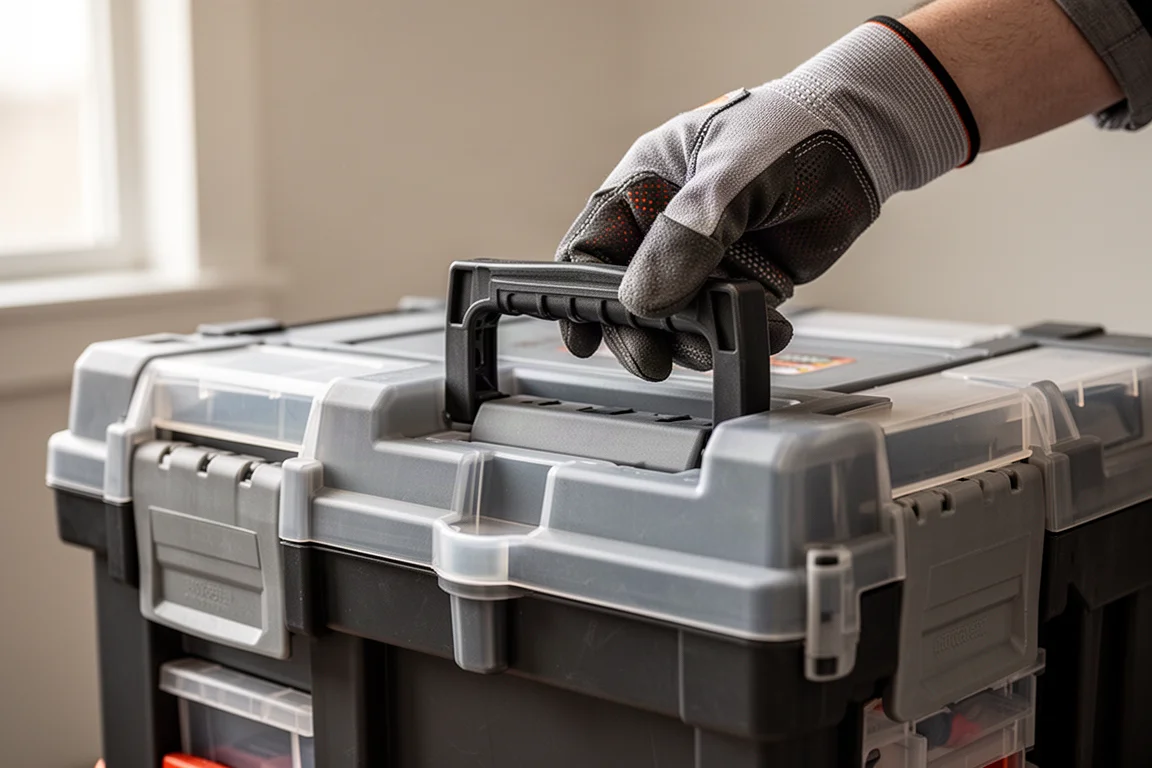
The release levers follow the same pattern. MakTrack’s front lever is intuitive: grab, pull forward, lift. Packout’s smaller levers take aim to find, and pulling a heavy box up with one or two fingers puts real pressure on your finger tendons, which is worth thinking about if you do this dozens of times a day.
One caveat: the narrow, shallow MakTrack organizer is the only unit in the range with small levers, purely because of its thin profile.
Organizers: Small Parts Storage Compared
The shallow organizers are basically the same footprint on both systems, but the usable space is very different. Makita’s version opens end to end, which lets you flip it around to open from either side of the stack, and its lid sits above the bins, adding roughly 10 to 12mm of extra depth in the middle. Milwaukee’s lid dips down into the tubs, eating into an already shallow interior. If you only carry tiny screws and washers, either works, but for anything slightly larger the Makita is close to double the usable height.
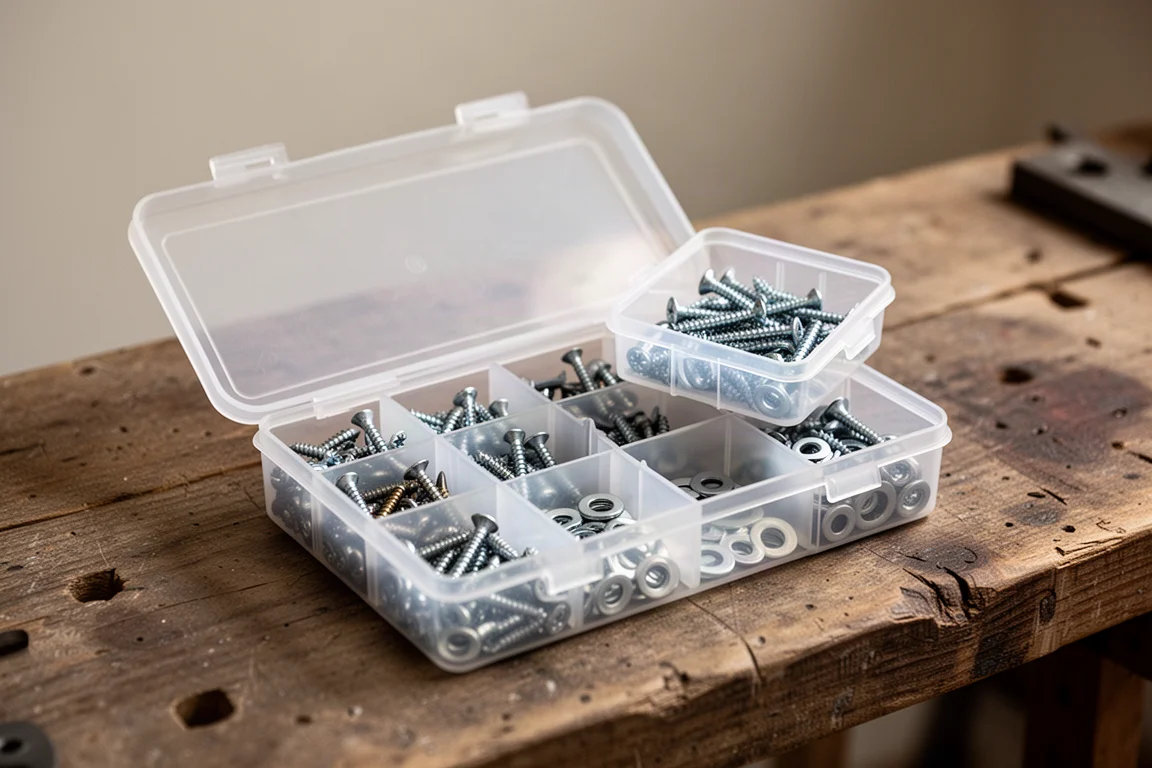
The Makita shallow organizer includes a clever card slot for labeling contents, plus cleats on the lid that let you clip open bins on for easy access while working. Milwaukee’s organizer does come with dividers included, while Makita sells dividers separately, so that is one point back for Packout.
Makita’s deep compact organizer offers around 5 inches of depth, comfortably fitting long fasteners, with optional two-tier bins. Milwaukee’s equivalent is substantially lighter, but shallower, and long screws simply will not fit. Milwaukee also sells an in-between depth organizer that Makita does not currently offer, which is worth noting if your parts fall between sizes.
Toolboxes and the Rolling Base
The MakTrack large toolbox is the standout unit. It holds 63 liters, supports a 45kg load, opens from both sides, and has no real Packout equivalent at that profile. The extra-large extension box matches it at 63 liters and can either stack on top or slide over the cleat on the rolling base for extra storage.
The Milwaukee rolling base is bigger, with 132 liters of capacity against Makita’s 82 liters, though both share a 250lb (113kg) max load rating and 9-inch wheels. The Milwaukee base includes a plastic tray and an auto-locking stay with a red release button, which is a genuinely nice touch. Neither large rolling chest is IP rated; Milwaukee includes a rubber seal but deliberately leaves a hole to prevent vacuum lock from temperature or altitude changes.
The Makita base is lower profile, designed to slide under truck covers, opens from both sides, includes a tray, a stay, and a removable MOLLE panel, and hides a dedicated tracking device slot. Packout has no dedicated tracker spot in this chest, though one could be screwed in. Both have padlock holes. Milwaukee does offer aluminum corner brackets on some boxes for strapping and mounting track saw rails, something MakTrack lacks. Milwaukee also has a vertical stacking option for stair carries and tight job sites that Makita does not yet offer, though it seems like an obvious next step.
Which System Should You Buy?
If you value everyday usability, MakTrack is the more refined system right now. The big latches, dual-side mounting, bidirectional opening, deeper organizers, and the rolling base that slides under a truck cover make it easier to live with on small indoor jobs. The trade-off is a smaller range, no vertical stacking option yet, and dividers sold separately.
Packout counters with sheer maturity: a much larger accessory ecosystem, a vertical stack option, lighter boxes, included dividers on some organizers, and that in-between organizer size. The plastic also feels thinner and less dense than the Makita equivalent, which some will read as cheap, though it keeps weight down when heaving a loaded stack into a truck.
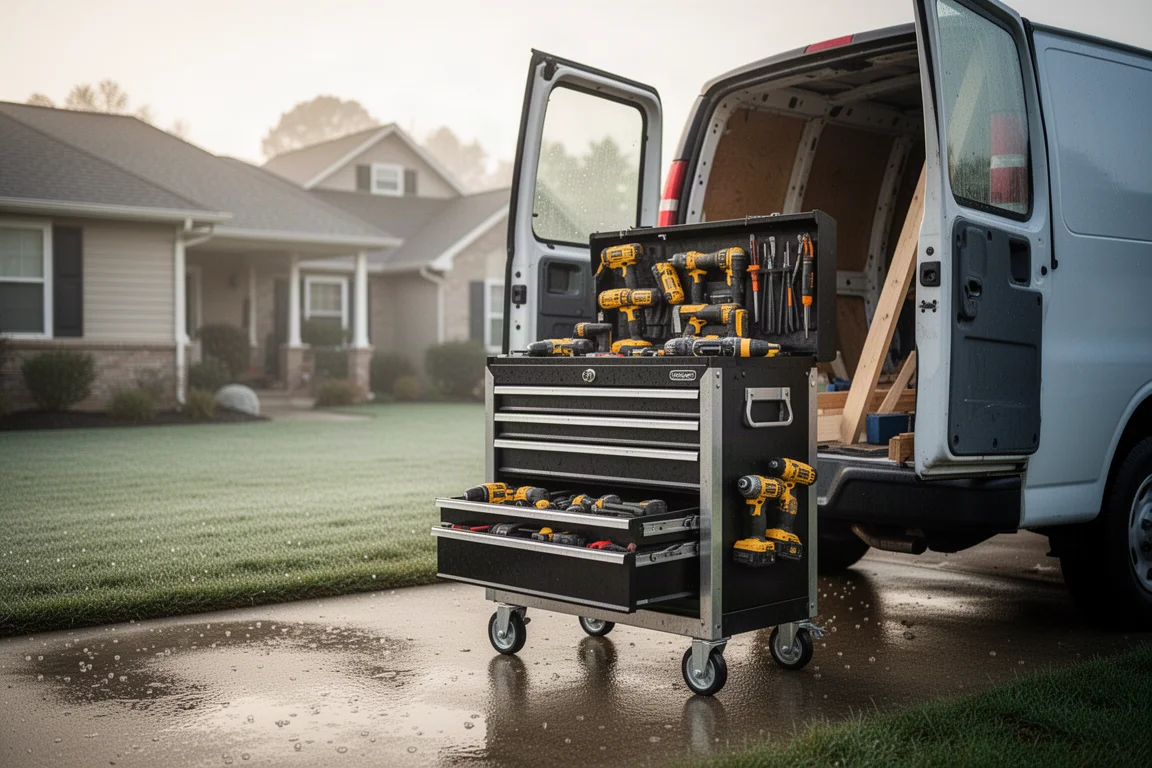
For large, dirty job sites where the whole stack rolls in as one unit, both work well. For moving through doorways and working out of a stack mid-job, Makita’s access-from-any-side design is hard to beat.
Conclusion
MakTrack beats Packout on latches, box access, and organizer depth, while Packout wins on range, weight, and ecosystem breadth. If Makita adds a vertical trolley option and expands the lineup, the gap could widen quickly. Right now, choose MakTrack if hands-on usability matters most, and Packout if you want the most complete modular ecosystem available today.
Product link
View more details for Makita MakTrack
This product is mentioned in the review. Check the specifications, options, and compatibility before buying.
View more details for Makita MakTrackFurther reading
Related Reviews

Tool Storage
Hilti ProKit Modular Storage System Review: A Sturdy, Stackable Tool Storage Solution
The Hilti ProKit modular storage system offers durable cases, a heavy-duty trolley, and a simple nesting latch design for professionals who need reliable tool organization.
Tool Storage
Atlas 46 Tool Rolls: Yorktown Mini and the Leather Classic Compared
Two tool rolls from Atlas 46 for different mindsets: a compact mini roll built for vehicle-based kits, and a heavy leather version for those who appreciate old-world craftsmanship.
Tool Storage
Atlas 46 vs Bucket Boss Tool Roll: Two Ways to Roll Your Tools
A first-impressions comparison of a premium American-made tool roll and a budget-friendly alternative, covering fabric quality, stitching, zipper layout, and storage design.