Tool Storage
Makita MakTrack Rolling Tool Chest Review: A Modular Storage System Built for Real Job Sites
A close look at the Makita MakTrack rolling tool chest and the seven-box modular storage system built around it, from load ratings to organizer bins.
Introduction
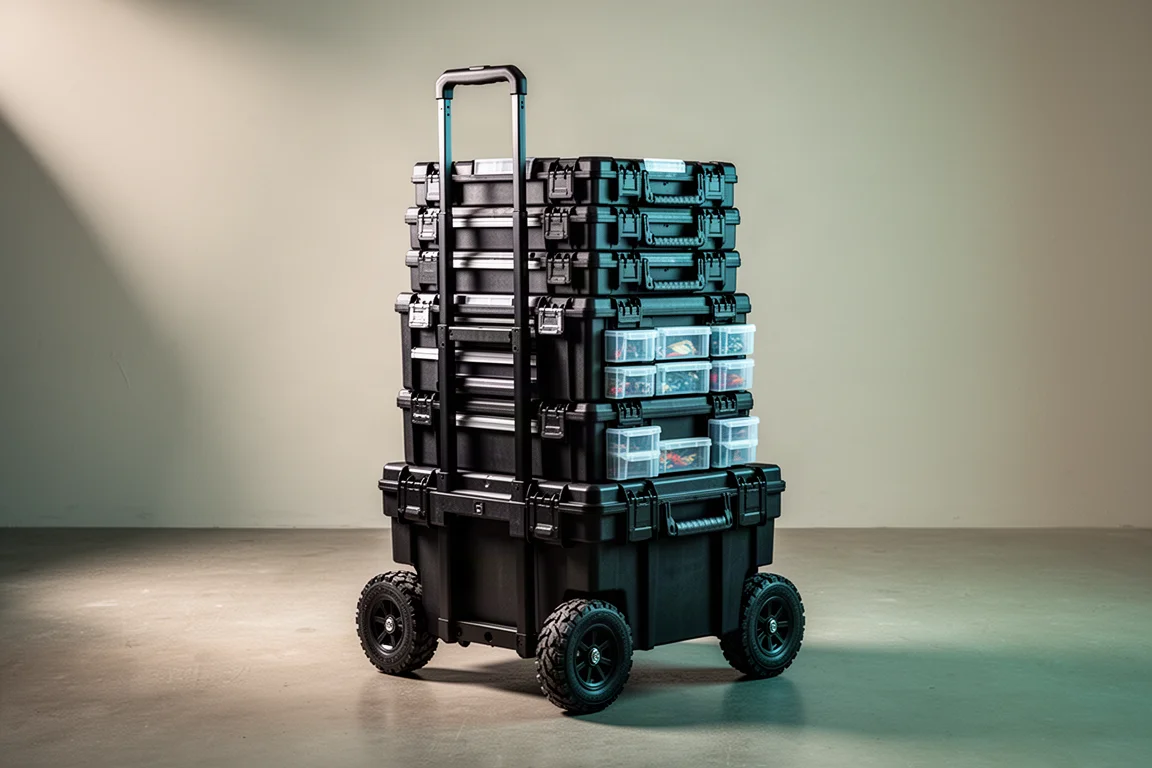
Makita’s MakTrack is the brand’s entry into the modular storage wars, and it arrives with a clear identity: it was designed and made in the US, and it is only now starting to spread to other markets. UK and Europe have been rolling out gradually, while New Zealand and Australia have seen it arrive in shops more recently. The launch lineup consists of seven boxes, and the system is fully modular, so you can buy just the pieces you need and grow it over time. At the heart of it all sits the rolling tool chest, the base unit everything else clips onto.
The Base Unit: Rolling Tool Chest
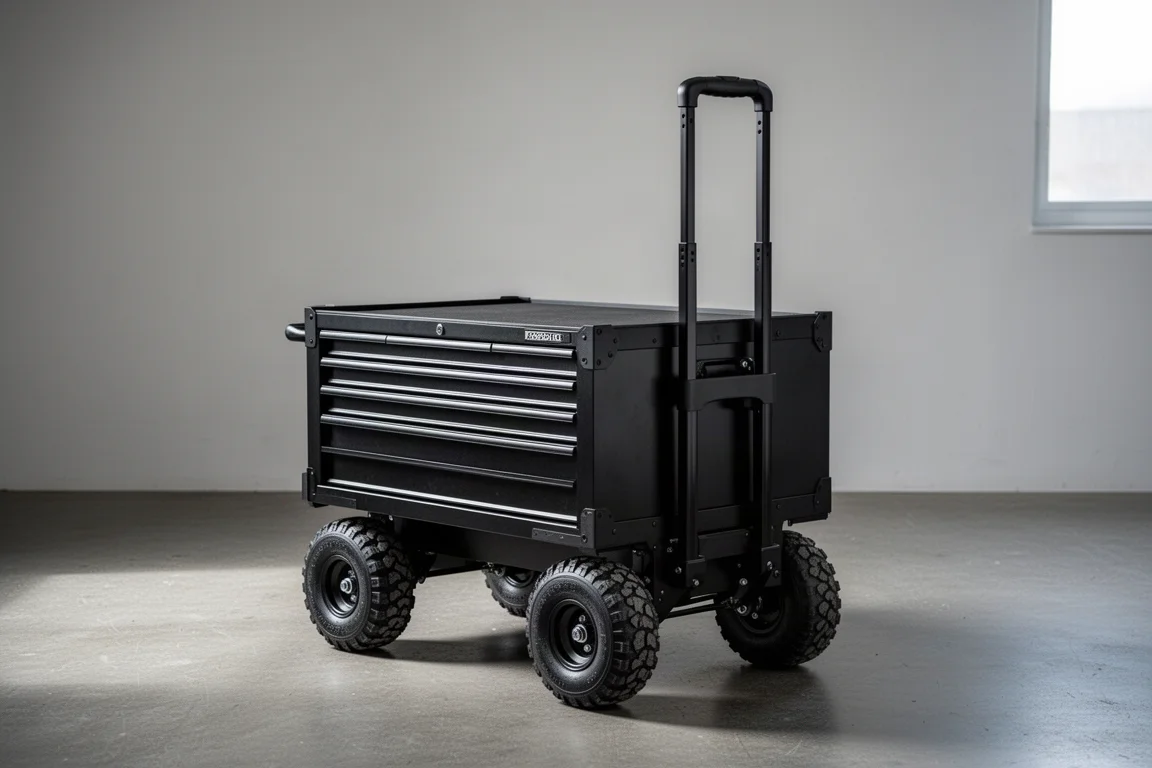
The rolling tool chest is the foundation of the MakTrack system. If you want to stack boxes and drag the whole pile around, this is the piece you buy first. It weighs 17.44 kg, holds up to 113 kg of load, and offers just under 82 L of capacity. That load rating is generous for the volume: even filled completely with water, the contents would only come to 82 kg.
The wheels measure 9 inches (230 mm) with plastic hubs and hard rubber-ish tires. The hard compound is a deliberate choice, since softer rubber would wear down faster. The tread is fairly smooth, which helps on job site floors. An extending telescopic handle with a rubberized grip pulls from the end, and there are gecko grips on the body designed to hook over the edge of a truck tray or tailgate so you can slide the chest in easily. A plastic cleat near the handle serves as the mounting point for the extension toolbox.
Inside, the lid is held by a couple of stays, plus a permanent stay you can clip on so the lid cannot slam shut. One of the standout features: three of the boxes in the system, including this one, are double hinged, so you can open the lid from either side. You can even remove the lid entirely. Inside you get a tray, a divider/molle panel you can hook ties and gear through, and plenty of mounting holes and strap slots throughout the shell. Extra dividers and molle panels are available as optional extras.
Capacity is genuinely useful for large tools. The chest swallowed a 270 mm framing saw, a framing nailer, a 7-inch grinder, a rotary hammer drill, and a plane, all at the same time, with room to spare for drills and impacts on top.
The Large Toolbox
The large toolbox stacks directly on the base unit and slides on from either side, though it can only be released from one side. Like the base, it is double hinged, so you can open it from whichever side you are standing on without removing it and turning it around, a small but genuinely useful advantage over some competing systems. The latching feet slide together easily.
It shares the same footprint as the base unit but is slightly shallower at 252 mm high versus 295 mm. Capacity is 63 L with a 45 kg load rating, which is hard to hit with hand tools. The box itself weighs over 10 kg because the construction is thick and solid, with three heavy-duty handles that leave plenty of room for a gloved hand.
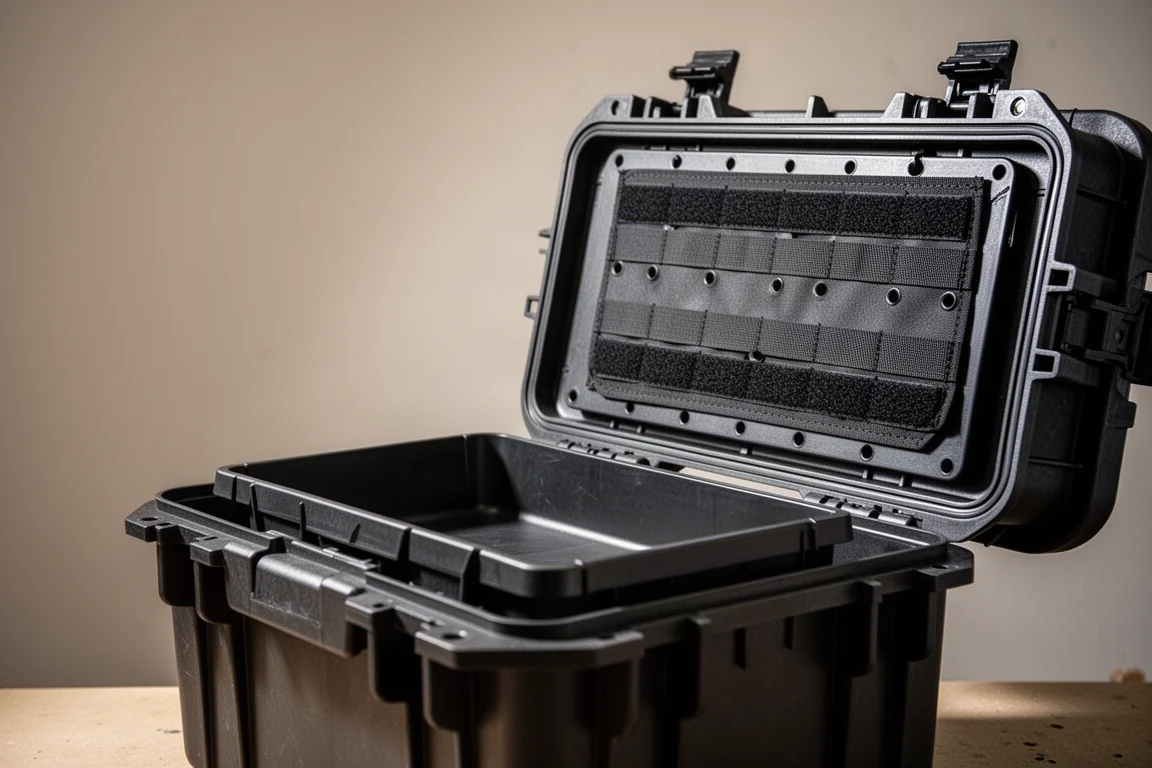
Inside you get the same tray, lid stays, and molle panel arrangement as the base unit. Filled up, it comfortably took two nailers, a belt sander, several finish sanders, three routers, multi-tools, and a cut-off tool.
The Extra-Large Extension Toolbox
The extra-large extension toolbox works a little differently. Rather than clipping on with a lever, it slides over the cleat on the main chest and is held by gravity, and it can mount on either long side of the box. It can also hinge from either side, and with both hinges undone the lid comes off completely.
Security is thoughtfully handled. Each box in the system has a hidden slot for a tracking device like an Apple AirTag, and this one adds padlock holes on both sides, so you could run up to four padlocks. That will not stop someone carrying the whole stack off, but with everything loaded it gets heavy enough to make that a real effort.
This box holds 58 L with a 45 kg load rating. In testing it held roughly 30 impact drivers, which says a lot about the usable volume.
The Medium Toolbox
The medium toolbox is the first single-hinge box in the lineup, opening from one side with a fairly stiff hinge that holds the lid open on its own. Every box in the system has a seal in the lid. There is no IP rating, so Makita does not claim waterproof, but the boxes should be fine in standard rain; just do not pressure-wash them.
It weighs about 4.5 kg, takes up to 34 kg of load, and offers 18 L of capacity. It comes with small and large divided trays for each end, which only fit in their designated positions, and there are slots for additional dividers. Trays, dividers, buckets, cups, and molle panels are all sold separately as optional extras. Filled with 40V max 8Ah batteries, it takes eight comfortably and would fit ten.
The Organizers
The deep medium organizer uses the same single-hinge layout, with eight small bins, two medium bins, and one long central bin. The configuration is fixed, so removing and reinstalling the bins is a bit of a puzzle. Each bin can take dividers, sold separately.
One clever detail: the lid has ridges that sit above the bins rather than pressing down into them, buying roughly another 20 mm of extra height over each bin. Compared with systems that intrude into the tub space, that is a meaningful gain. The latches across the MakTrack lineup deserve a mention: big, galvanized, easy to grip, and neither tight nor loose. They feel well engineered.
Makita rates the bins at 127 mm deep, and 5-inch screws fit with room to spare. Ten-inch screws fit the long bin easily. One bin sits directly over the release lever, so its usable depth is slightly reduced. For those who prefer shallower tubs, a shallower organizer with 85 mm bins uses the same layout but with smaller side latches and a fixed front handle instead of the pop-out side handle.
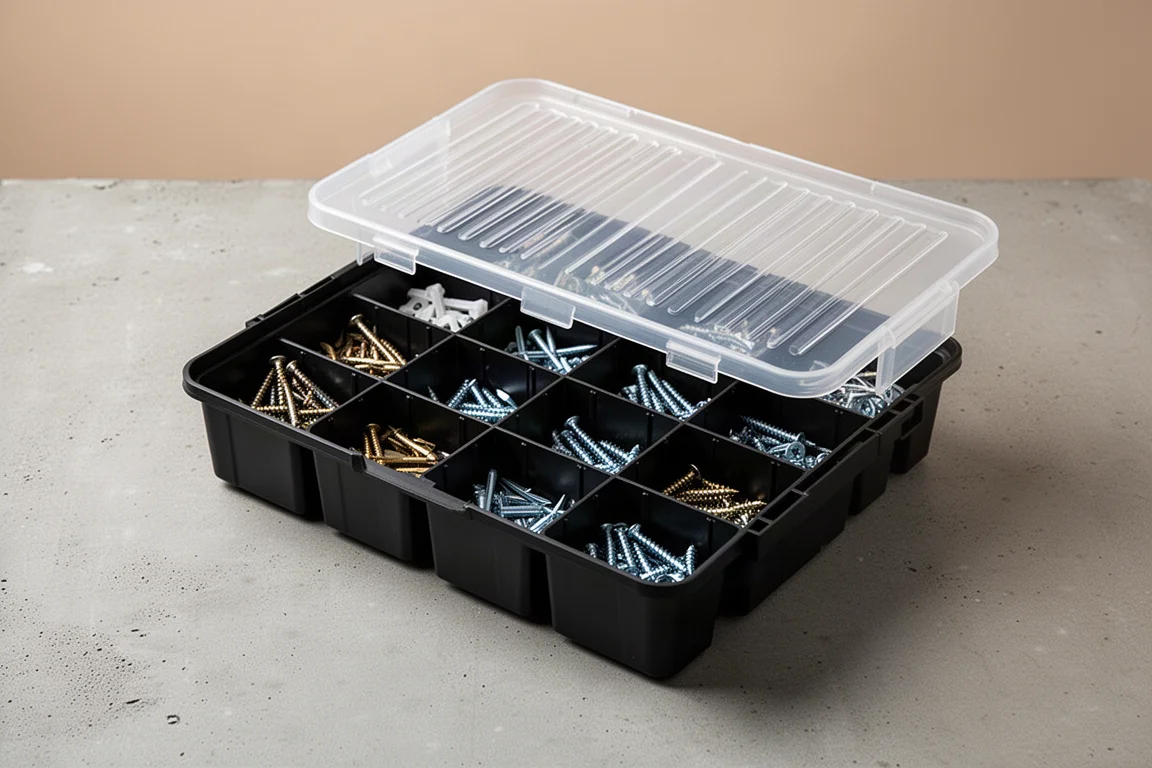
The small deep organizer rounds out the seven, with five nice and deep 125 mm bins, and it may well be a favorite for many users. A neat trick shared by all the organizers with tubs: you can clip bins from one organizer onto the open lid of another at any of the locking cutout points. Each bin also has a small slot for a cardboard label, so you can mark what screws live where.
Everyday Use, Weight and Transport
Fully stacked and loaded, the whole seven-box setup came to around 155 kg, roughly 50 kg of empty boxes and about 106 kg of tools. That is heavy, but still far more efficient than making a dozen individual trips. Do not try wheeling that up stairs, though.
A few practical habits matter. Tilting the base chest open with a fully loaded stack above it is asking for trouble; the system is designed so you can remove the upper boxes first, set them down, and then open the base. And keep the heaviest gear in the bottom boxes rather than the top ones.
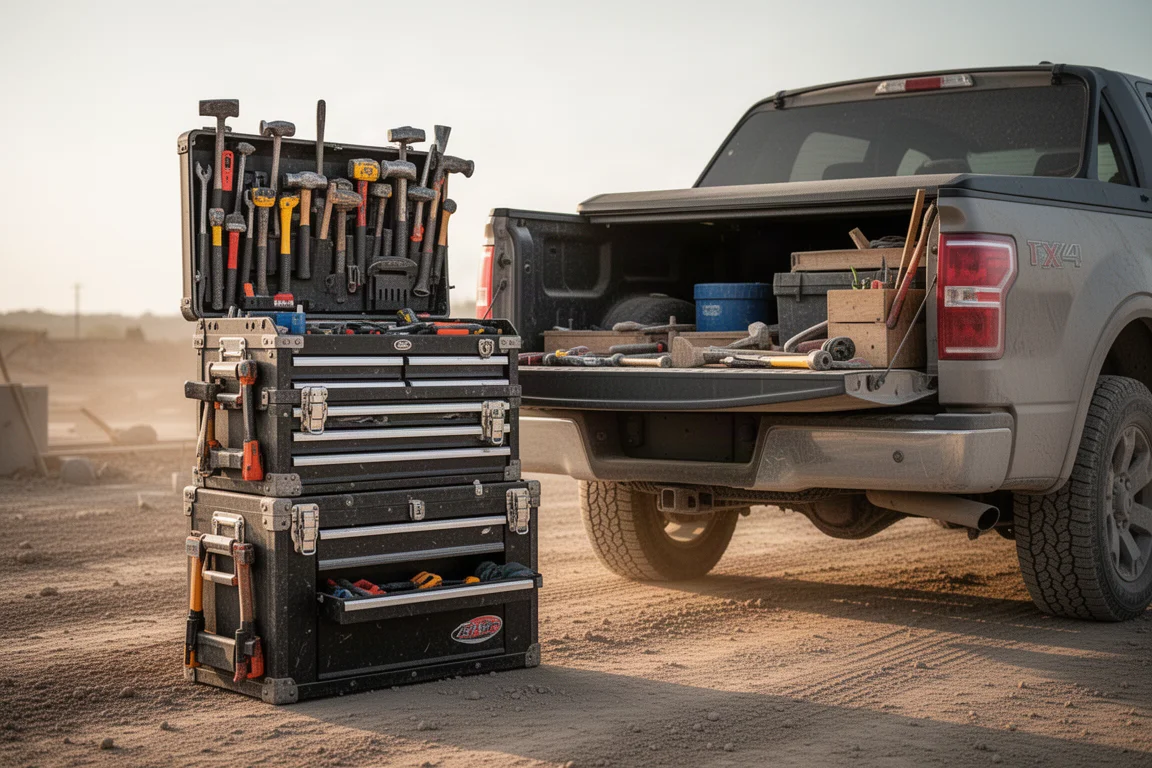
Sizing was clearly a design priority. The system was designed in the US to fit under the hard cover of a full-size pickup such as an F-150 or a Ram, using just the base unit with the large toolbox stacked on top. With the extra-large extension box moved to the front mounting position, the full stack comes in around 830 mm high, which slides under most ute and van canopies in Australia and New Zealand that sit around 900 mm.
There is also obvious room to grow. Wall-mounting points are built in, and the system invites future additions such as drawers, smaller extension boxes, and accessories. A dedicated battery storage or charging box would be a welcome next step, since anyone hauling tools around is usually hauling batteries too, and loose batteries sliding around a box is a real annoyance.
Buying Advice
Start with the rolling tool chest if you plan to move the system at all; every other box stacks onto it. Add the large toolbox next for bulk tools, then pick organizers or the medium toolbox based on whether your work leans toward fasteners or batteries and hand tools. The extra-large extension toolbox is worth considering if you need maximum capacity but can accept its gravity-held mounting. Since the lineup is still young, it is reasonable to expect more components over time, so buying the base first and adding later is a low-risk approach.
Conclusion
MakTrack arrives with genuinely thoughtful touches: double-hinged lids, generous load ratings, hidden tracker slots, latch quality that feels a cut above, and bins that gain height instead of losing it. The main caveats are the heavy empty weight of the larger boxes, the lack of an IP rating, and a young accessory ecosystem compared with more established systems. For anyone already in the Makita ecosystem, or anyone who needs a storage stack that fits under a truck cover or canopy, the rolling tool chest is a very solid place to start.
Product link
View more details for Makita MakTrack Rolling Tool Chest
This product is mentioned in the review. Check the specifications, options, and compatibility before buying.
View more details for Makita MakTrack Rolling Tool ChestFurther reading
Related Reviews

Tool Storage
Hilti ProKit Modular Storage System Review: A Sturdy, Stackable Tool Storage Solution
The Hilti ProKit modular storage system offers durable cases, a heavy-duty trolley, and a simple nesting latch design for professionals who need reliable tool organization.
Tool Storage
Atlas 46 Tool Rolls: Yorktown Mini and the Leather Classic Compared
Two tool rolls from Atlas 46 for different mindsets: a compact mini roll built for vehicle-based kits, and a heavy leather version for those who appreciate old-world craftsmanship.
Tool Storage
Atlas 46 vs Bucket Boss Tool Roll: Two Ways to Roll Your Tools
A first-impressions comparison of a premium American-made tool roll and a budget-friendly alternative, covering fabric quality, stitching, zipper layout, and storage design.