Power Tools
Makita KP00001G 40V Planer Review: A New Benchmark for Cordless Planing
The Makita KP00001G 40V planer brings a 4mm depth of cut, 15,000 RPM, and 25mm rebate capacity. Here is what stands out and what to check before buying.
Introduction
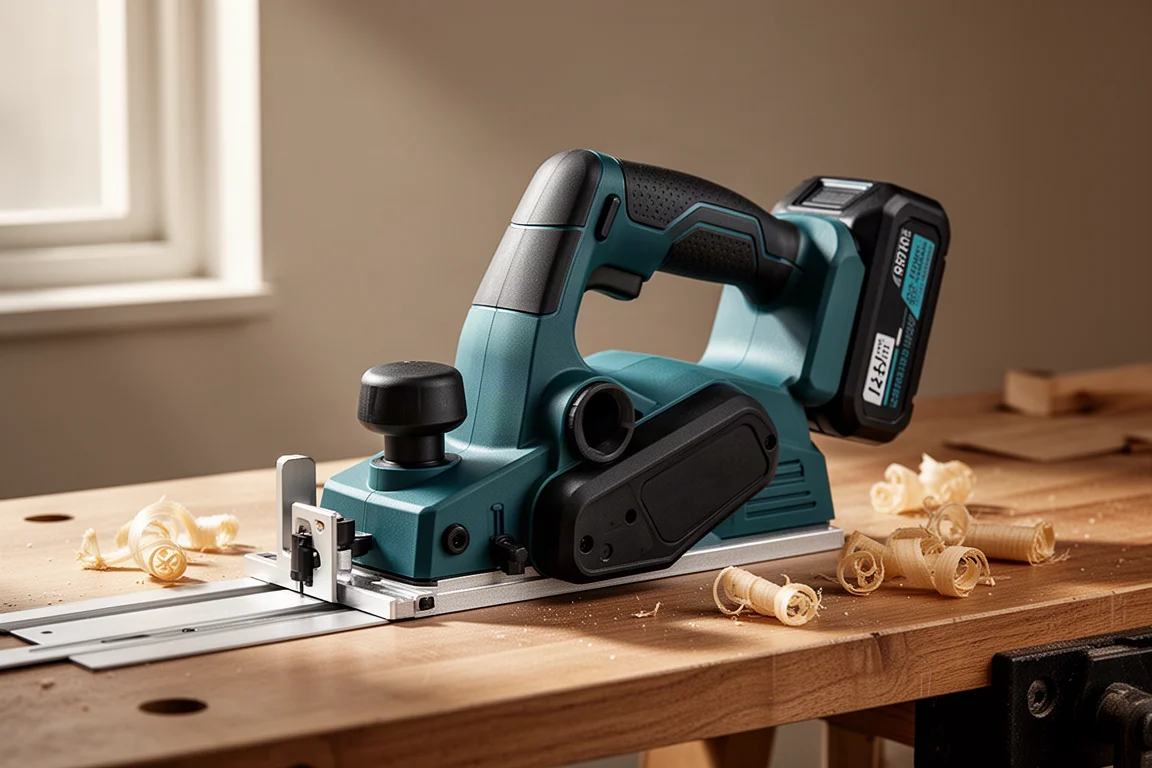
The Makita KP00001G 40V planer, sold as the GPK01 in the US, is the flagship cordless planer in Makita’s 40V platform, and it makes a strong case for itself immediately. After time spent with the tool, the headline is simple: a 4mm depth of cut in a single pass, backed by a 15,000 RPM motor. That is deep enough that only high-end corded planers typically match it, and it changes what a cordless planer can realistically handle on site.
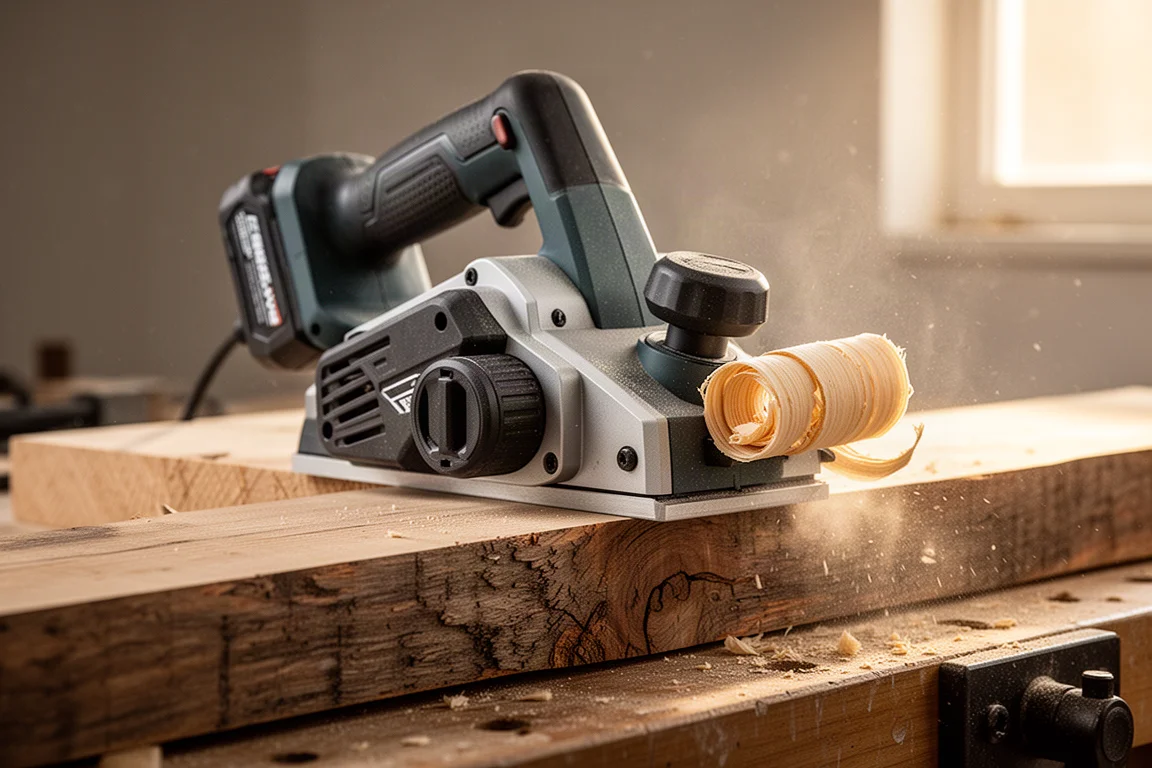
Compared with the existing 18V brushless planer, which runs at 12,000 RPM and cuts to 3mm per pass, the 40V version restores the full 15,000 RPM of the older brushed LXT model and adds an extra millimetre of cutting depth. In use, the difference is significant rather than incremental.
Who This Product Is For
This is a tool for carpenters and serious DIY users who plane framing timber, straighten walls, or shape weatherboards. If you currently use Makita’s 18V brushless planer and already know what it does, the 40V version is familiar in layout and features, but delivers more cutting authority where it counts.
It is also well suited to anyone who values battery flexibility. The tool performs comfortably even with a small 2.5Ah battery, which keeps the overall weight manageable, while larger 5Ah or 8Ah packs unlock even more sustained power for big, deep passes.
Main Strengths
The 4mm depth of cut is the standout specification. Most cordless planers manage 2mm, some 3mm, and only high-end corded models typically reach 4mm. On knotty framing timber at full width and full depth, the tool handled the pass with far less effort than expected, catching only briefly where the body snagged rather than struggling for power.
The 25mm rebate capability is another genuine advantage. Most cordless planers offer roughly 8 to 11mm of rebate depth, so the extra reach here makes tasks like fitting weatherboards far more practical.
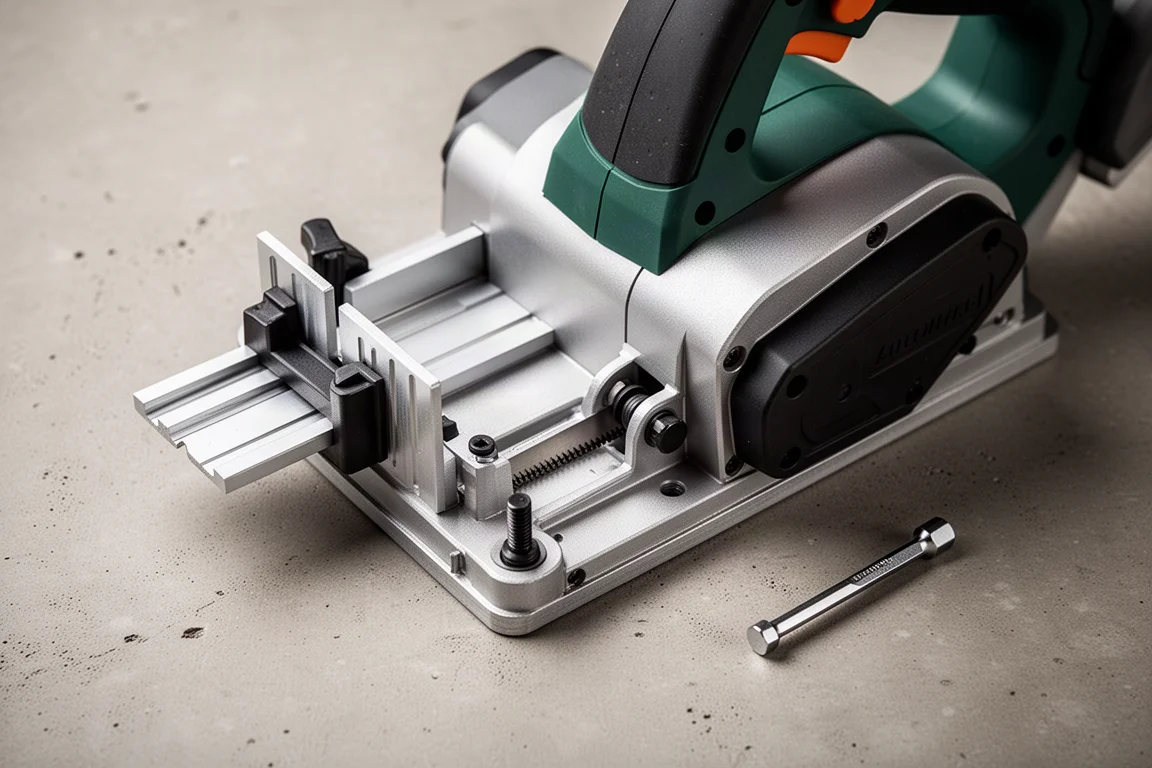
Feature-wise it carries over the sensible kit from the 18V version: AWS wireless hookup for pairing with a compatible vacuum, onboard storage for the blade changing tools, a guide fence, a depth fence, and a gauge for setting both mini blades and traditional full-size blades. Three chamfering guides are built into the base, with an optional two-sided chamfering guide available for holding the tool at a precise angle.
The 82mm cutting width is the standard planer width, and chips can be ejected from either side. In testing it clogged less than the 18V version thanks to stronger chip ejection, though deep 4mm cuts at speed can still block up without a vacuum attached.
Things to Consider Before Buying
Two practical limits are worth knowing. First, at the full 4mm depth setting, the front housing contacts the workpiece when planing a wide flat surface such as a benchtop. On flat surfaces you are limited to 3mm per pass, which is still deeper than nearly any other cordless planer allows. Second, deep 4mm full-width cuts generate heat quickly and can clog the ejection path, so slower feed rates or a connected vacuum help on heavy passes.
Weight is the other consideration. The tool itself weighs about 3.1kg, roughly 100g more than the 18V brushless version, but battery choice swings the total significantly: a 5Ah pack adds about half a kilogram over an equivalent 18V setup.
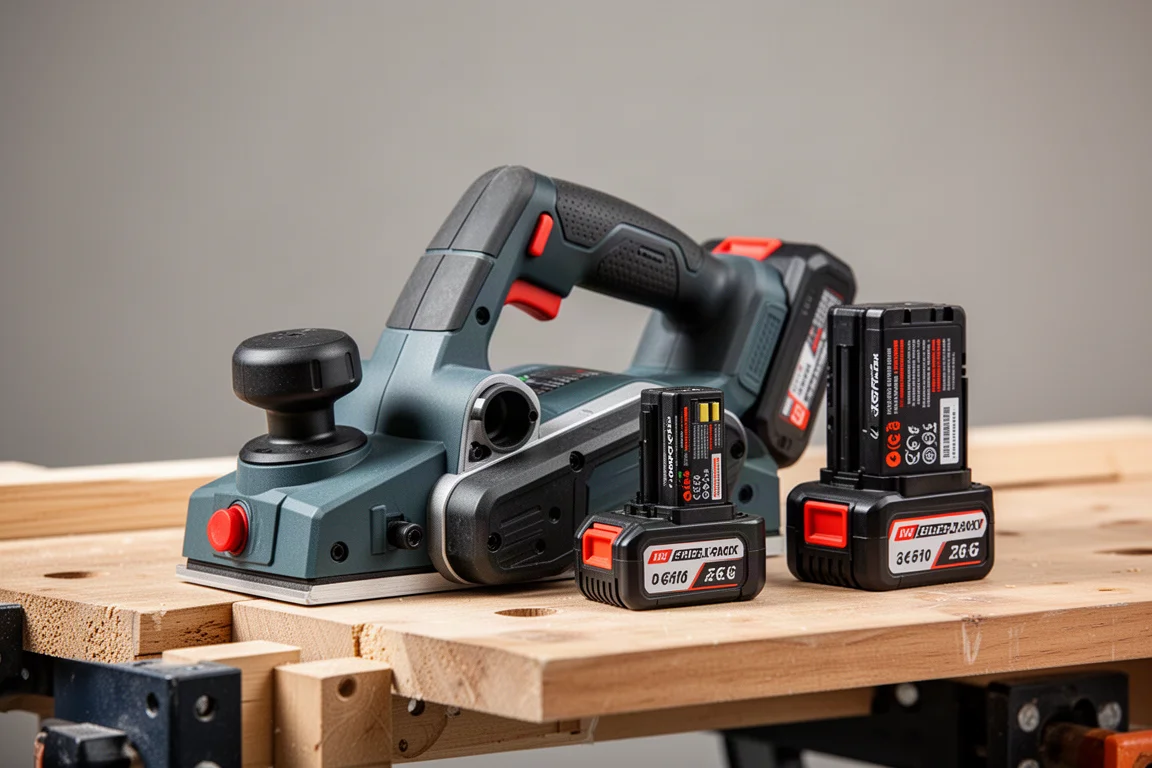
For overhead work such as straightening walls, a smaller battery like the 2.5Ah keeps the tool light, and the tool works brilliantly at that configuration. For horizontal planing, the extra battery weight sits on the wood and can even help keep the tool flat and stable.
Buying Advice
If you plane framing timber regularly, this is currently the most capable cordless planer available, and the 4mm single-pass depth alone justifies the upgrade over any 18V tool. The 18V brushless planer remains an excellent choice for lighter duty and tighter budgets, but the 40V version is better by a clear margin, not just a battery swap.
Choose your battery deliberately: 2.5Ah for overhead and everyday work, 5Ah or 8Ah for long deep passes where power to burn matters. Availability appears limited in some markets, so it is worth checking stock with Makita dealers in your region before committing.

Conclusion
The Makita KP00001G 40V planer earns its position as the benchmark cordless planer. A 4mm depth of cut, 15,000 RPM, a 25mm rebate, and thoughtful carryover features make it dramatically more capable than the already excellent 18V brushless version. If deep, fast planing is part of your work, this is the tool to beat.
Product link
View more details for Makita KP00001G 40V Planer
This product is mentioned in the review. Check the specifications, options, and compatibility before buying.
View more details for Makita KP00001G 40V PlanerFurther reading
Related Reviews
Power Tools
Best 1-Inch Pistol Impact Wrenches: Three Heavy-Duty Options Compared
We compare three 1-inch pistol impact wrenches, from a budget-friendly Harbor Freight model to a premium Caterpillar unit, to help you choose the right one.
Power Tools
Best 3/4-Inch Impact Wrenches 2026: Five Contenders Compared
We compare five 3/4-inch impact wrenches across price and performance, from a budget Amazon option to Snap-on's most powerful model yet.
Power Tools
Best Budget Cordless Tools 2026: Walmart Finds That Punch Above Their Price
We tested five cordless tools from Walmart, including a high-torque impact wrench that trades blows with Milwaukee and a $35 duster that outperforms its price class.