Power Tools
Makita JV001G XGT 40V Barrel Grip Jigsaw: Hands-On Review and 18V Comparison
Makita's 40V XGT barrel grip jigsaw finally arrives. We look at how it compares to the 18V DJV181, what ships in the box, and where it shines.
Introduction
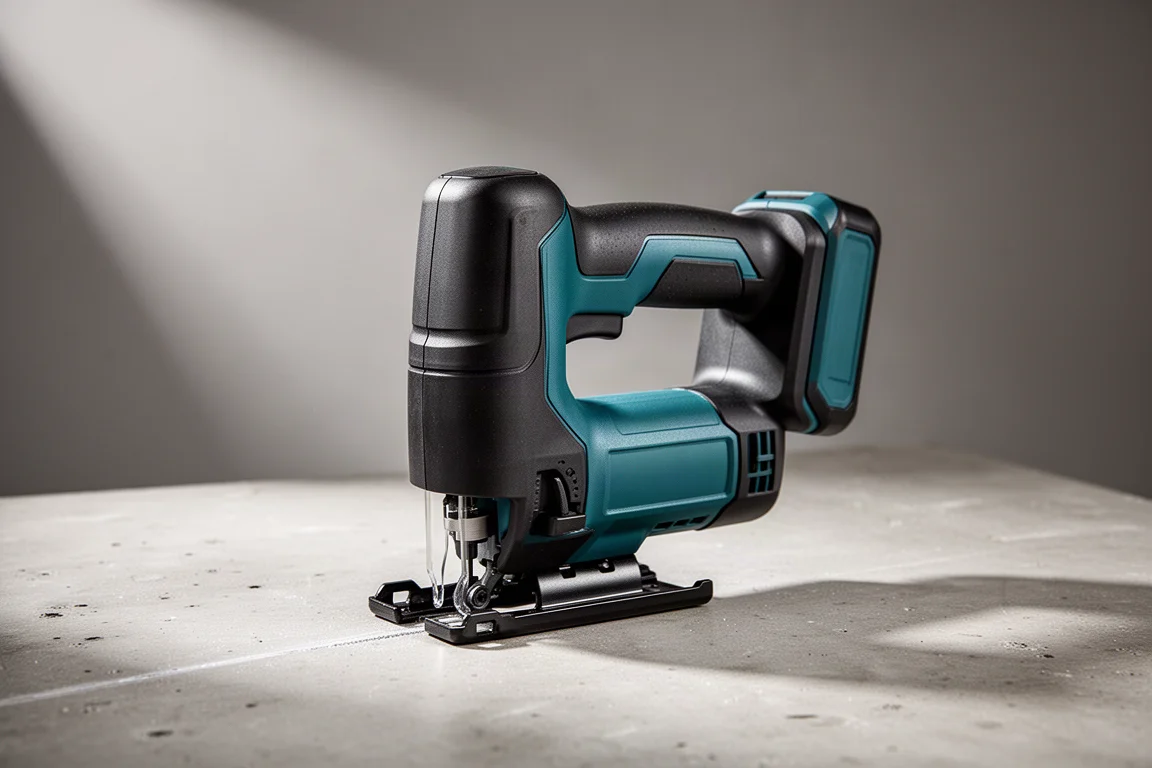
The Makita JV001G has been one of the most requested additions to the XGT 40V platform, and it is finally here. It is a brushless, variable speed barrel grip jigsaw running between 800 and 3,200 strokes per minute, with power buttons on both the left and right side of the body, just like its 18V sibling, the DJV181. In this review we put the two side by side, look at what is genuinely different, and help you decide whether the jump to 40V makes sense for your workbench.
Makita JV001G XGT 40V: The Headline Tool
The JV001G shares most of its layout with the DJV181: the same speed dial on the back, the same straight-cut setting plus three orbital modes on the side, and the same bayonet-style blade acceptance. The visible differences are subtle. The base is slightly longer, roughly 10 mm, and the body is a little slimmer through the grip area, which makes it noticeably nicer to hold. The 40V model is manufactured in China, whereas the 18V barrel grip and Makita’s other D-handle jigsaws are made in the UK.
One of the most welcome changes is the auto mode situation. Some earlier Makita jigsaws shipped with an always-on soft-start/auto mode that ramps speed up under load and down when pressure eases, and on certain early versions and regional variants it could not be disabled at all. On the JV001G, the factory setting has auto mode turned off, and it can be toggled on or off via a dial sequence with the tool switched off. If you prefer full manual control of speed, that is a meaningful quality-of-life improvement.
Under load, the 40V platform shows its advantage. Makita rates the JV001G at around 700W of power output, compared to roughly 390W for the 18V DJV181 and about 340W for the older brushed top-handle model. All three share the same 26mm stroke length and the same 135mm maximum cutting depth rating, so the 40V does not cut deeper; it simply has the reserve to keep running through heavy material without bogging down. In practice, that extra headroom is most noticeable in thick or demanding stock rather than everyday cuts.
Makita DJV181 18V: The Established Alternative
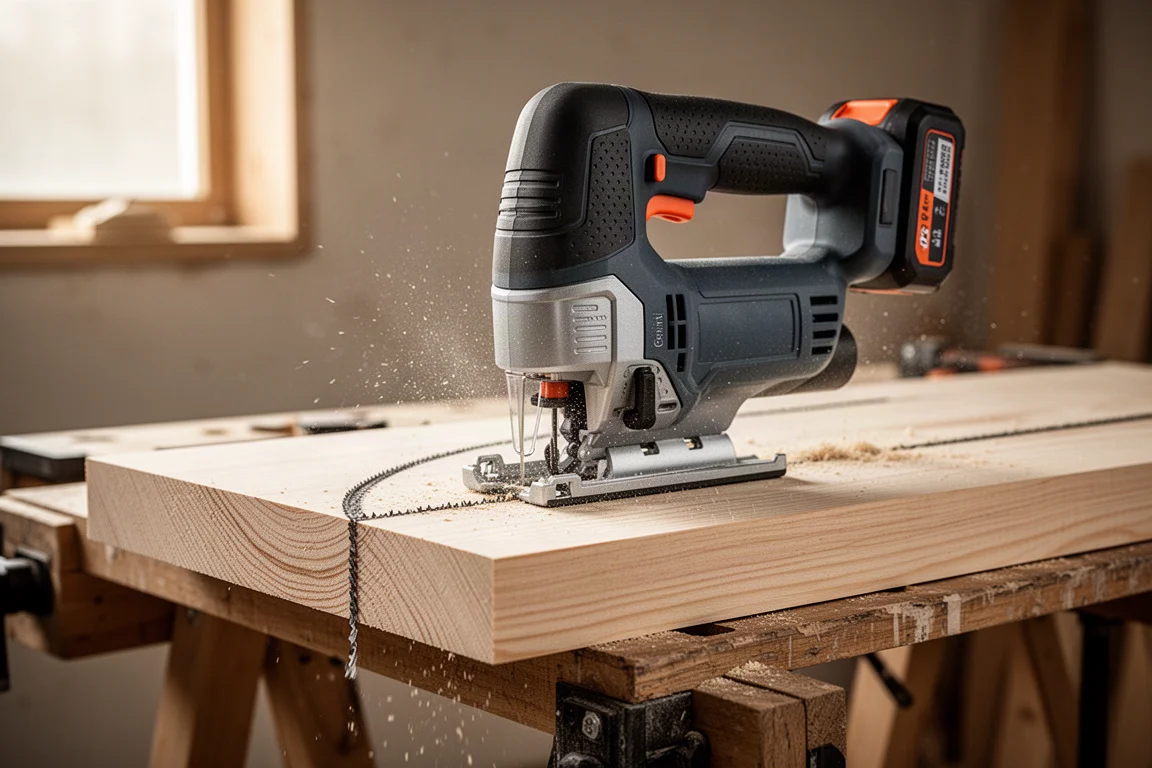
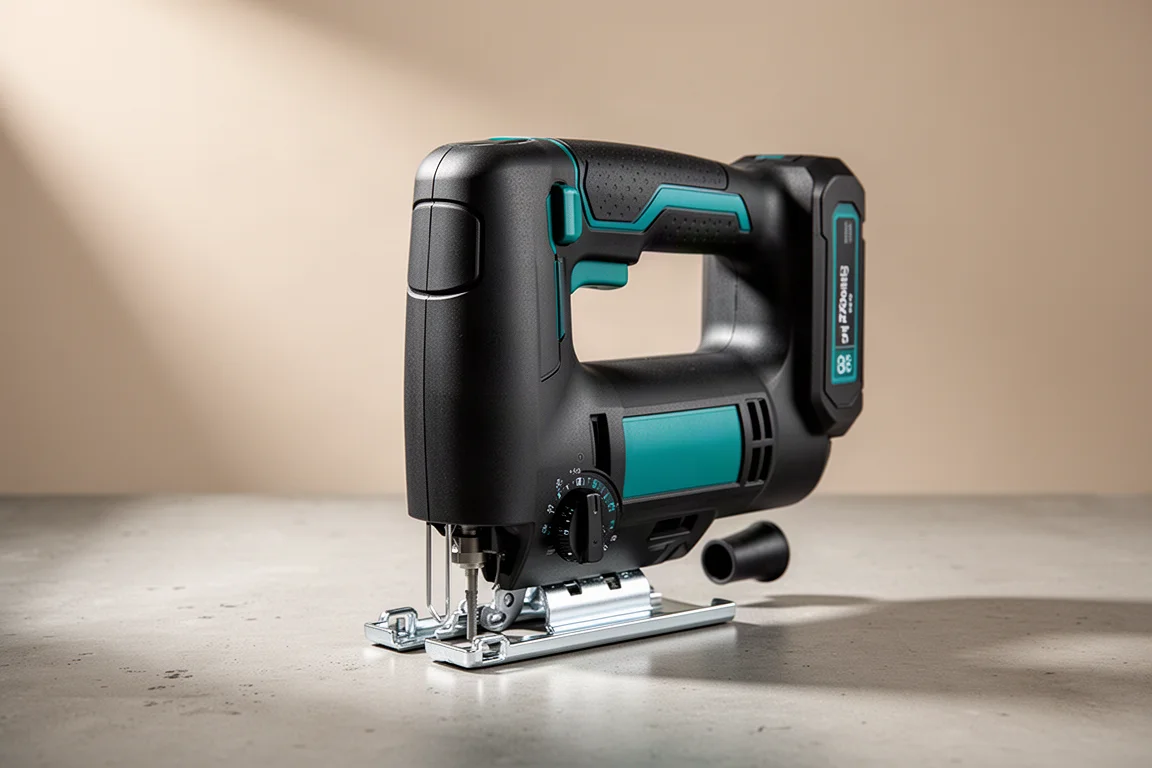
The DJV181 is the brushless 18V barrel grip jigsaw that the JV001G clearly builds on. It runs 800 to 3,500 strokes per minute, slightly faster on paper than the 40V model, with the same straight-cut and three orbital settings, the same bayonet blade system, and an Allen key stowed in the back of the body for bevel adjustments.
In real-world cutting through 45mm timber, the two are closely matched once the comparison is fair. An early-production DJV181 with the non-defeatable auto mode starts slower and ramps up mid-cut, which cost it time in a like-for-like race. If you are buying an 18V barrel grip, it is worth checking in store that the auto mode can be switched off, because older stock and some regional versions cannot be changed.
The differences in the hand are minor but real. The DJV181 is about 20g heavier than the 40V model, which is essentially nothing, and its body is slightly thicker at the grip. It also has front vents that the JV001G omits, presumably because the 40V tool should run cooler in theory. For anyone already invested in the 18V LXT platform, the DJV181 remains a very capable saw that delivers most of the same experience.
What Ships in the Box
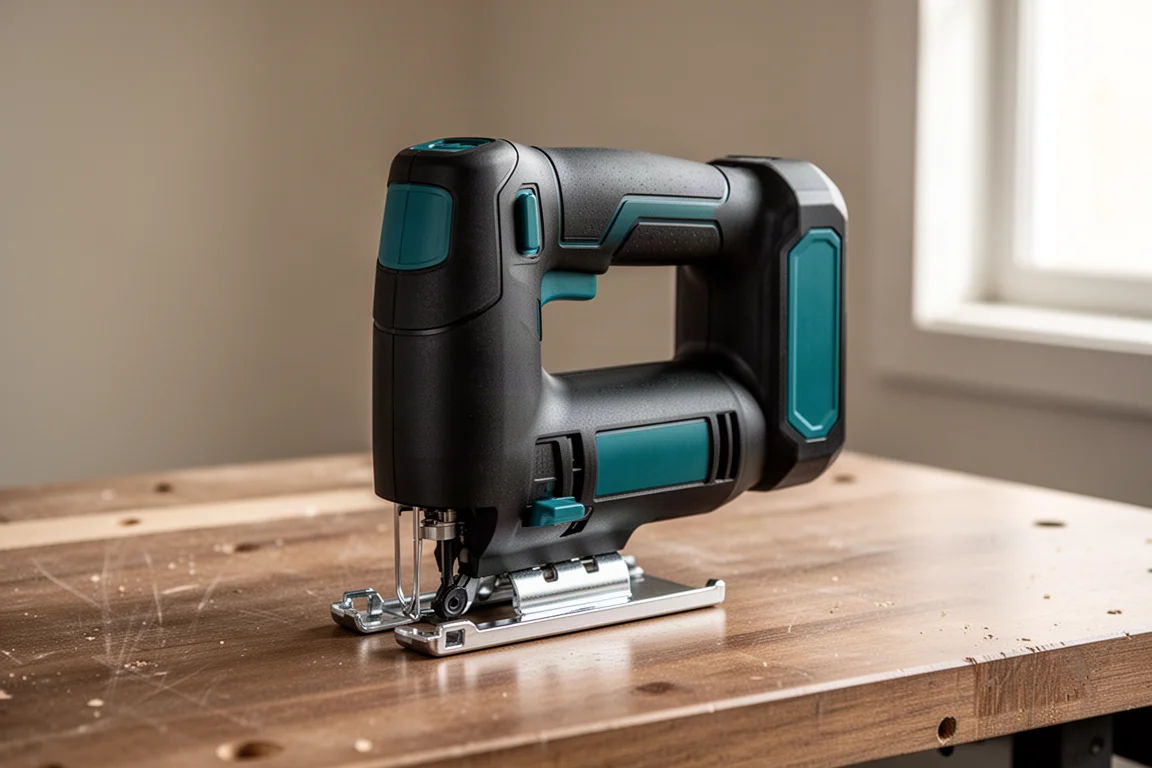
The JV001G comes with a removable base plate, a splinter guard, a pack of five blades made in Japan, and a dust port. The dust port can be mounted on either side of the tool by rotating the retaining screw, and a rubber adapter is included to connect a vacuum hose. It is a generous kit for a bare tool; plenty of jigsaws omit the port or the blades entirely.
Dust extraction performance is serviceable but not perfect, capturing somewhere in the region of 50 to 75 percent of dust, since the up-and-down blade motion throws a lot of material away from the pickup point. Two caveats matter: attaching a vacuum hose reduces the high maneuverability that makes a jigsaw useful, and the JV001G does not include AWS, so there is no way to have the vacuum trigger automatically with the tool. On a 40V platform tool that creates dust, that omission is genuinely disappointing.
Blade Changes and Bevel Cuts
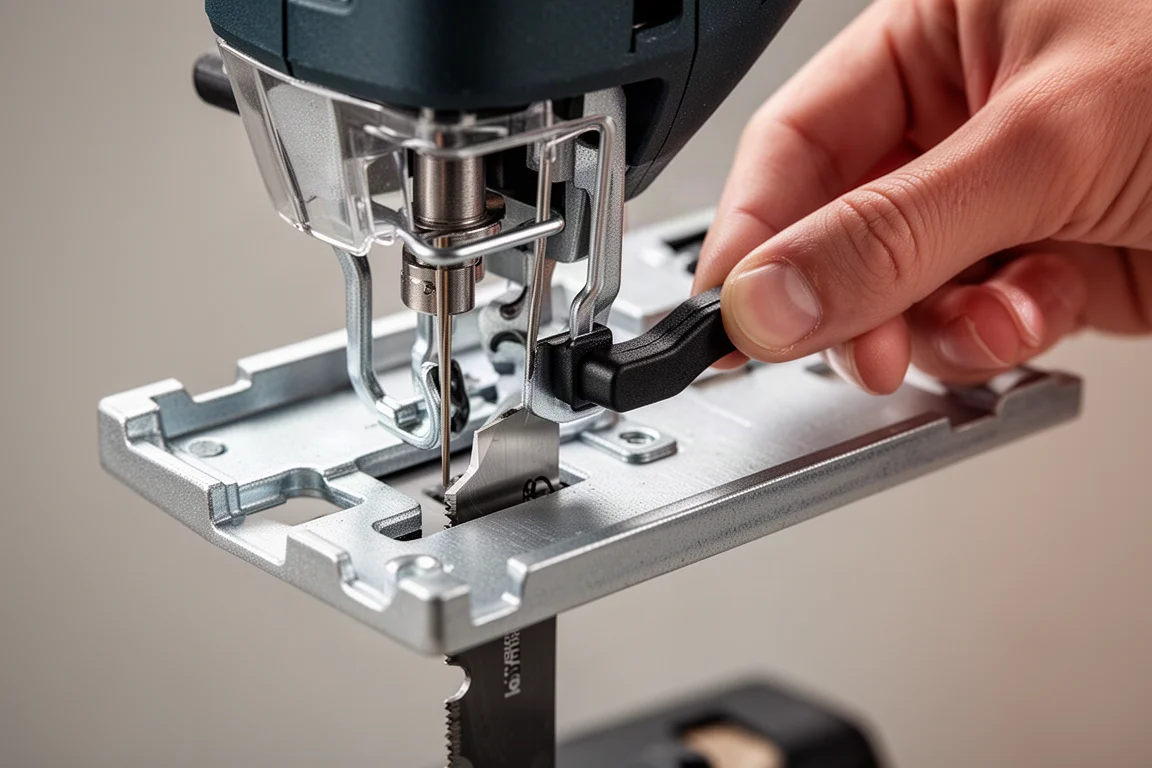
Both the 40V and current 18V barrel grip models use a one-handed bayonet blade system that is a genuine step up from the older brushed design. Line the blade up, push it in, and it locks; release the lever and the blade ejects automatically. The slot alignment is set up so the blade drops straight in, rather than requiring a twist like older models.
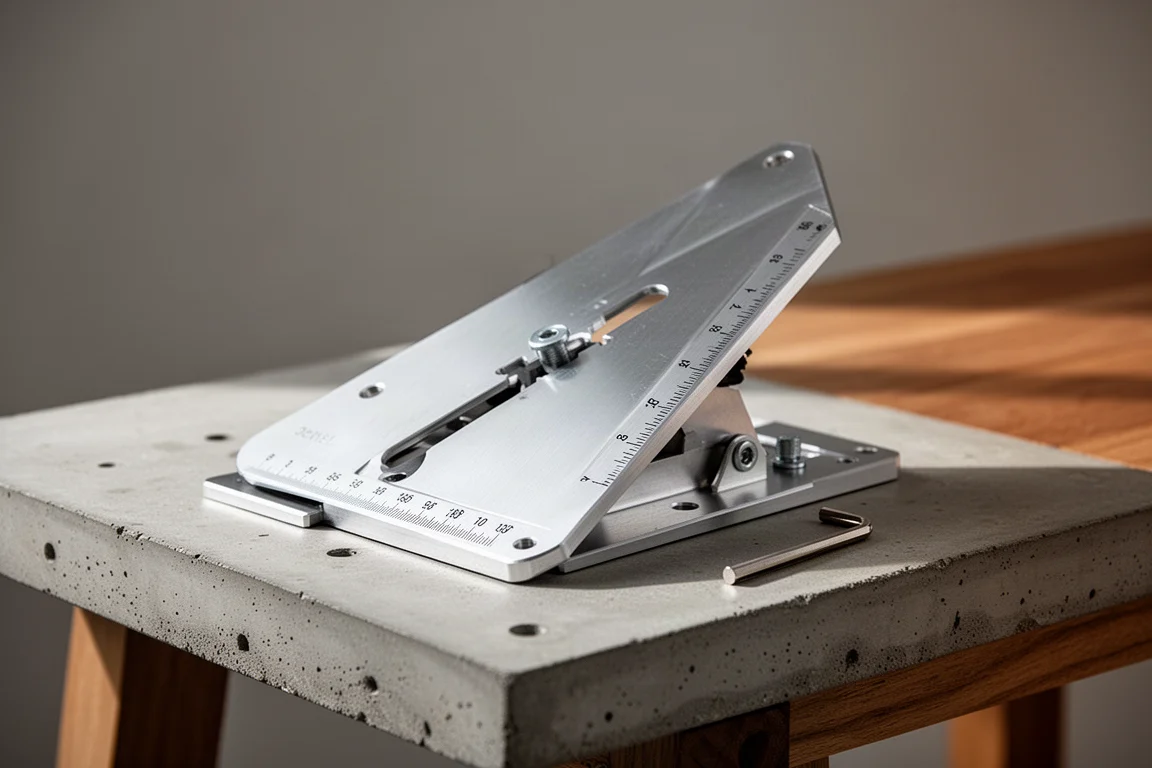
For bevel cuts, the Allen key stowed in the rear loosens a screw in the base, letting you tilt the plate with detents at 45, 30, and 22.5 degrees. The base can also be shifted fore and aft to position the blade closer to the front or back edge. In testing, a 45-degree bevel through 45mm timber cut cleanly and smoothly even on the highest orbital setting with a well-used blade. One practical warning: once the base is tilted, larger batteries such as 5Ah or 8Ah packs foul the workpiece, so you will need a 2.5Ah or 4Ah pack for angled cuts.
Straight Cut vs Orbital Settings
The four modes on the side of the body map directly to how you should use the saw. The straight-cut setting is for fine work: thin metal, laminates, and anything prone to chipping, where a slow, clean pass matters. The three orbital settings progressively increase blade travel for faster wood cutting, with the highest orbital mode best reserved for roughing out timber quickly at the expense of cut finish. For aluminium, the first orbital mode is usually enough.
Cutting Performance and Power
Put side by side on full speed and full orbital through thick timber, the 40V model finished first, largely because the older 18V sample in the comparison was locked into its slow-starting auto mode. With both saws behaving the same way, the gap narrows considerably, since the DJV181 actually boasts a slightly higher maximum stroke rate of 3,500 spm versus 3,200 spm.
The 135mm depth rating deserves a realistic note. Cutting that deep in solid timber would be slow going, and a reciprocating saw, chainsaw, or circular saw is better suited to the job. Where the deep capacity makes more sense is in materials like composite sandwich panels, for example foam core with thin aluminium or steel skins, which a jigsaw handles far more gracefully.
The dust extraction, blade ejection, and adjustable base all work as promised, and the saw tracks a pencil line confidently. It is a comfortable, low-vibration tool with plenty of power in reserve, and it is more pleasant to hold than the 18V barrel grip thanks to the slimmer profile.

Barrel Grip vs Top Handle: Which Should You Choose?
A barrel grip and a top-handle (D-handle) jigsaw suit different habits. A top handle gives you a trigger, so you can feather the speed continuously through a cut, easing off before you break through the far side to avoid blowout. You can also stop instantly by releasing your finger, rather than reaching around to find a button, which is the one aspect of the barrel grip layout this reviewer genuinely dislikes. Changing speed mid-cut on the barrel grip means fiddling with the rear dial while cutting.
The barrel grip fights back with versatility. Because there is no trigger to hold, you can grip it at any angle, which makes it far easier for cuts overhead, up walls, underneath benches, or across sheet goods. You can run it two-handed, steer from the front grip, and generally adapt your hold to the job. Some D-handle models offer variable speed triggers, but the older brushed Makita top handle in this comparison has no variable speed and no trigger lock, so it cannot mimic a barrel grip.
Which is better comes down to control preference. If you want every adjustment at your fingertips mid-cut, a top handle wins. If you need to hold the saw at odd angles and value grip flexibility, the barrel grip is the stronger choice. Either way, the JV001G is a very comfortable, capable jigsaw and a welcome arrival on the XGT platform.
Conclusion
The Makita JV001G XGT 40V barrel grip jigsaw delivers a slimmer, more comfortable grip than the 18V DJV181, auto mode that is off by default, a well-stocked box, and a big reserve of power for heavy stock. The 18V model remains an excellent saw for LXT users, with a marginally faster stroke rate and nearly identical features, provided you confirm its auto mode can be disabled. Choose the 40V if you want maximum headroom and already run XGT; the DJV181 is the smart pick for everyone else.
Further reading
Related Reviews
Power Tools
Best 1-Inch Pistol Impact Wrenches: Three Heavy-Duty Options Compared
We compare three 1-inch pistol impact wrenches, from a budget-friendly Harbor Freight model to a premium Caterpillar unit, to help you choose the right one.
Power Tools
Best 3/4-Inch Impact Wrenches 2026: Five Contenders Compared
We compare five 3/4-inch impact wrenches across price and performance, from a budget Amazon option to Snap-on's most powerful model yet.
Power Tools
Best Budget Cordless Tools 2026: Walmart Finds That Punch Above Their Price
We tested five cordless tools from Walmart, including a high-torque impact wrench that trades blows with Milwaukee and a $35 duster that outperforms its price class.