Power Tools
Makita HP003G vs HP001G: Is the New XGT 40V Flagship Drill Worth Upgrading?
Makita's new HP003G flagship drill claims 180 Nm of torque, but the older HP001G remains lighter, narrower, and faster at the top end. We compare both to see who should actually upgrade.
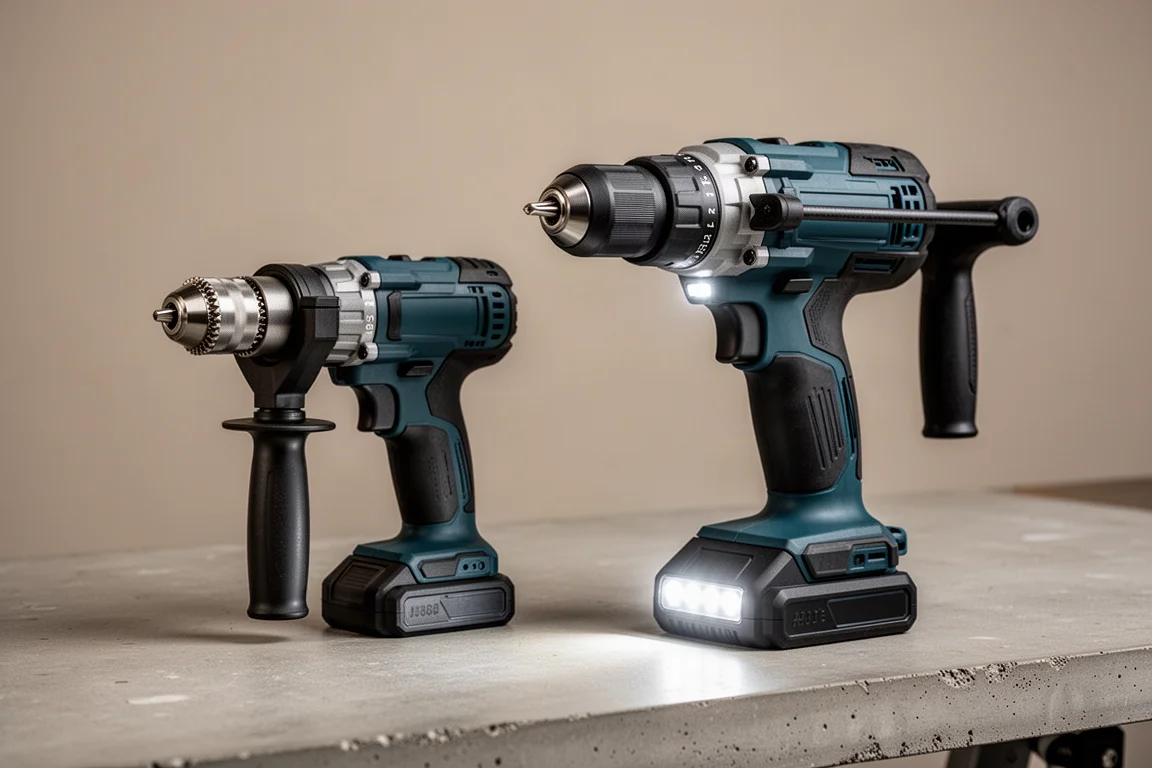
Introduction
Makita’s XGT 40V max platform has been around since late 2019, and for most of that time the HP001G (sold as the GPH01 in the US) has been the top of the drill range. While other tools in the original XGT lineup, like the impact driver, rotary hammer, and grinders, have been revised many times, the HP001G was never superseded. The HP002G that appeared later was a budget, entry-level model with a plastic chuck and less power, not a replacement.
Now there is a genuine flagship successor: the HP003G, rated at 180 Nm of max tightening torque and, as far as we can tell, the most powerful pistol-style cordless drill currently on the market. The question is whether that headline number matters enough to justify the extra bulk, especially for people who already own the older tool. This comparison looks at both drills side by side to help you decide.
Torque: 150 vs 180 Newton Meters
The HP001G launched with 141 Nm of max tightening torque on the box, a figure that sometimes shows as 150 depending on where you look, and Makita’s own regional site still lists 141. Since then the market moved quickly: Bosch released a large 150 Nm drill marketed as the world’s strongest, Milwaukee landed somewhere in the 156 to 159 Nm region, HiKOKI brought out a 155 Nm model, and DeWalt pushed to 169 Nm.
The HP003G answers all of that with 180 Nm. That is the headline feature, and it does show up in real use. Driving long coach screws and large-diameter bits, the HP003G consistently pulled a little further before stalling or hitting motor overload protection, and it managed a 190 mm auger bit without stalling where the HP001G needed several recovery pauses.
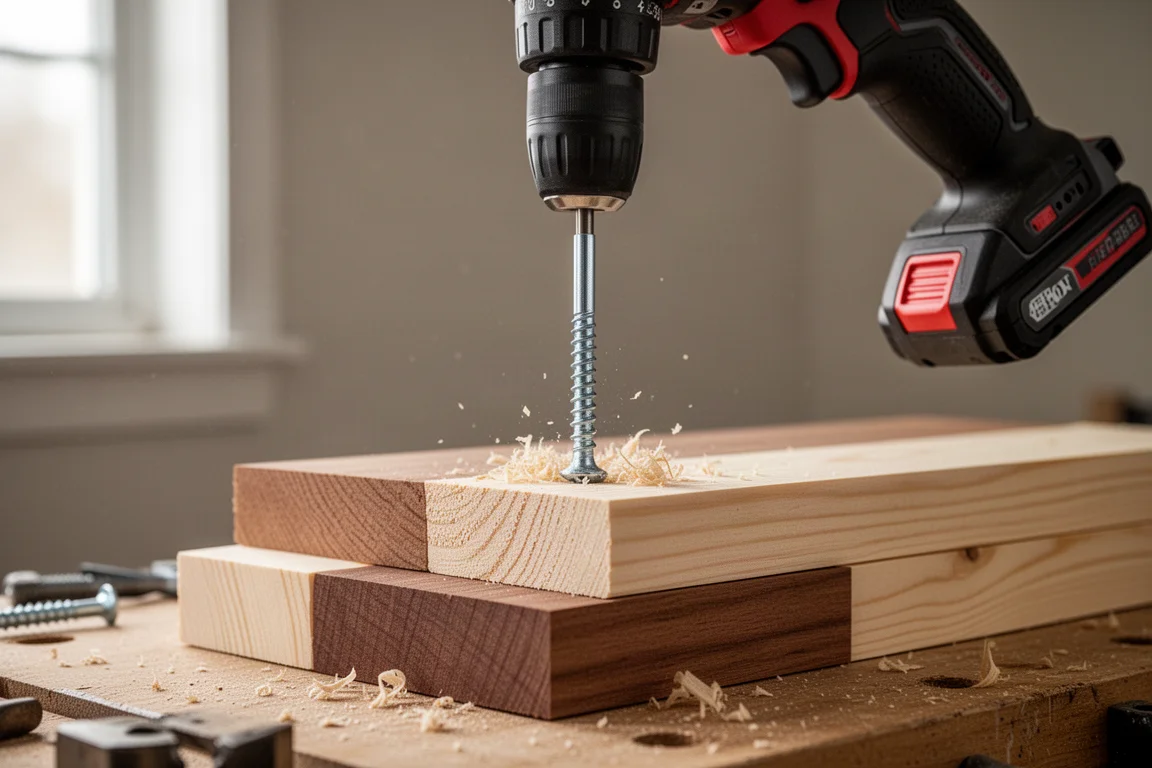
That said, the difference between 150 and 180 Nm turned out to be modest in practice. For most drilling and screwdriving, the older HP001G was no bother at all. If you regularly drive big lags with minimal pilot holes, the extra torque has value. For everything else, it is hard to feel in day-to-day work.
Speed, Gears and Hammer Mode
Here the two drills trade blows in an interesting way. The HP003G is a three-speed drill with speeds of up to 650, 1800, and 2400 rpm, and hammer impacts of 9750, 27000, and 36000 bpm. The HP001G is two-speed: zero to 650 rpm on low, and up to 2600 rpm on high, with hammer impacts of 9750 and 39000 bpm.
So the older drill is actually 200 rpm faster at the top end and delivers more hammer impacts per minute, while the new drill adds a useful middle gear. One practical note: the gearbox on the HP003G feels a little clunky, and if it is not fully seated in gear one it can pop down into gear two when you pull the trigger.
Electronic Clutch and Torque Settings
Both drills use an electronic clutch in screw mode, which behaves very differently from a mechanical clutch. Instead of slipping with a grinding noise at the set torque, the motor simply cuts out. If a screw is nearly home, you can tap the trigger repeatedly to finish it. This is quieter and far less unpleasant than the classic slipping-clutch sound.
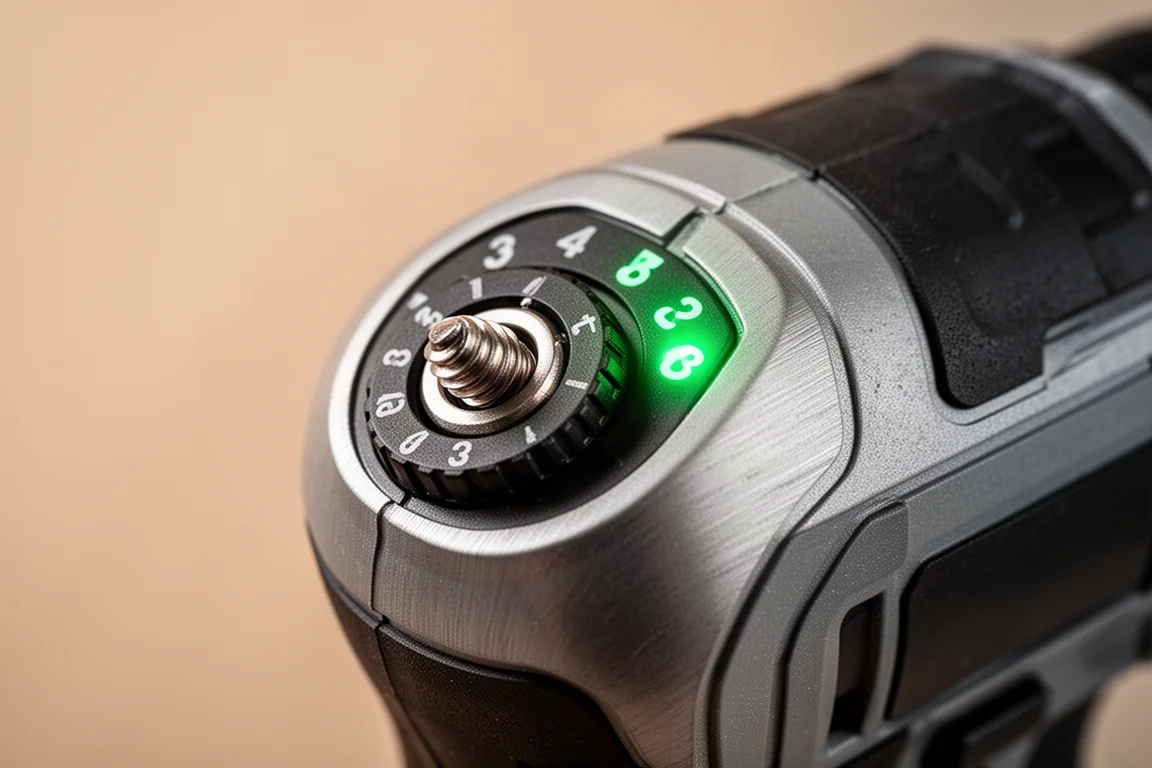
The setting counts differ significantly. The HP001G offers up to 41 settings in gear one and 21 in gear two, for a total of 62. The HP003G gives you 41 settings in gear one, 30 in gear two, and 25 in gear three, for 96 settings in total, and it remembers the setting for each gear independently, so you can effectively keep three presets.
In side-by-side testing the two were roughly comparable, with the HP003G tending to stop slightly earlier on equivalent numbers, possibly related to its soft start. The softer clutch engagement also makes tapping the trigger less effective on the new drill. In real carpentry use, the huge setting counts proved more theoretical than practical: fine roof screw placement on old hard timber was still too inconsistent on both, and an impact driver ended up doing most of that job.
Real-World Drilling and Big-Bit Tests
With 35 mm holes the HP001G felt more aggressive and quicker, while the HP003G felt more controlled and steady, as if the tool was not fighting the user as much. On the 190 mm auger bit, the HP001G got through with several stalls and impressive persistence; the HP003G pushed through with fewer interruptions, a clear demonstration of what the extra torque buys.
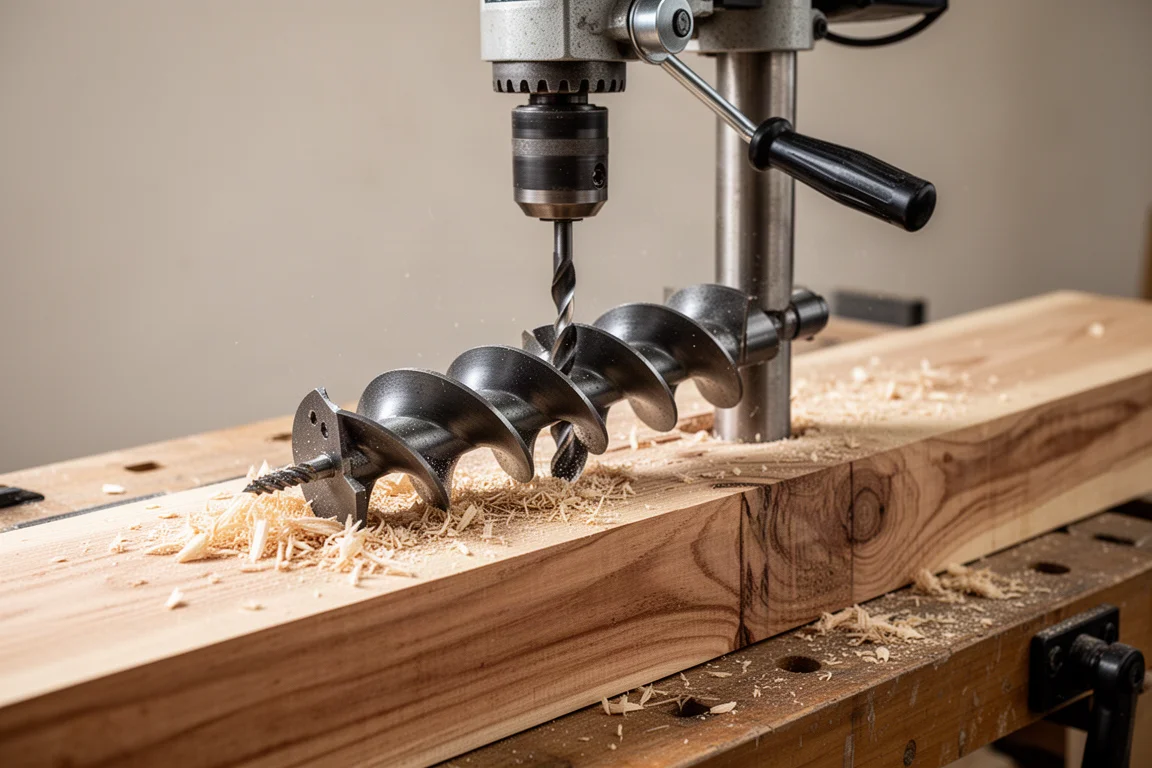
On long structural screws, the HP003G drove deeper in low gear than the HP001G could manage, though neither handled a full 300 mm half-inch coach screw in hardwood easily, even with a pilot hole. A reminder that applies to both: use the lowest gear for torque-critical work. The higher gears are for quick drilling, not for overcoming resistance.
Weight, Size and Handling
This is where the comparison turns. Weighed on verified scales, the HP001G came in at 1.675 kg and the HP003G at 1.83 kg, roughly 150 g heavier, despite Makita’s website listing 2 kg and 2.2 kg respectively (likely including the side handle). The new drill is also noticeably girthier around the front, and it feels heavier in the hand, which matters for overhead work.
The HP003G replaces the small above-trigger light with a large LED strip across the bottom of the tool. Held down on the mode button, it runs for a full hour and is brighter than the trigger-activated mode, which dims it. The HP001G keeps the conventional above-trigger light.
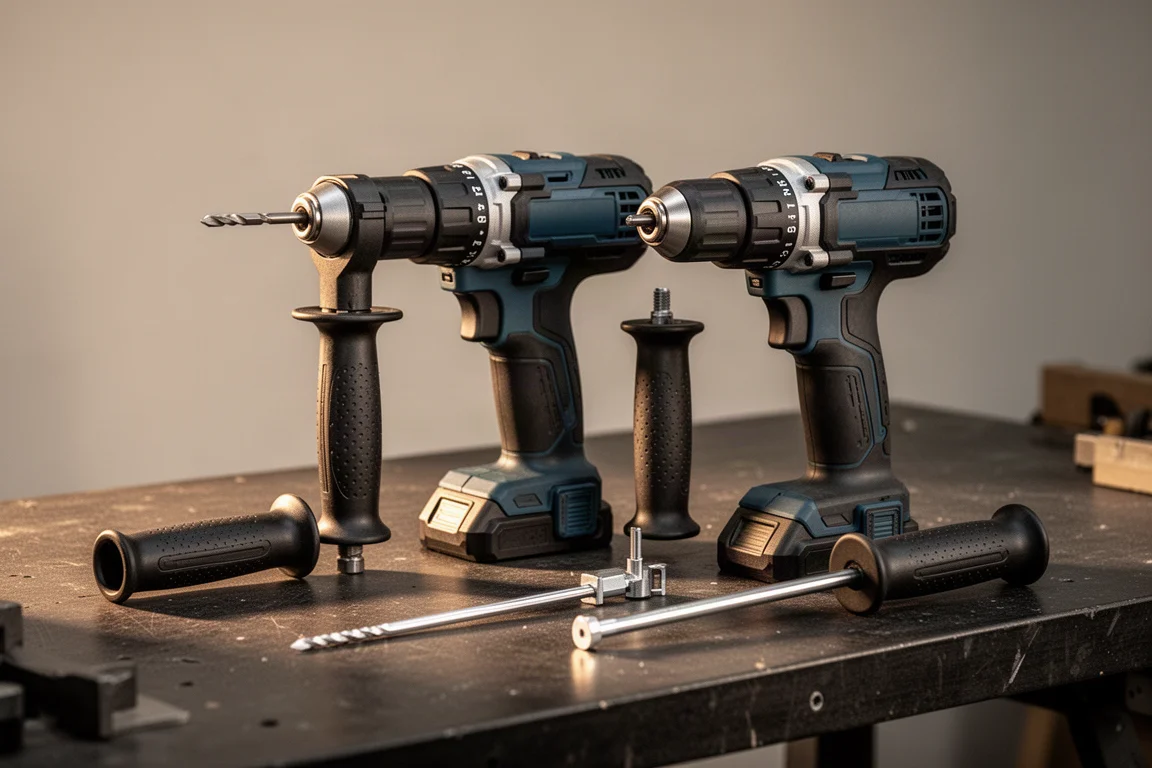
On kickback protection, the HP003G has active feedback technology (AFT). It works, as demonstrated by a clean cutout when the drill hit a nail, but it is less sensitive than comparable systems from Bosch or Milwaukee, which can cut out in less than an eighth of a turn. The HP001G, despite claims to the contrary, has no functioning anti-rotation mechanism at all in practice: it will happily spin you around rather than cut out. The HP003G’s AFT also cannot be switched off, unlike the toggle available on some competitors, though the lower sensitivity reduces the annoyance. The new drill also has a soft start in screw mode across all gears, which begins fast and hard jobs gently.
The side handles differ too: the HP001G ships with an enormous, robust handle, while the HP003G gets a shorter, simpler one with a steel band that locks on one side at a time. Both include a metal depth stop.
Buying Advice: Should You Upgrade?
If you already own the HP001G and it is working well, there is no compelling reason to upgrade. The older drill is shorter, narrower, lighter, and faster at the top end, and it feels nicer in the hand to many users. The known long-term concerns with the HP001G, gearbox slipping and chuck issues, are worth noting, and the HP003G’s different chuck may or may not resolve them over time.
If you are buying your first 40V XGT drill today, the HP003G is the sensible choice: more torque, anti-kickback protection, a three-speed gearbox, 96 clutch settings, and a genuinely useful work light. Just be honest about whether you will ever use that 180 Nm rating, because for most people the difference is subtle rather than transformative.
Conclusion
The HP003G is a legitimately impressive new flagship: the most powerful cordless drill on the market by max torque, with modern safety and control features the HP001G never had. But the HP001G remains an excellent tool, and in several respects, speed, weight, and compactness, it is still the better fit for everyday work. New buyers should get the HP003G. Existing HP001G owners should keep theirs unless the extra torque is genuinely central to their trade.
Product link
View more details for Makita HP003G
This product is mentioned in the review. Check the specifications, options, and compatibility before buying.
View more details for Makita HP003GFurther reading
Related Reviews
Power Tools
Best 1-Inch Pistol Impact Wrenches: Three Heavy-Duty Options Compared
We compare three 1-inch pistol impact wrenches, from a budget-friendly Harbor Freight model to a premium Caterpillar unit, to help you choose the right one.
Power Tools
Best 3/4-Inch Impact Wrenches 2026: Five Contenders Compared
We compare five 3/4-inch impact wrenches across price and performance, from a budget Amazon option to Snap-on's most powerful model yet.
Power Tools
Best Budget Cordless Tools 2026: Walmart Finds That Punch Above Their Price
We tested five cordless tools from Walmart, including a high-torque impact wrench that trades blows with Milwaukee and a $35 duster that outperforms its price class.