Power Tools
Makita GPH03 vs DeWalt DCD1007: Which Flagship Hammer Drill Wins?
We put two flagship cordless hammer drills through a gauntlet of heavy-duty tests to see which one comes out on top.
Introduction
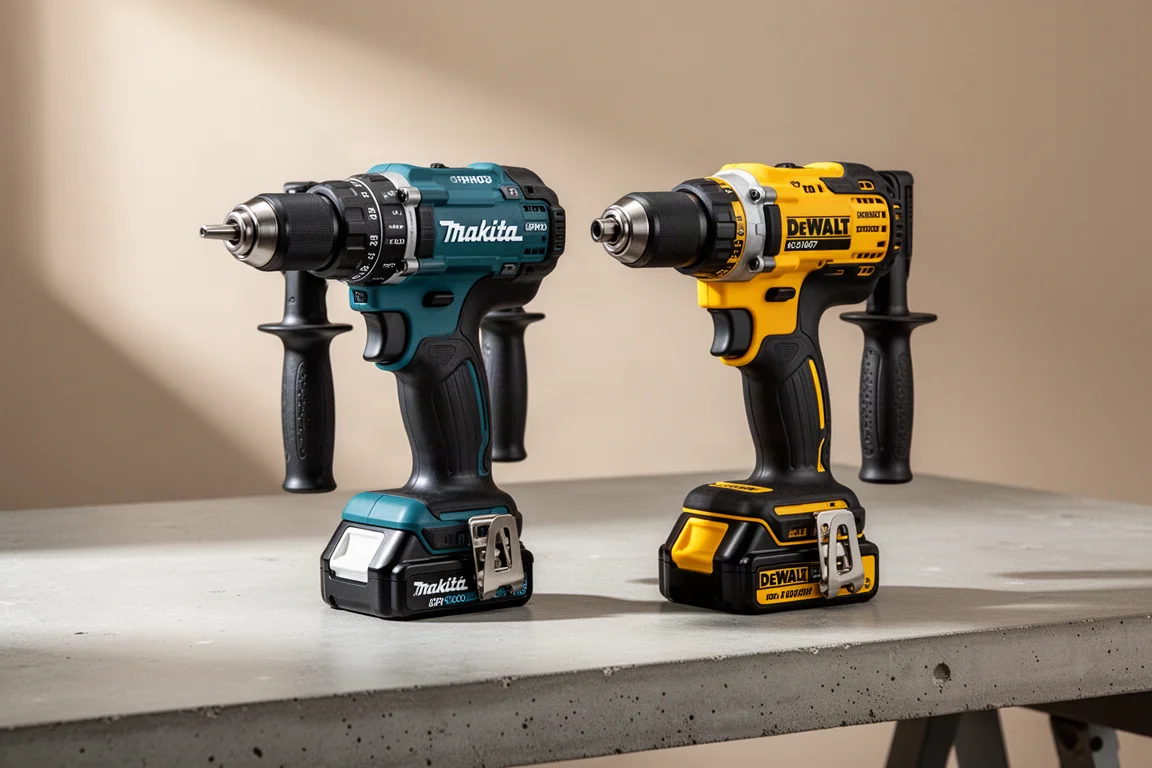
Two flagship cordless hammer drills, the Makita GPH03 and the DeWalt DCD1007, look very similar on paper. Both feature all-metal gearboxes, all-metal chucks, and three-speed transmissions. But specs only tell part of the story. To find out which one truly performs, we ran both tools through a gauntlet of heavy-duty tests in the shop: drilling with auger bits, boring with self-feed bits, driving lag bolts, and drilling into cured concrete.
The Contenders
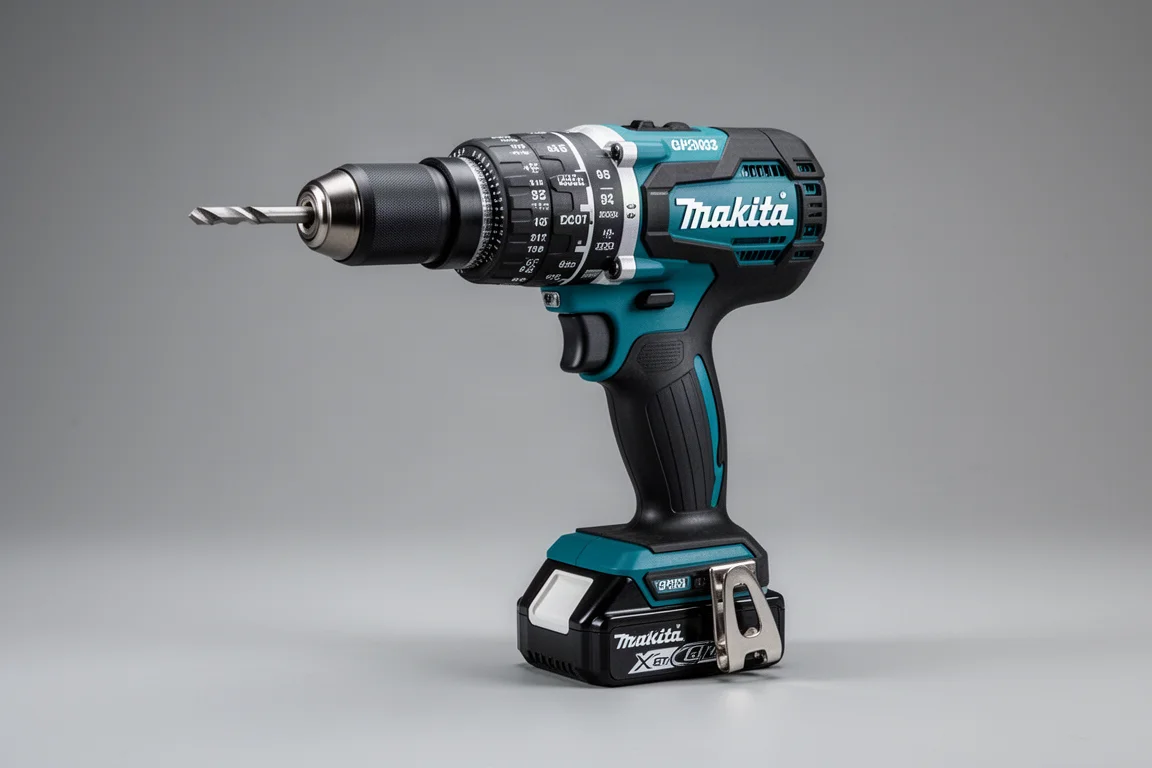
The Makita GPH03 runs on the XGT 40V platform and brings a significant change for Makita: a three-speed gearbox. It also features a digitally controlled torque setting wheel that provides up to 92 different torque settings, which is excellent for dialing in precision fasteners. The removable side handle makes it handy for higher-torque work.
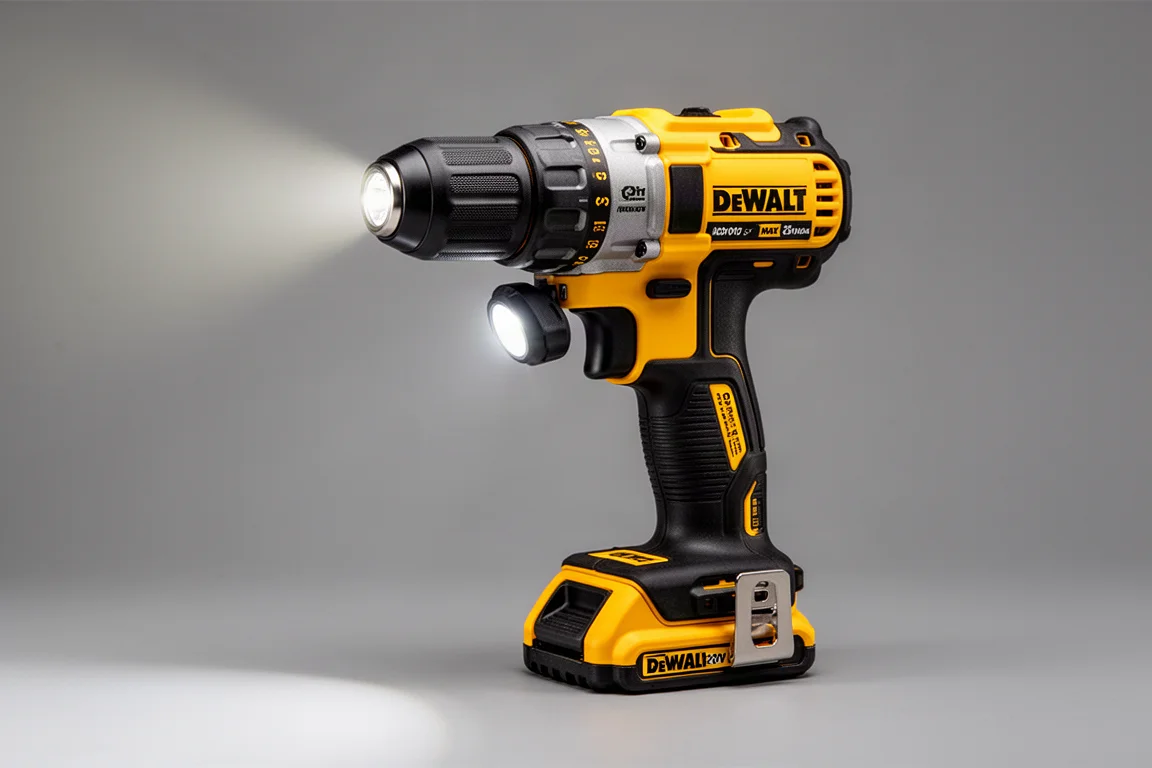
The DeWalt DCD1007 is not a new drill. It runs on the 20V Max platform and has been on the market for a while. It comes with a three-speed transmission, an all-metal gearbox, and an all-metal chuck. One standout feature is the positionable flashlight, which stays on for up to 20 minutes with a single click of the button. It also includes a large side handle for extra leverage during heavier-duty work.
Specifications at a Glance
In a quick comparison of core specifications, the Makita offers a bit more speed at 2,400 RPM versus the DeWalt’s hammer mode max of 2,250 RPM. The blows per minute go to the DeWalt at 38,250 versus the Makita’s 36,000. The Makita takes the torque with 1,590 in-lbs versus the DeWalt’s 1,496 in-lbs. Overall lengths, weights with and without batteries, are fairly similar between the two tools.
Test 1: Auger Bit Drilling
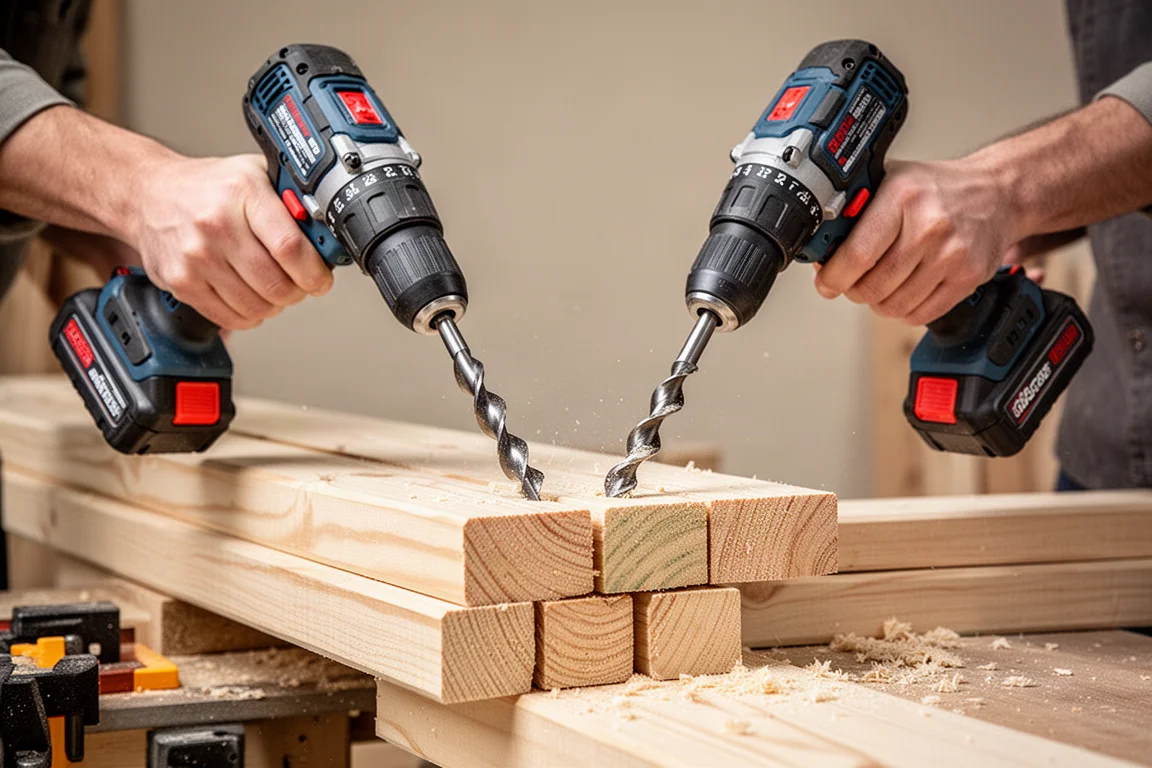
The first test used fresh 1-inch auger bits to drill through two stacked 2x4s. To keep things fair, each tester drilled three holes, then swapped tools and drilled three more holes. This helped eliminate variances in technique and pressure.
The Makita fell behind the DeWalt pretty quickly in this test, no matter who was doing the drilling. The DeWalt consistently got through the boards faster, and the difference was noticeable when hitting the second board.
Test 2: Self-Feed Bit Drilling
The second test used a 2 and 9/16-inch self-feed bit, a much more demanding challenge. The DeWalt was able to complete the holes in high speed (third gear) without struggling. It didn’t even hiccup; it just bore straight through.
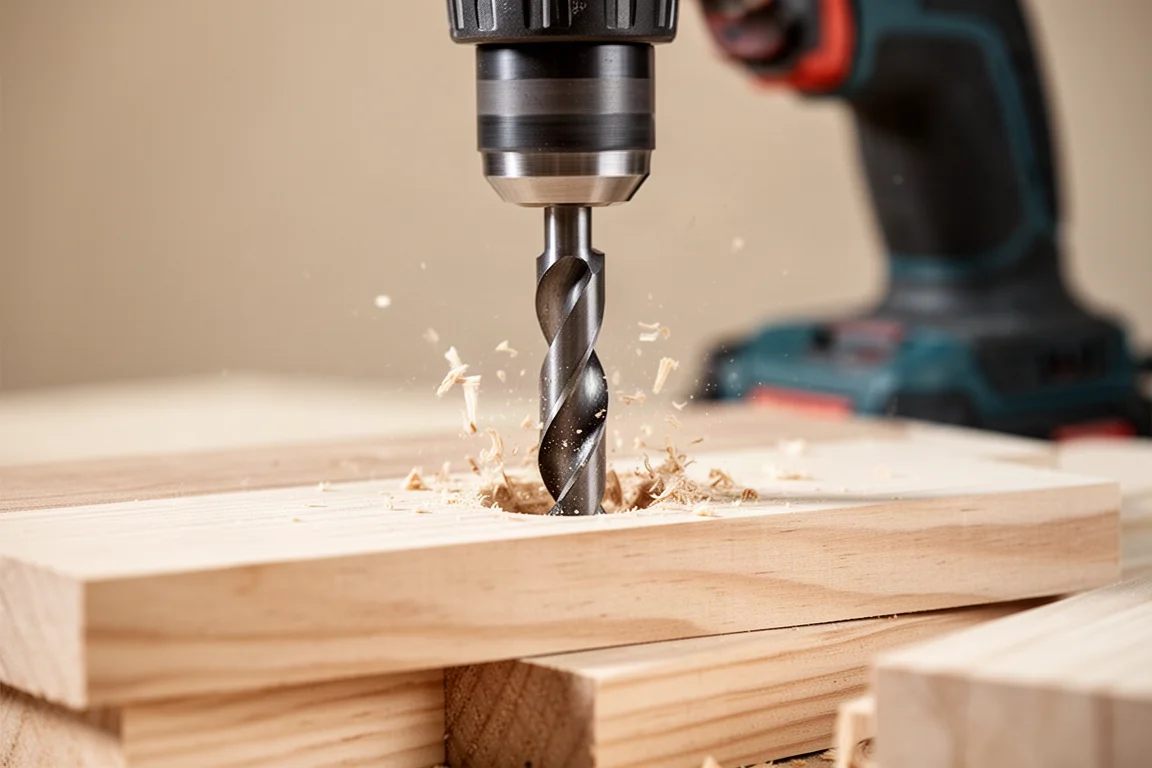
The Makita, on the other hand, had to be dropped down to second gear to get through. It took more torque to get through the boards, which meant it lost some speed. The DeWalt clearly took this test as well.
Test 3: Lag Bolt Torque
For the torque test, both drills were put in low gear to maximize torque. The task was to drive 10-inch by 1/2-inch lag bolts into a stacked OSB block. The idea was to see how fast each tool could drive the bolt and how far it would sink before the motor gave out.
The DeWalt drove the lag bolt deep into the block without issue, almost burying it. In one test, it got within a quarter of an inch of fully seating the bolt. The Makita left about 2 inches of the bolt proud of the surface. Even in first gear, which should provide maximum torque, the Makita didn’t have quite the same oomph.
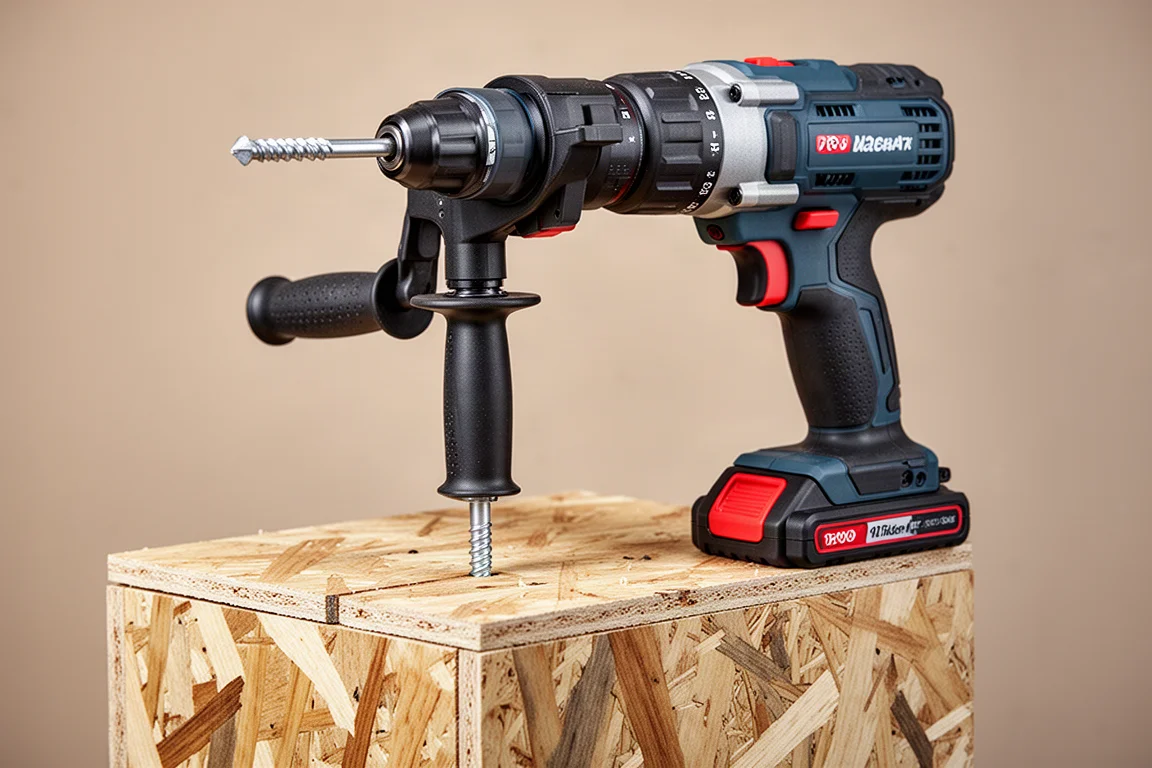
Both tools required the side handle for this test, and the consistency of the DeWalt’s performance was impressive.
Test 4: Concrete Drilling
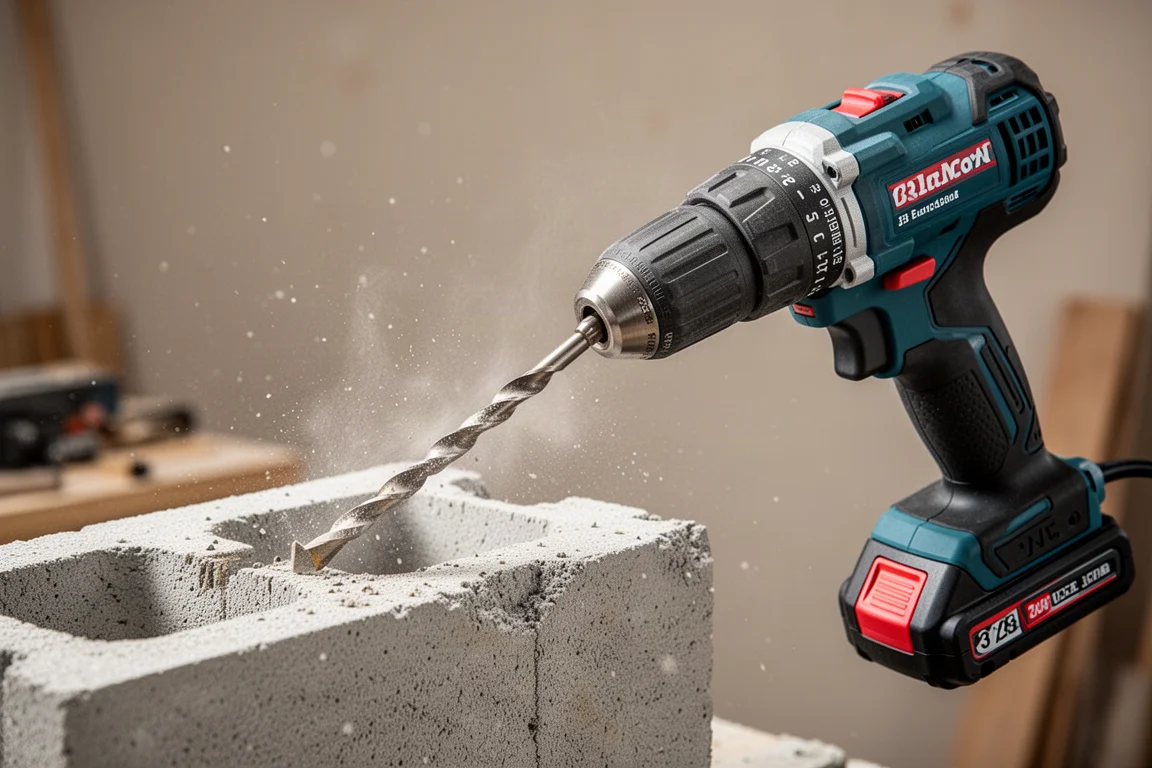
The final test involved drilling 3/8-inch by 3-inch deep holes into a cured concrete block using masonry bits. Both drills were set to high speed and hammer mode.
The DeWalt took this test as well, completing the holes faster and with less effort. The Makita struggled more, and after a couple of holes, it was clear which tool was working harder.
The Verdict
After compiling all the data, the DeWalt DCD1007 came out as the winner of our testing. It performed consistently well across all four tests, from auger drilling to concrete work.
That’s not to say the Makita doesn’t have a place. The Makita GPH03 offers an amazing amount of torque settings. With 92 different torque settings, it’s ideal for specialty fastening where you really need to dial in the exact amount of torque. The DeWalt offers 11 torque settings in each speed, for a total of 33. So the Makita gives you triple the amount of torque settings.
Buying Advice
Both tools are available online or wherever you buy Makita or DeWalt tools. The Makita GPH03 goes for $399 as a kit, which includes one 4-Ah battery and a charger. The DeWalt DCD1007 goes for $359 as a kit with one 8-Ah battery and a charger.
If you need maximum drilling and driving performance for heavy-duty work, the DeWalt DCD1007 is the stronger choice based on our testing. If you do a lot of precision fastening and want the flexibility of many torque settings, the Makita GPH03 is worth considering.
Conclusion
Both of these flagship hammer drills are capable tools, but they excel in different areas. The DeWalt DCD1007 proved itself as the better performer in our heavy-duty tests, while the Makita GPH03 shines when you need precise torque control. Choose based on your primary use case, and you’ll end up with a solid cordless hammer drill either way.
Further reading
Related Reviews
Power Tools
Best 1-Inch Pistol Impact Wrenches: Three Heavy-Duty Options Compared
We compare three 1-inch pistol impact wrenches, from a budget-friendly Harbor Freight model to a premium Caterpillar unit, to help you choose the right one.
Power Tools
Best 3/4-Inch Impact Wrenches 2026: Five Contenders Compared
We compare five 3/4-inch impact wrenches across price and performance, from a budget Amazon option to Snap-on's most powerful model yet.
Power Tools
Best Budget Cordless Tools 2026: Walmart Finds That Punch Above Their Price
We tested five cordless tools from Walmart, including a high-torque impact wrench that trades blows with Milwaukee and a $35 duster that outperforms its price class.