Power Tools
Makita DMP180 vs DMP181: LXT 18V Cordless Inflator Comparison
Two LXT 18V inflators side by side: pressure, flow, hose fittings, size and real-world inflation speed compared to help you pick the right one.
Introduction
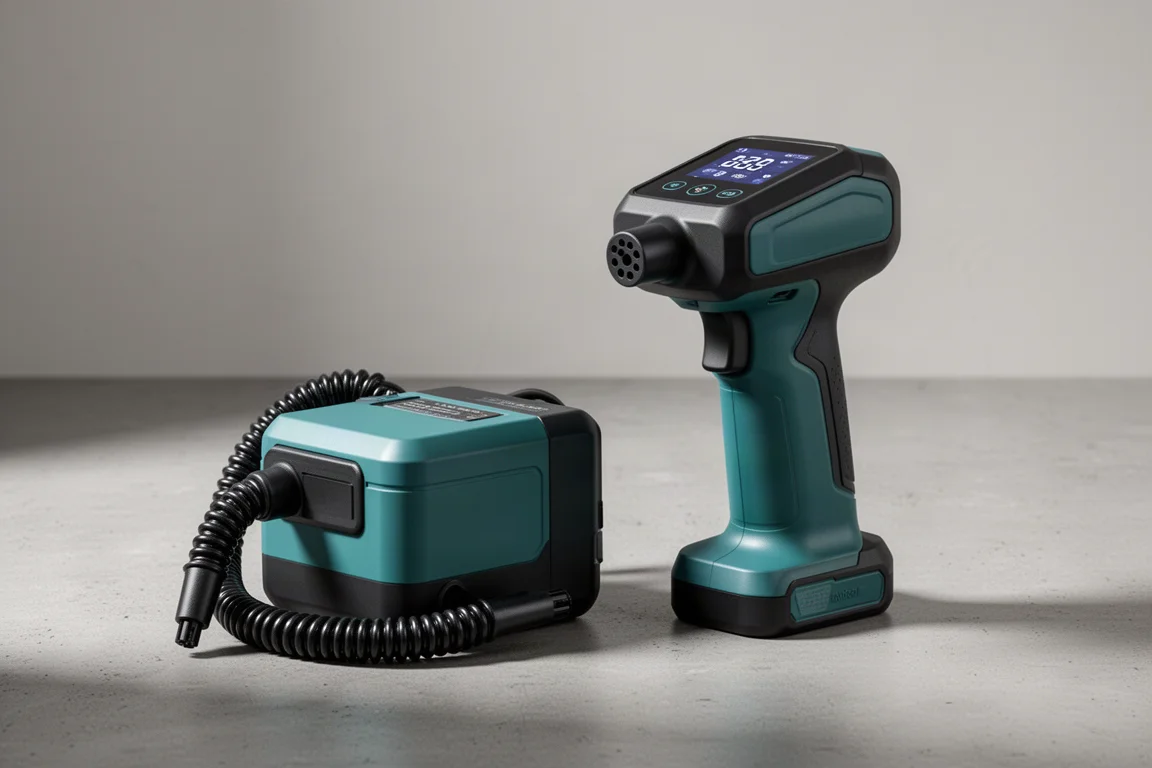
Makita’s LXT 18V inflator line has quietly grown, and the newest model, the DMP181, has now superseded the earlier DMP180. Both are brand-new-in-the-box tools built around the same design language and the same battery platform, but they differ dramatically in size, pressure capability, and airflow. We put them head to head to see where the extra bulk pays off and where the compact original still makes sense.
Size and Weight
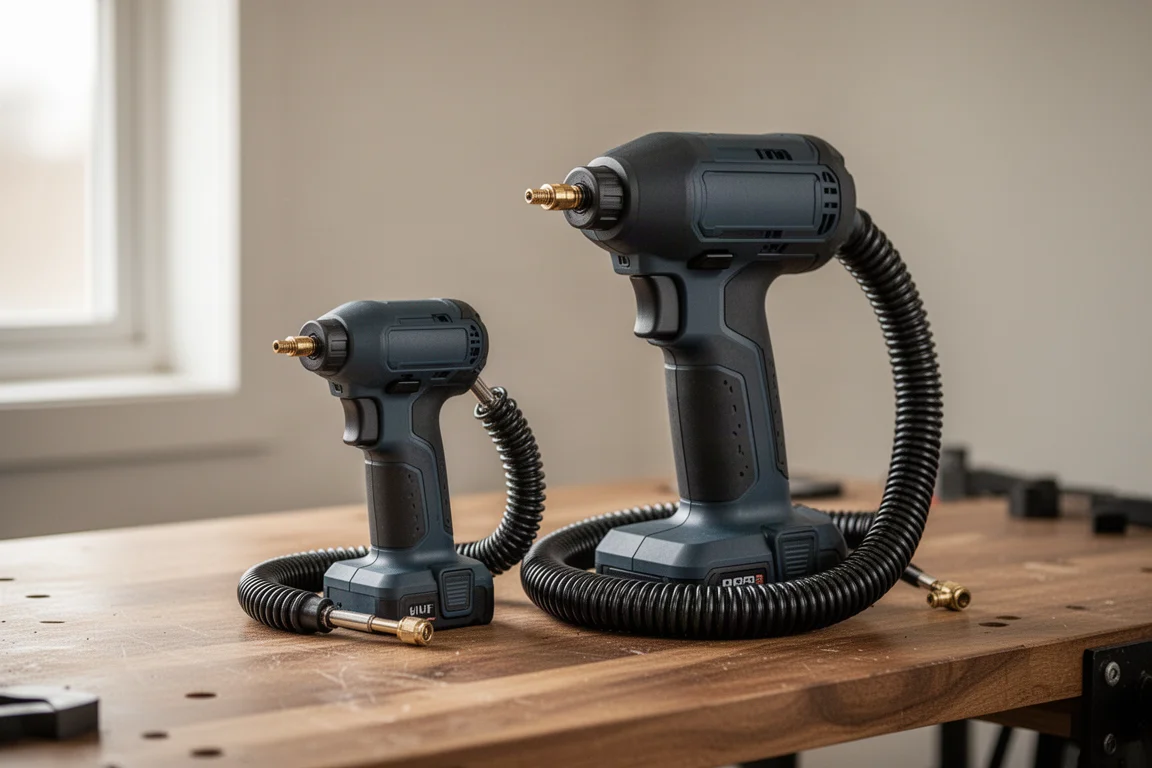
The most obvious difference is sheer physical presence. The DMP181 is significantly larger than the DMP180 while keeping the same basic shape, and the extra bulk translates directly into weight: the DMP180 weighs a little over a kilogram at 1,008 grams, while the DMP181 comes in at 2.14 kilograms, more than double. Neither is difficult to use, and once you see the performance numbers below, the extra weight is easy to forgive.
Pressure, Flow, and Duty Cycle
This is where the DMP181 pulls well clear. The DMP180 tops out at 121 PSI while the DMP181 reaches 161 PSI, a 40 PSI advantage. The duty cycle improves from 5 minutes on and 5 minutes off to 10 minutes on and 5 minutes off. Airflow rises from 12 liters per minute to 22 liters per minute at low pressure, with the older 12V MP100D sitting at 10 as a reference point. For context, Makita’s 40V XGT inflator manages only 24 liters per minute, so the 18V jump from 12 to 22 is the real leap here.
Flow drops as pressure climbs, which is normal: the harder the tool has to push air in, the slower it goes. At 161 PSI the DMP181 delivers around 7 liters per minute. The biggest practical gap appears at high pressure, when a tyre is nearly full and lower-powered inflators start struggling to keep up. At low pressure, small items, all of these tools behave roughly the same.
Hose Fittings: Clamp vs Screw-On
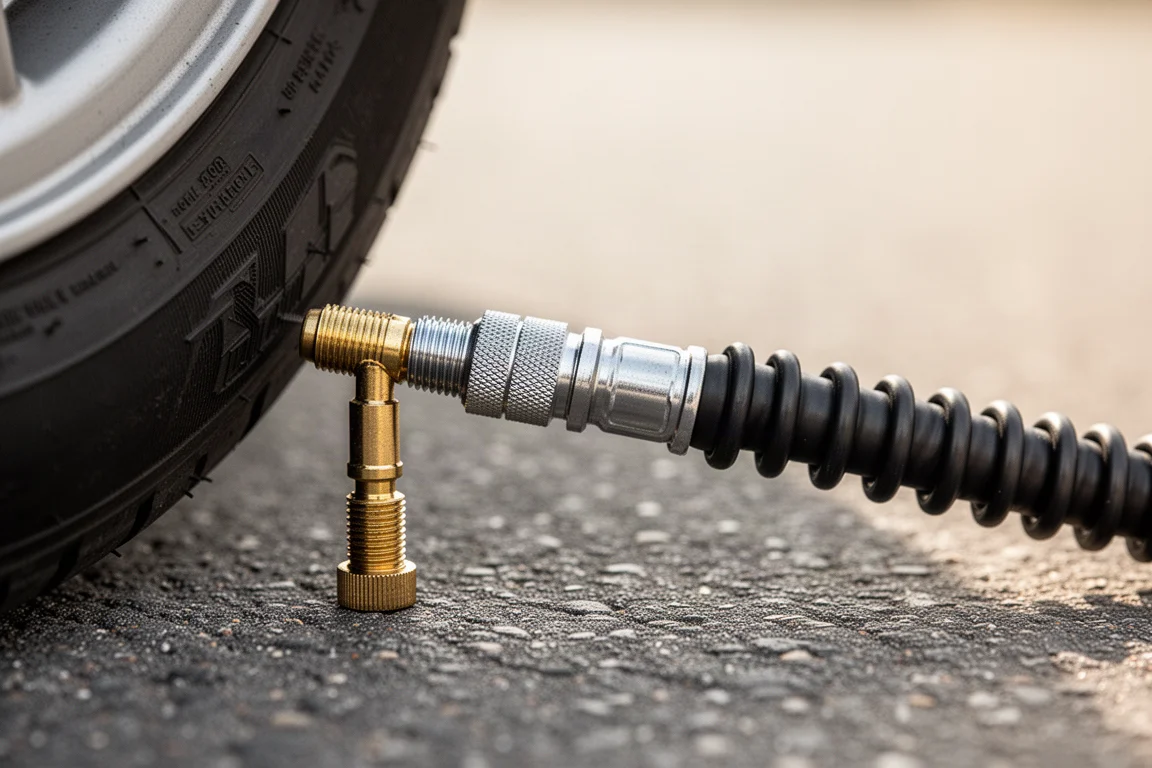
Hose length and the accessory set are identical across both models, including ball and beach ball attachments and adapters for Presta and Dunlop valves. Each ships with a Dunlop-style fitting attached by a small chain to the hose end, which many users will simply remove since most car, truck, bike, and trailer tyres use Schrader valves.
The fitting styles differ, and each has trade-offs. The DMP180 uses a quick clamp fitting: press it over the valve, lock it down, done. It is fast but can leak a little air and is more likely to pop off under pressure. The DMP181 uses a screw-on adapter that is tighter, more reliable, and far less likely to let go at high pressure, but noticeably slower to attach. On tube-type tyres such as bicycle, wheelbarrow, and hand truck tyres, the screw-on design also works better because the clamp style tends to push the valve back into the tyre, making it hard to seat.
The DMP181 also includes three hose clips for storage, one more than the two on the DMP180, which makes tidier hose wrapping possible.
Controls and Display
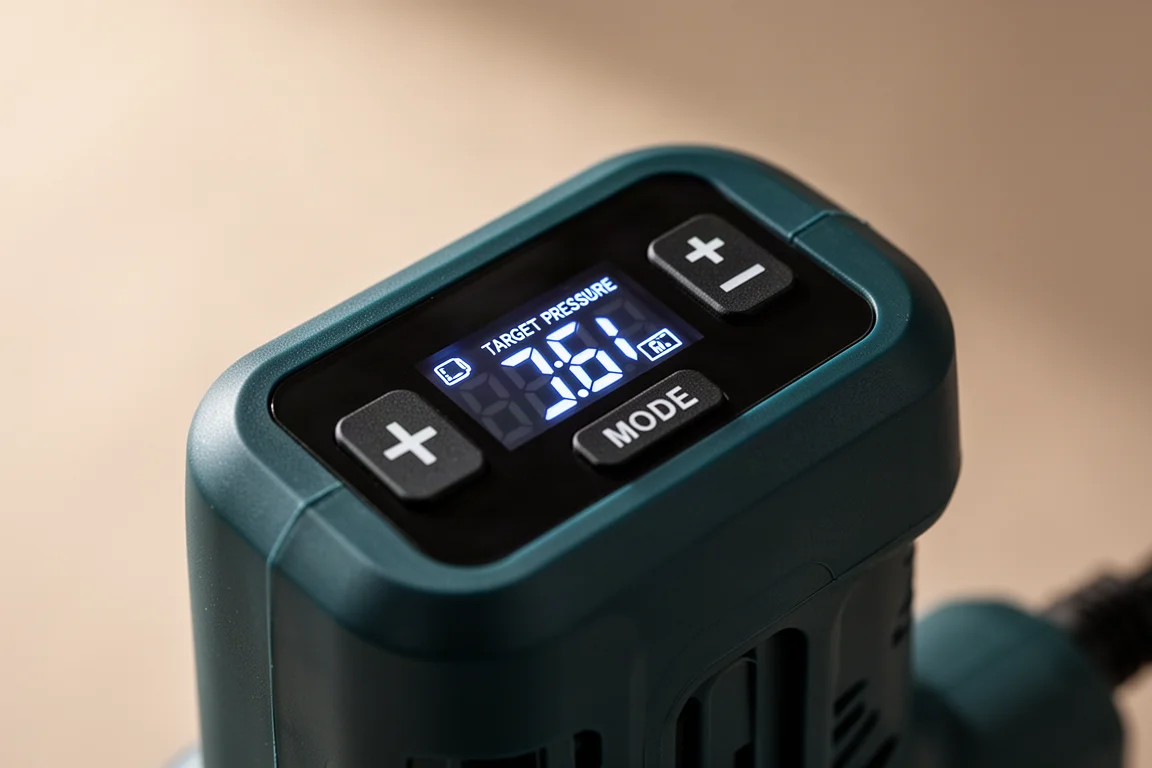
Both tools power on with a button on the side, which lights the screen on top. The DMP180’s display is more basic, with a blue backlight, a PSI/bar/kPa selection button, and plus and minus controls for setting pressure. It moves in 5 kPa increments.
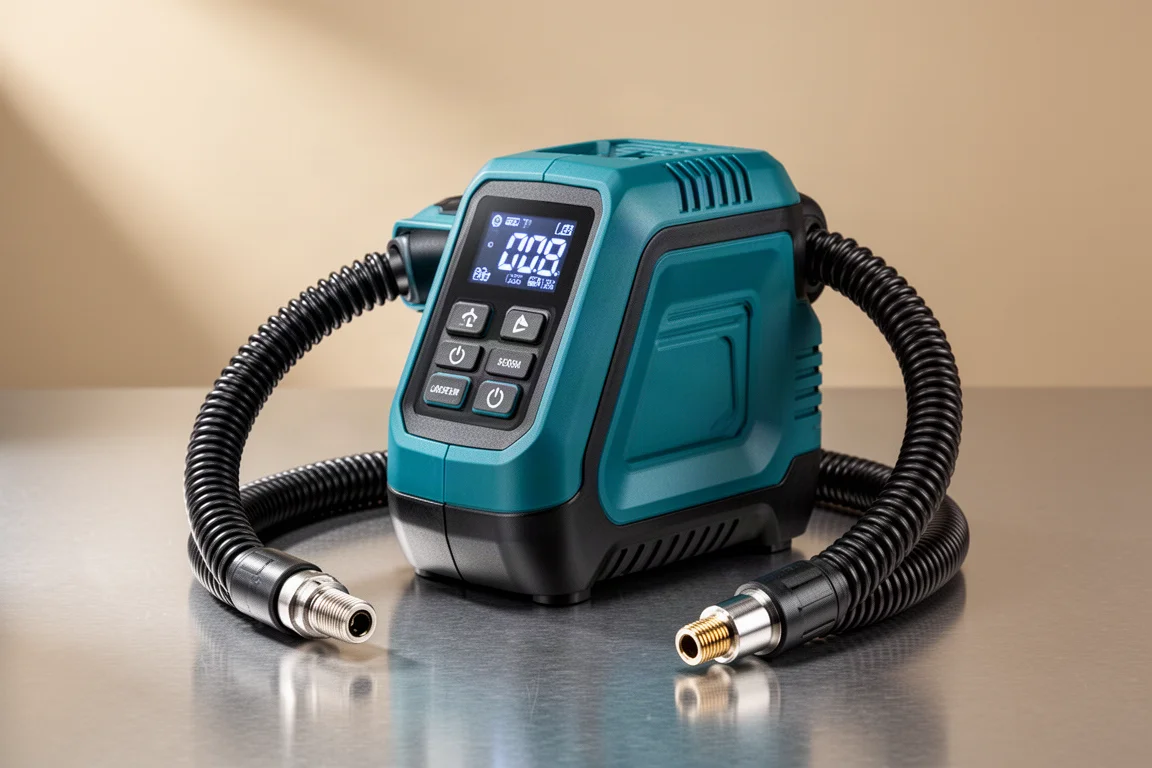
The DMP181’s screen is a clear step up. On startup, the current target pressure appears in the bottom right corner while the live incoming pressure is displayed on top. A mode button cycles between PSI, bar, and kPa. Holding the mode button drops down through three preset tiers, a low, medium, and high pressure band, then into ball mode at 8.5 PSI for sports balls. Pressure changes in 0.5 PSI steps per tap, or you can hold the button to run the value straight up to the 161 PSI maximum. The minimum setting is 5 PSI, and if you are at the top of a range and need to come back down, you can drop straight back to the start rather than stepping all the way down.
One genuinely new feature on the DMP181 is a deflation button. It manually opens a valve inside the tool to release air, and you can see the pressure fall as it works. Simple, effective, and handy for letting tyres down before making adjustments.
Both models have a small front light that is just enough to find a valve in the dark on the roadside. Neither offers a trigger lock: you must hold the trigger down for the whole inflation. The tool stops automatically at the target pressure, and a simple cable tie slipped over the trigger will hold it in place if you want hands-free operation. Third-party trigger-clamp attachments that screw on also exist.
Real-World Inflation Tests
With both tools fed by freshly charged 18V batteries showing healthy 20.3 and 20.5 volt readings, a set of practical tests tells the story clearly.
On a rugby ball set to 69 kPa, the quick test required the ball mode preset, since at the highest flow setting the tool would cut out thinking it had already reached pressure. Ball mode is slower but got the job done.
Inflating car tyres from completely flat to 50 PSI produced a decisive result in favor of the DMP181. A space saver tyre inflated to 32 PSI took 1 minute 18 seconds on the DMP181 versus 2 minutes 16 seconds on the DMP180, nearly a full minute of difference. After all tests, both batteries still showed four bars.
Build Quality and Feel
The DMP180 earned something of a toy reputation, and the housing carries a “household use only” marking, which is unusual and slightly disappointing to see on a Makita tool. The DMP181 feels like the business: tough, sturdy, and properly scaled for real work. All of these housings are ABS plastic, none are PA6 or polycarbonate, but the larger unit still feels solid in hand.
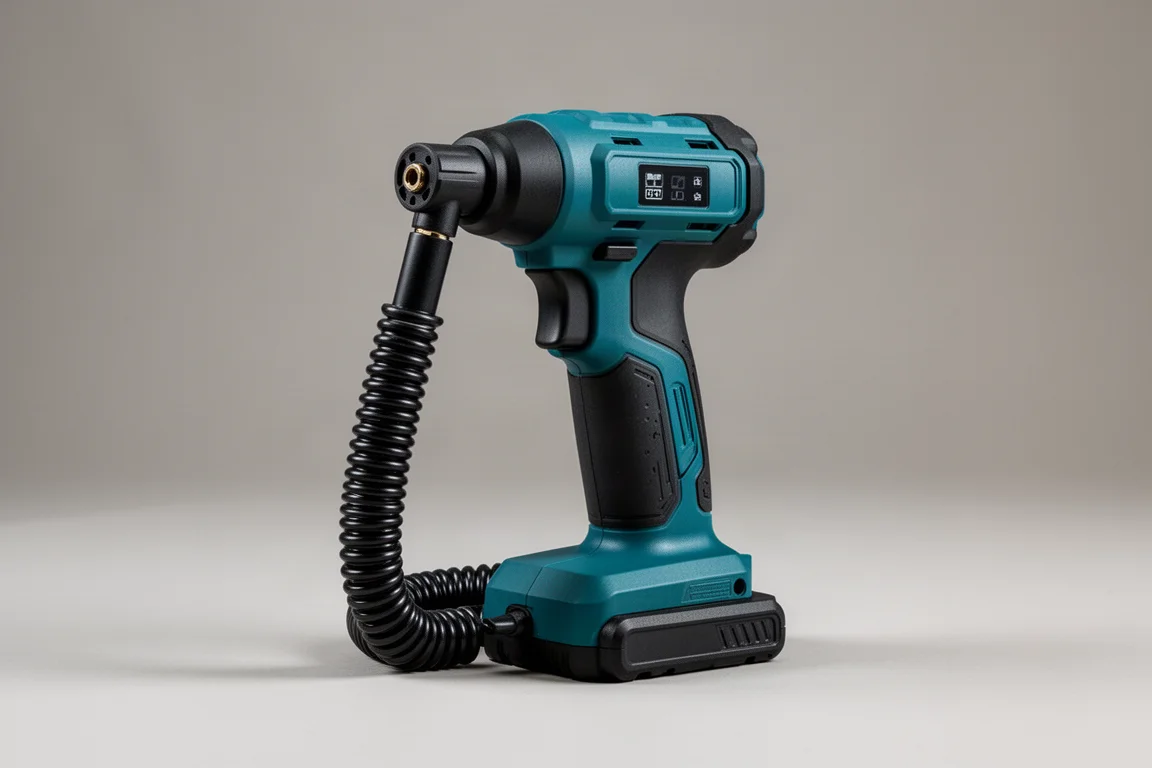
Makita DMP181: The Bigger, Stronger Successor
The DMP181 is a clear step forward in power and speed, and it also feels like a real tool rather than a lightweight household gadget. Its 161 PSI ceiling, longer duty cycle, nearly double the airflow, and better high-pressure endurance make it the more capable machine for tyres and anything demanding. The screw-on fitting is slower but more secure, the display is genuinely useful, and the deflation button adds everyday practicality.
Buying Advice
If you mostly inflate occasional car tyres, balls, and small items and you already keep a battery tied to the tool in a vehicle, the compact DMP180 remains a sensible, light choice. If you want faster inflation, higher pressures, longer run cycles, a better display, and a tool that feels built for sustained work, the DMP181 is worth the extra size and weight. Since the DMP180 has been superseded, availability may be limited, so check current stock before deciding.
Conclusion
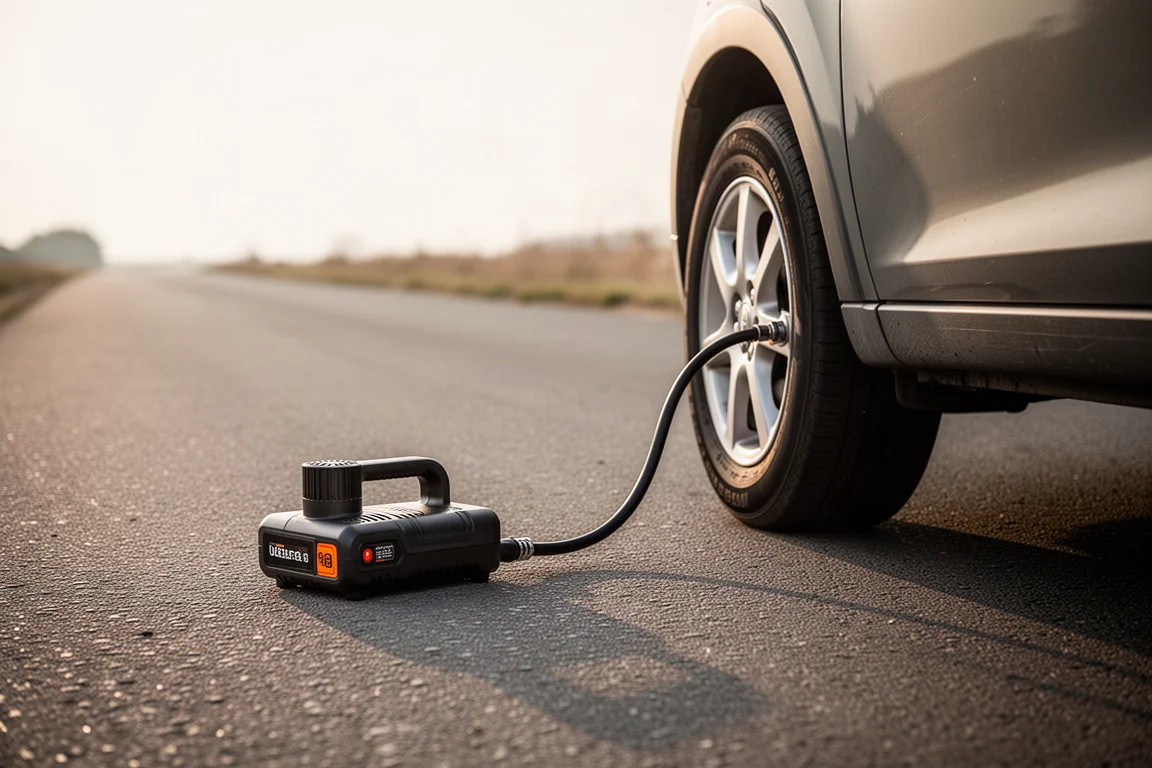
The DMP181 is the stronger tool in nearly every measurable way: double the airflow, 40 PSI more maximum pressure, double the duty cycle, a superior screen, and a deflation function. The DMP180 still suits light, occasional use where compact size matters more than speed. Match the tool to how often and how hard you inflate, and either will earn its place in the boot of the car.
Further reading
Related Reviews

Power Tools
Best 1-Inch Pistol Impact Wrenches: Three Heavy-Duty Options Compared
We compare three 1-inch pistol impact wrenches, from a budget-friendly Harbor Freight model to a premium Caterpillar unit, to help you choose the right one.

Power Tools
Best 3/4-Inch Impact Wrenches 2026: Five Contenders Compared
We compare five 3/4-inch impact wrenches across price and performance, from a budget Amazon option to Snap-on's most powerful model yet.

Power Tools
Best Budget Cordless Tools 2026: Walmart Finds That Punch Above Their Price
We tested five cordless tools from Walmart, including a high-torque impact wrench that trades blows with Milwaukee and a $35 duster that outperforms its price class.