Power Tools
Makita DAS180 vs AS001G: Which Dust Blower Should You Buy?
Makita's 18V LXT dust blower finally arrives to join the popular 40V XGT version. Here is how the two compare on power, runtime, weight, and everyday use.
Introduction
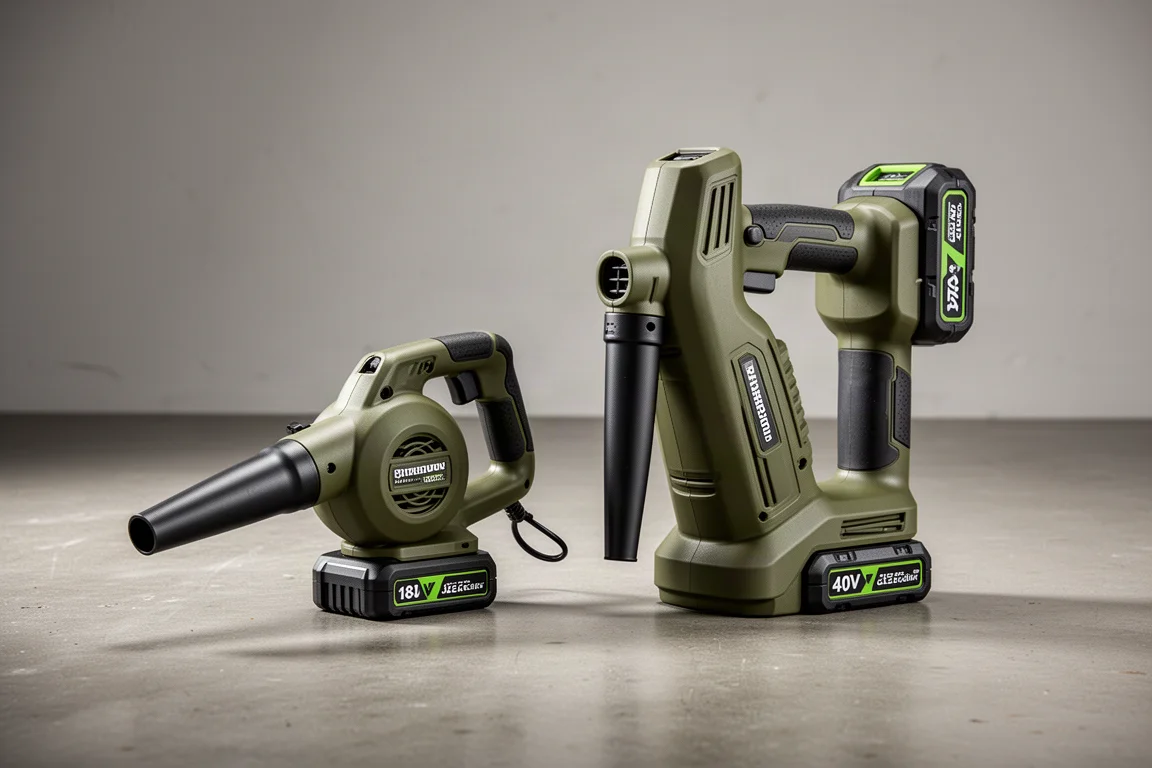
Makita’s 40V dust blower became a fast favorite when it launched, selling out quickly in many markets. But a recurring question followed it everywhere: when would an 18V LXT version arrive, for the huge group of users who did not want to buy into the 40V platform just for one tool? Over a year later, the answer is here in the form of the DAS180. This comparison looks at how the two stack up and which one makes sense for your battery collection.
Meet the New 18V LXT Option
The DAS180 is essentially the same tool as the 40V AS001G, just built around the 18V LXT battery system. The two battery platforms are not interchangeable, so the choice really comes down to which system you already own. There are a few small design tweaks on the newer model, including added rubber over-molding on the front to protect it when laid down, slightly different handle shaping with a thumb rest, and a marginally rounder base shape.
On paper, airflow is listed at 1.1 cubic meters per minute for both tools, and in use they behave the same. Inflation tests back this up: an air bed took about a minute and a half to inflate on each, and deflating took a similar time.
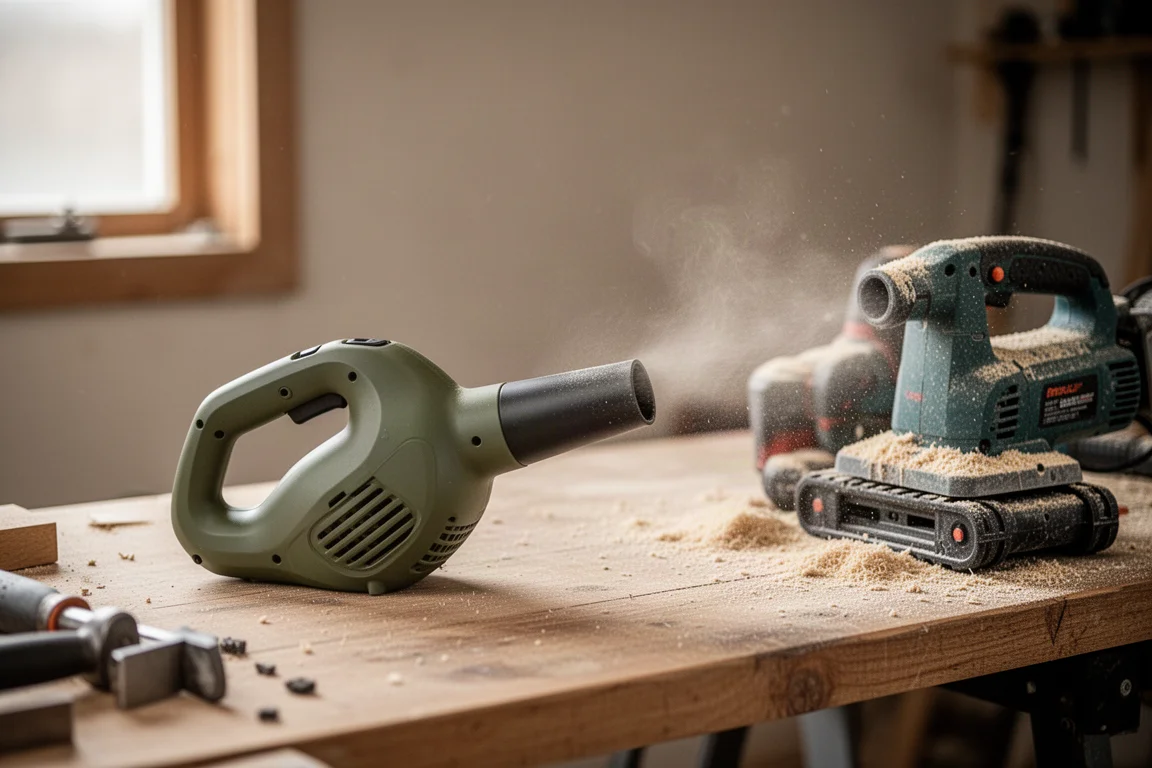
The 18V version is lighter, though. With the lightest comparable batteries fitted, the 18V unit came in around 1,450 grams versus roughly 1,573 grams for the 40V, a difference of about 120 grams on a small tool. That is noticeable in the hand, and it is the biggest practical difference between the two.
Power and Runtime
Both tools offer four power modes plus a trigger lock that keeps the blower running continuously without holding the trigger. There is also a small built-in light. In a head-to-head runtime test using a 5.0Ah battery on the 18V and the 2.5Ah equivalent on the 40V (both 90Wh packs), the 18V actually lasted slightly longer, though it slowed noticeably in its final minutes and its battery came off too hot to recharge immediately, while the 40V battery stayed cooler.
Runtime is rarely a real concern with a blower, since most jobs last a few seconds rather than minutes. And if you want more endurance, the 40V accepts larger batteries, giving it more headroom than the 18V platform tops out at.
Attachments and Extras
Both versions ship with the same five basic attachments in most markets: a pin valve for small inflatables, a wide nozzle for large areas, two narrow nozzles for tight corners, and a sweeper-style nozzle that spreads air across a wide arc. Additional nozzles are sold separately, including a long-hose narrow nozzle for cleaning inside a computer, and a two-piece set for blowing out drilled concrete anchor holes.
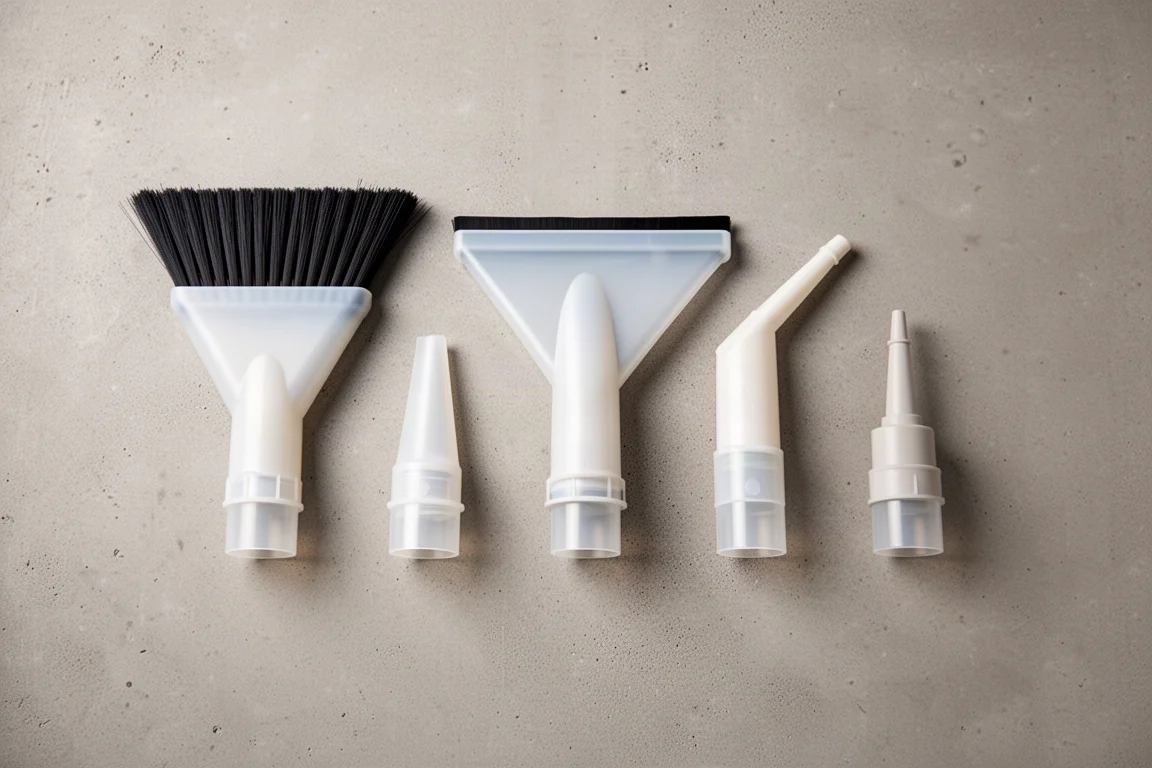
There are also sucking attachments that let you deflate pool toys and vacuum bags, and a HEPA filter that mounts on the rear intake to stop particles being blown back out. A belt hook is supported but not included in the box.
Everyday Usability
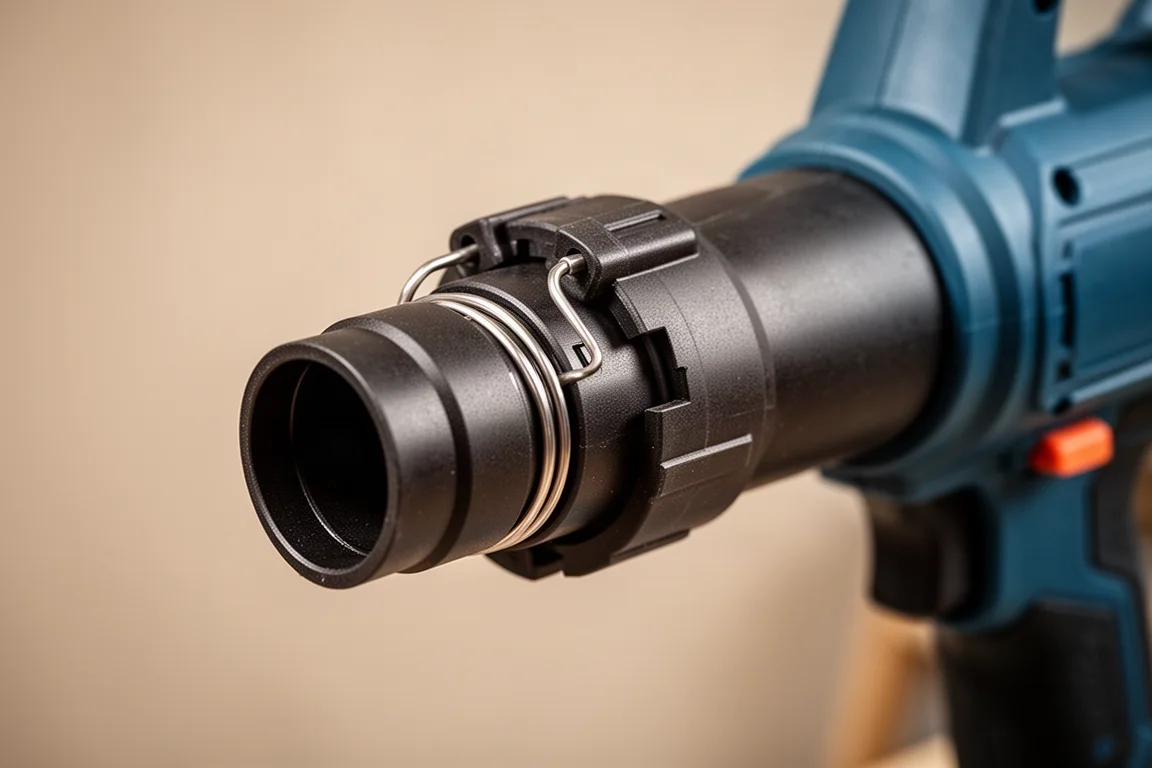
Nozzle changes are simple: line the attachment up with the cutout, push it on, and it clicks into a sprung collet. Removal is either a firm push-and-twist or pulling the collar back and twisting off. The tools are light and easy to keep on standby, which is exactly why owners tend to leave a battery permanently fitted.
Use cases go well beyond the job site: cleaning off miter and circular saws, clearing electrical boxes, blowing out filters on air conditioners, dehumidifiers, vacuums, and washing machines, dusting out PC fans and keyboards, and stoking a charcoal barbecue. It is one of those tools that quietly earns a permanent spot on the bench.
Which One Should You Buy?
The honest answer is simple: these are the same tool on different battery platforms, so buy the one that matches the batteries you already own. Choose the DAS180 if you are invested in 18V LXT and want the slightly lighter tool. Choose the AS001G if you run 40V XGT tools or want the option of bigger batteries for longer runtime.
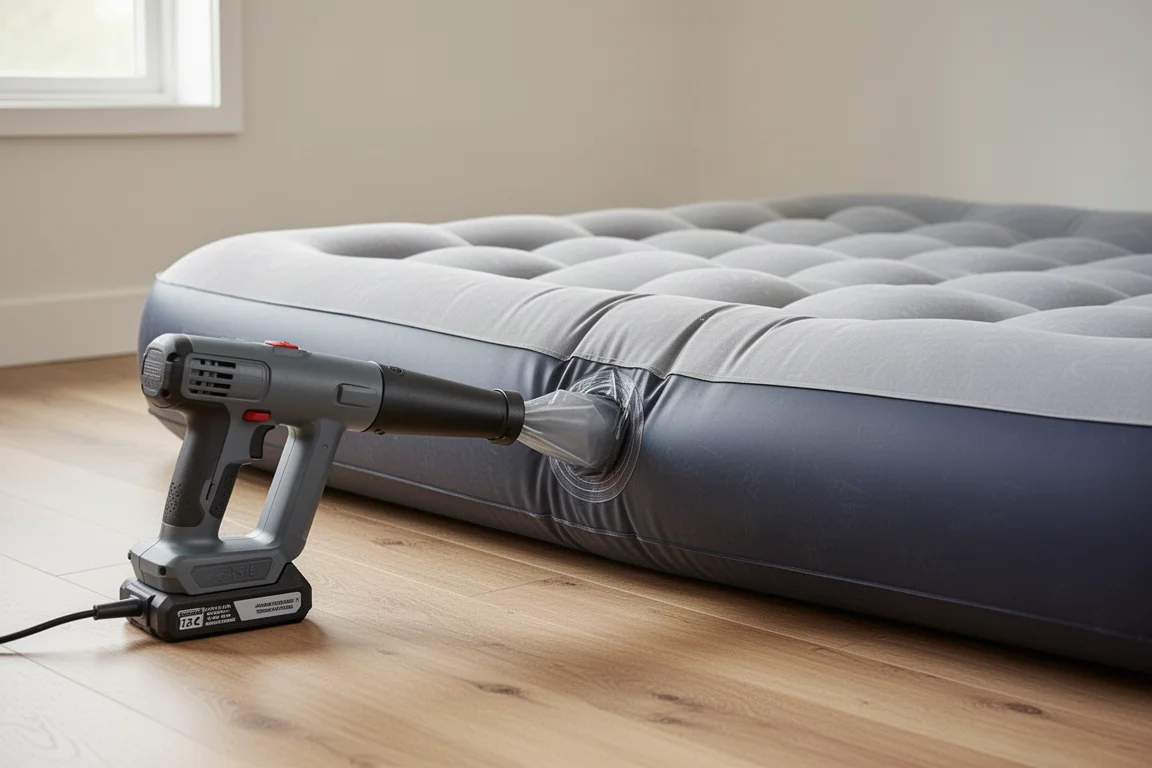
Color also varies by market: besides standard Makita teal, this model comes in olive green as part of the lifestyle series in some regions, sold as the outdoor adventure range elsewhere, with identical hardware underneath.
Conclusion
Makita did not reinvent anything with the DAS180, and that is the point. It delivers the same airflow, the same attachments, and the same versatility as the 40V original in a lighter, 18V package. Anyone who has been waiting for an LXT version finally has one, and it does not give up much at all.
Product link
View more details for Makita DAS180 18V LXT Dust Blower
This product is mentioned in the review. Check the specifications, options, and compatibility before buying.
View more details for Makita DAS180 18V LXT Dust BlowerFurther reading
Related Reviews
Power Tools
Best 1-Inch Pistol Impact Wrenches: Three Heavy-Duty Options Compared
We compare three 1-inch pistol impact wrenches, from a budget-friendly Harbor Freight model to a premium Caterpillar unit, to help you choose the right one.
Power Tools
Best 3/4-Inch Impact Wrenches 2026: Five Contenders Compared
We compare five 3/4-inch impact wrenches across price and performance, from a budget Amazon option to Snap-on's most powerful model yet.
Power Tools
Best Budget Cordless Tools 2026: Walmart Finds That Punch Above Their Price
We tested five cordless tools from Walmart, including a high-torque impact wrench that trades blows with Milwaukee and a $35 duster that outperforms its price class.