Power Tools
Makita Cordless Inflators Compared: MP100D, DMP180, DMP181 and MP001G
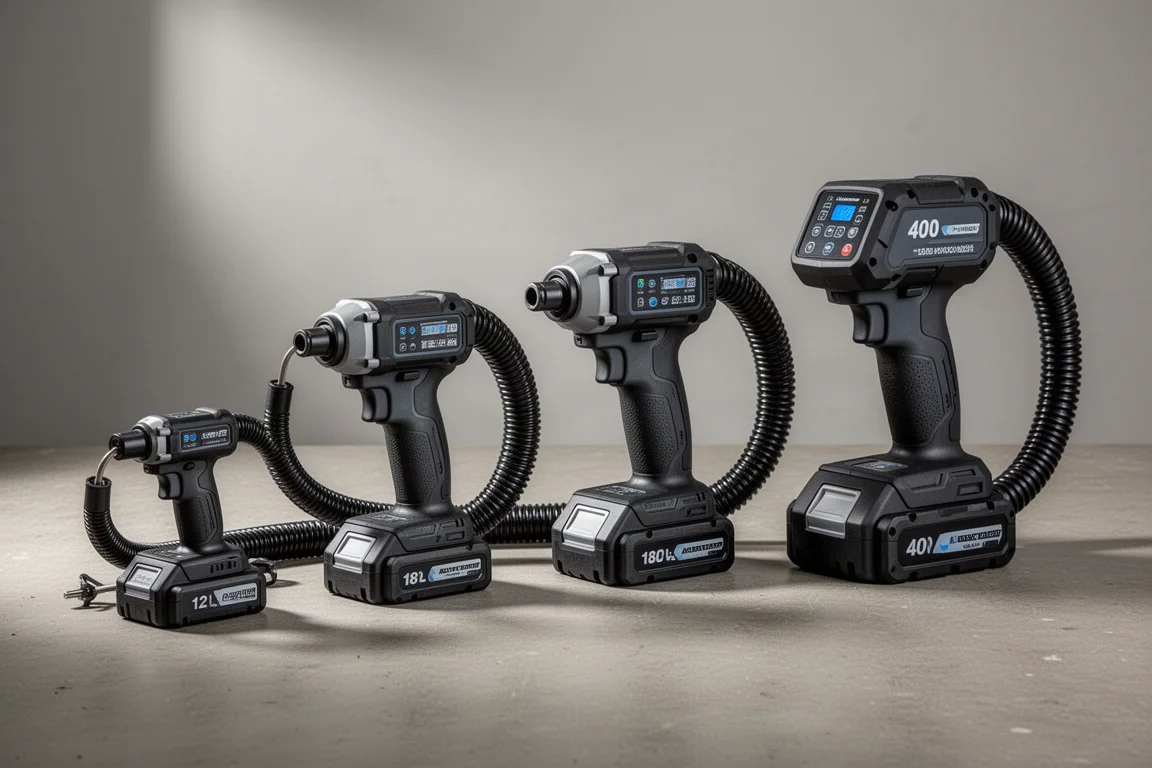
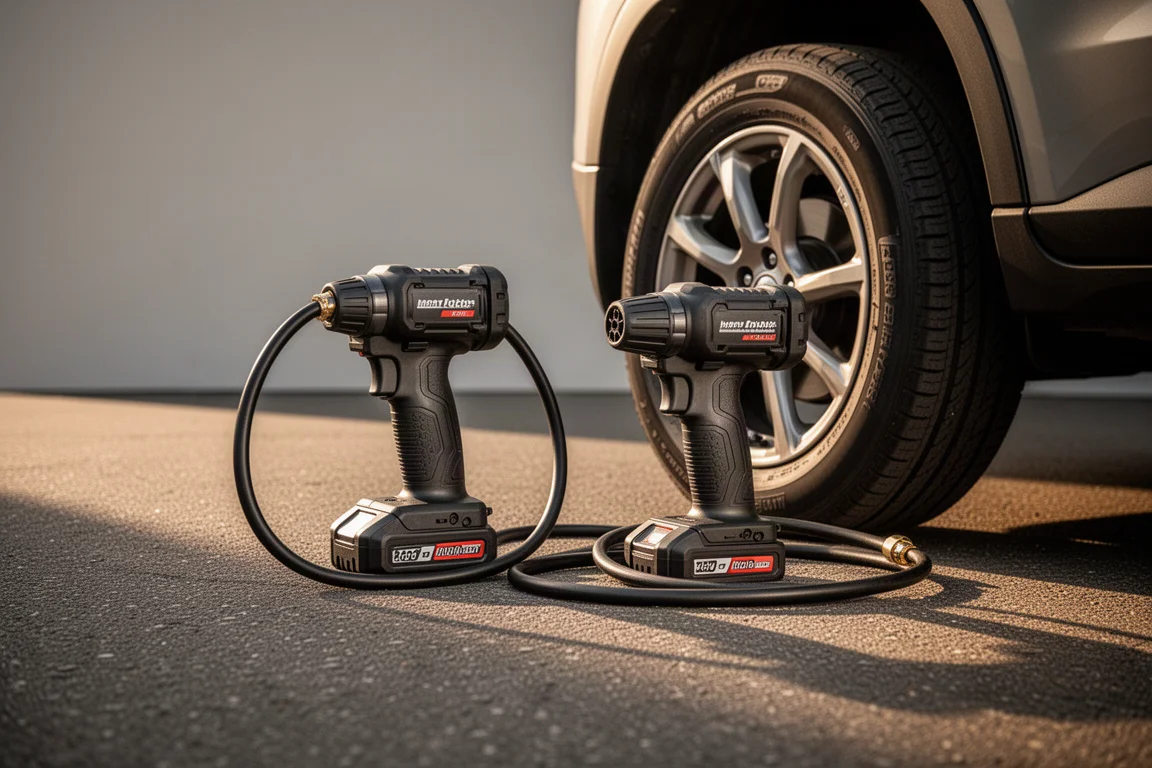
Four Makita cordless inflators across three battery platforms, tested side by side on the same car tire to show where the real performance gap sits.
Introduction
Makita now offers cordless inflators across three battery platforms: 12 volt, 18 volt and 40 volt max. Four models cover that spread: the compact MP100D, the original 18 volt DMP180, the updated 18 volt DMP181, and the 40 volt MP001G, sold in the United States as the GMP-01. They look deceptively similar in pairs, but the performance numbers tell a much clearer story.
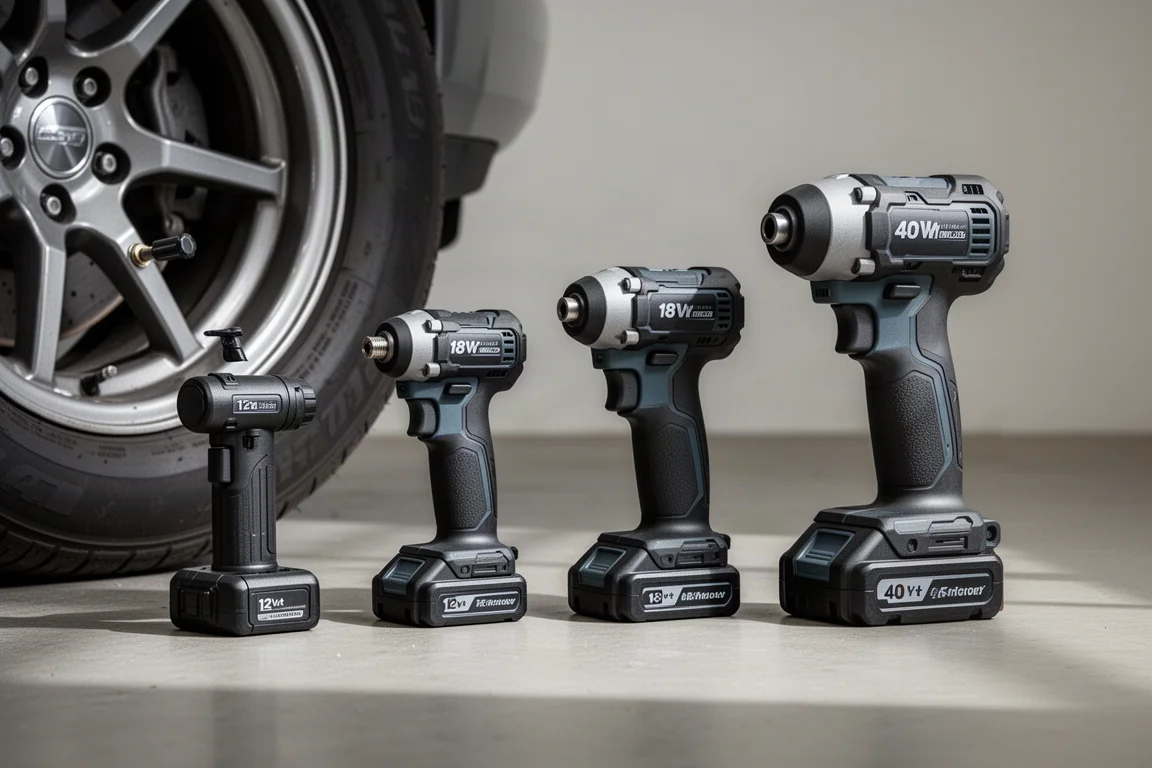
One detail worth knowing up front: these inflators are labelled for household use only, including the 40 volt model. For anyone inflating car tires, bike tires, wheelbarrows or sports equipment, that is exactly the kind of use these tools are built for.
Pressure and Airflow: Where the Gap Sits
The 12 volt MP100D and the original 18 volt DMP180 form the lower pair, while the new 18 volt DMP181 and the 40 volt MP001G form the upper pair. The pairs are close to each other internally, but there is a large jump between them.
The lower pair pushes around 10 to 12 liters per minute, while the upper pair manages 22 to 24 liters per minute. On maximum pressure, the lower pair reaches 161 psi, and the upper pair tops out at 121 psi. For most everyday jobs such as car and bike tires, you rarely need more than 50 or 60 psi, so the lower maximum of the newer models is unlikely to matter in practice. What does matter is speed: the upper pair completes the same job far faster and also carries a longer duty cycle, rated at 10 minutes on and 5 minutes off, versus 5 on and 5 off for the smaller models. Inflating band ties on the 12 volt unit, for example, makes it easy to run over its five-minute limit.
Control Panel and Hose Connections
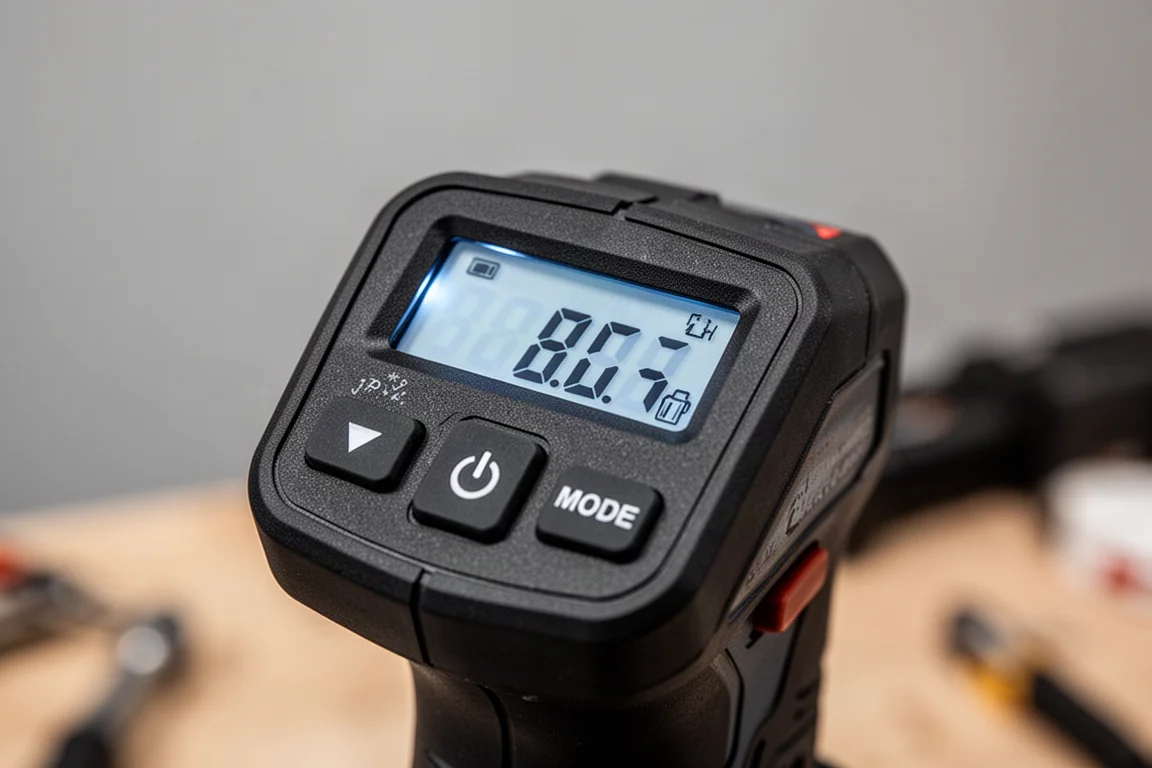
The DMP181 and MP001G share the same control layout. On power-up, the display shows the preset target pressure in the corner, while the top number shows live pressure going into the item being inflated. Tapping the mode button cycles between psi, bar and kPa. Holding the M key drops through three preset memory slots, including a dedicated ball mode set at 8.5 psi. Pressure adjusts in half-psi steps per tap, or holds and climbs rapidly when the button is pressed down.
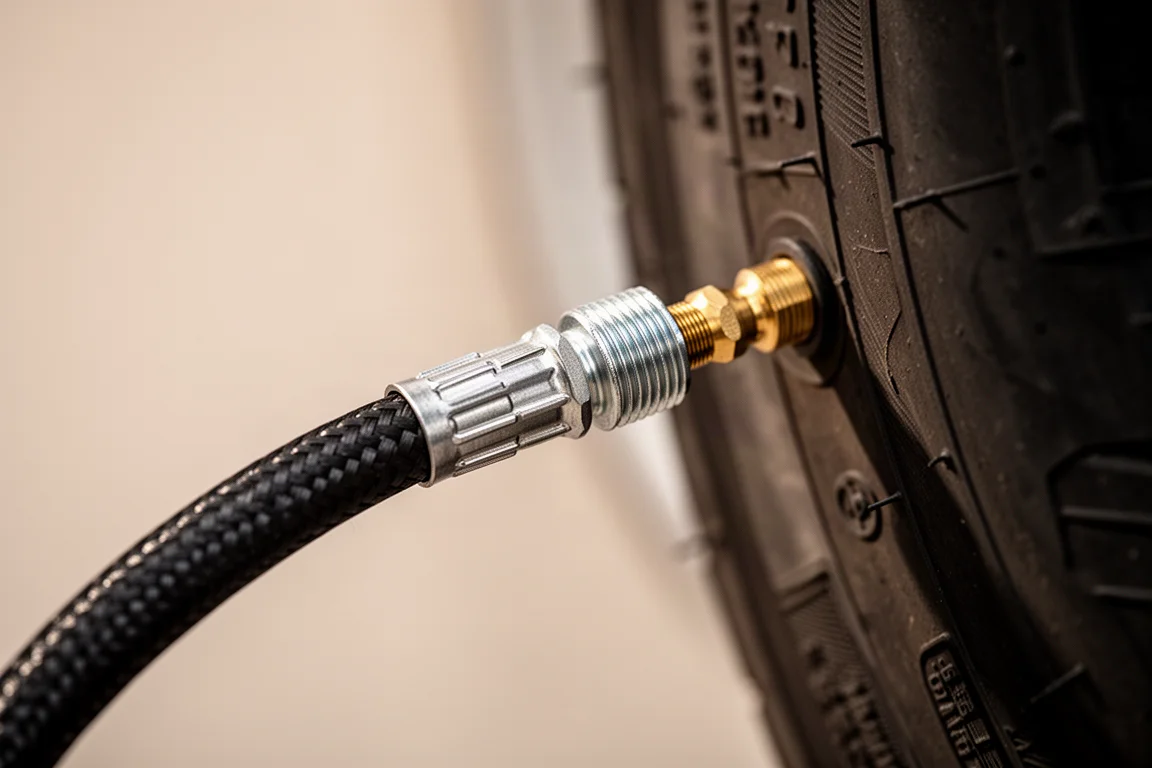
Both upper models use screw-on Schrader-style hose fittings instead of the clamp-on style of the older models. Each style has advantages depending on where the valve is positioned, but a threaded fitting that could accept both would be the ideal compromise. The supplied assortment also includes a Dunlop valve fitting, a presta fitting and a ball inflator, though for tire work the screw-on Schrader fitting is the one that sees all the use.
How the Four Models Performed in Testing
The test setup was deliberately simple: a Holden Barina spare tire inflated to 32 psi each time, deflated to zero between runs, with each model timed on a fresh charge.
The results split exactly as expected. The 12 volt MP100D took 2 minutes 39 seconds. The original 18 volt DMP180 managed 1 minute 18 seconds on the DMP181’s run, with the earlier 18 volt test posting 2 minutes 16 seconds. The new 18 volt DMP181 came in at 1 minute 18 seconds, and the 40 volt MP001G finished fastest at 1 minute 8 seconds.
Heat told a similar story. After the test runs, the 12 volt unit was still warm while the 40 volt and new 18 volt models never got noticeably warm. Both of the larger models’ batteries had not dropped a single charge bar after testing, while the 12 volt battery lost one. The 12 volt unit should manage roughly three inflations of that tire size per charge, whereas an 8 amp hour battery on the new 18 volt model could plausibly handle tire inflation all day.
Which Makita Inflator Should You Buy?
If you only inflate the occasional car or bike tire and value compact size, the MP100D is the lightest option, but it is the slowest of the four by a wide margin. The DMP180 suits existing 18 volt users who want a proven budget-friendly option, though it sits closer to the 12 volt in airflow than to the new generation.
The DMP181 is the sweet spot for most people: twice the airflow of the older 18 volt, the same refined control panel as the 40 volt, and barely a second behind it in the tire test. The MP001G is the fastest and offers the longest duty cycle, making it the choice for frequent or heavier inflation jobs.
One persistent niggle across the range: the 40 volt model still has no trigger lock, so you need to keep a finger on the trigger for the whole run.
Conclusion
Makita’s inflator lineup splits cleanly into two tiers. The MP100D and DMP180 handle light, occasional jobs at a gentler pace, while the DMP181 and MP001G deliver roughly double the airflow, longer duty cycles, better heat behaviour and a more modern control panel. For most tire-related tasks, the new 18 volt DMP181 offers the best balance, and the 40 volt MP001G takes the crown for speed and endurance.
Product link
View more details for Makita MP100D
This product is mentioned in the review. Check the specifications, options, and compatibility before buying.
View more details for Makita MP100DFurther reading
Related Reviews

Power Tools
Best 1-Inch Pistol Impact Wrenches: Three Heavy-Duty Options Compared
We compare three 1-inch pistol impact wrenches, from a budget-friendly Harbor Freight model to a premium Caterpillar unit, to help you choose the right one.

Power Tools
Best 3/4-Inch Impact Wrenches 2026: Five Contenders Compared
We compare five 3/4-inch impact wrenches across price and performance, from a budget Amazon option to Snap-on's most powerful model yet.

Power Tools
Best Budget Cordless Tools 2026: Walmart Finds That Punch Above Their Price
We tested five cordless tools from Walmart, including a high-torque impact wrench that trades blows with Milwaukee and a $35 duster that outperforms its price class.