Job Site Equipment
Makita CF00002G 40V XGT 13in Job Site Fan Review: Quiet, Powerful, and Ridiculously Long-Running
The Makita CF00002G XGT job site fan runs up to around 8.5 hours on a single 5Ah 40V battery, delivers a smoother and more directed airflow than the older 18V model, and is dramatically quieter.
Introduction
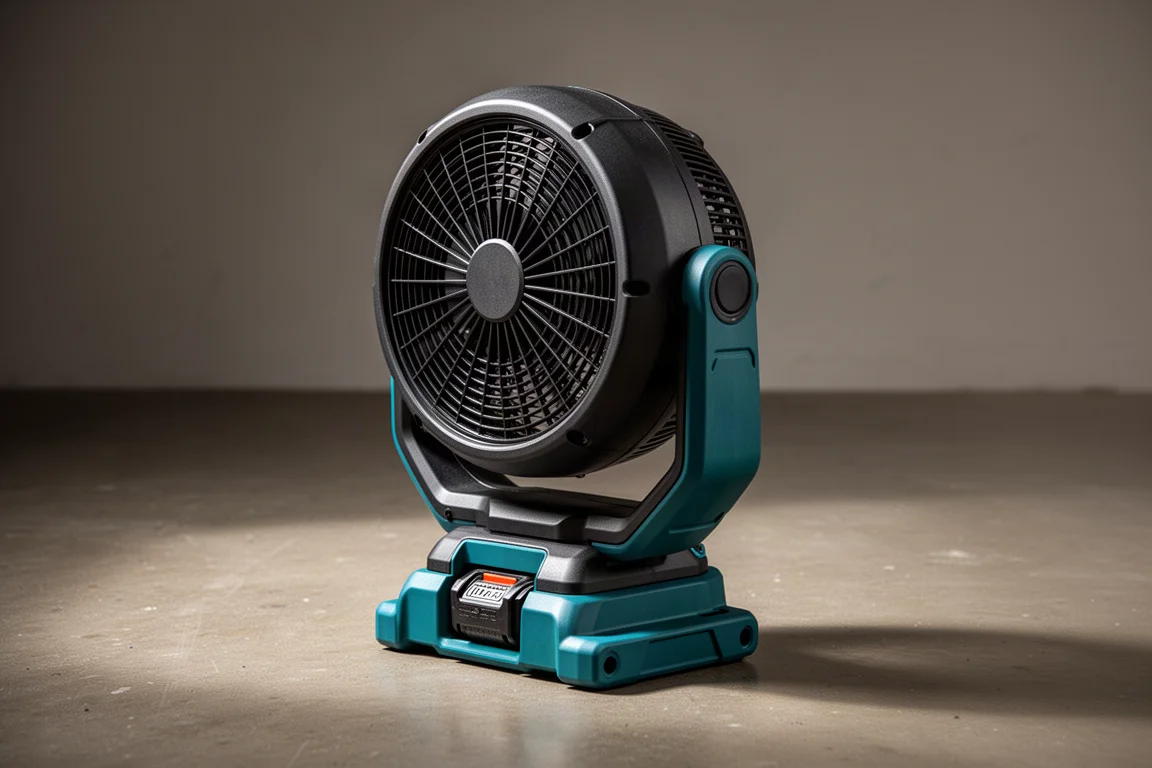
When the heat sets in on a job site or in a garage workshop, airflow stops being a luxury. Makita’s CF00002G 40V XGT 13in (330 mm) job site fan arrived at exactly the right time for anyone working through hot afternoons with the doors closed, and after extended testing alongside the older 18V LXT fan, the differences are clear. This is a fan that runs far longer, sounds far better, and throws its air more usefully across a space.
First Impressions and Design
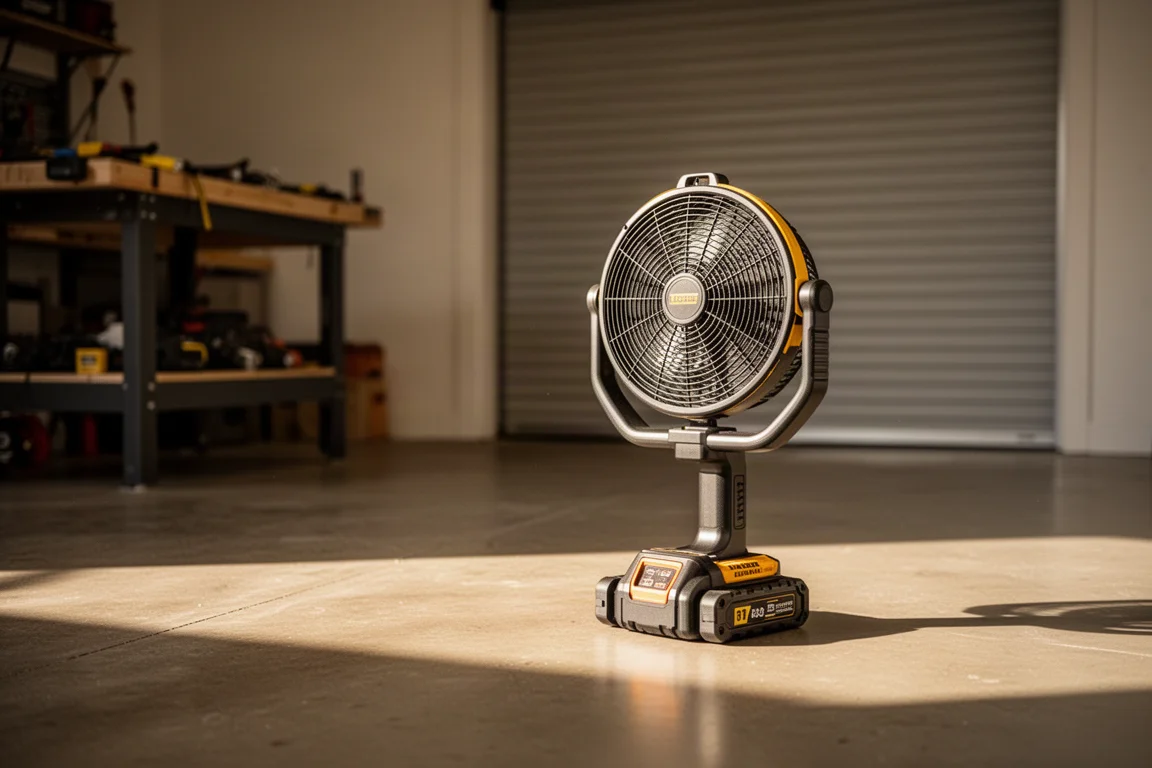
The CF00002G is an all-plastic design, unlike the older 18V LXT fan, which uses a steel grill and feels more rugged overall. Both fans are roughly the same overall height, but the 40V model sits a bit lower because the handle is on top rather than on the back. That handle placement matters more than it sounds: the 18V fan’s rear handle is awkward to grab, twists in your hand, and grazes your knuckles when picking it up.
Battery compatibility is well thought out. The fan fits all current Makita 40V XGT batteries and should fit future ones too, because as amp-hours increase, the batteries extend forward rather than growing in every dimension, keeping the mounting distance the same.
Features and Controls
The control panel offers three speeds, with the highest rated at around 240 m of airflow per minute, which works out to about 21 cubic metres of air passing through the fan each minute. There is also an oscillation function and a timer with 1, 2, and 4 hour settings.
The fan tilts downward a surprising amount, and you can angle it to blow straight up if you like. There is a mounting area underneath so you can attach it to a tripod, just like Makita’s work lights, so a single tripod could hold a light on one side and this fan on the other.
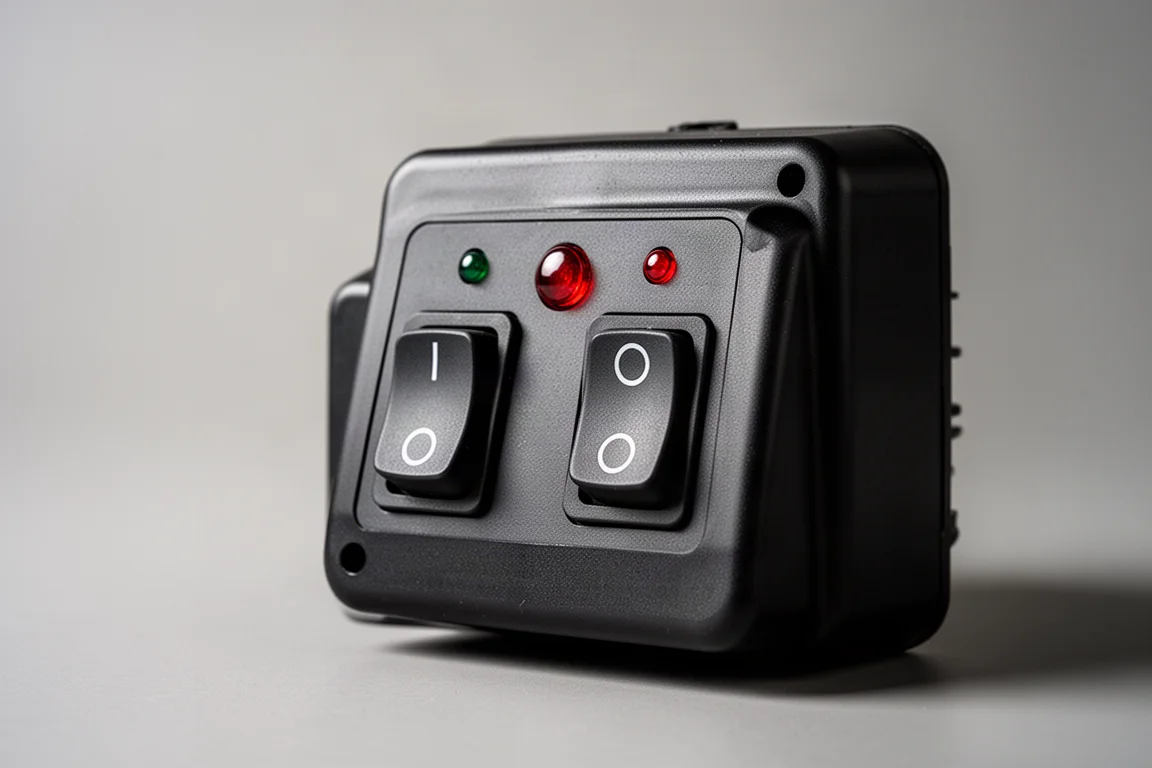
Two thoughtful touches stand out. First, the fan remembers your speed setting between power cycles. The older 18V model always restarts on full blast, which gets old fast. Second, besides running on 40V batteries, it can be powered from an AC adapter that comes included, which makes the timer settings actually useful.
Battery Life: The Big Story
This is where the 40V fan crushes the 18V. Running both fans side by side on freshly charged 5Ah batteries, on full speed with oscillation engaged, the results were one-sided:
- The 18V LXT fan died at around 1 hour 50 minutes, barely showing a full afternoon’s use. On one hot social evening it chewed through three batteries in roughly five hours.
- The 40V fan was still showing four bars after 1 hour 54 minutes, still on four bars after 3 hours, still going at 5 hours, still running at 7 hours 23 minutes, and finally cut out at approximately 8.5 hours on the single 5Ah battery.
That is a full standard workday on the highest setting in oscillation mode. With a larger battery, run time would stretch even further. For anyone who has been swapping batteries on the 18V fan all day, this alone justifies the upgrade.
Noise: A Massive Improvement
Noise was one of the biggest complaints about the 18V fan, and it is a valid one. The old model rattles and hums on every speed, including its lowest setting, and it is simply too annoying to use indoors. The 40V fan sounds completely different: on low speed you can barely hear it, on medium it stays quiet, and on high you mainly get the sound of the moving blades rather than any harsh motor noise.
Both fans measure around 66 to 67 decibels on their top speeds, but the character of the sound is entirely different. Outdoors you will not notice either one much, but the 40V fan is quiet enough to run in the background inside a garage or workspace.
Airflow Compared
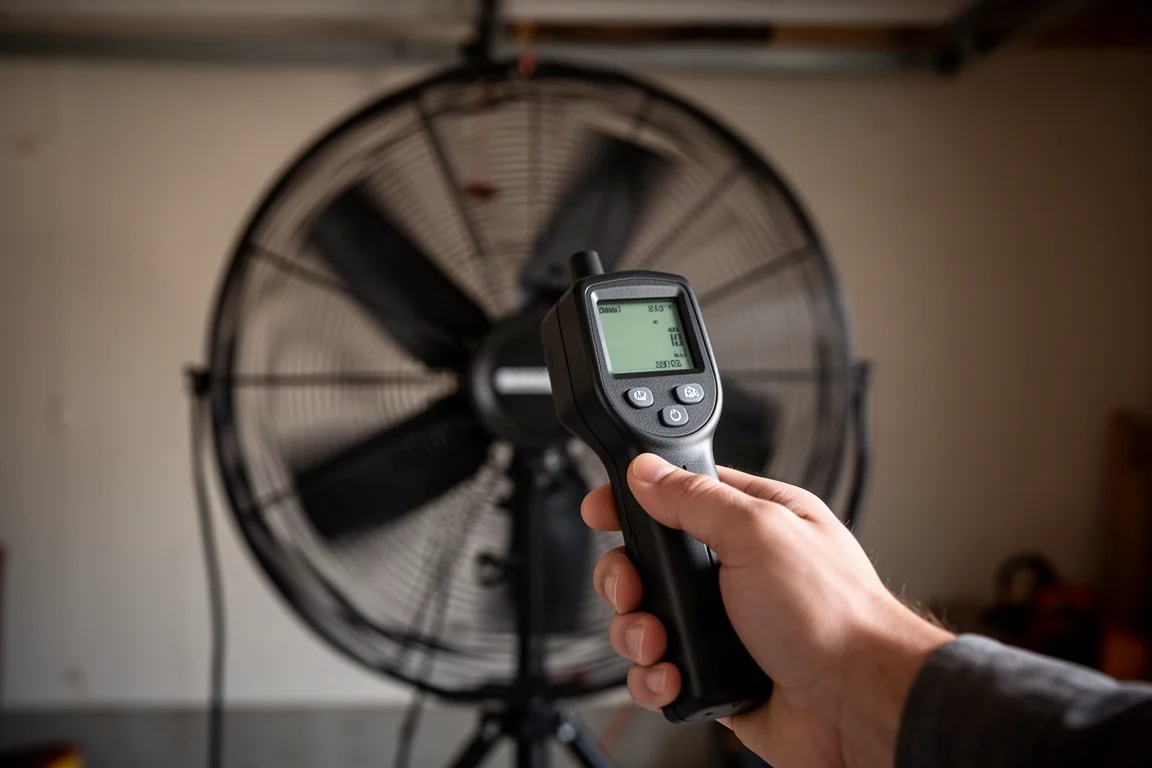
On paper, the 18V model is not far behind: its maximum wind speed is rated at 220 m per minute versus the 40V’s 240. In real testing, both fans reached a similar peak air speed at close range, around 3.8 to 3.9 m/s measured a metre from the fan.
The difference is in how the air is delivered. Right in front of the 18V fan, the air feels stronger because it is concentrated around the perimeter of the fan head. But move back to about 3.5 metres and the story flips: the 40V fan held readings between roughly 1.5 and 2.1 m/s as a constant, even stream, while the 18V dropped to a maximum of 1.4 and fluctuated a lot. The circular grill design on the 40V keeps the airflow directed and consistent, while the 18V’s grill breaks the air up and fires it in more directions.
In practical use, this showed. Both fans were used to dry a water-blasted concrete block wall before applying waterproofing membrane, speeding up drying enough to get a second coat on the same day. That kind of task demands a solid, directed blast of air, and the 40V fan handled it well.
Things to Consider Before Buying
The all-plastic construction is less rugged than the 18V fan’s steel grill, so if you treat tools roughly on site, that is worth weighing. The timer settings are only really useful on AC power, because on battery the fan will often run the pack down faster than the timer duration. And if you want a strong blast of air right at the fan face for instant cooling, the older 18V model actually feels punchier up close, though it does start blowing warmer air after running for a long stretch.
There is also a newer 18V version that shares the same design and specs as the 40V model, so if you are invested in the LXT system, you can get the same fan for your battery platform. The main advantages of the XGT version remain the exceptional run time and the quieter operation.
Buying Advice
If you are upgrading from the old 18V fan or choosing between a reduced-price 18V and the 40V, it comes down to three things. For long run time, the 40V is a no-brainer, delivering around 8.5 hours versus under 2. For less noise, especially for indoor or enclosed-space use, the 40V is the clear winner. For airflow, the 40V gives you a more even, directed stream that travels further, while the 18V feels stronger only in the immediate fan face.
For anyone starting from scratch, the choice is straightforward: the CF00002G is quieter, runs dramatically longer on a battery, and throws air more effectively across a space. If you already own 40V XGT batteries, it needs no second thought.
Conclusion
The Makita CF00002G 40V XGT job site fan ticks every box that matters: hugely improved battery life, a far more pleasant sound signature, and a more even, directed airflow. Running a full workday on one 5Ah battery is genuinely impressive, and the tripod mounting and AC adapter option make it more versatile than its predecessor. It is an easy recommendation for anyone who spends hot days working in a garage, workshop, or on site.
Product link
View more details for Makita CF00002G 40V XGT 13in Job Site Fan
This product is mentioned in the review. Check the specifications, options, and compatibility before buying.
View more details for Makita CF00002G 40V XGT 13in Job Site FanFurther reading
Related Reviews
Power Tools
Best 3/4-Inch Impact Wrenches 2026: Five Contenders Compared
We compare five 3/4-inch impact wrenches across price and performance, from a budget Amazon option to Snap-on's most powerful model yet.

Power Tools
Best Cordless Impact Drivers 2026: 12 Models Tested for Power, Speed, and Value
We tested 12 cordless impact drivers from leading brands to find the best performers for fastening, driving, and bolt breaking.

Power Tools
Best Right Angle Impact Wrenches 2026: Three Models Put to the Test
A close look at three right angle impact wrenches, including a record-breaking Makita and two budget options that fall short.