Jobsite Audio
Makita BMR100 vs DMR106: Which Jobsite Radio Makes More Sense?
Two closely related Makita jobsite radios share a rugged DNA, but the newer DMR106 adds Bluetooth, CXT battery support, and a few clever design fixes.
Introduction
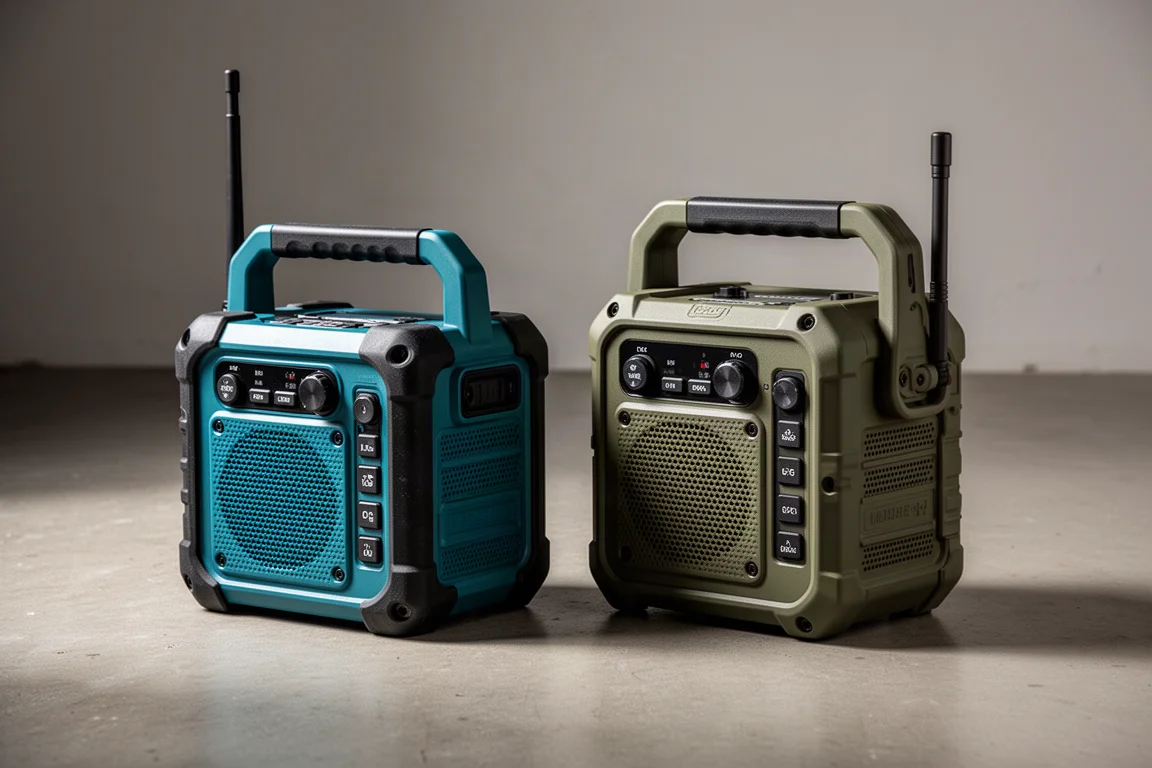
Makita has been iterating on its jobsite radios roughly every couple of years, and the two generations looked at here show how those small refinements add up. The older Makita BMR100 and the newer Makita DMR106 are so similar in silhouette that, from the front or the side, they are nearly indistinguishable. But the differences that do exist matter, especially if you are deciding between hunting down the older model at a discount or paying for the current version.
This comparison walks through the design changes, power options, and day-to-day usability of both, so you can work out which one fits your bench, garage, or site.
Two Radios, One Design Language
Both radios follow the same core formula: a rugged, rubberized body, a carry handle, and a design clearly built to survive rough handling. Makita rates both at IP64, which is an excellent protection rating for this category. It will not survive being dunked in a pool, but rain and splashes are no problem, and both units have a sealed gasket in the battery compartment to keep moisture out.
The durability is not just theoretical. One of these units arrived as a wet, second-hand find with a cracked display screen, yet it has worked flawlessly on battery power ever since. That kind of resilience is where these radios genuinely outclass many smaller competitors that lack any IP rating at all.
The Older Baseline: Makita BMR100
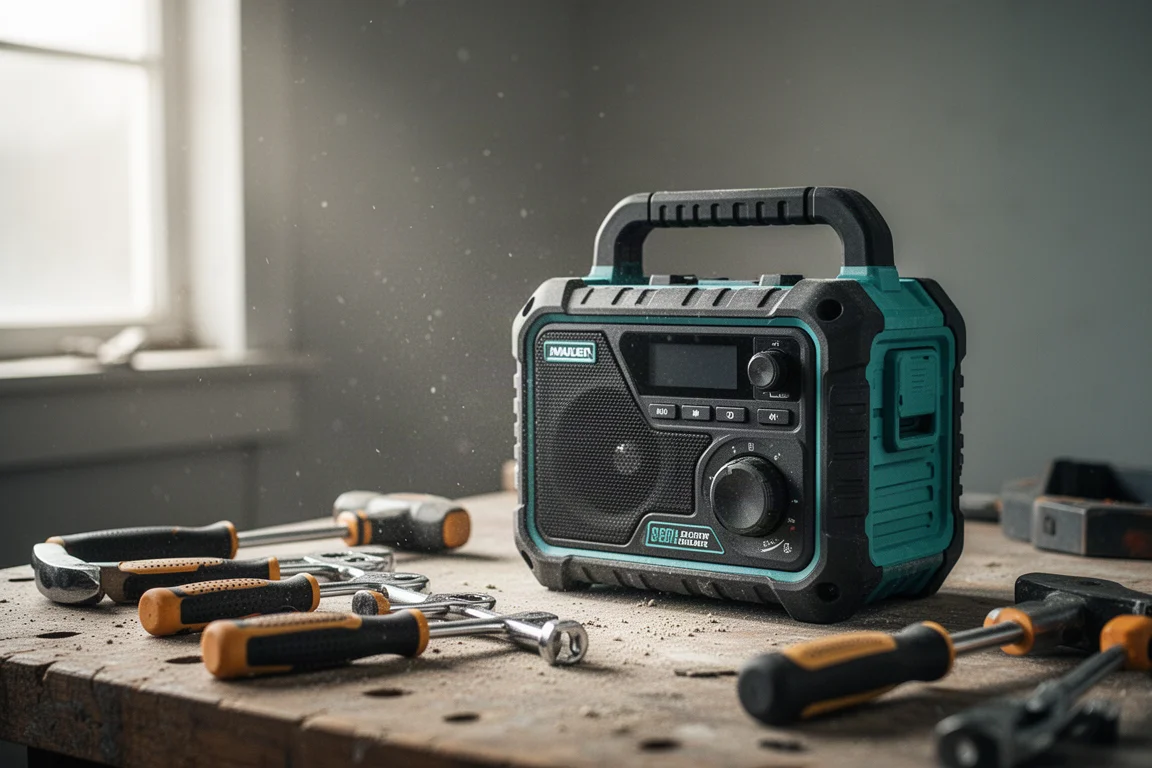
The BMR100 covers the fundamentals well. It runs on Makita slide batteries or can be plugged into the wall, and it has an auxiliary 3.5mm input. It lacks Bluetooth out of the box, which is the most obvious gap for modern use.
On the physical side, it is the chunkier of the two, with more rubber over-molding on the front panel and an antenna that simply sticks up from the top. That over-molded antenna cap is a known weak point, prone to peeling off after years of sun exposure. The controls are not backlit, so reading the display in low light is harder, and the power connector sits on the front face, which is an awkward placement.
As a baseline, though, it is tough, dependable, and still a very capable radio if you find it cheap.
The Newer Pick: Makita DMR106
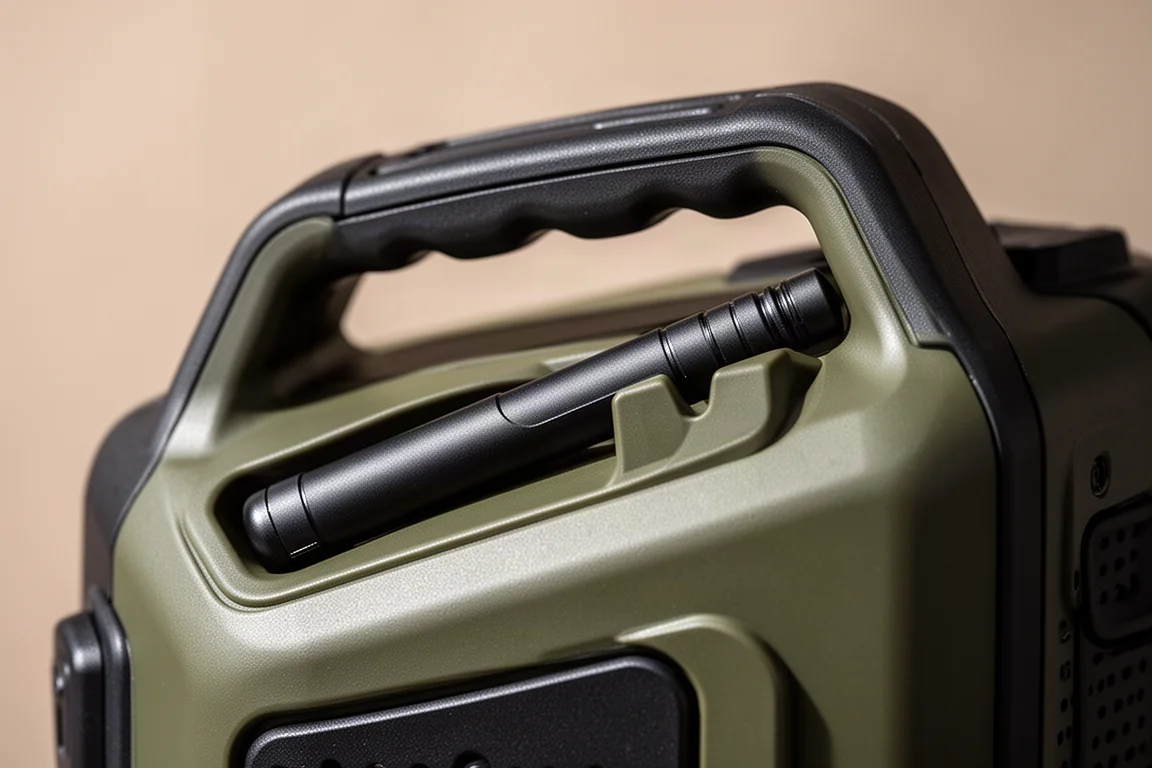
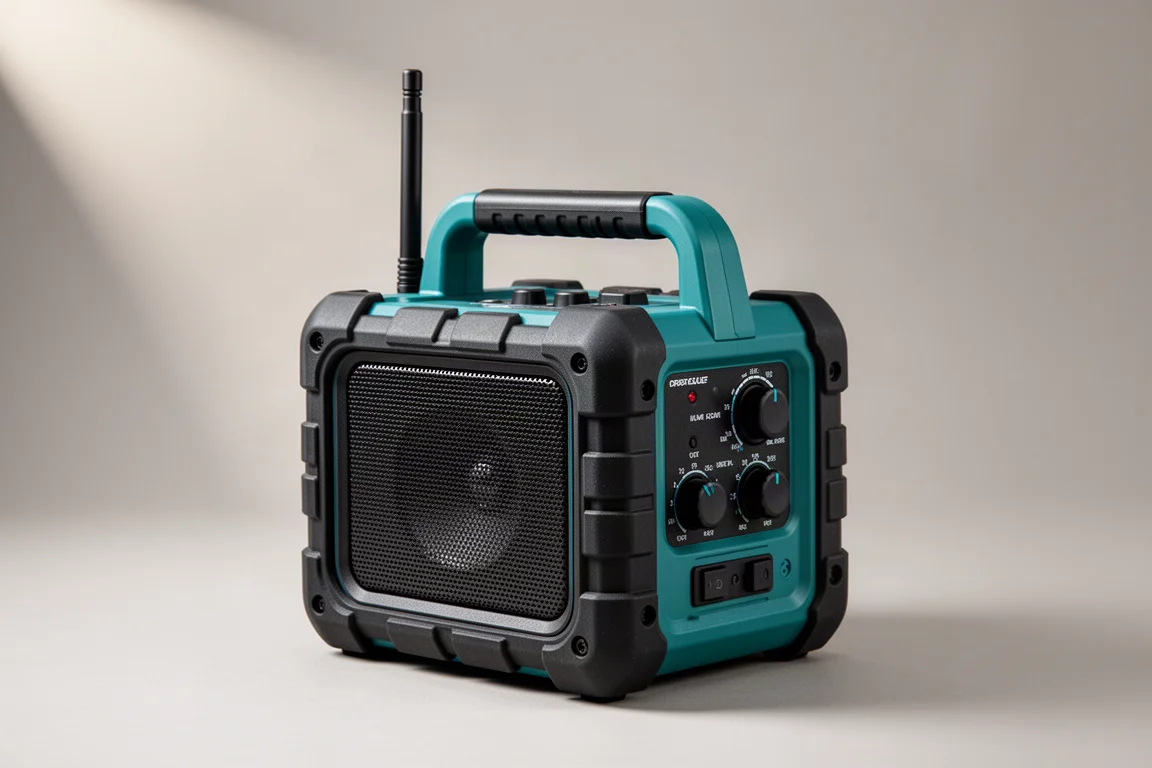
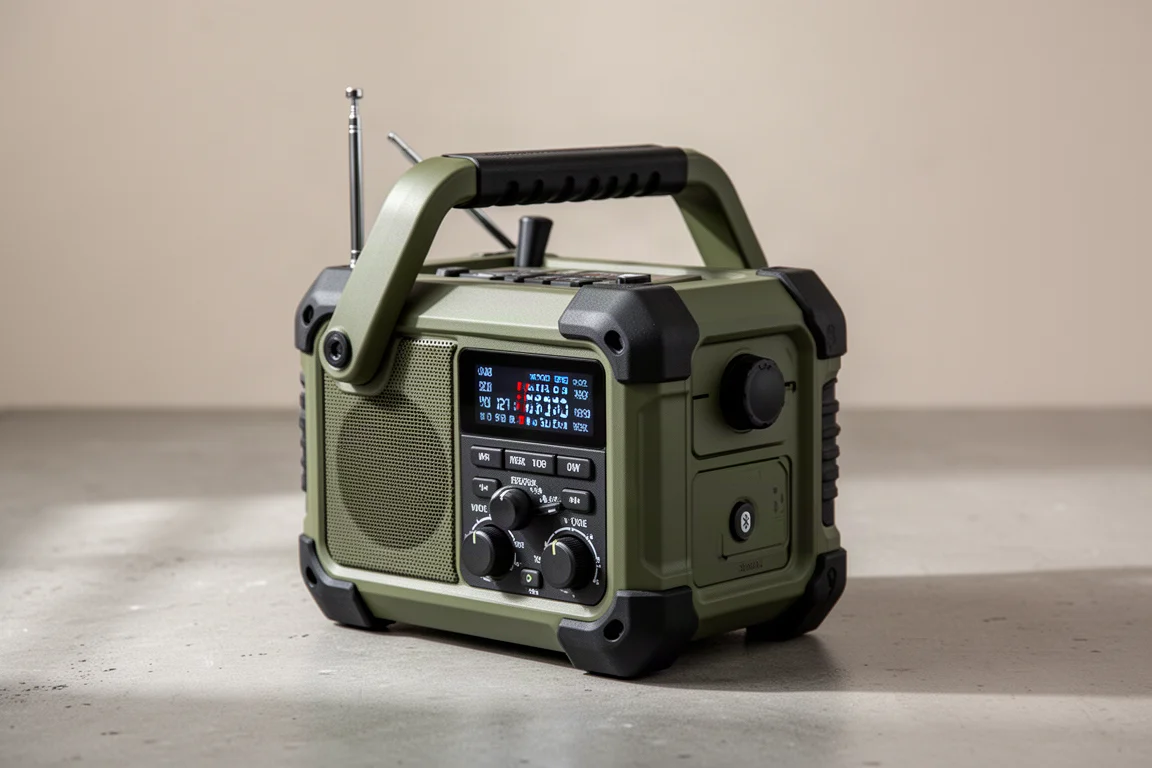
The DMR106 keeps the same rugged formula but refines nearly every rough edge. Bluetooth is built in and pairs easily, making it far more convenient for streaming from a phone. The antenna is now recessed under the handle with a small finger notch that makes extending it much easier, and the display is backlit, a genuinely useful upgrade in a dim garage or early-morning site.
Power flexibility is the headline change. In addition to standard slide batteries, the DMR106 accepts three different battery types, including the compact CXT line. CXT packs are small and lightweight, so the radio stays easy to move around, which is a nice bonus if you already have those batteries lying around.
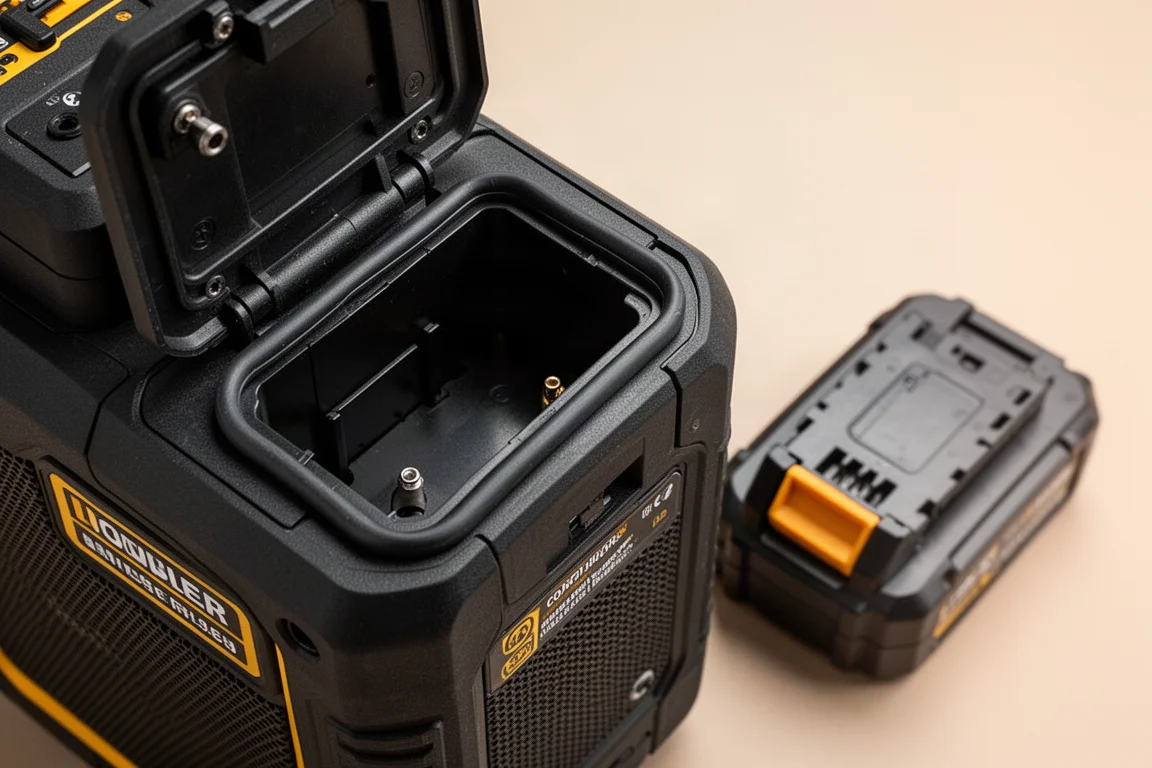
There are a couple of trade-offs. The power connector has moved to the side rather than the back, which is not ideal but better than the old front placement. On the plus side, the front panel now includes a USB power output, so you can charge a phone while streaming over Bluetooth.
Is the Upgrade Worth It?
For most buyers, yes. The DMR106’s combination of Bluetooth, backlighting, broader battery compatibility, and tidier antenna design makes it the more complete package, and the olive-green adventure-series styling (with other colors also available) is a pleasant bonus.
Whichever model you pick, it is worth understanding the audio design. Both radios aim for roughly 360-degree sound rather than forward-facing output. Set in the middle of an open floor plan on a construction site, they sound great. Placed on a bench against a wall, a side-mounted speaker can get blocked, and the lack of a front- or up-facing driver becomes the main complaint.
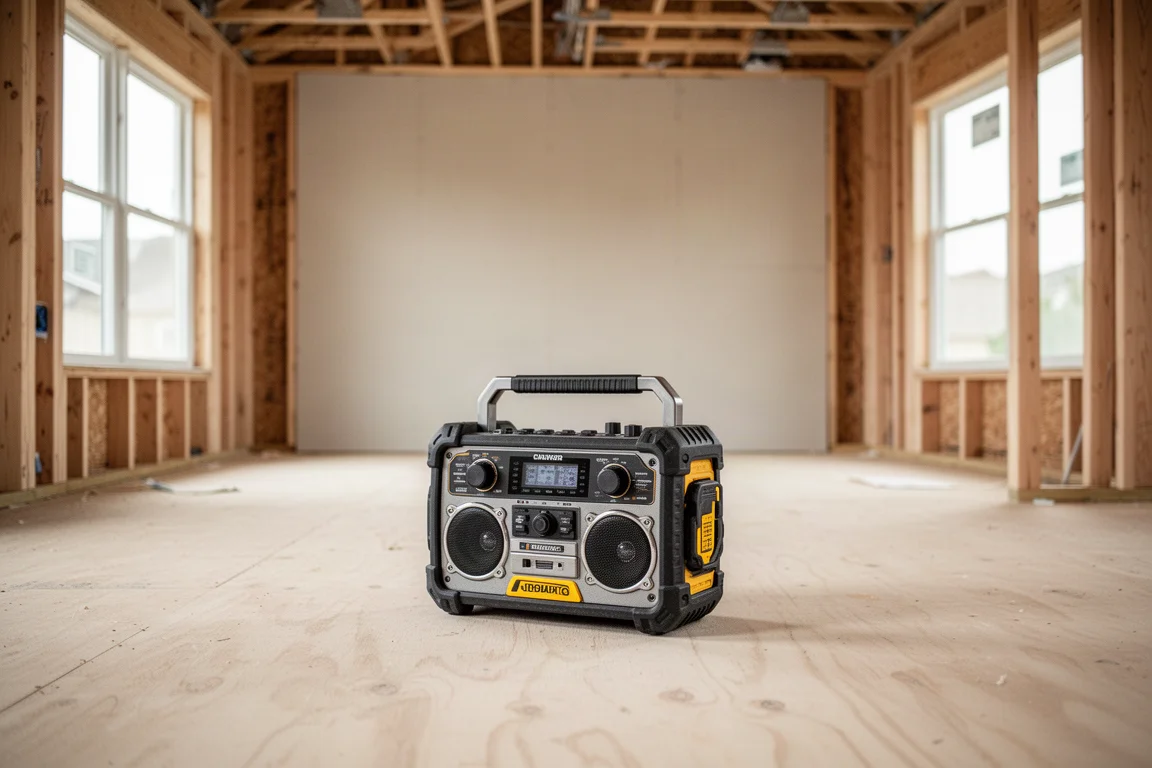
The honest caveat on both is that audio quality is just okay. Competitors, particularly some more compact options, sound noticeably better. What Makita offers in exchange is durability: these are phenomenally built, and the IP64 rating means they hold up in conditions that would kill lesser radios.
Conclusion
If you want Bluetooth, backlighting, CXT battery support, and a USB charging port, the DMR106 is the clear choice and worth the upgrade. If you can find a BMR100 cheaply and Bluetooth is not essential (or you are willing to work around it), it remains a tough, reliable unit that will survive years of abuse. Just go in knowing these are site radios built for rugged, all-around sound, not compact forward-firing speakers.
Further reading
Related Reviews
Jobsite Audio
Best DeWalt Jobsite Audio Options: Which One Fits Your Workday
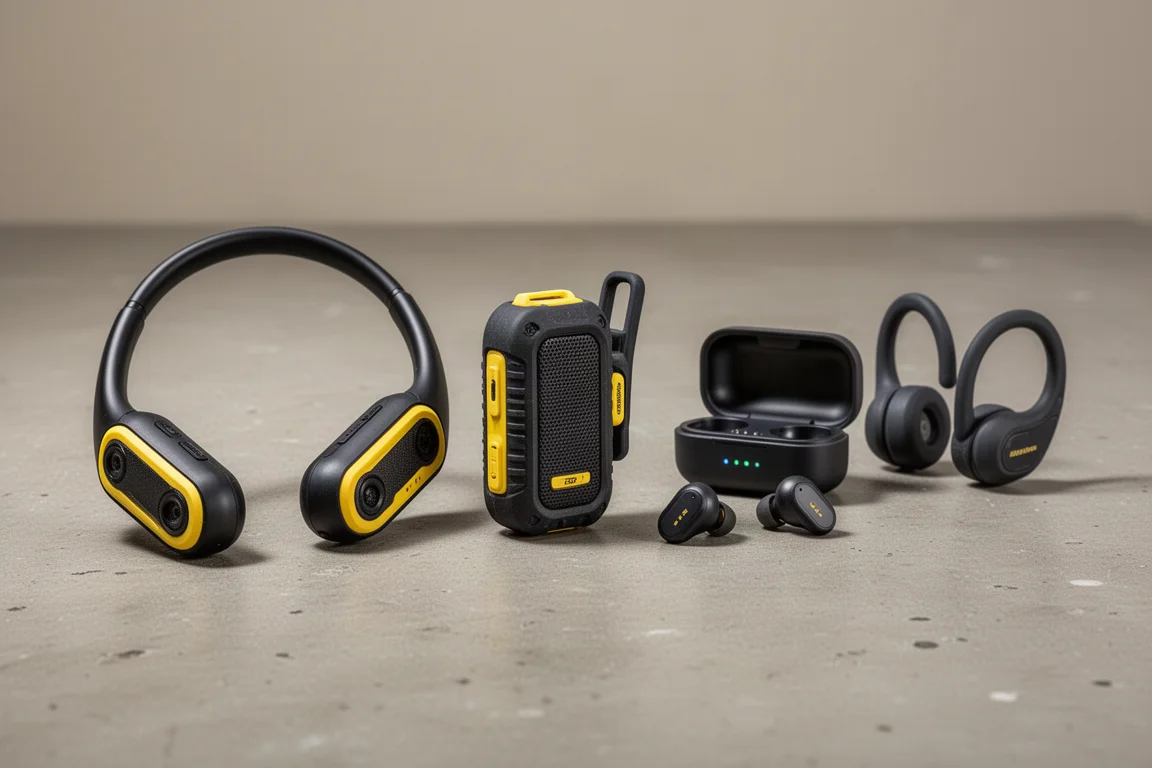
Four rugged DeWalt audio products compared: a neck band system, a clip-on wearable speaker, earbuds with a rechargeable case, and open-ear earbuds that rest on top of the ear.
Jobsite Audio
DeWalt Wearable Audio: Three Jobsite Picks for Music, Calls, and Awareness
DeWalt's wearable lineup goes beyond power tools: a wearable jobsite speaker, a neckband headset, and the Jobsite Pro Max earphones with built-in speakers, including new Limited Edition Black versions.
Jobsite Audio
DeWalt Tough Sound Pro Bluetooth Speaker: A Small Jobsite Speaker That Punches Above Its Size
An IP67-rated Bluetooth-only speaker with magnetic mounting, multiple EQ modes, and AuraCast multi-speaker pairing for the workshop.