Power Inverters
Makita BAC01 Review: A 1400W Power Inverter Built Around the PDC Battery Platform
The Makita BAC01 turns PDC1200 and PDC1500 battery packs into a clean 1400W power station with full 120V output, USB-C, and solid safety behavior.
Introduction
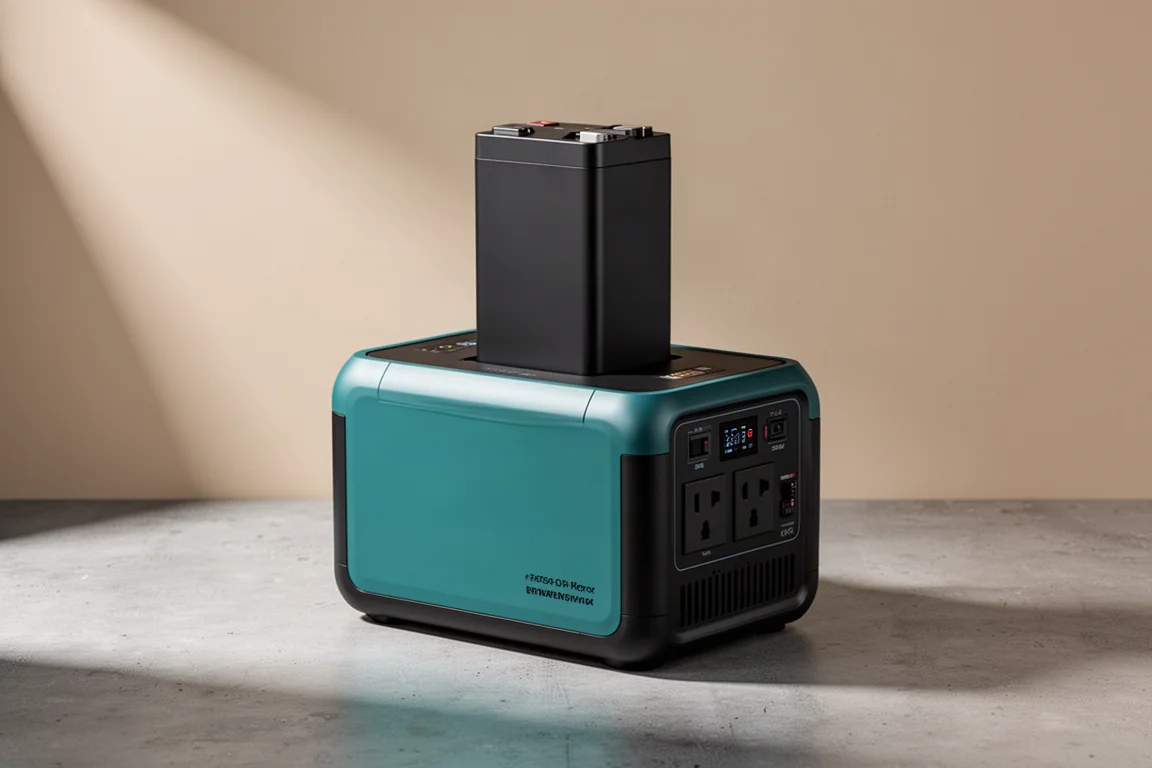
Most portable power stations feel like consumer gadgets. The Makita BAC01 feels like a tool. It is a 1400W power inverter designed to work with the Makita PDC1200 and PDC1500 battery packs, letting you pull those packs off outdoor power equipment and turn them into a mobile AC power source for the job site, the van, or anywhere else you need clean electricity.
At $779 for the inverter, this is not a budget impulse buy. But after looking closely at how it behaves under load, the story is consistent: stable voltage, correct frequency, sensible safety systems, and a design that treats your electronics with respect. Here is how it all fits together.
Who the BAC01 Is For
The core idea is simple: if you already own a PDC1200 or PDC1500 for outdoor power equipment, the BAC01 gives those expensive batteries a second job. The pack slides on top of the inverter and connects through a rear power connector, with a neat channel that routes the cord out of the way. The two pieces become one unit, albeit a fairly heavy one, so plan on moving it where you need it rather than carrying it casually all day.
It suits tradespeople who want site power without a generator’s noise and fumes, van lifers who want to run occasional tools or appliances, and anyone who values power quality over raw capacity. Combined, the inverter and battery deliver 1260 watt-hours on top, which Makita says is good for 52 to 56 minutes at a full 1400W load. Realistically, expect closer to 45 minutes if you push it hard, which is still plenty for most real tasks.
Power Quality and Load Testing
This is where the BAC01 earns its price. Many inverters output around 110V in North America because they share design between markets. The BAC01 puts out a true full 120V, measuring right around 119.9 to 120 volts in testing, with a 50 or 60Hz switch for international use. Under a medium heat gun load of roughly 700W, it held 117.5V at 59.5Hz. Pushed to high at around 1329 to 1340W, it still held 116.9V and steady frequency.
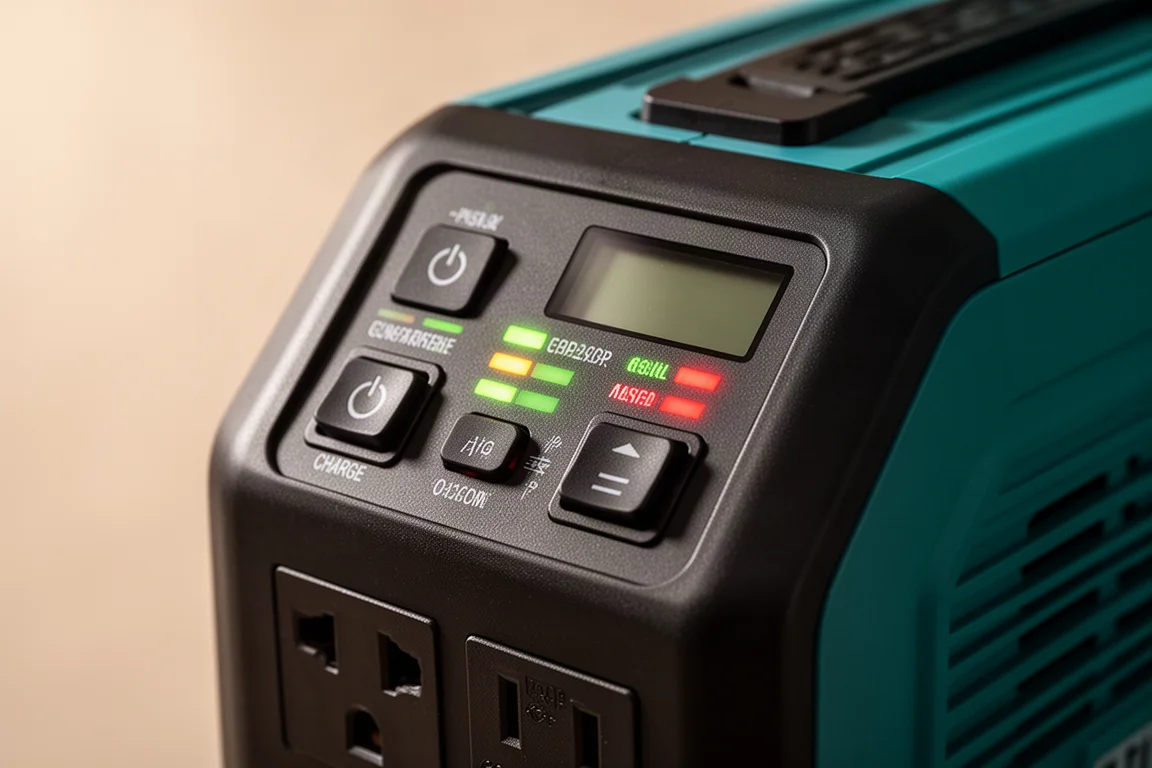
The inverter accepts up to 2800W of input demand but delivers 1400W continuous, so short spikes like a saw motor starting are handled without complaint. If you draw past the limit, a red overcurrent indicator lights, an alarm sounds, and the unit shuts itself down cleanly while still holding around 116 volts for your connected equipment. Resetting is as simple as removing the overload and powering back on. There is also an over-temperature safeguard that shuts the unit down if the inverter or battery gets too hot for the fans to manage.
Charging and Everyday Operation
The top of the unit doubles as the charging station for the PDC packs. A dedicated port accepts the larger Makita charger, and indicator lights show charge status while the battery fills. One limitation worth knowing: you cannot power anything else while charging, so the pack has to be disconnected from the charger before you use the inverter.
Once running, operation is refreshingly simple: press and hold the power button, confirm your frequency setting, and plug in. A fan kicks in under sustained load, and it is not overly loud, though it is there and it is doing real cooling work. The control layout is minimal and you never have to enable everything at once, just what you need.
Ports and Everyday Charging
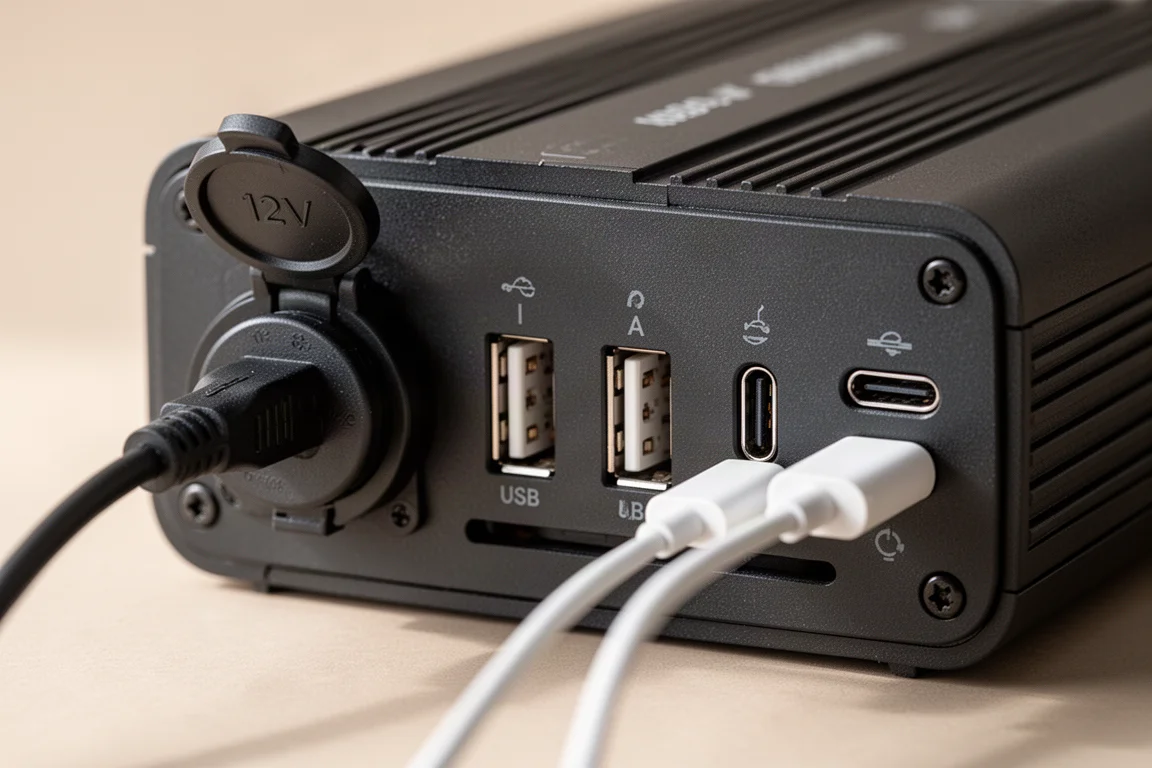
The output selection covers modern and legacy needs. You get a 12V cigarette-style accessory outlet rated at 10 amps, two USB-A ports at 5V and 2.4 amps, and two USB-C ports with 30W Power Delivery. The honest critique: many buyers will wish those USB-C ports were PD 100W. They are not, so phone and small-device charging is covered, but laptop fast-charging is limited.
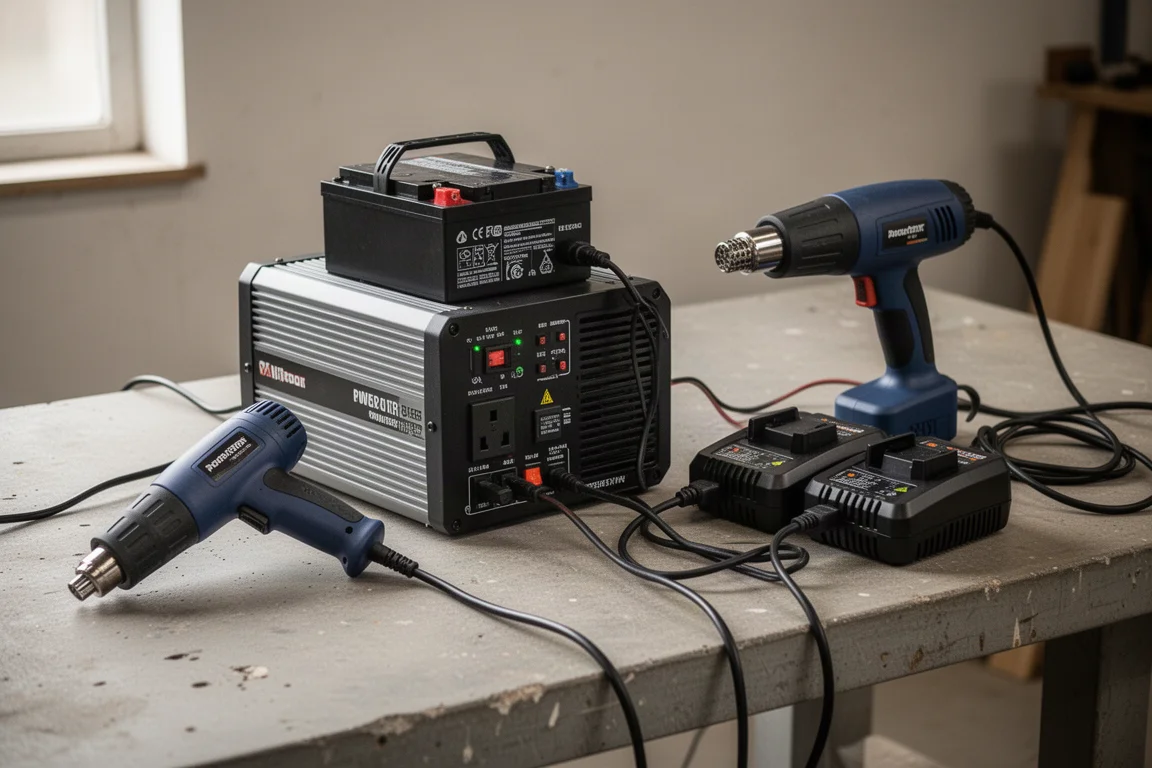
Still, the mix means you can run a heat gun, charge Makita batteries through a dual charger (which ramped from 200W to over 400W as packs kicked in), and top off devices simultaneously. Under a sustained 400W-plus mixed load, the inverter fan did not even need to run, and the battery still showed three of four bars remaining. That efficiency matters when you are working away from wall power.
There is also a stacking system built in. The corner fittings are not for opening anything up; they are for Makita MAKPAC cases, letting you connect the unit to another system above or below it. You cannot stack something on top while actively using the connectors, but a second unit or case below works fine.
Buying Advice
If you want high-quality power that will not hurt your electronics, this is the unit for that job. The combination of full 120V output, correct 60Hz frequency, and layered overcurrent and over-temperature protection makes it safer for sensitive tools and devices than most generic inverters in the same class.
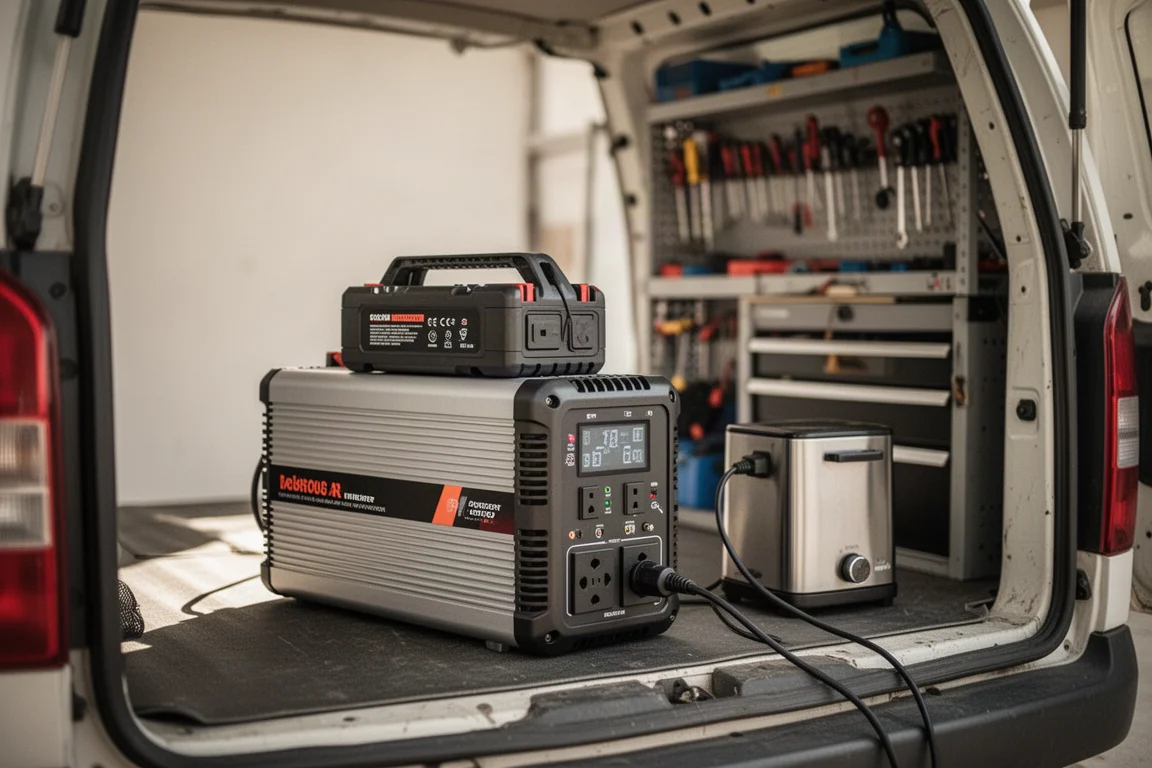
The trade-off is money. The BAC01 costs more than comparable-looking inverters sold through big online marketplaces, and you also need a PDC1200 or PDC1500 pack to make it useful. If you already own those batteries, the math gets much friendlier. If you do not, budget for the pack on top of the $779 inverter.
Conclusion
The Makita BAC01 is a well-engineered 1400W inverter that turns an already expensive battery platform into genuinely useful mobile AC power. It measured excellent voltage stability, handled motor spikes, protected itself intelligently, and stayed quiet in mixed-use scenarios. The 30W USB-C ports and the single-task charging limitation are the main gripes, but the fundamentals are exactly what you would want from a company known for engineering discipline. For PDC battery owners who need dependable site or van power, it is an easy recommendation.
Product link
View more details for Makita BAC01 Inverter
This product is mentioned in the review. Check the specifications, options, and compatibility before buying.
View more details for Makita BAC01 InverterFurther reading
Related Reviews

Power Tools
Best Right Angle Impact Wrenches 2026: Three Models Put to the Test
A close look at three right angle impact wrenches, including a record-breaking Makita and two budget options that fall short.
Product Reviews
Makita Coffee Maker Review: Battery-Powered Brewing on the Job Site
The Makita coffee maker brews fresh coffee using drill batteries, but the weight-to-output ratio and practical limitations make it a niche solution in search of a real problem.
Cordless Chainsaws
Makita GCU08E 40V Max XGT Cordless Chainsaw Review: Real-World Cutting Performance
A hands-on look at the Makita GCU08E 40V Max XGT 20-inch cordless chainsaw, covering power, battery life, ergonomics, and who it suits best.