Power Tool Accessories
Makita AWS Auto-Start Wireless Module Review: Cordless Dust Extraction Made Simple
A small module that automatically syncs your Makita dust extractor with your saws and grinders. Here is how it works, what it does well, and who it makes sense for.
Introduction
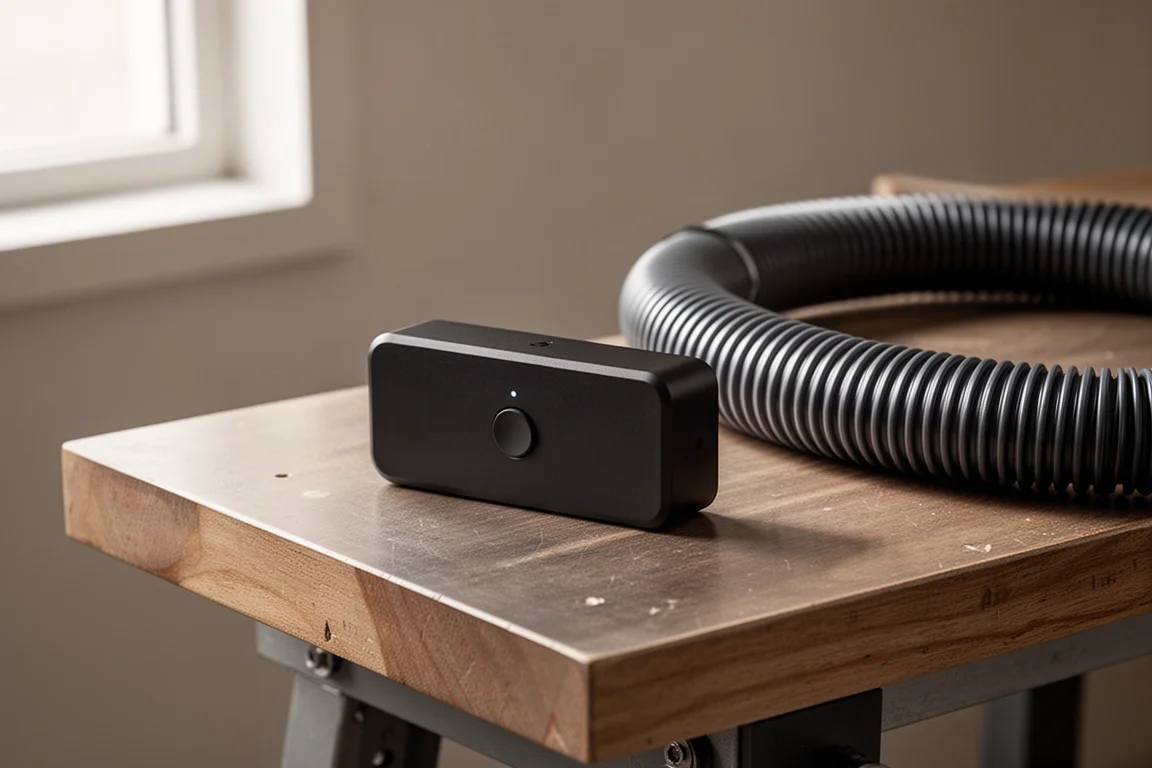
Dust extraction is one of those things everyone agrees on and far fewer people actually use consistently. The main friction point is simple: you have to remember to switch the vacuum on every time you pull the trigger, and off again when you stop. Makita’s answer is a small add-on module that automates the whole thing, and after spending time with it, the appeal is easy to understand.
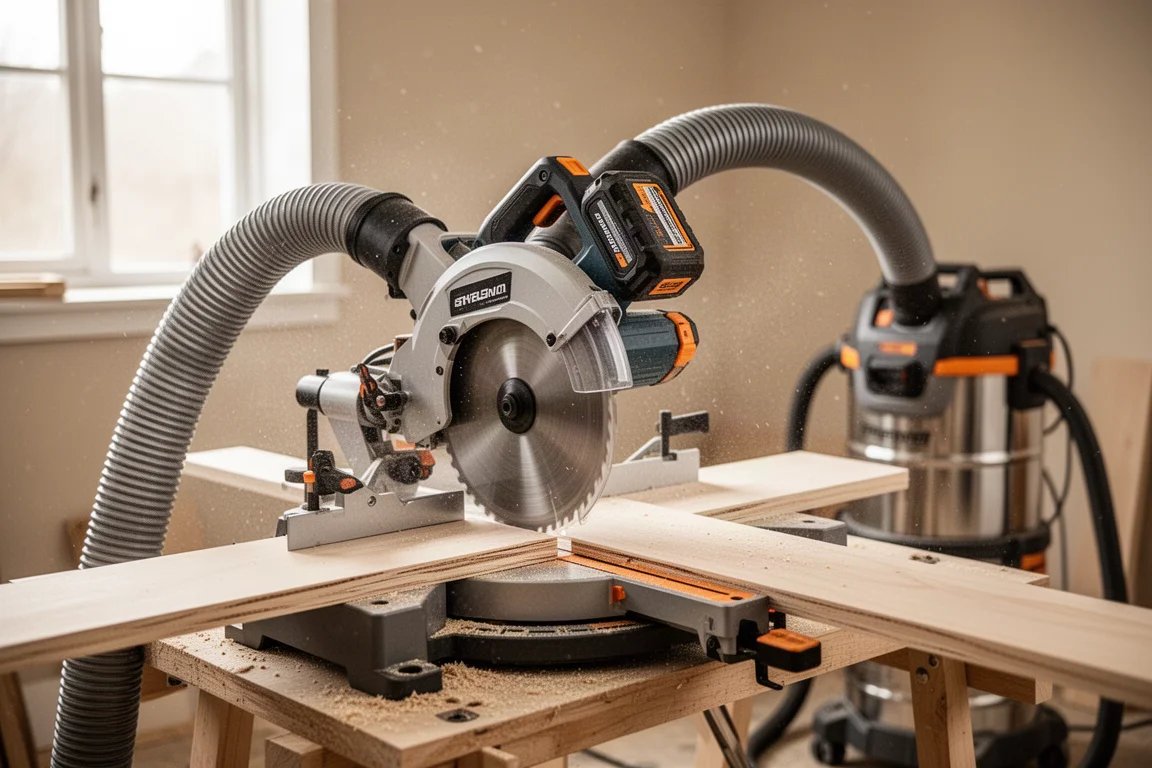
The module is part of Makita’s auto-start wireless system, known as AWS. If you are running a battery-operated miter saw, track saw, grinder, or anything else with a dust collection port, together with a Makita dust extractor, this little chip makes the extractor turn on at the same moment the tool does. When the trigger is released, the vacuum runs on briefly to clear remaining dust from the hose, then pulses the filter to knock it clean before shutting down. It is a neat, hands-free workflow that removes the main excuse for skipping dust collection altogether.
Who This Product Is For
This is fundamentally a Makita ecosystem product. Makita is generally good about labeling tools as AWS compatible or not, but if your tool has one of these controllers built in, you are already set up to use the system. If you are already invested in Makita batteries, the module slots neatly into that world.
It also works across both of Makita’s battery platforms. Whether your tools run on the XGT line or the LXT line, everything communicates together and works with the same module. For battery-first users, that cross-compatibility is one of the stronger arguments for the system.
There is a broader context worth knowing. If you run corded tools, you do not strictly need this module. A so-called advanced power strip can detect current draw from a plugged-in miter saw and switch on the vacuum automatically, and that approach works across different tool brands. There are also wired systems that run a connection through the hose itself, which are hard to get wrong. But most people buying tools today are going battery powered, and for that crowd, this wireless approach is one of the more elegant options around.
Setup and Pairing: Straightforward Once You Know the Steps
Physical installation is simple. The chip slides into its port and is pushed down into place, with four prongs holding it securely. A red indicator light confirms it is seated properly.
Pairing takes just a few moments. Press and hold the button on the module until the light blinks green, then go to the dust extractor and press and hold its button until its light blinks too. Once both lights come on solid green, switch the extractor to auto mode, and the pairing is complete. From then on, squeezing the tool’s trigger starts the vacuum instantly.
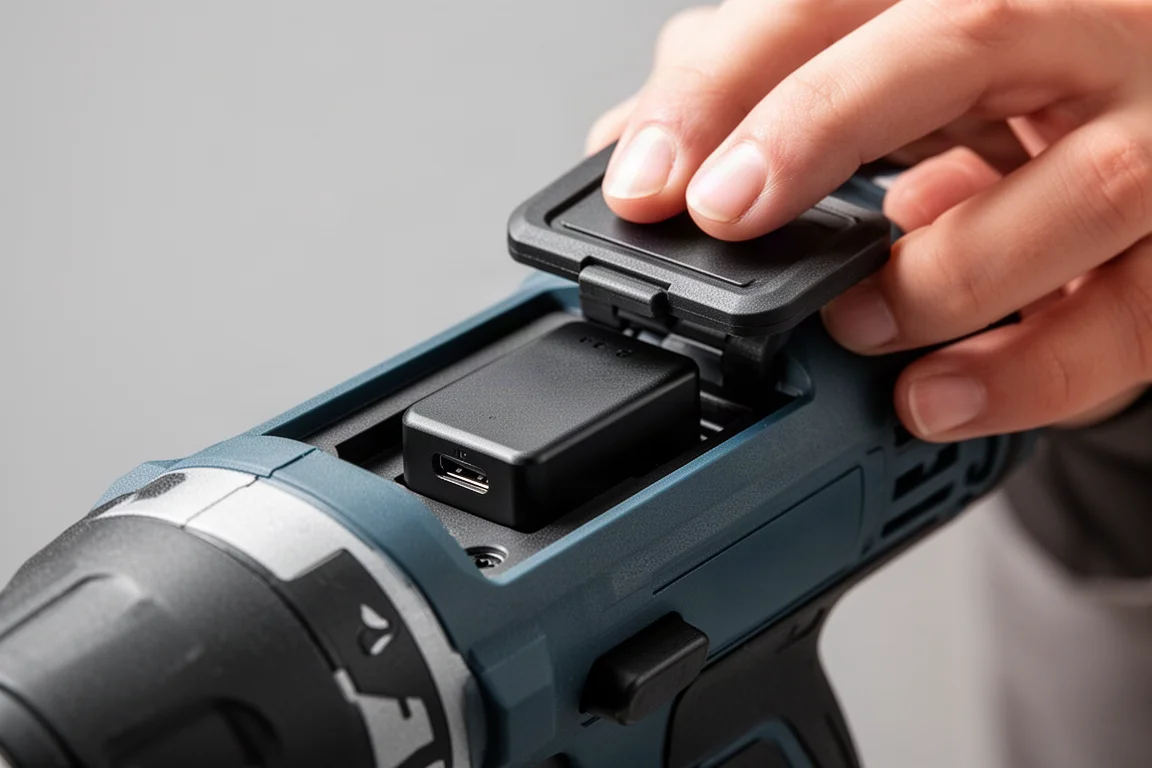
A couple of practical habits are worth knowing. If you remove the battery from the tool, the module loses power and nothing happens when you press the trigger. Putting the battery back in and pressing the wireless button once puts you back in business immediately. The light blinks purple to confirm it has reconnected, and then the trigger-vacuum link works again as before.
Because the module can be removed and swapped between tools, you do not necessarily need one for every machine. Multiple modules can be paired to a single dust extractor, so buying several is an option rather than a requirement. If you would rather keep one chip and move it between tools, that works too, with the obvious trade-off that a small removable part can be lost if you are careless.
Why Battery Runtime Makes Auto-Start Genuinely Useful
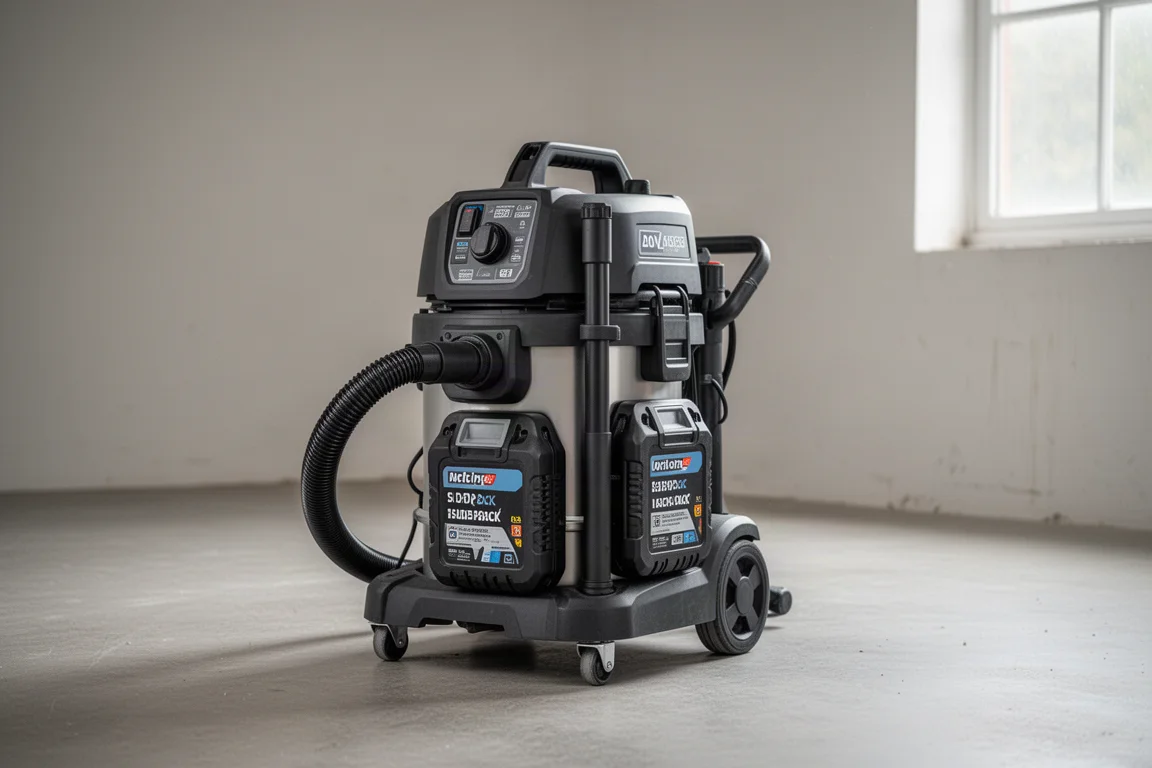
Cordless dust extractors live and die by battery runtime, and that is exactly where automatic switching earns its keep. Because the vacuum only runs while the tool is in use, plus a short over-run to clear the hose, you are not burning battery charge while the extractor sits idle. In a platform where runtime is inherently limited, that efficiency matters.
On the extractor side, running two 5.0Ah XGT batteries gives an 80-volt setup with reasonably decent runtime for the class. Pairing that with a module that keeps the machine running only when needed is a sensible match.
Main Strengths
The clearest strength is convenience. Auto-start removes the constant on-off routine entirely, which makes proper dust collection far more likely to actually happen on a job. The filter-pulse at shutdown, where the machine pounds the filter to clear it, is a nice finishing touch that keeps the system working well over time.
The second strength is flexibility within the Makita ecosystem. One module moves between AWS-compatible tools, several modules can pair to one extractor, and the whole thing works across XGT and LXT. Makita has essentially turned a built-in feature into an optional upgrade: you only pay for wireless control on the tools where you actually want it. Not everyone will love that split, since some prefer the feature built into every tool, but having the choice is hard to argue against.
Things to Consider Before Buying
This module only makes sense if you own, or plan to own, a Makita dust extractor. Without one, it is a paperweight. That is the single biggest gating factor.
The removable design cuts both ways. Being able to share one module across tools saves money, but it also means the chip is out of the tool sometimes, and small parts get misplaced. If you would rather never think about it, buying one module per tool is the more convenient route.
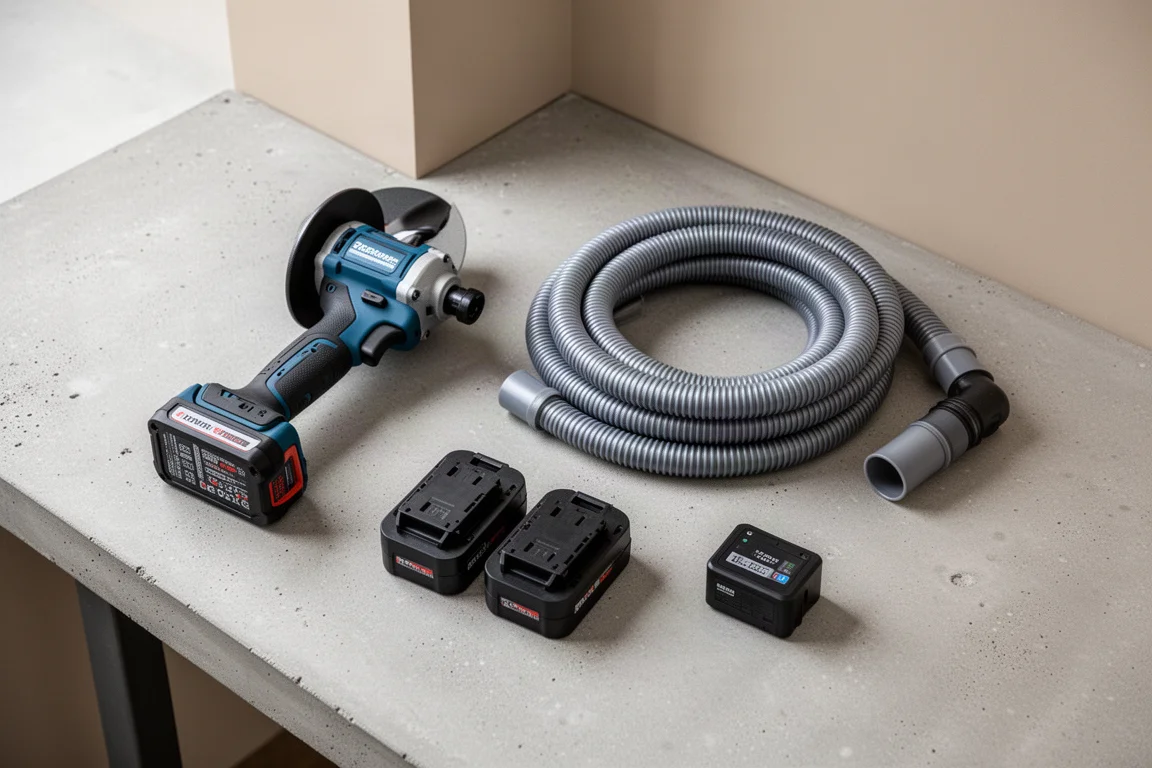
Finally, if your tools are corded rather than battery operated, other solutions exist. A smart power strip that triggers on current draw, or a wired hose-based system, will get you automatic extraction without any wireless pairing at all. The module’s real value is specifically for Makita cordless users.
Buying Advice
If you are all-in on Makita cordless tools and already own or plan to buy the brand’s dust extractor, this module is an easy recommendation. Setup takes minutes, it just works afterward, and it meaningfully extends usable runtime by keeping the vacuum off when it is not needed. If you split brands or run corded equipment, look at current-sensing power strips instead, which work across manufacturers without any pairing.
Conclusion
The Makita AWS auto-start wireless module is a small, focused accessory that solves a real annoyance in cordless dust collection. It is simple to install, quick to pair, and flexible enough to share across the Makita line. For cordless Makita users who want dust extraction to happen without thinking about it, it is one of the more elegant solutions on the market, and genuinely uncommon in how it approaches the problem.
Product link
View more details for Makita AWS Auto-Start Wireless Module
This product is mentioned in the review. Check the specifications, options, and compatibility before buying.
View more details for Makita AWS Auto-Start Wireless ModuleFurther reading
Related Reviews

Power Tool Accessories
Best Drill Attachments 2026: Three DeWalt Tools Worth Buying
A practical look at three DeWalt drill attachments that deliver real value, plus the sketchy options you should skip.

Power Tool Accessories
Best Drill Bits 2026: 14 Sets Tested on Mild Steel, Spring Steel, and AR500 Armor
We tested 14 drill bit sets across mild steel, spring steel, and AR500 armor plating to find the best value, speed, and durability.

Power Tool Accessories
Best Right Angle Impact Adapters 2026: Five Options Tested for Speed, Torque, and Durability
We tested five right angle impact adapters from DeWalt, Milwaukee, Warrior, Titan, and Milescraft to see which ones deliver real performance without failing early.