Power Tools
Makita AS001G Cordless Blower: Every Attachment Explained
A close look at the Makita AS001G 40V max blower and its full set of nozzles and attachments, from wide bench sweeps to vacuum funnels and concrete hole wands.
Introduction
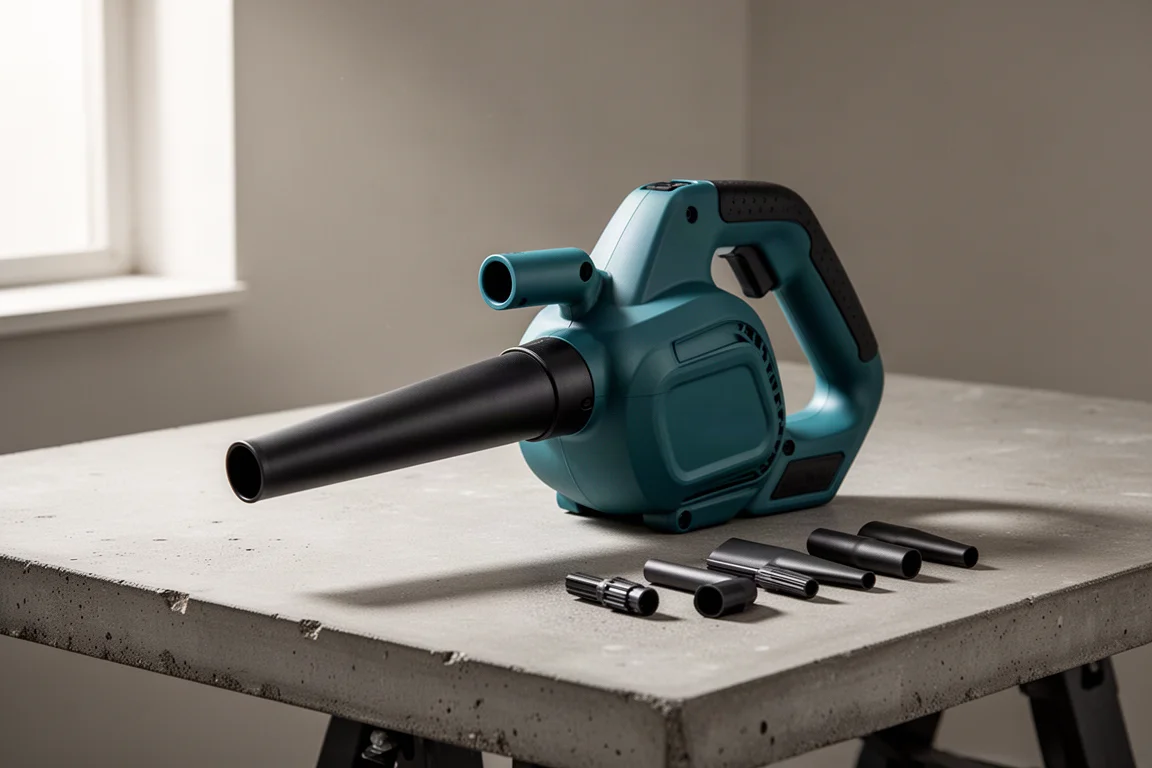
The Makita AS001G is a compact 40V max cordless blower that punches well above its size, but the real story is the attachment system. With a simple clip-on ring, the tool swaps nozzles in seconds, and the accessory range turns it into a bench cleaner, inflator, vacuum, computer duster, and concrete hole blaster in one body.
If you are buying in the United States, the same tool is sold as the Makita GSA01, so the attachment line-up below applies to both model names.
The Five Attachments Included in the Box
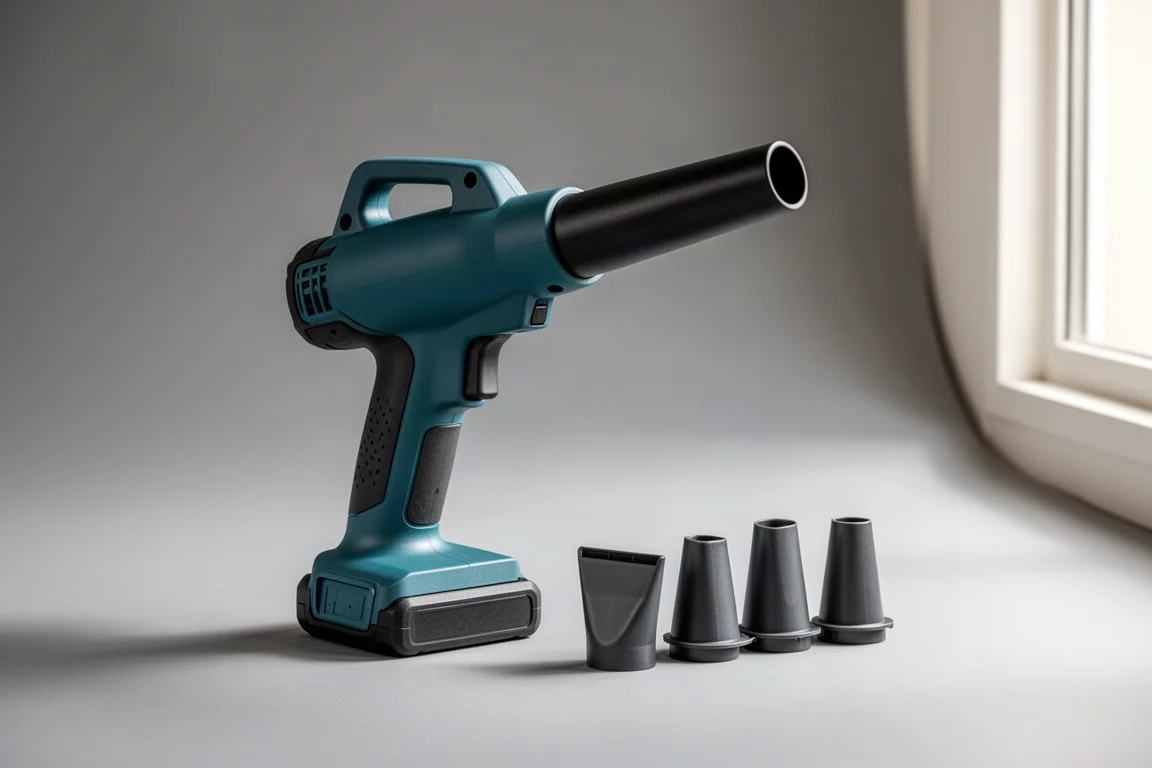
In most markets, including New Zealand, the AS001G ships with five attachments. The first is a wide, flexible sweeping nozzle with multiple holes in the head and a rubbery edge. It covers roughly a 110 to 130 degree arc, which makes it ideal for clearing a workbench or any large flat surface quickly. It is also surprisingly handy for more delicate jobs, such as dusting off a Lego collection.
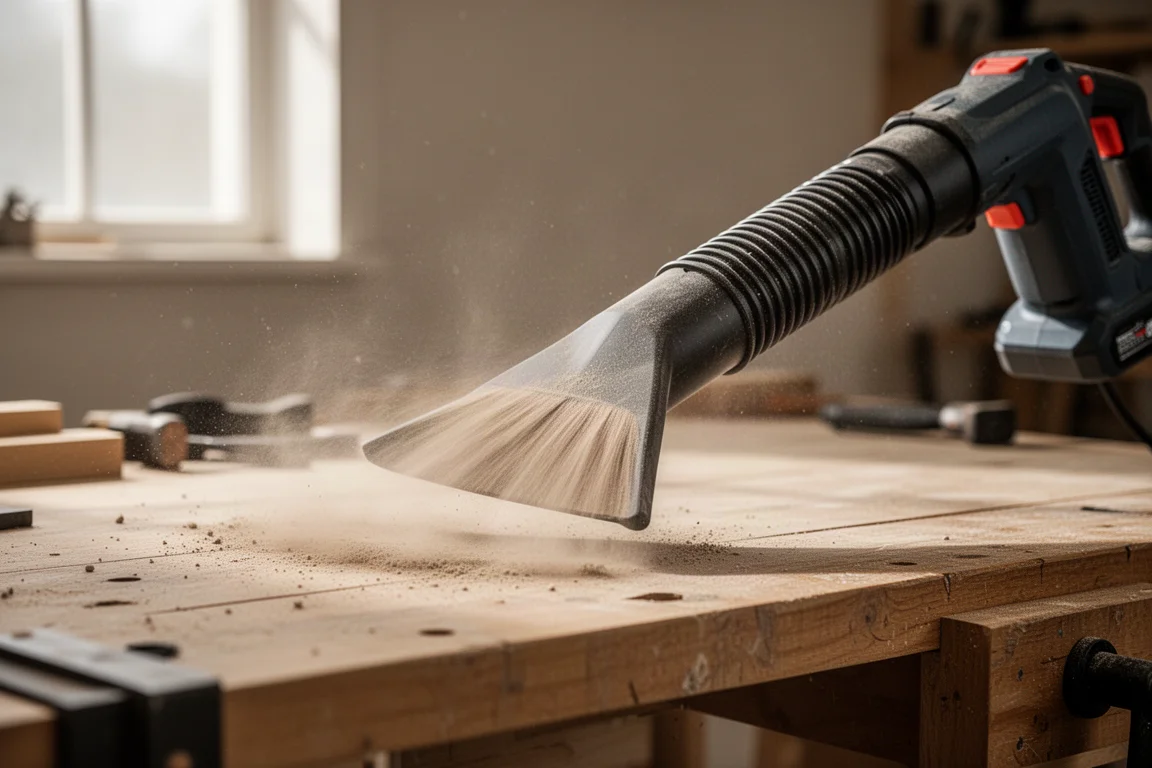
The next three nozzles are narrower, general-purpose tips suited to everyday blowing tasks like cleaning dust out of appliance filters, where dust tends to build up in strips along the vent edges. Any of the three works; the choice really comes down to whichever one you grab first.
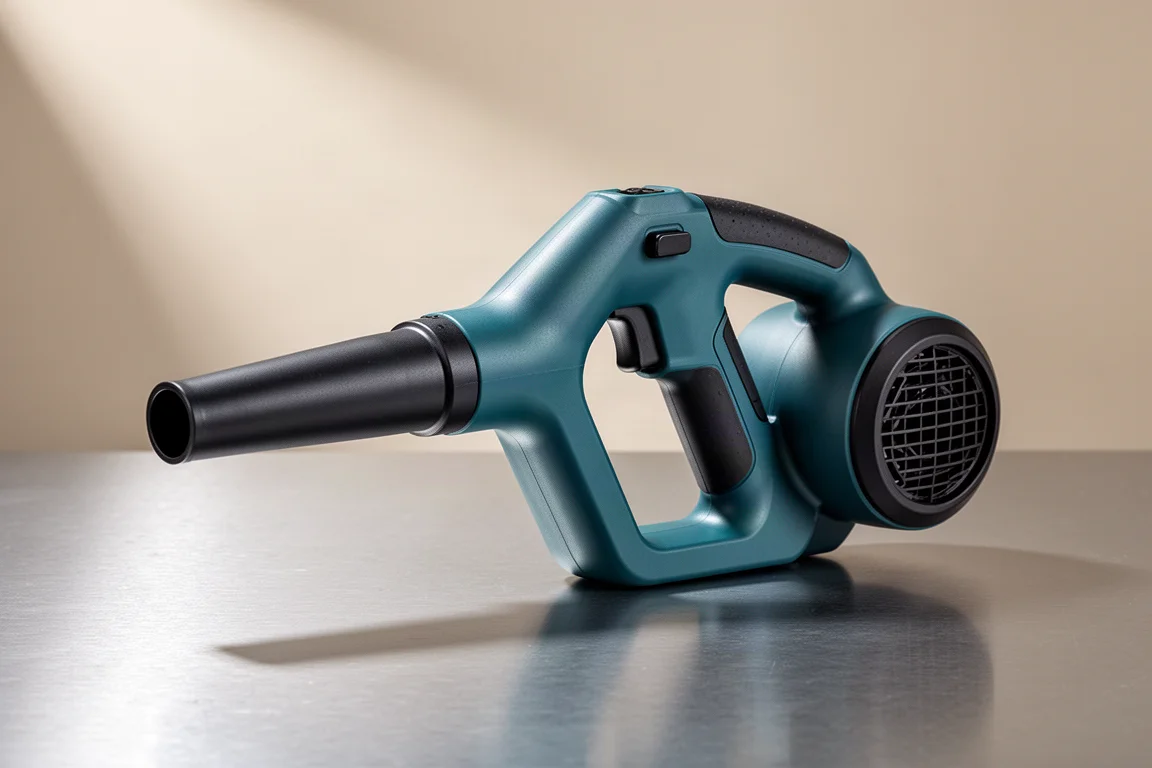
The Inflator Nozzle
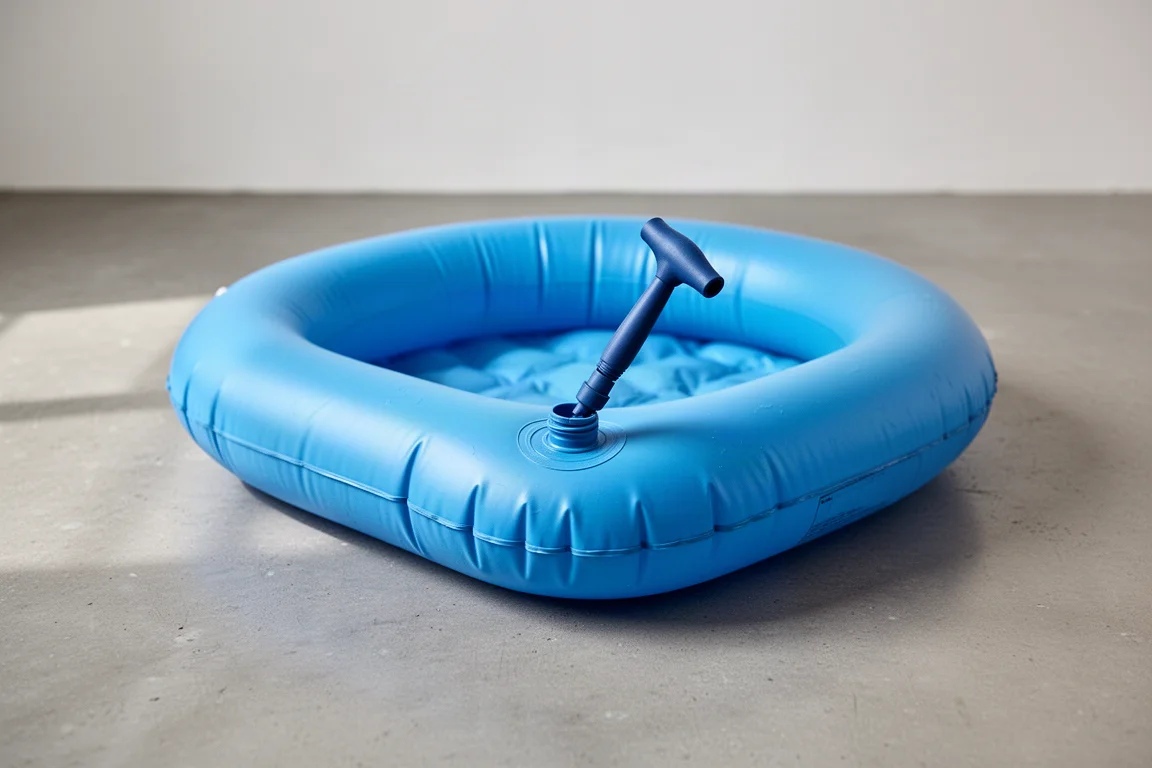
The fifth standard attachment is the most versatile of the set, even if it does not look like much. It is an inflator nozzle with a valve-opening pin at the tip, designed for the one-way valves commonly found on beach balls and inflatable toys. Push it in until the valve opens, lock the trigger, and the job inflates in seconds.
Turning the Blower Into a Vacuum
The attachment range goes well beyond the boxed set. The standout extra is a long flexible hose that mounts on the rear intake of the tool. Remove the rear filter, line up the tabs, give it a twist until the marks align, and the blower becomes a sucker instead of a blower.
The hose accepts the same clip-on nozzles as the front, and the most useful of these is the 13 mm nozzle. From there, a rubber tip can be pushed into a valve so you can both inflate an air bed and suck the air back out when it is time to pack it away.
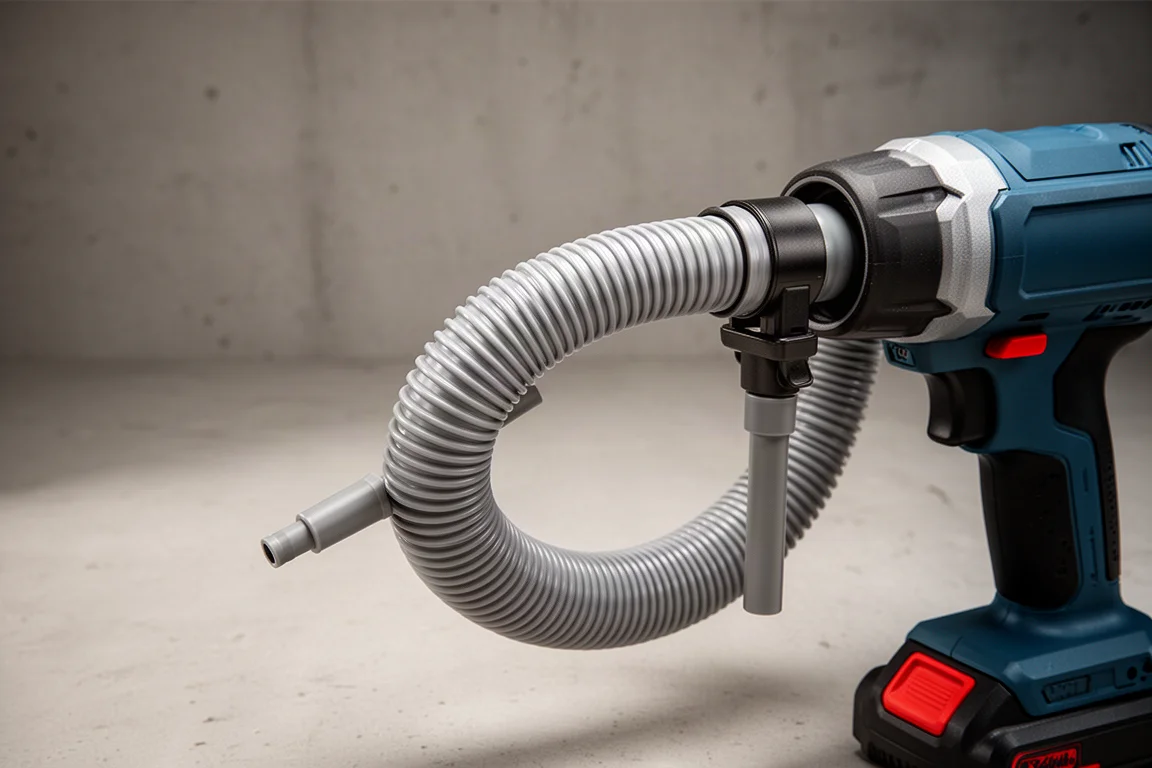
There is also a funnel-shaped rubber attachment designed for vacuum seal storage bags. It sits over the valve on compression bags, letting you squeeze luggage down before a trip or store bulky seasonal gear in a fraction of the space.
One caution when using the tool in vacuum mode: avoid sucking up particles. Dust can clog the filter or, if no filter is fitted, pass through into the machine and potentially cause damage. The rule of thumb is simple: blow dust, do not suck it. If you need to blow air into sensitive electronics, a HEPA filter can be fitted at the rear instead of the standard foam filters, trapping particles so they are not blown into whatever you are cleaning, whether that is a laptop interior or another appliance.
Concrete Hole Cleaning Wands
The last attachment is aimed squarely at concrete work. It is a tapered tube that fits through the 13 mm nozzle, creating a long, narrow wand for blasting dust out of drilled holes before setting concrete anchors or bolts.
If the hole is deeper than the standard wand can reach, an extension piece is available, and the two pieces are sold together rather than separately. The standard wand is about 200 mm long with a 10 mm tip and roughly a 14 mm body, while the extension tapers to about half an inch at the joint.

Once everything is clipped on, attachments pop off with a pull of the ring and a twist. The tool itself has four speed modes and a trigger lock, so you can set it running hands-free while you work.
Buying Advice
If you mostly want a bench and debris blower, the five included attachments cover almost everything you will realistically do day to day. If your work involves concrete anchoring, air beds, vacuum bags, or cleaning inside electronics, the extra hose, wands, and HEPA filter are worth sourcing alongside the tool. Buyers in the US should look for the GSA01 model number, while most other regions list it as the AS001G.
Conclusion
The Makita AS001G and its US twin, the GSA01, prove that a small cordless blower can be far more than a one-trick tool. With the right nozzle clipped on, it cleans, inflates, vacuums, and preps concrete holes, and swapping between jobs takes seconds rather than a toolbox change.
Further reading
Related Reviews
Power Tools
Best 1-Inch Pistol Impact Wrenches: Three Heavy-Duty Options Compared
We compare three 1-inch pistol impact wrenches, from a budget-friendly Harbor Freight model to a premium Caterpillar unit, to help you choose the right one.
Power Tools
Best 3/4-Inch Impact Wrenches 2026: Five Contenders Compared
We compare five 3/4-inch impact wrenches across price and performance, from a budget Amazon option to Snap-on's most powerful model yet.
Power Tools
Best Budget Cordless Tools 2026: Walmart Finds That Punch Above Their Price
We tested five cordless tools from Walmart, including a high-torque impact wrench that trades blows with Milwaukee and a $35 duster that outperforms its price class.