Power Tools
Makita 40V Max Circular Saws Compared: Every Size in the XGT Lineup
Five Makita 40V Max circular saws, from a compact 125mm flush-cutting tool to a 260mm rear-handle beast, compared for depth of cut, power, and everyday handling.
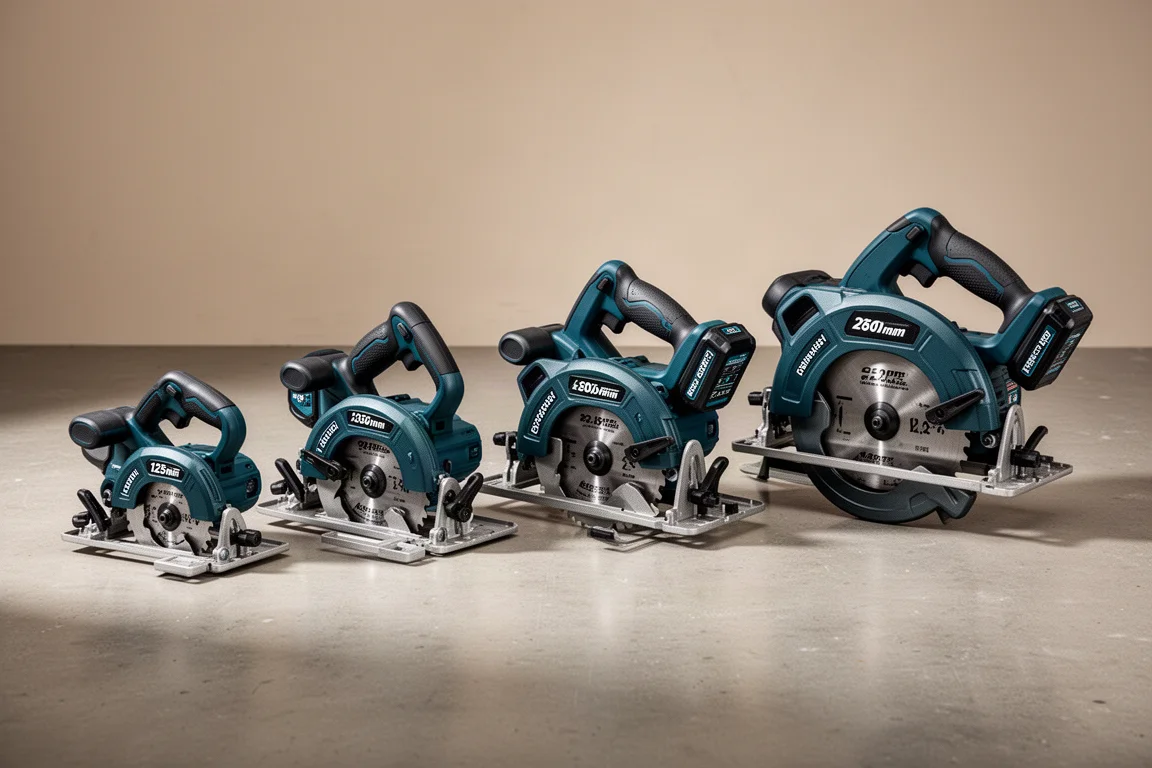
Introduction
Makita’s 40V Max (XGT) platform currently spans five circular saw sizes: the 125mm (5 inch), the 165mm (6.5 inch), the 185mm (7.25 inch) top handle, the 185mm rear handle, and the enormous 260mm (10.25 inch) rear handle. Choosing between them comes down to what you cut, how often, and where. This guide walks through each one so you can match a saw to your actual workload rather than buying on blade size alone.
A quick note on the wider lineup: there are multiple variants of some models, including versions with AWS (Makita’s Bluetooth dust-extraction trigger system) and a 185mm model with a grooved base for guide rails. Some variants, including certain black-edition tools, have only been available in Japan.
Makita HS005G 125mm: The Flush-Cutting Specialist
The HS005G is the smallest saw here, but it has a trick no other saw in the lineup offers: the front section of the base plate removes with two captive knobs, and the base can bevel in both directions. Combine the two and you can tilt the base the “wrong” way, run the blade hard up against a wall base plate, and undercut flooring, corners, or ceilings in a flush cut. For flooring repairs and trim-in jobs, it is genuinely hard to replace.
It runs two speeds (6,000 and 4,500 rpm), weighs about 2.2 kg, and cuts 47mm deep at full depth. The body is polycarbonate rather than the more common glass-fiber nylon, and the base is an unusually shiny, near-chromed aluminum. The safety trigger is a clever angled push-and-slide design that works well for both left- and right-handed users. The main trade-off is the battery orientation: large packs, including the 5Ah battery, do not fit at full depth of cut, so you are realistically running 2.5Ah or 4Ah packs. It is also light enough that cutting a long straight line takes a bit more concentration than with a bigger blade.
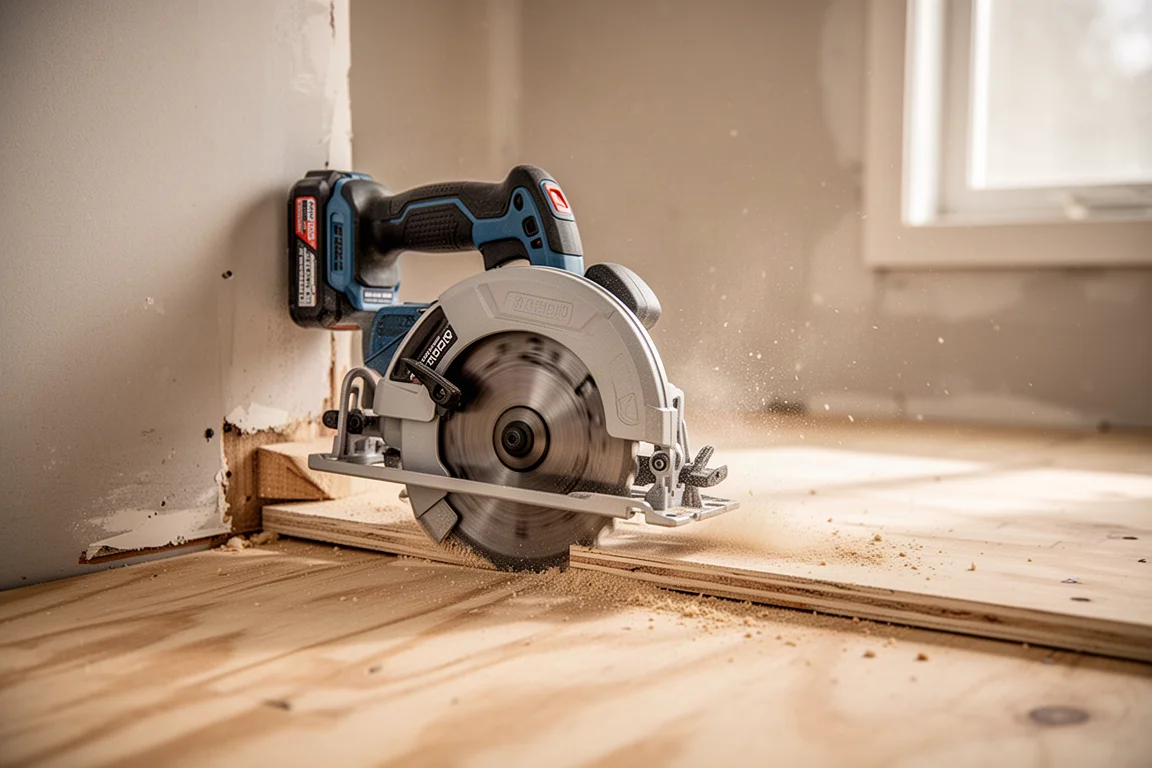
If your work involves odd jobs, flooring removal, and getting into tight spots, this is arguably the most versatile saw of the five.
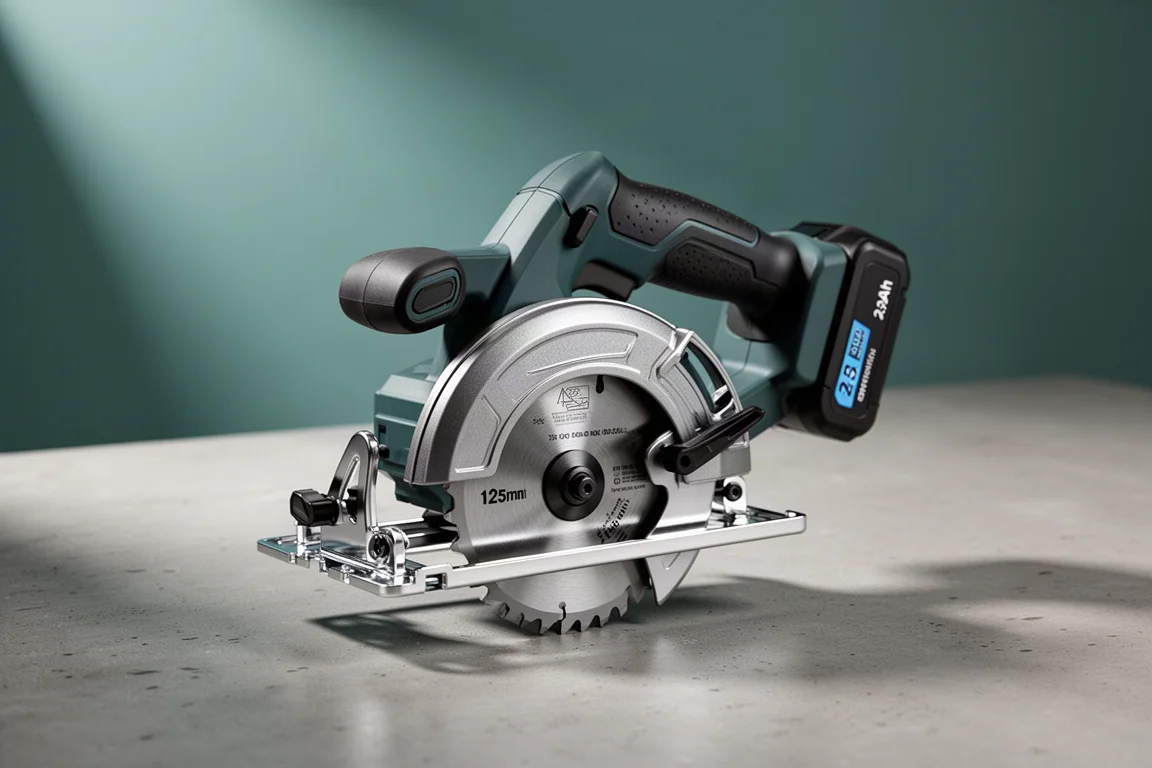
Makita HS001G 165mm: The Best All-Rounder
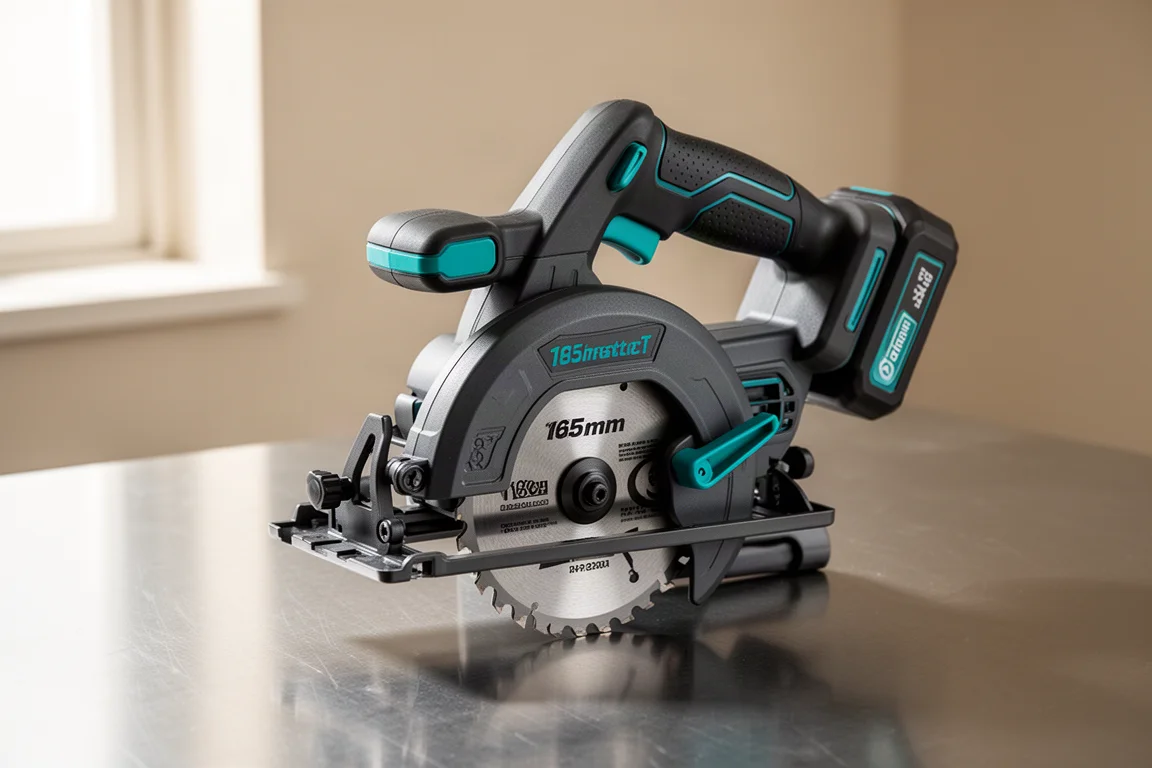
The HS001G was the first 40V Max circular saw Makita released, and in many markets it has still not shipped widely. It cuts 66mm deep at 90 degrees, deeper than the 18V equivalent, and manages 46mm at a 45 degree bevel, which clears standard 45mm framing timber cleanly. It spins at 5,500 rpm on the high setting with a two-speed selection, and it accepts a 5Ah battery thanks to a better battery orientation than the 125mm saw.
It is built from a mix of polycarbonate and glass-reinforced polycarbonate with rubberized overmolding, and like the HS005G it has a mirror-finish base. There are captive screw knobs for the rip guide that clamp over a wider area, plenty of adjustment screws underneath for truing the saw up, and a small bevel lever that gives 5 degrees past vertical in the reverse direction. Guides can be attached front and rear for track use with a separately purchased adapter. The notable omission is a front handle, which the 18V equivalent has and which is genuinely missed during longer cuts.
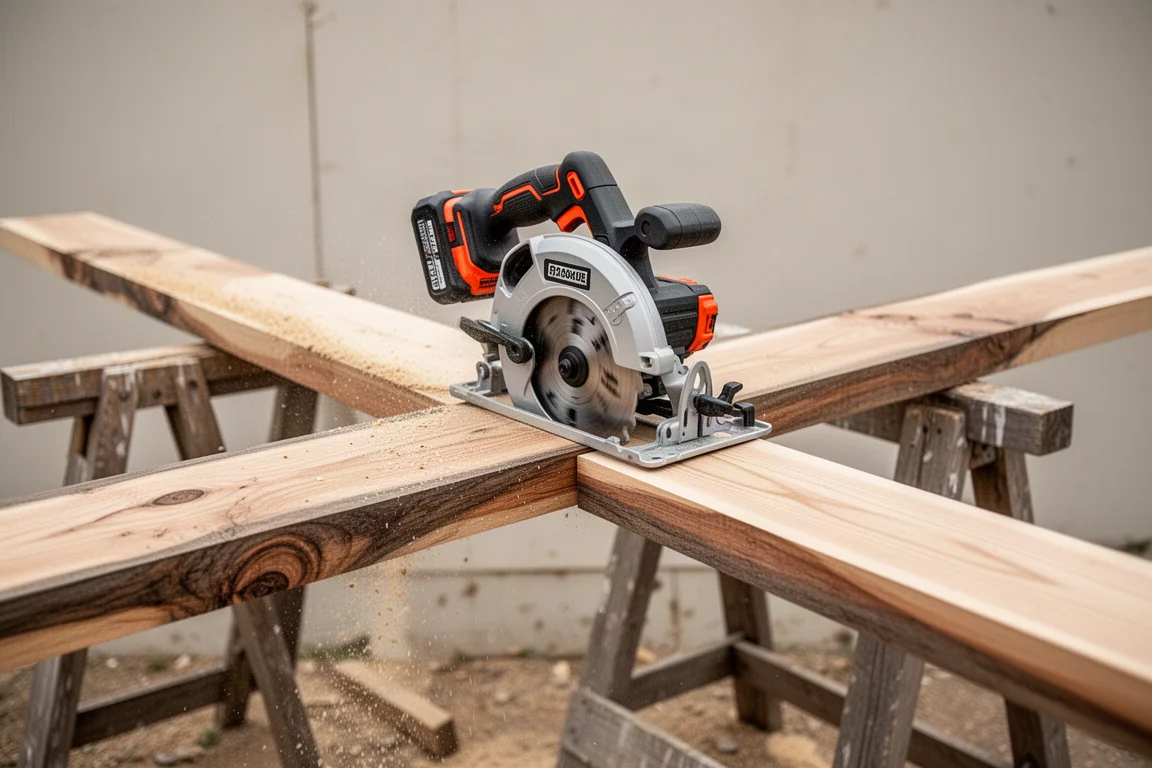
In use, it feels roughly 20 to 25 percent quicker than the comparable 18V saw, with noticeably more sustained power when ripping. If you can only buy one saw from this lineup, this is the sensible pick: deep cutting, lighter and more compact than the 185mm, and strong enough for most framing work.
Makita HS003G 185mm: The Standard Top-Handle Saw
The HS003G is the classic 185mm top-handle format, running 6,000 rpm with an adaptive speed under load. It cuts 66mm at 90 degrees with the included blade, or about 68.5mm with a 190mm blade, 45.5mm at 45 degrees, and 34mm at the full 56 degree bevel. Positive stops at 22.5, 45, and 56 degrees make repeat bevels quick. The magnesium base, brushless motor, electric brake, rafter hook, and dust chute round out a complete feature set, though the rip fence is not included in the box.
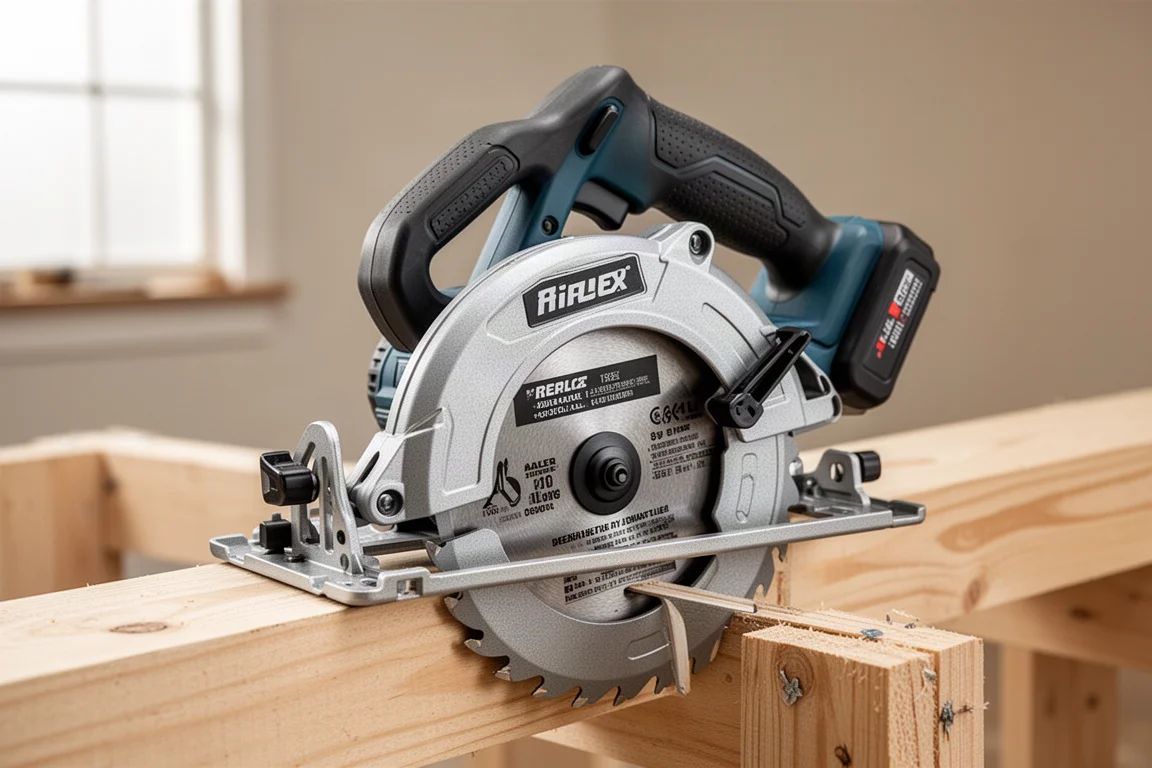
Compared with its 36V predecessor, it feels slightly better balanced, a touch lighter with a battery on, and has a bit more torque for ripping. The improvement is real but incremental: if you already own the 36V version, there is not enough of a jump to justify switching platforms for this saw alone. For anyone starting fresh, it is the most conventional and capable general-purpose saw here.
Makita RS001G 185mm Rear Handle: The Ripping Machine
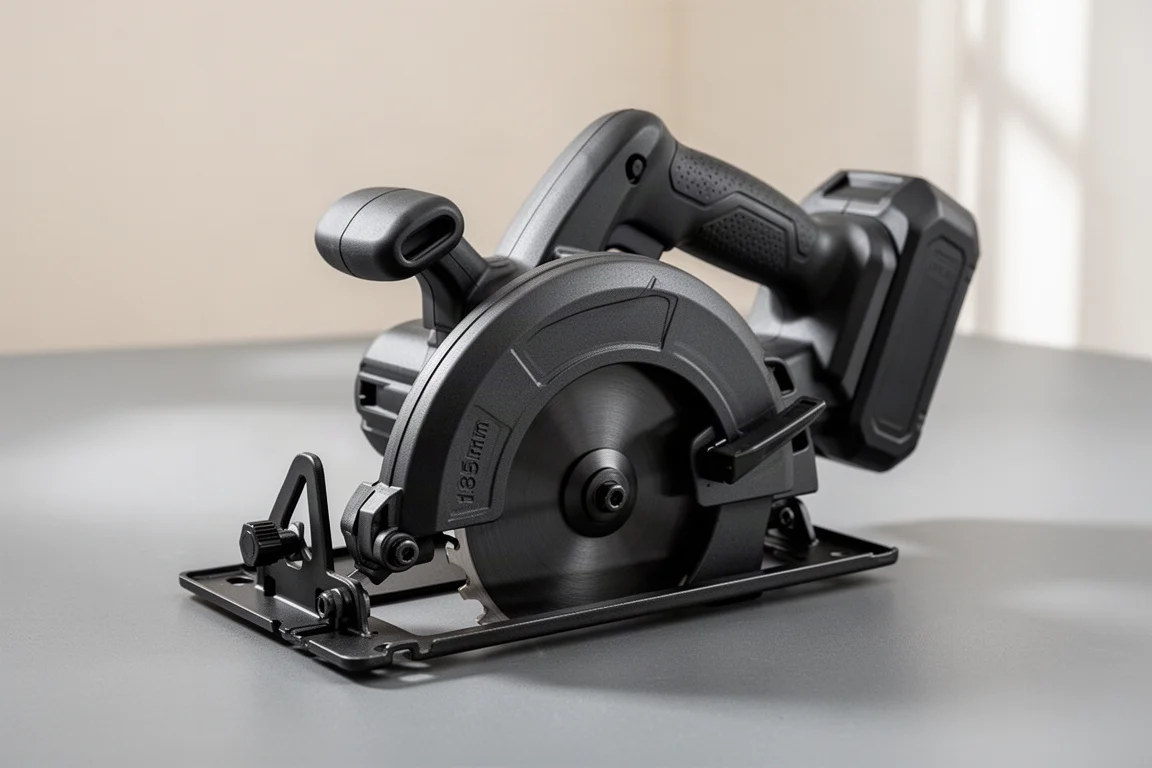
The RS001G is Makita’s 40V Max rear-handle saw, the format North American carpenters know well. It runs 6,400 rpm, about 400 rpm more than the HS003G, and that shows in use: long rips through wet 200x50 timber were noticeably faster, smoother, and more consistent than on the top-handle or the 36V rear-handle predecessor. Straight-line accuracy is also easier to hold with a big blade and a rear grip driving the cut.
Depth of cut is 65mm at 90 degrees, with bevel detents at 22.5, 45, and 53 degrees. It shares its base plate and guard design with the 36V DRS780 and is roughly 700g lighter than that saw before batteries, translating to around 1.3kg less in hand with a 2.5Ah pack fitted. Where it falls down is cross-cutting: with the weight sitting forward over the front of the tool, holding smaller stock flat for one-handed cross cuts is awkward compared with a top-handle saw. Battery removal is also fiddly because of the deep cutout around the packs.
If ripping framing and sheet goods is the bulk of your circular saw work, this is the standout of the lineup. If cross cuts dominate, stick with a top handle.
Makita RS002G 260mm: The Beast
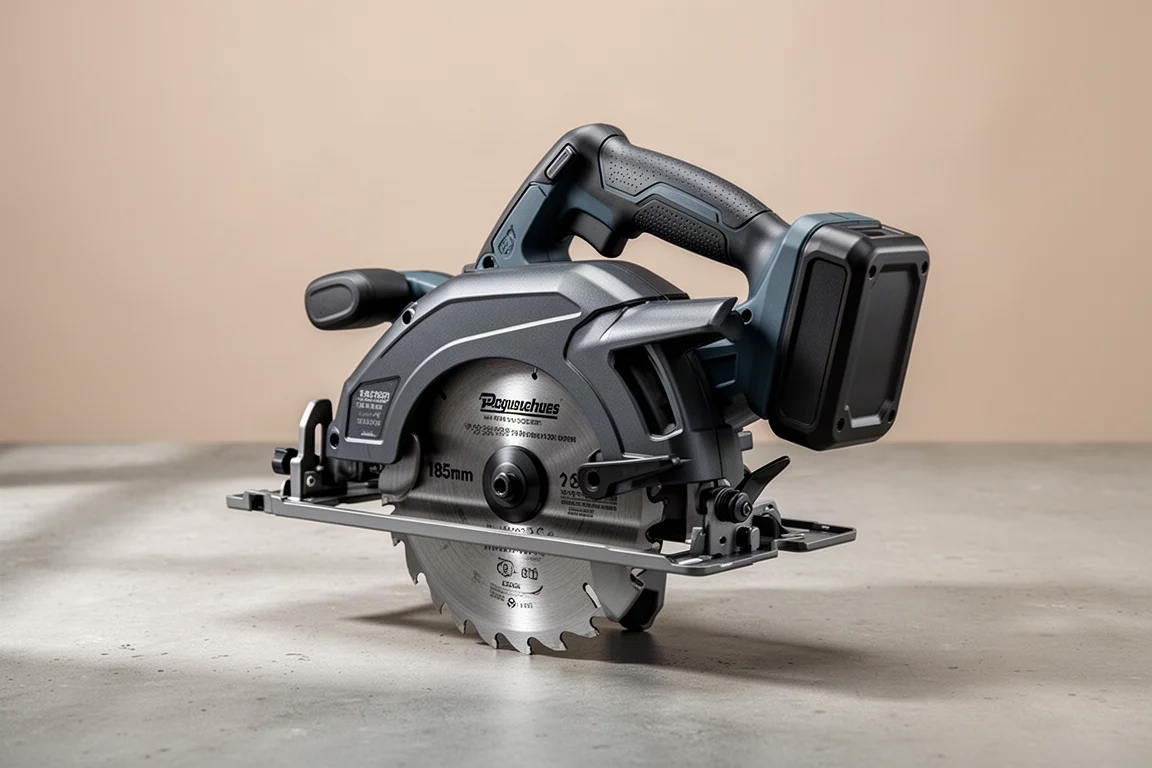
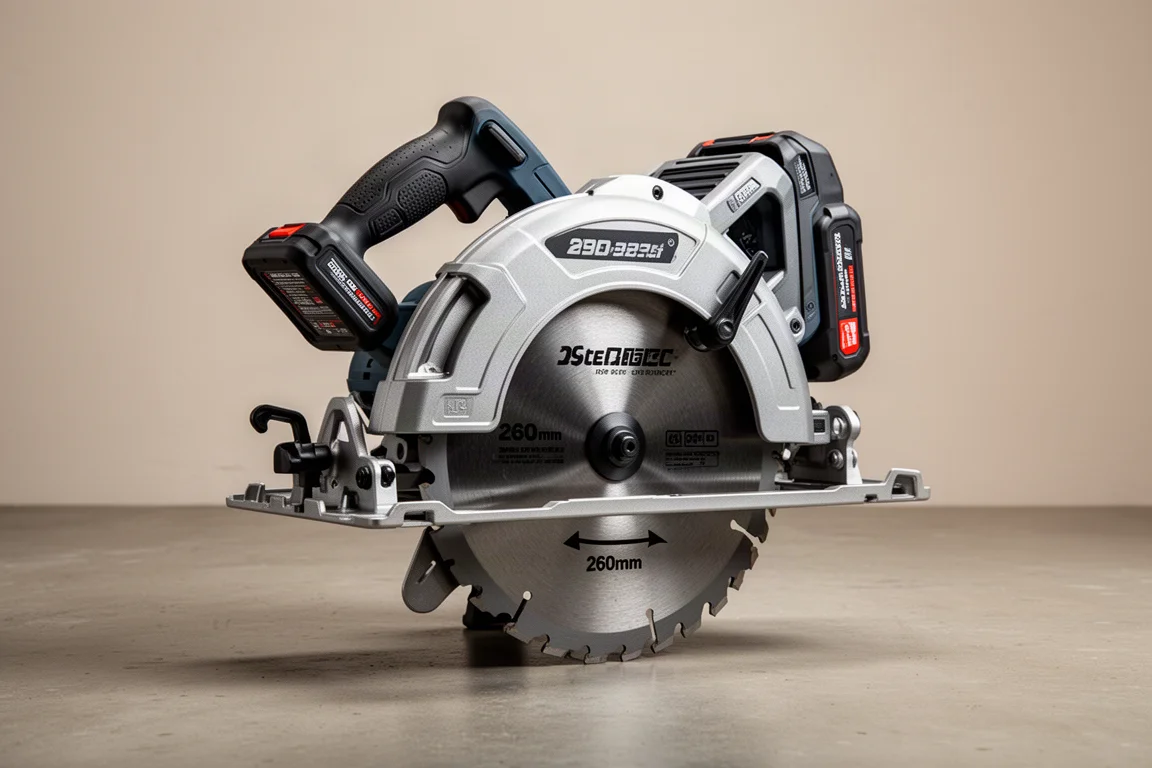
The RS002G is, as far as battery circular saws go, the biggest available: a 260mm blade on a rear-handle body around the 5kg mark without a battery. It cuts approximately 95mm at 90 degrees, close to clearing a 100x100 post in one pass, though slightly under on denser or swollen stock. Bevel depths are 91mm at 22.5 degrees, 72mm at 45, and 55mm at the full 56 degree stop, with the bevel able to creep a little past 56. It has AWS for dust extraction, a large rafter hook, a blade on the left side, and a sturdier 13mm spanner stowed on the back rather than the usual hex key.
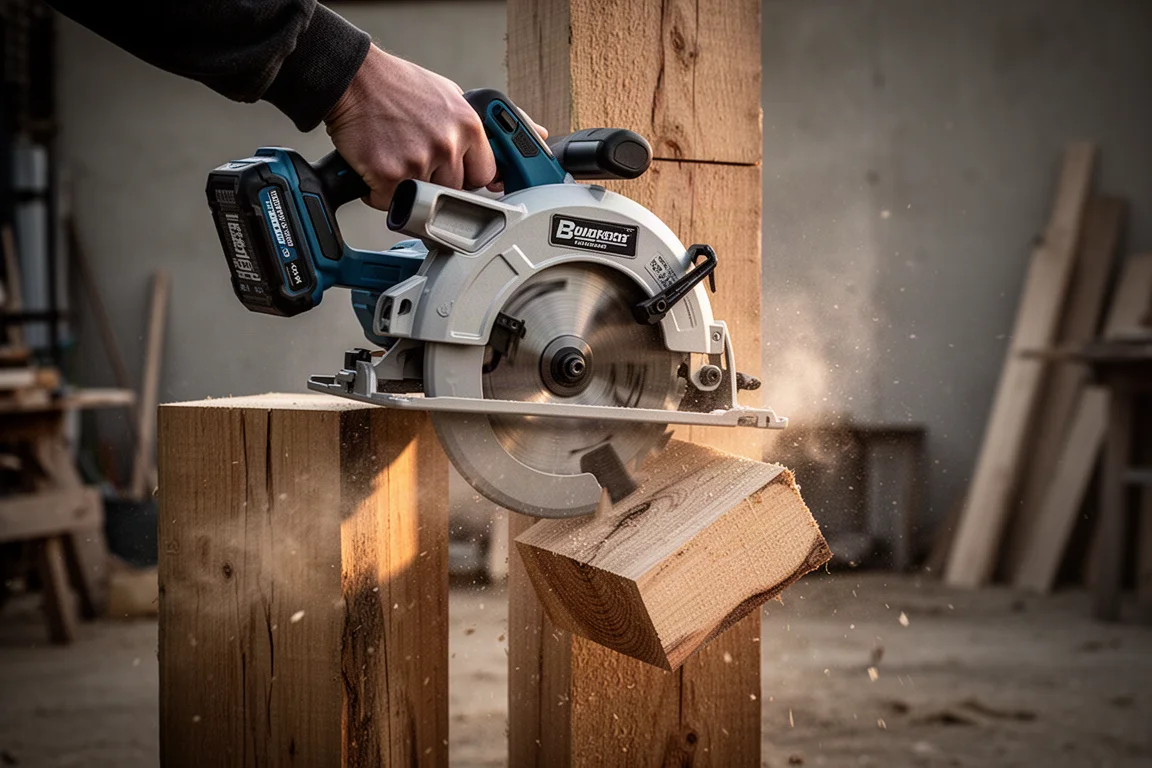
This is not a one-handed tool. You run it with both hands and let the weight do the work; pushing it hard risks stalling. It also chews through battery capacity quickly, so it is best paired with 5Ah packs. For most buyers it is a specialist purchase: the saw you bring out for beams, posts, and heavy demolition rather than daily framing. If you want one saw that does everything, the 185mm top handle is a better fit.
Buying Advice: Which One Should You Choose?
If you can only own one, the HS001G 165mm is the strongest overall pick: deep cutting relative to its size, lighter than the 185mm for ladder and roof work, and with plenty of power in reserve. Heavy rip-cutter should look hard at the RS001G rear handle. The HS003G suits anyone who wants the conventional, do-everything 185mm format. The HS005G is the niche specialist that earns its place through the removable base front and flush-cutting tricks, and the RS002G is for those who genuinely need big-beam depth. Availability varies by region: some models have limited distribution outside Japan, so check your local market before committing.
Conclusion
Makita’s 40V Max circular saw range covers nearly every need, from a 2.2kg flush-cutting tool to the largest cordless circular saw currently available. Match the saw to your cut depths and cutting style, and there is almost certainly a model here that fits.
Further reading
Related Reviews
Power Tools
Best 1-Inch Pistol Impact Wrenches: Three Heavy-Duty Options Compared
We compare three 1-inch pistol impact wrenches, from a budget-friendly Harbor Freight model to a premium Caterpillar unit, to help you choose the right one.
Power Tools
Best 3/4-Inch Impact Wrenches 2026: Five Contenders Compared
We compare five 3/4-inch impact wrenches across price and performance, from a budget Amazon option to Snap-on's most powerful model yet.
Power Tools
Best Budget Cordless Tools 2026: Walmart Finds That Punch Above Their Price
We tested five cordless tools from Walmart, including a high-torque impact wrench that trades blows with Milwaukee and a $35 duster that outperforms its price class.