Power Tools
Makita 40V Heat Gun Review: A Cordless Heat Gun That Finally Gets It Right
The Makita 40V heat gun reaches 600°C, offers four fan speeds, precise digital temperature control, and noticeably more heat output than its 18V sibling. Here is how it performs on real tasks.
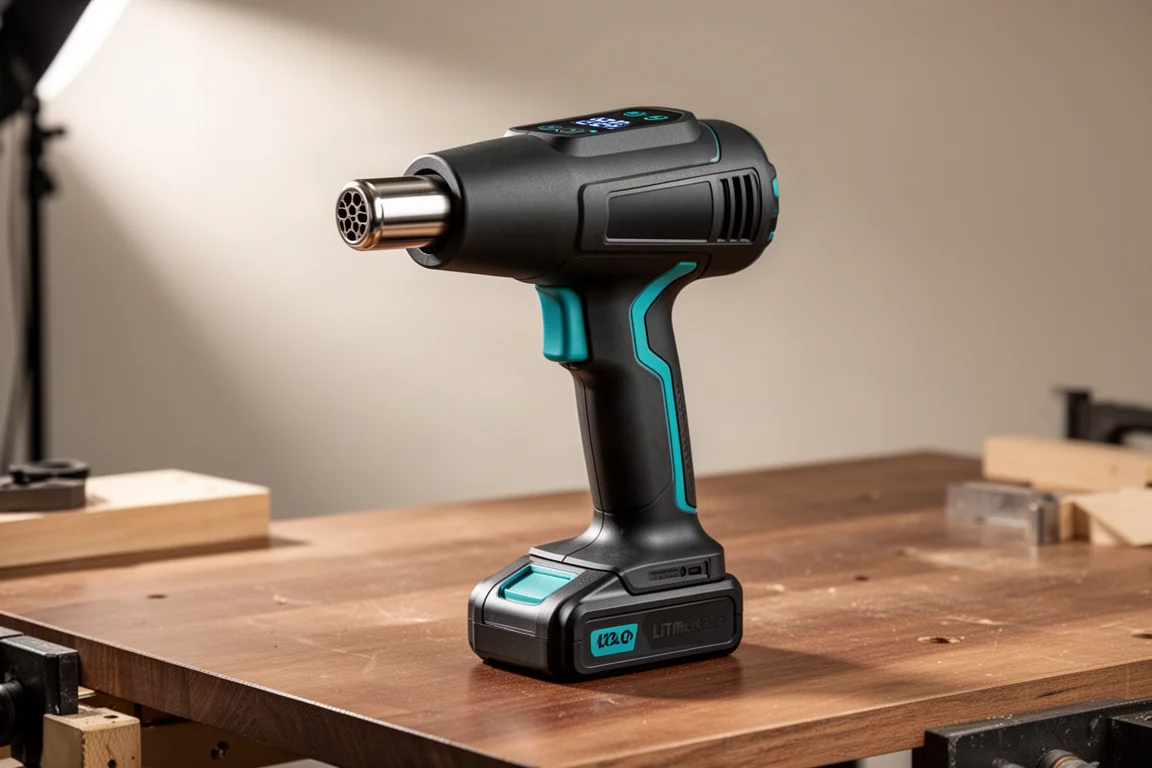
Introduction
Cordless heat guns have long been the compromise tool in most battery platforms. They get warm, they blow air, and they eventually get the job done, but rarely quickly. The Makita 40V heat gun sets out to change that, and after working through heating, shrinking, and bending tasks with it, the short answer is: it is significantly better than the 18V version, though not a total revolution.
What You Get in the Box
The 40V heat gun ships without a case, arriving as the tool itself, a manual, and a bag containing four nozzles. Those nozzles are identical to the ones supplied with the 18V DHG181, which is good news if you already own that tool and have collected accessories. Both guns also share the same pull-out hanging hook that clips back flush into the body.
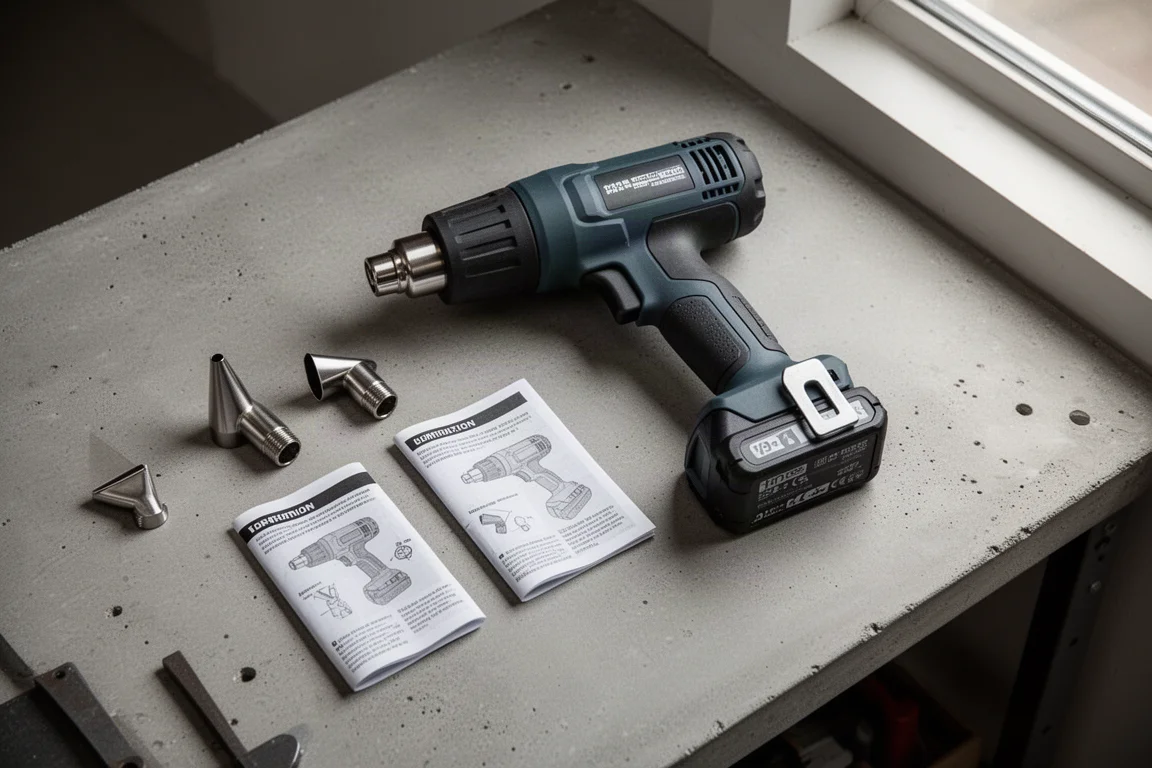
One fitting deserves a note of caution: the flexible reducing nozzle can easily be stretched out of shape if you slide it too far over the barrel. Seat it just over the front lip rather than forcing it over the full depth, or it will lose its grip. Makita also sells optional accessories beyond the standard set, including a small-cable heat shrink nozzle and plastic welding tips that feed plastic rod directly into the gun.
Specs: 40V Versus 18V
On paper, the differences look modest. The 18V model tops out at 550°C, while the 40V reaches 600°C (about 1,110°F). The 18V offers two fan speeds with a maximum airflow of 200 L/min, and the 40V offers four speeds spanning 120 to 200 L/min, so 7.1 CFM at the top end. The numbers sound close, but in use the 40V clearly moves more air and delivers more heat.
Weight is another close call: the 18V measures around 708g, the 40V around 762g. Fitted with a 4Ah battery, the 40V sits at roughly 1.7kg. The 40V body is slightly larger and fatter, but it is still a light, manageable tool.
Controls and Display
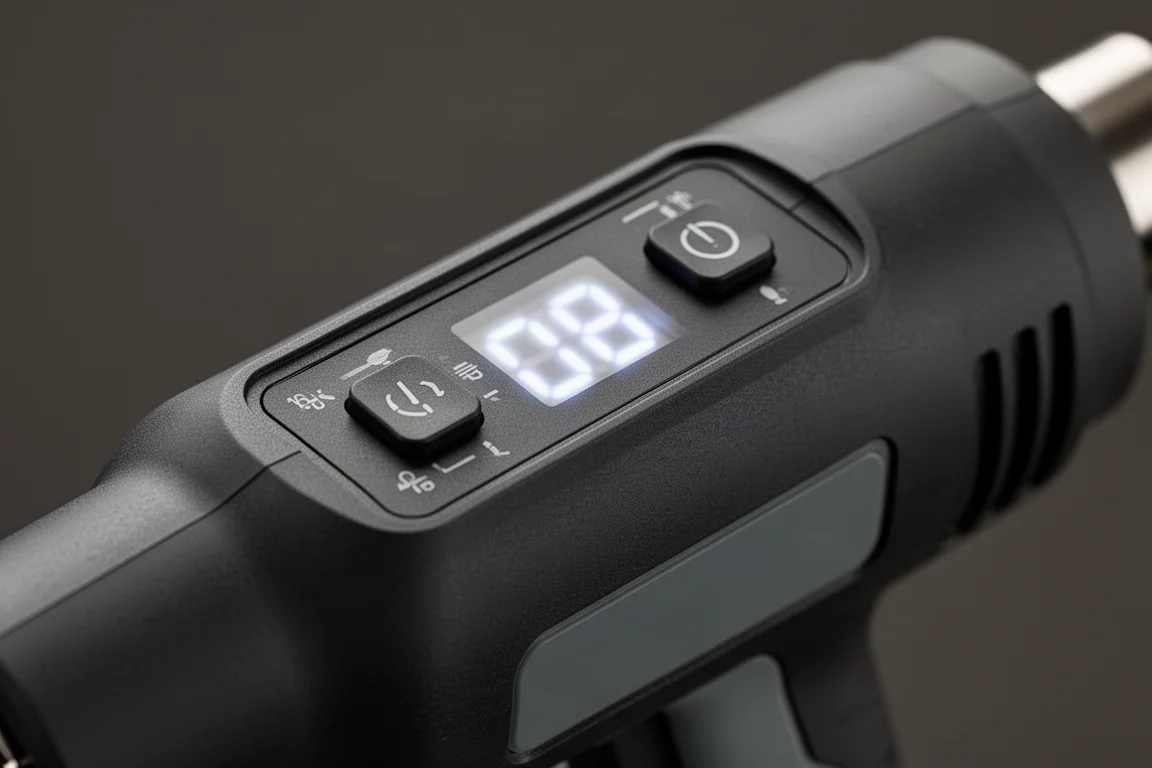
This is where the 40V pulls clearly ahead. The 18V uses a temperature dial and a two-position airflow switch, with no way to know when it has actually reached temperature. The 40V replaces all of that with a top-mounted digital control panel. Temperature adjusts in 10° increments from 50°C up to 600°C, fan speed cycles through four settings, and a live readout shows the gun warming up in real time, so you know exactly when it is ready.
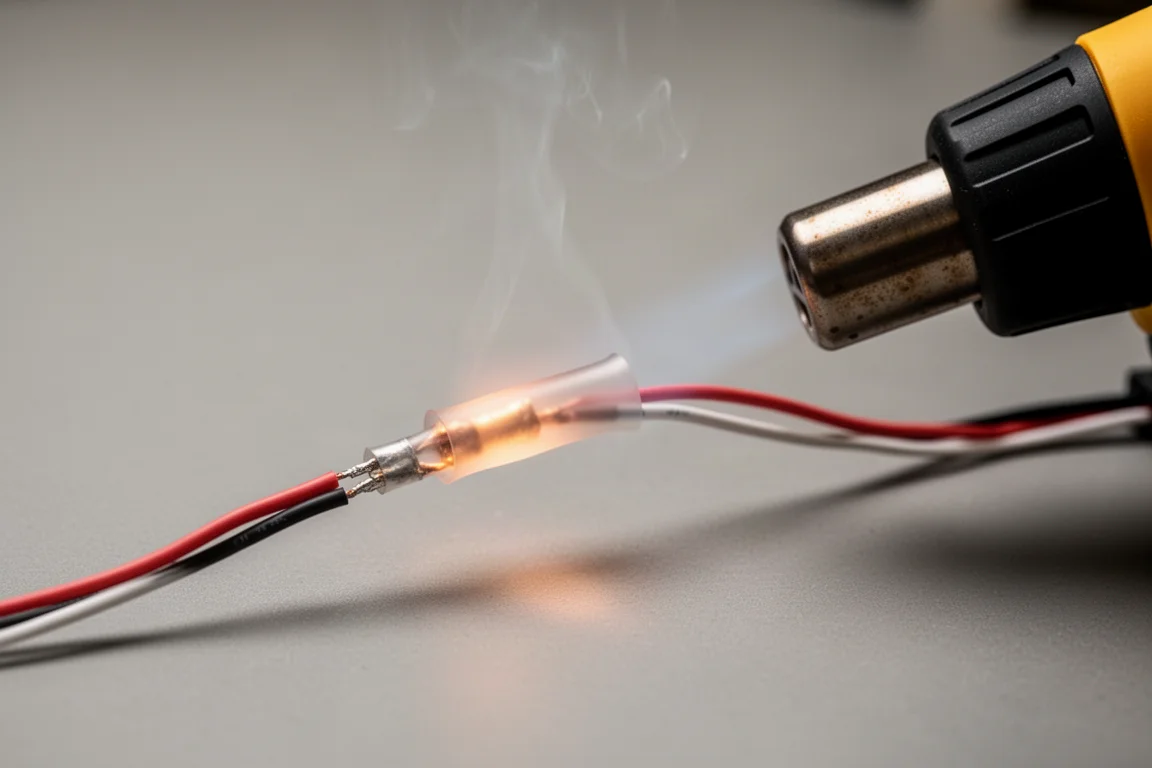
There is also a cool-blow mode, which is genuinely useful. If you have overheated a workpiece or want to back the gun down, you can set it to cool and let the fan purge the heat out. Temperature units can be switched between Celsius and Fahrenheit by pressing both temperature buttons together. The trigger locks on for continuous operation, and the battery acts as a flat base so the gun sits upright on a bench when you need hands-free heat.
Heat-Up Time and Runtime
With the fan on full and the temperature set to 600°C, the gun reaches temperature in roughly a minute and a half, faster than expected. Makita claims around 14 minutes of runtime per 4Ah battery, which would imply roughly 28 minutes with one of the larger 8Ah packs. The gun is loud on the top speed, noticeably gruntier than the 18V, and the extra airflow is genuinely felt from further away.
Heat Shrink Performance
This is the task that sold the upgrade. Heat shrink on small wires that used to be a slow, frustrating job with the 18V came together very quickly on the 40V. Even large-diameter shrink tubing pulled down fast, though at 600°C you need to keep the gun moving because it is easy to scorch the material if you linger.
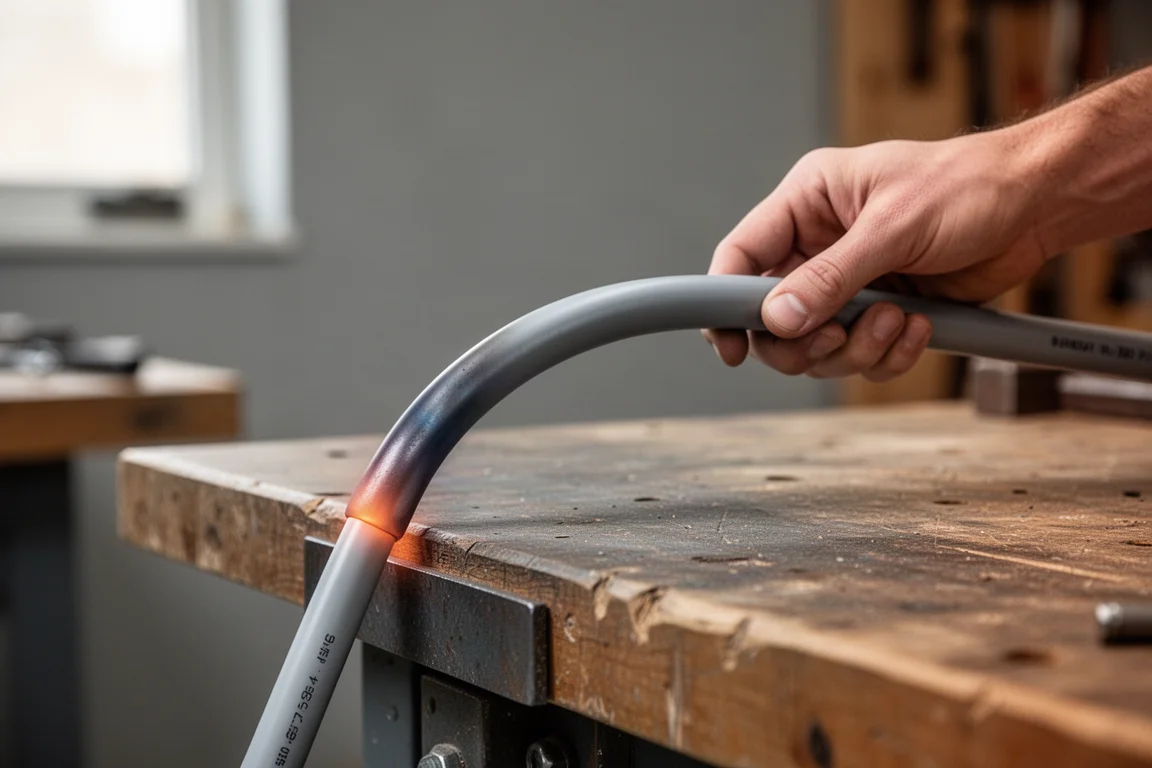
Working close to metal surfaces was also no problem, and shrinking heat from multiple sides noticeably sped the process up. If heat shrink is a regular part of your work, the difference here alone is hard to overstate.
Bending Electrical Conduit
Bending conduit is a classic heat gun job, and the comparison was stark. Both guns were run at maximum with fresh batteries. The 18V, at 550°C, took a long while of rotating and heating a single spot before the conduit began to droop, and even then it needed further work to reach a full bend.
The 40V started softening almost immediately and finished the job much faster. Despite matching paper airflow figures, the 40V audibly moves more air and throws noticeably more heat. This is a recurring pattern with Makita tools: identical numbers on the spec sheet, very different results in the hand.
Candle Melt Test
For a crude heat output comparison, both guns were set at maximum temperature and aimed at candles from a distance. Within a couple of minutes, the 40V had melted the entire top off its candle and the heat was clearly felt from well back, while the 18V had barely taken a divot out of the side of its own. It is not a laboratory test, but the gap in effective heat delivery was obvious.
Should You Upgrade?
The 40V heat gun is better than the 18V in every way that matters: hotter, more airflow where it counts, faster heat-up, precise digital control, and visibly quicker on real tasks like heat shrink and conduit bending. It is not miles better, but it is significantly better, and the jump from “eventually gets there” to “gets it done quickly” is exactly what you want from this kind of tool.
Runtime is the one open question worth planning around. Makita quotes around 14 minutes per 4Ah battery, so for longer sessions you will want a second battery on charge, and the largest-capacity packs are not yet available to extend that further. The lack of a supplied case is also worth factoring in if you like to keep tools protected between jobs.
Conclusion
If you only use a heat gun occasionally, the 18V remains a reasonable light-duty option. But if you do regular heat shrink, conduit work, or anything that depends on sustained heat, the Makita 40V heat gun is the first cordless heat gun in the platform that genuinely feels like a replacement for a corded tool. Precise temperature control, a live readiness display, and clearly stronger heat delivery make it an easy recommendation.
Product link
View more details for Makita 40V Heat Gun
This product is mentioned in the review. Check the specifications, options, and compatibility before buying.
View more details for Makita 40V Heat GunFurther reading
Related Reviews
Power Tools
Best 1-Inch Pistol Impact Wrenches: Three Heavy-Duty Options Compared
We compare three 1-inch pistol impact wrenches, from a budget-friendly Harbor Freight model to a premium Caterpillar unit, to help you choose the right one.
Power Tools
Best 3/4-Inch Impact Wrenches 2026: Five Contenders Compared
We compare five 3/4-inch impact wrenches across price and performance, from a budget Amazon option to Snap-on's most powerful model yet.
Power Tools
Best Budget Cordless Tools 2026: Walmart Finds That Punch Above Their Price
We tested five cordless tools from Walmart, including a high-torque impact wrench that trades blows with Milwaukee and a $35 duster that outperforms its price class.