Power Tools
Mafell KSS 40 Review: An 18V Track Saw With a Built-In Track
A German-engineered 18V track saw with an integrated track, miter stops up to 60 degrees and clever plunge-cut design, compared against the Makita HS005 and Hikoki 36V circular saws.
Introduction
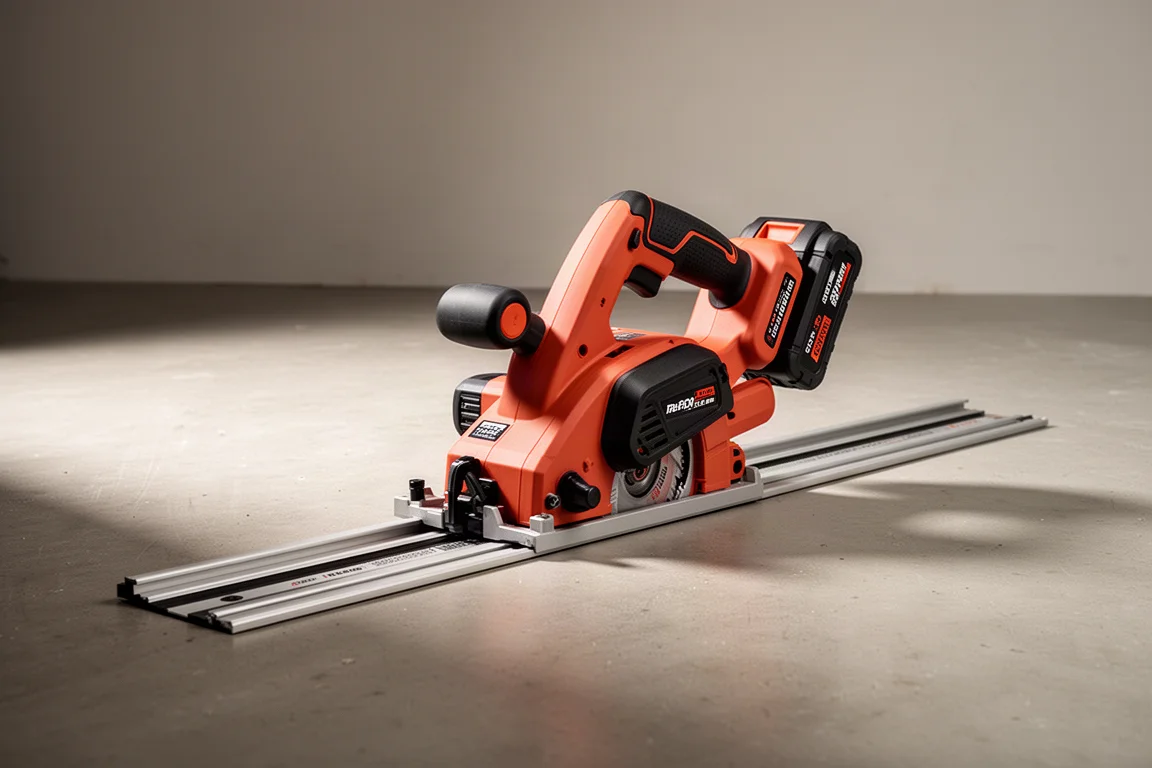
Some tools try to be everything at once and fail. The Mafell KSS 40 mostly succeeds. This is an 18V, 120mm track saw of sorts: a crosscut-focused saw with its own guide track attached directly to the body, powered by two 5.5Ah batteries from the Cordless Alliance System (CAS). It is compact, unusually well thought out, and made in Germany. It also has one limitation that will rule it out for some buyers entirely, and it is worth understanding that before anything else.
What Makes the KSS 40 Different
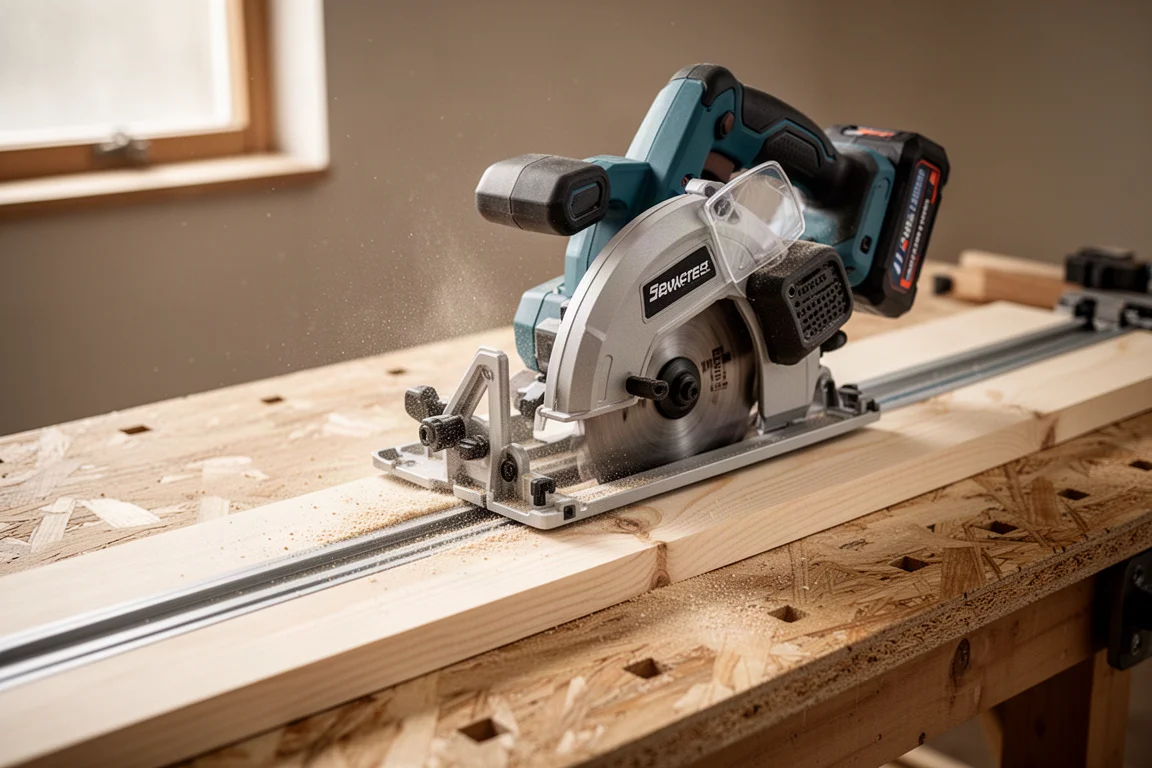
The core idea is simple. Instead of buying a separate guide rail and clamping it down every time, the KSS 40 carries a spring-loaded track on its base. The saw rolls along it, giving you a clean, straight crosscut without needing a speed square or a separate rail. If you want to work freehand, a small lever unclips the saw from the track, and it slides off the back. Reattach it by lining up the front and it locks straight back in.
Plunge cuts work the way you would expect from a track saw: lift the blade to zero, pull back, line up your mark, and plunge. A spring-loaded riving knife pops back down behind the cut once the slot opens up. Depth of cut is set with a dial from zero to 40 and locked with a lever, and the blade lock sits on top of the body rather than in an awkward front position, which makes blade changes far less fiddly than on most saws.
Standout Features on the Mafell KSS 40
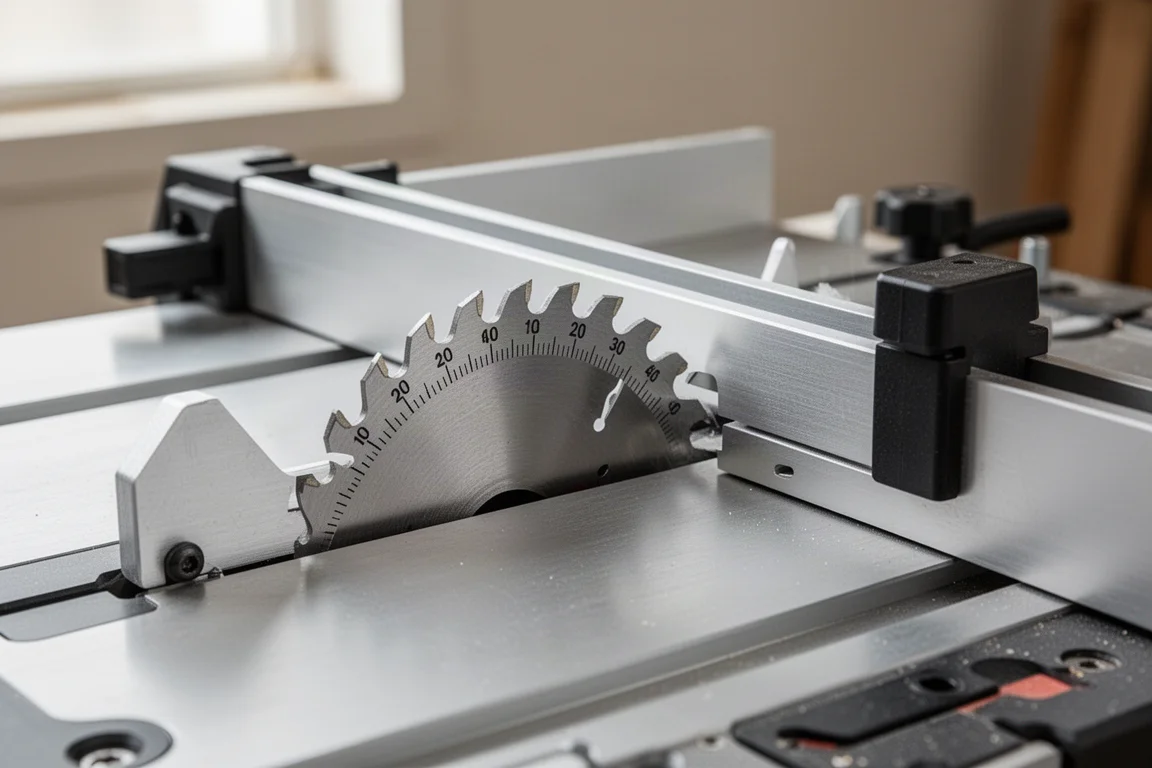
The crosscut base is where this saw earns its keep. There is a solid stop and a movable stop, with detents at 22.5 and 45 degrees, and the movable stop adjusts anywhere up to 60 degrees. Set your angle once and the board runs against the stop for repeatable, accurate miters. In practice this turns the KSS 40 into something close to a portable miter saw, with a maximum crosscut width of around 325mm (about 13 inches) on the base.
Bevel cuts are handled with front and rear knobs, and the depth lever raises and lowers with a satisfying one-handed motion. Left-handed users get a flip-open cover on the trigger area, and the safety lock sits right by your thumb. The dust bag comes with a screw-on cap so sawdust stays inside when you remove it, and a posable elbow lets you orient it in different directions. It even has onboard tool storage, though that is a minor point next to everything else.
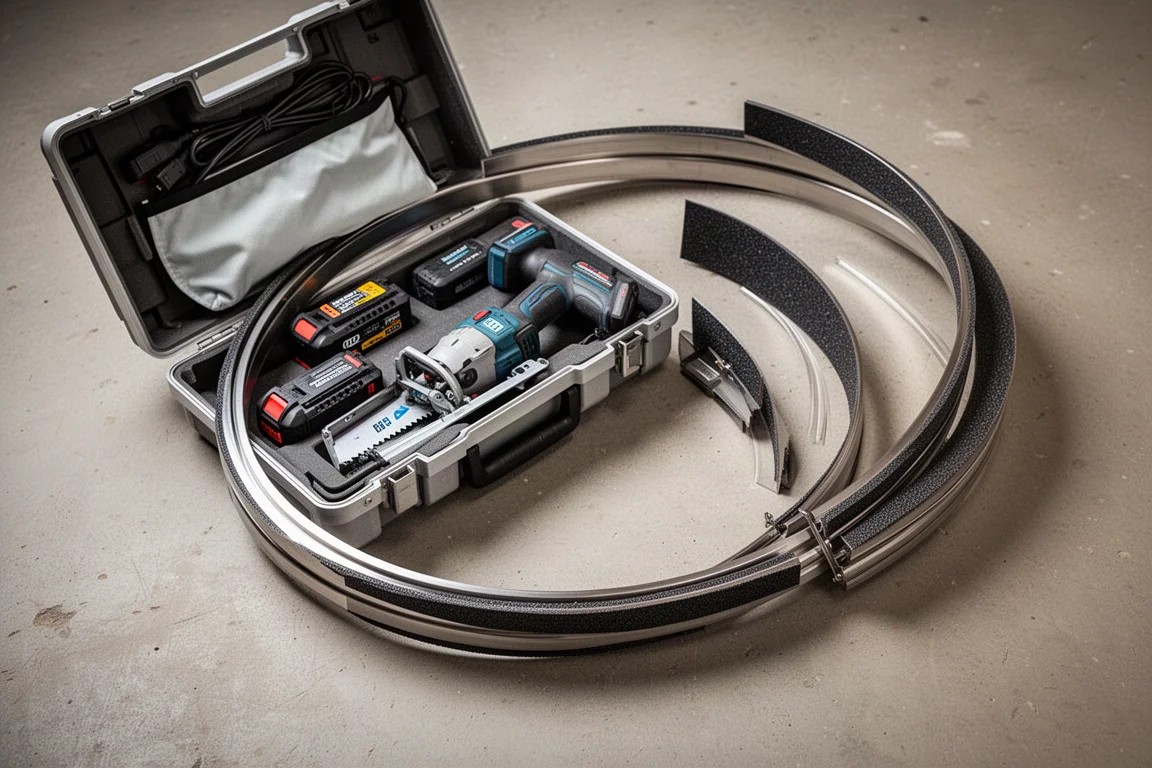
The box also includes a full-length guide rail that locks on both sides and clamps down with a thumb screw, plus a genuinely clever accessory: a flexible stainless track, 1.4 meters long, with a grippy backing that holds position on its own. Clips let you secure it if you do not trust the grip, though clamps are sold separately.
Where the Mafell Falls Short
The headline limitation is depth of cut: 40mm on the track, roughly 29mm at a 45-degree bevel, and only a couple of millimeters more off the track. In markets where framing timber runs to 45mm, that is just barely not enough, and it makes the saw better suited to laminate flooring, decking, and sheet goods under 40mm than to structural framing. A 125mm or 136mm blade would likely have solved it.
Other frustrations are smaller but real. The 5.5Ah CAS batteries are heavy at around 997g each, noticeably heavier than comparable 18V packs from other brands, and battery release is a button on the tool rather than the pack, which requires two hands. The trigger is square-edged and slightly uncomfortable, the handle is narrow, and the riving knife has some lateral play that can catch mid-cut during bevels. The included charger is a slow 3-amp unit, so expect a couple of hours per battery; a rapid charger is available but not included. It also does not reverse bevel, so flush cutting against a wall is limited to about 13mm of clearance.
How It Compares on Paper
As a standalone saw, the KSS 40 is a little back-heavy and cumbersome, running at 6,000 RPM and weighing about 3.25kg with a battery fitted. On the track, though, it comes alive, and the whole system fits in one box that can sit on a car seat, which is a genuine advantage for flooring work. Because the base is flat, you can even lay it on its side and run along skirting boards to undercut them for floor installation, something neither of the saws below can do.
Buying Advice: KSS 40 vs Makita HS005 vs Hikoki 36V
The Makita HS005 125mm circular saw runs at 6,700 RPM and, together with the Hikoki 36V circular saw at 7,000 RPM, forms a different class of tool. Both support the reverse bevel feature, letting the base tilt so the blade angles out at the bottom for flush cutting against walls. If you cut out flooring for a living, that is the feature to prioritize.
Power-wise, the Makita and Hikoki have the edge, which is fair given they run on 36V platforms rather than 18V. The Hikoki in particular has plenty of power on tap. The Mafell cannot match them raw, and it is not really trying to: it is a different tool for a different job.
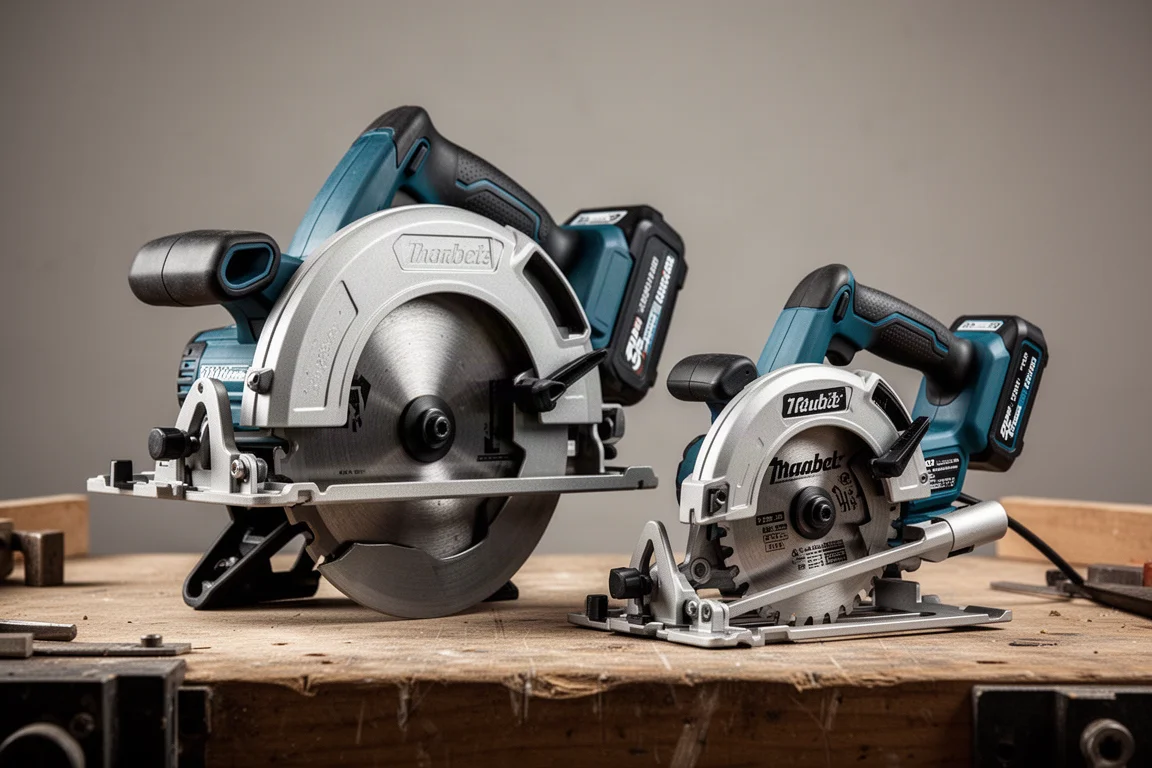
The sensible pairing, and the one that makes the most sense for flooring and decking work, is a KSS 40 for fast, accurate crosscuts and installation work, plus a reverse-bevel-capable saw like the Makita or Hikoki for demolition and flush cuts against walls. The Mafell commands a premium price, though for a kit with two batteries, a charger and a full track system, the overall package is more reasonable than the badge might suggest.
Conclusion
The Mafell KSS 40 is a feature-packed, well-engineered take on the portable crosscut saw, and the integrated track system is genuinely one of the better ideas in cordless woodworking. If it cut to 45mm, it would be close to unbeatable. At 40mm, it remains an excellent choice for flooring, decking, and repeatable angled crosscuts, provided you accept its depth limit and pair it with a flush-cutting saw for demolition work.
Product link
View more details for Mafell KSS 40 18V 120mm Track Saw
This product is mentioned in the review. Check the specifications, options, and compatibility before buying.
View more details for Mafell KSS 40 18V 120mm Track SawFurther reading
Related Reviews
Power Tools
Best 1-Inch Pistol Impact Wrenches: Three Heavy-Duty Options Compared
We compare three 1-inch pistol impact wrenches, from a budget-friendly Harbor Freight model to a premium Caterpillar unit, to help you choose the right one.
Power Tools
Best 3/4-Inch Impact Wrenches 2026: Five Contenders Compared
We compare five 3/4-inch impact wrenches across price and performance, from a budget Amazon option to Snap-on's most powerful model yet.
Power Tools
Best Budget Cordless Tools 2026: Walmart Finds That Punch Above Their Price
We tested five cordless tools from Walmart, including a high-torque impact wrench that trades blows with Milwaukee and a $35 duster that outperforms its price class.