Kitchen Knives
Made by Middleton Echo Line: 6-Inch Nakiri and 8-Inch Chef's Knife Review
Two handmade kitchen knives from an American bladesmith's Echo Line: a nimble Nakiri and a classic Chef's Knife, reviewed on the cutting board.
Introduction
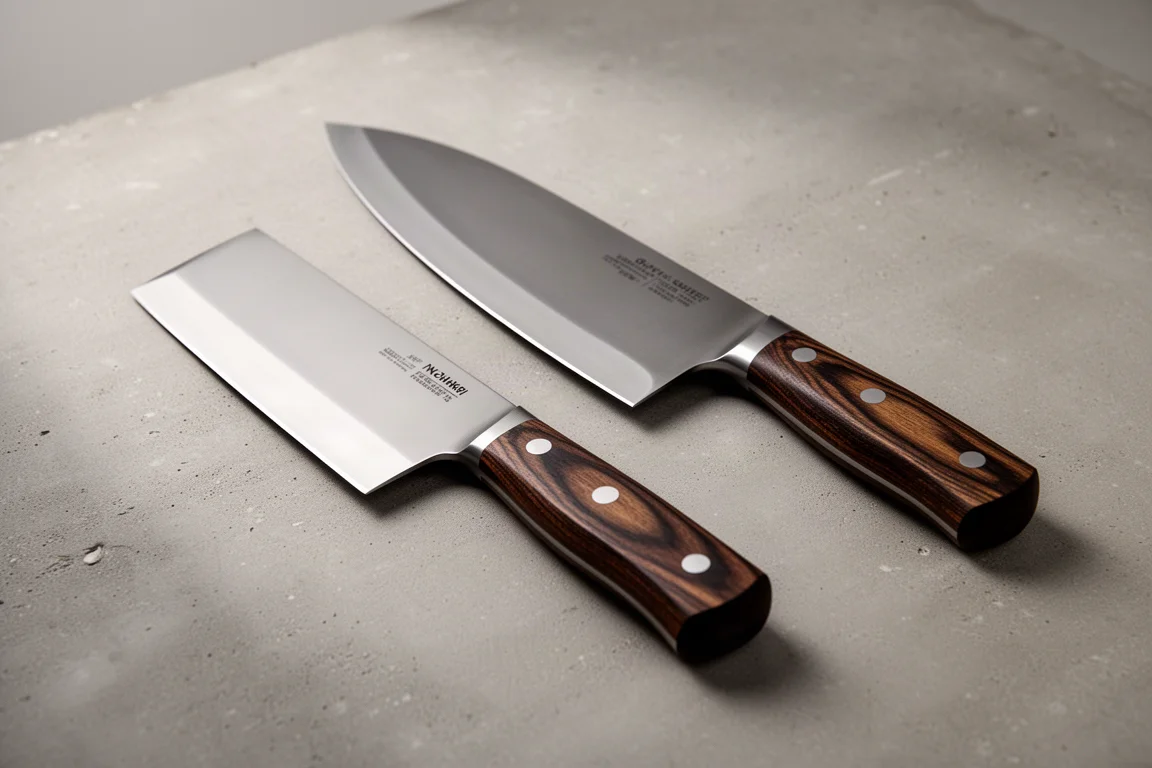
The Echo Line from Made by Middleton, the workshop of American bladesmith Quentin Middleton of St. Stephen’s, South Carolina, brings handmade kitchen knives to an approachable price point. Two knives from this line stand out for home cooks looking to step up from factory-made blades: the 6-inch Nakiri and the 8-inch Chef’s Knife.
Both share the same design language. Each uses dyed birch veneer handle scales with rivets and a full tang construction, and each is part of a three-knife set that also includes a paring knife. Here is how they perform where it matters: on the cutting board.
The Nakiri: A Vegetable Knife With Personality
The Nakiri measures 6 inches, a little over 150 millimeters, which sits slightly below the more common 165-millimeter Japanese nakiri length. The blade profile is fairly flat but not entirely so: it curves up just slightly at the tip rather than running parallel to the handle, which makes it a surprisingly good rock chopper in addition to push cutting.
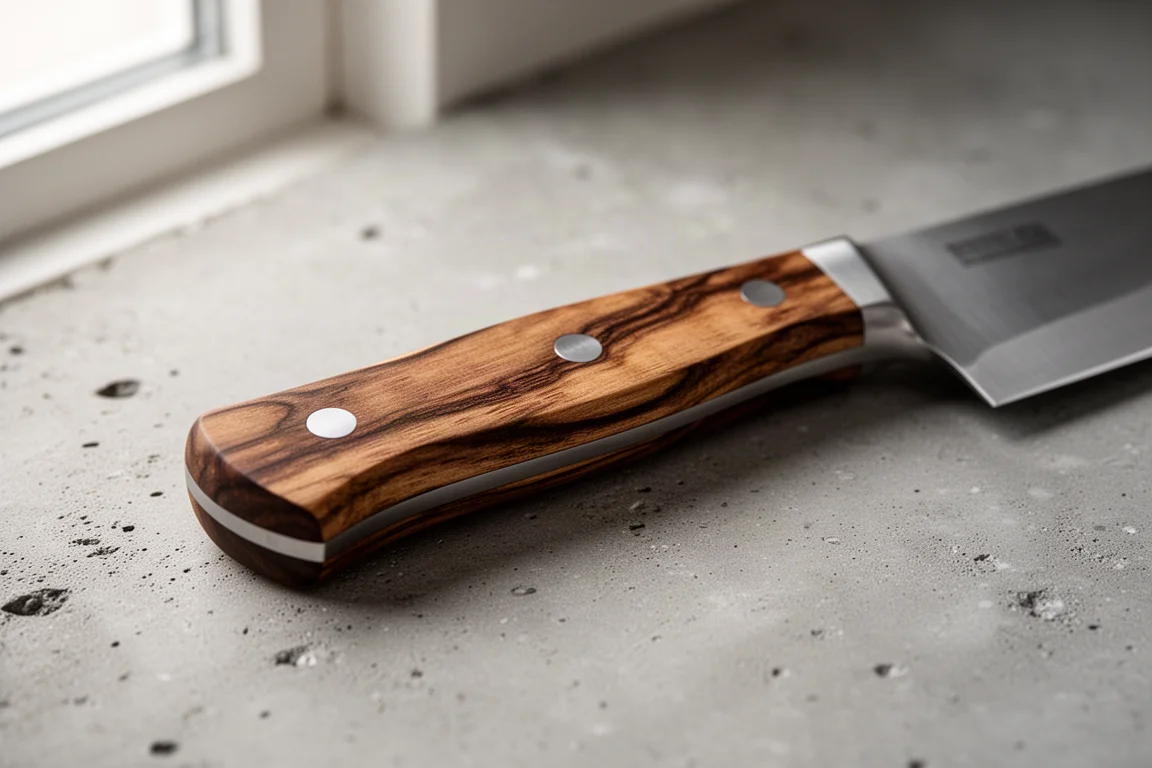
The handle follows the same pattern as the rest of the Echo Line. It has a coke bottle shape with a bulge in the middle that makes it comfortable to hold, and the knife feels light and nimble in the hand. Note that the rivets and full tang stick out very slightly from the handle, which appears to be a reaction of the wood to a dry climate rather than a craftsmanship issue, since reputable makers see the same behavior.
Cutting Performance: Where It Shines and Where It Struggles
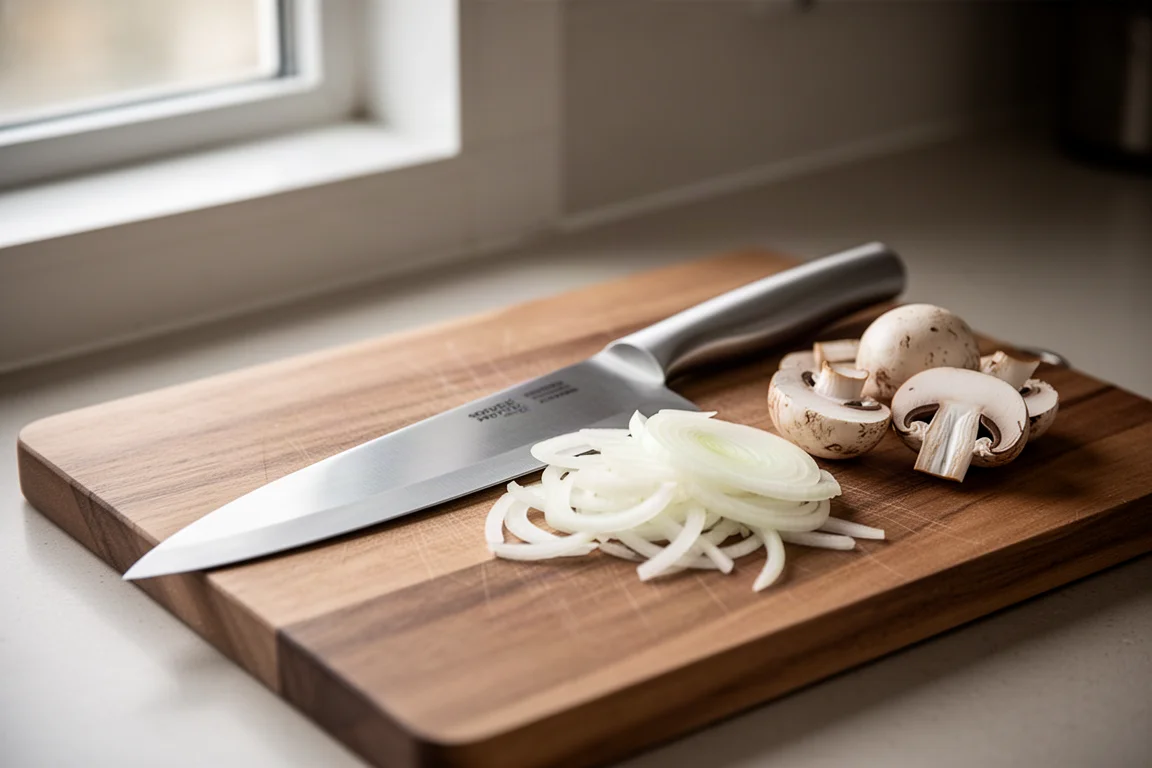
Where the Nakiri excels is in dense vegetables. Onions, mushrooms, and Brussels sprouts were handled beautifully, with clean vertical slices and confident cuts. The balance point sits right at the junction between handle and finger choil, and the added finger choil makes a pinch grip genuinely comfortable.
The trade-off comes with skinned, juicy produce. Cherry tomatoes and bell peppers expose the limits of the wide V-grind, which leaves a lot of steel above the primary bevel. A slightly more toothy, two-tier edge would help pierce taut tomato skins, and a taller grind would improve food release, since dense produce like onions tends to grip the blade as it closes during the cut. The bright side of that V-grind: it makes the knife resilient. This is a blade you can confidently use on hard tasks like cheddar cheese without worrying about chipping, which is not true of many thinner Japanese-style knives.
Handle Comfort and Balance
Compared to the shorter-bladed paring knife in the same line, the Nakiri is far better balanced. The paring knife was handle-heavy and awkward to pinch grip; the Nakiri balances at the choil, letting you feel the coke bottle grip even when pinching. Combined with the light weight, it is an easy knife to work with for extended sessions.
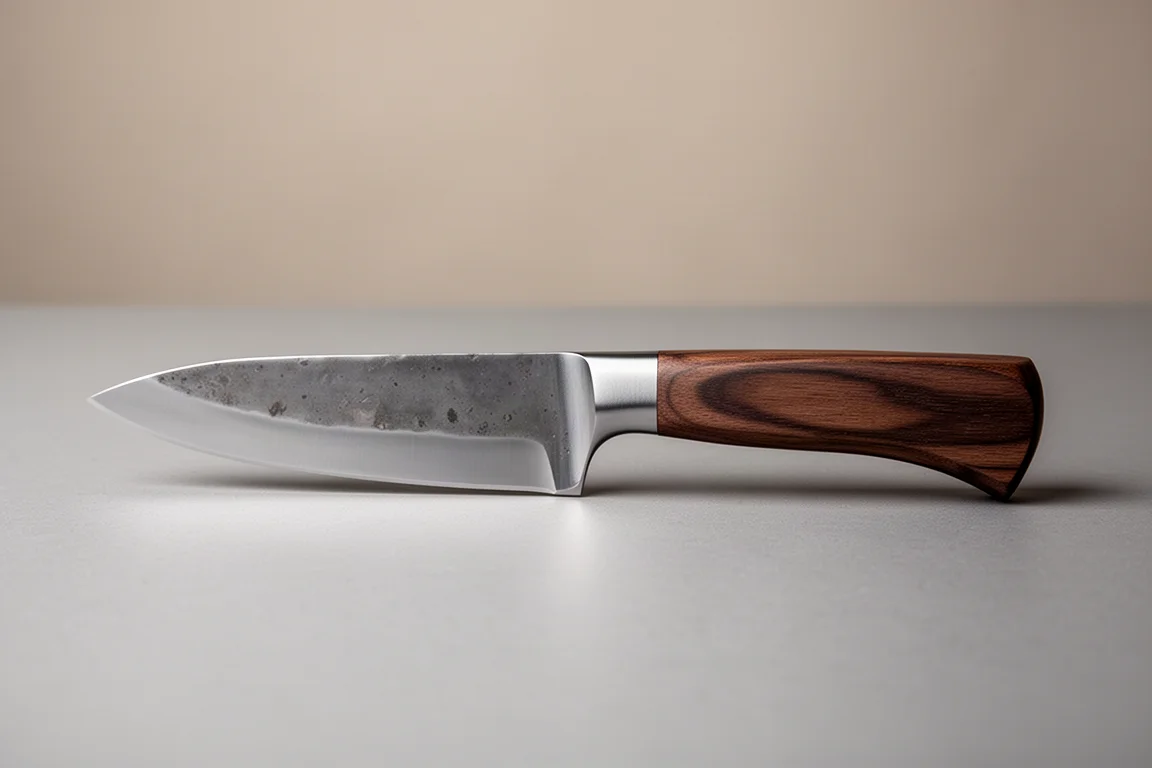
For buyers comparing it with Japanese nakiri conventions, the slightly shorter 150-millimeter-class blade is nimble, though many cooks prefer 165 millimeters or more for large tasks like cabbage, squash, and eggplant.
The Chef’s Knife: The Classic All-Rounder
The 8-inch Chef’s Knife completes the Echo Line trio and rounds out the set for general-purpose prep work. It carries the same construction as its siblings: dyed birch veneer scales, rivets, full tang, and the same comfortable coke bottle handle geometry.
An interesting detail across the line: the Nakiri, the Chef’s Knife, and the third knife in the set all share nearly the same belly height at the heel, differing by only half a millimeter or so. The profiles are very different, which means each knife performs distinctly despite that shared dimension. For buyers, that means the Chef’s Knife handles the broad daily tasks while the Nakiri covers vegetable-focused work with a completely different feel.
Buying Advice: Which One Fits Your Kitchen
If your prep work is mostly vegetables, the Nakiri is the more distinctive pick: light, nimble, well balanced, and forgiving thanks to its resilient grind. If you want one knife that does everything, the 8-inch Chef’s Knife is the safer all-rounder, and it is the next in the line worth a close look.
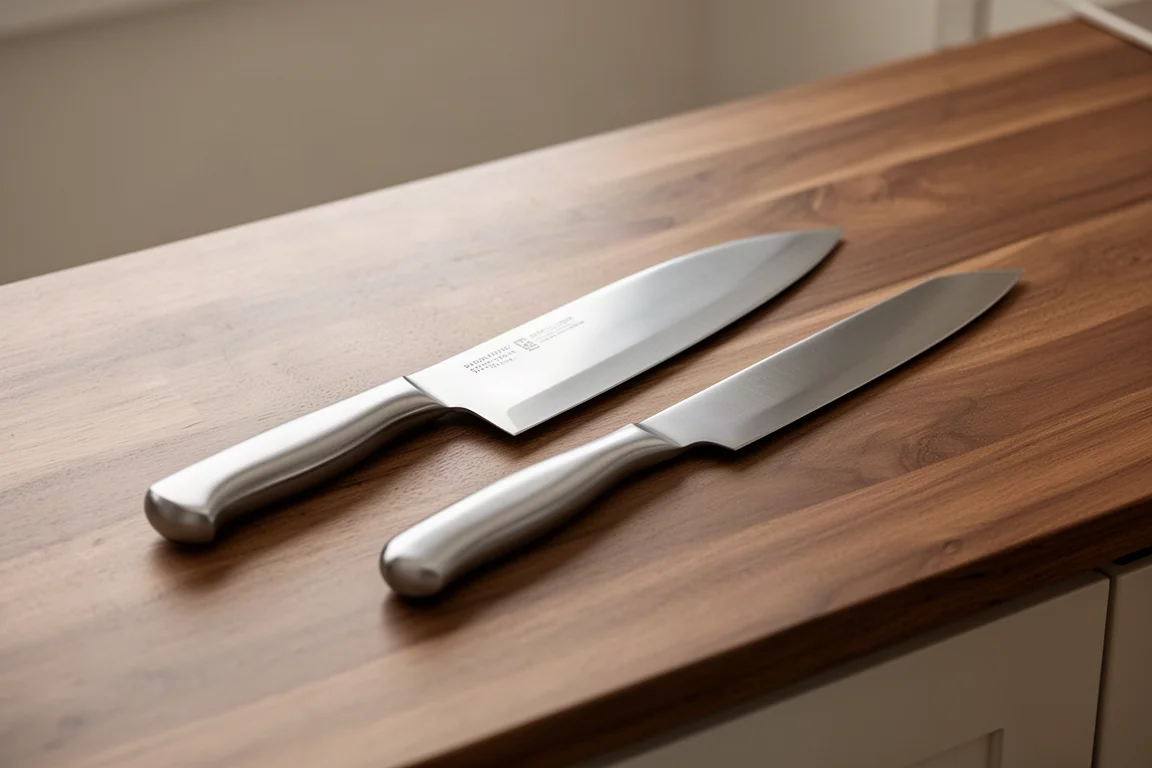
Both knives target the entry-level buyer moving from factory-made knives to handmade ones, and the pricing reflects that. The Nakiri sits at around 200 USD, which is reasonable for a handmade blade. If you prefer a longer vegetable knife, it is worth noting the blade could ideally sit closer to 165 or even 180 millimeters, but at its current length it remains a genuinely light and enjoyable tool.
Conclusion
The Echo Line delivers handmade quality at an accessible price, with comfortable handles, sensible balance, and a resilient V-grind that suits real kitchen abuse. The Nakiri is the standout for vegetable-focused cooks, while the Chef’s Knife fills the everyday role. Sharper edge refinement would unlock even more performance, but as first steps into handmade cutlery, both are easy knives to recommend.
Product link
View more details for Made by Middleton 6-inch Nakiri (Echo Line)
This product is mentioned in the review. Check the specifications, options, and compatibility before buying.
View more details for Made by Middleton 6-inch Nakiri (Echo Line)Further reading
Related Reviews

Kitchen Knives
Best Chef's Knives 2026: 27 Popular Options Tested and Ranked
A comprehensive review of 27 chef's knives ranging from $18 to $380, with honest assessments of handle comfort, blade balance, and real-world performance.

Kitchen Knives
Best Chef's Knives Under $75: Two Tested Recommendations
Two practical 8-inch chef's knives that balance sharpness, comfort, and durability without premium pricing.

Kitchen Knives
Best Chef's Knives 2026: 27 Options Tested and Ranked
A comprehensive review of 27 chef's knives ranging from $18 to $380, with honest assessments of handle design, balance, blade profile, and real-world performance.