Kitchen Knives
MAC MTH-80 Chef's Knife Review: A Hybrid of Japanese Precision and Western Comfort
The MAC MTH-80 has been named a best overall chef's knife, and its blend of sharpness, balance, and lightweight handling explains why.
Introduction
The MAC MTH-80 chef’s knife occupies an interesting spot in the knife world: a Japanese-made blade with a Western-style handle, praised by major publications and repeatedly recommended as a best overall chef’s knife. This review covers what makes it special, where it excels, and the trade-offs you should weigh before buying.
Why the MAC MTH-80 Gets So Much Praise
MAC may not have the household recognition of Wusthof or Zwilling, but the company has been making knives since 1964 and has sold over 25 million of them. Every MAC knife is made in Seki City, Japan, a region with a long knife-making history. The MTH-80 belongs to MAC’s most popular line, the Professional collection.
The knife has earned praise from Good Housekeeping, Food and Wine Magazine, and has been named the best overall chef’s knife by the New York Times Wirecutter. That combination of heritage and third-party recognition is rare for a brand that most shoppers have never handled.
Key Features and Build Quality
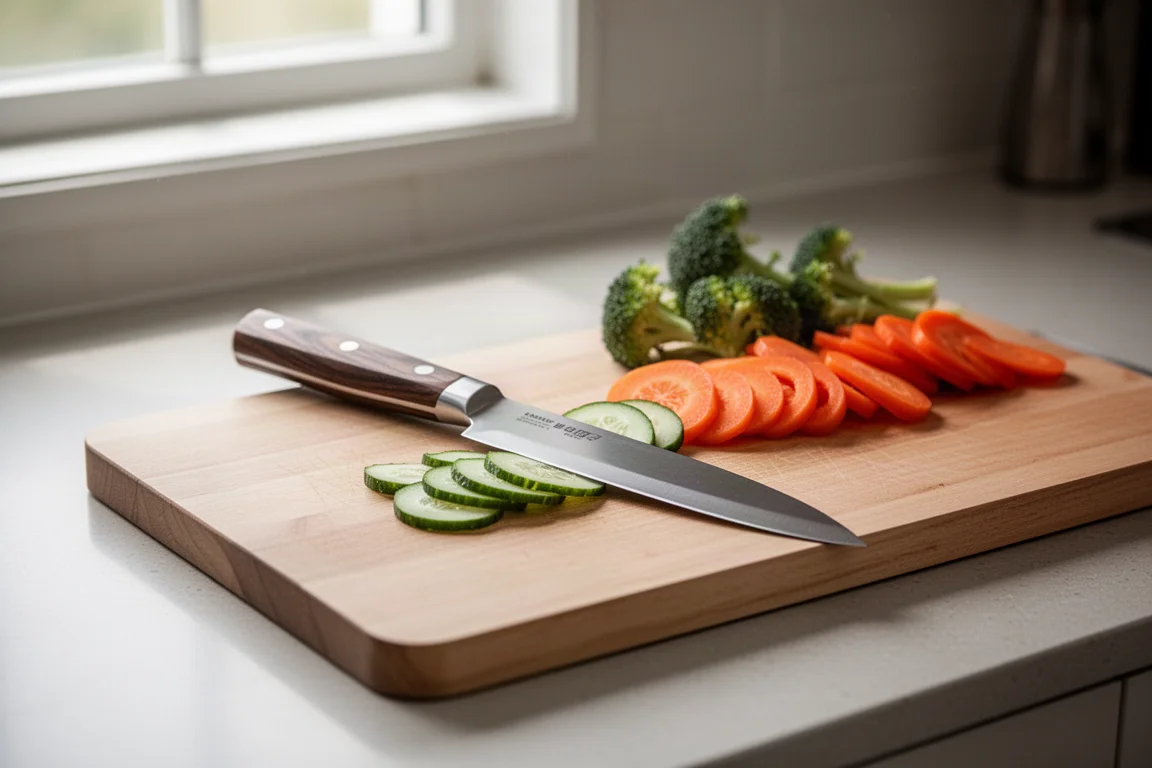
The blade is made from high carbon steel with a Rockwell Hardness rating of 59, which sits on par with most premium knives. That hardness level is a genuine sweet spot: softer steel loses its edge quickly, while harder steel becomes brittle and prone to chipping. The handle is PakkaWood, a wood and resin composite that is heat resistant, moisture resistant, and very durable.
MAC blades are stamped rather than forged, but the process is more involved than typical stamping. Each blade goes through sub-zero tempering, where the steel is treated with liquid hydrogen to make the alloy harder and improve edge retention. After stamping, the entire side of the blade is ground from spine to edge into a V taper, and the bolsters are welded on. This labor-intensive process results in a sharper and more precise edge.
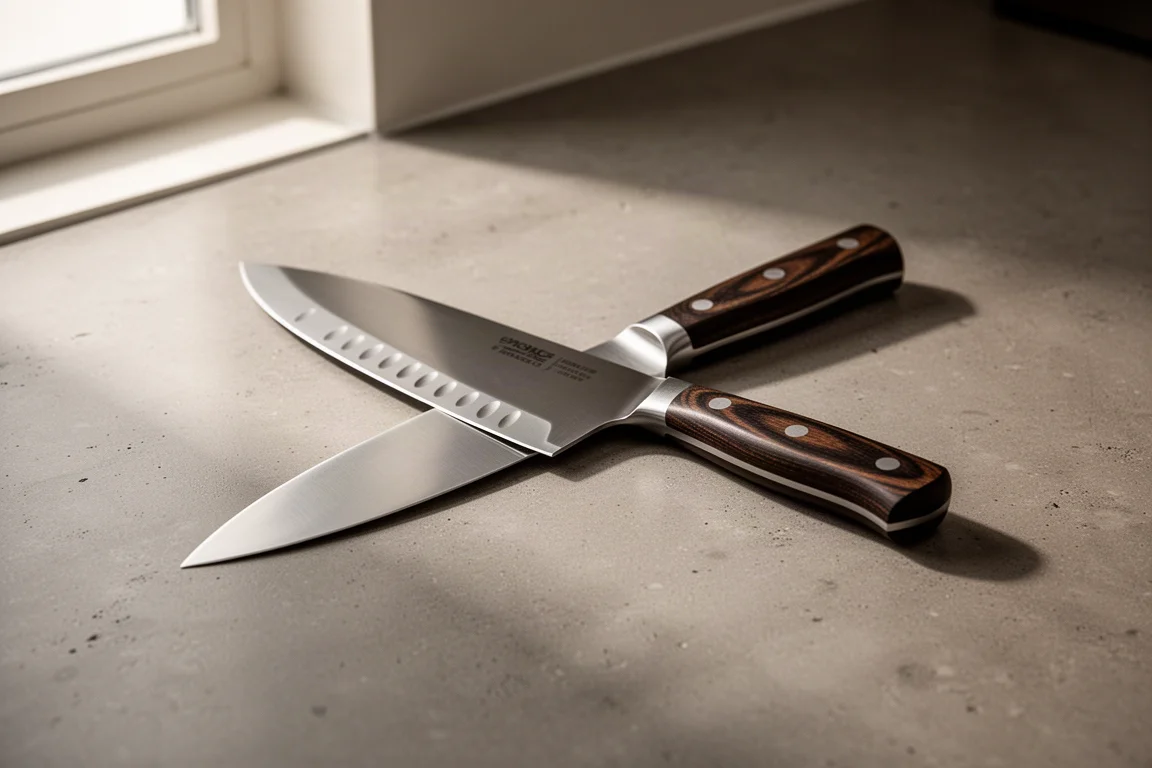
The blade profile is a thoughtful hybrid. Compared to most Japanese chef’s knives, the edge is slightly more curved, allowing a rocking motion. Compared to most Western-style knives, the edge is flatter and straighter, allowing more precise cuts. You essentially get a flatter edge for slicing and chopping with just enough curve for rock chopping, almost a crossover between a chef’s knife and a santoku. A hollow edge, also known as a Granton edge, adds small dimples that create air pockets to help food release from the blade, though the practical difference is modest in everyday use. The knife has a full tang with a triple riveted handle shaped much like a classic Western knife, with a subtle curve toward the butt end and a classy, understated look.
What We Like About the MAC MTH-80
The first thing you notice is how lightweight it is. It does not feel nearly as heavy as most Western-style knives, which makes it more nimble and maneuverable, and it reduces fatigue during long chopping sessions. The balance point sits right at the bolster between handle and blade, and the smooth handle has a comfortable curve to rest your finger on.
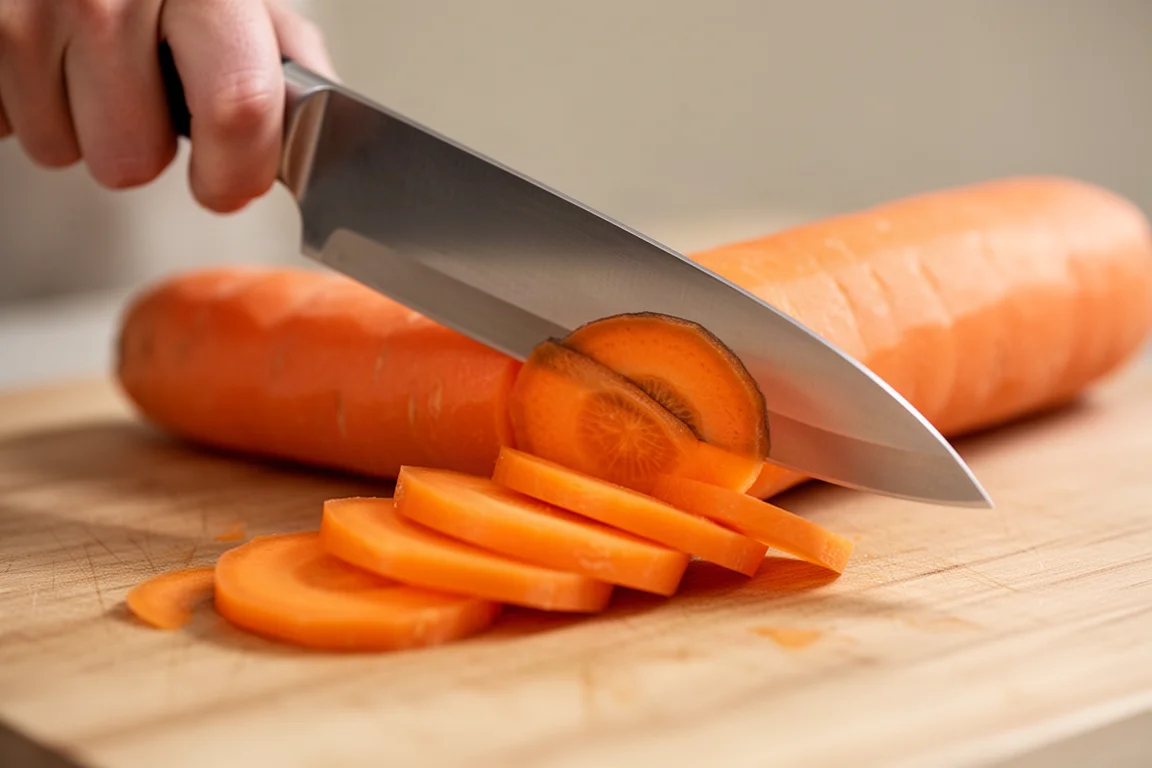
The blade shape is the other standout. It is sharp enough out of the box to cut through hard ingredients like carrots and potatoes with ease, and it is one of the sharpest knives in its class straight from the box. The V taper from spine to edge and the high carbon content also enhance edge retention, so you will not need to sharpen it often.
Things to Consider Before Buying
The lightness cuts both ways. If you are used to Western-style knives, you will need to apply slightly more force when pressing down on firm ingredients. The handle is also noticeably short, which is fine for smaller hands but may feel uncomfortable for larger hands.
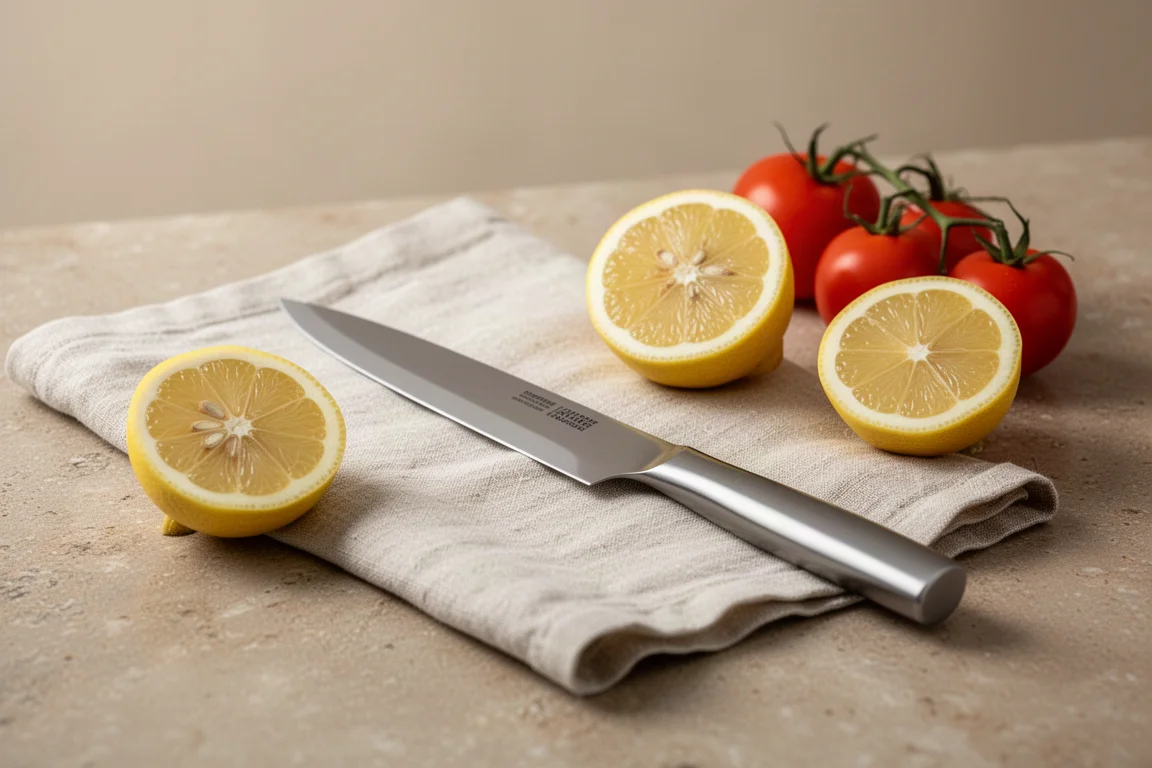
The ultra-fine edge feels a bit more delicate than a German knife. The instructions on the box explicitly warn against cutting bones, frozen food, or hard squash. Because of the high carbon content, the steel is more prone to rust and stains than stainless steel, especially when cutting acidic foods like citrus or tomatoes. MAC’s philosophy prioritizes performance over stainless appearance, and any rust or stains can be polished off, but it requires more care.
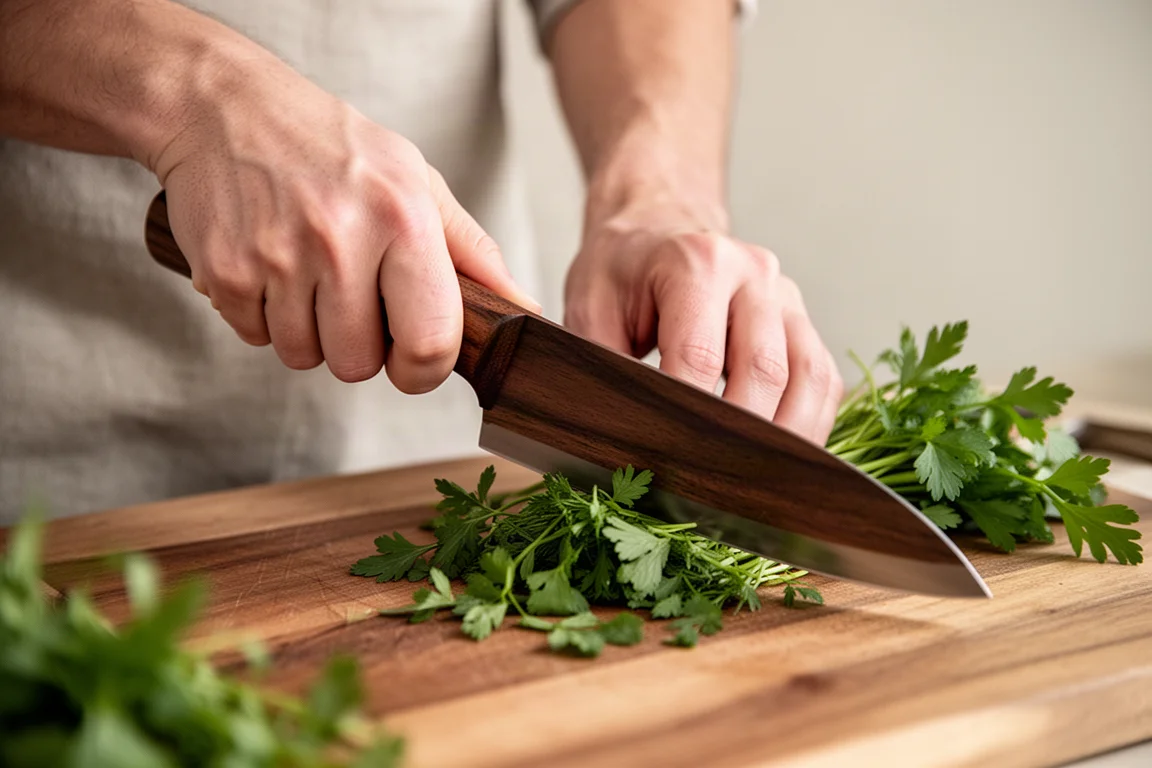
The narrow blade profile has one more drawback: if you are used to scooping chopped herbs or other ingredients off the board with the flat of the blade, there is not much room to scoop with.
Buying Advice
The MAC MTH-80 is listed on MAC’s website for $195, which is on the high end, especially compared to other stamped knives. MAC knives are available on Amazon and MAC’s own website, but they are not widely stocked in stores. If you buy through Amazon, make sure the seller is on MAC’s list of authorized sellers, because the warranty is void otherwise.
Overall, this is an extremely well-rounded knife that blends Japanese and Western styles: a Western-style handle with a harder, lighter, nimbler Japanese-style blade. If you want a well-made knife that is comfortable, balanced, and ultra sharp, it belongs in the conversation for the best chef’s knife. If instead you want a knife you can beat up in the kitchen with softer steel and less risk of chipping, a Western-style knife from Wusthof, Zwilling, or Made In may suit you better.
Conclusion
The MAC MTH-80 earns its reputation through a rare combination of out-of-the-box sharpness, excellent edge retention, and lightweight balanced handling. It rewards careful use and regular maintenance rather than rough treatment. For home cooks who prioritize cutting performance and precision, it is an easy recommendation.
Product link
View more details for MAC MTH-80
This product is mentioned in the review. Check the specifications, options, and compatibility before buying.
View more details for MAC MTH-80Further reading
Related Reviews

Kitchen Knives
Best Chef's Knives 2026: 27 Popular Options Tested and Ranked
A comprehensive review of 27 chef's knives ranging from $18 to $380, with honest assessments of handle comfort, blade balance, and real-world performance.

Kitchen Knives
Best Chef's Knives Under $75: Two Tested Recommendations
Two practical 8-inch chef's knives that balance sharpness, comfort, and durability without premium pricing.

Kitchen Knives
Best Chef's Knives 2026: 27 Options Tested and Ranked
A comprehensive review of 27 chef's knives ranging from $18 to $380, with honest assessments of handle design, balance, blade profile, and real-world performance.