Camping Chairs
M Snail Ultralight Chair Review: Carbon Fiber and Dyneema for Around $60
A 1.6 lb camp chair built from carbon fiber and Dyneema at a fraction of the usual price, plus what one frame failure revealed about its bonded joints.
Introduction
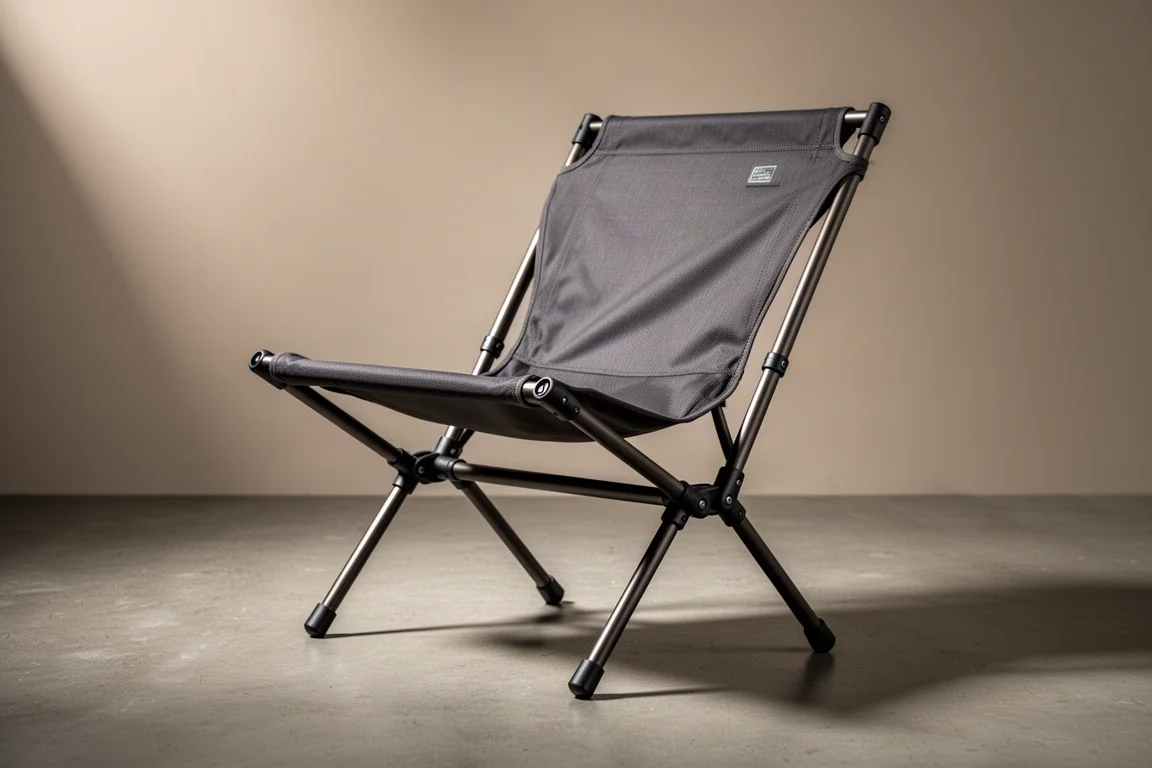
An ultralight camp chair that pairs a carbon fiber frame with a Dyneema seat is normally an expensive proposition. Gear built from these materials often runs into the hundreds of dollars, and some pieces approach four figures. The M Snail ultralight chair takes the opposite approach: the same class of materials, a total setup weight of 1.6 lbs, and a price that generally lands somewhere between $60 and $70 on Amazon, depending on the day. That combination is what made this chair worth living with over roughly a month and four trips out. It is also why a frame failure on the most recent trip deserves a careful explanation rather than a quick verdict.
Who This Chair Is For
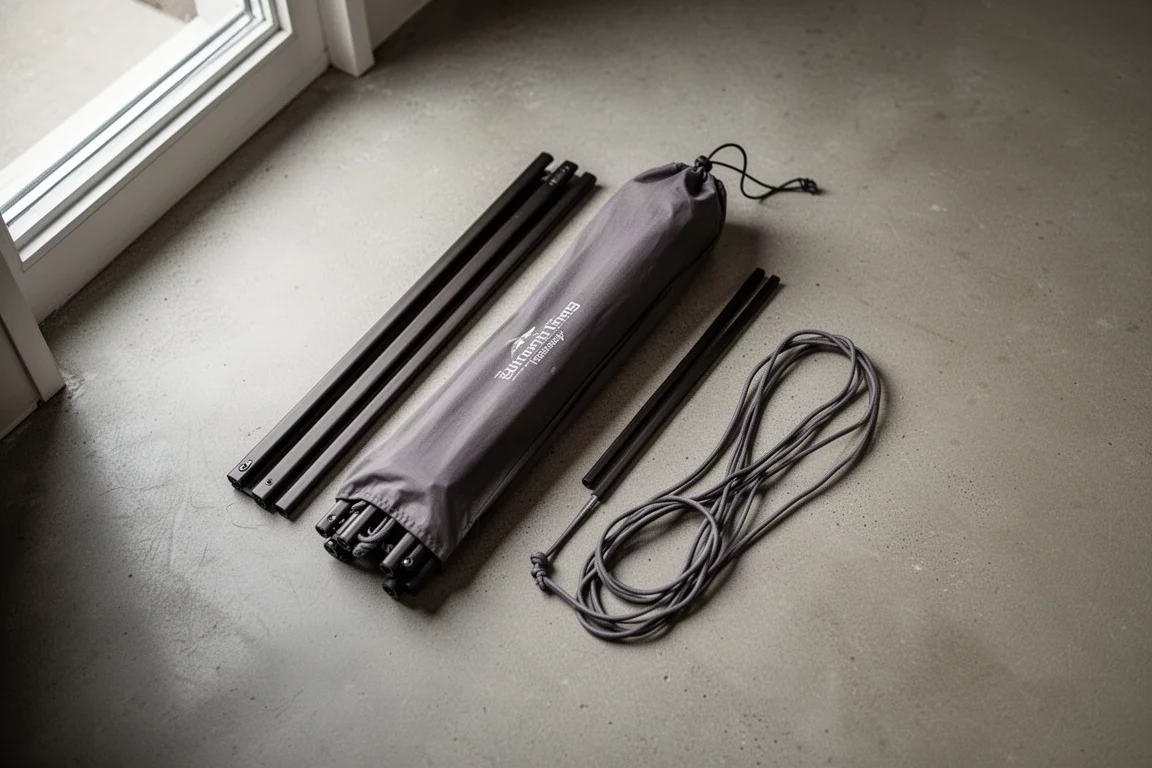
This chair is aimed at people who count weight. At 1.6 lbs for the complete setup, it fits the pack list of a backpacker or bikepacker who has been leaving a chair at home because of the bulk and the grams. It folds into its own storage bag, so it travels small as well as light. The stated weight limit is 330 lb, which means it is not restricted to smaller users, and it gives heavier campers a genuinely viable option.

If your priority is a chair that disappears into a pack and comes out at the end of a long day, this is the category of product to look at. If you want a wide, plush seat with armrests for car camping, this is not that chair, and the low seat height is part of the ultralight formula rather than a flaw.
Main Strengths: Carbon Fiber, Dyneema, and 1.6 Pounds
The frame is carbon fiber and the seat panel is Dyneema, two of the most advanced materials currently used in the outdoor space. Carbon fiber keeps the pole structure light and stiff, while Dyneema brings high strength at very low weight in the seat fabric. Together they produce a chair that weighs 1.6 lbs in total and still feels technically strong under load.
The frame assembles from four legs, two front supports, and two rear supports, all threaded on an internal shock cord system so the sections snap together in sequence. Setup is quick and the packed size is small enough to slot into a pack without reorganizing everything else.
What makes the chair unusual is the price relative to the materials. Comparable outdoor products built with carbon fiber and Dyneema typically cost hundreds of dollars, sometimes far more. Finding those materials in a chair that sells for roughly $60 to $70 is the headline here, and it is the reason this product stood out enough to test properly rather than simply note on a spec sheet.
The Frame Failure and What Caused It
After roughly four trips, the chair failed. It happened on a backpacking trip in the evening, while sitting in the chair during dinner and then standing up to move a camera. The chair broke in a way that cannot be repaired.
The failure point sits between two poles on the rear support. Each rear support is made of two tube sections joined by a short connector pole that is glued into one of them. On this chair, that connector pole came unglued and shifted up inside the tube, so it could no longer bridge the two sections. Without the connector doing its job, the joint would not hold, and the load that passed through it splintered and cracked the carbon fiber.
That detail matters, because this was not a failure of the carbon fiber or the Dyneema. It was a manufacturing defect involving the adhesive that holds the connector pole in place. A repair is not practical either, since the connector pole is lodged deep inside the tube and cannot be extracted without breaking something else.
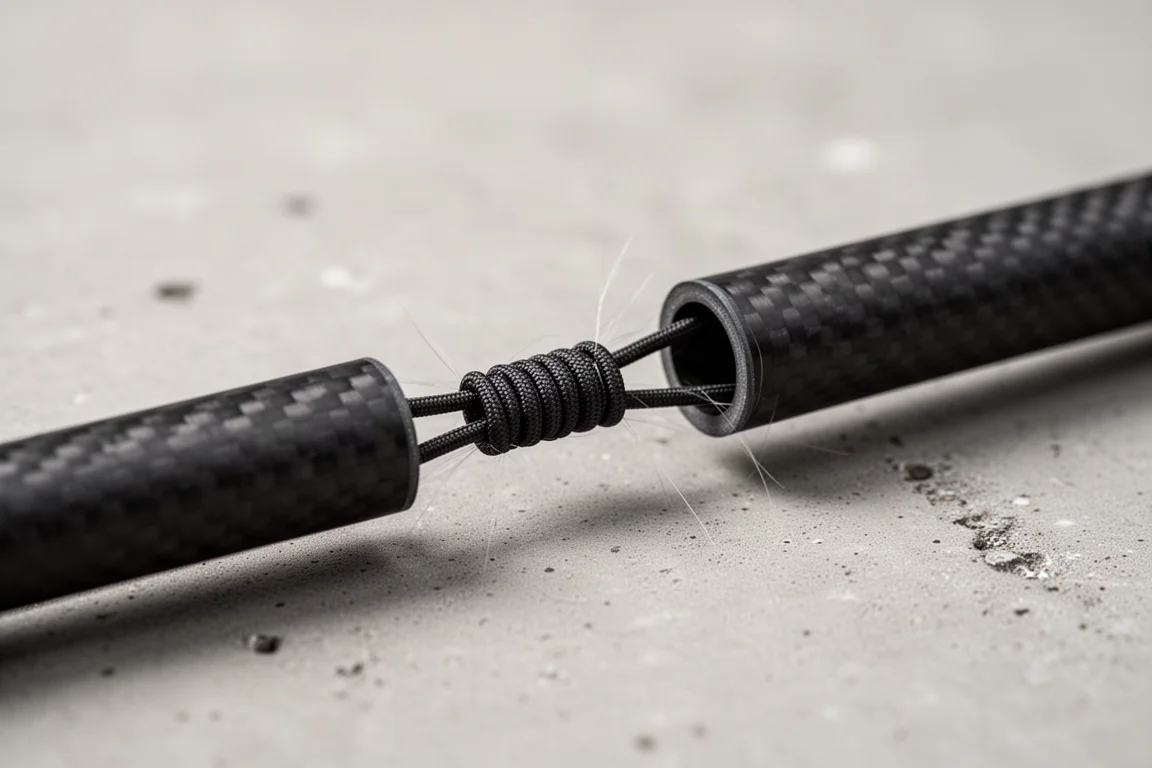
Weight was not a contributing factor. The chair is rated to 330 lb and the user is under 200 lb, well inside the limit. The failure came down to the bonded joint, not to overload.
What the Failure Means for Other Owners
A single failure does not establish a pattern. A bonding defect of this kind could be isolated to one chair, or it could affect a batch, and there is not yet enough information to say which. The honest position is that the cause is known but the scope is not.
Two owner reports add useful context. One chair arrived with the frame and poles assembled incorrectly; the owner corrected it by undoing the shock cord, taking the frame apart, and reassembling it in the right order, after which the chair worked perfectly. Another owner who ordered from the company’s website waited longer than expected for delivery from China and did not receive a reply to their message. Based on what happened here, replies from this small company can land in a spam folder, which may explain the missing response rather than a lack of intent.
For anyone who already owns this chair, the practical advice is to inspect the rear support joints before each trip. Check that each connector pole is seated and that the two tube sections meet flush. If a joint starts to feel loose or the sections no longer hold together on their own, stop using the chair before the load transfers into the carbon fiber.
Customer Support and the Replacement Process
The chair was purchased on Amazon and the failure happened outside the return window, so the next step was the manufacturer. There is no email address listed, so contact went through the message form on the company’s website. A reply came back the same day, although it initially landed in a spam folder and was only found later.
The company asked for three things: photos of the problem, a description of the issue, and an address to send a replacement chair to. A replacement is now on the way, and testing will continue with the second chair.
That is a fast and straightforward resolution for a product in this price bracket. As a point of comparison, resolving a fault on a much more expensive sleeping pad required several rounds of slow email exchanges over a far longer period before a replacement was issued. Price is not a reliable indicator of how well a company will look after a customer, and in this case the cheaper product came with the better experience.
Things to Consider Before Buying
The bonded joint is the main thing to weigh. The connector pole in the rear support is glued in place, and on this chair that glue failed. Whether the issue is isolated or widespread is unknown, so the risk is real but unquantified.
Price moves around. The chair generally sells between $60 and $70 on Amazon, and that fluctuation matters mostly because of the return window. Buying from a seller with a clear return policy gives you a simple path if something goes wrong early. Once you are outside that window, any resolution runs through the company directly, which worked well here but does depend on catching a reply that may arrive in a spam folder.
Check the assembly when the chair arrives. One owner received a chair with the frame and poles put together incorrectly, and the fix was simply to undo the shock cord, take the frame apart, and rebuild it in the correct order.
Finally, understand that there is no field repair for the specific failure seen here. If the connector pole comes unglued and shifts deep into the tube, the chair is done.
Buying Advice
If you want the lightest possible seat at camp and you are comfortable with the materials being the reason the price is low, this chair still makes a strong case. Carbon fiber and Dyneema at 1.6 lbs for under $70 is a genuinely rare combination, and the chair performed well across four trips before the joint failed.

The sensible approach is to buy from a source with a clear return window, inspect the rear support joints on arrival, and check them again before each trip. Keep the packaging until you have used the chair a few times, and if a joint ever feels loose, stop using it immediately rather than pushing through a trip.
For backpackers who value a real seat at the end of the day, the value proposition remains hard to beat. For anyone who wants zero maintenance risk and no interest in inspecting joints, a heavier chair with a different frame design will be the safer purchase.
Conclusion
The M Snail ultralight chair delivers advanced materials, a 1.6 lb total weight, and a 330 lb weight limit at a price that is far below what carbon fiber and Dyneema normally command. It performed well over roughly a month and four trips, and the company responded the same day with a replacement when a bonded joint in the rear support came unglued and cracked the frame.
The failure was a manufacturing defect in the adhesive, not a problem with the carbon fiber or the Dyneema, and its scope is still unknown. Buy with a return window in hand, inspect the joints when the chair arrives, and this remains one of the most affordable ways to carry a genuinely light chair into the backcountry.
Product link
View more details for M Snail Ultralight Chair
This product is mentioned in the review. Check the specifications, options, and compatibility before buying.
View more details for M Snail Ultralight ChairFurther reading
Related Reviews
Camping Chairs
ALPS Mountaineering Rendezvous Chair Review: Fast Setup, Compact Pack, Real Trade-Offs
A practical look at the ALPS Mountaineering Rendezvous Chair: measured seat dimensions, setup and pack-away speed, materials, and who it genuinely suits.
Camping Chairs
Best Lightweight High-Back Camping Chairs: Helinox Sunset vs REI Flexlite Camp Dreamer vs Big Agnes Big Six
A measured comparison of three lightweight high-back camp chairs, covering setup times, seat dimensions, breathability, storage, materials, warranty, and price positioning.
Camping Chairs
Best Oversized Camp Chairs: ALPS King Kong vs Coleman vs YETI Trailhead
Four of the largest camp chairs compared on seat size, seat support, materials, storage, portability, and price, with clear guidance on which one is worth buying.