Telescopes
Lunt DS100 Double Stack vs Sky-Watcher Heliostar 100: Which Solar Telescope Wins?
Two hydrogen alpha solar telescopes go head to head on build quality, accessories, tuning, eyepiece views, imaging, and outreach use.
Introduction
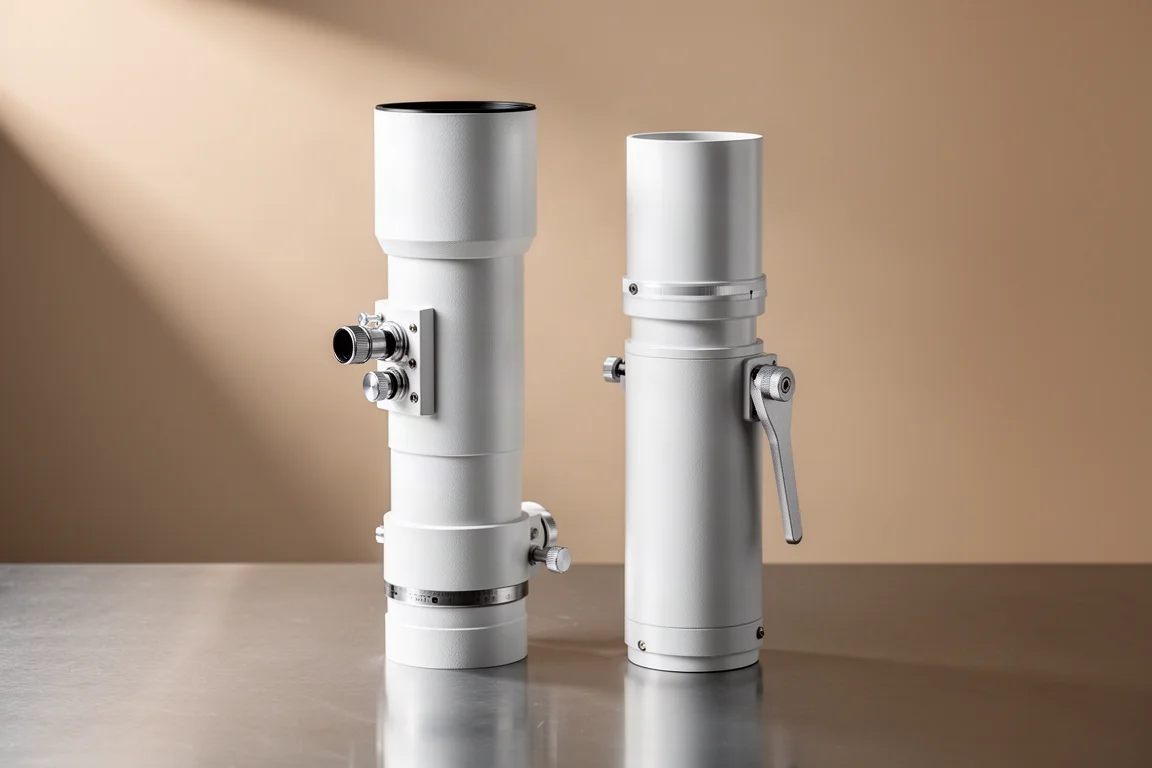
Hydrogen alpha observing opens up a completely different Sun. At the 656.3 nanometer wavelength, surface details become visible that you simply cannot see in white light: prominences, filaments, and granulation on the solar surface. Solar telescopes have been around for decades, but two models currently stand out as the most compelling offers: the Lunt DS100 Double Stack and the Sky-Watcher Heliostar 100.
This comparison focuses on the differences that actually matter when choosing between them: build quality, included accessories, tuning, the view through the eyepiece, imaging, and how each behaves in public outreach.
Build Quality
The Lunt DS100 makes an immediate impression. Picking it up, the machining, fit, finish, and sheer heft all point to a beautifully designed instrument. At its heart is a well color-corrected triplet objective, and the overall impression is that of a lifetime purchase. It feels like a tank, in the best sense.
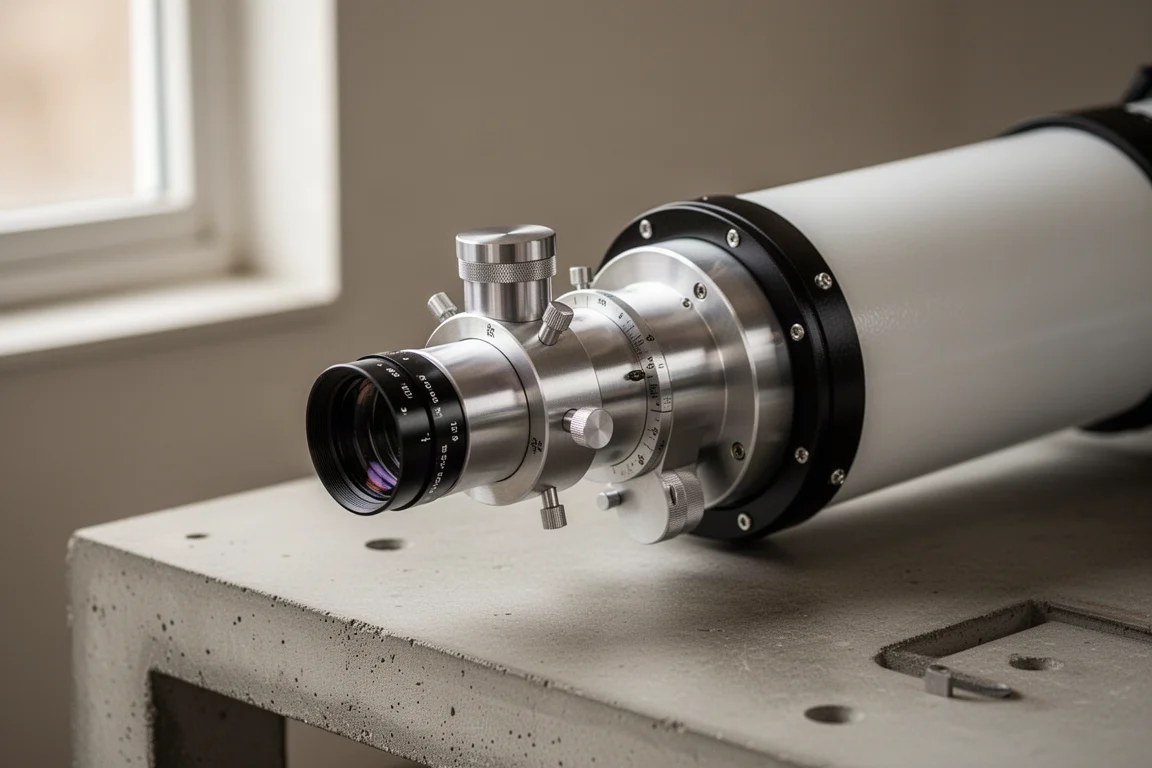
The Heliostar 100 is no slouch either. It is well-built and solid, but side by side, the Lunt is the more substantial and more premium-feeling telescope. If you are an observer or collector who finds reassurance in a built-to-last feel, the Lunt makes a stronger first impression.
Included Accessories
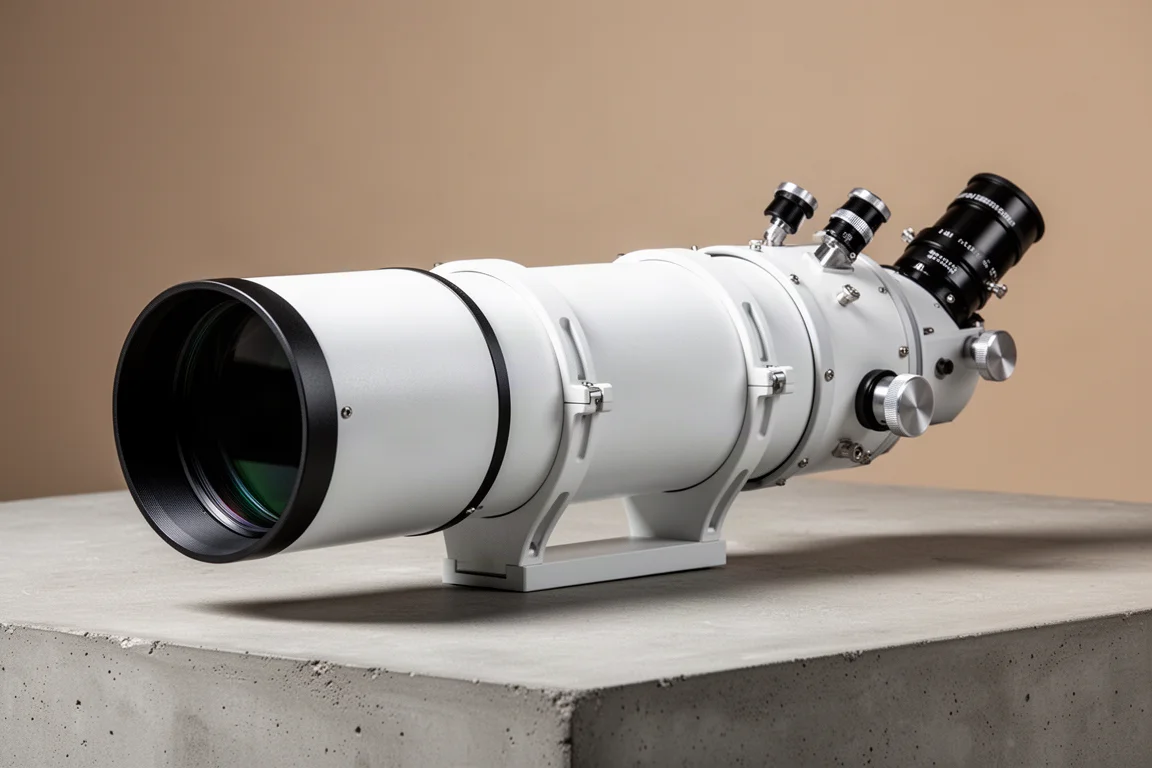
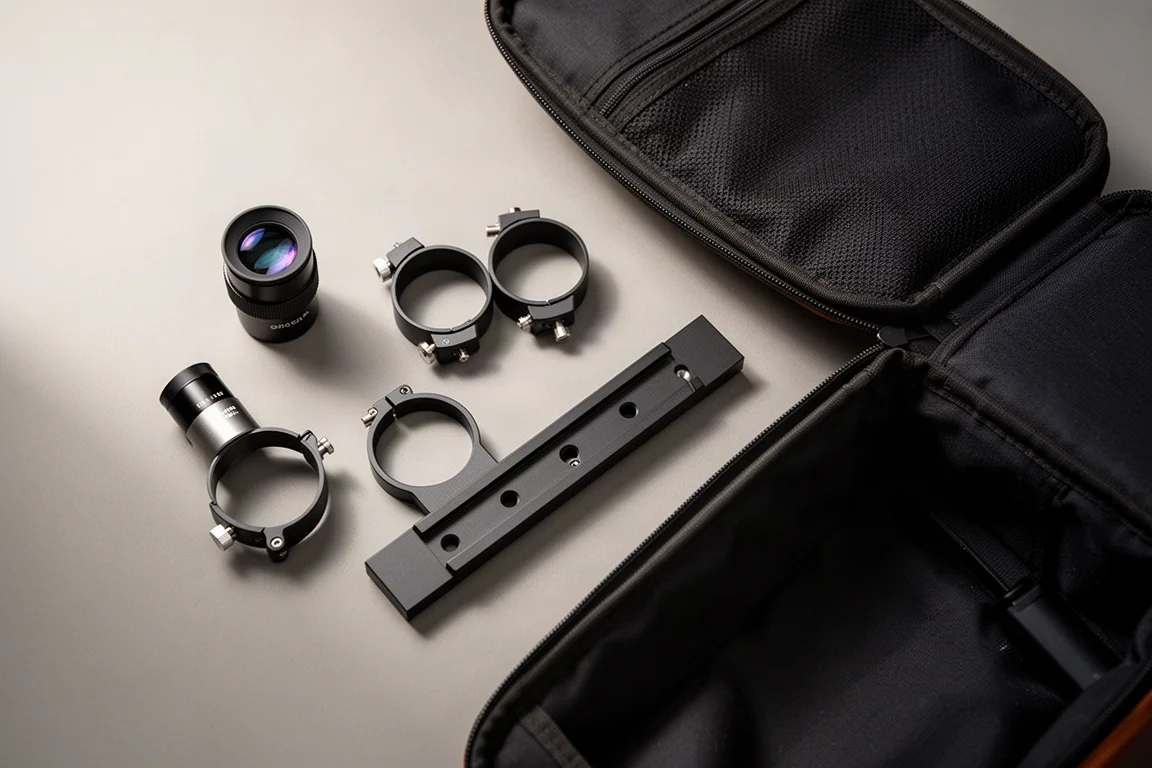
Both scopes ship with mostly what you would expect: an eyepiece, tube rings, a dovetail, and the ability to tune the telescope. Both also include nice dual-speed focusers that are EAF compatible, plus quality cases. But two accessories separate them.
First, the Heliostar 100 includes a solar shade; the Lunt DS100 does not. Second, the solar finders differ in design, and the Heliostar’s is exceptionally well thought out. Those two details turned out to have a surprisingly large impact on day-to-day use, as you will see below.
Tuning: Two-Step Versus One-Lever
Hydrogen alpha telescopes need to be properly tuned to deliver the sharpest possible views, and this is where the two designs diverge sharply.
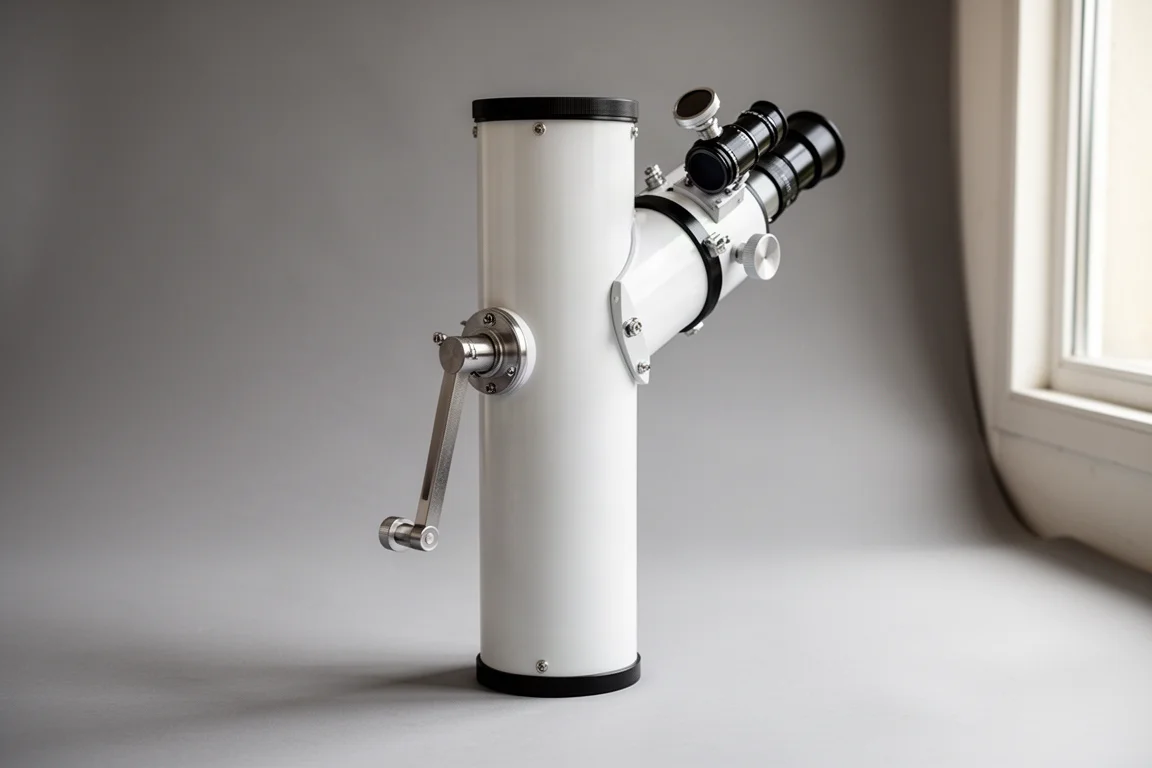
The Lunt is a double stack system with two pressure tuners, so tuning is a two-step process. You get a sharp focus on the solar limb, tune the primary etalon until detail starts to pop, then move to the secondary etalon and refine. Expect some back and forth between the two. Once dialed in, the surface detail is genuinely spectacular, with filaments resolving sharply across the disc. The reward is real, but the process takes practice, and it is more precise as a result, somewhat like collimating a fast Newtonian.
The Heliostar is a single stack system with the Triffid tuning system, which adjusts pressure to the etalon itself. Instead of two tuners, you simply move a lever left, right, up, or down until the view sharpens. It goes from featureless to high contrast in seconds. As a tuning experience, it is dramatically simpler.
The View Through the Eyepiece
Looking through the Heliostar first, brightness is the immediate impression. The Sun is very bright, not dangerously so, and the prominences on the limb are extremely easy to see. With the included solar shade attached, squinting disappears entirely and viewing comfort improves dramatically. The Triffid lever makes live enhancement of the view effortless.
The Lunt’s view is noticeably dimmer, which is expected from a double stack, but that dimness comes with sharper surface detail. Filaments appear darker, with more contrast and more separation. If maximizing surface detail is your priority, the double stack delivers.
Comfort, however, favors the Heliostar. Without a solar shade, viewing through the Lunt means squinting or shading your eye, and the exit position requires some head positioning to find the sweet spot. Eyepiece comfort is clearly better on the Heliostar, while raw surface detail is clearly better on the Lunt. Which matters more to you is genuinely a personal call.
Imaging and Outreach
For imaging, both scopes accept a camera directly at the solar diagonal, and several thousand frames captured through each produced results that were surprisingly close. Neither scope is clearly left behind for solar imaging.
Outreach is where the practical differences compound. Showing someone the Sun through a hydrogen alpha telescope is one of the most underappreciated and stunning views in amateur astronomy, and it happens in daylight. For public events, you want a telescope that just works. Between the one-lever tuning, the solar shade, the excellent solar finder, and faster time from setup to view, the Heliostar simply spends less time being fiddled with and more time showing people the Sun.
Conclusion
Both telescopes are excellent, and the right choice depends on what you value. The Lunt DS100 Double Stack wins on build quality and delivers sharper, higher-contrast surface detail once tuned. The Sky-Watcher Heliostar 100 wins on ease of use, viewing comfort, and included accessories, making it the better pick for outreach and for observers who want great views with minimal fuss.
Further reading
Related Reviews

Telescopes
Sightron SJ75 UF and Sky-Watcher HS125: Two Telescopes Worth Watching
A look at two notable telescopes from a recent camera and optics expo: a sharp new astrograph from Sightron Japan and a compact fast reflector from Sky-Watcher.

Telescopes
SV503 102ED Review: A Budget 102mm Refractor That Surprises
The SV503 102ED is an affordable 102mm doublet refractor that delivers surprisingly decent star shapes and a smooth focuser, despite some chromatic aberration and light falloff.

Telescopes
SVBony MK127 Review: A Compact Maksutov-Cassegrain That Surprises
The SVBony MK127 is a 127mm Maksutov-Cassegrain telescope with a unique 0.65x reducer, making it a versatile option for visual astronomy and even some deep-sky imaging.