Hand Tools
Best Low-Profile Ratcheting Tools for Tight Spaces: Five Options That Get Bolts Out Where Nothing Else Fits
Five low-clearance tools, from extra-thin ratcheting wrenches to flex-head sockets, that reach hidden fasteners without tearing your car apart.
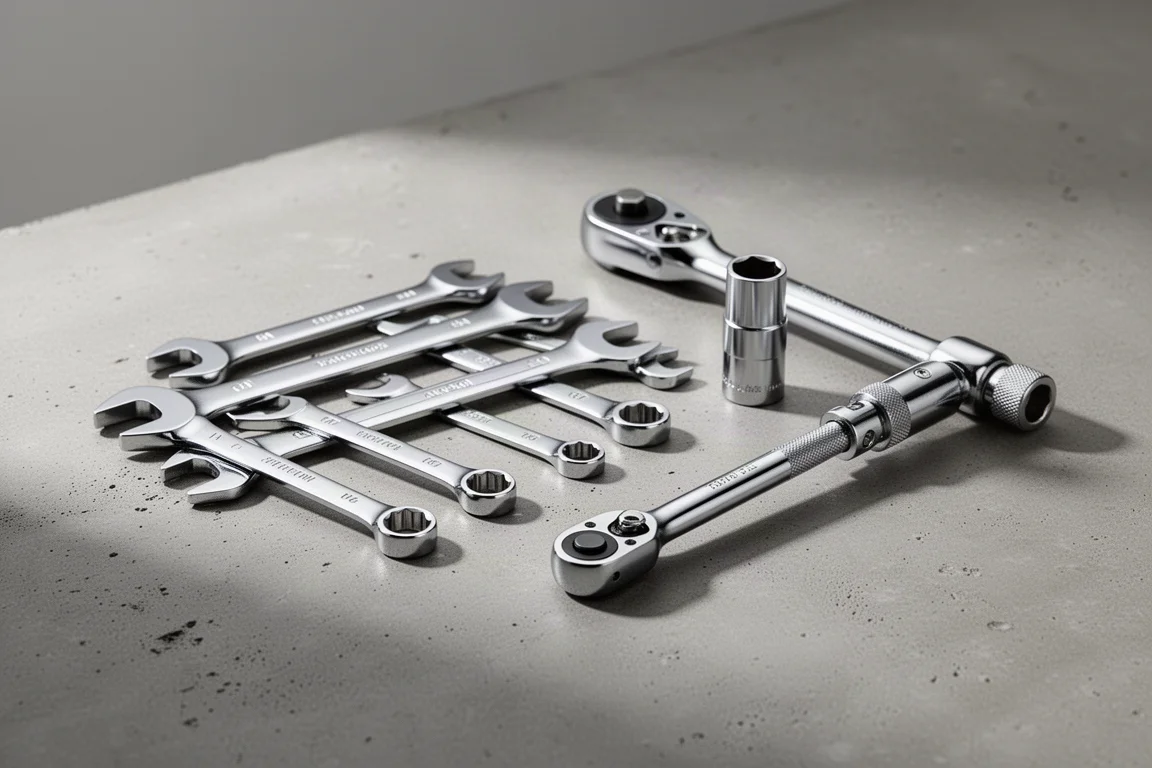
Introduction
Every mechanic eventually meets a fastener that simply will not cooperate. The bolt is hidden behind an obstruction, recessed inside a bracket, or tucked so deep into the chassis that a normal 3/8-inch flex-head ratchet cannot reach it. The usual answers are unpleasant: wrestle it a few degrees at a time with an open-end wrench, or strip off a bumper, an exhaust, or half the car to get clearance.
Low-clearance specialty tools exist to solve exactly this problem, letting you reach the bolt with a minimum of disassembly and get the job done quickly. We looked at five options that stand out for working in the tightest spots: the Astro Nano flex-head sockets, the Astro Razor extra-thin ratcheting wrenches, the Mountain double box offset reversible wrench, the Koken Rebit low-profile socket on a Tona micro ratchet, and the Quinn low-profile socket.
Astro Razor Extra-Thin Ratcheting Wrenches
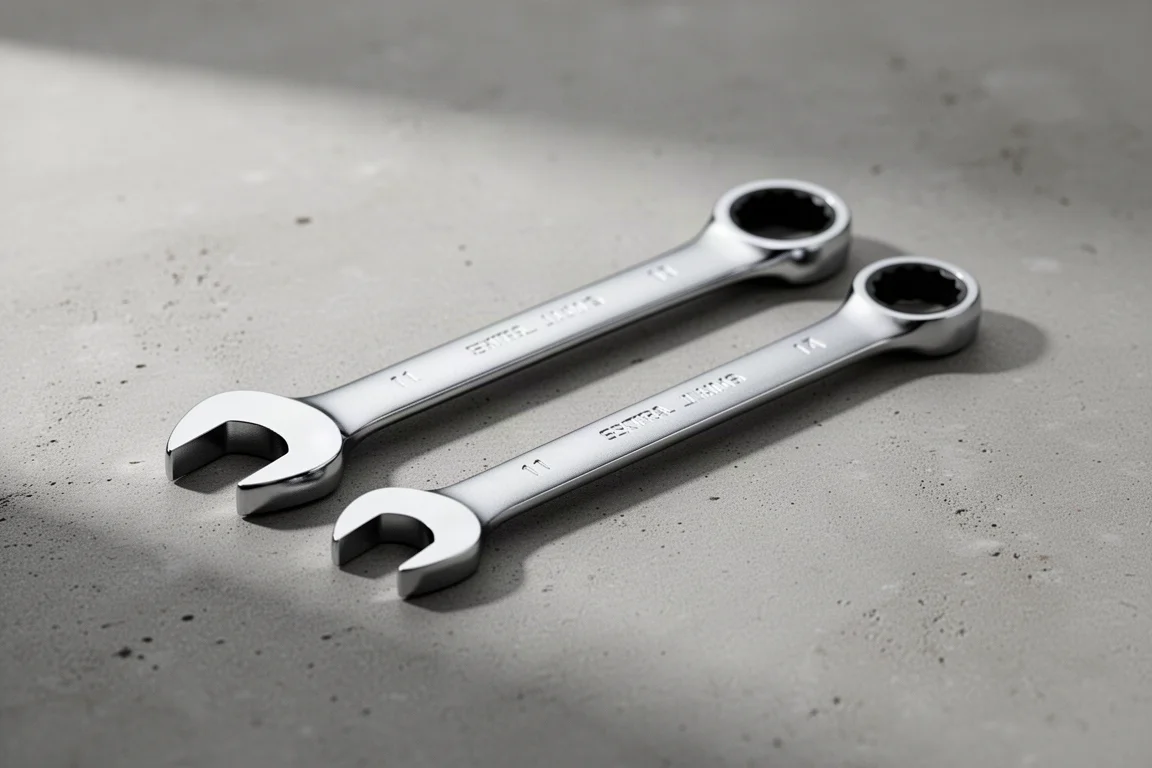
Sometimes the simplest low-clearance solution is a ratcheting combination wrench. The Astro Razor takes that idea further with an extra-thin profile, which gives you even better clearance in tight situations. Where a standard wrench barely sneaks onto a recessed bolt, the Razor slides in without a fight.
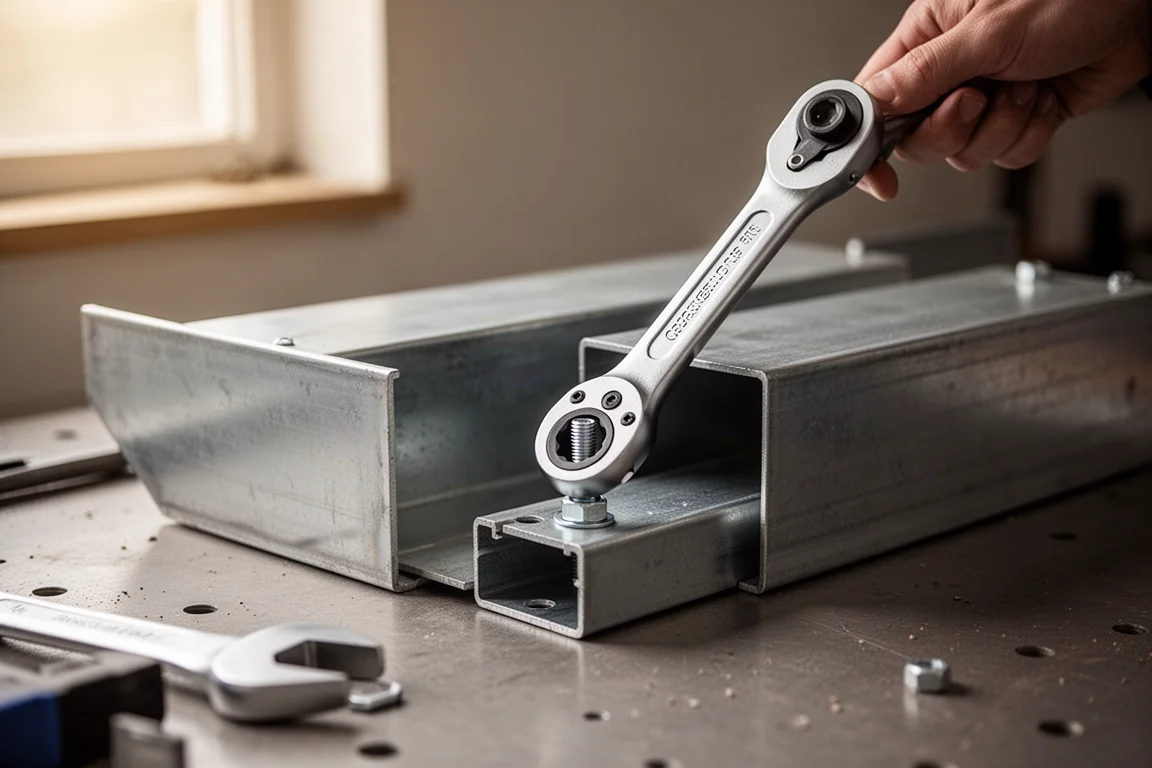
These are the right choice when you have straight-line access to the fastener but almost no room above it. Ratcheting action means you never have to lift and re-seat the wrench between strokes, which matters enormously when the swing arc is measured in a few degrees.
Astro Nano Low-Profile Flex-Head Sockets
When an obstruction sits above the bolt head and blocks a flat, zero-offset wrench, you need a tool that can angle over the obstacle. That is exactly where the Astro Nano series shines. These are flex-head, low-profile, impact-rated sockets that also work on mechanical devices, letting you reach around an obstruction, seat the socket on the bolt, and still have enough clearance to loosen it quickly and effectively. The handle provides plenty of torque.
We think the Nano series is an excellent investment. They are not terribly expensive, they come with their own handles, and the sockets work with any ratcheting wrench of the appropriate size. What sets the Astro version apart is the retaining ring that holds each socket in place. Some competitors omit that retaining ring, and without it the socket is, frankly, close to useless; people try improvising something on the back to stop the socket falling out, but it is not terribly effective.
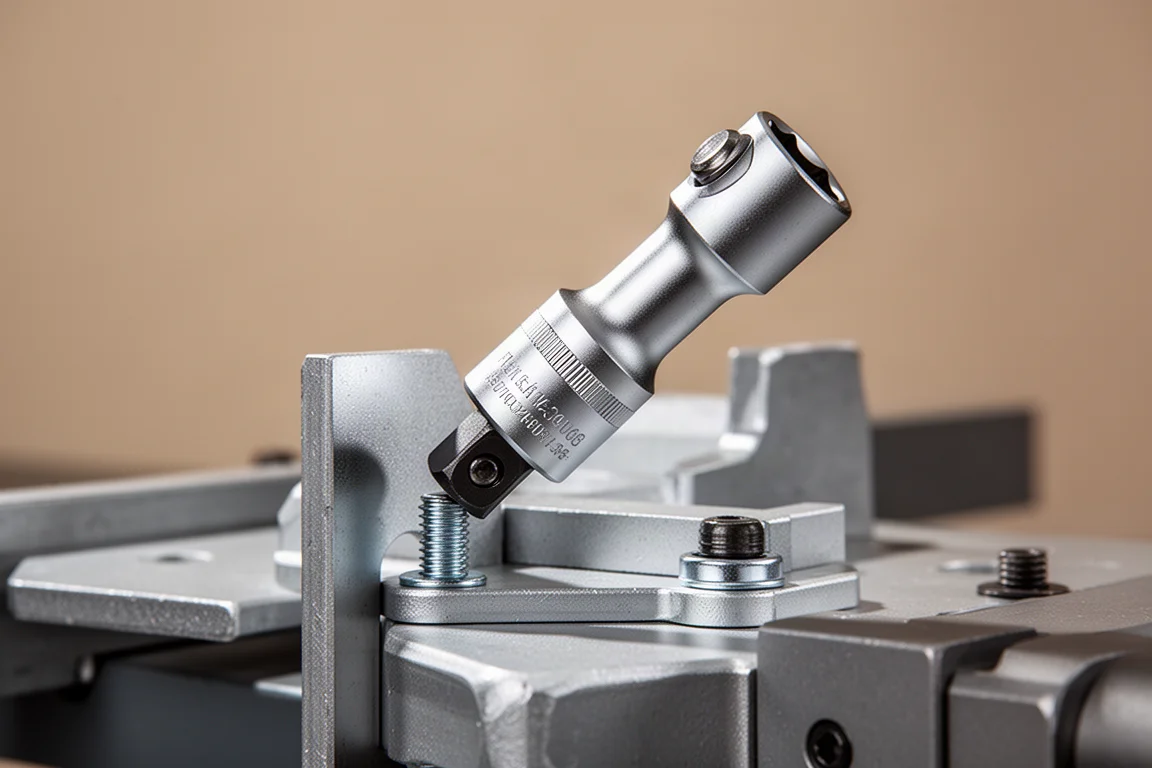
One more reason to like the series: Astro also makes a 1/4-inch version alongside the 3/8-inch and 1/2-inch versions. The 1/4-inch and 3/8-inch versions share the same actual socket interface, but the 1/4-inch has a smaller handle and drive size, so it gets into even tighter places, slipping around obstructions with no problem.
Mountain Double Box Offset Reversible Ratcheting Wrench
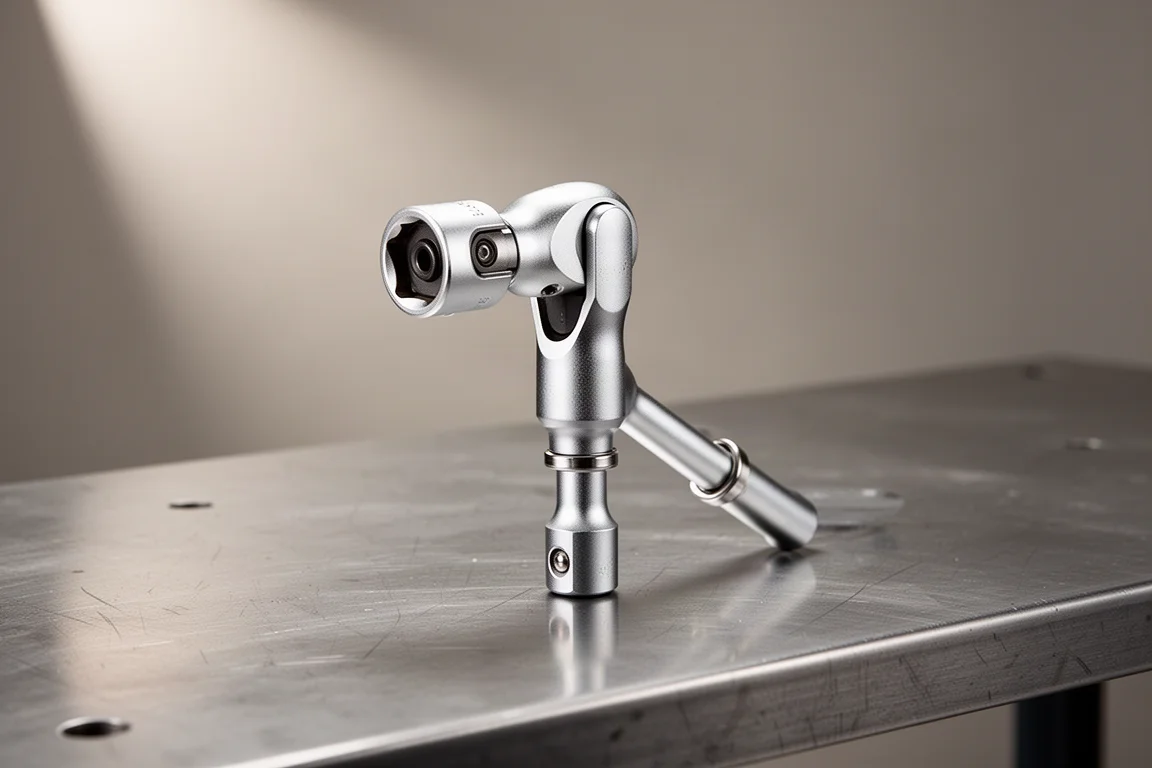
Another tool people consistently reach for in these situations is the double box offset ratcheting wrench sold under the Mountain name. A small lip on the end of the head gets the wrench over the classic problem of an obstruction blocking a regular wrench, and in practice it slips onto the fastener with no trouble, with plenty of leverage behind it. These are very effective wrenches.
Worth knowing: this design is sold under several labels. Besides Mountain, the same wrench appears branded Platinum Tech, and the Icon version is nearly identical. There are at least three or four different versions that all come out of the same factory, and they do vary in price a little, so it pays to compare.
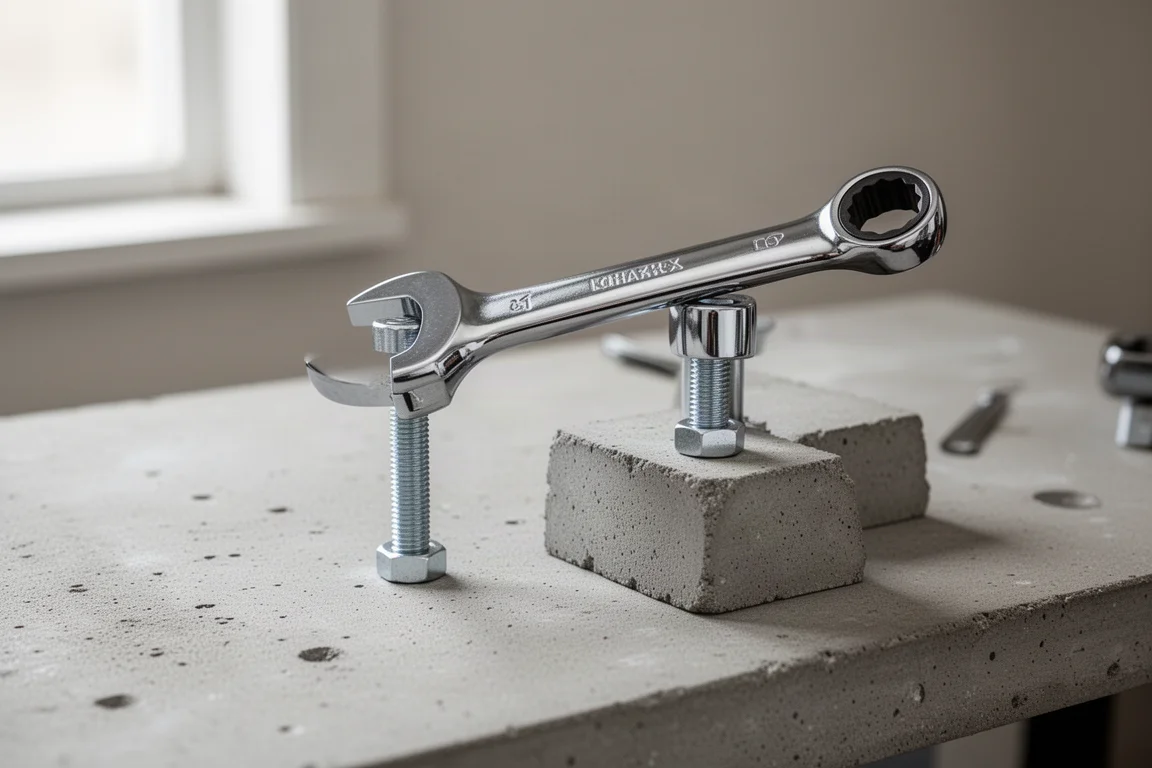
The standout advantage over the Astro Nano is reversibility. You can flip direction with the flip of a switch, whereas the Nano requires you to pop the socket out and flip it over. That is usually not a big deal, but it can occasionally catch you out.
Koken Rebit Low-Profile Socket with Tona Micro Ratchet
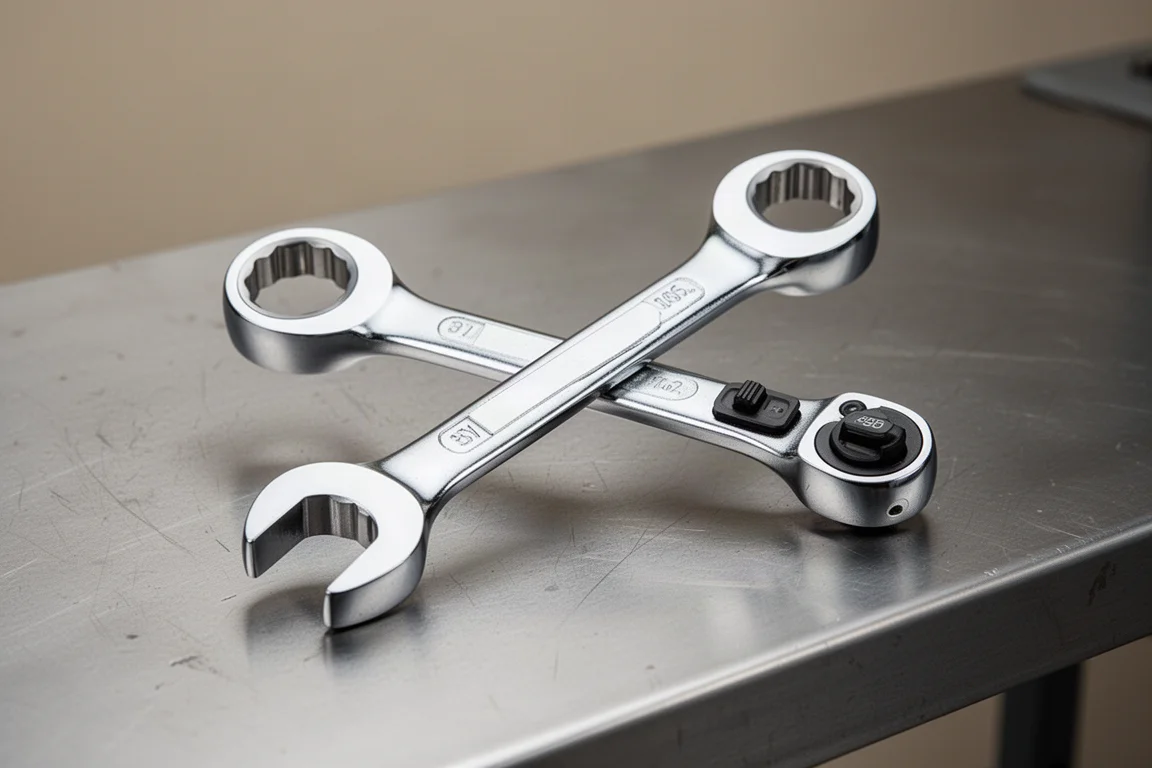
For situations the tools above cannot reach, an ultra-low-profile socket on a micro ratchet is the next step. This is Koken’s Rebit series socket, very low profile, mounted on a Tona micro ratchet. We stuck a breaker bar on that micro ratchet for extra turning force, which transforms the combination into a surprisingly capable package.
The key limitation is depth. On a recessed fastener, a very low-profile socket may not be deep enough to grab the bolt, so it will not work in that particular situation. But where an outside bolt is blocked from direct access, this tool slips around the obstruction and loosens or tightens the bolt quite effectively.
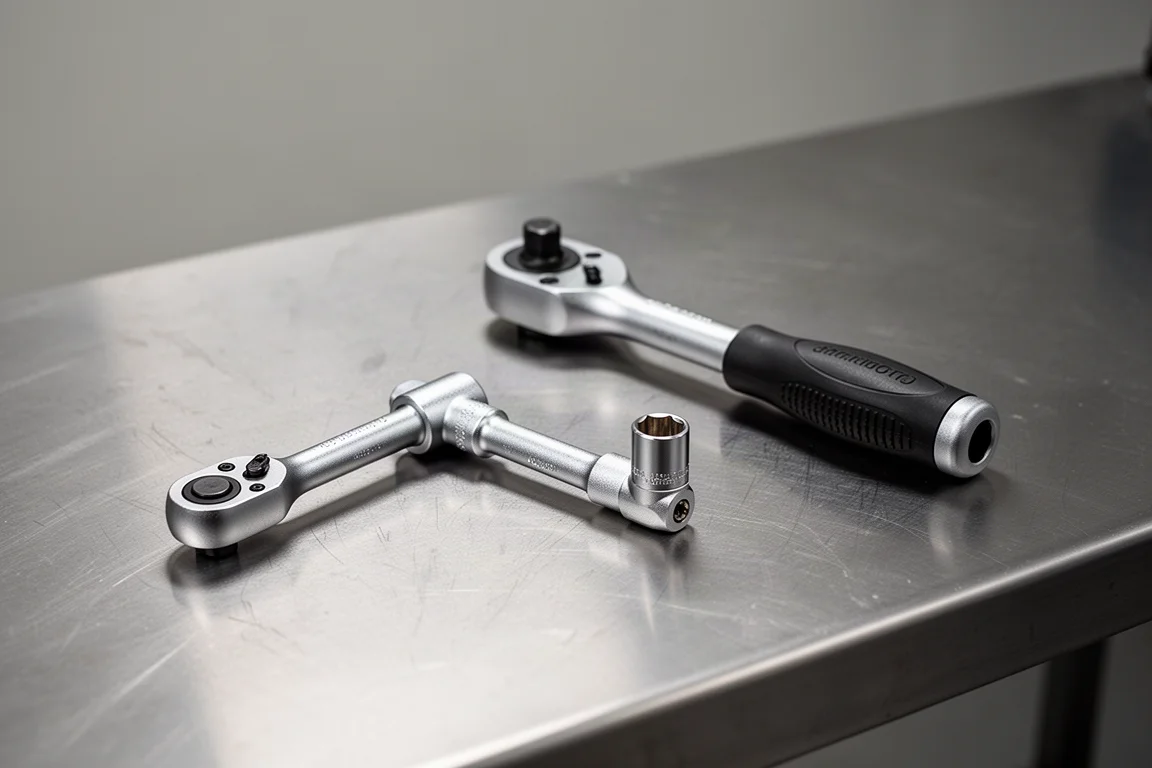
The practical takeaway is that these tools complement each other. You might need the Nano for one side of a job, to avoid a certain disassembly, and the Rebit micro ratchet setup for the other side.
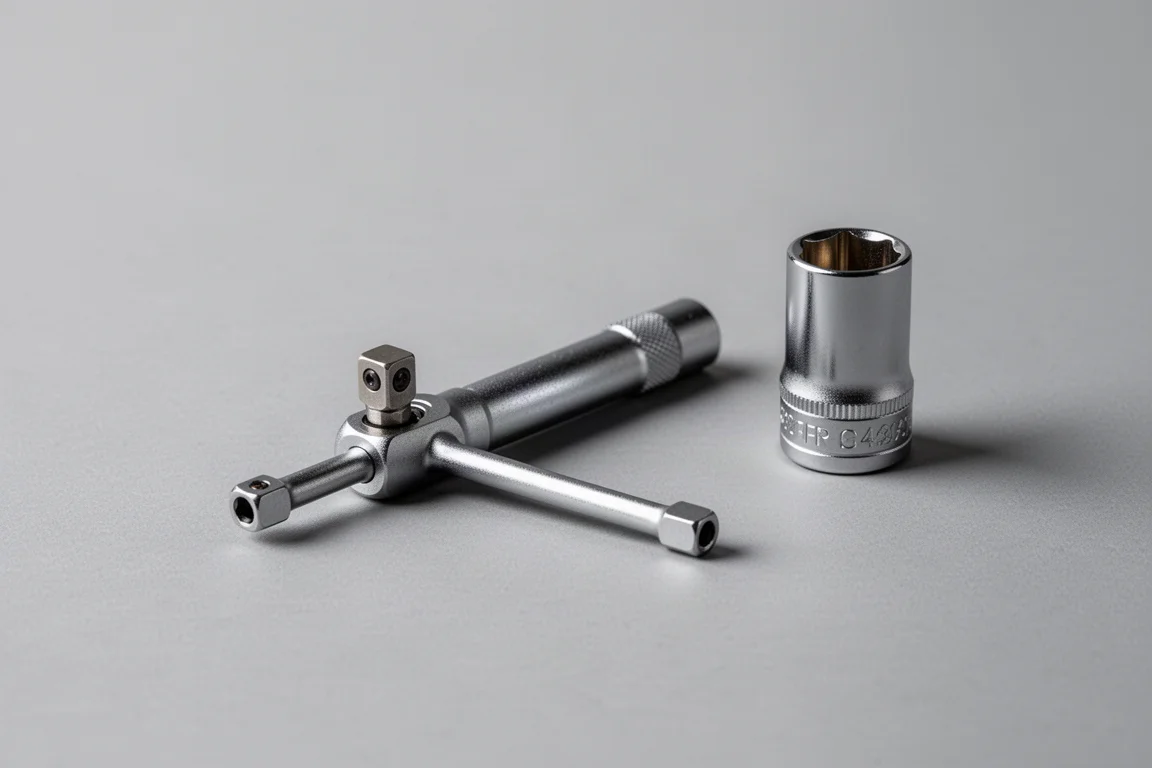
Quinn Low-Profile Socket
Quinn makes its own version of the low-profile flex-head socket, and in our view it is fundamentally flawed. This applies to the standard SAE version and equally to the metric version.
The flaw comes down to the interface. Remember that the Astro series comes in 1/4-inch, 3/8-inch, and 1/2-inch versions, and the 1/2-inch Astro uses a big wrench with a large 22 mm interface on it. That is fine when you are working on suspension bolts with room to swing. But for a fastener recessed in a narrow hole, a low-profile socket with a huge 22 mm interface defeats its own purpose: there is simply no way to get that tool effectively into the space.
Not to mention that many people will not own a 22 mm ratcheting wrench, so you would end up having to buy the Astro wrench anyway. The honest conclusion: just buy the Astro series instead.
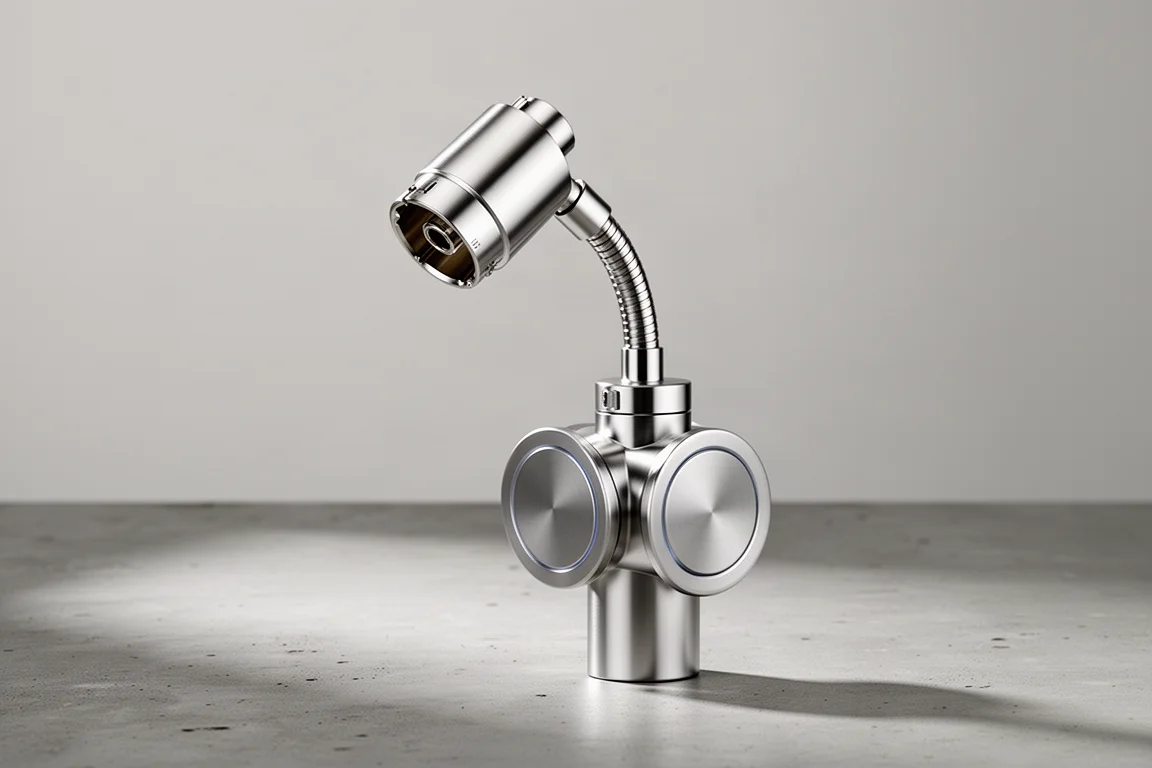
Buying Advice
Always use a standard ratchet when you have access. A conventional 3/8-inch flex-head ratchet is a great tool: easy to use, great torque, and it is never going to break on you. If you can fit it into the application, it is the right tool to use.
But when a fastener sits somewhere a standard tool cannot reach, the low-clearance options above can save you a lot of time and effort. For most toolboxes, the Astro Nano series is the anchor purchase: affordable, available in three drive sizes, and the only version with a retaining ring that actually keeps the socket on the tool. Add the Mountain double box offset wrench if you value on-the-fly reversibility and want the most leverage in a straight pull, and keep a Koken Rebit micro ratchet combination on hand for the rare spots nothing else can enter.
Conclusion
Low-clearance fasteners do not have to mean major disassembly. Extra-thin ratcheting wrenches handle shallow-access bolts, flex-head low-profile sockets reach around obstructions, and offset double box designs combine lip clearance with real leverage. Choose the Astro Nano for versatility and value, the Mountain double box for reversible convenience, and the Koken Rebit micro ratchet for the tightest spots, and most previously impossible bolts become a quick, satisfying turn away.
Further reading
Related Reviews
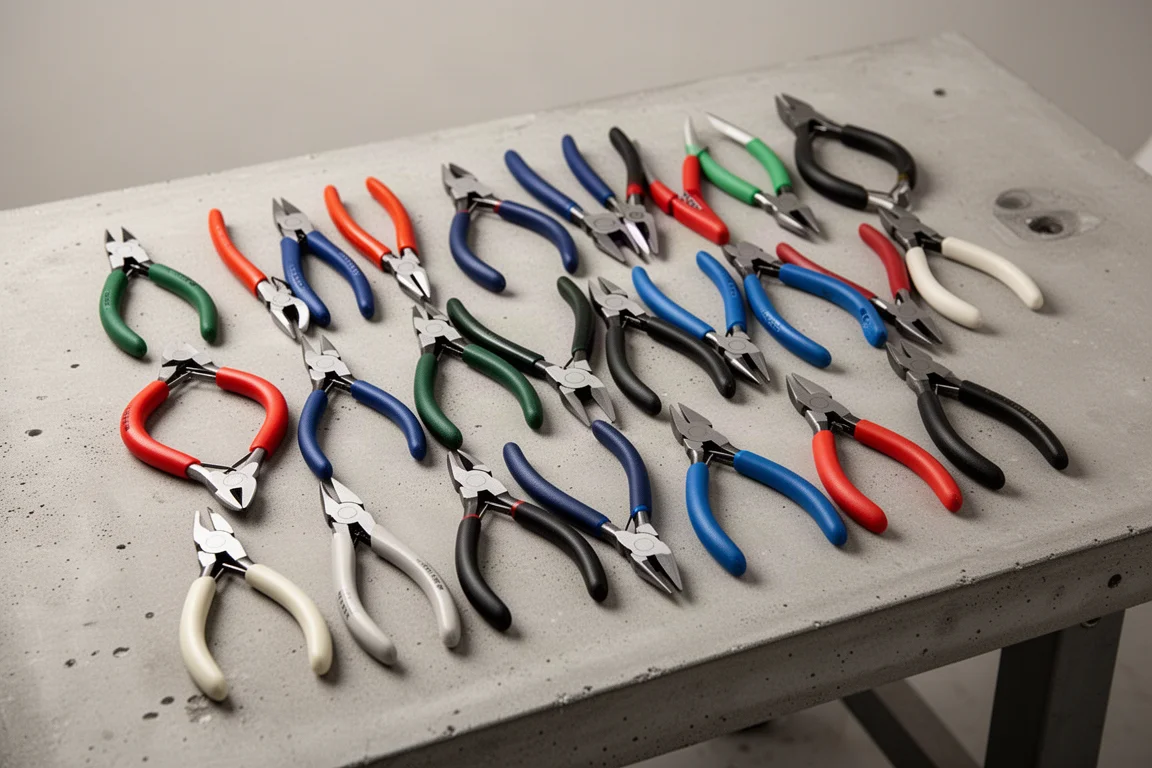
Hand Tools
Best Diagonal Cutters 2026: 16 Pliers Tested for Cutting Power and Durability
We put 16 diagonal cutters through nail, screw, drill bit, and hex key tests to find the best value picks for your toolbox.
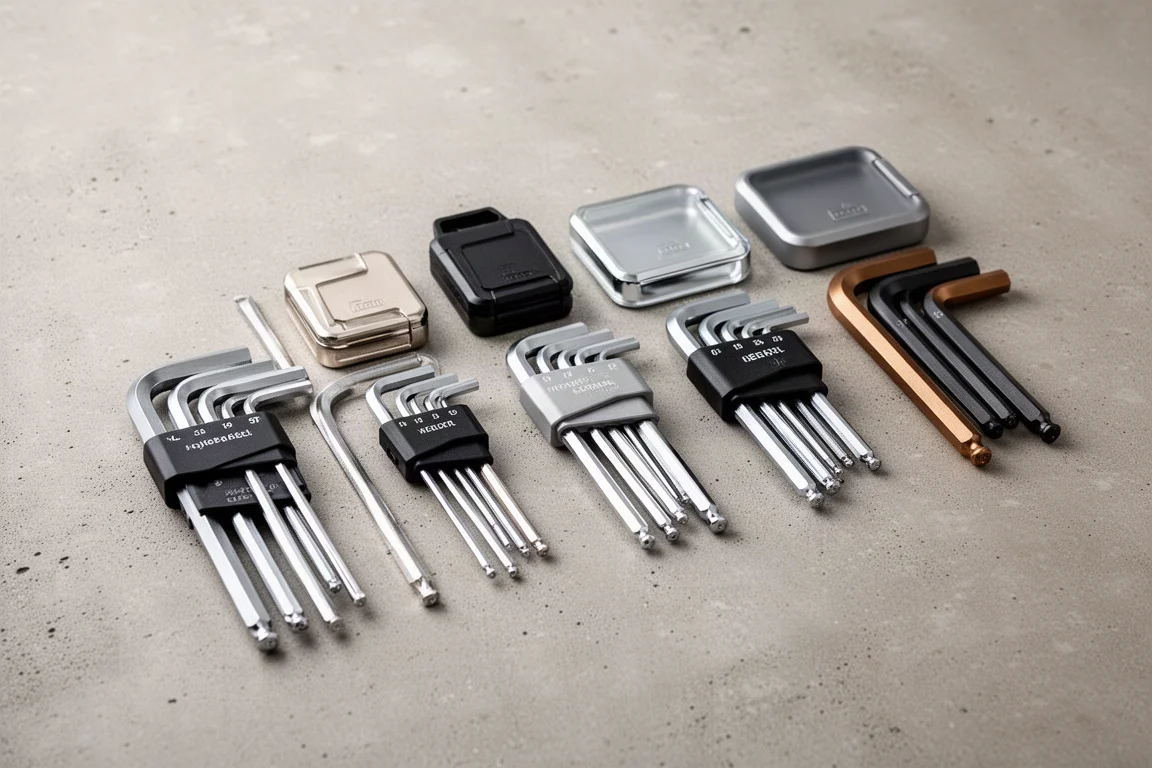
Hand Tools
Best Hex L Key Sets 2026: Nine Sets Tested for Real-World Torque
Nine hex L key sets from budget to premium, tested for torque, fit, and durability. See which sets deliver real performance and which ones to skip.
Hand Tools
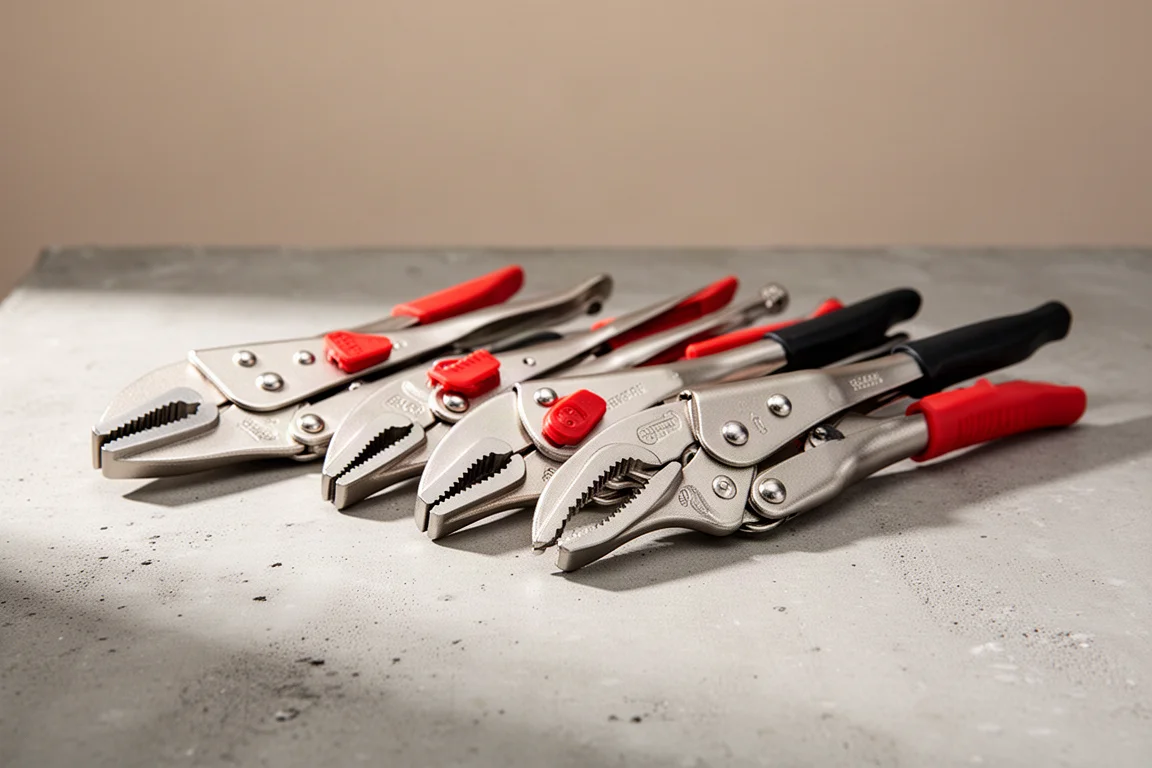
Best Locking Pliers 2026: Top Picks Tested for Grip and Durability
We tested 18 brands of 10-inch locking pliers for grip strength, jaw bite, build quality, and ease of release to find the best options for tough jobs.