Flashlights
Loop Gear Loop Dot Review: The World's First Pixel Display Flashlight
A palm-sized flashlight with an RGB pixel screen, a mechanical rotating dial, haptic feedback, and a genuine fidget-factor. Here is what it does well and where it falls short.
Introduction
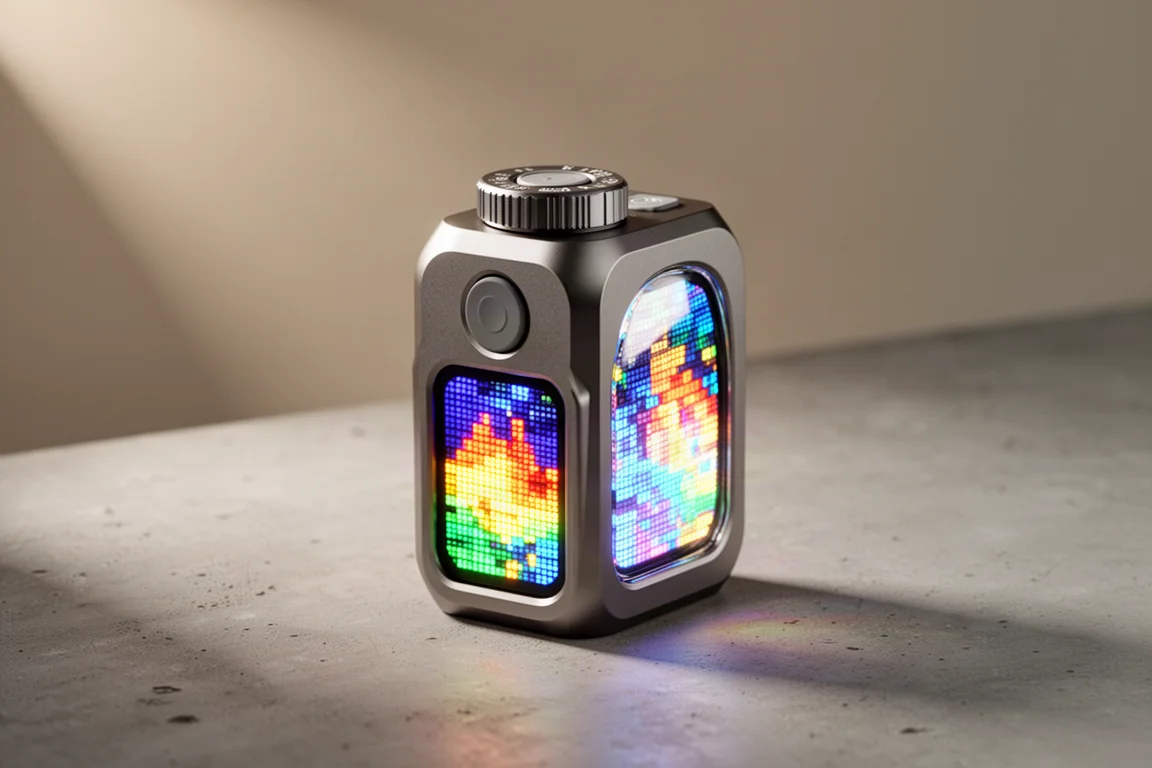
The Loop Gear Loop Dot is one of the more original flashlights to come along in a while. The company calls it the world’s first pixel display flashlight, and that is not just marketing fluff: a curved tempered glass screen sits on the body, backed by an RGB LED matrix that shows which of the four main modes you are in. A single top button and an infrared mechanical dial handle every control, and the whole thing weighs just 1.4 oz (38 g).
It is currently available through Kickstarter, with early bird pricing mentioned at around $23.50. If you can grab it for under $25, that is a genuinely good deal for something this distinctive.
Who This Product Is For
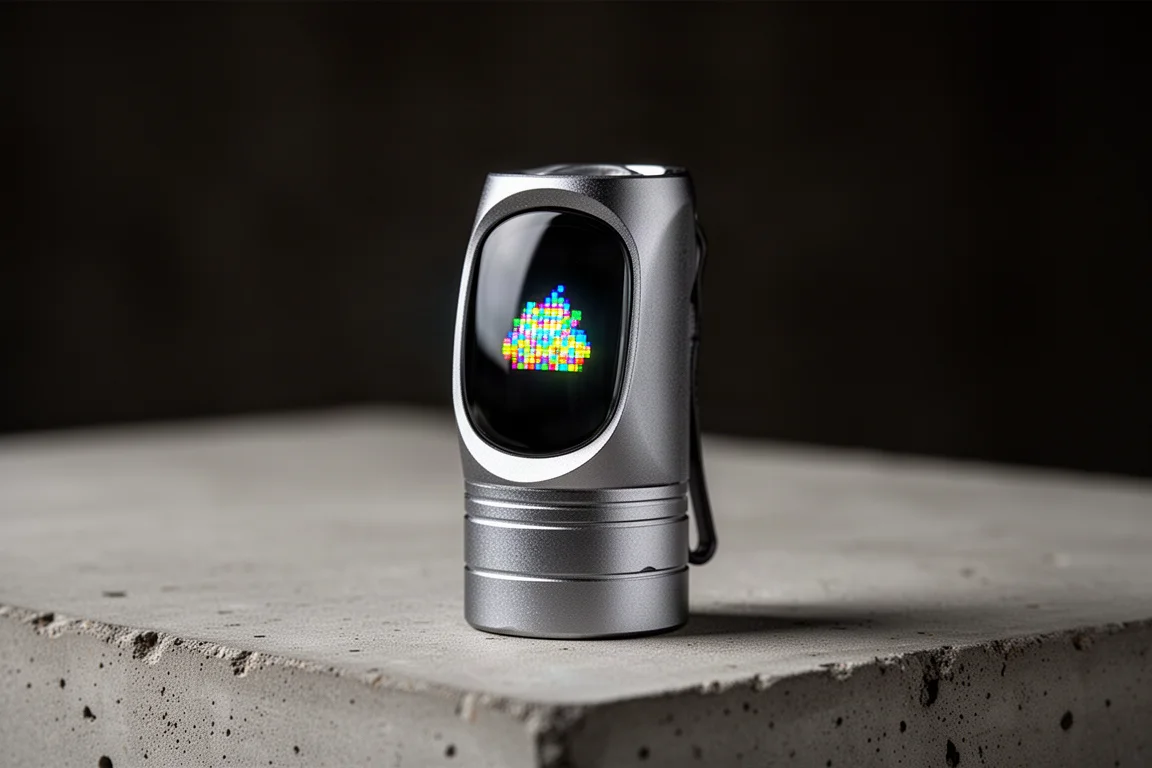
The Loop Dot is not for everyone. It is for people who enjoy tactile, playful everyday carry items: the mechanical dial clicks addictively even when the light is off, and rotating it while powered on produces adjustable haptic feedback. The vibration intensity is fully configurable, from off all the way up to level 20, though levels two to four are a sensible sweet spot that preserves battery life while keeping the satisfying haptics.
Design and Build Quality
The body is aluminum alloy with a sandblasted anodized finish and laser-etched detailing on the back. It feels solid and high quality in the hand, and the contoured shape is genuinely comfortable to hold. The curved tempered glass screen covering the RGB LED matrix is bright, clear, and vivid in person.
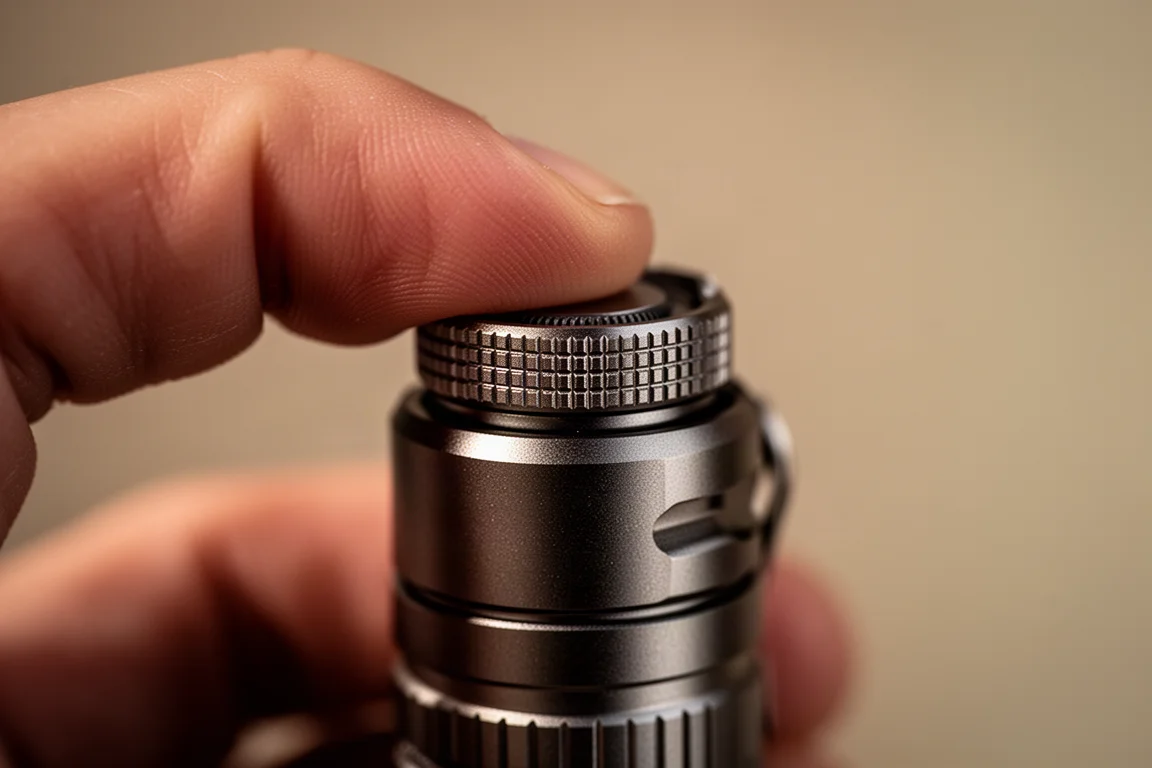
Dimensions are compact: 2.37 in long, 1.08 in wide, 0.75 in thick at the lens (0.56 in at the body). It is rated IPX6, meaning it can withstand high-pressure water jets from any angle but should not be submerged, and it carries a 1 m impact resistance rating.
One clarification worth making: while the Kickstarter page mentions a magnetic feature, the flashlight itself is not magnetic. The included case is what carries the magnet.
Specs and Runtime
Inside is a built-in 600 mAh battery charged via USB-C. Spotlight mode uses an SFT12 LED with a cool white output around 6,000 Kelvin, topping out at 400 lumens, a 100 m throw, 2,400 candela max intensity, and a 100-hour maximum runtime. Flood mode uses a COB LED ring with a warmer white around 3,000 to 3,200 Kelvin, 90 CRI, 210 lumens max, and the same 100-hour maximum runtime.
The full brightness ladder for spotlight: moonlight at 0.1 lumens lasting 100 hours, low at half a lumen for 80 hours, high at 150 lumens for 1.6 hours, and turbo at 400 lumens for 30 seconds before stepping down to 150 lumens for another 1.5 hours. Flood mode shares the moonlight and low steps, with high at 90 lumens for 1.6 hours and turbo at 210 lumens for 30 seconds before stepping down to 90 lumens for 1.5 hours.
Interface: Simple Once You Learn It
Everything runs through the top button and the rotating dial. A short press opens the menu, the dial cycles through the four modes, and a second short press activates the light. Twisting the dial adjusts brightness. A double press triggers the 400-lumen turbo from either on or off, another double press returns to the previous level, and press-and-hold from on turns the light off. Press-and-hold from off activates moonlight, and a triple click fires the strobe.
The screen makes mode identification easy, and with only four main modes, navigation becomes second nature quickly. One minor frustration: there is no indication when you hit the maximum brightness step while cranking the dial, since the haptics feel identical at every position.
Beam Performance: Spot and Flood
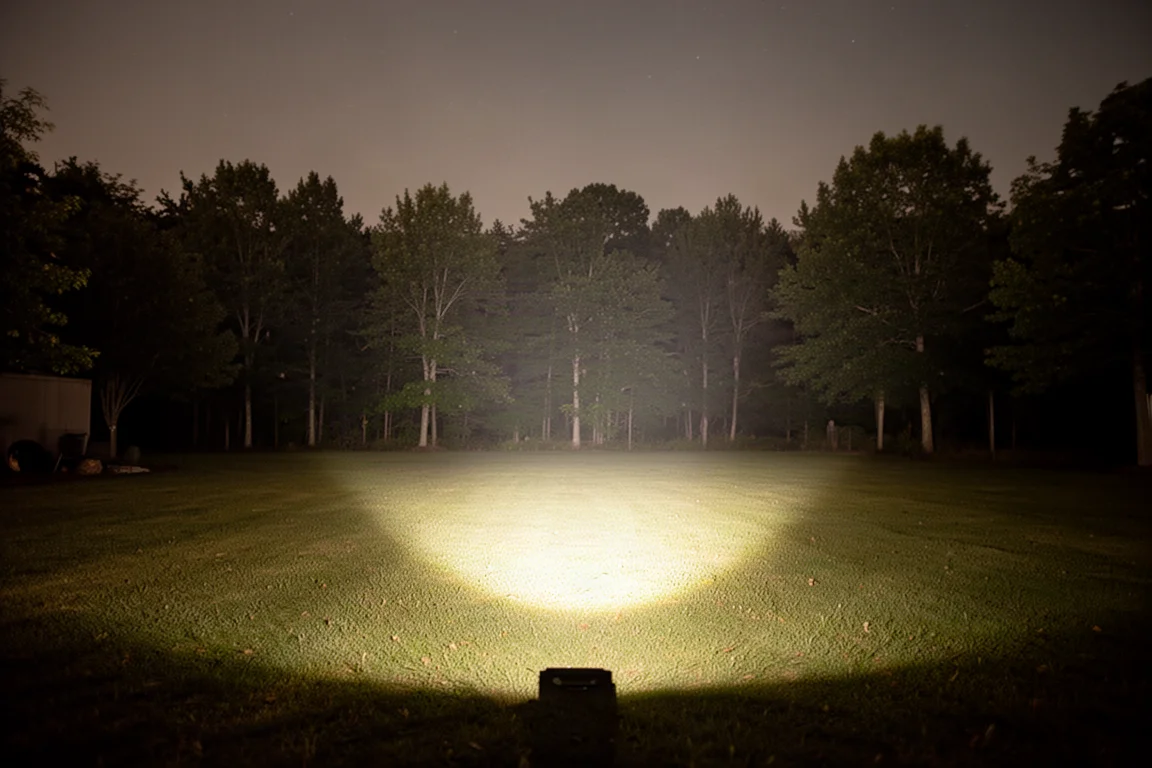
The flood mode produces a very even, very floody beam with a pleasing warm white tone, though it will not throw far; that is not its job. The spotlight is surprisingly even for a thrower, with no harsh hotspot, and at high (150 lumens) it comfortably reaches a distant tree or barn. Turbo at 400 lumens is bright enough to light a large outdoor area, and the body gets warm in the hand but not uncomfortably so. The screen and dial together border on fidget-toy territory, which many will find charming rather than annoying.
What Comes in the Box
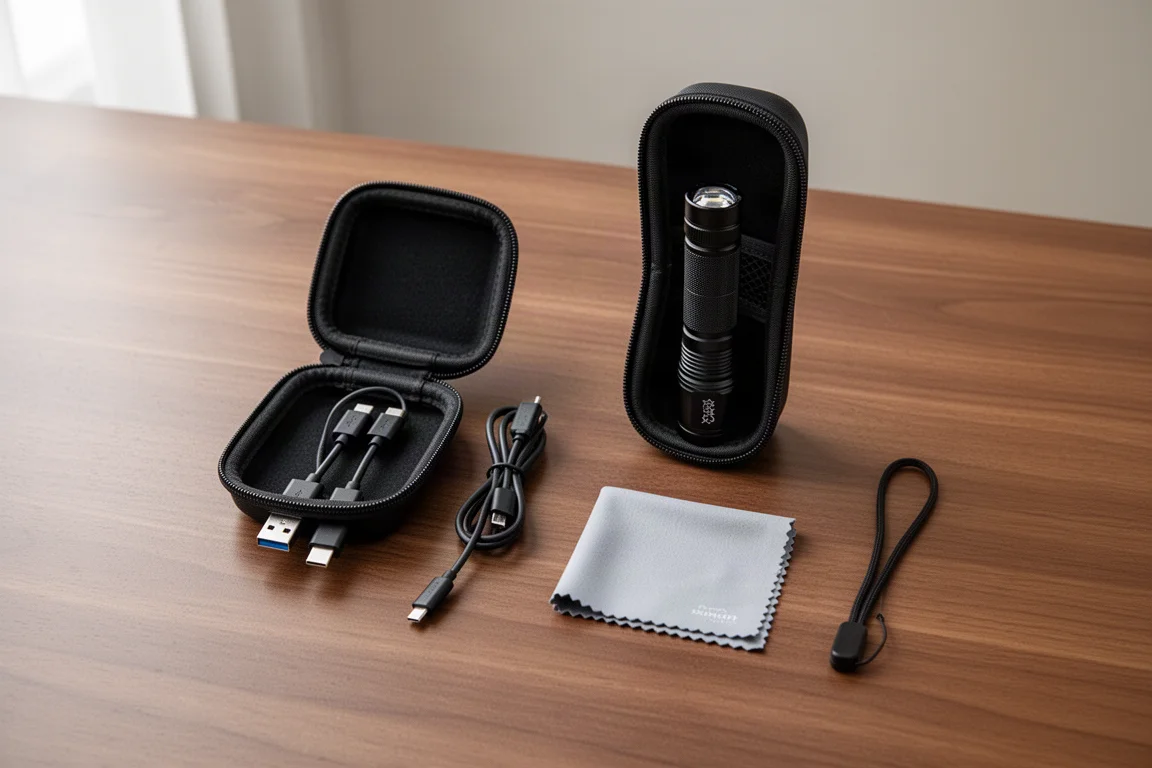
Packaging is nicely done and includes a user manual, a microfiber cleaning cloth, a USB-A to USB-C charging cable, and a protective case that also works as a stand, letting the flashlight sit upright while keeping the top button accessible. The magnetic feature lives in the case, as noted above.
Things to Consider Before Buying
Some of the screen content is admittedly gimmicky. The games menu includes animations like a matrix display, a flame, a water effect, a dice roller, and a rock-paper-scissors game that respond to shaking the light. They are fun but mostly novelty. Notably, there is no Tetris, which feels like a missed opportunity for a flashlight with a pixel display. Lighting-wise, the Loop Dot does not outperform a conventional flashlight of similar price, so you are paying for the design, the screen, and the tactile experience rather than raw output.
Buying Advice
If the early bird pricing holds around $23.50, the Loop Dot is an easy recommendation for anyone who enjoys unique EDC gear and fidget-friendly design. Collectors with large flashlight arsenals may find its lighting performance unremarkable, but the originality alone earns it a place on a desk or in a pocket.
Conclusion
The Loop Gear Loop Dot earns applause for inventiveness. It combines a pixel display, a mechanical dial, haptic feedback, dual spot and flood LEDs, and solid construction in a 1.4 oz package. The games are gimmicks, but the screen genuinely helps with mode navigation, and the fidget factor is through the roof. For under $25 on Kickstarter, it is a distinctive little light that is hard not to like.
Product link
View more details for Loop Gear Loop Dot
This product is mentioned in the review. Check the specifications, options, and compatibility before buying.
View more details for Loop Gear Loop DotFurther reading
Related Reviews
Flashlights
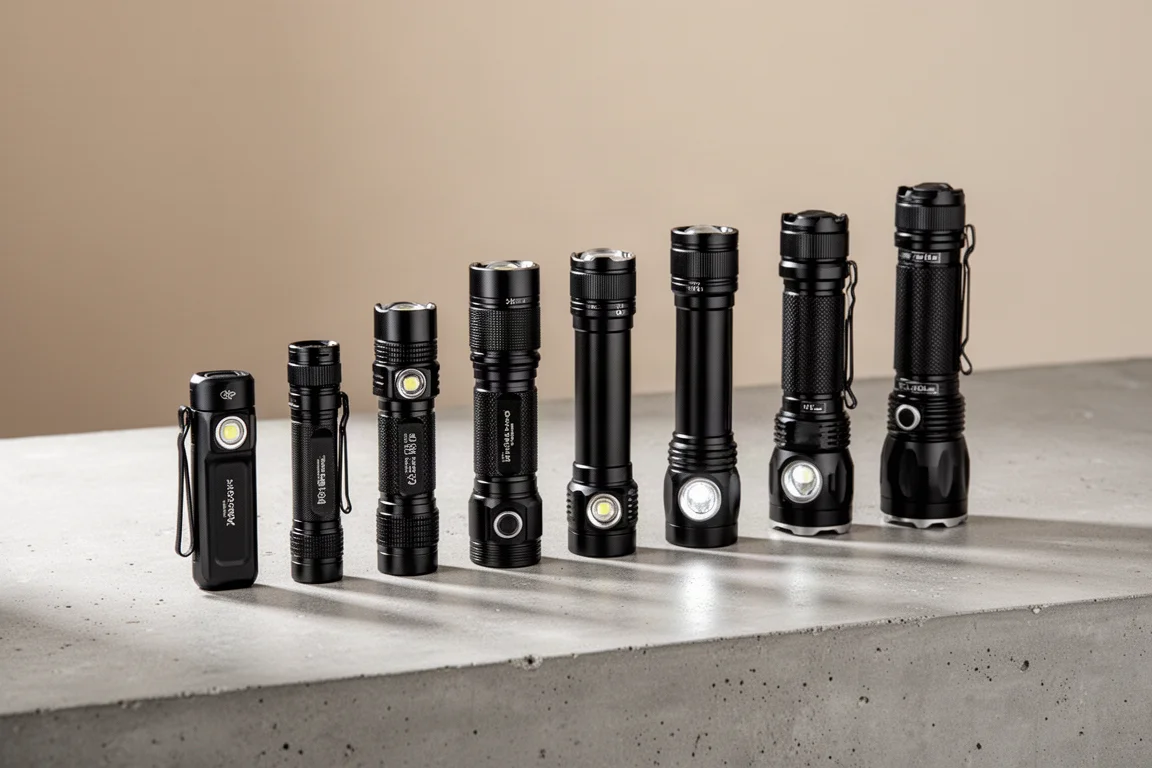
Best Flashlights 2026: Brightness, Battery, and Value Compared
We tested 18 flashlights across a wide price range to find the best performers in brightness, battery life, and durability.
Flashlights
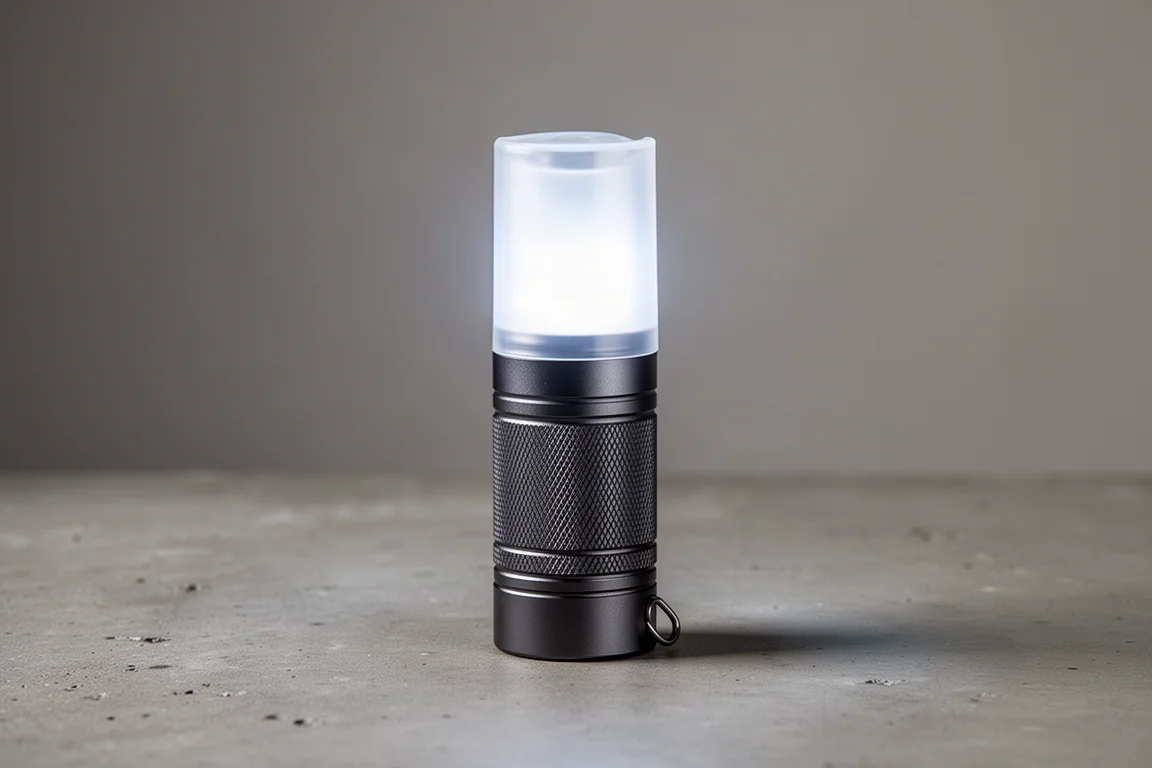
Nitecore LA10 Review: A Tiny 2-in-1 Lantern That Nails the Basics
The Nitecore LA10 pairs a pocket-sized lantern with a single AA battery, a magnetic tail cap and a five-year warranty. Here is where it shines and where it struggles.
Flashlights
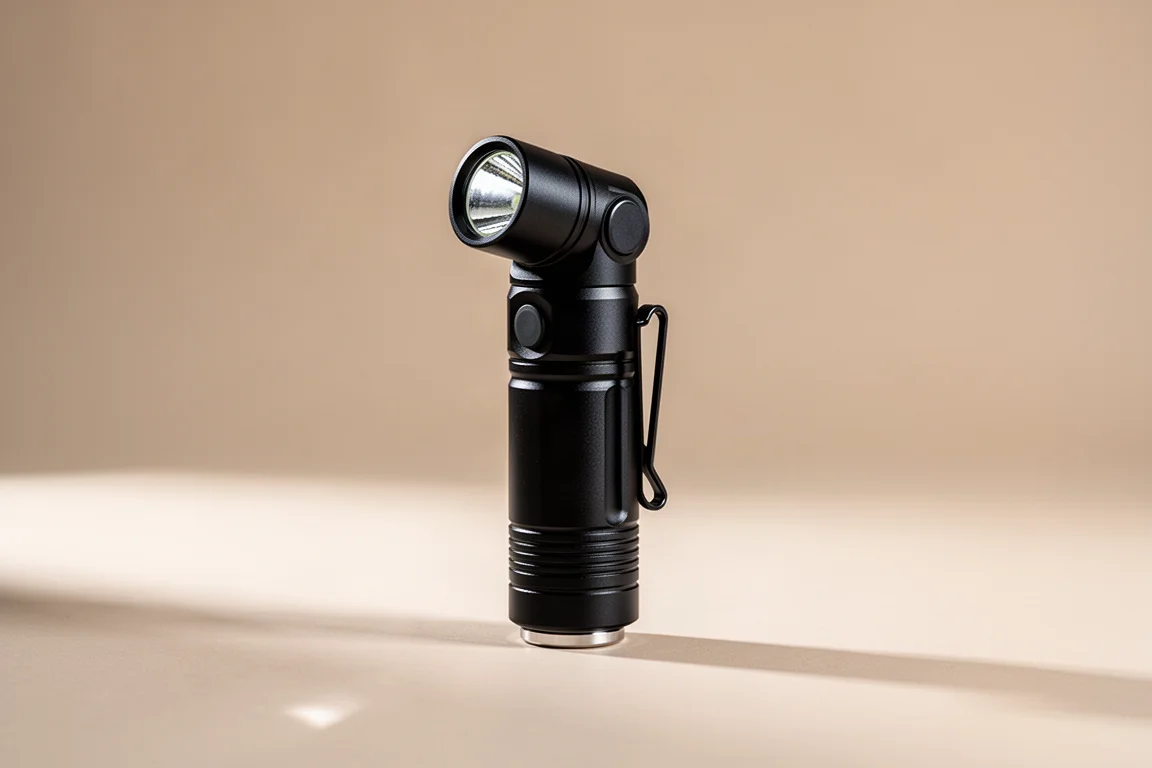
Wuben G5 Review: A Compact Everyday Carry Flashlight
The Wuben G5 is a small, rechargeable flashlight with a pivoting head, magnetic base, and color modes. Here is how it performs as an everyday carry light.