Skis
Liberty Scope 94 and Scope 104 Review: Light, Playful Freeride Twins
A close look at the Liberty Scope 94 and Scope 104, two lightweight freeride twins with different strengths, and how to decide between them.
Introduction
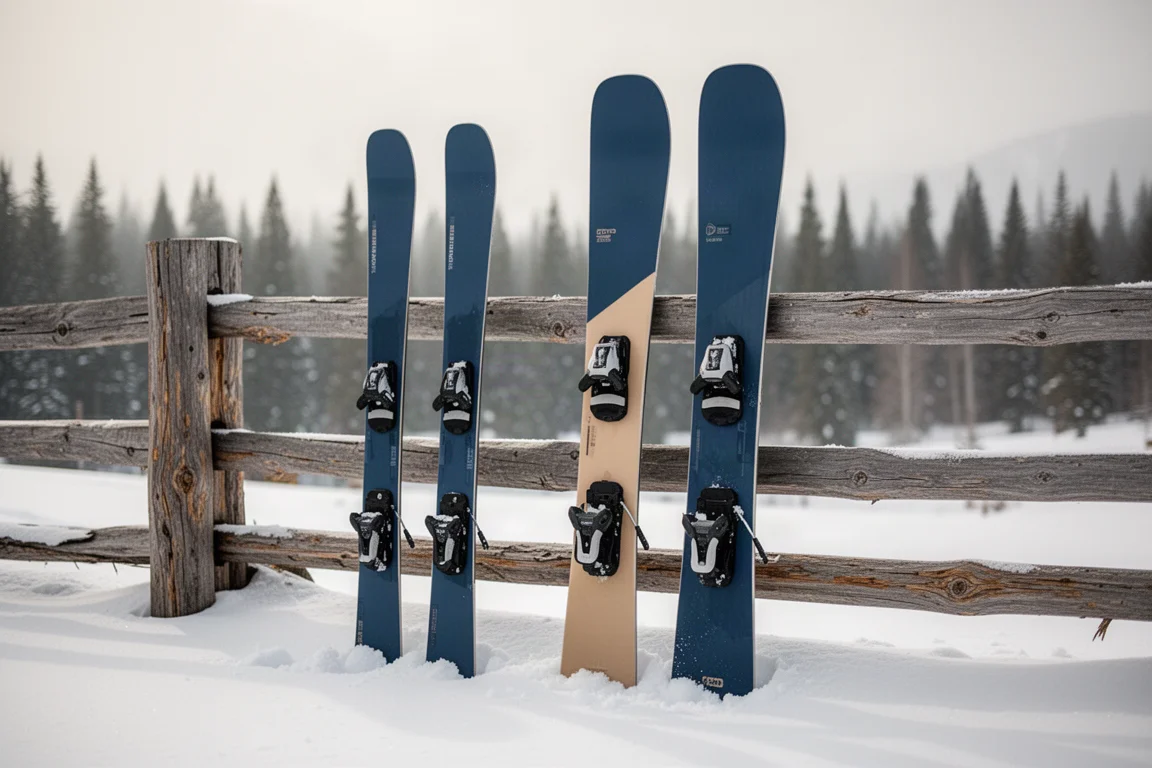
Liberty Skis has made some of the bigger changes in its history for the 2025 season. Production has moved to Europe, bamboo is no longer the default core material across the line, and the collection has been trimmed to three families and eight skis in total. Two of the most interesting arrivals are the Scope 94 and the Scope 104, a pair of light, playful twins that sit on the freeride side of the range.
This review looks at what the two models share, where they diverge, and who each one actually suits. If you are shopping for a first freeride ski, or you already know you like a light build underfoot, both are worth a careful look.
What Changed at Liberty for 2025
The 2025 lineup is organized around three families. Radian and Horizon are directional freeride shapes offered in 92 mm and 100 mm widths. Helix is the everywhere twin, leaning toward freestyle and park skiing. Scope is the fun freeride family covered here, and it spans four widths: 84, 94, 104 and 110. That adds up to eight skis in total, a deliberately compact range for a smaller brand.
In broad terms, Scope replaces the Origin series, although Radian is arguably closer to the Origin in how it performs. The Scope family instead reads as a return to the lighter, more maneuverable character Liberty has built around in the past. Helix remains the bamboo exception in the line, and Radian uses a variable metal laminate that now runs horizontally, tapering through the tips and tails while staying full width underfoot.
Construction and Shape Across the Scope Line
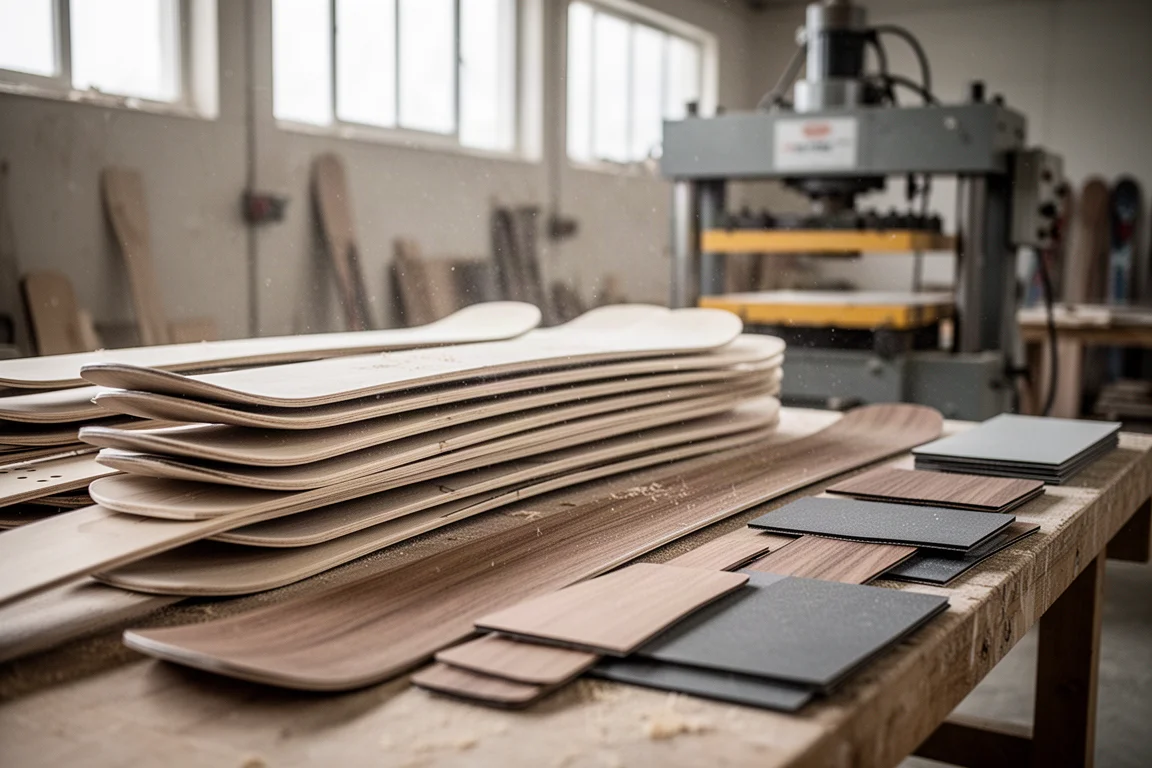
The 94, 104 and 110 share a full-size build. The core pairs poplar with ash, and there is a phenolic composite plate underfoot. Phenolic is familiar from race sidewalls, where it is used vertically and makes a ski very stiff, but here it is laid horizontally so it firms up the underfoot region without behaving like a race ski. The result is a pronounced contrast in flex: very flexible tips and tails with a noticeably more solid midsection.
Rocker is long and low, similar in spirit to the Origin, and there is plenty of camber underfoot. Measured on the 94, tip rocker runs roughly 33 cm with about 30 cm at the tail. The two Scope models also stay close in profile, and the 188 cm length comes with a 22 m turn radius. Weight is a defining trait: a 180 cm Scope measured 1,760 g, while an Origin 106 at 182 cm came in around 2,000 g. The 84 is built a little differently, since it serves as a tweener length option.
Liberty Scope 94: Playful, Reactive, and Center Mount Friendly
The Scope 94 is the more park-leaning of the two. Mounted on the center line, it is very reactive and genuinely fun just about anywhere, but it is not a strong carving ski. Center mounting places the skier slightly ahead of the thickest part of the ski, so turns have to be driven more off the heel, and the experience is less engaging than it is at the recommended line. Move back to the traditional mount and you can pressure the camber properly, which sharpens the whole picture.
What the center mount does unlock is playfulness. The Scope 94 is excellent for 180s, butters and skiing switch, and even at the center mark it remains a strong tree ski. Compared with another 94 mm twin tip that is a more dedicated park shape, the Scope 94 gives up a little in the park and gains in tight trees. Swing weight is extremely low, which makes it approachable for newer park skiers, and the shape is forgiving enough for intermediates. For a park-focused rider, a mount roughly two centimeters behind true center looks like the sweet spot.
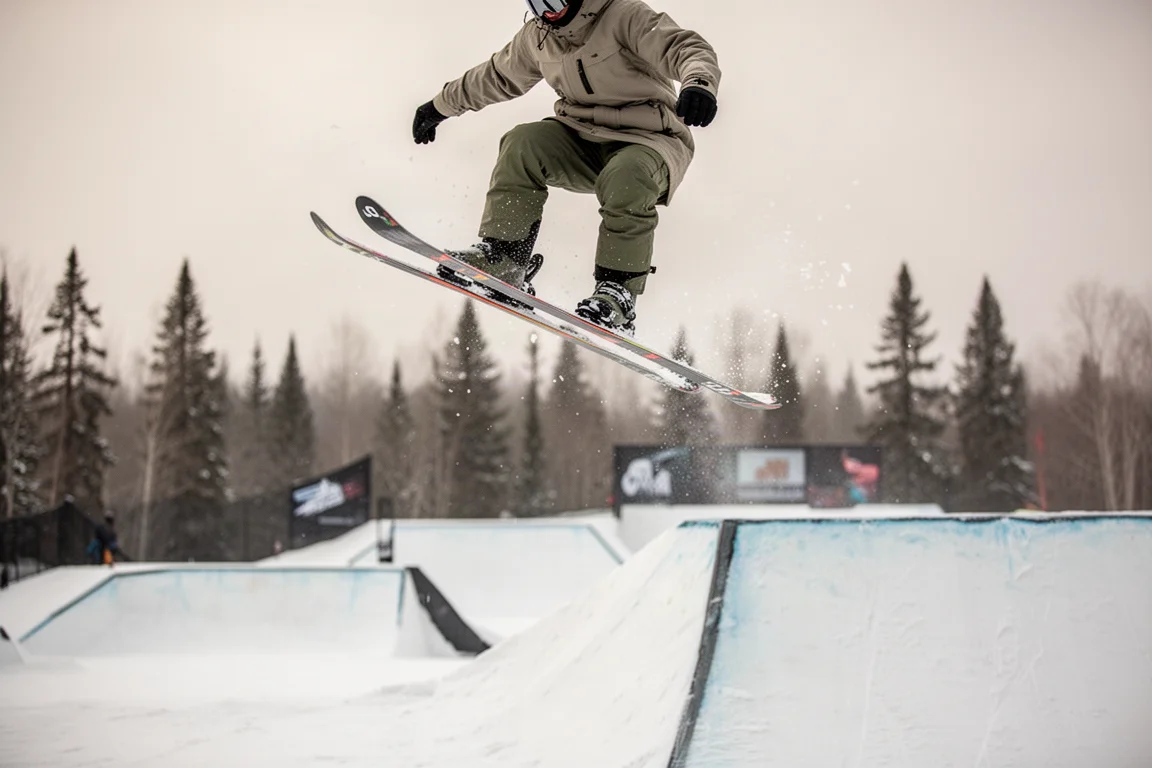
Riders who split their time between park laps and tight natural terrain will find the 94 covers both without demanding much effort or precision.
Liberty Scope 104: Light and Loose in Tight Terrain
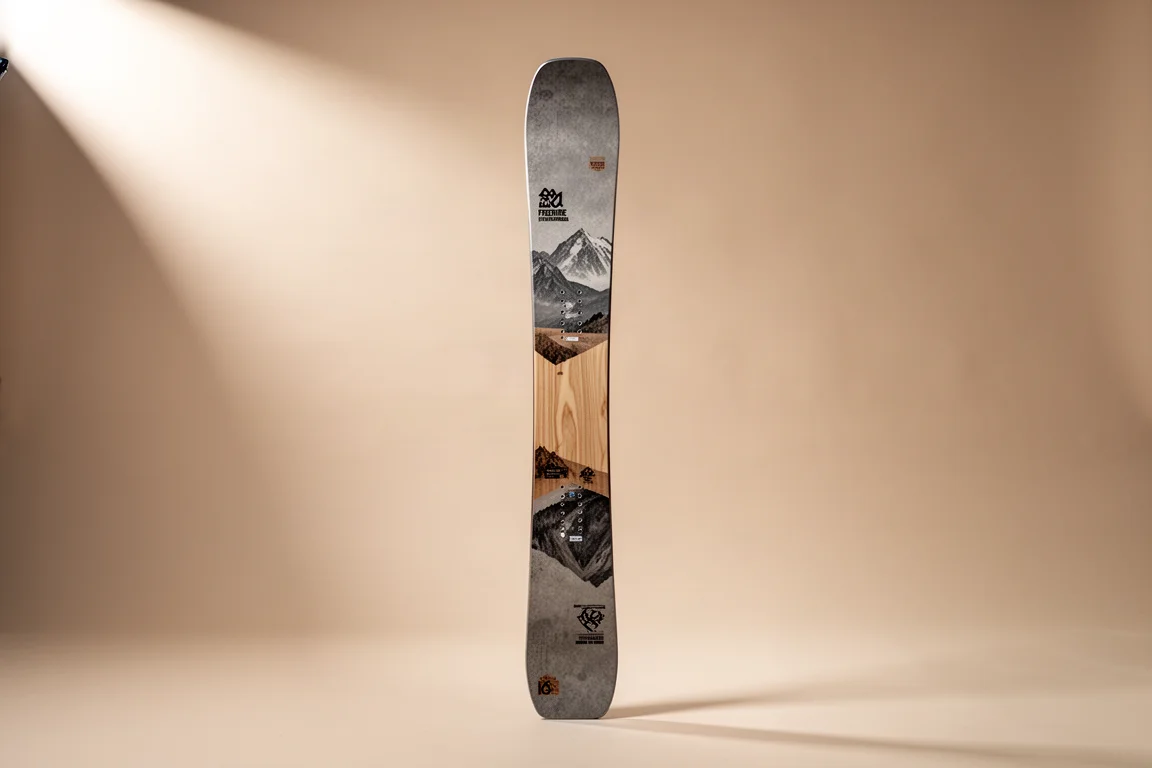
The Scope 104 was skied in the longest length available, in the tight woods of Vermont. This is where the design makes the most sense. It is quick, mobile and eager to change direction, and the tails follow wherever you point them. The wiggle factor is extremely high, which is exactly what you want when you are exploring unfamiliar lines with limited space to correct a mistake.
That agility comes with a trade-off. Feedback is limited, and you have to stay balanced and weight the ski precisely. Pressure the tips or expect energy out of the tail and you will wait a long time for a response. In soft snow, whether fresh or spring-like, the Scope 104 is easy and fun. In firm, icy conditions the light build gets bounced around. It reads as a shape built with lighter, drier snow and more open terrain in mind, and the wider 110 in the family takes that surfy character further still.
Set against a heavier, directional freeride ski in the same width, the Scope 104 is close to a polar opposite. That kind of ski rewards speed and high-angle carving; the Scope 104 rewards slow, creative noodling and quick adjustments in the trees. If you are replacing a heavier all-mountain ski and you want similar tank-like performance, this is not the swap to make. If you want an approachable first freeride ski, or you already know you like a lightweight build, it is a compelling option.
Mounting and Setup: Recommended Line Versus Center
Both the 94 and the 104 offer two mount points: a traditional recommended line and a center line. Liberty states that the recommended line places the skier in the middle of the side cut and the middle of the camber, which lines the ski up for clean initiation and feedback. The center line exists because the Scope’s tip rocker is shorter than the Origin’s, leaving more room to move the binding forward without running out of ski.
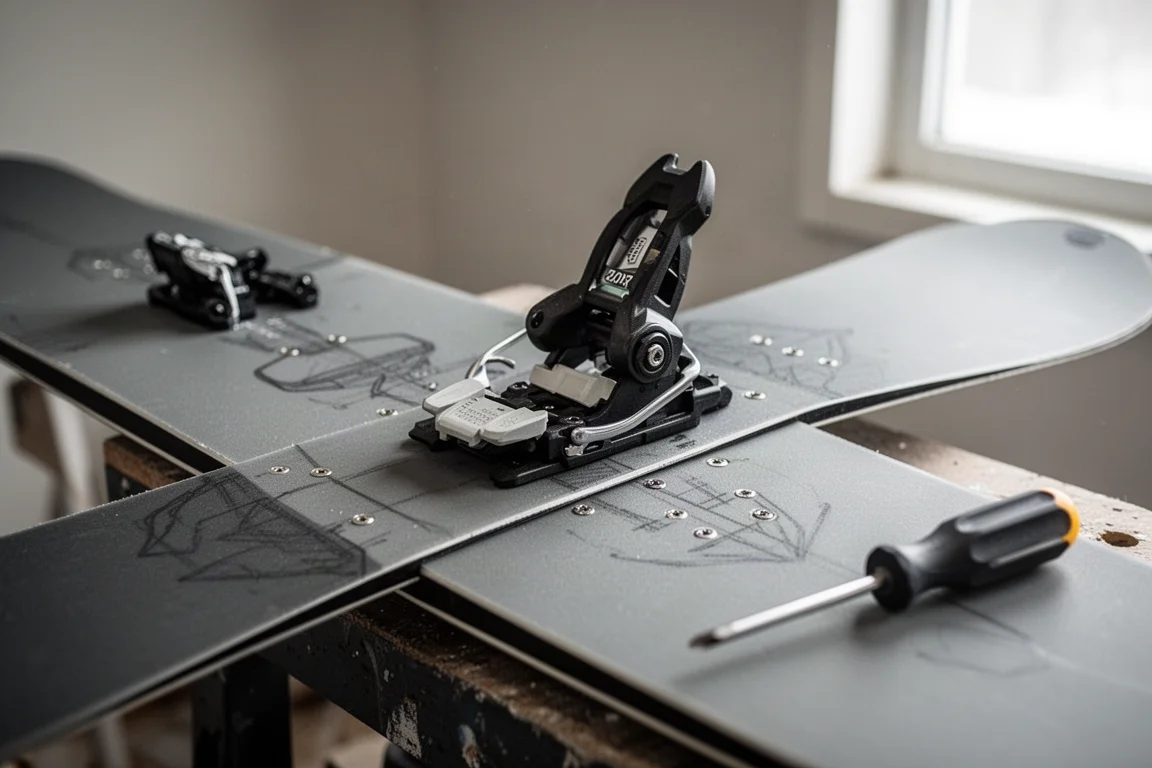
For most skiers, the recommended line is the safer starting point, especially if you want the ski to carve at all. A park-focused rider can happily experiment with a center mount, though something closer to minus two centimeters from true center tends to work better than a full center mount on this shape. If you own the ski, the mount point is worth revisiting once you have a few days on it.
Buying Advice: Who the Scope Skis Suit
Choose the Scope 94 if your days are split between park laps, butters, switch skiing and tight trees, and you want a forgiving, low swing weight ski that intermediates can handle without feeling punished.
Choose the Scope 104 if you spend your time hunting new lines in tight terrain, you ski a lot of soft snow, and you value quickness and maneuverability over damp, high-speed stability. It also works as a first wider freeride twin tip for an intermediate who wants to explore more adventurous terrain.
Skip both if you want a heavy, planted ski that holds an edge at speed on firm groomers, or if you are looking to replace a directional all-mountain ski with something similar in character. Lightweight is a preference, and these two are unapologetically light.
Conclusion
The Scope 94 and Scope 104 are a clear statement of intent from Liberty. They are light, playful and quick, and they do things that heavier skis in the same widths simply cannot. The 94 leans toward park and all-mountain playfulness, while the 104 is at its best in soft snow and tight trees. Match either one to the terrain and the style of skiing you actually do, and the low weight stops being a compromise and starts being the point.
Further reading
Related Reviews

Skis
Armada Anti Matter 82 W Review: A Light, Approachable All-Mountain Carver
Armada's Anti Matter 82 W pairs a lightweight Karuba and carbon build with an easygoing all-mountain shape, aimed at intermediates through lighter-footed advanced skiers.

Skis
Armada Anti Matter 88W Review: A Light, Playful 88mm All-Mountain Ski Plus Two Alternatives
The Armada Anti Matter 88W returns unchanged in spirit from its Reliance 88C days, and it remains one of the most versatile 88mm skis around. We also look at the Nordica Santa Ana 87 and Anti Matter 92 W as alternatives.

Skis
Armada ARV 100 vs Atomic Bent 100: Which 100mm Freestyle Ski Should You Buy?
Two of the best all-mountain freestyle skis of the season compared: one leans playful and park-ready, the other holds up better everywhere else.