Kitchen Knives
Lesic Pyon 250mm Gyuto Review: A Big Blade That Balances Beauty and Bite
A close look at the Lesic Pyon 250mm Gyuto, covering its balance, edge sharpness, bolster comfort, and where this hefty blade shines and struggles.
Introduction
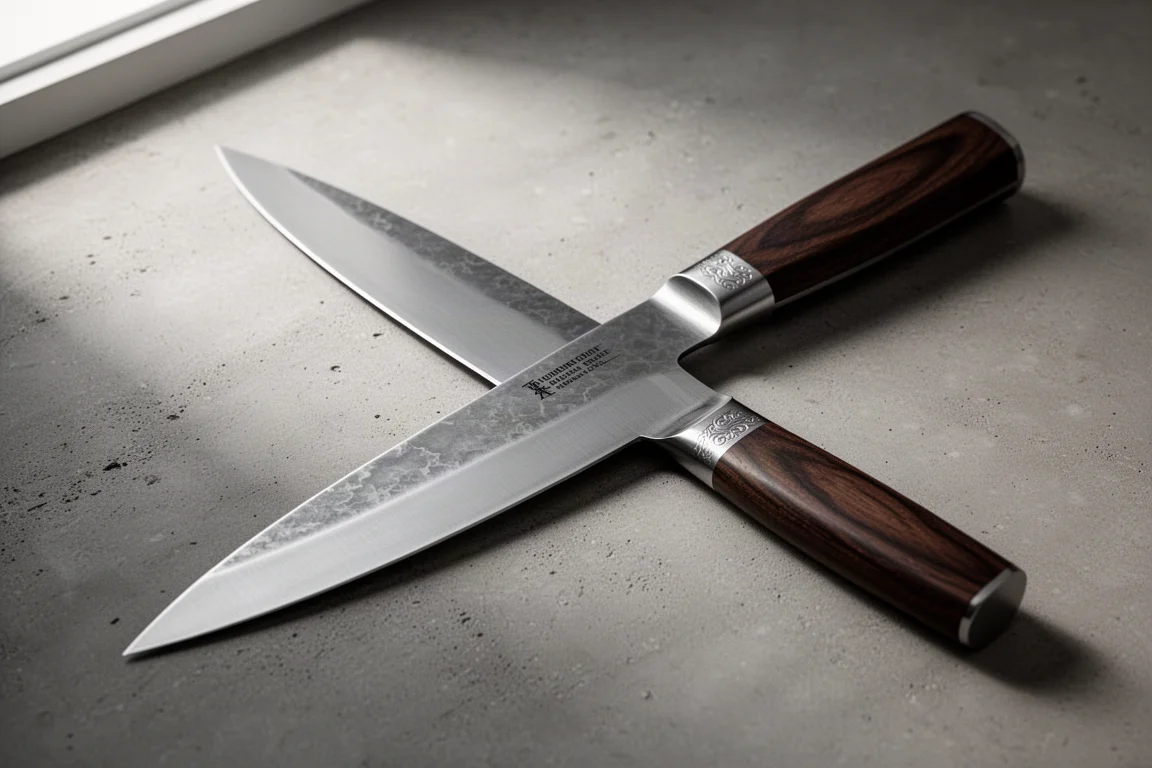
Some knives earn nicknames for a reason, and the Lesic Pyon 250mm Gyuto has apparently picked up “the beast” along the way. A 250mm blade is a serious length for a kitchen knife, and this one pairs that size with a tall heel, a full Western profile, and construction that leans on both traditional craft and modern finishing. After extended use across a wide range of ingredients, the picture that emerges is of a distinctive, well-balanced large knife with one clear weak point worth knowing about before you buy.
First Impressions and Handling
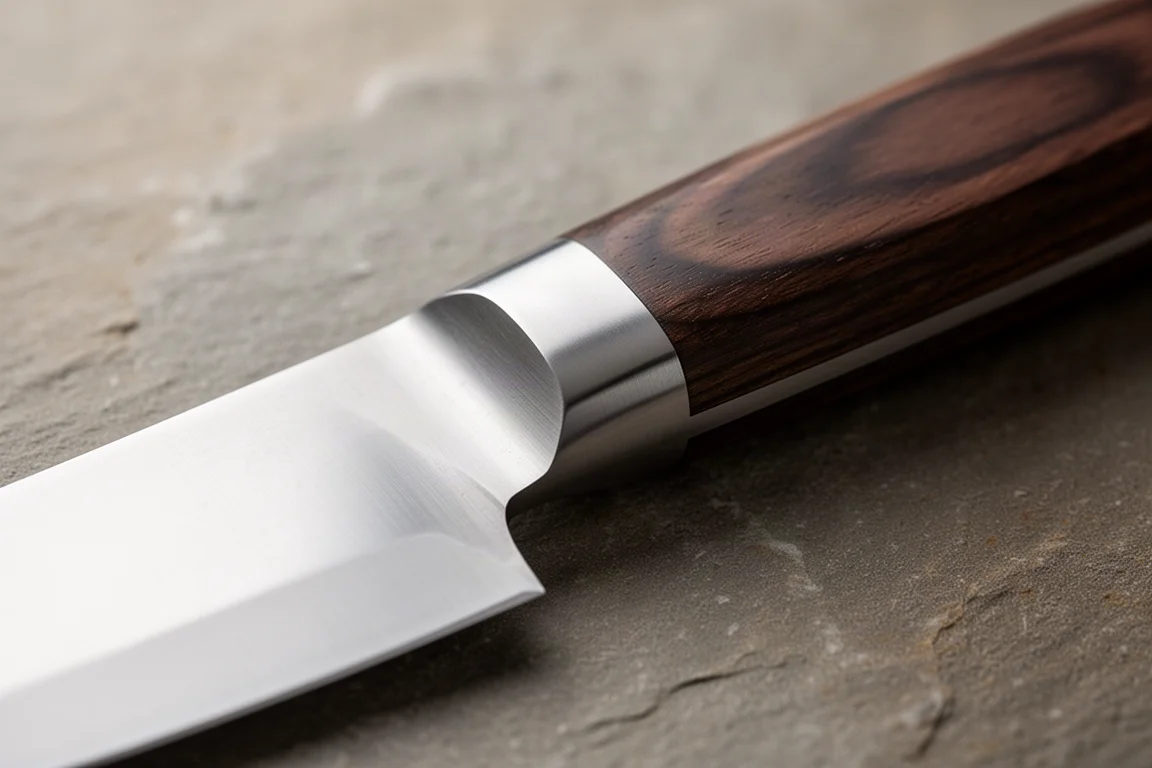
The first thing worth addressing is the question that comes up often with this style of knife: is the bolster comfortable? The answer is a clear yes. In a pinch grip, the knife almost disappears from awareness, and the fluted design follows the natural opening of the hand. With a blade this long and tall at the heel, the bolster also plays a practical role: it keeps the knife from feeling too front-heavy.
The handle itself is relatively light, with most of the balancing weight coming from the bolster and the length of the handle rather than the density of the wood. The overall balance is genuinely good for a blade of this size, though make no mistake, this is a hefty knife. At just under 200 grams, it is not for the faint of heart, yet the weight feels purposeful rather than cumbersome.
Design and Craftsmanship
The profile is Western, with an aggressive sharp tip and flat grind geometry in an etched finish. What stands out most is the angularity. The angles are sharp and deliberate, but they are offset by subtle contrasts: the integral bolster is beautifully handworked, with details you only notice on close inspection, and the transition from bolster to handle is remarkably smooth, with no recess where the two materials meet.
In deliberate contrast to those soft transitions, the nickel cladding line is purely angular and sinusoidal, making a strong visual statement. It is a compelling blend of traditional craft and modern technology, and it gives the knife a character that is easy to appreciate after weeks of use rather than just on first sight.
Where It Shines: Protein Work
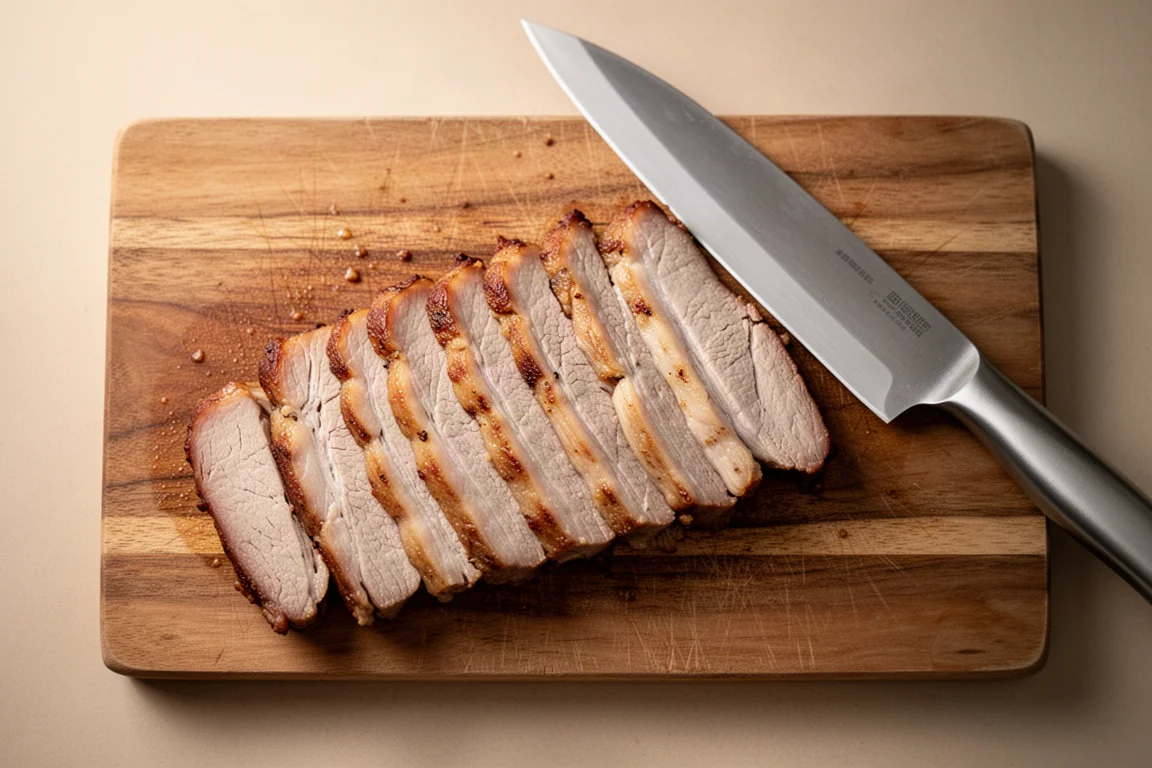
This is where the knife earns its keep. With a scalpel-sharp edge out of the box, arguably the sharpest out-of-box edge from a non-Japanese maker, the Pyon handled protein work exceptionally well. It took down a pork shoulder quickly and with ease, behaving almost like a hefty sujihiki. At 250mm, the blade length naturally lends itself to this kind of slicing task, and the generous bite makes quick work of larger cuts.
The sharp apex also makes cleanup tasks easy, and the edge produced thin, clean slices when the ingredient cooperated. For anyone whose knife work centers on protein, this is the strongest argument for the knife.
Pushing It Beyond Its Comfort Zone
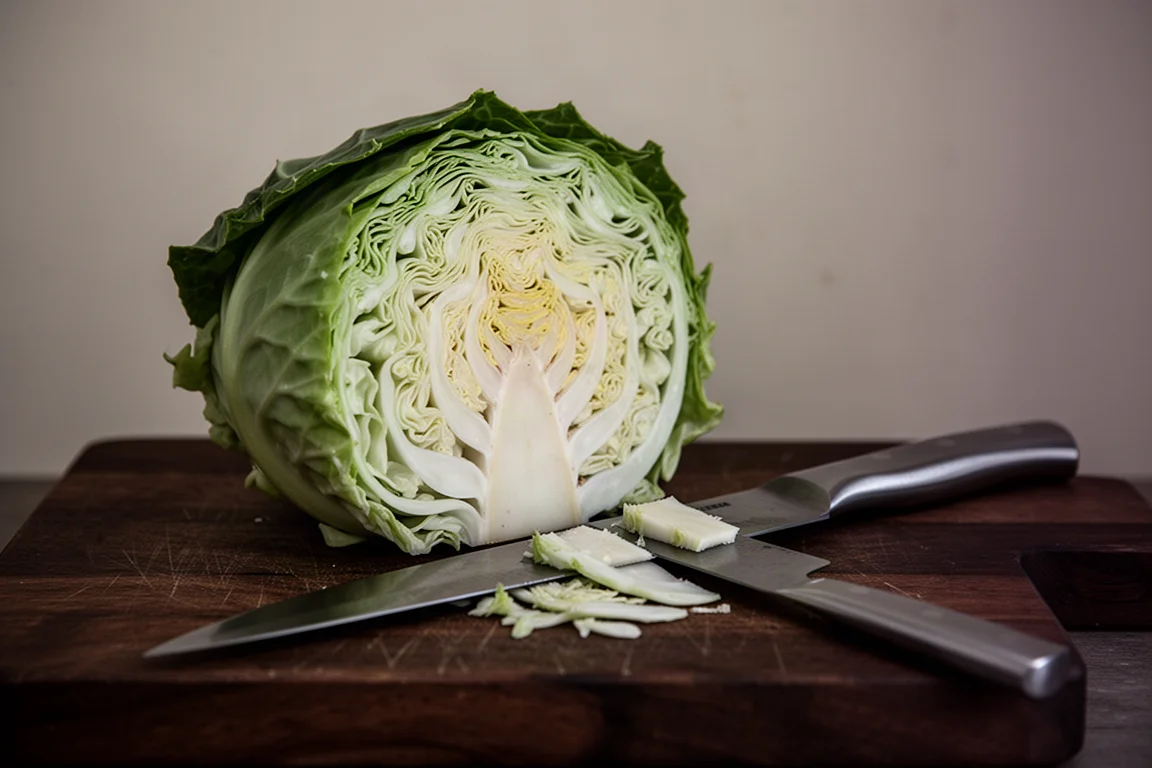
The clearest weakness surfaced with dense vegetables. Cutting through a very dense cabbage was a struggle, less from wedging than from the blade getting stuck. The culprit appears to be the edge geometry: it feels slightly thick behind the primary bevel, even though the apex itself is exceptionally sharp and the spine taper contributes to a good feel in hand.
A more acute primary bevel angle or a thinner secondary bevel could make push cuts through dense ingredients easier, and a different grind style might also be part of the answer. The spine taper and lovely blade geometry still earn praise, but for fine precision work on dense produce, this is the one point of criticism worth weighing.
Things to Consider Before Buying
Weigh the trade-offs honestly. If your work is mostly protein slicing and general prep where a razor edge does the talking, the thick-behind-the-edge feel will rarely bother you, and you can even hear the scalpel edge sing through ingredients that do not demand a razor. If dense vegetables are a daily task, expect a bit more resistance than the knife’s otherwise excellent profile would suggest.
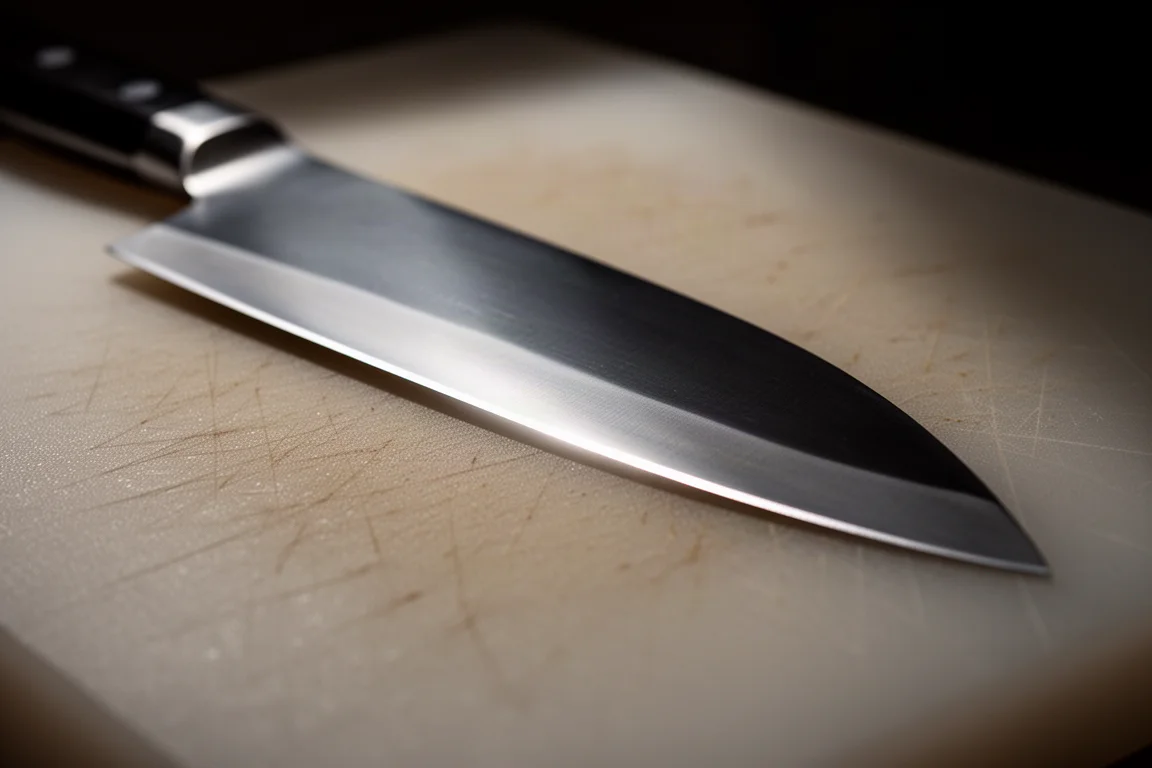
On the plus side, the bolster comfort holds up over long sessions, the balance suits the long blade well, and the visual craft is genuinely special, from the angular nickel cladding line to the nearly invisible handwork on the bolster.
Buying Advice
This knife makes the most sense for cooks who want a large, confident blade for protein-heavy prep and who appreciate distinctive, hand-finished construction. If your priority is fine precision work on dense produce, consider whether the slightly thicker geometry behind the primary bevel fits your cutting style, or look for a variant with a thinner grind. For everyone else, the combination of a superb out-of-box edge, comfortable bolster, and striking angular design makes the Lesic Pyon 250mm Gyuto a memorable and capable kitchen companion.
Conclusion
The Lesic Pyon 250mm Gyuto lives up to its intimidating reputation in the best ways: excellent balance for its size, a stunning blend of traditional and modern design, and one of the sharpest out-of-box edges available from a non-Japanese maker. Its single meaningful flaw, a slightly thick edge behind the primary bevel, only matters if dense vegetables dominate your prep. Match it to the right tasks and it is a knife that both performs and impresses.
Product link
View more details for Lesic Pyon 250mm Gyuto
This product is mentioned in the review. Check the specifications, options, and compatibility before buying.
View more details for Lesic Pyon 250mm GyutoFurther reading
Related Reviews

Kitchen Knives
Best Chef's Knives 2026: 27 Popular Options Tested and Ranked
A comprehensive review of 27 chef's knives ranging from $18 to $380, with honest assessments of handle comfort, blade balance, and real-world performance.

Kitchen Knives
Best Chef's Knives Under $75: Two Tested Recommendations
Two practical 8-inch chef's knives that balance sharpness, comfort, and durability without premium pricing.

Kitchen Knives
Best Chef's Knives 2026: 27 Options Tested and Ranked
A comprehensive review of 27 chef's knives ranging from $18 to $380, with honest assessments of handle design, balance, blade profile, and real-world performance.