Everyday Carry
Leatherman Garage Series 3 Parts Review: A Limited Release With Real Trade-offs
Leatherman's Garage Series 3, called Parts, ships with two swappable blades and a distinctive cerakoted frame. Here is what it does well and what you should know before hunting one down.
Introduction
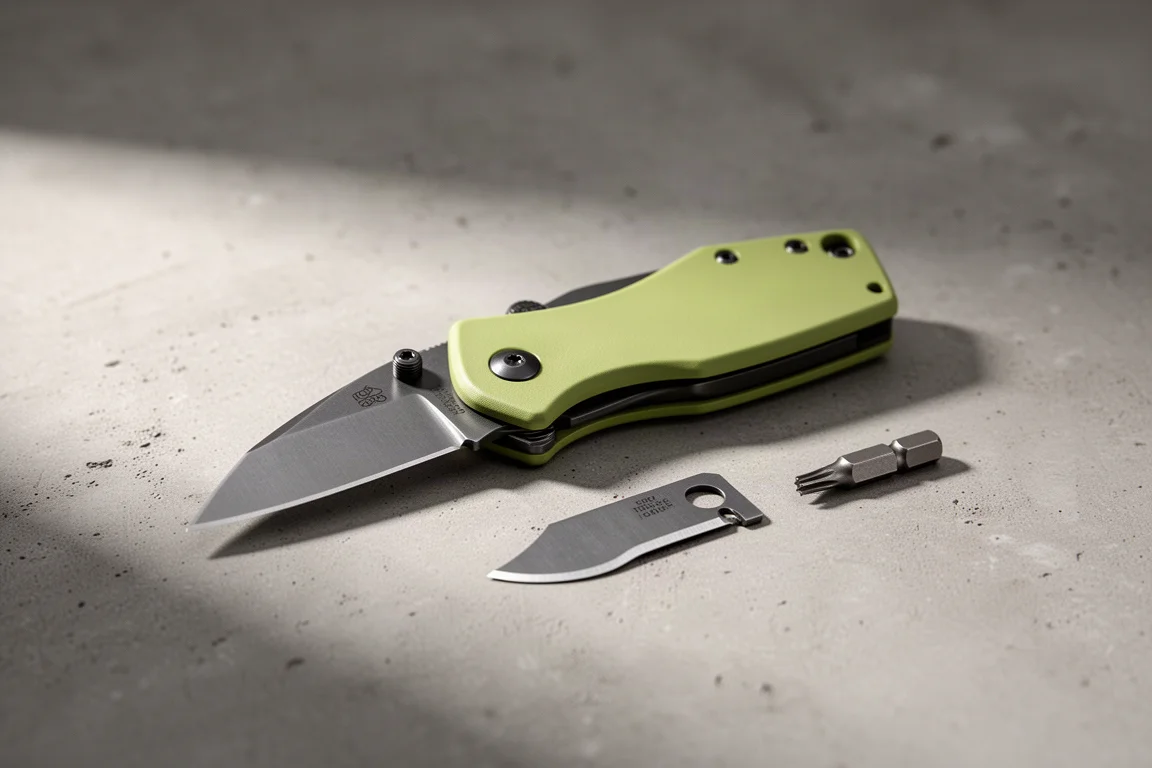
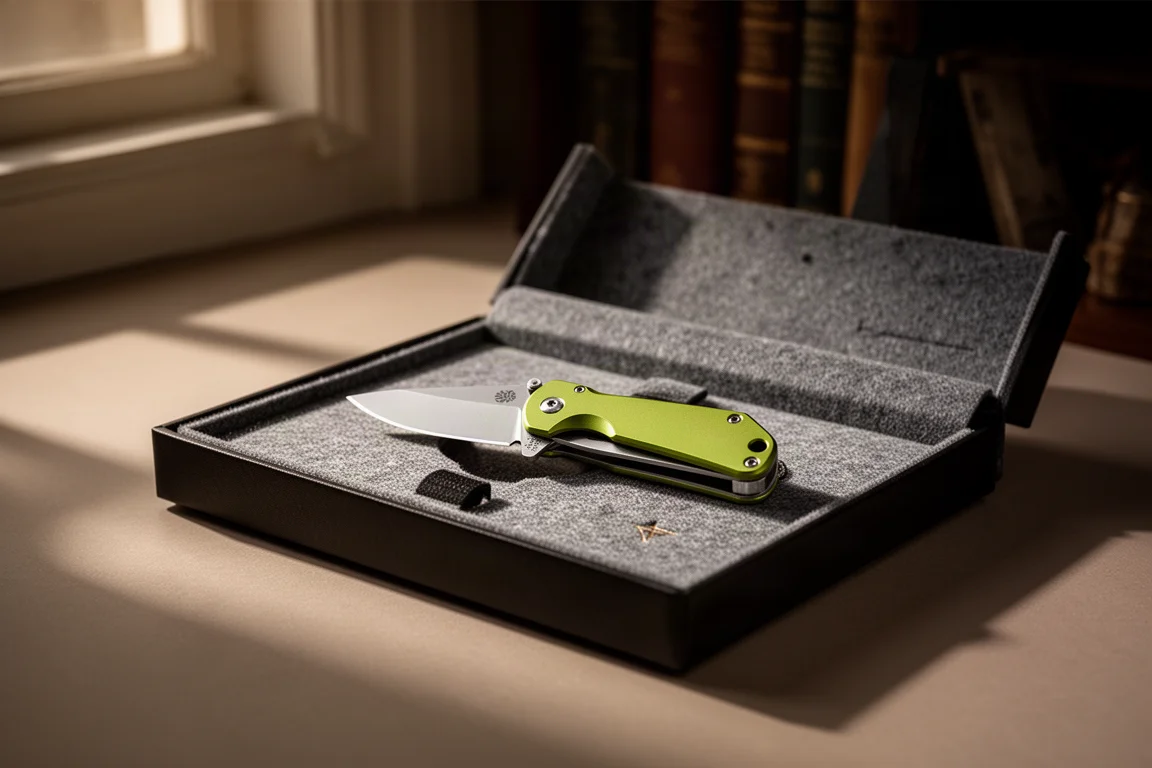
Leatherman’s Garage series exists for experiments, and the third entry, simply called Parts, is a strange and interesting one. It is a compact folding knife with two swappable blades: an S30V blade installed out of the box and a 154CM sheep’s foot blade included as a spare. The frame wears a thick chartreuse cerakote finish over what appears to be steel, which gives it a look unlike anything else in Leatherman’s regular lineup.
At $215, Parts is priced and positioned as a limited collector’s item rather than a mainstream tool. It is only available in the United States, and quantities are clearly small. That scarcity is part of the appeal, but it also raises the question of whether the design itself holds up. After spending time with it, the honest answer is: partially.
What You Get in the Box
The package includes a small pamphlet identifying the series number and the Parts name, along with instructions for changing blades. The knife itself comes with the S30V blade installed, and the box holds the second 154CM sheep’s foot blade, a short length of paracord, and a Leatherman bit holder loaded with T6, T8, and flat bits.
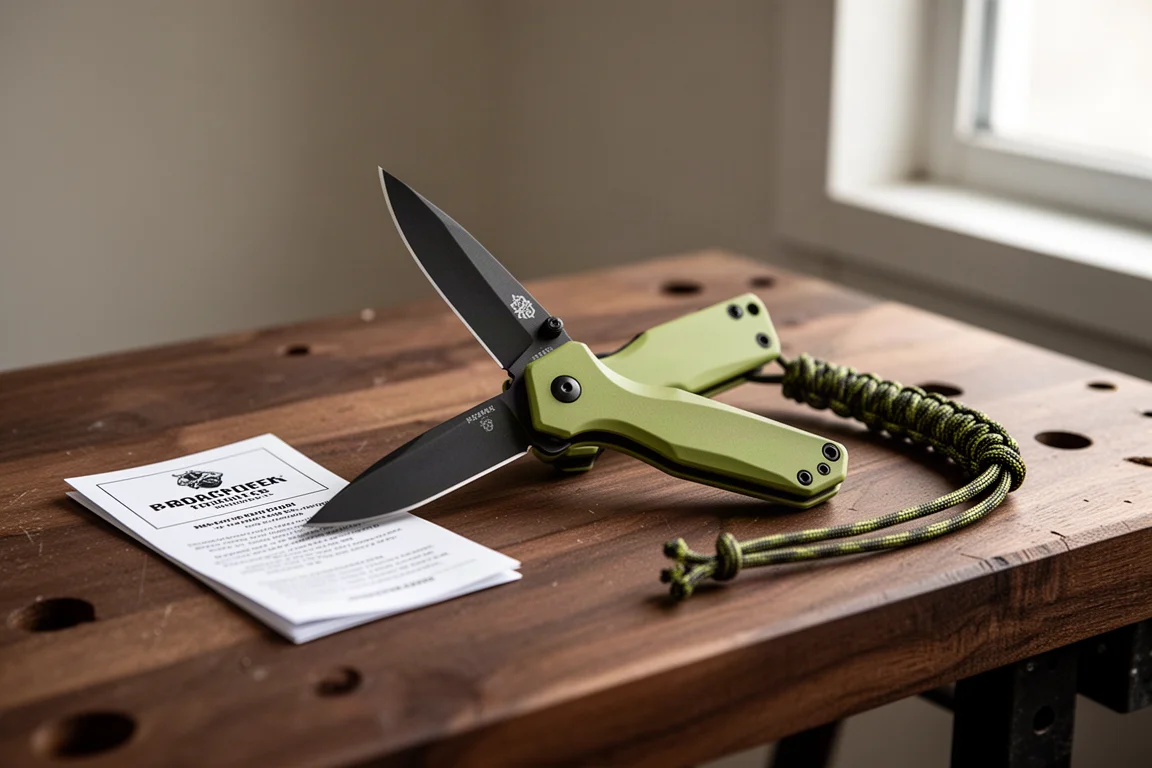
One detail worth noting: the cerakoted section that looks like plastic in product images is actually metal. The finish is applied over steel, and you can see the metal protruding on the back of the frame. That is a relief for anyone worried about durability at this price.
How the Blade Mechanism Works
The mechanism is the most unusual part of the design. There is no flick or thumb-stud launch here. The blade opens with a rolling motion and resists throughout the travel, which is safer but slower. It feels reminiscent of the Leatherman Free series in appearance, but it does not behave like a Free knife, where a quick flick opens the blade easily.
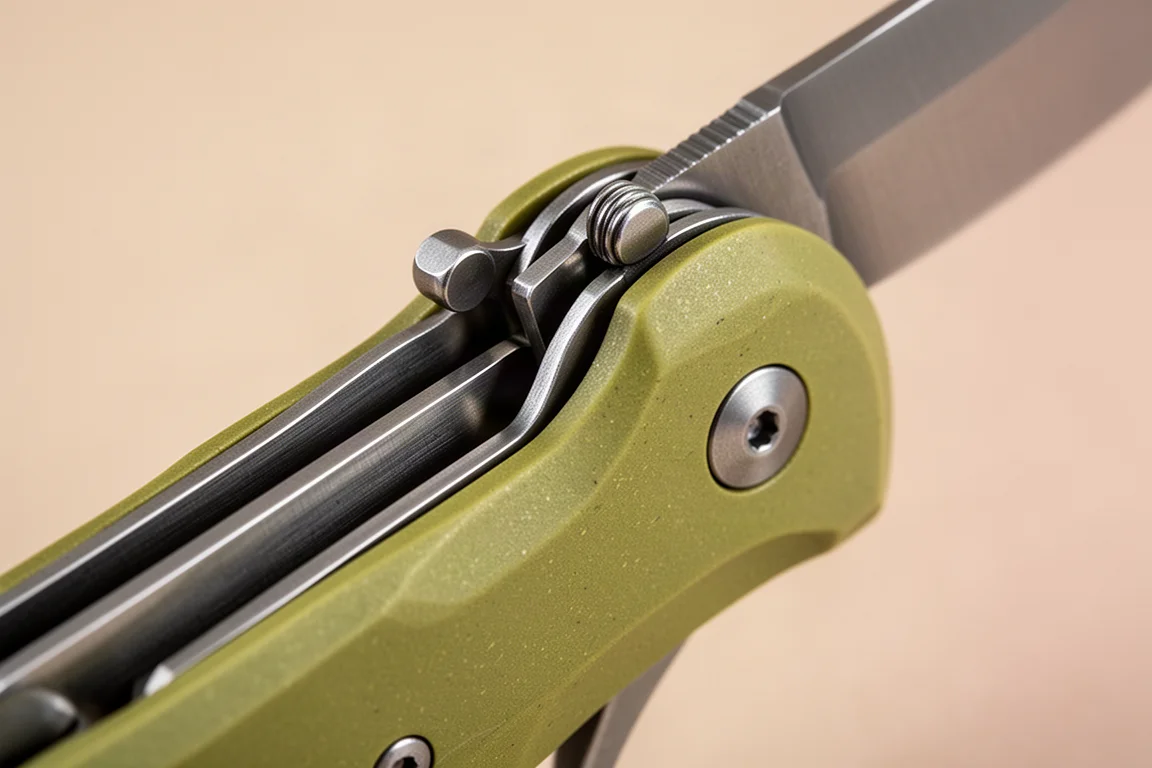
The frame is unusual in another way: the steel liners continue all the way through, and the visible mechanism appears to be spring-based. Disassembly is not something most owners should attempt, so much of what makes this knife tick stays behind the coating. The thumb stud, oddly, does not seem to do much beyond keeping the blade from gaining leverage over a single screw near the pivot. That one small screw carries a lot of responsibility.
Swapping the Blades: Fiddly Work
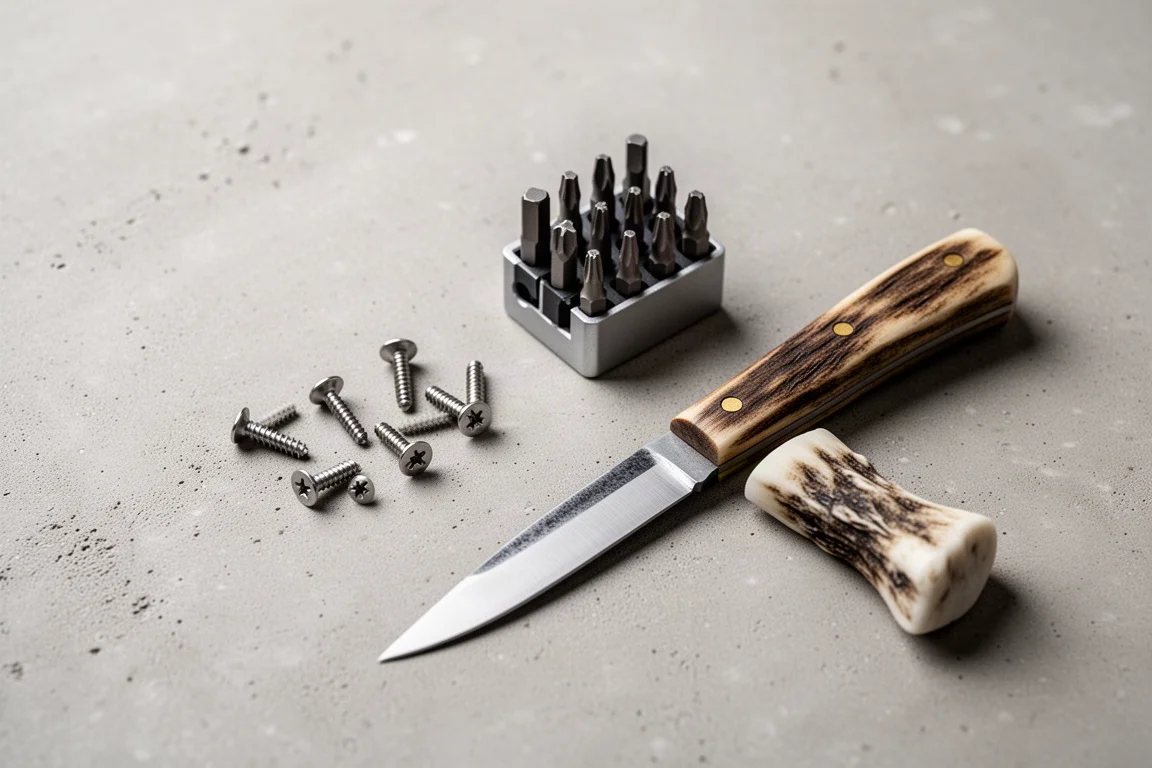
Changing blades is where Parts becomes frustrating. The process requires a number-six Torx for the body screws and, because the pivot is free-floating rather than a proper detent pivot, two T8 drivers to adjust it. The pivot also appears to be thread-locked, so loosening it without proper tools is not realistic.
The thumb stud itself is not fixed in place, which means you have to arrest it somehow while unscrewing, and over-tightening risks gripping it hard enough to mar the coating. During a single blade swap, small flakes of the cerakote came off with only gentle handling. The tiny screws involved are easy to lose, and doing this anywhere other than a controlled workspace would be genuinely obnoxious.
That is the core weakness of the design: it has none of the advantages of a folding knife and none of the advantages of a disposable utility blade, and the blade-change process is complicated enough that losing a difficult-to-replace screw is a real risk under hard use.
Build Quality and the Coating Question
The cerakote finish is applied thick, which looks striking out of the box but does not hold up well to even light maintenance. Adjusting the pivot or swapping blades for the first time is enough to produce visible flaking. The clip is a standard Leatherman Free clip, attached quite low on the frame, leaving more exposed space than seems necessary. The size and placement are fine; it is the why of the whole design that is hardest to justify.
Who This Makes Sense For
Parts makes sense for one group: collectors. This is a limited release from a workshop experiment program, and it will almost certainly become difficult to find and hold its value among Leatherman enthusiasts. For anyone outside the United States who has never had access to Garage releases, it represents a genuinely rare piece.
For everyone else, the practical case is thin. There are more sensible ways Leatherman could have used leftover parts, such as hybrid versions of existing tools, and the mechanism here does not offer a single clear advantage to offset its quirks. If you missed out on this release, there is little reason to feel bad about it.
Buying Advice
If you are a collector and a unit surfaces, it is a legitimate piece of Leatherman history and likely a safe store of value. Treat it as a display piece, not a user knife. If you want a practical swappable-blade tool or a hard-use folder, look elsewhere in Leatherman’s regular lineup instead.
Conclusion
The Leatherman Garage Series 3 Parts is an interesting concept executed as a one-off. The cerakoted metal frame looks great, the two premium blade steels are a genuine bonus, and its scarcity gives it collector appeal. But the fiddly blade-change process, the fragile coating, and a mechanism without a clear purpose mean its value is almost entirely sentimental and collectible rather than practical.
Product link
View more details for Leatherman Garage Series 3 Parts
This product is mentioned in the review. Check the specifications, options, and compatibility before buying.
View more details for Leatherman Garage Series 3 PartsFurther reading
Related Reviews

Everyday Carry
Everyday Gear That Deserved a Second Look
A roundup of solid everyday carry items: watches, pens, a pencil, a knife, and a smart ring that each earned a place on the table.

Everyday Carry
KORE Tactical Bifold Wallet Review: A Durable Everyday Carry Option
A close look at the KORE Tactical Bifold Wallet, a reinforced nylon wallet with magnetic closure and room for cards, cash, and IDs.

Everyday Carry
Krabby Wallet Review: A Slim, Simple Carry That Has Stood the Test of Time
A closer look at the Krabby Wallet, a slim canvas and elastic design with a loyal following and a simple, functional approach to everyday carry.