Gravel Bikes
Lauf Seigler Review: A Race Gravel Bike Built for Big Tyres
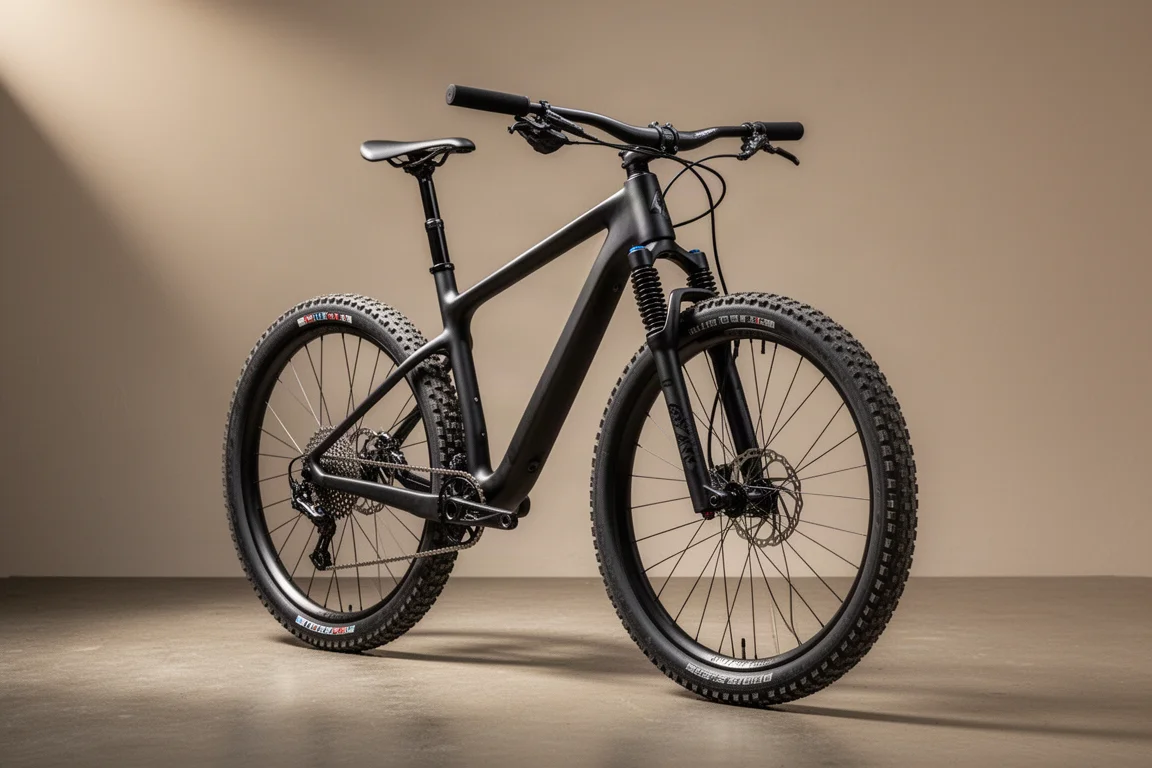
The Lauf Seigler takes the True Grit formula and adds huge tyre clearance, a 30mm leaf-sprung fork, and a noticeably more compliant rear end.
Introduction
The Lauf Seigler is the next step in the evolution of the True Grit, a race gravel bike that has built a following on stable handling and a smooth front end. The Seigler keeps that geometry almost unchanged, then rewrites the parts of the formula that riders pushed back on: tyre clearance and rear-end comfort.
The headline figure is clearance for 29 x 2.5 inch rubber, or 700 x 57c. The frame is 1x specific, the rear stays are shorter than ever, and the front end carries a leaf-sprung fork with 30mm of travel. Our first rides took place in Iceland, covering around 140 kilometres of gravel, and the early impressions suggest Lauf has addressed the main criticisms levelled at the True Grit.
Who the Lauf Seigler Is For
This is a race-oriented gravel bike, not a bikepacking platform. It suits riders who want a fast, stable machine that stays composed on rough, loose or washboard surfaces, and who are happy to trade a front derailleur and a broad gear range for simplicity and wide tyre capability.
Riders who spend long days on chattery gravel will get the most from it. The combination of large volume tyres, a compliant rear triangle and the leaf-spring fork makes the front end noticeably calmer than a typical rigid gravel setup. Riders who prefer a pin-sharp rigid fork and a double chainring should think carefully before committing, as those two things are simply not on the menu here. Setup is refreshingly simple too, since the fork has no adjustments to tune.

The bike is built around a relatively long front end with a short 70mm stem, a combination aimed at stability at speed and over loose terrain. That geometry will feel natural to anyone coming from a modern gravel or mountain bike background.
Frame Design and Tyre Clearance
The front two thirds of the frame are constructed as a single-piece monocoque, with the front triangle extending a few inches into the chainstay. The chainstays themselves come from a shallow but broad carbon plate, which adds strength and stiffness around the bottom bracket area while keeping the stays straight. Lauf says the straight profile improves compliance without compromising strength, and a shallower depth helps squeeze wider tyres into the short rear stays.
Further back, the stays narrow into slim carbon tubes, and the drive side gets rubberised chain slap protection. Lauf uses a BSA73 bottom bracket rather than the more common BSA68 standard, gaining around five millimetres of extra clearance, while chainring-to-chainstay clearance has been preserved to prevent a dropped chain from damaging the stays.
Compliance comes from several places at once. The seat stays are dropped lower down the seat tube, the top tube meets the seat tube in a flattened junction, and the seat tube angle is slacker. The result is a seat tube that visibly bows inward when a bump travels through the frame.
The frame uses a standard carbon weave throughout. Lauf chose not to use a lighter high modulus carbon, believing it may not be as durable against rock strikes, and the frame meets the ISO standard for mountain bike frame strength. There are four sets of bosses: two inside the main triangle, one under the down tube, and one on top of the top tube for a top tube bag or bento box.
Routing is internal with sleeve routing all the way to the chainstays, and the rear hose exits near the dropout. Riders running a mechanical or wired Di2 groupset can use the chainstay protector as outer routing. The frame is 1x only, with no option to fit a front derailleur, and there is no routing for a cable-operated dropper post, though a wireless dropper can be installed on stock wireless builds.
The Grit SL Fork and Front-End Comfort
The leaf-sprung fork is the most distinctive part of the bike. Twelve glass fibre springs join a pair of dog-leg links to the fork legs to produce 30mm of travel, limited by rubber bumpers that prevent damage when the full travel is used. For the Seigler, the fork has been updated with a more common 12 x 100mm axle instead of the older 15mm standard, and broader shoulders to accommodate wider tyres.
Out on the gravel, it does what it is designed to do. There is no friction in the system at all, and it tunes out high frequency chatter in a way a rigid fork cannot, lifting comfort beyond what most gravel bikes offer. Combined with large tyres and the vibration-damping bar, it creates a very comfortable front end.
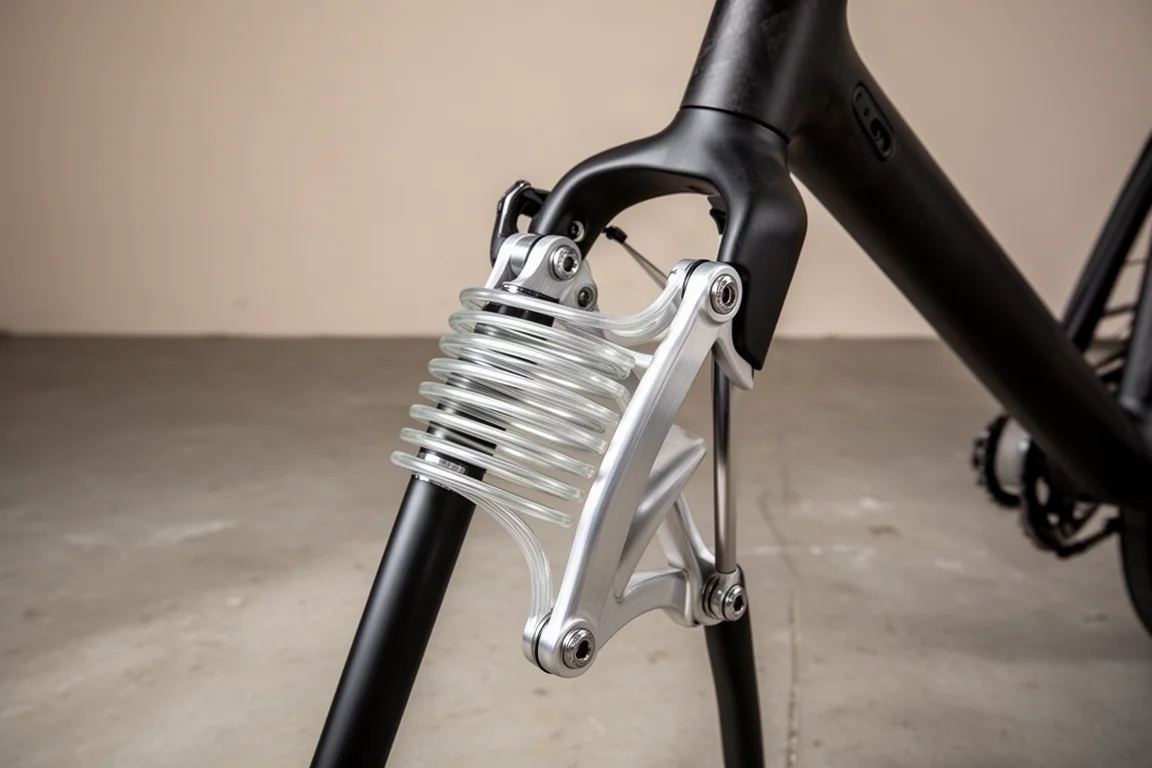
There are limits worth understanding. Sprinting out of the saddle produces a little bob as the suspension compresses under shifting body weight, though it stays relatively benign. Push and pull hard through the bars and there is a hint of disconnect between the bar and the tyre contact patch, which riders used to a stiff road fork may notice. On steep, rough descents with heavy braking, the fork can twist and twang a little. It is not a telescopic mountain bike fork, it is undamped, has no progressive spring rate, and travel is limited, so direct comparisons with that category are unfair.
Drivetrain, Cockpit, and Build Options
The bike is offered in three spec levels: the more affordable Weekend Warrior Wireless, the Race, and the top end Ultimate. The test bike was a slightly modified Race model with a carbon wheel upgrade. Lauf also offers the Seigler with a rigid fork option for riders who prefer it.
The cockpit pairs a short 70mm stem with the Lauf Smoothie bar, a carbon drop bar with glass fibres running through the tops for vibration damping. The tops have a three degree back sweep with a tight radius into the hoods, the drops are shallow at 125mm, and there is 16 degrees of flare. The gearing comes from SRAM’s Rival wireless drivetrain, with a 10 to 44 tooth cassette and a wireless connection between shifter and derailleur.
Shifting under power is very good, with clean changes and natural jumps between sprockets. The button-based shifters deliver consistent, repeatable performance, which is what you would expect from this tier of SRAM equipment. Riders coming from a mountain bike background may miss the wider range of a mullet setup using a 10 to 50 tooth cassette, but the derailleur on this bike cannot stretch to that size.
Wheels are 24mm internal width gravel wheels. Stock builds are currently listed with 40c tyres, though that is expected to move to 45c down the line. The test bike was ridden on both 700 x 50c tyres at around 35 psi and 29 x 2.25 tyres at 30 psi.
Rear Compliance and Handling
Lauf claims saddle-to-rear-axle compliance has been tripled compared with the True Grit. It is not as buttery as the front end, but it does feel noticeably more comfortable, which makes longer, more efficient efforts over rough ground possible. At the same time, the bottom bracket area with its deep chainstays feels stiff under power, so the compliance has not come at the cost of drivetrain rigidity.
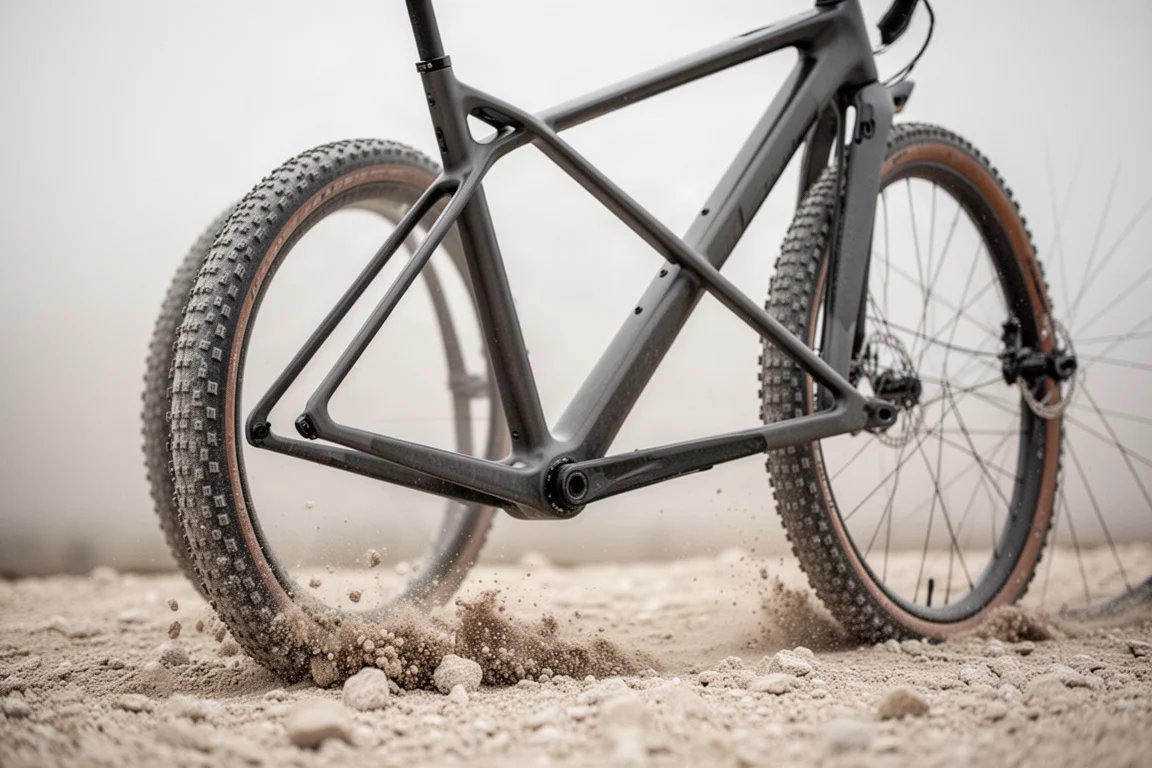
Handling stays close to the True Grit blueprint, with geometry that differs by only a millimetre or two. Chainstays are super short at 425mm, which Lauf says gives reactive, snappy handling, paired with a relatively long front end for stability at speed over rough or loose terrain. Rattling over coarse road surfaces, the bike feels fairly unshakable, and the fork takes the sting out of the worst bumps. Descending time during the launch rides was limited by snow cover on the gravel roads, so firmer conclusions on downhill performance will have to wait for more familiar routes.
Things to Consider Before Buying
The most obvious trade-off is the 1x specific frame. There is no front derailleur option, so the cassette range you choose is the range you live with, and the derailleur will not accept a larger mountain bike cassette. Riders who want very high top speeds alongside very low climbing gears may find that restrictive.
Dropper post routing is another consideration. A cable-operated dropper cannot be fitted, so you would need a wireless dropper and a compatible wireless groupset.
The fork, while impressively smooth, is undamped and has only 30mm of travel, and it can twist under heavy braking on steep, rough descents. If you want a fork that behaves like suspension on big hits, this is not that fork. It is also worth noting that it has no adjustments at all, which keeps setup simple but leaves nothing to tune for rider weight or terrain.
Finally, pricing had not been confirmed at the time of riding. Lauf indicated the Seigler would be positioned as inflation-adjusted equivalents to the current True Grit range, so a few percent higher than those models is a reasonable expectation.
Buying Advice
If you want one of the most comfortable front ends you can get on a gravel race bike, and you ride terrain where chatter and washboard sap your energy, the Seigler makes a strong case for itself. Choose the rigid fork option only if you know you prefer a firmer, more connected feel and want to save the weight and complexity.
Tyre choice will shape the ride more than anything else. The lighter, less treaded 50c tyre feels more reactive to snappy pedal inputs, while the wider 2.25 inch tyre adds a little lag but floats better over softer surfaces and digs in less on rough gravel. Riders who split their time between fast hardpack and loose, rough ground will likely appreciate the wider option.
On spec, the Race model with a wireless groupset covers the essentials, and a carbon wheel upgrade sharpens the bike further. Riders who want the lowest entry point can look at the Weekend Warrior Wireless, while the Ultimate sits at the top of the range.
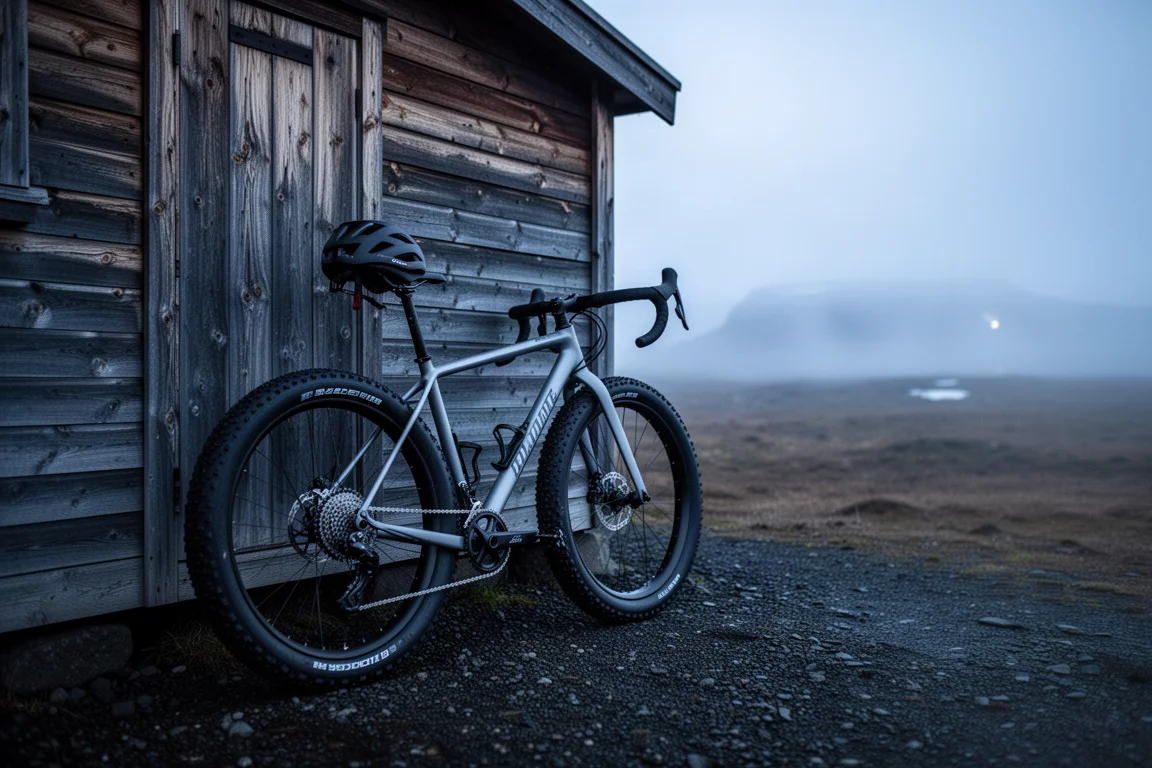
Because the geometry is so close to the True Grit, existing fans of that bike can approach the Seigler with confidence, with the meaningful changes concentrated in clearance, comfort and tyre capacity rather than handling character.
Conclusion
The Lauf Seigler reads as a careful evolution. It keeps the stable handling and smooth front end that made the True Grit popular, then answers the two criticisms that grew as gravel riding got rougher: limited tyre clearance and a rear end that felt firm next to such a plush front. With room for 29 x 2.5 inch tyres, a 1x specific monocoque frame, a 30mm leaf-sprung fork and a claimed tripling of rear compliance, it is a genuine modern gravel race bike. The compromises are real but well defined: one chainring, no cable dropper routing, and a fork with limits on the roughest descents. For riders whose gravel includes long stretches of rough, loose and chattery surfaces, those trade-offs are likely to feel worthwhile.
Product link
View more details for Lauf Seigler
This product is mentioned in the review. Check the specifications, options, and compatibility before buying.
View more details for Lauf SeiglerFurther reading
Related Reviews
Gravel Bikes
3T Exploro Ultra Review: A Fast Gravel Bike Built for Big Tyres
A close look at the 3T Exploro Ultra, an aero carbon gravel bike designed around wide tyres, with road-like handling, a 980 g frame and genuine rough-terrain capability.
Gravel Bikes
3T Extrema Italia Review: Aero Gravel Speed With Room for 57 mm Tires
The 3T Extrema Italia pairs an aero frame with huge tire clearance, Italian-made carbon and a more comfortable ride than the RaceMax. Here is what to know before buying.
Gravel Bikes
3T Race Max 2 Italia Review: An Aero Gravel Race Bike Made in Italy
A closer look at the second-generation 3T Race Max 2 Italia, covering its aero updates, ride character, tire clearance, internal storage and who it suits.