Kitchen Knives
Kuam Mokit Demon Slasher Gyuto Review: A Handmade Statement Knife
A 210mm Gyuto from Indonesia with a demon-head resin handle, a standout finger choil, and trade-offs worth knowing before buying.
Introduction
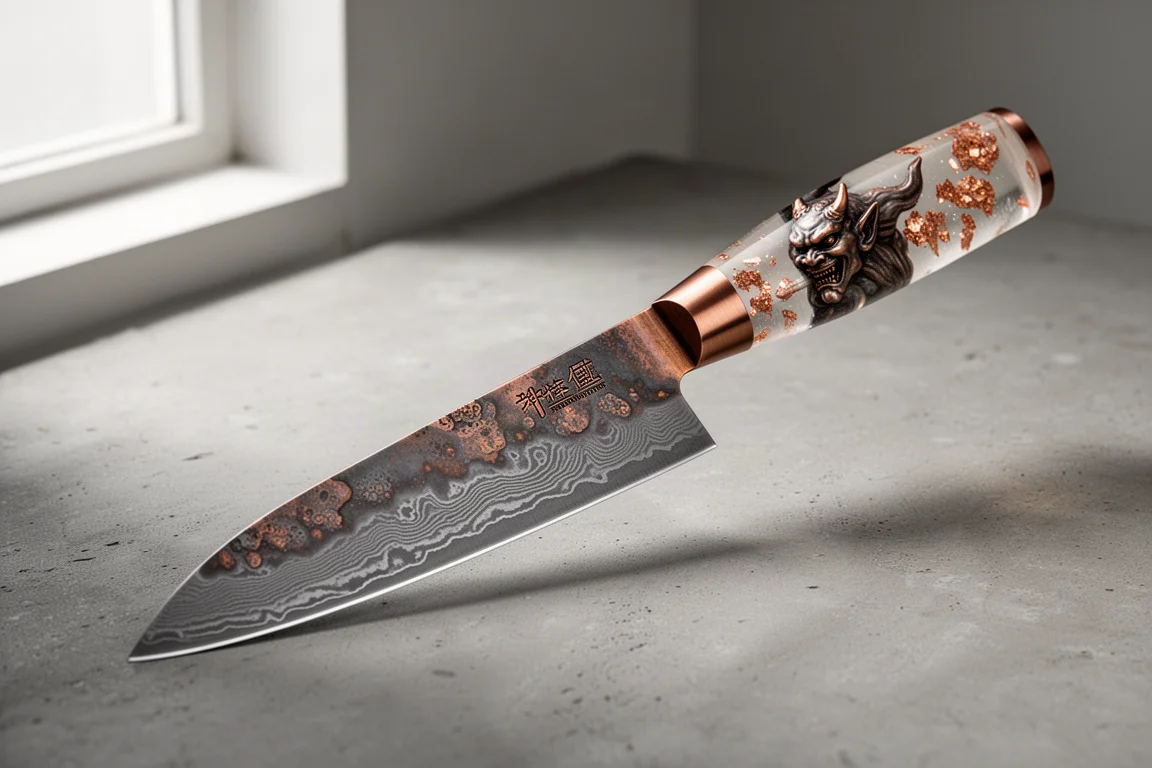
Kuam Mokit is a small knife maker out of Indonesia, and the Demon Slasher 210mm Gyuto is exactly the kind of knife that explains why handmade blades keep earning attention. The company has been making knives since 2017, with the brand itself founded in 2019, and its specialty is artistic, design-forward work. This Gyuto is a clear example: a forged, layered blade paired with a translucent resin handle that has a miniature demon head embedded at the tip.
It is a knife with personality, but it also has to cut. Here is how it held up.
Who This Knife Is For
The Demon Slasher is aimed at cooks who want a knife that looks unlike anything else in the drawer. If you prefer quiet, understated tools, this design will feel too loud, and that is a fair reaction. For anyone drawn to resin handles, Damascus layering, copper accents and forced etching, though, this is a genuinely striking piece that invites conversation the moment it comes out of the block.
It is also a proper pinch-grip knife, so it suits cooks who hold their blades forward on the bolster rather than at the rear of the handle.
Unboxing and First Impressions
The knife arrives in a wooden presentation box with a personal thank-you note from the maker. The look of the box is appealing, though the build quality is not impeccable: the lighter wood has visible holes filled with a pink wood filler that draws the eye away from the box itself. Leaving those imperfections raw, or filling them invisibly, would have been the stronger choices. It is a minor gripe, but worth knowing before you buy.
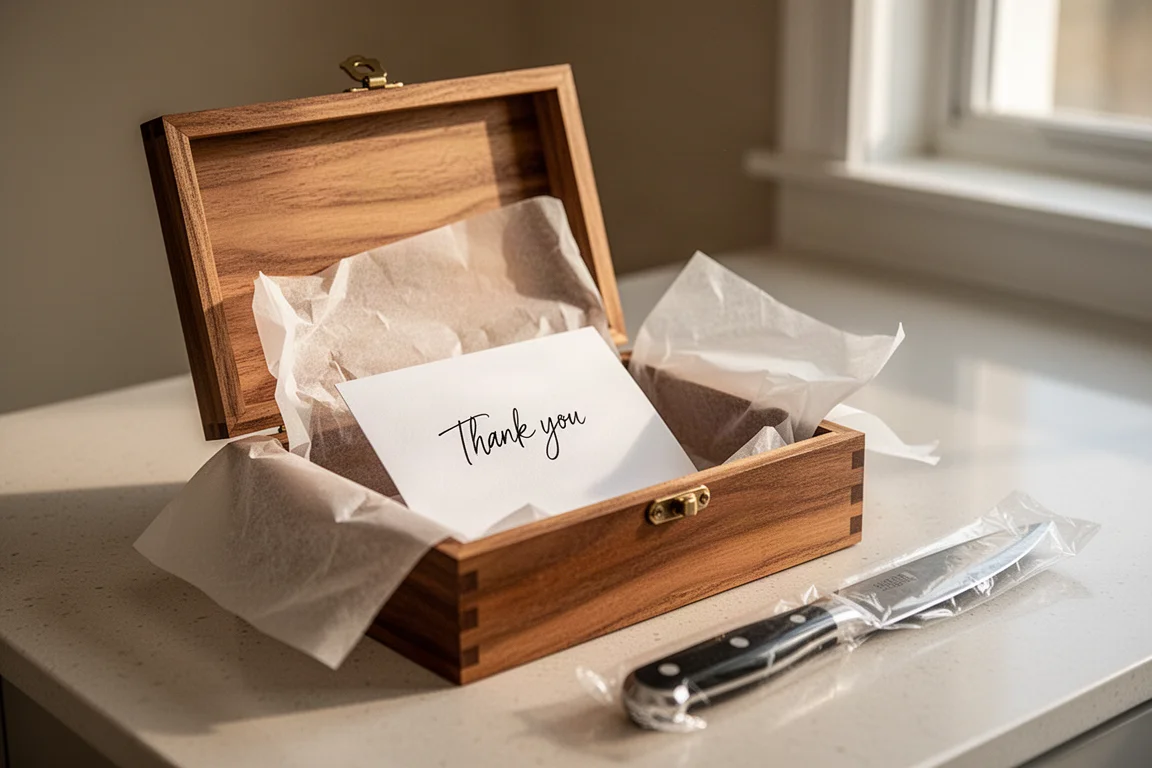
The knife itself arrived intact and well protected, and the first in-hand impression is strong. The blade shape rises gently toward the tip in a modified style, the spine is shaped neatly, and the handle has a topographic, layered interior inside the clear resin that looks genuinely jazzy without being messy.
The Standout Feature: The Finger Choil
Most finger choils are slightly rounded. This one is fully round, shaped so the finger sits naturally inside it. That small difference makes this one of the most comfortable finger choils on any knife tested in this category, and it is arguably the single best feature of the whole build.
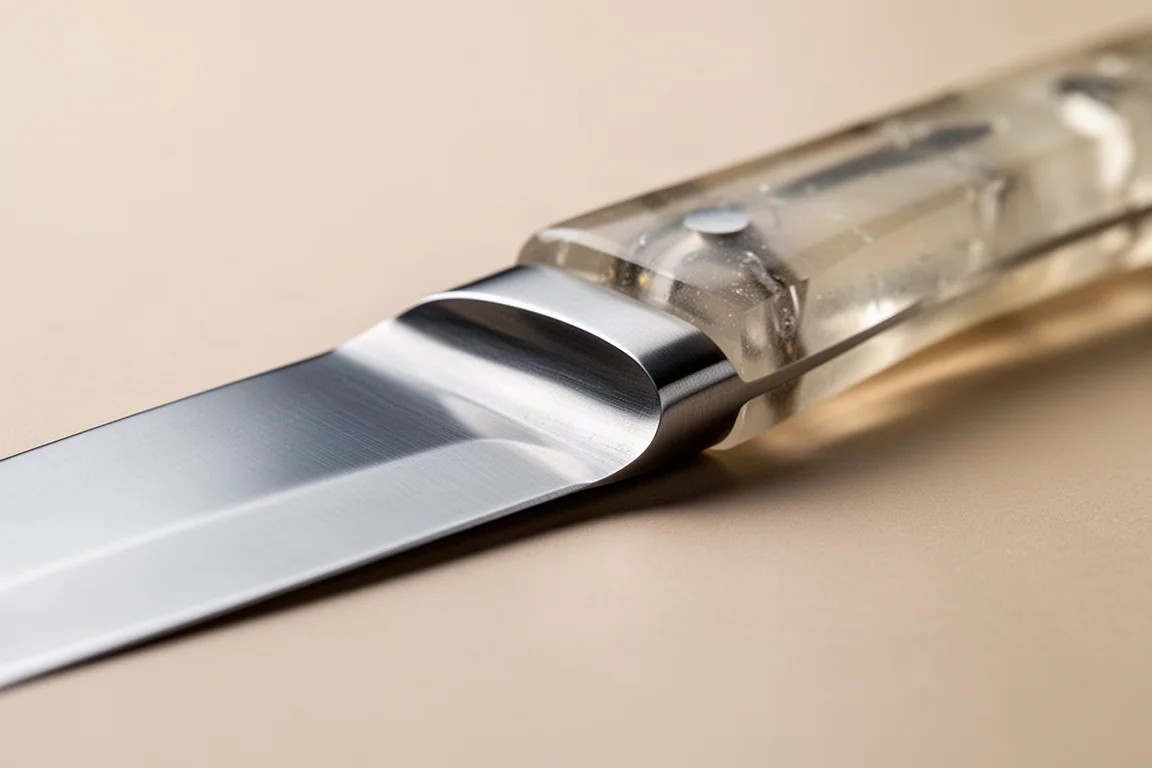
Combined with a generously sized bolster that does not create pressure pinch points, the knife feels very natural in a pinch grip. The handle and bolster are proportioned so larger fingers fit without feeling crowded, and the comfort carries through long prep sessions.
Cutting Performance
Performance is good, with one caveat. The edge does not have quite enough bite for cherry tomato skin, and the bite it does have seems concentrated at the heel rather than spread along the edge. The likely explanation is a high-polish finish on the blade, probably in the 3K grit range or above. Against a red bell pepper cut skin-side up, the tip struggled more than expected, though the sharp, usable tip still got the job done.
Carrots went smoothly, with only slight wedging near the end, better than most knives manage. Rock chopping works well thanks to the blade’s generous belly, though this is not a knife built primarily for rocking. One caution: the spine thins dramatically near the tip, to the point where pressing fingers there during a rock sweep is genuinely uncomfortable. Hold further back on the handle and use the belly instead.
The good news is that the edge is resilient and takes well to a coarser finish. Refreshing it to a 1K grit edge would suit the way most people actually use a Gyuto.
Things to Consider Before Buying
Two criticisms are worth weighing before purchasing. First, the presentation box: the visible pink wood filler detracts from an otherwise attractive box. Second, the included saya should fit more snugly. Feedback from other owners of the same brand suggests their saya fits tightly with no spare movement, so the loose fit here may simply be a consistency issue. Either way, check that the saya does not wobble when your knife arrives, since a loose saya is always a small concern.
None of these issues touch the knife itself, which is the part that matters most.
Buying Advice
The price had not been finalized at the time of writing, so treat this as a value question rather than a fixed number. The package includes the presentation box and a saya alongside a genuinely distinctive handmade blade, which suggests strong value once pricing settles.
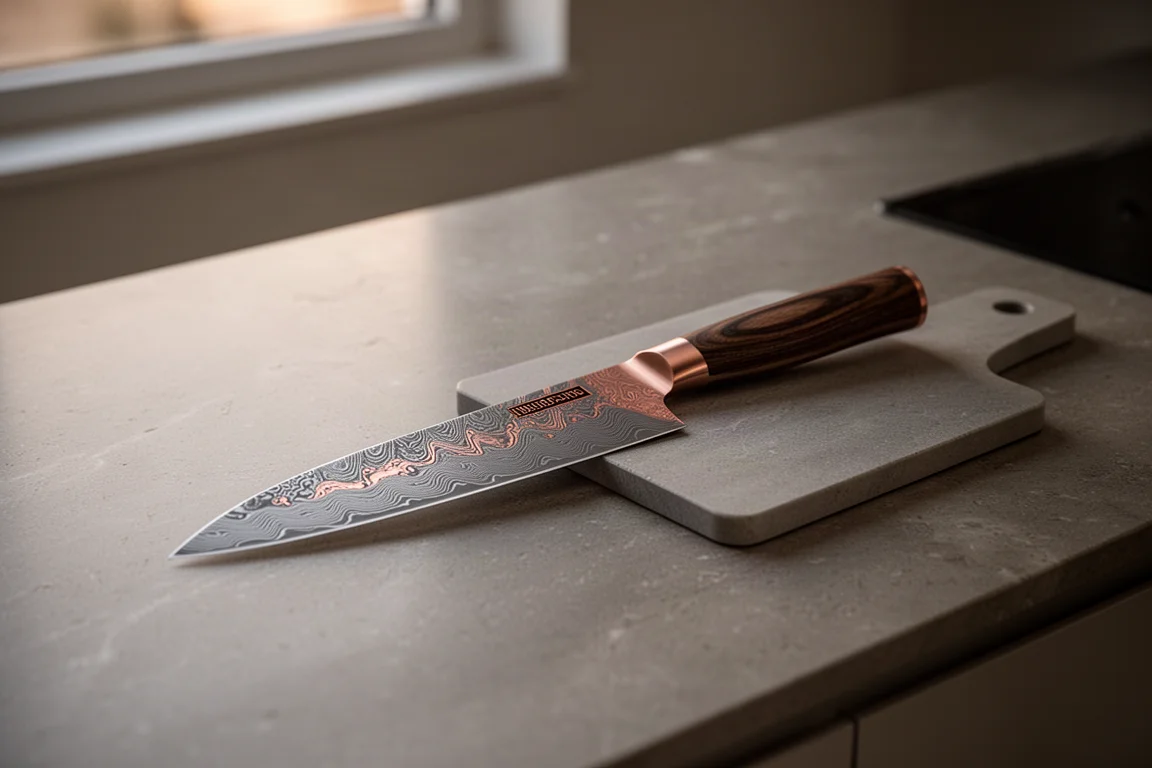
If you want to support a maker from Indonesia, this is an easy recommendation. The handle craftsmanship, the layered Damascus with copper and forced etching, and the resin handle with its demon head all hold up beautifully even after heavy use with a variety of ingredients. It is a piece that stands out in any collection and naturally starts conversations.
Conclusion
The Kuam Mokit Demon Slasher 210mm Gyuto is a fantastic all-around knife for the most part, with a truly unique design and one of the most comfortable finger choils available on a handmade blade. The edge could use more bite out of the box and the presentation box and saya have minor quality lapses, but the knife itself is a stunning, well-made piece that performs well across everyday tasks. For cooks who want something design-forward that still cuts properly, this is absolutely worth a look.
Product link
View more details for Kuam Mokit Demon Slasher 210mm Gyuto
This product is mentioned in the review. Check the specifications, options, and compatibility before buying.
View more details for Kuam Mokit Demon Slasher 210mm GyutoFurther reading
Related Reviews

Kitchen Knives
Best Chef's Knives 2026: 27 Popular Options Tested and Ranked
A comprehensive review of 27 chef's knives ranging from $18 to $380, with honest assessments of handle comfort, blade balance, and real-world performance.

Kitchen Knives
Best Chef's Knives Under $75: Two Tested Recommendations
Two practical 8-inch chef's knives that balance sharpness, comfort, and durability without premium pricing.

Kitchen Knives
Best Chef's Knives 2026: 27 Options Tested and Ranked
A comprehensive review of 27 chef's knives ranging from $18 to $380, with honest assessments of handle design, balance, blade profile, and real-world performance.