Camping Stoves
Kovea Spider Review: A Stable Canister Stove With Real Cold-Weather Capability
A long-running three-legged canister stove that can run on inverted fuel in cold conditions, with excellent stability and simmer control, plus a few trade-offs worth weighing first.
Introduction
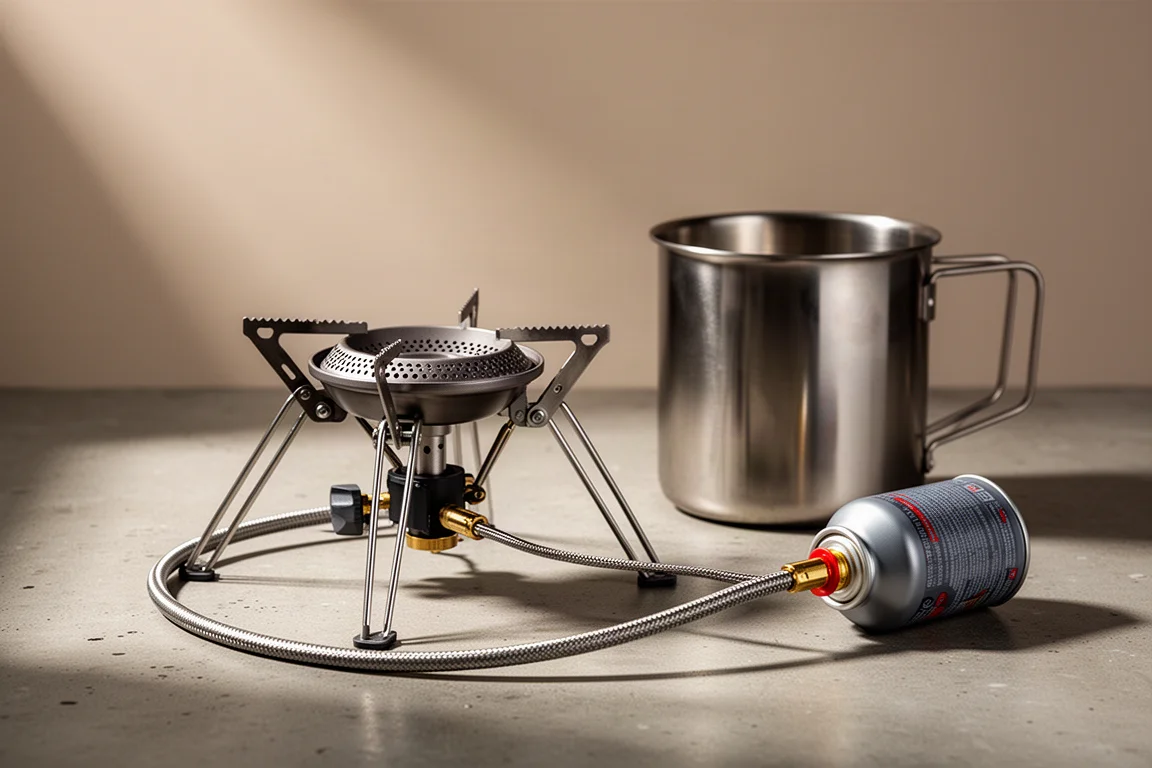
The Kovea Spider is a compact canister stove with a design that has quietly earned a following since it first arrived in 2012. It stands out for two reasons: a very stable three-legged platform, and a heat pipe that lets it run on an inverted canister when temperatures drop. On a standard upright canister it brought two cups of water, roughly 475 milliliters, to a rolling boil in about four minutes and ten seconds.
Use has spanned mountain trips in snow and coastal outings, and the stove behaved consistently in both.
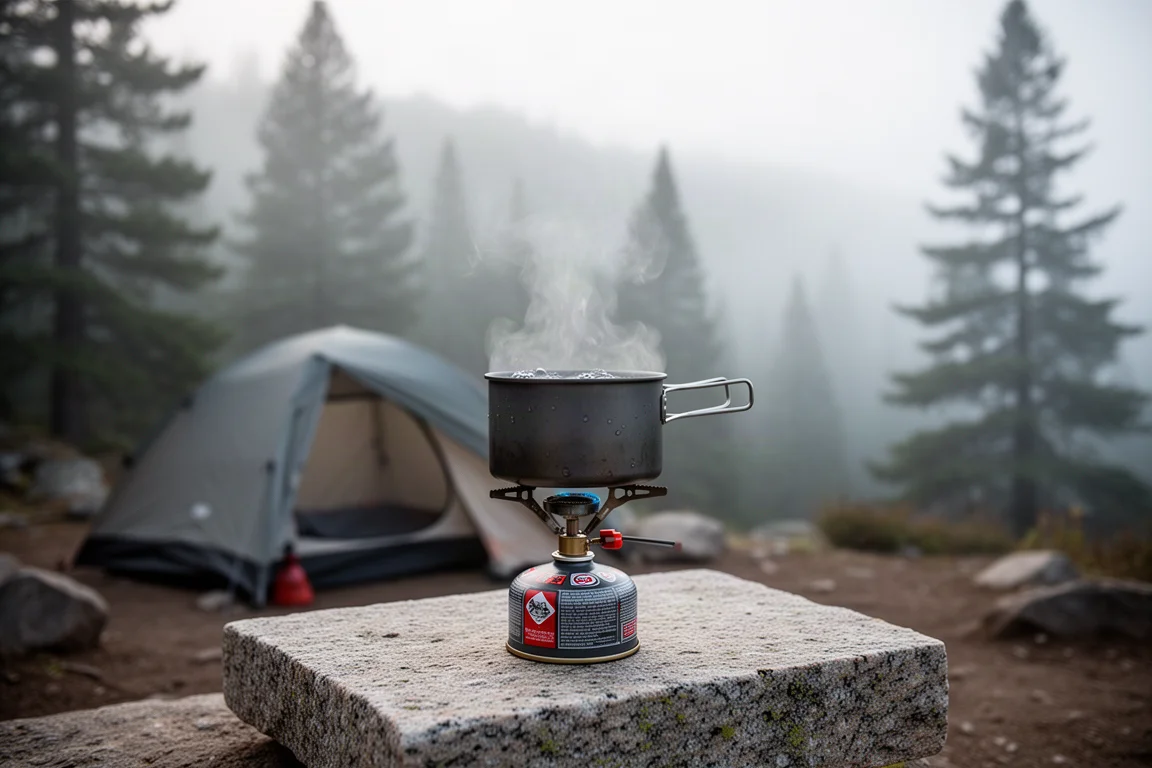
At 5,633 BTU it sits well below the roughly 10,000 BTU typical of more recent stoves built around the same layout, yet in practice the gap rarely shows up on an ordinary backpacking trip. At the time of writing it sells for about $66, roughly $20 more than it did a year earlier.
Who This Stove Is For
This stove makes the most sense for backpackers and campers who cook in cold conditions and want the option of an inverted canister for stronger output. The liquid fuel mode, the low center of gravity, and the precise simmer control all point to the same buyer: someone who values dependable cooking over the lightest possible pack.
If winter performance is not part of the plan, the calculation changes. Several stoves share this general design, and without a need to invert the canister, less expensive options can do the same job. Hikers counting grams on long-mileage trips should also look elsewhere, because six ounces is respectable but not ultralight.
Main Strengths
The strengths here are structural and practical rather than spec-sheet bragging.
Stable, Well-Built Design
Three legs lock into position and release by pushing them down and rotating. Once set, the stove sits very low to the ground, so a pot stays put whether the stove is on dirt or on a camp table. The three pot supports are ridged at the tips and sit roughly two inches apart, which keeps cookware from sliding while you stir.
Build quality is excellent throughout. The body is primarily stainless steel, with copper, bronze, and aluminum components in the mix. Folded, the stove measures about three and a half inches wide and three and a quarter inches high, and the twelve-inch hose with its control valve coils away neatly so the whole package fits inside a cook kit.
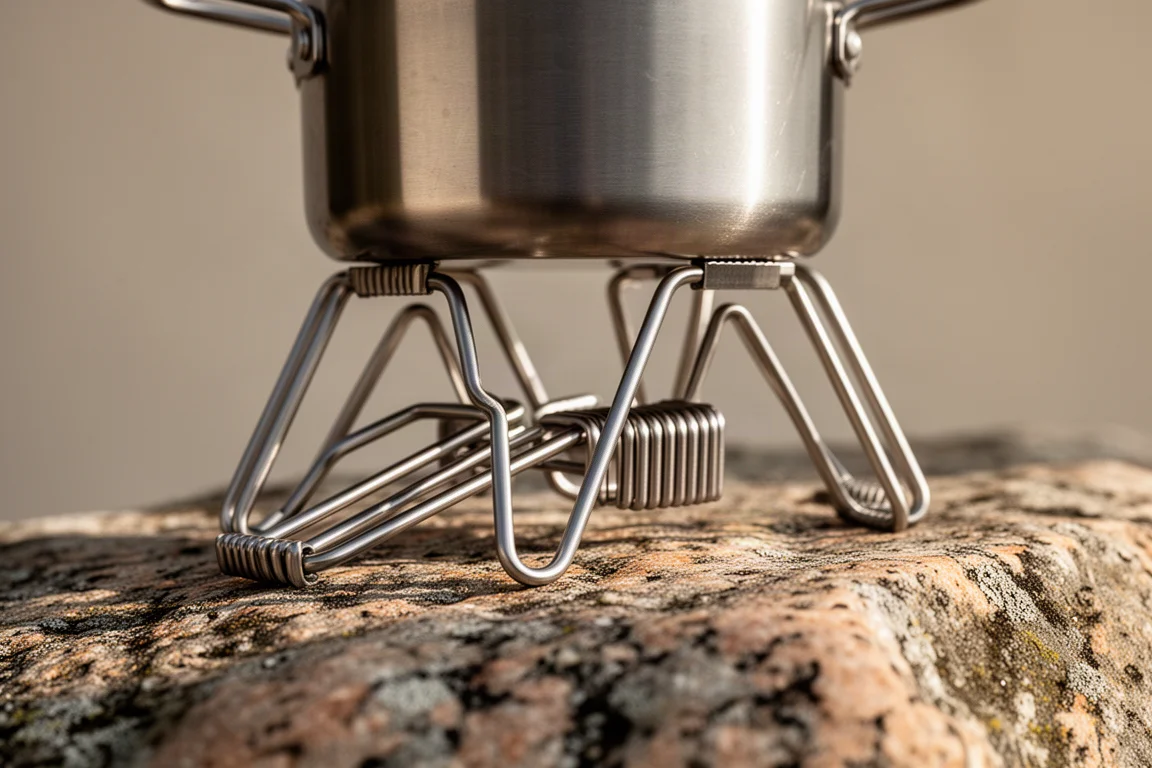
The design has barely changed since 2012, and that is a point in its favor. Minor refinements aside, there has been little reason to alter a platform that works this well.
Cold-Weather Performance With Inverted Canisters
A heat pipe sits at the center of the burner head, and it is the key to the stove’s cold-weather behavior. Start the stove upright and let it burn at a decent pace for about ten seconds so the pipe heats up. Once it is hot, turn the canister upside down and the stove runs on liquid fuel, which travels through the hose, enters the heat pipe, vaporizes, and burns like a normal canister stove.
The change in output is immediate. Flipping the canister acts like a shot of adrenaline: intensity climbs and boil times drop noticeably. In testing, the stove ran without trouble at around 19 degrees Fahrenheit in inverted mode, though that testing was limited in scope.
Two cautions matter. Keep the canister warm to begin with, and never try to light the stove with the canister already inverted, because unvaporized liquid fuel can produce a large fireball. Not every stove with this general shape can be inverted; only models designed for it should be used this way.
Simmer Control and Fuel Adapters
The control valve is excellent. It offers a good amount of resistance, which makes fine adjustments easy, and the stove will hold a low simmer for as long as you need. Markings on the valve show which direction raises and lowers the flame.
Adapters open up the fuel options. With the right adapter the stove can run from larger propane tanks or from butane, and butane in particular is inexpensive, which can bring running costs down over time.
Things to Consider Before Buying
A few trade-offs are worth understanding before committing, because two of them affect everyday use rather than edge cases.
The Piezo Igniter Falls Short
The included piezo igniter is the weakest part of the package. It fails to light the stove the vast majority of the time, and the problem has been consistent for years. The burner head itself has no built-in ignition and no windscreen, so a separate lighter or ferro rod belongs in the kit regardless.
Weight, Burner Head Size, and Cold Hose Behavior
The stove weighs six ounces on its own and seven ounces with the storage bag and igniter. That is not heavy, but it is not ultralight either, and there are noticeably lighter stoves on the market. On short trips the extra weight is easy to justify; on a long-mileage route, a lighter option makes more sense.
The burner head is on the small side, which concentrates heat in the center of the pot rather than spreading it across the base. Simple meals are no problem at all, but cooking a larger one-pan dinner, such as a steak with a side, takes more attention because the heat stays centralized. A larger burner head makes that kind of cooking easier.
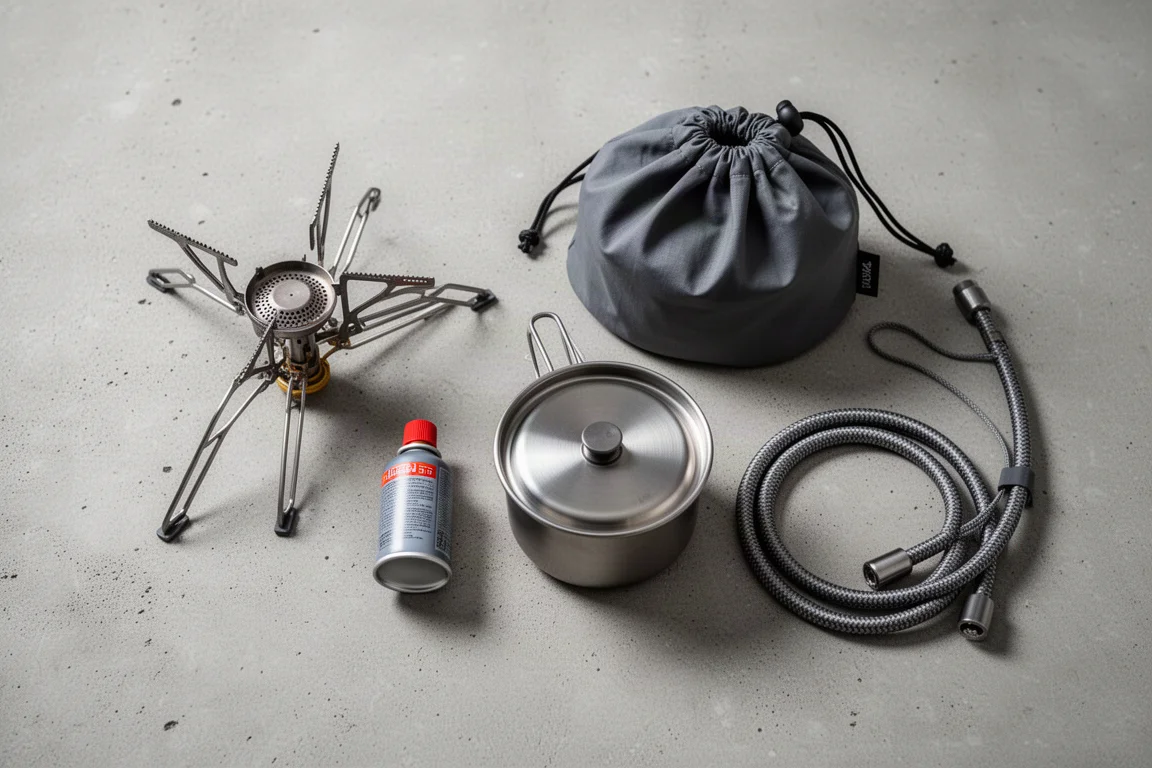
Cold conditions introduce one more quirk: the hose becomes very stiff and somewhat fussy to handle. There is also a shutdown detail to respect. After the stove is turned off, liquid fuel remains in the hose and takes a while to vaporize and burn away, so the flame can linger briefly after the valve is closed.
Documentation and Instructions
Product information is surprisingly thin. The manufacturer’s website says very little about the stove and does not publish the BTU rating at all, which makes comparison shopping harder than it should be.
The bigger concern is the paperwork in the box. Units sold in the United States ship with Korean instructions rather than English ones, and that is a genuine safety issue given how easily the inverted canister procedure can go wrong when it is done incorrectly.
Speed, Weight, and Value
Raw output is where the Spider trails newer designs. At 5,633 BTU it delivers roughly half the output of a typical modern stove with the same layout, and stoves that boil water in about half the time are easy to find. In real use, though, the four-minute-and-ten-second boil for two cups never felt slow on an ordinary backpacking trip, where speed is rarely the deciding factor.
Value depends entirely on how the stove will be used. At about $66 it costs more than it did a year ago, and the price only makes sense if the inverted canister capability is something you will actually use. Fuel adapters soften the long-term picture, since inexpensive butane can bring the cost per trip down.
Buying Advice
If cold-weather cooking is part of your routine, the Spider is a solid purchase. The stability, the simmer control, and the ability to run inverted make it a dependable cooking platform, and the design has proven itself over many years.
If you do not need winter performance, spend less. Stoves with a similar layout and no inverted-canister capability cost considerably less and will cook your meals just as well in three-season conditions.
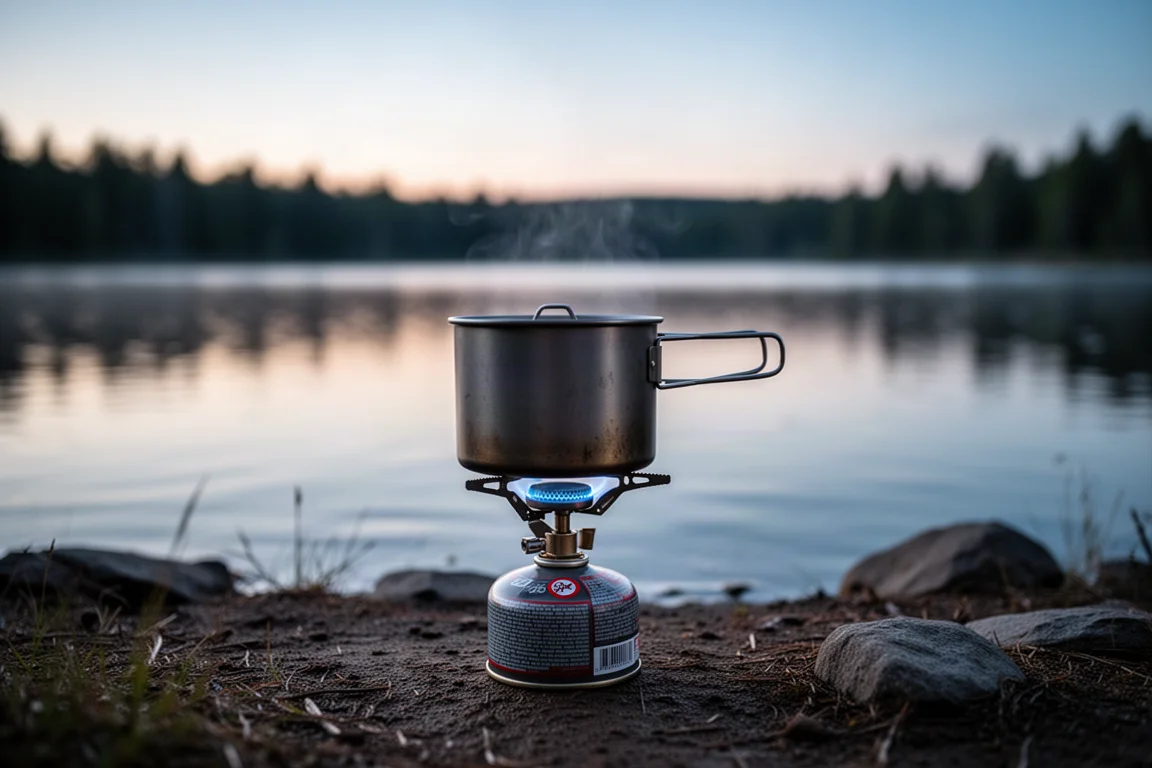
Either way, plan the accessories. Pack a reliable lighter or ferro rod, since the bundled igniter cannot be trusted, and give yourself time on a first outing to practice the sequence: start upright, let the heat pipe warm for about ten seconds, then invert. Following that order is what keeps the stove running safely and predictably.
Conclusion
The Kovea Spider is a very good stove, with excellent build quality, a stable low-slung stance, precise flame control, and cold-weather capability that few canister stoves can match. Its limits are equally clear: modest BTU output, a small burner head, six ounces of weight, an unreliable bundled igniter, and Korean-only instructions for the US market. Buy it for the cold-weather mode and the stability. Skip it if you only need a warm-season stove and want to spend less.
Product link
View more details for Kovea Spider
This product is mentioned in the review. Check the specifications, options, and compatibility before buying.
View more details for Kovea SpiderFurther reading
Related Reviews
Camping Stoves
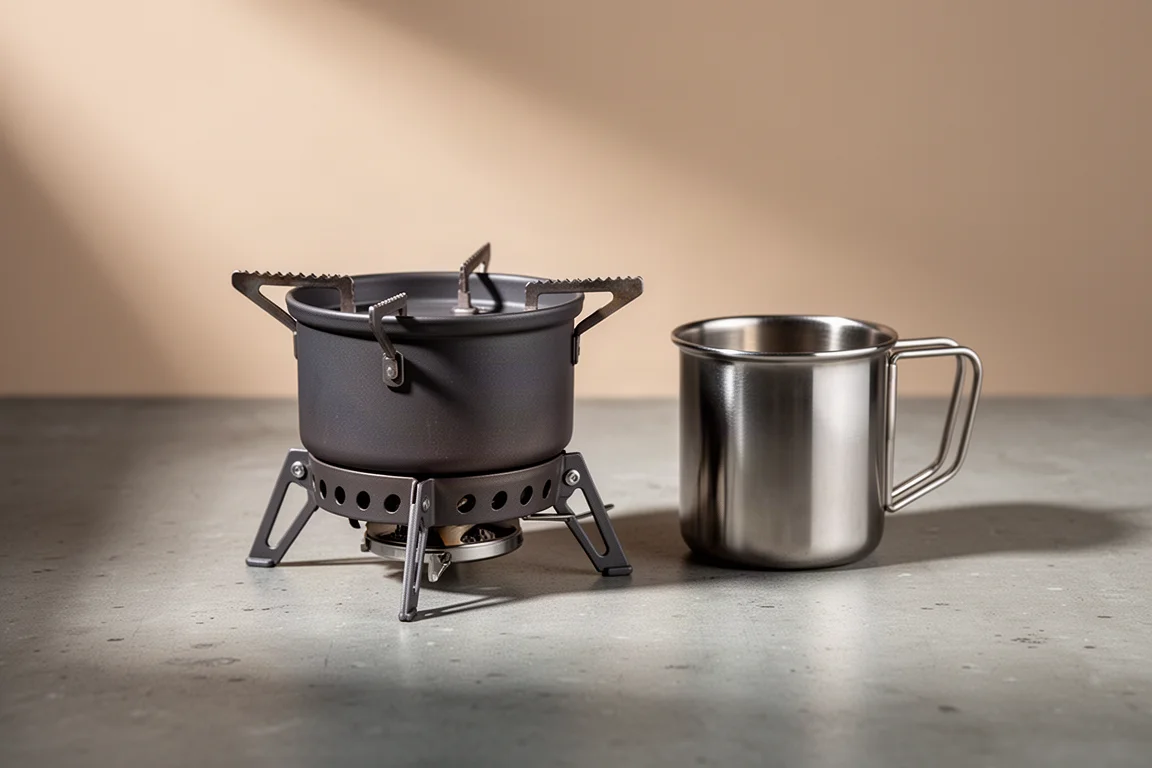
BCB Fire Dragon Mini Cooker Review: A Tiny Folding Stove With Real Trade-Offs
A palm-sized, fuel-flexible folding stove that heats water well enough, but brings flame control, stability, and fuel cost questions worth understanding first.
Camping Stoves
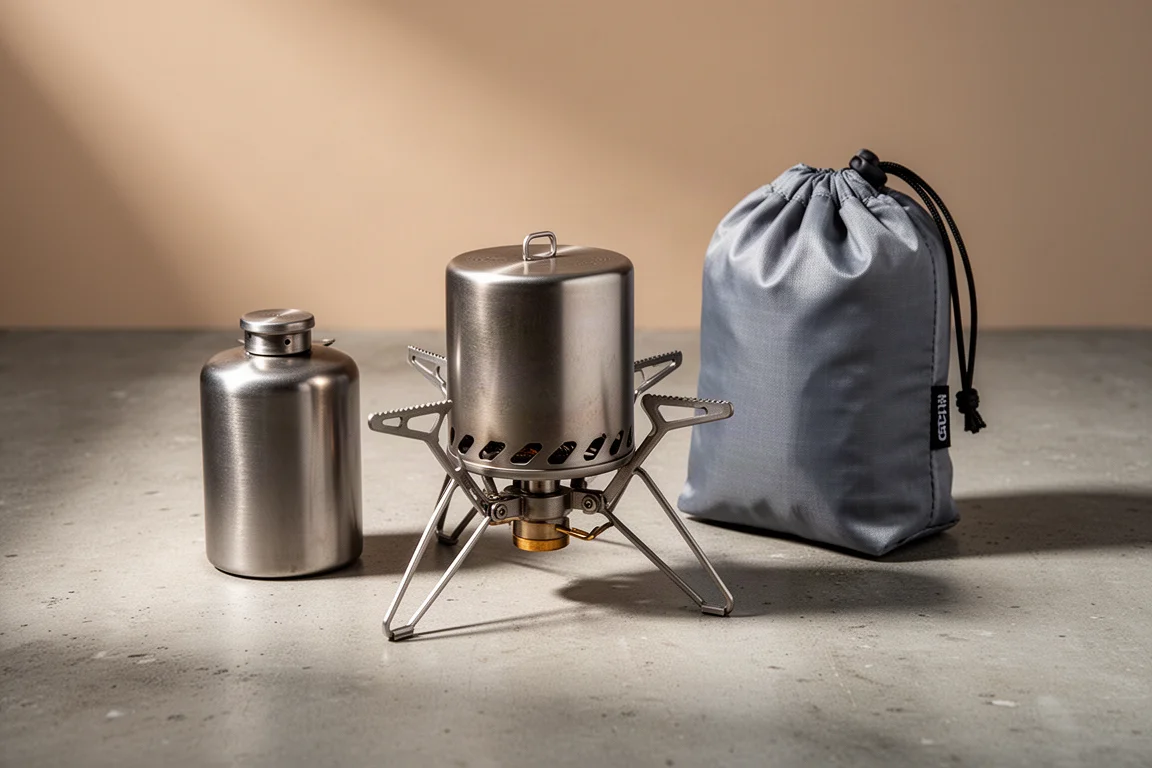
Boundless Voyage Titanium Alcohol and Wood Stove Review: Ultralight Cooking, Two Ways
A titanium alcohol and wood burning stove kit that weighs 4.5 oz complete, boils two cups of water in about 10 minutes, and costs $36.
Camping Stoves
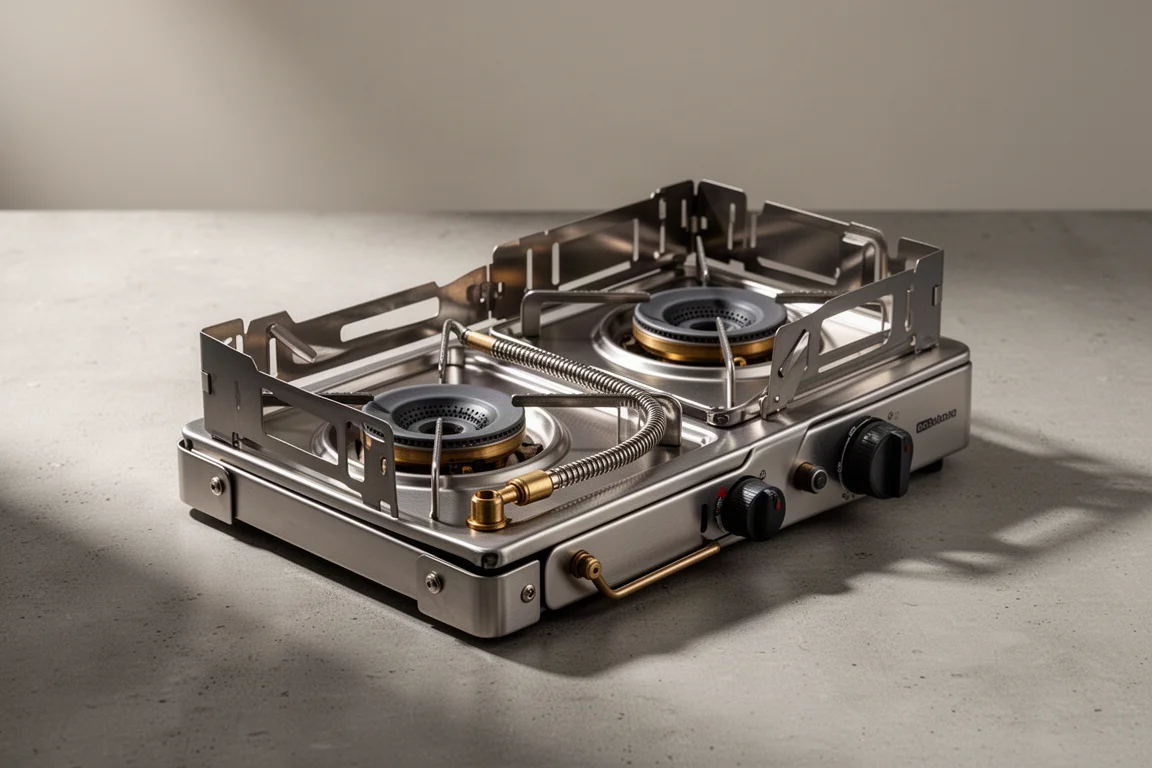
BRS 32 Dual Burner Stove Review: A Folding Two-Burner That Packs Down Flat
A detailed look at the BRS 32, a slim folding dual burner camping stove that expands into a stable cooking platform for around $60.