Kitchen Knives
Best Knives for Food Separation: Five Blades That Keep Food From Sticking
Why food sticks to Japanese knives, how blade geometry affects food release, and five knives that handle sticky ingredients better.
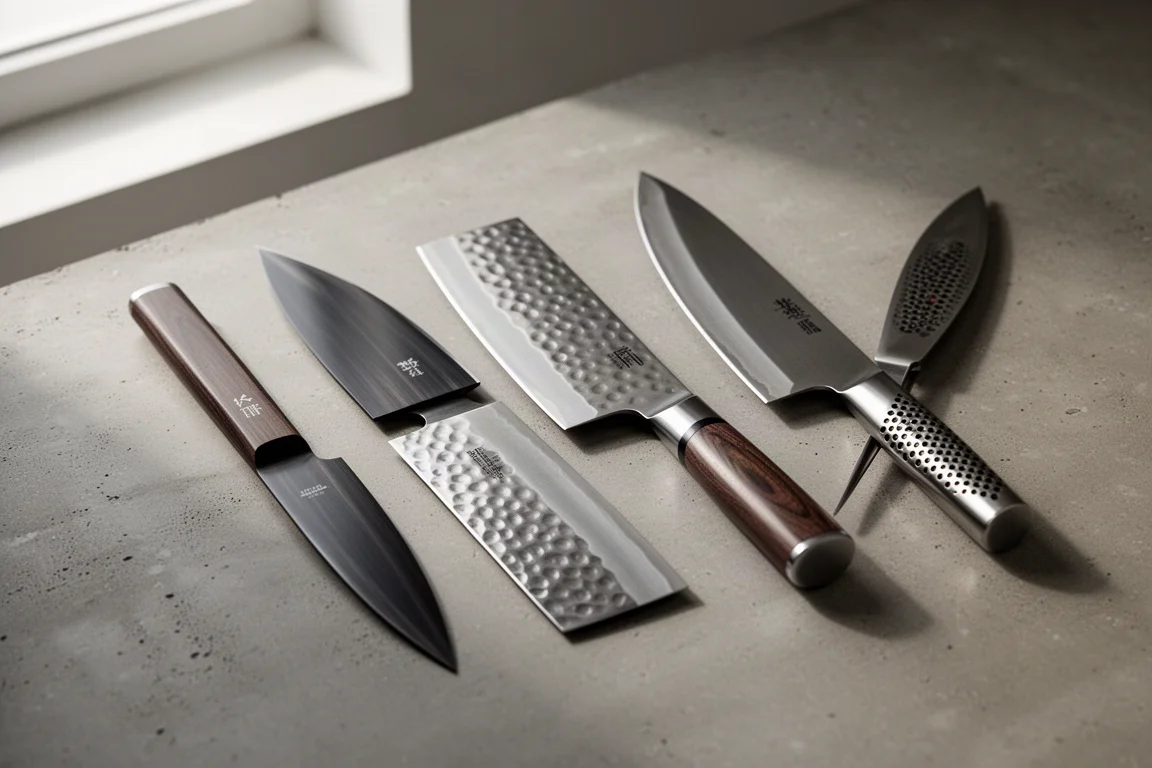
Introduction
Few things break your chopping rhythm like food piling up over the blade. You line up your cuts perfectly, everything looks great, and then the slices fall over the knife and you end up cutting through them again. It is a small annoyance, but it adds up, and it is one of the most common questions that comes up when people are choosing a new kitchen knife: is food going to stick to this blade, and does that hammered texture actually help food fall away?
The answer is a bit more complicated than a simple yes or no, and it comes down to geometry. After a hands-on comparison across several high-performing Japanese knives, a clear spectrum emerged, and it can genuinely help you pick the right blade for how you cook.
Why Food Sticks: A Quick Geometry Lesson
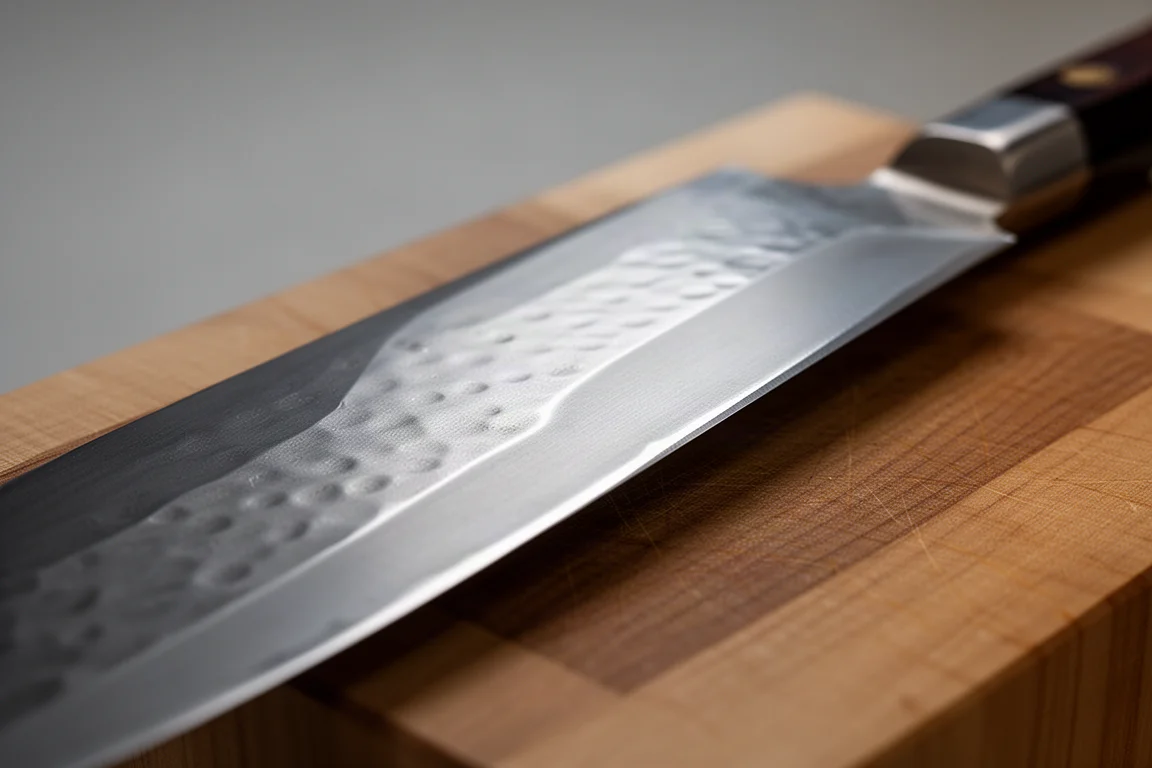
Every knife starts as a flat piece of steel, either punched out or forged, and the maker grinds that flat surface down toward the edge to form the bevel. On some knives that taper is hidden in a smooth, rounded blend from spine to edge. On many Japanese knives, there is a distinct line where the flat face of the blade stops and the grind to the edge begins. In Japanese, that line is called the shinogi, and knife enthusiasts often call it the shoulder.
The theory behind food separation is simple: on a knife with a very smooth, gradually blended bevel, food can glide up the blade and stay stuck to it the whole way. On a knife with a more pronounced shoulder, food hits that corner, the surface tension breaks, and the slice peels away. Thinner blades also tend to glide through dense foods like carrots and potatoes more smoothly, but counterintuitively, those thin, laser-like knives often stick more.
Laser Knives: Yu Kurosaki Senko and Shibata Kotetsu
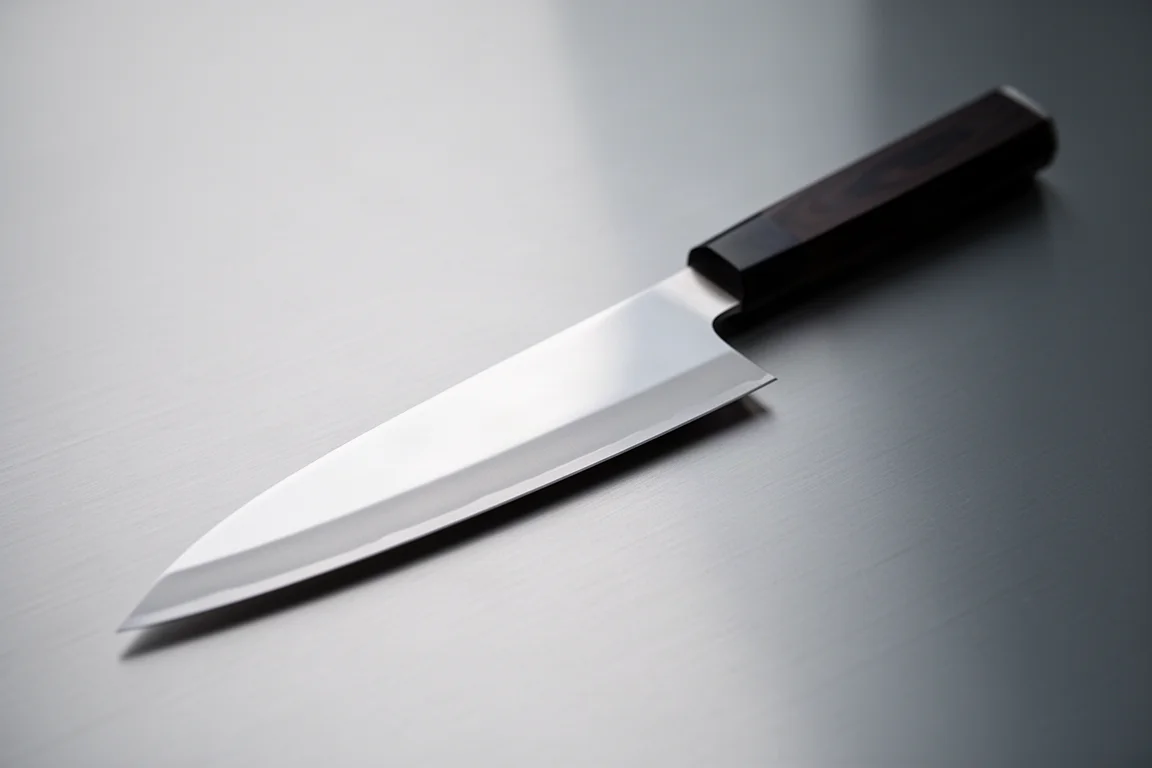
These are two of the highest-performing knives you can buy, and both are a joy to use. In a simple push-cut test, the Yu Kurosaki Senko showed some sticking, but nothing piling over the blade. It stayed within acceptable territory, possibly because it has a slightly more pronounced bevel angle where the blade grinds down to the edge.
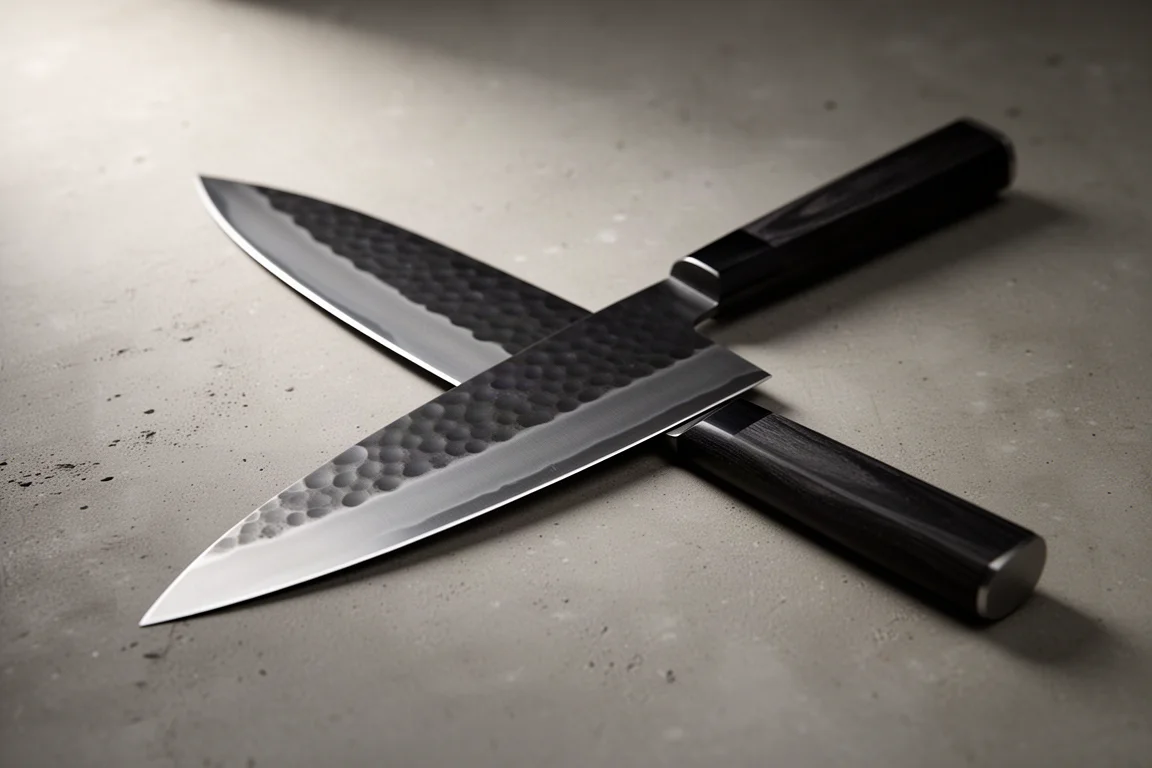
The Shibata Kotetsu, with its much more consistent, smooth taper, was a different story. Food clearly stuck more, slices started piling over the blade, and the familiar problem of having to go back and re-cut appeared. For a home cook not chasing perfectly precise cuts, this is not a huge concern, but if stickage bothers you, it is noticeably more present here. That said, the Kotetsu remains one of the best-performing knives you can use, and a little food sticking does not diminish that.
Kurosaki Kuishi: Texture and a Firmer Shoulder
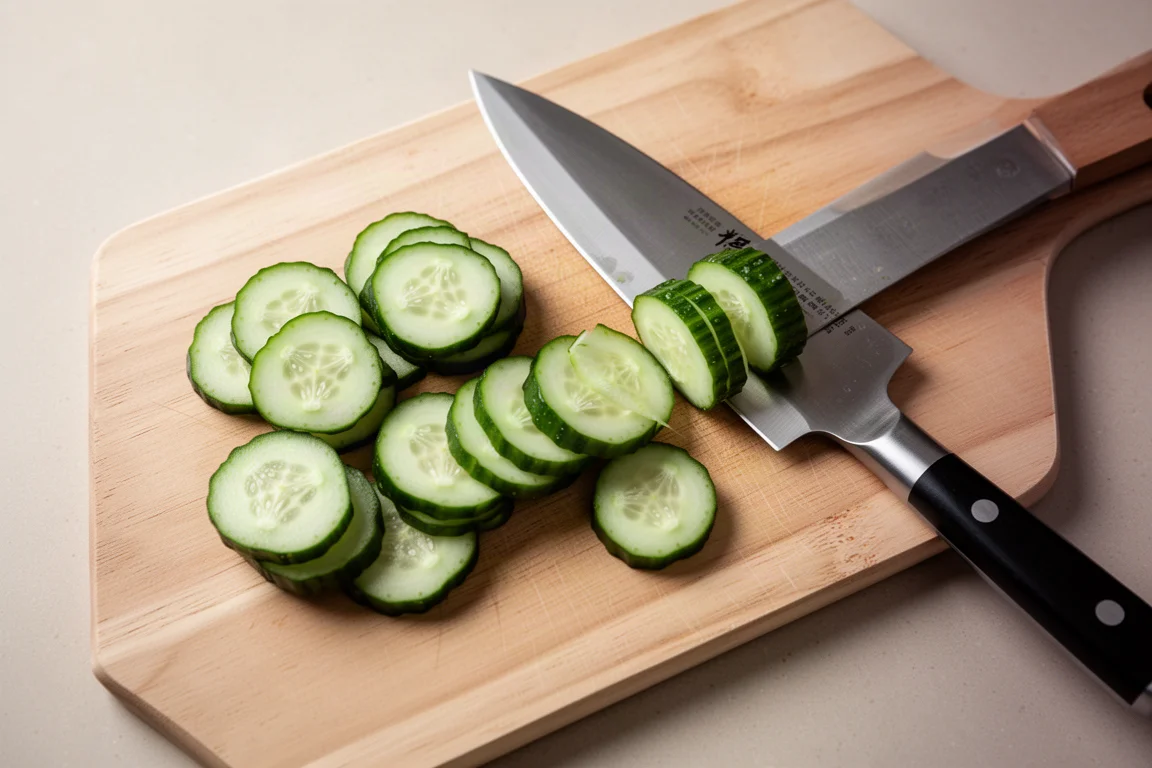
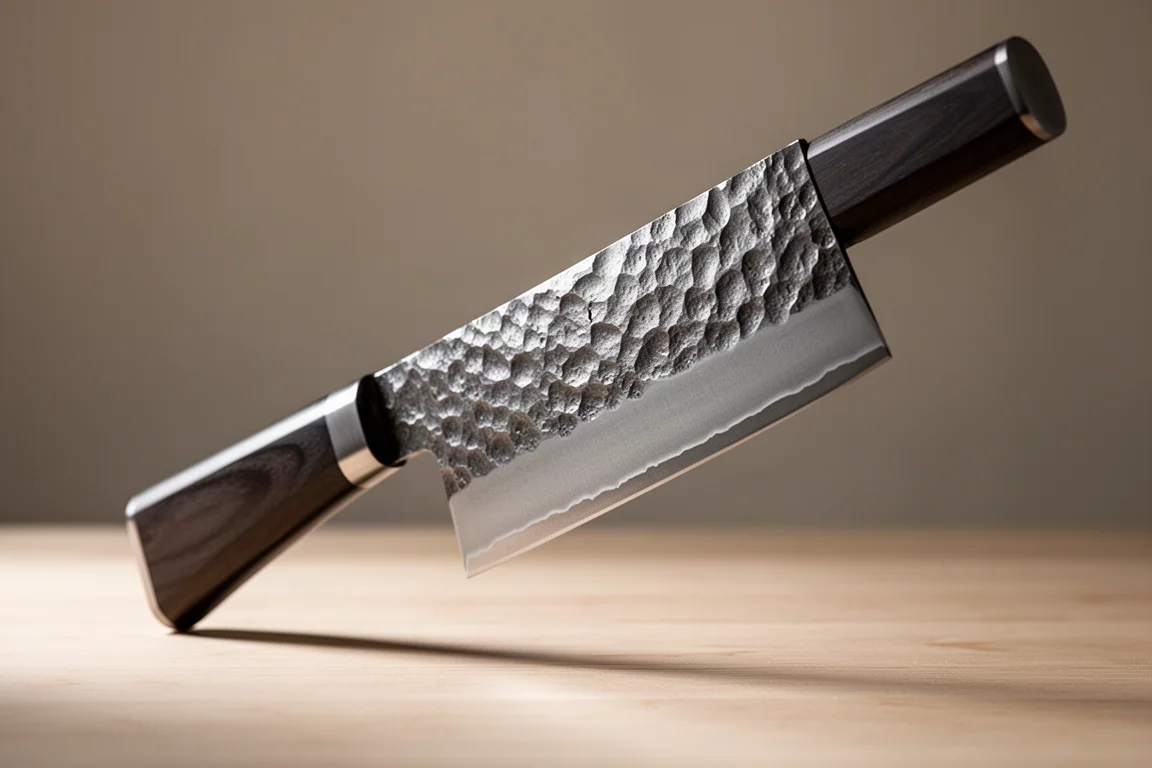
The Kurosaki Kuishi takes a slightly different approach. It is a little thicker toward the top of the bevel, so there is more of a separation angle where the bevel meets the face of the knife, plus a rougher, rockier texture on the blade that is meant to help food fall away.
In testing, there was still some stickage, but noticeably less than with the Kotetsu. On cucumber, one of the worst vegetables for clinging to a blade, the food fell away really nicely. The takeaway from this comparison: a bit of texture, a slightly thicker blade, or just a more pronounced bevel, as opposed to a fully blended one, tends to help food separation.
The Chinese Cleaver Approach
A Chinese cleaver solves the problem in a completely different way. Some of these are genuinely thin, made from much softer steel, so they are not a replacement for a performance knife like the Kotetsu or the Kurosaki. But if you are doing volume prep work, like thinly slicing a whole case of potatoes, the tall blade lets you do something no chef knife can: run your fingers along the flat side of the blade and force food to break away as you cut. With carrots, slices peel off almost without conscious effort, simply because the food runs into your hand.
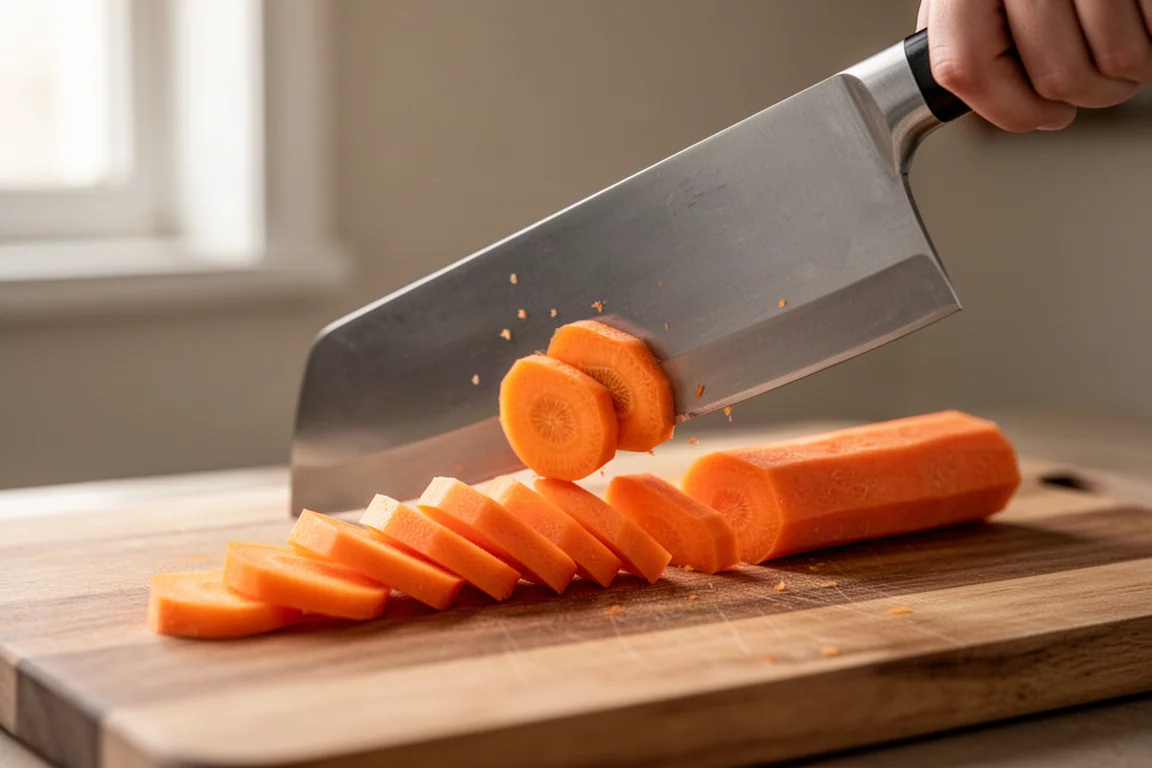
A thicker cleaver, a few millimeters at the spine, handles food separation even more on its own. It has smoother beveling without much of a shoulder, but the extra blade thickness is enough to keep food from clinging. If you cook big meals and want a thin blade that will not pile food up, it is a strong contender.
Blades Built for Food Release
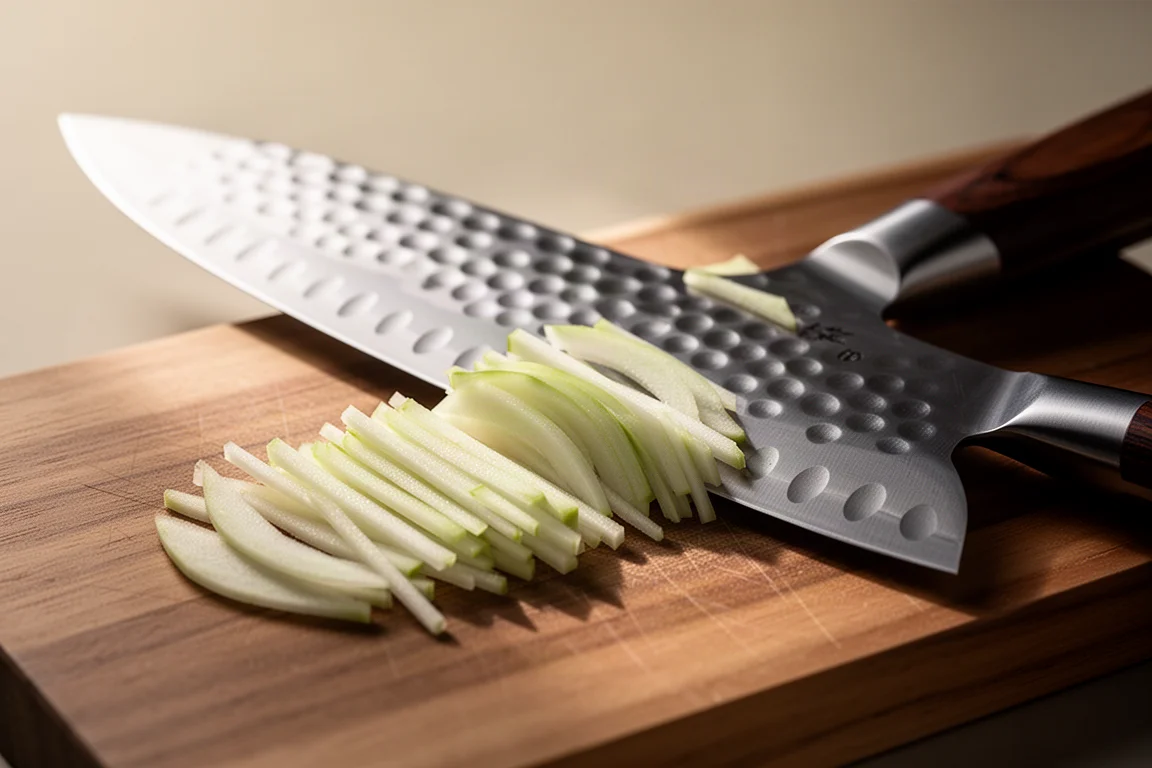
Some knives are designed primarily for food separation rather than treating it as a bonus. The Glain, made for Japanese chefs but increasingly popular in the West, is one of the most interesting. It is a right-handed, single-bevel-style blade with pronounced beveling on the right side, a less extreme bevel on the left, and deep dimples across the blade. Those dimples are often a gimmick on other knives, but here they genuinely help food jump away without hurting cutting performance after sharpening.
The results were dramatic. Even thin cucumber slices, which normally want to stick the most, jumped right off the blade. Despite the uneven grind, the knife did not skew cuts to one side, and precise cuts were still easy to achieve. For anyone doing a lot of thin slicing, especially in a professional setting, this is an easy recommendation.
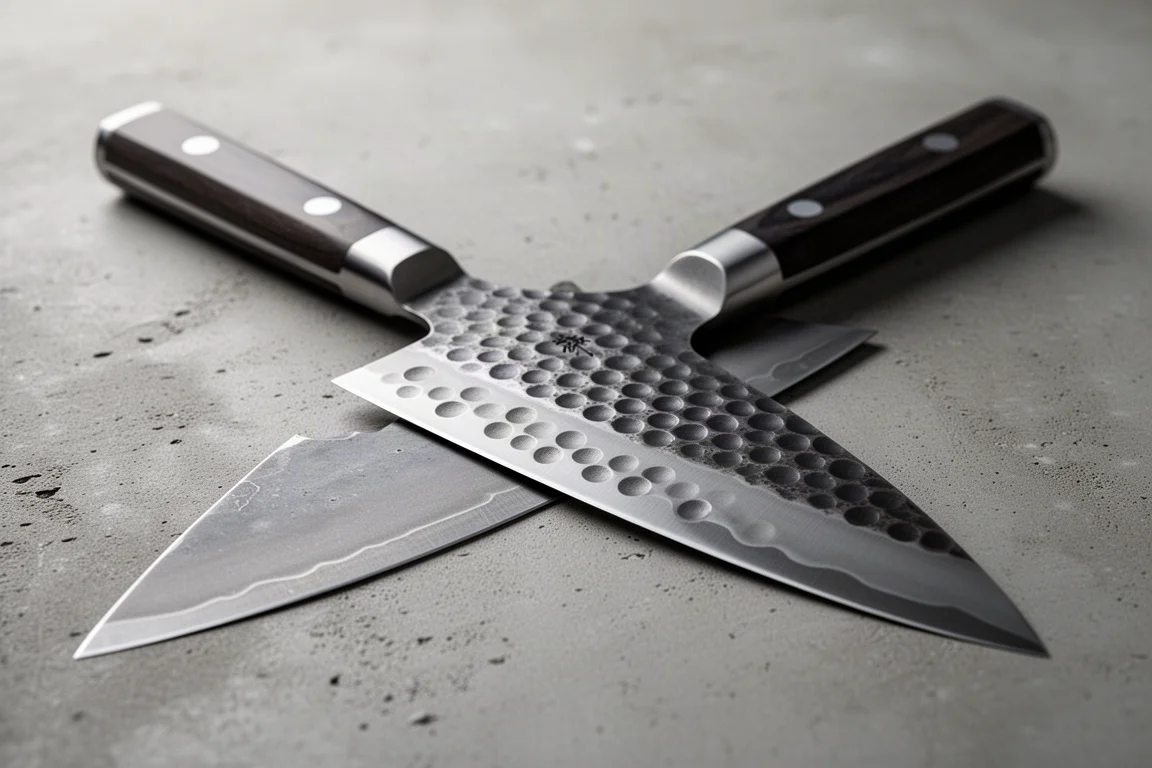
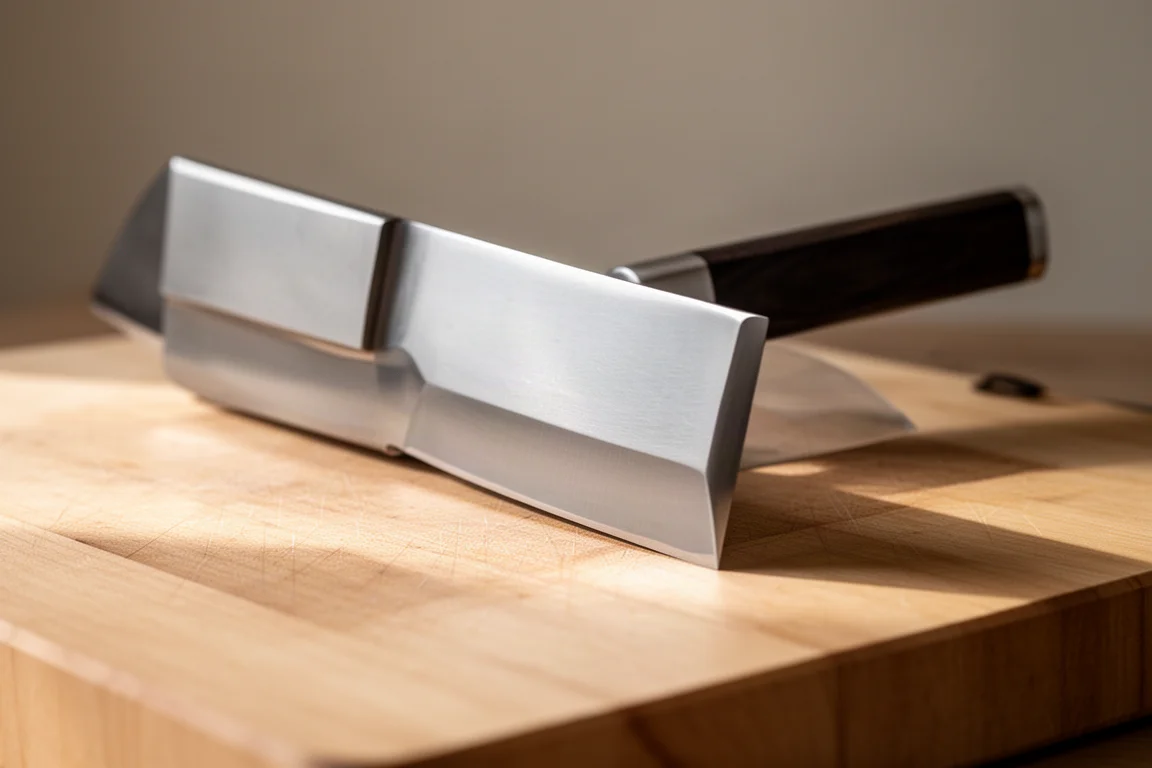
The Suzuki II Hono single-bevel santoku is even more unusual. Its maker is a sickle maker, and sickles are traditionally single-sided blades, so he has taken those principles into kitchen knife shapes like the santoku. These knives are fairly thick, with a very pronounced bevel that comes out of the blade and then stops, creating that shoulder line that breaks food off the blade. Food simply wants to fall away, even on the thinnest slices.
They do cut slightly unbalanced and want to steer a little to the left, and getting used to the single-bevel feel takes a bit of adjustment. But the beveling is not so extreme that it feels awkward. It does not feel as laser-sharp as the Kotetsu, and you notice it cutting through food more, but not in a way that hurts the experience. For neat, thin slices with no piling up, it works beautifully.
Overall Buying Advice
You no longer have to sacrifice performance for food separation, or food separation for performance. The Shibata Kotetsu is an incredible blade, and a little food sticking to it is a fair trade if you want that level of performance. If you want similar performance with better food release, look at the Yu Kurosaki Senko or the Kurosaki Kuishi: thin, sharp knives with a bit more bevel definition. If food separation is the priority, the Glain, the Suzuki II Hono, or a Chinese cleaver are all phenomenal options, each just offering a slightly different cutting feel.
Conclusion
Food separation comes down to geometry: texture, bevel angle, blade thickness, and that shinogi shoulder all play a role. There was a real spectrum across every blade tested, and matching the knife to how you actually cook matters more than any single ranking. Choose based on what you cut most, and the sticky-slice problem largely takes care of itself.
Further reading
Related Reviews

Kitchen Knives
Best Chef's Knives 2026: 27 Popular Options Tested and Ranked
A comprehensive review of 27 chef's knives ranging from $18 to $380, with honest assessments of handle comfort, blade balance, and real-world performance.

Kitchen Knives
Best Chef's Knives Under $75: Two Tested Recommendations
Two practical 8-inch chef's knives that balance sharpness, comfort, and durability without premium pricing.

Kitchen Knives
Best Chef's Knives 2026: 27 Options Tested and Ranked
A comprehensive review of 27 chef's knives ranging from $18 to $380, with honest assessments of handle design, balance, blade profile, and real-world performance.