Hand Tools
Knipex Raptor 8741 250 vs Harbor Freight Icon Multi-Slip Joint Pliers: Which Parrot-Nose Pliers Make Sense?
Two similarly sized push-button parrot-nose pliers go head to head. One is finished with real precision, the other costs about half. Here is where each one fits.
Introduction
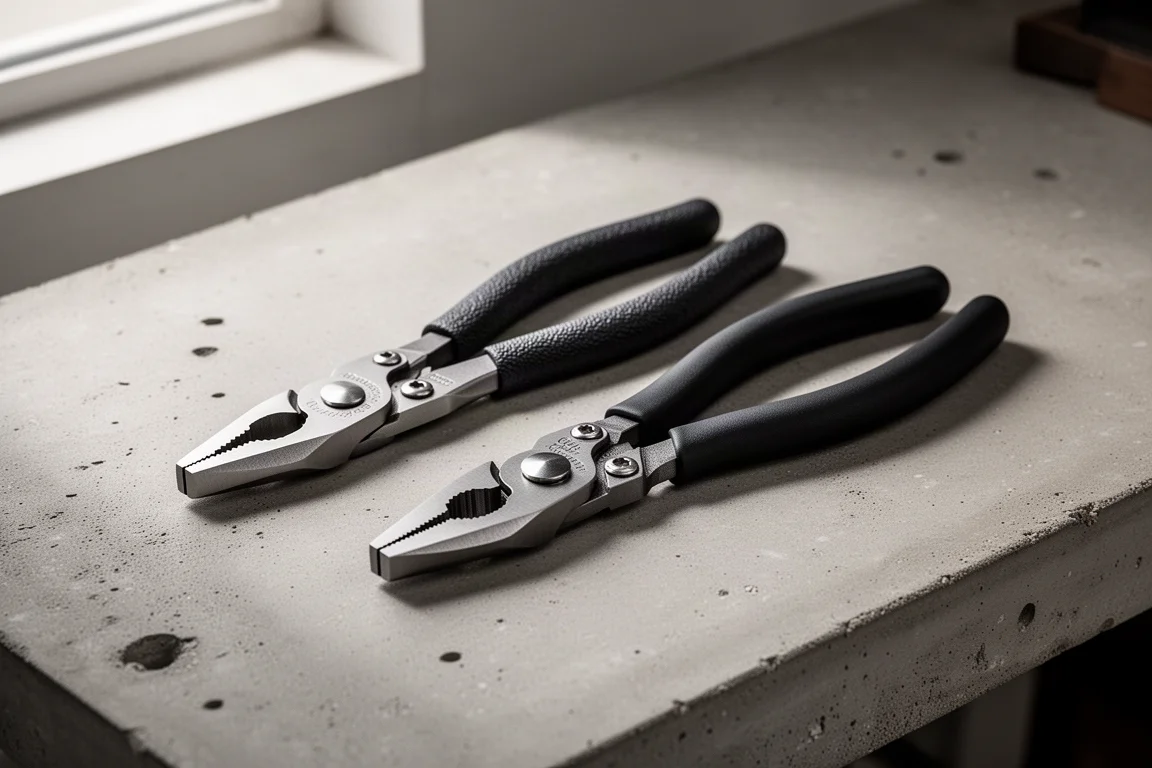
Parrot-nose push-button pliers occupy an odd corner of the tool world. People who own them often are not sure where they fit: do they replace a standard slip joint, compete with a flank-drive style design, or stand in for a set of Cobra or TwinGrip pliers? This comparison looks at two of the most talked-about options, both about the same length, both with push-button adjustment, and both with dipped handles.
Two Pliers, One Job: First Impressions
The two tools side by side are the Knipex Raptor 8741 250 and the Harbor Freight Icon multi-slip joint pliers. Both are roughly the same length. Both use a dipped handle, but the character is very different: the Icon’s handle is much thicker, cushier and squishier, while the Knipex goes with a thin, textured dip. The Icon is made in Taiwan and described as designed in America; the Knipex is made in Germany.
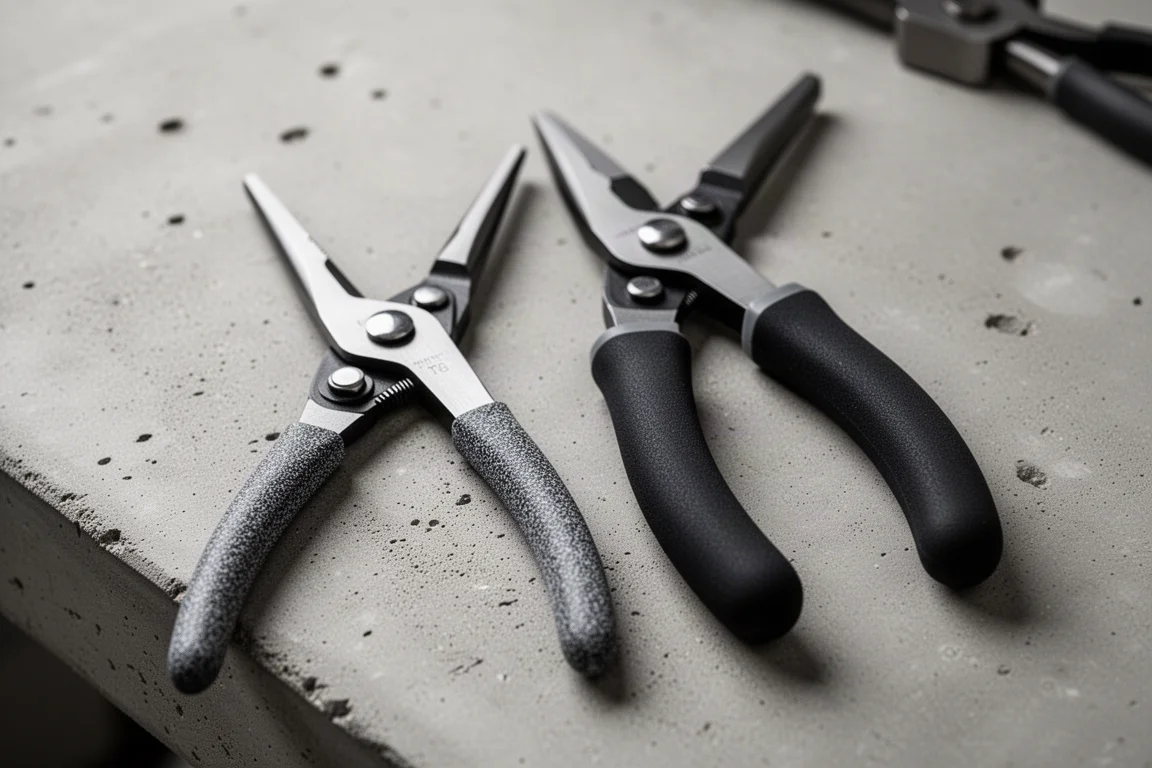
Mechanically, they are very similar. Both use box construction with push-button adjustment, and the click counts are close: the Knipex offers about 15 clicks to the Icon’s 14. The Icon actually has a slightly wider jaw capability, both at the closed end and at full span. Where the Icon gives up ground is finish quality, smoothness of operation, and how securely the jaws grab a fastener. On raw price, the Icon lands at roughly half the cost.
Where the Knipex Design Shines
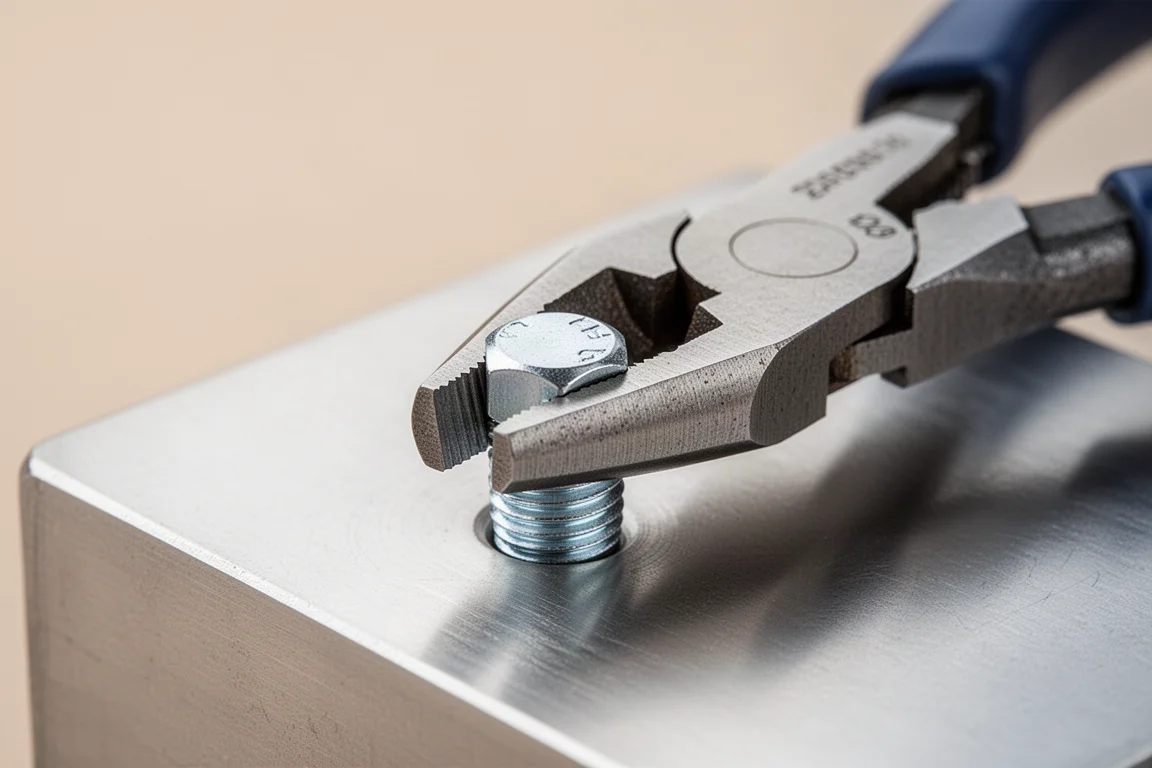
The core trick of this style of plier is grabbing a bolt, fastener, or anything with flat sides, including squares and hexes, and holding it with very little handle effort. The geometry does the work: as you turn a fastener, the jaw angle pushes the fastener into a corner of the tool, essentially locking it in place. The long lever arm makes it very hard for rotation forces to push the fastener out. It does not take much effort to keep the connection in place, and the grip feels strong with zero movement on the right fastener.
The Knipex also offers a genuinely useful adjustment range. On a small fastener near full closure, there is still a little space left to work with, and the push-button mechanism makes it easy to resize on the fly, even one-handed around the workpiece. Many tools of this type also have some directionality, working better when turned in the intended direction.
Machining: The Corner That Was Cut
The most visible difference is the finish work. On the Knipex, the finishing marks on the two handle halves line up, parallel across the joint, which suggests the tool was finished after assembly. On the Icon, the tool marks from polishing do not line up: one side was finished differently from the other, and the jaw surface is angled slightly down and not flat compared to the top. The assembly looks like a case of pairing handle halves from a bin.
That machining shows up in use. On the Icon, a fastener can sit unevenly in the jaws and actually spin or wiggle under a hard squeeze, especially when the jaws are near full squish on a small fastener. Grinding the rounded, off-center jaw surface flat would help, but most owners will not want to modify a new tool. Both pliers carry a lifetime warranty, and the Knipex design uses an internal mechanism with replacement parts available should it ever fail.
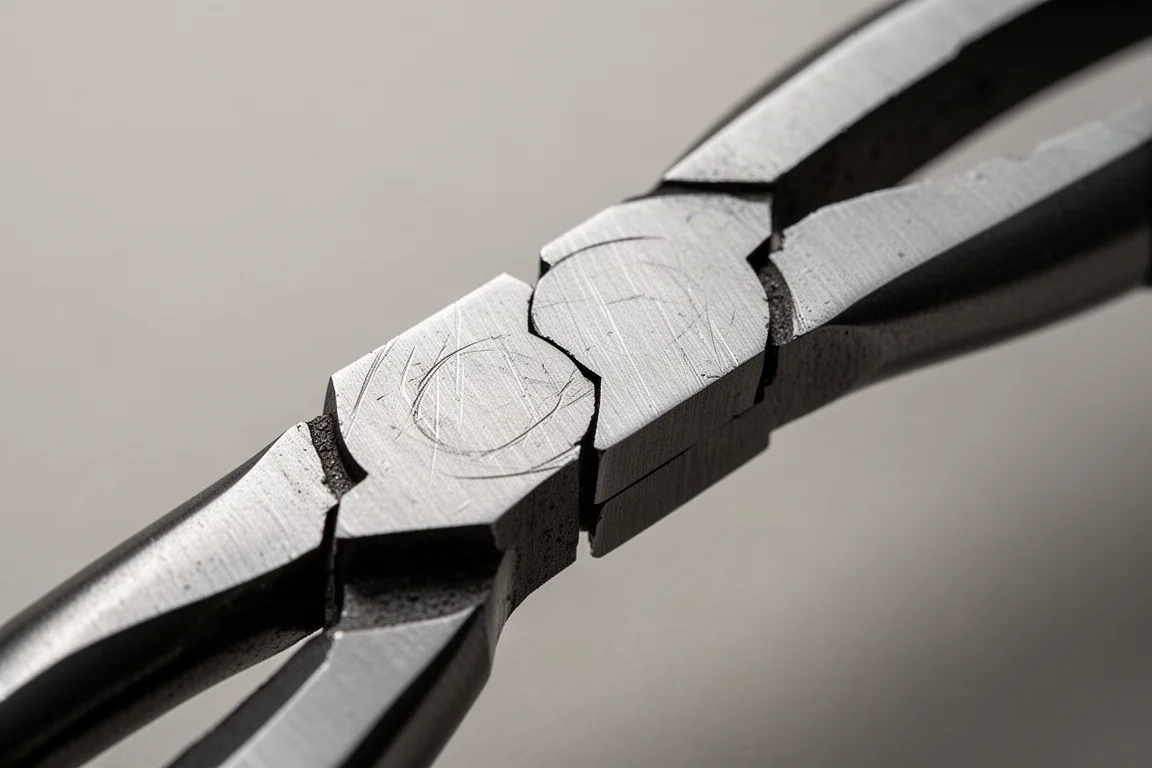
The practical suggestion for Icon buyers: if you can, pick through the stock and find a pair where the top and bottom jaws align properly. That is apparently part of how the half-price cost is achieved, a quick polish and assembly from a bin.
What These Pliers Are Actually For
The honest answer, based on how these perform, is that they work best as a supplement to a combination wrench set rather than a replacement. Think of them as covering the opposite end of a wrench: instead of using two wrenches, or a wrench plus pliers, to hold both ends of a fastener, one of these grabs the second end easily. They are simple to manipulate, easy to hang onto once set, and forgiving if you land on the fastener at an awkward angle.
On a 10 mm fastener, the Knipex at full small-end closure still shows only a tiny sliver of space and holds with zero movement. That brute-force grabbing is the strength here. The Icon trades some of that precision for a squishier handle and a wider jaw range, and at half the price it can be a reasonable entry point, more of a training tool: there is nothing wrong with it, but there is a potentially much better option out there.
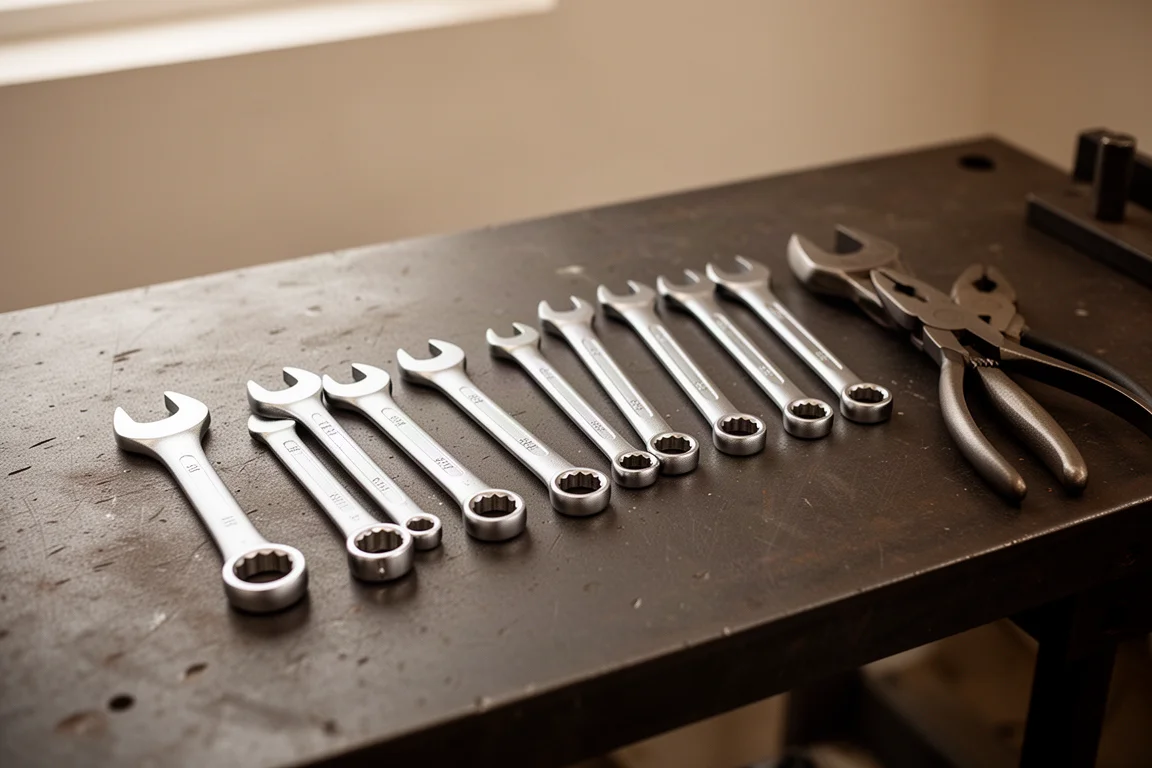
If you are choosing between this style and a plier wrench, the plier wrench still handles most jobs better except for very specific applications. Tie rods come up repeatedly as a sweet spot for the parrot-nose design, thanks to the clearance, the grabbing ability, and the leverage that keeps it locked on when you cannot hang on tightly by hand. It is also worth noting the obvious comparisons: Snap-on’s version puts a flank-drive style head on a traditional slip joint, and a larger version of that design would be welcome, as would a bigger Knipex in this size, which feels powerful enough to have a place.
Conclusion
The Knipex Raptor 8741 250 is the better tool on merit: finer adjustment, smoother operation, better finish, and a more secure grip on fasteners. The Harbor Freight Icon is half the price with a cushier handle and slightly wider jaw capability, but its machining cuts corners that you can feel in use. If your workflow has a specific job for this style, the Knipex earns its price. If you just want to experiment, the Icon is a serviceable starting point, and the Knipex remains the upgrade waiting down the road.
Product link
View more details for Knipex Raptor 8741 250
This product is mentioned in the review. Check the specifications, options, and compatibility before buying.
View more details for Knipex Raptor 8741 250Further reading
Related Reviews
Hand Tools
Best Diagonal Cutters 2026: 16 Pliers Tested for Cutting Power and Durability
We put 16 diagonal cutters through nail, screw, drill bit, and hex key tests to find the best value picks for your toolbox.
Hand Tools
Best Hex L Key Sets 2026: Nine Sets Tested for Real-World Torque
Nine hex L key sets from budget to premium, tested for torque, fit, and durability. See which sets deliver real performance and which ones to skip.
Hand Tools
Best Locking Pliers 2026: Top Picks Tested for Grip and Durability
We tested 18 brands of 10-inch locking pliers for grip strength, jaw bite, build quality, and ease of release to find the best options for tough jobs.